
Plush Toy Manufacturing Built for Reliable Bulk Production
Move approved plush designs into scalable production with stronger control over workmanship, consistency and execution. Ewin Toys integrates core manufacturing processes under one system, helping brands reduce sample-to-bulk variation and manage larger or more complex orders with confidence.
95,000+ m² Manufacturing System | 1,900+ Workforce | 1,200+ Sewing Team | 130+ Assembly Staff | 100+ Quality Personnel | Cutting / Embroidery / Sewing / Stuffing / Assembly / QC / Packing
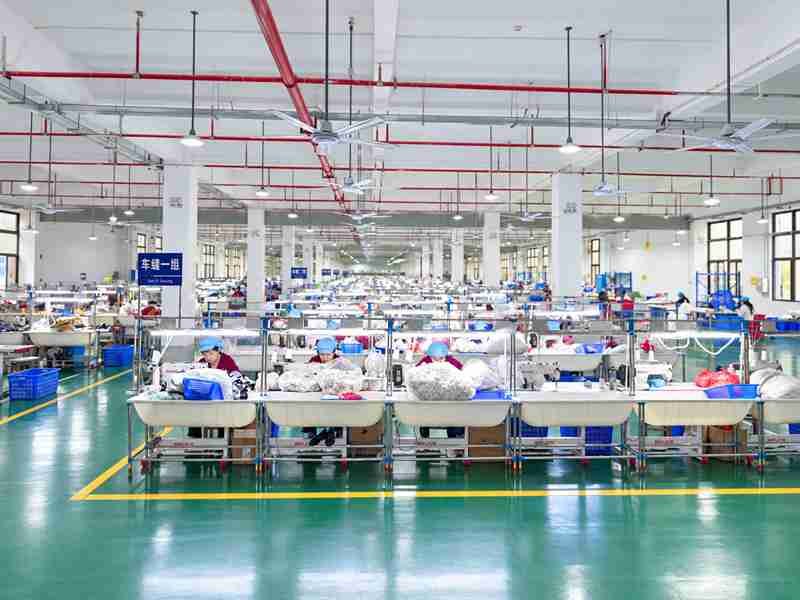
What Controlled Plush Manufacturing Actually Requires
Product Definition
Material Definition
Production Release
Process Control
Quality Gates
Commercial Release
Plush Product Types Built for Controlled Production

Character & Mascot Plush
- Manufacturing focus: fidelity and repeatable shaping.
- Common size range: many IP and merchandise projects fall around 10-40 cm.
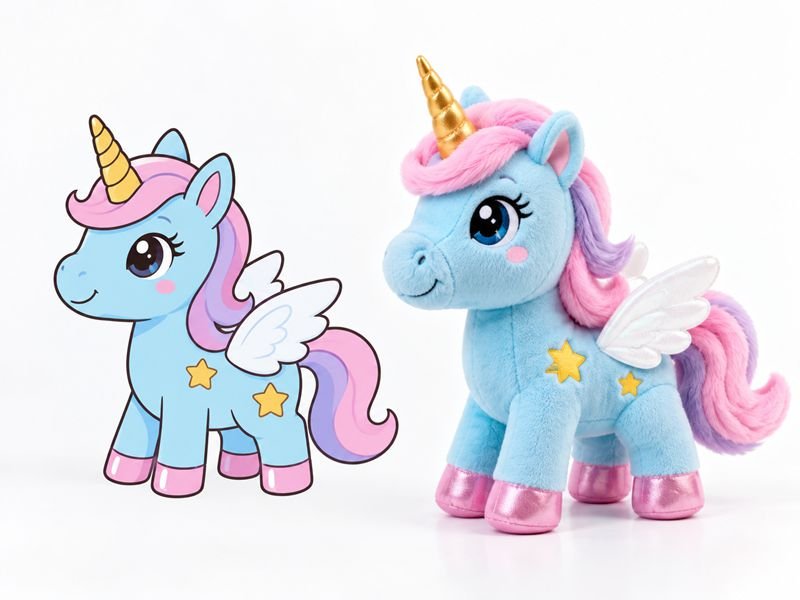
Collectible Plush
- Manufacturing focus: detail, finish, and series consistency.
- Best fit: designer, kidult, limited-edition, and premium collections.
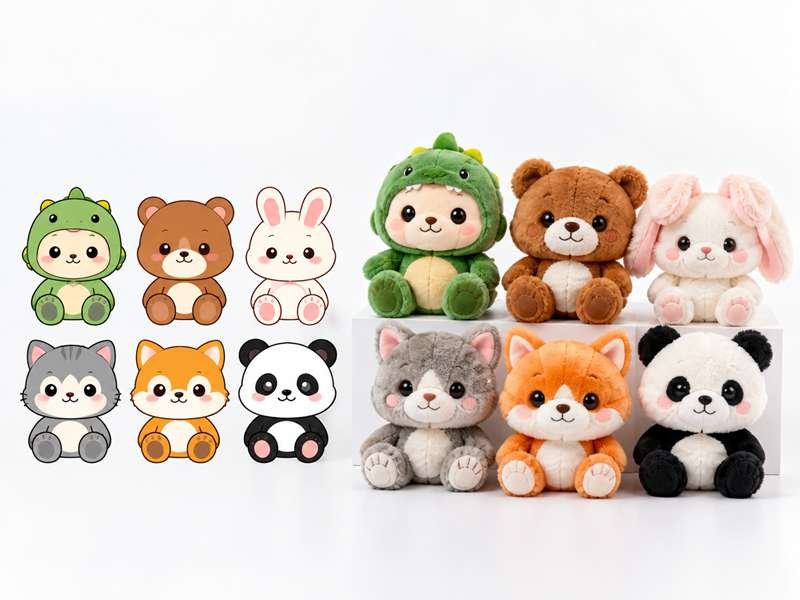
Mini & Blind Box
- Manufacturing focus: small-detail repeatability and SKU separation.
- Typical mini range: about 5-12 cm; blind-box formats often about 6-15 cm.
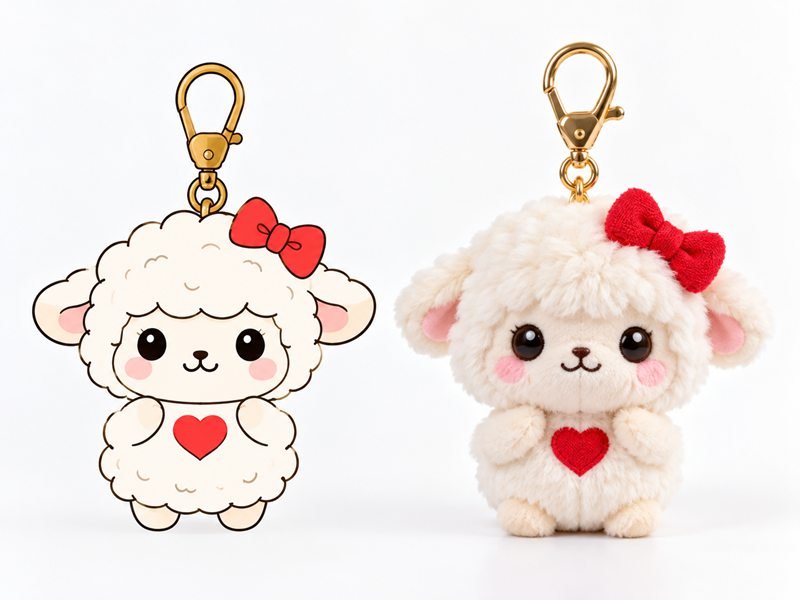
Keychains & Bag Charms
- Manufacturing focus: hardware integration and small-part control.
- Typical ranges: keychains about 6-15 cm; bag charms about 7-18 cm.
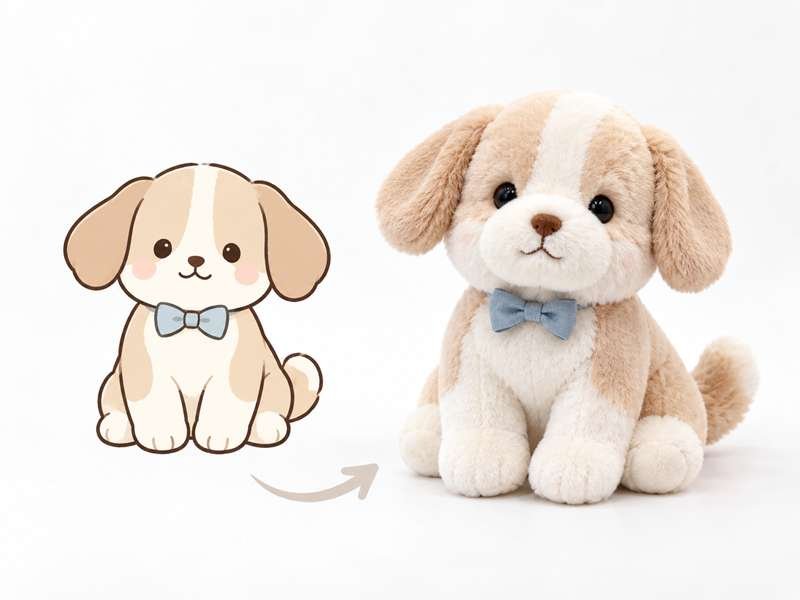
Standard Custom Plush
- Manufacturing focus: efficient repeatability.
- Product scale: custom plush can extend from small items to 100+ cm constructions.

Hybrid Plush Products
- Manufacturing focus: soft-hard interface and repeatable fit.
- Best fit: stylized characters, collectibles, and functional hybrid products.
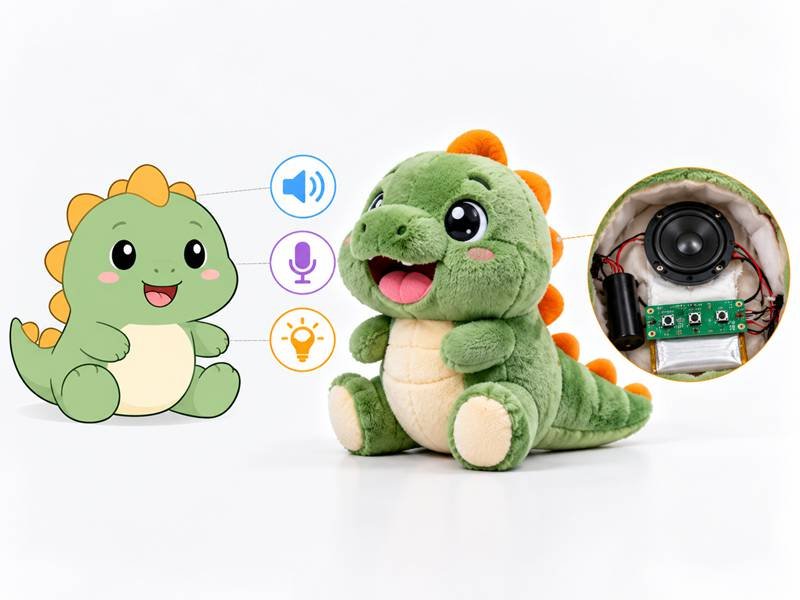
Electronic & AI Plush
- Manufacturing focus: soft-goods integration with controlled hardware interfaces.
- Technology boundary: firmware, applications, or cloud systems can remain with approved technical partners.
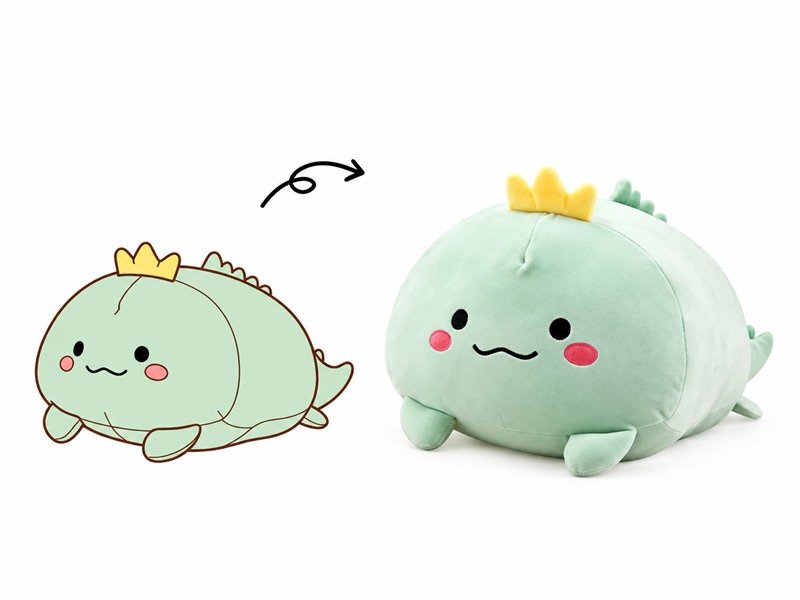
Lifestyle Plush Merchandise
- Manufacturing focus: functional construction plus character appearance.
- Example backpack scale: many mini and children’s formats sit around 20-35 cm high.
Manufacturing Priorities Change With the Commercial Program
Global Brand Teams
Brand programs need repeatable color, appearance, packaging, communication, and reorder continuity across several releases. Ewin keeps Golden Sample, BOM, artwork, packaging, and change records connected so later production follows the approved brand standard instead of restarting interpretation with every purchase order. This becomes especially important when several seasons or regional launches share the same core product.
- Priority: consistency and controlled change.
- Useful inputs: brand standards, forecasts, approved references, packaging requirements.
IP Owners
IP programs place character fidelity, confidential files, approval versions, and series consistency at the center of manufacturing. Ewin can keep artwork, sample revisions, materials, decoration files, and production references controlled by SKU while restricting unnecessary access to unreleased product information. Controlled handoffs also reduce the chance that rejected artwork or sample details return during scale-up.
- Priority: fidelity, confidentiality, and approval traceability.
- Useful inputs: character guide, approval comments, launch schedule, permitted usage scope.
Licensing Companies
Licensing programs often connect rights holder, licensee, product team, agency, and factory. Manufacturing needs a clear record of which artwork, legal copy, sample, packaging, and market version is approved, especially when several regions or SKU variations are moving at the same time. A clear approval trail helps manufacturing teams act on the authorized version without guessing between stakeholder comments.
- Priority: version and approval control.
- Useful inputs: approval workflow, market scope, legal copy, packaging requirements.
Toy & Collectible Companies
Toy and collectible companies frequently manage product families rather than one isolated plush. Series consistency, materials, accessories, packaging, testing, production waves, and replenishment need shared program controls while each character retains its own engineering and quality requirements. The system also supports phased launches when different SKUs reach approval and production readiness at different times.
- Priority: product-family control and scalable manufacturing.
- Useful inputs: SKU matrix, collection plan, release waves, target market.
Retail & Private Label
Retail programs connect manufacturing with landed cost, barcodes, labels, case packs, quality requirements, traceability, on-shelf dates, and distribution-center instructions. Ewin brings those requirements into product and packaging release before final pack-out, reducing expensive late relabeling or repacking. Early channel inputs help production avoid finishing goods that later require new labels, packs, or case configurations.
- Priority: retail readiness and on-time commercial release.
- Useful inputs: retailer guide, packaging brief, barcode data, set date.
E-Commerce Programs
DTC and marketplace programs need clean unit presentation, barcode execution, compact packaging, compression recovery where appropriate, carton efficiency, and reliable replenishment. Manufacturing should connect product condition with pack-out rather than treating fulfillment requirements as a warehouse-only task. Pack-out decisions can also influence carton volume, product recovery, scanability, and the condition seen at unboxing.
- Priority: pack condition and replenishment consistency.
- Useful inputs: channel, SKU data, fulfillment requirements, replenishment plan.
Merchandise Agencies
Agencies may handle several end clients, campaign dates, quantities, price bands, and packaging directions at once. Ewin uses distinct project and SKU references so creative approval, sampling, costing, production, and delivery decisions do not become mixed across programs. Clear separation is particularly useful when several end clients approve similar products through the same agency team.
- Priority: clear handover and deadline control.
- Useful inputs: campaign brief, quantity, delivery date, artwork, client approval route.
Technology & AI Teams
Technology teams may supply hardware, firmware, applications, or cloud systems while Ewin handles the soft-goods productization and manufacturing route. Module dimensions, cavity, access, wiring, assembly steps, packaging, and hardware revisions need to remain synchronized with the plush product. A controlled interface reduces costly rework when hardware dimensions or connection points change after early samples.
- Priority: interface and revision control.
- Useful inputs: module envelope, hardware sample, technical drawings, current revision list.
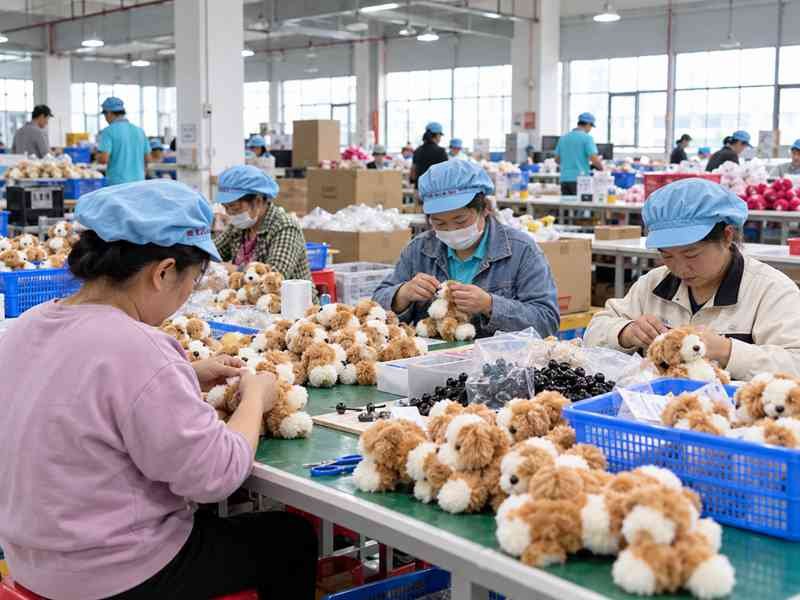
Six Inputs Should Be Ready Before Bulk Release
Approved Product
The current product should have a clear approval status and identifiable physical reference. A prototype, sales sample, test sample, and Golden Sample serve different purposes and should not be treated as interchangeable bulk references. Where several physical samples exist, the release should identify which one production and QC are authorized to use.
Frozen Materials
Fabrics, trims, components, filling, labels, and packaging should be represented in a controlled BOM before purchasing and line issue. Material approval also needs to consider commercial availability, not only visual acceptance. A frozen specification also gives sourcing a clear basis for incoming inspection and later reorder comparison.
Released Pattern
The production pattern should match the approved sample revision and include the panel geometry, seam information, openings, nap direction, mirrored parts, and other marks required for repeat cutting and sewing. Pattern release should also identify changes caused by size, material stretch, component cavities, or approved DFM adjustments.
Current Artwork
Embroidery, print, applique, logo, and legal artwork need current file versions, final sizes, placements, colors, backing or process notes, and approval status. Decoration files should stay linked to the correct SKU. This prevents production from reusing an earlier face, logo, legal line, or color treatment after later approval.
Quality Criteria
Dimensions, workmanship, filling, attachment, appearance, function, and other CTQs should be defined before production reaches final inspection. QC references should match the same product revision used by manufacturing. Critical points should be practical to check at the stage where the defect can still be corrected efficiently.
Packaging Definition
Unit packaging, labels, warnings, barcodes, inserts, master cartons, case pack, carton marks, and destination requirements should be approved early enough to avoid correct products waiting for unresolved packaging. If packaging remains open, finished products may occupy capacity and warehouse space while commercial release stays blocked.
Fabrics Move From Approved Swatch to Controlled Bulk

Short-Pile Plush
- Production value: clear detail and repeatable surface.
- Watch: generic material names hiding supplier-to-supplier differences.

Medium-Pile Plush
- Production value: fuller appearance with controlled texture.
- Watch: bulk material changing the character’s perceived volume.

Sherpa & Teddy
- Production value: distinctive texture and warmth.
- Watch: small facial features losing clarity after material changes.
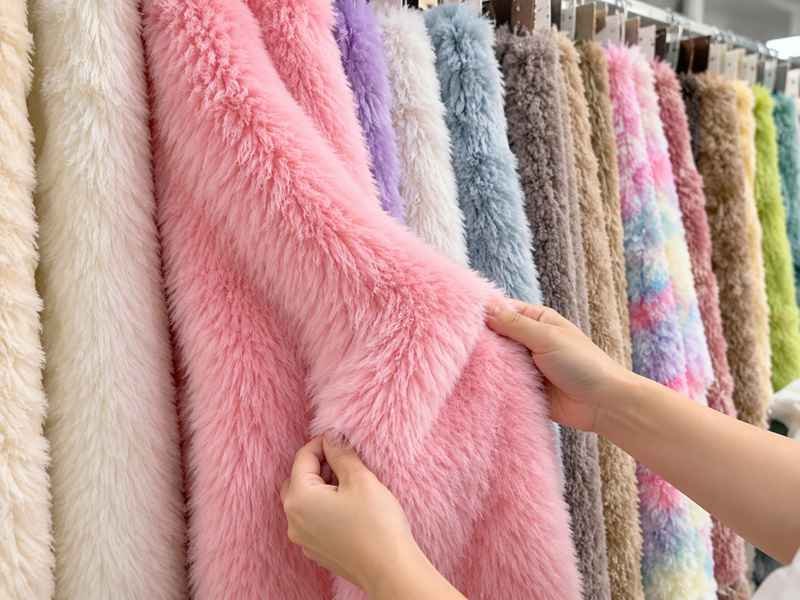
Faux Fur & Long Pile
- Production value: premium surface depth and character effect.
- Watch: sheen mismatch, trapped fur, hidden features, and post-pack distortion.

Flat & Structural Fabrics
- Production value: function and structure where plush pile is unsuitable.
- Watch: changes in stretch or stiffness altering fit and assembly.

Recycled Material Routes
- Production value: documented recycled-material option where commercially suitable.
- Watch: sustainability claims extending beyond the evidence attached to the material route.
Supporting Materials Stay Inside the Manufacturing Definition
Linings & Interlinings
- Production control: identify material and location.
- Risk reduced: hidden internal changes affecting the approved external result.
Sewing Threads
- Production control: size, color, use location, structural role.
- Risk reduced: seam performance or visible color changing between batches.
Embroidery Threads
- Production control: thread and program revision.
- Risk reduced: faces or logos changing because thread or program settings drift.
Labels & Wash Labels
- Production control: artwork revision and placement.
- Risk reduced: obsolete or wrong-market labels entering a current production run.
Ribbons & Elastic
- Production control: dimensions, stretch, attachment.
- Risk reduced: inconsistent fit or function between operators and lots.
Hangtags & Consumables
Hangtags, strings, adhesives, tapes, heat-melt materials, and other consumables may be low-cost but still affect branding and assembly. Critical items should follow approved artwork, material, size, application method, and SKU mapping instead of miscellaneous stock. Even adhesives or tapes can require review when they contact plush surfaces, printed areas, clear windows, or premium presentation packaging.
- Production control: specification and packaging revision.
- Risk reduced: retail-identity and finishing errors appearing at final pack-out.
Components Need Defined Identity, Fixing, and Inspection
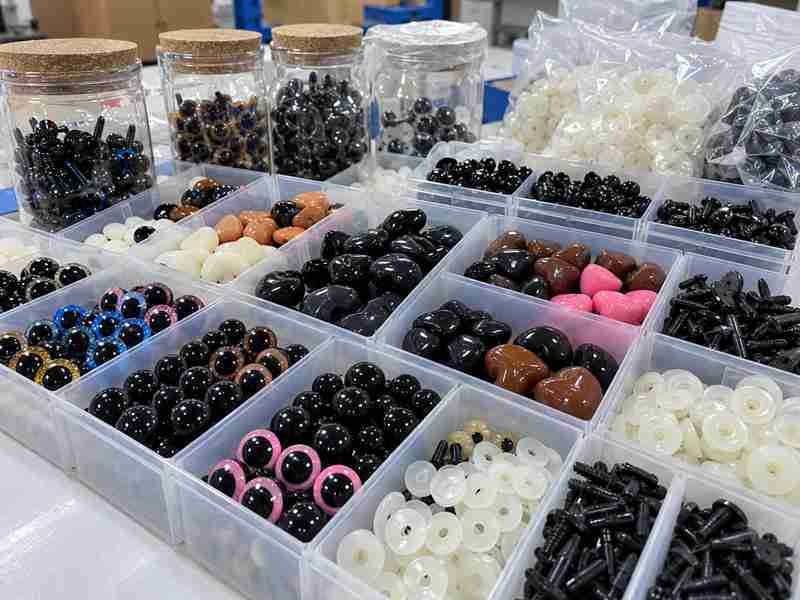
Eyes & Noses
- Production control: Part ID, size, fixing, placement.
- Risk reduced: wrong components or weak attachment entering bulk production.
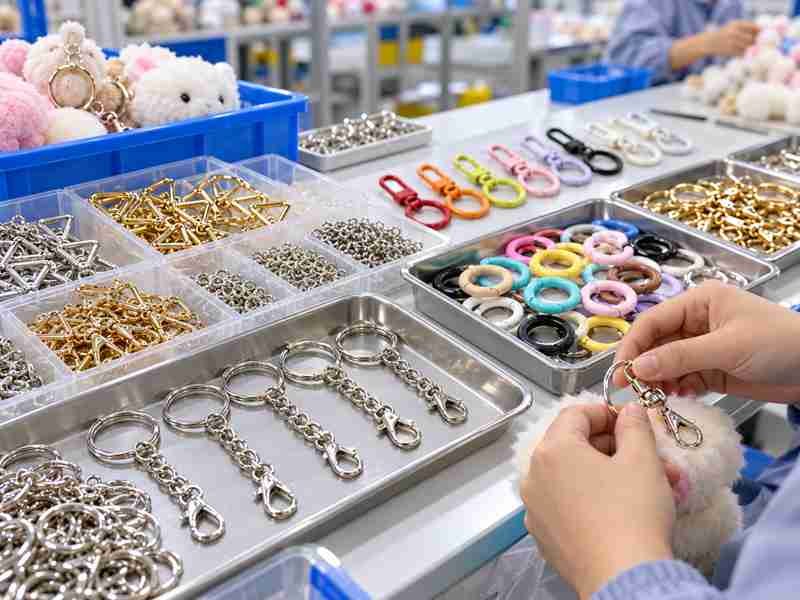
Metal Hardware
- Production control: material, finish, dimensions, fixing.
- Risk reduced: attachment, corrosion, orientation, or surface-damage problems.
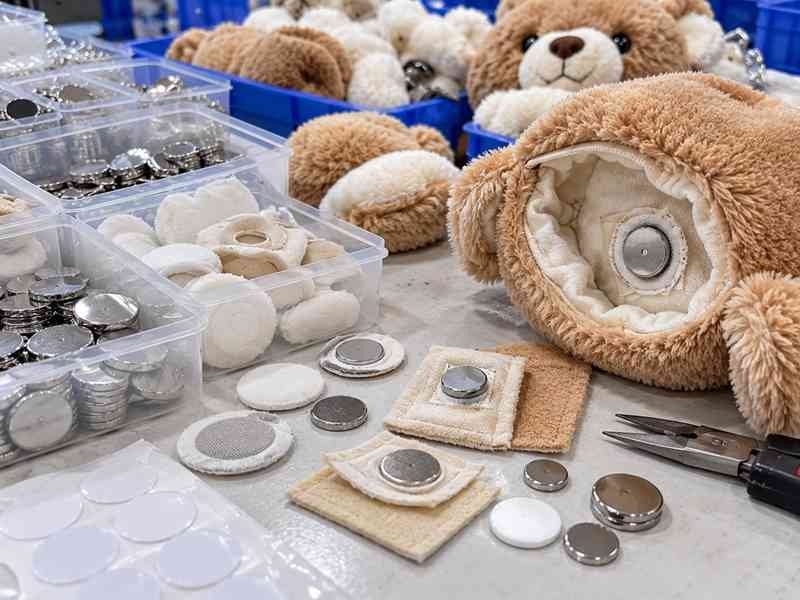
Magnets
- Production control: magnet map, polarity, fixing, location.
- Risk reduced: reversed polarity, weak retention, or inconsistent function across units.
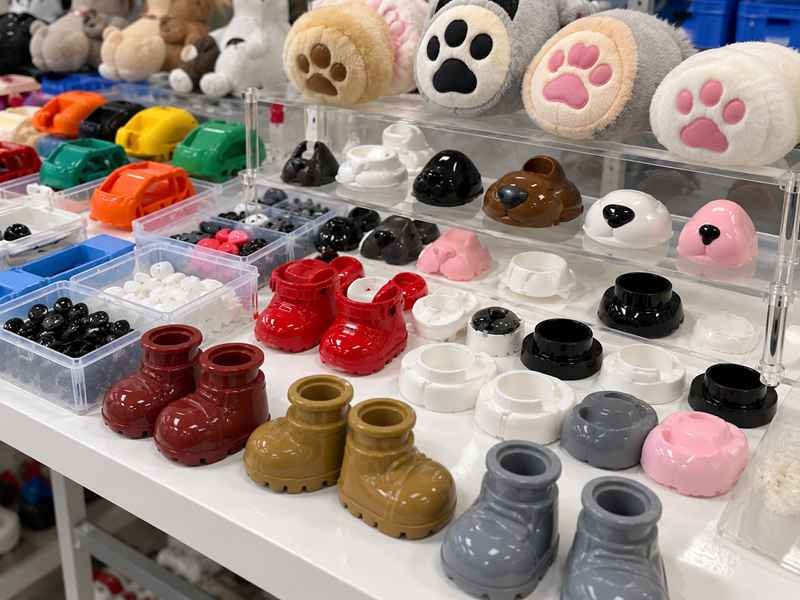
Molded Components
- Production control: drawing, material, tolerance, finish, interface.
- Risk reduced: fit and assembly surprises after tooling or scale-up.

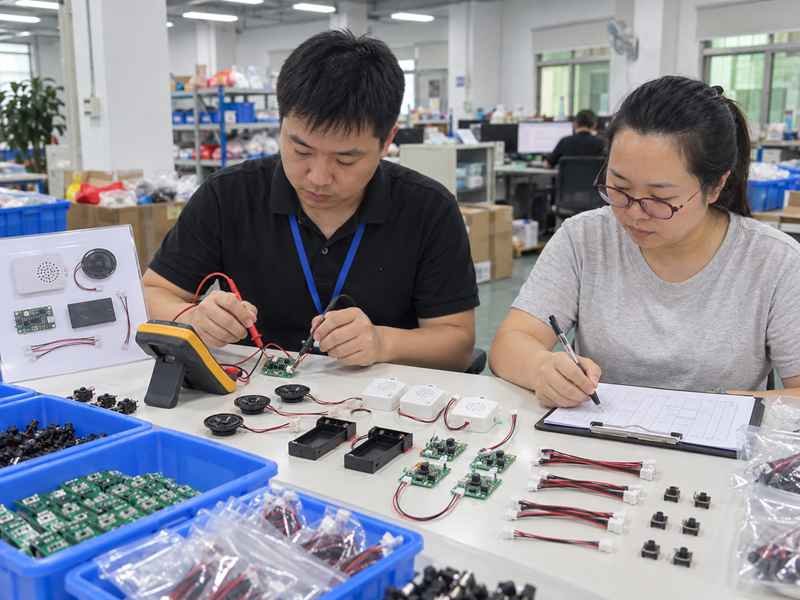
Electronic Modules
- Production control: module revision and installation method.
- Risk reduced: mismatched hardware and plush structure during production.
Filling & Inserts
- Production control: material, weight, zone, firmness.
- Risk reduced: inconsistent shape, balance, or handfeel between batches.
Sample Development Prepares the Product for Manufacturing
Start With the Information Already Available
A project can begin with a hand sketch, 2D artwork, character sheet, 3D render, AI-generated concept, reference product, or physical sample. The first manufacturing task is to identify what is already fixed and what still needs engineering before a reliable production definition can exist.
Input review: Product type, approximate size, target market, intended channel, quantity direction, packaging, launch timing, and critical visual or functional features provide context for development decisions.
Gap review: The team identifies missing side views, unclear dimensions, impossible seams, unsupported structures, material questions, hardware interfaces, or other points likely to create repeated revisions.
Engineer Pattern and Structure for Repeatability
Pattern engineering converts artwork into panels, curves, seam routes, openings, grain or nap direction, and three-dimensional volume. Structure engineering addresses balance, internal support, cavities, magnets, hard components, electronics, clothing, weighted inserts, and other features that affect production beyond surface appearance.
Repeatability review: Panels should be practical to cut, seams accessible, turning openings realistic, components installable, and filling zones controllable for more than one sample maker.
DFM review: Extreme curves, fragile details, excessive hand shaping, or hard-to-reach assembly points can be adjusted before the product is frozen, while critical character features remain protected.
Validate Materials, Decoration, and Components Together
Fabric, pile, stretch, color, filling, embroidery, print, applique, clothing, hardware, magnets, and other parts interact with the pattern. Ewin reviews the combination rather than approving each input in isolation and discovering incompatibilities later.
Material record: Material ID, composition, GSM, pile or thickness, color, nap, supplier route, and approved reference can travel into the BOM.
Decoration record: Artwork revision, final size, placement, color, backing, and approval status can stay connected to the correct material and SKU.
Component record: Part ID, material, size, color, weight, fixing, and installation notes can define how an accessory enters assembly.
Use Sample Revisions to Close Specific Questions
Prototype, V1, revision, material, testing, PP, and Golden Sample stages serve different purposes. Ewin keeps those stages identifiable so comments, approvals, and later production teams understand which physical object and data set are current.
Revision record: Meaningful changes can identify pattern, dimension, material, color, decoration, filling, component, cost, or timing effects instead of using labels such as “latest sample.”
Internal review: Sample QC can catch obvious workmanship, material, decoration, or assembly problems before an external approval round, allowing brand comments to focus on genuine product decisions.
Golden Sample and Frozen BOM Control Bulk Release
Golden Sample Defines the Physical Product
The Golden Sample is the approved physical reference for proportion, silhouette, facial expression, handfeel, filling, clothing, decoration, component placement, and overall presentation. It should be identifiable by project, SKU, revision, approval status, and related production references.
Physical role: Production and quality teams can compare the current output against one agreed product rather than several earlier prototypes or photographs.
Control role: Customer, factory, and QC reference samples can be maintained where separate controlled physical references are useful for the project.
Limit: A Golden Sample cannot reveal every material code, hidden component, embroidery file, filling weight, label artwork, or packaging instruction. The sample therefore works together with the Frozen BOM and released files rather than acting as the entire specification. A controlled identification card can connect the sample to source revision, pattern revision, BOM revision, artwork revision, target market, approval evidence, custody, and storage status. That makes the physical standard auditable during production, QC, and later reorders.
Frozen BOM Defines the Approved Inputs
The BOM records what is inside and around the approved product: main and secondary fabrics, lining, thread, embroidery thread, accessories, filling, labels, hangtags, packaging, and other controlled items. Ewin uses a maturity path from DRAFT to CONTROLLED to FROZEN as development closes.
Freeze condition: Approval and commercial availability should both be sufficiently understood before critical inputs are treated as frozen.
Sourcing control: After freeze, unrecorded changes in material, color, accessory, filling, label, or packaging should not enter production simply because a substitute appears similar.
Manufacturing value: Purchasing, production, QC, packaging, and reorders can refer to the same material definition instead of reconstructing specifications from sample-room memory. The BOM should also distinguish true alternatives from unapproved substitutes. If a second supplier or material route is accepted, its conditions should be documented so future purchasing knows when the alternative is valid and when new approval is required.
Released Files Define How the Product Is Made
Bulk release should connect the Golden Sample and Frozen BOM with released pattern, current embroidery or print programs, measurement specification, filling reference, component installation details, labels, packaging, and customer approval evidence where applicable.
Pattern control: Production uses a released revision rather than any available paper pattern or old digital file.
Artwork control: Decoration teams use the current approved file, size, placement, color, backing, and process information.
QC control: Measurement and appearance criteria refer to the same SKU revision manufacturing is producing.
Manufacturing value: The line receives one coherent production package, reducing the chance that sourcing, sewing, QC, and packaging are each working from a different version of the product. A production release package can also carry attachment methods, filling zones, hand-feel references, label instructions, packaging specifications, and customer approval evidence. Those details are often the difference between a visually similar result and the actually approved commercial product.
Change Control Prevents Silent Product Drift
Products change for legitimate reasons: new material sources, revised accessories, packaging updates, cost engineering, regulatory requirements, or hardware revisions. The objective is not to freeze a SKU forever; it is to make changes visible and review their impact before use.
Change review: Identify what changes, which SKU and revision are affected, and whether appearance, cost, testing, assembly, packaging, or lead time need revalidation.
Release review: Approved changes create an updated revision rather than silently modifying the existing manufacturing definition.
Reorder value: Later production can use a delta review – reuse proven information, check what changed, and carry forward earlier QC or CAPA learning without mixing old and new files. For larger programs, the change record should also show whether the change affects related SKUs in the same series. A shared fabric, hardware part, label, or packaging component can create a program-wide impact even when the request begins with one item.
Production Readiness Is Checked Before the Line Starts
Material Readiness
- Review: stock, supplier status, color or lot, arrival timing.
- Decision: proceed, pre-book, substitute through approval, or adjust the production wave.
Process Routing
- Review: process steps, workstation fit, special handling.
- Decision: line route, handwork allocation, pilot or first-piece requirements.
Decoration Readiness
- Review: artwork revision, thread or ink, backing, first piece.
- Decision: release decoration or hold for correction.
Tooling & Components
- Review: tooling, part approval, fit, quantity, revision.
- Decision: release, rework, re-sample, or update soft-goods files.
QC Plan
- Review: CTQs, measurement method, physical checks, references.
- Decision: inspection gates, hold points, records, escalation route.
Packaging Readiness
- Review: artwork, sample, barcode, case pack, carton configuration.
- Decision: release packaging, revalidate, or adjust shipment timing.
Cutting and Decoration Turn Released Files Into Parts
Cut Against the Released Pattern
Cutting begins from the current released pattern, not an unlabeled sample-room template. Pattern information can include panel geometry, seam allowance, notches, mirrored parts, openings, nap or grain direction, and other marks needed for repeatable bundles.
Material behavior: Long pile, stretch, positional print, surface luster, thickness, and mixed materials can require different cutting methods and marker decisions.
Bundle control: Cut panels remain identified by project, SKU, color, size, part, and quantity so similar characters do not exchange parts before sewing.
Decorate With Current Artwork and Coordinates
Faces, logos, text, markings, and graphics need more than an image file. Embroidery can require final size, placement, thread color, backing, density, and program revision; printing requires current artwork, color, scale, substrate, placement, and the applicable process route.
Material interaction: Long pile can bury stitches, stretch fabric can distort dense embroidery, and the same printed color can appear different on another substrate.
First-piece approval: The first decorated panels can be checked against the approved product before a larger quantity is processed.
Keep Part and Version Identity Visible
Multi-SKU programs create a special front-end risk because several characters may share panel shapes while changing only color, embroidery, accessory, or packaging. Ewin keeps pattern revision, material lot, bundle identity, and decoration program connected to the SKU as work moves forward.
Identification: Project, SKU, part, bundle, date, and applicable process information provide a route for investigating errors later.
Changeover: Line or machine setup changes should distinguish the outgoing and incoming SKU clearly, especially when visual differences are small.
Sewing and Assembly Build the Approved Three-Dimensional Product
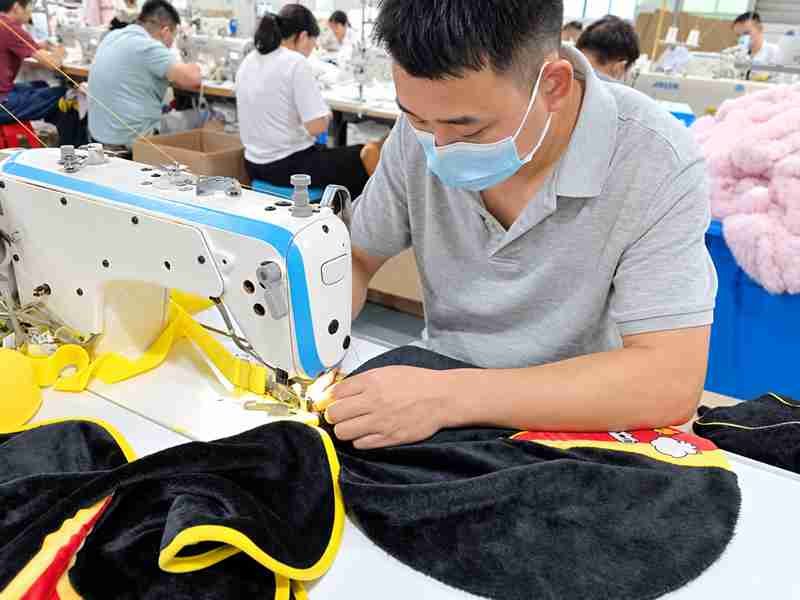
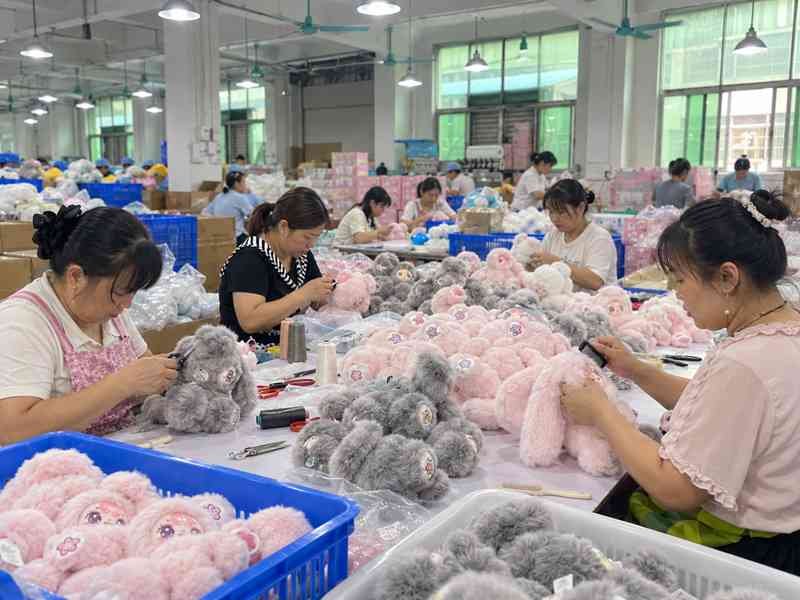
Sewing
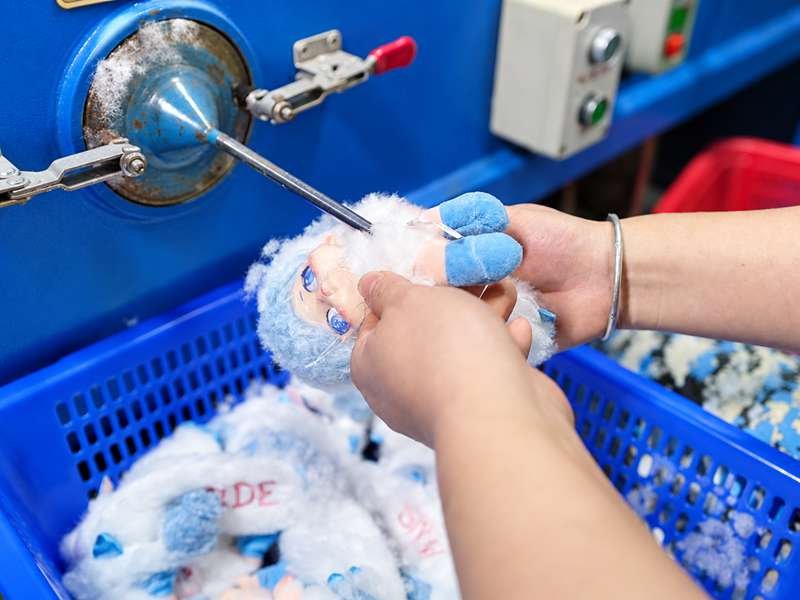
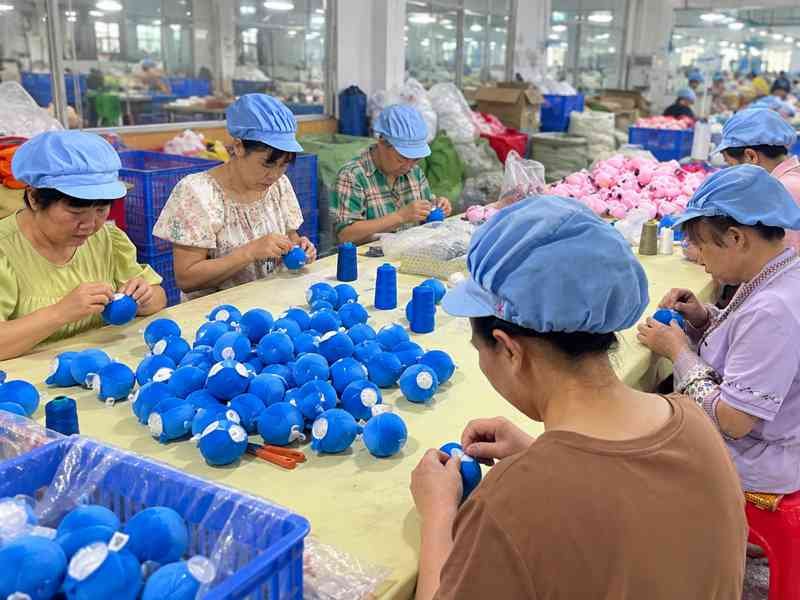
Stuffing
Shaping
Closing
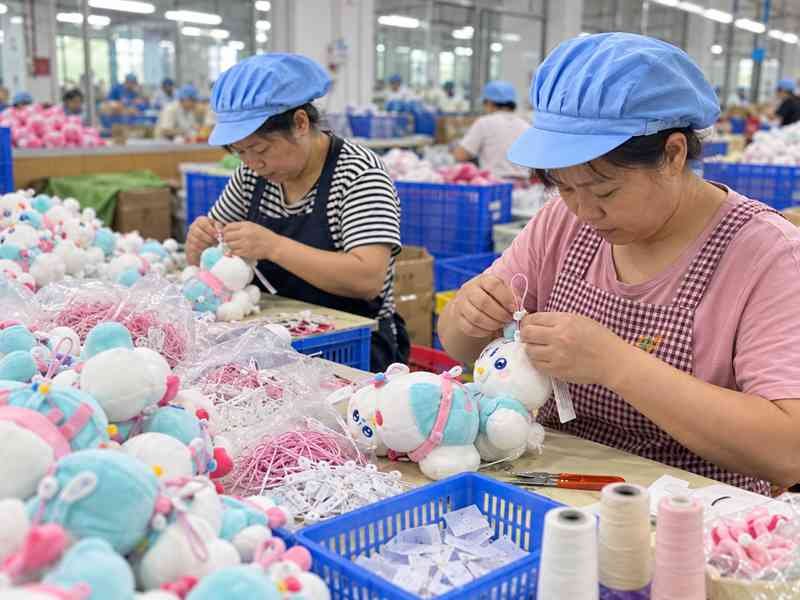
Component Assembly
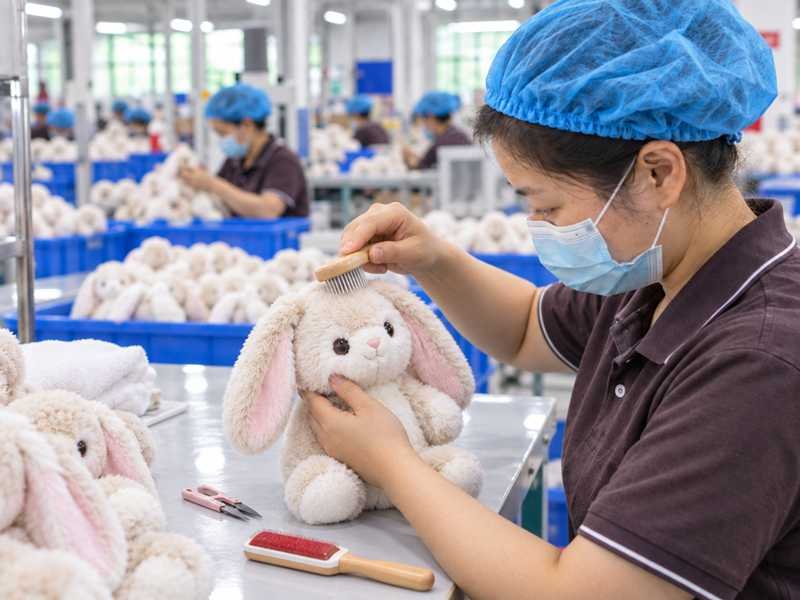
Finishing & Grooming
Bulk Production Follows Eight Controlled Manufacturing Stages
Production Release
Material Issue
Cutting & Bundling
Decoration
Sewing & Assembly
IPQC & Finishing
Final Inspection
Final Pack-Out
Certificates, Compliance & Quality Assurance
Ewintoys follows structured quality and compliance practices for custom plush production. We hold relevant certifications and support additional testing, inspection, and compliance documentation based on specific product requirements and destination markets, helping brands meet different international standards with confidence.






















Quality Control Runs Through the Manufacturing Process
IQC - Incoming Control
Incoming fabrics, trims, components, filling, labels, and packaging are checked against the applicable specification before use. Depending on the item, control can include identity, color lot, GSM or thickness, dimensions, appearance, component fit, or approved reference comparison. Nonconforming lots can be held before they are cut, sewn, or assembled into a larger quantity of finished product.
- Reference: Frozen BOM and approved material/component sample.
- Value: prevents incorrect inputs from spreading into production.
IPQC - Process Control
In-process QC reviews critical operations while correction is still possible. Decoration placement, seams, dimensions, filling, attachment, shaping, assembly, and other CTQs can be checked at the process where variation is created. The check plan can change by SKU because a magnet, long-pile face, small embroidery, or weighted insert creates different process risks.
- Reference: released pattern, process requirement, Golden/QC sample.
- Value: contains repeat defects before they affect a larger production quantity.
FQC - Finished Control
Finished-product inspection compares completed units with the approved physical and data references. Appearance, dimensions, workmanship, accessories, filling, and function where applicable are judged against the current SKU rather than a generic plush standard. Defect categories and recurring patterns can also provide evidence for prevention work instead of treating every failure as isolated rework.
- Reference: Golden/QC sample and defined inspection criteria.
- Value: confirms the finished product before unit packaging and shipment preparation.
OQC - Outgoing Release
Outgoing control checks the commercial shipment as well as product status. Packaging, labels, barcode, carton marks, quantity, carton data, inspection release, and destination should match the correct SKU before logistics handoff. Shipment release can therefore confirm both manufacturing quality and whether the goods are commercially usable for the intended receiving channel.
- Reference: packaging revision and shipment information.
- Value: reduces wrong-label, mixed-SKU, carton, and destination errors after manufacturing.
Capacity and Multi-SKU Control Depend on the Product Mix
| Manufacturing Variable | What Ewin Reviews | Why It Changes Capacity or Control |
|---|---|---|
| Product Structure | Panel count, sewing complexity, filling, components, hybrid or electronic features | Complex structures consume different cutting, sewing, assembly, and inspection resources. |
| SKU Count | Number of characters, colors, sizes, variants, and changeovers | More SKUs create extra setup, bundle, version, QC, packaging, and coordination load. |
| Material Mix | Fabric families, custom colors, trims, molded or electronic parts | Long-lead or specialized inputs can control the earliest realistic production start. |
| Decoration Load | Embroidery stitches, print processes, applique, placement changes | Decoration can become a separate bottleneck before sewing begins. |
| Handwork | Clothing, grooming, accessory installation, finishing, complex closure | Manual operations can limit output even when sewing capacity is available. |
| Quality Scope | CTQs, physical checks, inspection level, traceability requirements | More checkpoints require inspection time, records, and possible hold/review gates. |
| Packaging | Unit packs, blind boxes, retail displays, assortment, barcodes, special cartons | Pack-out can become the controlling process for retail and multi-SKU programs. |
| Delivery Window | Launch date, production waves, partial release, destination plan | The schedule determines whether work should be phased, consolidated, split, or pre-booked. |
| SKU Version Control | Sample, BOM, artwork, packaging, testing, production, shipment status | Capacity is only useful when the correct SKU and revision can move through the factory without mixing. |
| Forecast & Reorders | 3-, 6-, or 12-month forecast visibility, material planning, reorder delta | Earlier visibility can support material and slot planning without treating forecast as a committed order. |
DFM Makes the Approved Product Easier to Repeat
Reduce Complexity That Adds Risk Without Adding Value
Some sample details create significant production effort without contributing much to the finished product. DFM reviews panel count, hidden seams, difficult turning openings, excessive hand shaping, inaccessible component installation, redundant layers, embroidery density, or assembly steps that create repeated variation.
Process review: Identify which features make cutting, sewing, filling, assembly, or inspection difficult at production scale.
Alternative review: Consider whether panel geometry, seam position, hidden construction, or assembly sequence can be simplified while keeping the approved appearance and function.
Commercial value: Fewer unnecessary process risks can improve repeatability, throughput, rework exposure, and cost clarity without forcing the brand to compromise the visible character simply to make production easier. DFM is especially useful before PP or bulk release because that is still early enough to change construction without disrupting an active production batch. The review can also separate one-time sample craftsmanship from operations that can be taught, measured, and repeated by a production team.
Protect Character DNA and Safety-Critical Features
DFM is not permission to simplify everything. Character face, silhouette, head-body ratio, signature colors, important accessories, licensed details, required structural strength, age-grade considerations, and applicable safety requirements may be non-negotiable even when they add production complexity.
Protect first: Mark the visual and functional points that carry recognition or required performance before proposing cost or construction changes.
Optimize around them: Review hidden panels, low-value handwork, internal supports, seam routing, filling strategy, or packaging structure where alternatives can preserve the approved product.
Approval value: When a change can affect appearance, handfeel, function, testing, or channel presentation, validate it through the appropriate sample or approval route before it becomes a production instruction. For licensed or premium programs, the reason for protecting a feature should be visible in the product definition so a later cost review does not reopen the same decision casually. This creates a better boundary between genuine optimization and changes that weaken approved brand, functional, or safety requirements.
Design Quality Checks Into the Manufacturing Route
A product is easier to control when critical features are measurable or visually comparable at the point where they are created. DFM can help define inspection access, measurement points, filling references, attachment checks, first-piece gates, or assembly steps that allow defects to be caught earlier.
CTQ review: Identify which dimensions, features, attachments, materials, decoration locations, or functions matter most to product acceptance.
Process placement: Put the check before the next step hides or locks in the failure. A decoration error is easier to correct before sewing; an internal attachment is easier to verify before closure.
Manufacturing value: Quality becomes part of the route design rather than a final sorting exercise after labor and materials have already been invested in the full product. The review can also define whether the reference should be a dimension, sample photo, Golden Sample comparison, weight, pull check, barcode scan, or another observable criterion. Clear checks reduce arguments after the fact because the production team knows what acceptance means before the operation begins.
Compliance and Traceability Stay Connected to Production
Market Requirements
- Manufacturing value: fewer late redesigns and packaging changes.
- Boundary: requirements remain SKU-, version-, and market-specific.
Material & Component Risk
- Manufacturing value: safer substitutions and clearer test representativeness.
- Boundary: a changed input may require review before assuming previous evidence still applies.
Controlled Changes
- Manufacturing value: visible impact review before use.
- Boundary: major or critical changes may require re-sampling, technical confirmation, or re-testing.
Traceability
- Manufacturing value: narrows affected scope when a problem appears.
- Boundary: traceability depends on records being created during production, not reconstructed later.
Packaging and Warehouse Control Finish the Manufacturing Route
Unit Packaging
Retail Packaging
E-Commerce Packaging
Barcode & Labels
Warehouse Staging
Shipment Release
Verify the Manufacturing System Through Factory Evidence
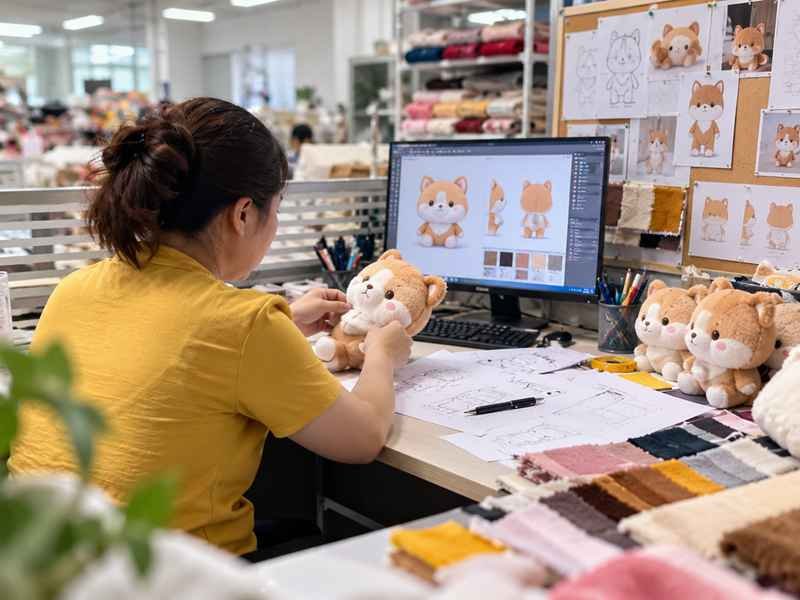
Development Center
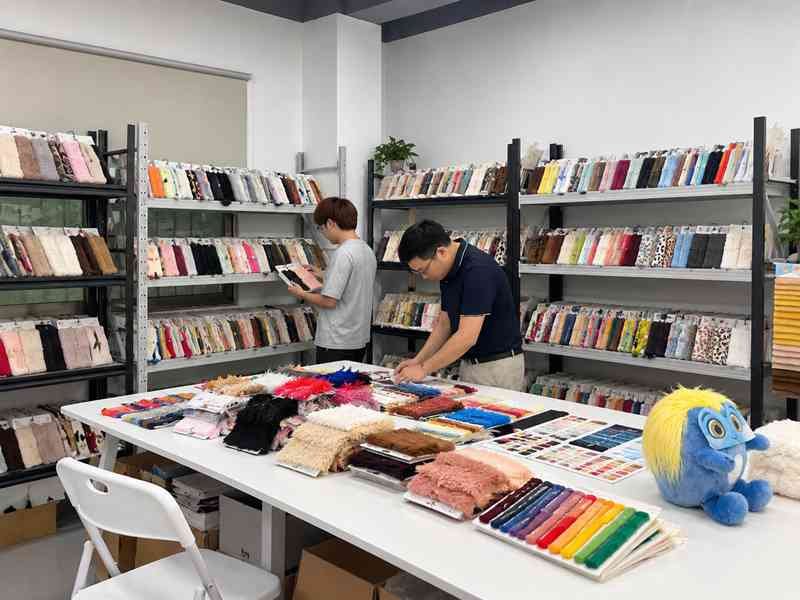
Material Control

Production Route
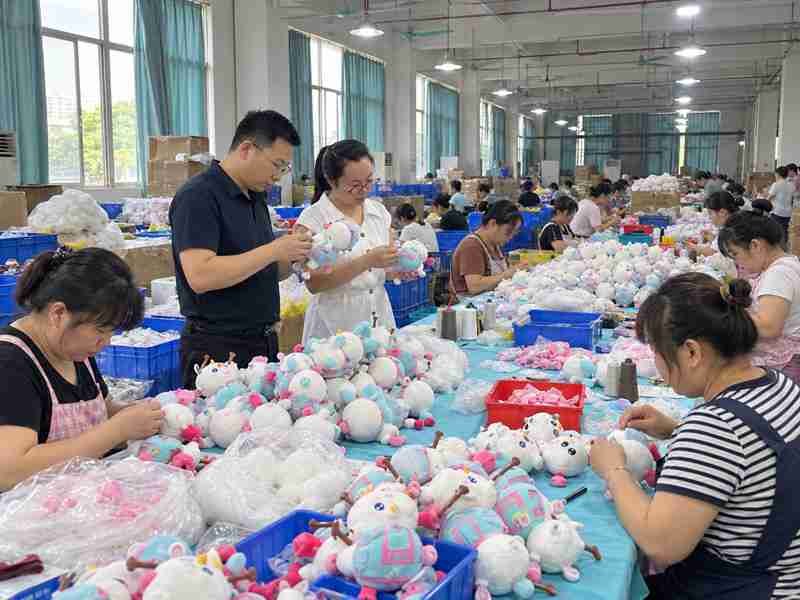
Quality Control

Packaging & Warehouse

Project Review
Bring artwork, a current sample, SKU matrix, QC problem, supplier comparison, or launch plan. An on-site or live video tour can focus on the manufacturing controls most relevant to your project. The discussion can then convert observed factory capability into a concrete sampling, transfer, pilot, capacity, or RFQ plan for the proposed program.
Frequently Asked Questions
Ewin reviews the approved product, Golden Sample, Frozen BOM, released pattern, current artwork, components, QC requirements, packaging, material readiness, and unresolved items before authorizing bulk production.


Send Your Product for a Manufacturing Review
这是示例文本,单击 “编辑” 按钮更改此文本。