...

A Trusted China Plush Partner for Global Brands !

Custom Plush Manufacturer for Crowdfunding & Kickstarter Projects

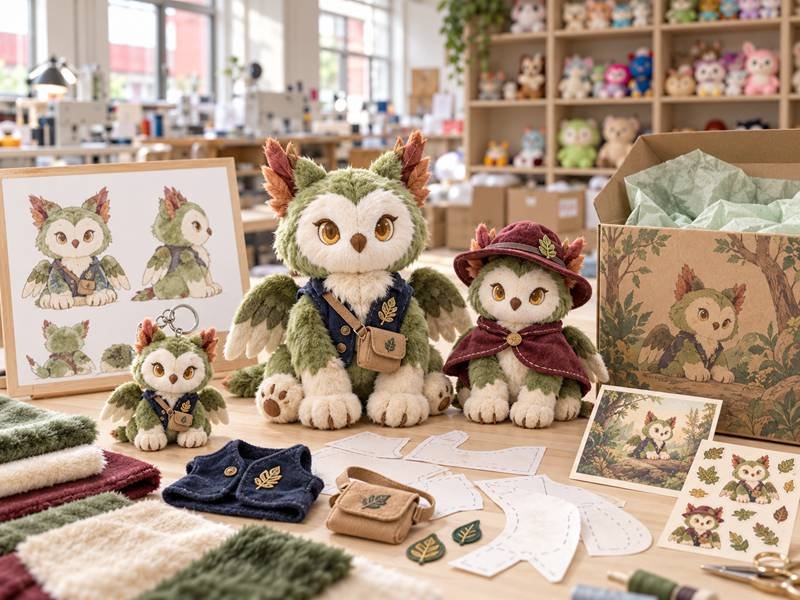
Ewin Toys helps creators turn campaign concepts into production-ready plush before launch, then scale approved designs into bulk production after funding. With 20+ years of plush manufacturing experience, our team supports prototype development, reward-tier planning and production preparation to reduce fulfillment risks as order volumes grow.
  • 60+ Development Specialists
  • MOQ 500 pcs
  • Campaign-Ready Prototypes
  • Multi-Tier Reward Variants
  • Packaging & Fulfillment Planning

Crowdfunding Plush Projects Need Two Manufacturing Plans

A successful campaign needs one plan before launch and another for funded production, with both built around the same approved product definition. 

Before Campaign Launch

The pre-launch goal is not simply to make one attractive sample. Artwork, size, material, face details, filling, accessories, packaging direction, target market, expected quantity, and cost assumptions should already point toward a repeatable production route. A campaign prototype should represent the product supporters are actually being promised, not a hand-finished showpiece that cannot be reproduced economically.

After Funding Closes

Funded production introduces different pressure: quantity may rise quickly, stretch goals may add SKUs, materials must be booked, packaging files must be frozen, testing may be required, and delivery dates become public commitments. Production should therefore release from an approved Golden Sample, frozen BOM, current pattern, artwork, packaging version, and QC reference instead of relying on campaign photos alone.

Built for Teams Turning Audience Demand Into Products

Ewin Toys supports campaign programs where product fidelity, commercial control, scale-up planning, and launch timing matter more than simply finding the lowest factory quote.

Creator-Led Brands

Creators with an established audience often know exactly what followers love but need manufacturing support to translate artwork into proportions, seams, materials, embroidery, filling, accessories, and packaging. The manufacturing plan should protect the visual traits that drive campaign conversion while keeping the final construction realistic for larger funded quantities.

Indie Game Studios

Game characters frequently contain oversized heads, tiny limbs, layered costumes, unusual colors, props, or expression details that look simple in artwork but become difficult in fabric. Development should lock character recognition first, then control pattern structure, embroidery placement, accessory attachment, color standards, packaging, and SKU versions before launch assets are finalized.

Comic And Book IP

Illustrated characters may only exist in front or three-quarter views. Pattern development therefore needs clear decisions on side profile, back shape, sitting or standing posture, limb thickness, tail construction, and hidden details. Ewin can work from sketches, 2D artwork, character sheets, renders, reference products, or physical samples to build a manufacturable form.

Collectible Plush Brands

Collector programs place greater weight on surface finish, small facial details, limited-edition packaging, clothing, accessories, color consistency, series language, and repeatability. A single character may also lead to seasonal colors or additional figures, making version control, shared materials, packaging logic, and SKU-level approval important from the first campaign.

DTC Launch Teams

Direct-to-consumer launches need unit economics that remain workable after freight, packaging, platform fees, fulfillment, replacement stock, and campaign rewards are considered. Size, fabric, embroidery coverage, handwork, accessories, carton cube, and packaging structure should be reviewed together rather than optimized independently after the sample is already approved.

Established Brands Testing Demand

Larger brands may use crowdfunding to validate a new IP, limited edition, collaboration, or collector concept before committing to a broader retail program. These projects benefit from the same discipline used in larger supply programs: confidentiality, technical review, Golden Sample approval, BOM control, target-market compliance planning, capacity review, and a defined route for repeat orders.

Match Manufacturing Work to Your Campaign Stage

Different stages require different decisions. Treating every project as a single quote request usually creates cost, timing, or version problems later.

Concept And Feasibility

Before pattern work begins, confirm character references, intended size, pose, key visual features, target market, expected quantity range, campaign date, and target delivery window. Engineering review identifies features that may require simplification, special fabric, embroidery, applique, internal support, custom accessories, or additional development work before a realistic quote is built.

Prototype And Campaign Assets

The first physical version should prove silhouette, proportions, face, material direction, decoration, balance, and major accessories. Revision comments are converted into measurable actions for pattern, embroidery, color, structure, filling, or packaging. Once the sample can represent the intended commercial product, campaign photography and video can proceed with much lower mismatch risk.

Funded Production Release

Funding success does not automatically mean production should start. Quantity, SKU mix, reward configuration, final packaging, labels, market requirements, shipping destination, and artwork versions must be closed. Golden Sample, BOM, released pattern, decoration files, QC references, and packaging specifications become the controlled production package used by manufacturing and inspection teams.

Scale And Reorder

A strong campaign may move from an initial run into repeat orders, retail distribution, new characters, or additional colorways. Scale-up planning reviews material availability, bottleneck processes, labor, QC load, packaging, storage, and shipment waves. Repeat production begins with a version and material delta review so older files are not copied blindly.

Campaign Manufacturing Readiness Before You Publish Rewards

Lock the decisions that affect product cost, manufacturability, compliance, scale, and delivery before promising specifications publicly.

Campaign InputWhat Should Be ConfirmedManufacturing ImpactRisk If Left Open
Character artworkFront, side, back, key recognition featuresPattern count, embroidery, applique, proportionsPrototype drifts from the promoted design
Product sizeHeight plus key width/depth limitsFabric usage, detail resolution, carton cubeReward price and freight assumptions change
Quantity rangeBase target, expected funded quantity, stretch rangeMaterial booking, line planning, packaging MOQScale-up becomes reactive after funding
SKU planCharacters, colors, reward variantsBOMs, labels, packaging, QC and sortingWrong versions or mixed rewards
Target marketCountry, age grade, sales channelMaterial/component review, labels, testingLate redesign or testing delay
Target costProduct-only and packaging assumptionsMaterial, structure, decoration trade-offsMargin disappears after sample approval
Campaign datePhotography and launch milestonePrototype and revision priorityCampaign assets are delayed
Backer deliveryDesired receipt window and destination mixProduction, inspection, pack-out, shipping pathPublic promise becomes unrealistic
PackagingPolybag, box, blind box, bundle, mailer handoffCube, labeling, assembly labor, MOQFreight and fulfillment costs rise unexpectedly
Fulfillment routeWarehouse, 3PL, distributor, direct programCarton marks, labels, assortment, shipment dataHandoff errors after goods are complete

Plush Reward Formats for Different Campaign Price Points

Choose product formats according to character detail, reward value, shipping volume, collector experience, and the quantity each tier is expected to carry.

Hero Character Plush

Usually the main campaign reward and the strongest representation of the IP. Common sizes around 15-35 cm allow recognizable proportions, embroidery, clothing, and accessories without creating excessive shipping volume. Development should prioritize face, silhouette, pose, hand feel, and the features supporters will compare against campaign artwork.

Mini Plush

Compact versions around 8-15 cm work well for lower reward tiers, bundles, add-ons, or event carry. Small scale reduces fabric volume but increases difficulty in facial embroidery, narrow limbs, tiny accessories, seam allowance, and filling. Designs often need deliberate simplification rather than merely shrinking the larger pattern.

Plush Keychain

Commonly 6-15 cm with a woven loop, metal ring, lobster clasp, chain, or other attachment. The hang point should connect into the body structure, not only surface fabric. Hardware finish, sharp-point risk, attachment pull strength, embroidery resolution, and retail or blind-bag packaging should be reviewed together.
Plush Keychains​

Bag Charm Plush

Bag charms typically use premium short plush, faux fur, PU details, upgraded hardware, decorative chains, or branded tags. Common sizes around 7-18 cm balance visibility with carrying comfort. Hardware plating, pull strength, scratch protection, product orientation, and gift-style packaging can strongly influence perceived value and cost.

Collectible Plush

Collector-focused designs may use multiple pile lengths, custom clothing, applique, embroidery layers, sculpted stuffing, accessories, and numbered or special packaging. The development goal is controlled detail rather than maximum complexity. Every visible feature should have a clear pattern, material, decoration, assembly, and QC method that remains repeatable.

Mascot Plush

Mascots often represent a company, event, team, school, venue, or community identity. Brand colors, logos, uniforms, facial expression, and recognizability matter more than generic cuteness. Manufacturing files should connect approved brand artwork to fabric colors, embroidery files, garment dimensions, accessory placement, and packaging artwork.

Plush Doll

Human or humanoid dolls require careful control of head shape, hair, eyes, mouth, body proportion, clothing fit, footwear, and small accessories. Fabric hair, faux fur, embroidery, applique, printed facial details, removable garments, and soft structural parts can be combined depending on age grade and intended collector experience.

Stuffed Animal

Animal programs range from simplified kawaii forms to realistic species. Pattern engineering considers muzzle volume, ear construction, leg position, belly shape, tail, balance, pile direction, and filling density. Long-pile materials may improve realism but can hide facial embroidery or change apparent color under different nap directions.

Blind Box Plush

Blind-box plush adds assortment, hidden variants, individual packaging, SKU coding, and pack-out control to the manufacturing task. Small characters must remain visually distinct while sharing enough materials and processes to keep the series manageable. Outer box, inner bag, insert card, barcode, assortment ratio, and master carton configuration need coordinated approval.

Plush Pillow

Plush pillows commonly range around 30-70 cm and emphasize hugging, decor, or character-head shapes. Large fabric area, filling weight, compression recovery, printed or embroidered graphics, and freight cube drive cost. Packaging should protect face shape and surface finish while keeping carton utilization suitable for the campaign fulfillment route.

Plush Pouch

Pouches combine plush appearance with functional construction such as lining, zipper, gusset, pocket, or internal capacity. Common sizes around 10-25 cm work for stationery, cosmetics, coins, or small electronics. Zipper clearance, lining, seam strength, logo placement, and fur control around the opening require more engineering than a simple stuffed body.

Interactive Plush

Sound, light, button, sensor, electronic module, or other functional features require a defined cavity, access route, switch or trigger position, battery strategy, assembly method, and safety review. The soft-goods design should be developed around the module geometry instead of forcing electronics into a finished plush pattern afterward.

Choose Materials for Appearance, Cost, and Repeatability

Material selection should protect character recognition and hand feel while remaining realistic for the funded quantity, decoration method, target market, and repeat production.
Ewintoys 03-01 Minky Short Plush

Minky And Short Plush

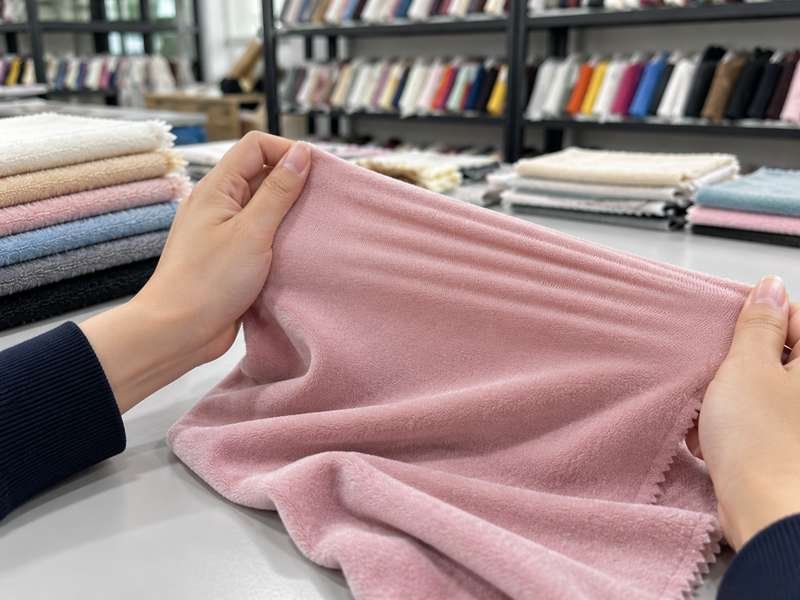
Minky and short plush are strong options for clean character shapes, facial embroidery, compact products, and smooth color blocks. Short pile keeps seams and small details visible. Review composition, GSM, pile height, stretch, color route, embroidery backing, and approved swatches so the production fabric is controlled by specification rather than a generic “soft plush” description.

Velboa And Velvet

Velboa supports clean surfaces and detailed printing or embroidery on many character products, while velvet can create a denser, more refined collector appearance. Nap direction matters because the same color can look different under opposite pile orientation. Cutting markers should control direction across matching panels to avoid visible shade changes after sewing.

Faux Fur

Faux fur works for animals, monsters, premium collectibles, hair, tails, manes, or selected accents. Pile may range from moderate to very long, so cutting, seam brushing, hair direction, shedding control, facial visibility, and packaging recovery become important. Long fur can hide small embroidery, making short-pile face inserts or larger decoration more reliable.

Sherpa And Textured Plush

Sherpa, boucle-style surfaces, and textured fabrics create a warm handmade character feel, but texture can swallow fine stitches or expose backing between curls. Larger embroidery, applique, woven labels, contrasting short-pile panels, or simplified facial details may perform better. Sample approval should check both appearance and how the texture changes after packing and handling.

Stretch Plush

Stretch fabrics help rounded heads, smooth curves, fitted shells, and some highly sculpted character forms. Stretch direction must be controlled during cutting, embroidery, sewing, and stuffing because inconsistent tension can change head width, eye spacing, or body proportions. Elasticity should be treated as an engineering variable, not only a softness feature.

Filling Systems

Polyester fiber filling can be adjusted by grade, density, weight, and distribution to create soft, medium, or firm hand feel. Head, body, limbs, ears, and accessories may need different fill levels. Production should use approved weight references and shaping methods so the bulk does not become harder, flatter, or more distorted than the campaign prototype.

Linings And Interlinings

Bags, pouches, clothing, structured ears, wings, hats, or accessories may require lining, nonwoven reinforcement, foam, felt, mesh, or support materials. These hidden components affect shape, strength, sewing difficulty, and testing. They belong in the BOM and sample approval just like the visible plush fabric because they influence repeatability and cost.

Color And Material Approval

Stock colors can shorten material preparation, while custom-dyed or special-pile materials may carry higher supplier MOQ and longer preparation. Campaign teams should approve physical swatches or material references under realistic lighting before final photography when color accuracy matters. Reorders should compare new lots against the approved standard instead of relying on screen colors.

Decoration, Logo, Accessories, and Brand Details

Decoration choices should match pile length, feature size, age grade, collector positioning, attachment strength, and the level of detail the design really needs.

Computer Embroidery

Embroidery is well suited to eyes, mouths, brows, small symbols, text, and logos on short-pile surfaces. Stitch density, backing, thread color, fill direction, fabric stretch, and pile height change the result. Facial embroidery should be mapped against the actual pattern pieces so placement remains correct after curved panels are sewn and stuffed.

Applique Embroidery

Applique builds larger graphic shapes from cut fabric combined with edge stitching. It can create bold eyes, patches, clothing graphics, layered markings, or large logos without excessive thread density. Material thickness, edge finish, shrinkage, pile height, and alignment must be controlled, especially when several applique layers meet on small character panels.

Printing Methods

Screen, digital, heat-transfer, or sublimation routes can reproduce gradients, repeated patterns, tattoos, fabric markings, clothing graphics, or detailed surface art. Compatibility depends on fiber composition, pile height, surface texture, color, and print area. A printed panel should be approved after sewing and stuffing because curved surfaces can distort artwork differently from flat samples.
Woven and Printed Labels​

Woven And Printed Labels

Sewn labels can carry brand marks, copyright lines, care information, material content, SKU references, or other required text. Label dimensions, fold type, edge feel, print quality, placement, and seam insertion method matter. Small plush products need special attention so labels do not dominate the appearance or interfere with use.

Clothing And Soft Accessories

Hats, capes, shirts, scarves, shoes, bows, bags, wings, tails, and removable garments can raise campaign value but also add patterns, materials, handwork, fit tolerance, and assembly steps. Clothing should be developed on the final body dimensions, with attachment method and age-grade risk reviewed before reward photography is finalized.
Soft Components

Plastic And Soft Components

Molded eyes, noses, PVC or silicone features, soft badges, buttons, clips, or other hard components can create a different visual language from embroidery. Tooling, color, finish, attachment structure, pull resistance, sharp-point or small-part considerations, and supplier lead time should be evaluated before selecting them for a campaign promise.
Metal Hardware

Metal Hardware

Key rings, lobster clasps, chains, buckles, rivets, zipper pulls, or decorative metal parts should be specified by dimensions, finish, attachment route, and expected load. Hardware can drive MOQ and preparation time even when the plush body is simple. Contact surfaces may need protection to prevent scratching during packing and transport.

Branded Packaging Details

Hangtags, belly bands, insert cards, gift boxes, blind boxes, sticker seals, tissue, and printed mailer elements can extend campaign storytelling beyond the plush itself. Artwork version, copyright copy, SKU code, barcode, warning information, attachment position, and pack-out sequence should be controlled so late packaging changes do not delay shipment.

From Artwork to a Manufacturable Plush Product

Campaign artwork must be translated into a controlled three-dimensional definition before cost, quality, and scale can become reliable.

Character Analysis Before Pattern Cutting

Development begins by identifying the visual anchors that make the character recognizable: head-to-body relationship, face width, eye spacing, muzzle or nose position, ear shape, limb thickness, signature markings, clothing, props, and intended pose. Flat artwork rarely answers every side and back view, so missing geometry is resolved deliberately instead of being left to sewing operators. The team also decides which details should become embroidery, applique, printing, fabric color blocking, soft accessories, hard components, or simplified construction. Important dimensions are converted into measurable references before the first pattern is cut. For series projects, shared proportion rules, eye language, material families, and repeated construction points can be defined early. A character-development review should also flag details that may disappear at small scale, become hidden by long pile, distort across a seam, or create avoidable handwork. The goal is a 3D definition that still reads like the original artwork when viewed from front, side, back, and in the intended pose.

Pattern, Structure, and Filling Engineering

Pattern engineering converts the approved character direction into seam lines, panel shapes, seam allowances, grain or pile direction, opening positions, attachment points, and shaping logic. The number of panels should be sufficient to hold the intended curves without making a small product unnecessarily difficult to sew. Standing, sitting, hugging, hanging, or weighted products require different balance and internal structure. Thin ears, wings, horns, feet, and accessories may need felt, foam, interfacing, internal bags, or other support to keep the approved shape. Filling is also part of the visual definition: too much can widen the head, push eyes apart, shorten limbs, or make a soft campaign sample feel rigid; too little can flatten cheeks, collapse posture, or make clothing fit poorly. Weight references and filling distribution therefore belong in the product specification. Pattern, support structure, attachment points, and filling are revised together until the sample can be reproduced through a defined sewing and shaping route.

DFM Before the Campaign Locks Expectations

Design-for-manufacturing review asks a simple question: can the approved appearance be reproduced consistently at the funded quantity? Tiny color panels, extremely narrow limbs, hidden hand stitches, fragile accessories, inaccessible turning openings, long-fur facial details, or decorations placed across difficult seams may look acceptable on one hand-finished sample but become unstable in volume. DFM does not mean removing character. It identifies where pattern, material, decoration, assembly, or packaging changes can protect the same visual idea with better repeatability. A feature may be enlarged for cleaner embroidery, moved away from a seam, converted from a tiny sewn part into applique, supported with an internal layer, or simplified on a mini reward while remaining more detailed on the hero plush. Cost and lead-time effects should be considered at the same stage. Campaign pricing, prototype photography, MOQ planning, testing, and delivery assumptions become more reliable once the visual promise is tied to a production route that can actually be cut, sewn, assembled, inspected, packed, and repeated.

Build the Prototype Path Before Campaign Photography

A controlled sample path separates visual development from production approval, reducing the risk of photographing a version that cannot become the bulk standard.

Requirement Review

Confirm usable artwork, target dimensions, pose, quantity assumptions, market, age grade, key materials, packaging direction, and campaign timing before the sample clock begins. Missing references are translated into explicit development decisions. The result is a sample brief with priorities instead of a collection of disconnected chat comments.

First Prototype

The first sample tests silhouette, proportion, pattern structure, major materials, face direction, balance, and key accessories. Standard concepts may reach a first version faster, while character IP with layered details, clothing, custom colors, or functional parts normally needs a broader development window. Ewin manages sample timing by complexity rather than promising one fixed number for every project.

Revision Control

Comments are converted into tracked actions covering face, proportion, pattern, material, color, embroidery, sewing, filling, accessory, packaging, cost, or timeline impact. Each revision should have a clear status and should replace obsolete versions. This avoids a common failure where the visual change is approved but an older embroidery or material file remains in production.

Golden Sample

Once appearance, material, decoration, structure, filling, accessories, labels, and other key details are fully approved, the Golden Sample becomes the physical bulk reference. It works together with the frozen BOM, released pattern, current artwork, packaging specification, and QC reference rather than acting as an isolated sample on a shelf.

PP Or Pilot Validation

For complex, high-volume, multi-SKU, or launch-critical programs, a pre-production or pilot stage can verify that the released product definition works under conditions closer to mass production. Material lots, process sequence, workmanship, measurement points, packaging, inspection, and assembly issues can be corrected before a much larger funded quantity is exposed.

Production Release

Bulk starts only after open approval items are closed and the factory receives one controlled production package. Quantity, SKU mix, market, material status, packaging artwork, labels, QC requirements, and required shipping milestones are reviewed at release. Campaign photos may support visual reference, but production relies on the approved manufacturing definition.

Plan MOQ and Reward Economics Before Funding Closes

Cost or MOQ DriverWhat ChangesCrowdfunding Decision
Product sizeFabric, filling, labor, carton cube, freightConfirm reward price before final size is public
Fabric routeStock color vs custom dye or special pileUse stock/shared materials when reducing early commitment matters
EmbroideryStitch count, area, thread changes, backingKeep signature details; simplify low-value hidden decoration first
Applique/printingSetup, alignment, material compatibilityCompare visual gain against additional process risk
AccessoriesHardware, PVC/silicone, clothing, custom partsReview supplier MOQ and tooling before stretch goals are announced
SKU countSplit material, labels, packaging, QC and sortingDo not assume 2,000 total units means 500 per color is economical
PackagingPolybag, printed box, blind box, insert, bundlePackaging MOQ can exceed plush-body requirements
Target marketLabels, component choices, testing planBuild compliance cost into campaign economics early
Pilot/scale pathSmaller validation run vs larger releaseIncrease inventory commitment in stages where feasible
Shipping modelCarton volume, destination, split shipmentCheck landed-cost assumptions before promising free shipping

Scale Safely When Funding Exceeds the Base Goal

Overfunding changes more than piece count. Materials, bottleneck processes, inspection load, packaging, and shipment planning all need to scale under one approved product standard.

From 500 To 1,000

At the first meaningful increase, confirm whether stock materials remain available, whether packaging still uses the same commercial route, and whether any stretch reward creates a new SKU. Production planning should preserve the approved sample and BOM while checking embroidery, accessories, handwork, filling, and carton configuration against the revised quantity.

From 1,000 To 3,000

Larger funded quantities justify a more formal capacity and material review. Fabric lots, custom colors, embroidery programs, accessory orders, production slots, QC workload, and packaging quantities should be synchronized. If several reward tiers share the same character, common materials and components can simplify procurement while SKU-specific labels and packaging remain separately controlled.

From 3,000 To 10,000

At several thousand units, production should be managed through released specifications, controlled material lots, staged manufacturing, inspection gates, pack-out records, and shipment planning. Bottleneck processes matter more than a headline factory capacity figure. Complex clothing, long fur, heavy handwork, special hardware, or multi-SKU packing may determine the true schedule.

Beyond the First Campaign

A successful first run may lead to retail, additional characters, new colors, or repeat launches. Reorder planning should review material changes, current packaging, barcodes, labels, compliance requirements, and the latest approved version before repeating production. Forecast visibility can support material preparation and production-window planning without treating forecast quantity as a confirmed order.

Controlled Production From Frozen Specs to Pack-Out

Mass production should repeat an approved definition through controlled inputs, manufacturing stages, quality gates, and packaging release – not recreate the product from memory.

Material Readiness

Frozen BOM, purchase requirements, material specifications, color references, and supplier routes are checked before cutting. Incoming fabric, filling, labels, hardware, and accessories are identified by lot or approved reference where relevant. Color-critical or custom materials should be compared against the approved standard before entering the main production flow.
Cutting Control​

Cutting Control

Released patterns, seam allowances, pile direction, stretch direction, print placement, and bundle identification guide cutting. Matching left and right panels need consistent orientation so surface reflection, hair direction, or stretch does not create visual asymmetry. Multi-SKU programs use separation and identification controls to reduce mixed-panel errors.
Embroidery And Printing​

Embroidery And Printing

Facial features, logos, marks, and printed graphics are produced from the approved decoration files. Placement references are linked to actual pattern pieces. Stitch density, backing, thread color, print registration, fabric stretch, and pile height are checked before decorated panels enter sewing, because correction becomes harder after the body is assembled.
Sewing And Assembly​

Sewing And Assembly

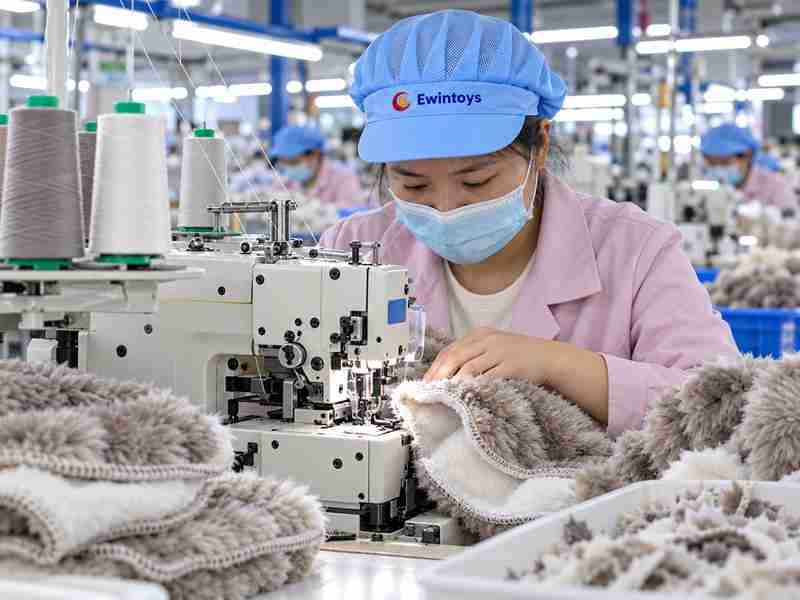
Panels, clothing, loops, straps, wings, ears, tails, hard components, and other details are assembled through the defined manufacturing route. Critical seams and attachment points receive additional attention where load or appearance is important. Complex programs may use dedicated fixtures, templates, or controlled work instructions to improve repeatability between operators.
Stuffing And Shaping​

Stuffing And Shaping

Filling weight and distribution influence face width, body volume, sitting balance, limb position, softness, and overall silhouette. Operators work against approved references instead of filling by feel alone. Products with weighted inserts, internal supports, electronics, or multiple cavities require defined placement so function and balance remain consistent.
Finishing​

Finishing

Closing seams, brushing, trimming, thread removal, garment adjustment, accessory positioning, facial shaping, and surface cleaning affect the final visual quality. Long-pile products may need seam brushing and grooming so trapped fur does not reveal construction lines. Finishing also prepares the product for final inspection and packaging photography if required.
Final Inspection​

Final Inspection

Finished units are checked against the approved standard for appearance, dimensions, workmanship, decoration, accessories, labels, functional points, and project-specific quality requirements. Defects are classified and corrected according to the quality plan rather than hidden through last-minute cosmetic repair. Inspection records support release and traceability.
Packaging Release​

Packaging Release

Only accepted products move into the current approved packaging route. Hangtags, labels, inserts, barcodes, unit packs, bundles, cartons, and assortment ratios are matched to the correct SKU. Final carton quantity, dimensions, weight, marks, and shipment records are frozen before logistics handoff.

Build Backer Delivery Dates From Real Milestones

A credible delivery plan works backward from the required receipt window and closes the technical, approval, material, production, testing, packaging, and logistics gates in sequence.

Sample And Approval Window

Standard plush concepts can often be developed faster than detailed character IP, while clothing, custom colors, long pile, hard components, electronics, or major revisions extend the path. Ewin uses complexity-based sample planning: standard concepts may target roughly 5-7 working days for a first internal benchmark, character IP around 7-12 working days, and complex functional work around 10-20 working days. Timing begins after key inputs are usable, not when an incomplete inquiry first arrives.

Material, Testing, and Packaging Critical Path

Custom-dyed fabric, special faux fur, molded accessories, electronic parts, printed boxes, or retailer-specific packaging can become the longest preparation item. Testing also needs a representative product and final material/structure logic. Running these activities without version control can save a few days early but create a much larger delay if the product changes and materials, packaging, or reports no longer match the approved version.

Production And Delivery Planning

Bulk timing should be reviewed against SKU mix, process complexity, material readiness, packaging, inspection load, destination, and the requested delivery window. A 2,000-piece simple short-plush program and a 2,000-piece multi-SKU collectible program do not use the same capacity model. For launch-driven schedules, Ewin can review material pre-booking, production-slot planning, inspection milestones, split shipment, air, sea, express, or other supported logistics routes based on the actual project.

Keep Campaign Samples and Bulk Production Aligned

Quality control connects the approved character to material lots, manufacturing processes, inspection references, corrective action, packaging, and shipment records.

IQC Material Control

Fabric, filling, accessories, labels, hardware, packaging, and other incoming materials are checked according to project requirements before production use. Color, surface, specification, quantity, lot identity, and critical component details are compared against approved information. Problems found before cutting are much cheaper to contain than the same issue discovered in finished campaign rewards.

Pattern And First-Piece Check

Released pattern, seam allowance, pile direction, key dimensions, decoration position, and construction sequence are confirmed before broad production. Early pieces reveal whether the approved sample has been translated correctly into the manufacturing route. Deviations can be corrected before hundreds or thousands of units carry the same error.

IPQC Process Inspection

In-process inspection focuses on sewing, decoration, assembly, stuffing, accessories, workmanship, and critical measurements while production is still moving. Issues can be contained by lot, work stage, or responsible process instead of waiting until final inspection. For complex designs, key visual checkpoints are linked directly to the Golden Sample and QC references.

Filling And Shape Control

Approved filling weights, distribution, softness, balance, and shaping references help keep the bulk from becoming harder, flatter, wider, or less stable than the sample. Critical character features such as cheeks, muzzle, belly, feet, or seated posture may use defined handling methods because shape can change even when every sewn panel is correct.

Attachment And Safety Checks

Loops, keychain hardware, buttons, soft accessories, molded parts, zippers, straps, and other attachments may require pull, torque, seam, sharp-point, sharp-edge, or small-part consideration depending on product and age grade. A failure at one attachment point can create both durability and safety problems, so component choice and fixing method are reviewed together.

FQC Appearance Review

Finished goods are checked for symmetry, face placement, color, stains, loose threads, open seams, exposed stuffing, incorrect accessories, garment fit, label position, surface finish, and other defined defects. Appearance criteria should reflect what supporters saw in campaign assets while still using measurable manufacturing references wherever possible.

OQC And Pack-Out Verification

Before shipment, released goods can be checked for quantity, assortment, unit packaging, labels, barcode where used, carton marks, master-carton pack-out, and shipment records. Multi-SKU programs need extra line-clearance and separation discipline so a correct plush is not placed into the wrong reward pack or carton.

CAPA And Traceability

When a recurring issue appears, containment protects the current lot while root-cause analysis identifies why it happened. Corrective and preventive actions may involve pattern, material, embroidery, sewing, filling, supplier, inspection, packaging, or work instruction changes. Product IDs, material lots, production records, QC status, and packaging records support backward investigation when needed.

Certificates, Compliance & Quality Assurance

Ewintoys follows structured quality and compliance practices for custom plush production. We hold relevant certifications and support additional testing, inspection, and compliance documentation based on specific product requirements and destination markets, helping brands meet different international standards with confidence.


Plan Compliance Before the Campaign Makes Public Claims

Target market, intended age, materials, components, labels, packaging, and final construction determine the testing route; compliance should not be postponed until finished goods exist.

United States Programs

For products sold as toys in the United States, the applicable review may involve ASTM F963, CPSIA requirements, small-parts considerations, lead or phthalate testing, tracking or labeling obligations, and CPC support based on the final product and age grading. Specific compliance conclusions must be tied to the actual SKU, materials, structure, and valid test documentation.

European Union Programs

EU projects commonly require review against relevant EN 71 requirements and applicable chemical, labeling, traceability, or CE documentation responsibilities for the final product. Materials, coatings, accessories, small components, cords, electronics, and intended age can change the necessary test scope. The development team should identify these variables before production release.

Collector And Adult Products

Calling a product a collectible does not automatically remove every safety or consumer-product responsibility. Marketing language, intended age, product construction, market, and local rules still matter. Small decorative parts, sharp hardware, magnets, batteries, scented inserts, or functional components can introduce additional risk that should be assessed before packaging claims are printed.

Test Sample And Change Control

Testing is meaningful only when the submitted sample represents the final BOM and construction. After a report is issued, changes to material, pigment, accessory supplier, component, coating, structure, color grouping, or age grade may affect the original rationale. Golden Sample, BOM, report identity, and production materials should remain traceable to one another.

Package Rewards for Fulfillment, Not Just Presentation

Packaging should protect the approved plush, identify the correct reward or SKU, control shipping cube, and hand cleanly into the chosen warehouse or fulfillment route.

Protective Polybag

A polybag is efficient for many plush rewards, but bag size, sealing, ventilation, warning information, folding method, hardware isolation, and compression level should match the actual product. Long fur, structured ears, hats, printed surfaces, rigid accessories, and facial shapes may need extra protection or recovery instructions before the item reaches supporters.
Belly Band

Belly Band And Hangtag

Paper bands and hangtags can carry story content, logo, care information, copyright text, SKU identification, age or market information, and campaign branding with relatively low packaging volume. Attachment point, string or fastener, orientation, print version, and compatibility with shipping protection should be approved alongside the plush rather than added at the end.

Printed Gift Box

Gift boxes suit premium rewards, licensed projects, collector editions, bundles, or launch kits. Structure should balance presentation with carton efficiency. Window size, insert, product restraint, scuff protection, opening experience, barcode placement, printed copy, and outer dimensions all affect cost and shipping cube, especially when thousands of units move through a fulfillment center.

Blind Box Packaging

Blind-box rewards need controlled outer artwork, inner bag, insert card, SKU or hidden-edition logic, assortment ratio, case pack, and carton identification. Packaging files should map to the correct product revision. Line clearance and pack-out checks are important because one wrong character inside a sealed box is difficult to detect after the goods leave production.

Compression Packaging

Compression can reduce cube for bulky plush, but the goal is not maximum pressure. Face shape, ears, wings, long pile, clothing, printing, electronics, and rigid accessories can be damaged or recover poorly. Ewin can evaluate compression direction, recovery, carton utilization, product protection, and opening instructions as one packaging decision.

Fulfillment Handoff

Ewin can prepare manufacturing and shipping information for the agreed handoff route, including SKU identity, unit packaging, label version, pack-out, carton quantity, carton dimensions, gross weight, marks, destination, and shipment split. Fulfillment ownership, last-mile delivery, tax, import, platform, or 3PL responsibilities should be defined separately rather than hidden inside a vague “worldwide fulfillment” promise.

Control Stretch Goals Without Losing Version Accuracy

New characters, colors, accessories, packaging, or reward bundles can increase campaign value, but every addition creates another controlled manufacturing object.

New Character SKU

A new character should receive its own design ID, pattern, sample revision, BOM, packaging identity, approval status, QC references, and production record. Shared fabrics or common components can improve purchasing efficiency, but visual approval and version control remain SKU-specific. Do not let a late stretch character borrow undocumented files from the original hero plush.

New Colorway

A color variant appears simple but can change fabric availability, dye MOQ, embroidery thread, printed graphics, labels, packaging artwork, and test rationale. Approved physical color references should be linked to the correct SKU. When several colorways share the same pattern, manufacturing can reuse structure while maintaining separate material and packaging control.

Accessory Or Bundle Upgrade

Stretch goals often add a hat, cape, keychain, card, pouch, gift box, or other bonus item. Each addition should be reviewed for cost, material MOQ, assembly time, packing sequence, safety, and carton cube before it becomes a public promise. A low-cost accessory can create disproportionate delay if its supplier lead time is longer than the plush body.

Multi-SKU Reward Pack

Bundles require more than placing several finished items in one carton. SKU versions, quantity ratios, labels, packaging, barcode or identifier logic, pick-and-pack sequence, carton configuration, and shortage handling should be mapped. One project team should control design, sample, BOM, packaging, testing, production, and shipment status across the full assortment.

1,000+ Unit Crowdfunding Program Scenarios

United States Game Character

A U.S. indie game studio planned a 24 cm hero character plush as the physical centerpiece of a campaign, with an estimated funded run above 2,000 units. Development focused on an oversized head, small embroidered facial details, a removable cape, and a signature accessory. The workflow moved from character-sheet review to pattern development, material selection, first prototype, two controlled revision rounds, Golden Sample approval, packaging mock-up, and production-release review. A 2,400-piece representative order structure uses one main SKU with shared packaging, allowing material booking and QC to stay simpler than a multi-color reward program. Before release, the cape attachment, accessory position, embroidery file, filling reference, sewn label, polybag size, carton pack-out, and target-market test plan are tied to the same approved version. The main manufacturing lesson is to freeze the hero design before adding stretch accessories that could alter material demand, assembly time, testing, or the shipment schedule. Campaign photography should use the version closest to the commercial construction so supporters are not shown details that disappear later for manufacturing reasons.

United Kingdom Illustrator Brand

A U.K. illustration brand planned three soft animal characters for a creator-led crowdfunding launch, each around 18 cm with different colors but a shared body platform. A representative 3,600-piece order can be organized as 1,200 pieces per character. Shared short-pile fabric families, common filling, identical sewn-label construction, and a common carton size help reduce unnecessary complexity while each face, color, hangtag, and SKU identity remains separately controlled. Development begins with a series master for body proportion, sitting posture, hand feel, eye style, and common seam language, then character-specific embroidery and markings are revised against the same framework. Material colors are approved physically before final campaign imagery, reducing the risk of screen colors creating unrealistic expectations. Before production release, each SKU needs its own Golden Sample, BOM, embroidery file, label artwork, packaging version, and pack-out mapping. Production can then run shared processes efficiently while final inspection and packing preserve character identity. The main risk is not making three plush styles; it is preventing a shared part, wrong label, or old artwork revision from crossing into the wrong reward.

Germany Collectible Campaign

A German collectible brand planned a premium 16 cm creature with faux-fur accents, applique eyes, embroidered details, a metal bag-charm option, and a printed collector box. A representative 1,800-piece funded order is large enough to require formal control of long-pile direction, applique placement, hardware finish, protective packing, and box dimensions, but still small enough for packaging or custom-component MOQ to influence unit economics strongly. Development therefore locks the plush body first, then confirms hardware and packaging as separate approval gates. The charm attachment is reviewed for load and surface protection, while the box insert is checked to stop metal parts from pressing into the face during transport. Pilot or PP validation checks whether the approved hand-finished details can be repeated under production conditions before the full run enters sewing, assembly, inspection, and boxed pack-out. Final pack-out uses SKU identity, box artwork version, quantity, carton dimensions, and shipment records so the collector presentation remains controlled through the warehouse handoff rather than becoming a last-minute packing task.

Ewin Infrastructure Behind Prototype-to-Scale Plush Programs

The manufacturing system connects development, controlled production, quality, packaging, and scale planning under one project workflow instead of separating the campaign sample from bulk execution.
60+ Development Team

60+ Development Team

A 60+ person Plush Product Development Center supports artwork review, pattern engineering, sample making, material selection, decoration development, revision control, and production handoff. Campaign teams can begin from sketches, 2D artwork, character sheets, 3D renders, AI-generated concepts, reference products, or physical samples.
95,000+ m2 Manufacturing

95,000+ m2 System

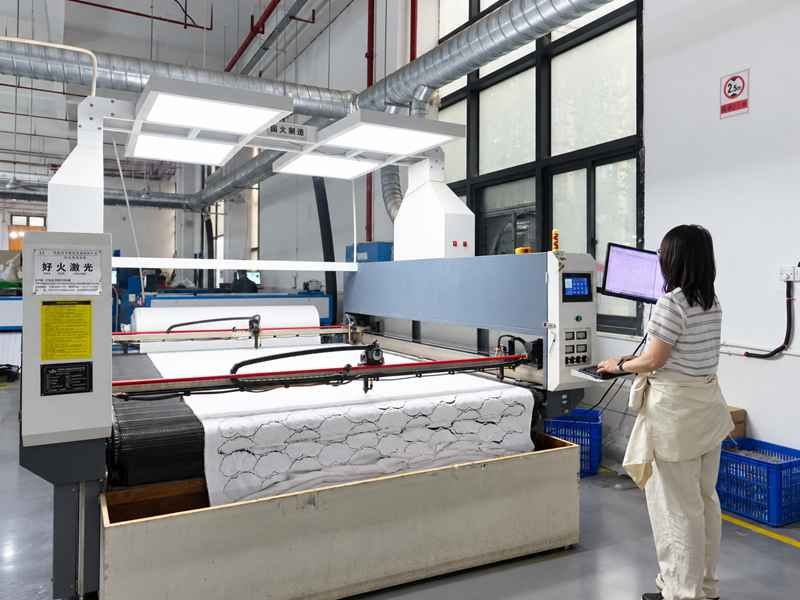
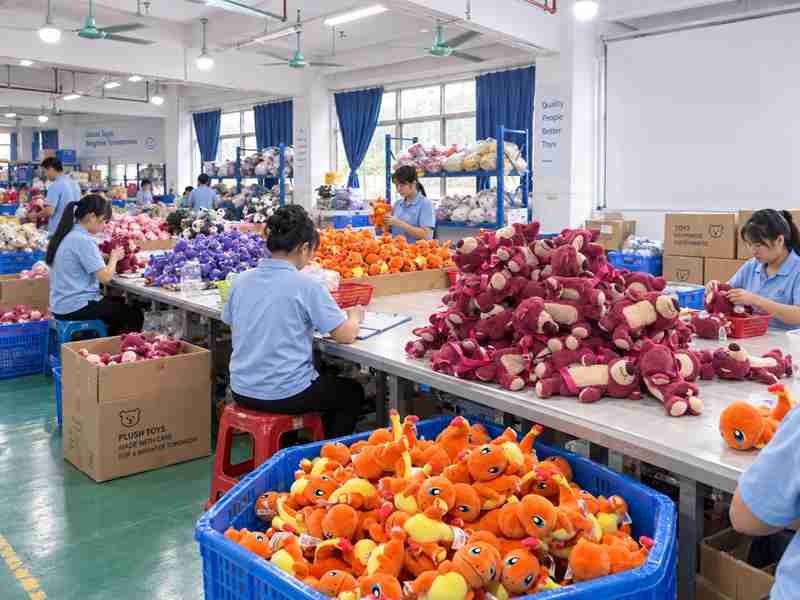
Ewin operates a 95,000+ m2 integrated manufacturing system covering cutting, embroidery and printing, sewing, stuffing, hand assembly, finishing, quality inspection, packaging, warehousing, and logistics coordination. The value is not floor area alone; approved product definitions can move through connected manufacturing stages under one project standard.

1,900+ Workforce

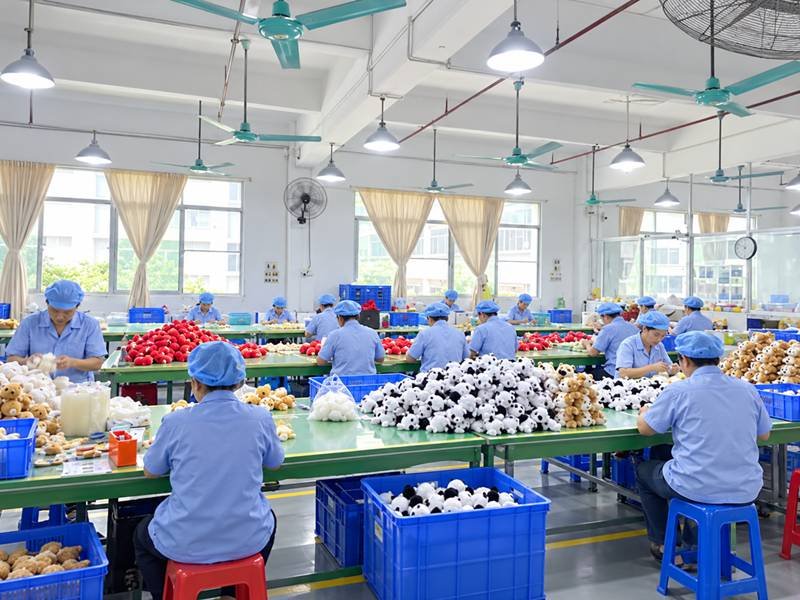
A 1,900+ workforce structure supports different production routes for standard plush, detailed character IP, collectible programs, lifestyle merchandise, and larger multi-SKU orders. Capacity planning is still reviewed by process complexity, material readiness, handwork load, packaging, and delivery window rather than treating total headcount as unlimited capacity.
Controlled Production Handoff​

Controlled Production Handoff

Golden Sample, frozen BOM, released pattern, current artwork, QC references, packaging specification, and version status connect development to mass production. This handoff is especially important after crowdfunding closes, because quantity may increase quickly while the approved appearance, material, labeling, and reward configuration must remain stable.

Frequently Asked Questions for Crowdfunding Plush Projects
Many standard custom plush programs use about 500 pcs per SKU as an early reference. Material, special components, packaging, SKU count, electronics, and production setup can move the workable quantity higher or lower after review.
Yes. Prototype development should validate character shape, materials, decoration, structure, and major accessories first. Bulk production is released later from the approved Golden Sample, BOM, pattern, artwork, QC, and packaging references.
Timing depends on complexity and material readiness. Internal planning benchmarks may be about 5-7 working days for standard concepts, 7-12 for character IP, and 10-20 for complex functional designs before revision needs are added.
Quantity changes trigger a new review of materials, bottleneck processes, production slots, QC workload, packaging, and shipment planning. The approved product definition stays fixed while manufacturing resources scale around the new funded quantity.
Yes, but each new SKU needs controlled artwork, sample approval, BOM, packaging identity, QC references, and production status. Shared materials can reduce complexity, while colors, labels, or accessories may still introduce separate MOQ and timing constraints.
Ewin can review target market, intended age, materials, accessories, structure, labeling, packaging, and test planning, then support third-party testing workflows as applicable. Final compliance claims must match the specific SKU and valid documentation.
A firm public date is safer after the product route, revision scope, materials, testing, packaging, funded quantity, destination, and logistics assumptions are understood. Launch-driven schedules should be planned backward from the required receipt window.
Yes. Options can include polybags, belly bands, hangtags, gift boxes, blind boxes, inserts, labels, bundles, and master-carton configurations. Packaging should be approved for product protection, cube, labeling, pack-out, and fulfillment handoff.
The approved Golden Sample works with a frozen BOM, released pattern, current artwork, material references, QC criteria, and change control. Production and inspection use the controlled package rather than campaign photos or memory alone.

Send Your Campaign Brief for Manufacturing Review

Share the information already available and Ewin Toys can review development, cost, scale, quality, compliance, packaging, and delivery requirements. A complete tech pack is not required; sketches, character sheets, renders, reference products, or an existing prototype can start the review. Please include:
  • Artwork or reference files and desired plush size.
  • Base quantity, stretch quantity, and planned SKUs.
  • Target market, intended age, campaign date, and preferred backer receipt window.
  • Materials, accessories, electronics, logo details, or packaging ideas already decided.
  • Target product cost or reward-price assumptions if available.
  • Shipping destination, fulfillment warehouse, or 3PL handoff plan if selected.
Ewin will identify development gaps, sample steps, commercial constraints, long-lead items, and the safest next manufacturing action.

Start Your Custom Plush Project

We will contact you within 24 Hours, please pay attention to the email with the suffix“@ewintoys.com”. 

# Confidential project? NDA requirements can be discussed before sensitive files are shared.

Seraphinite AcceleratorOptimized by Seraphinite Accelerator
Turns on site high speed to be attractive for people and search engines.