Plush Product Development That Moves Ideas Toward Production
Turn artwork, character concepts or reference samples into manufacturable plush products with fewer late-stage changes. Ewin Toys helps brands define structure, proportion, materials and production feasibility early, so development decisions are clearer before sampling and bulk production begin.
60+ Product Development Team | 20+ Senior Pattern Specialists | Artwork / 3D / Reference Sample Input | Pattern Engineering | V1–V3 Prototype Control | 5–7 Working Day Standard Sample Planning | BOM & Production Specification Release
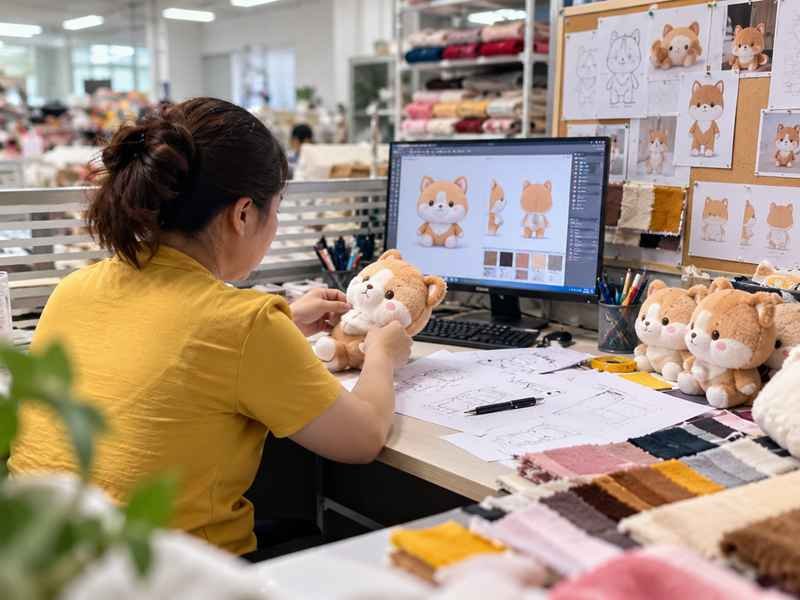
Product Development Is More Than Making a Sample
Define the Product
A sketch or character image rarely contains every manufacturing decision. Development turns visual intent into size, proportions, structure, materials, decoration, filling, components, labeling, packaging, and measurable product requirements before bulk production carries the risk.
Validate the Product
Prepare for Production
Start From the Product Information You Already Have
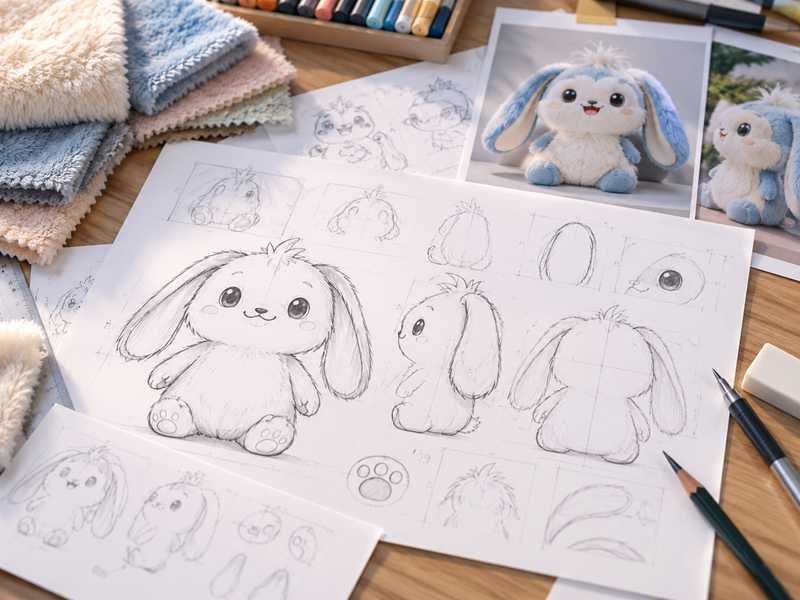
Hand Sketch
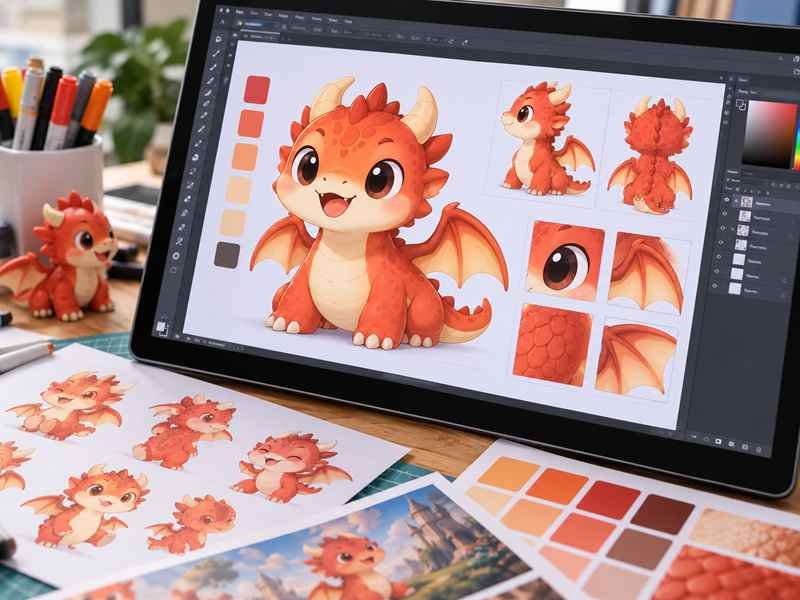
2D Artwork
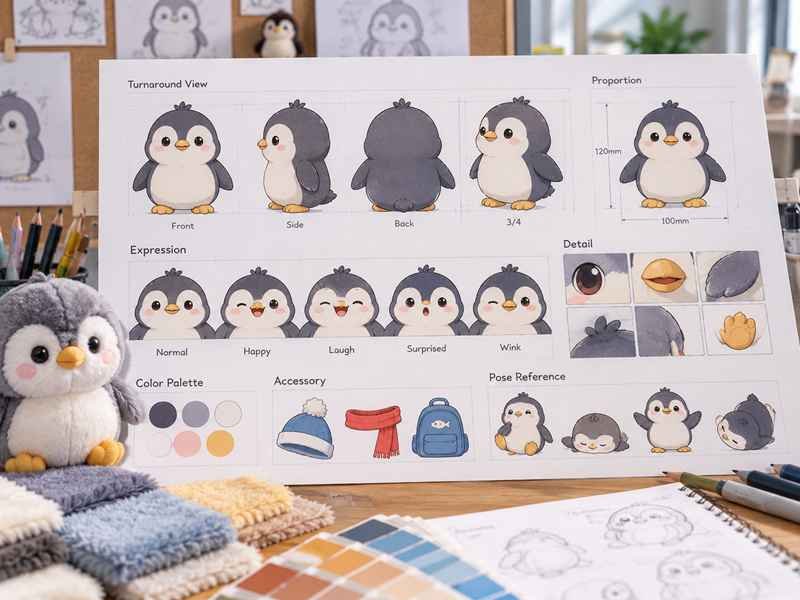
Character Sheet
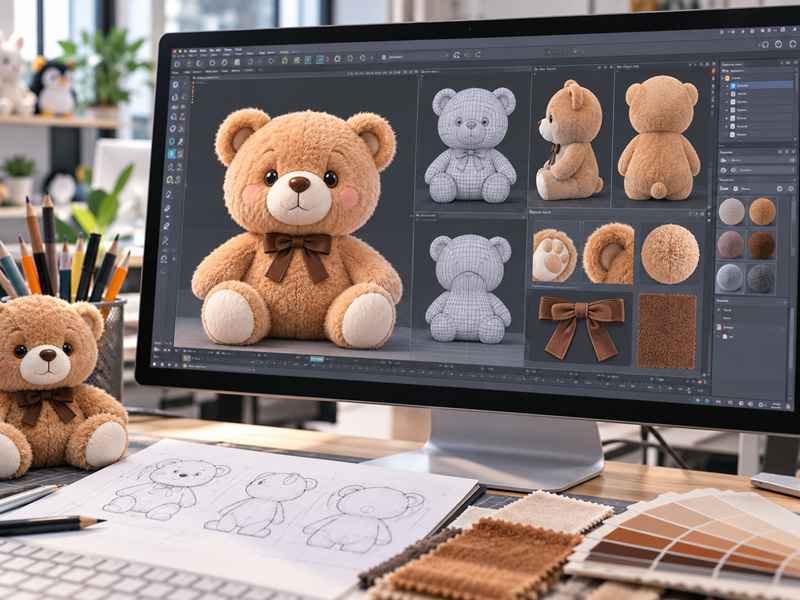
3D Render
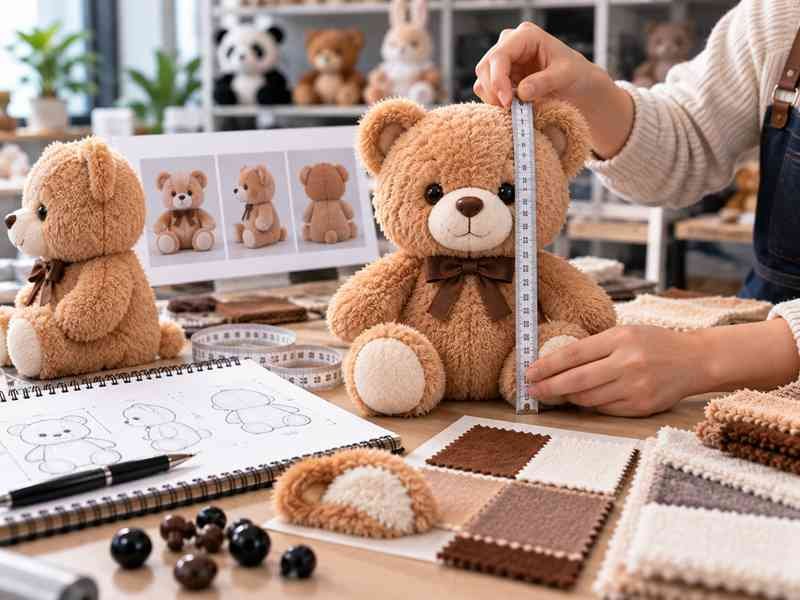
Physical Reference
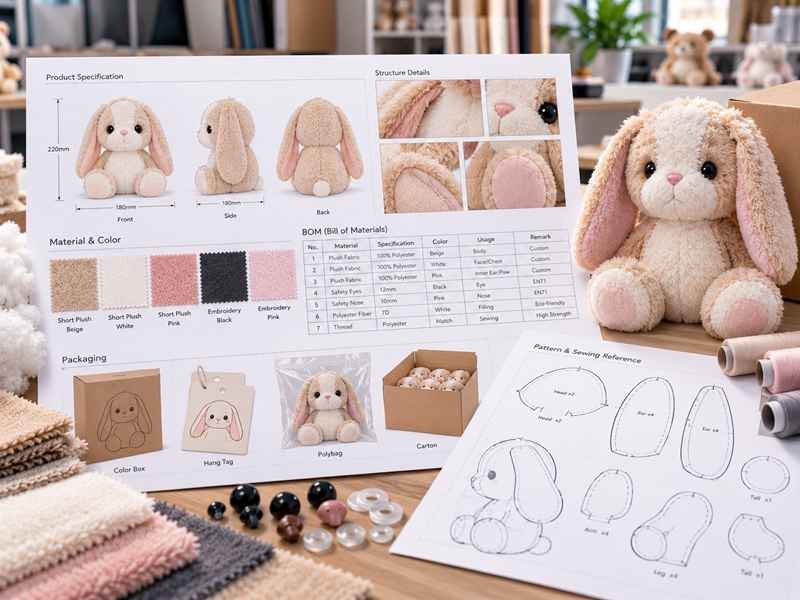
Technical Package
Ewin Character Development System Connects Design to Production
Define the Concept Before Pattern Work Starts
Product development begins by clarifying what the final plush must achieve, not by immediately cutting fabric. Ewin reviews the available artwork, reference files, target size, intended pose, target market, quantity range, channel, launch timing, packaging expectations, and any non-negotiable character features.
Concept definition also separates fixed requirements from areas where engineering freedom is still available. A licensed face, logo, signature color, or approved costume may be locked, while hidden seam position, internal support, filling distribution, or assembly sequence can remain open for manufacturing improvement.
Missing information is converted into specific questions. If only a front view exists, side and back geometry need definition. If a 3D render contains floating accessories, attachment logic needs definition. If a concept requires standing balance, foot size, center of gravity, filling, and internal support need early review.
A clear development brief reduces revisions caused by assumptions and gives pattern, material, sample, quality, and costing teams one shared starting point.
Engineer Character, Pattern, Structure, and Materials Together
Character appearance cannot be separated from construction. Head shape, eye position, body proportion, ear angle, hair, clothing, and pose must be translated into panel geometry, seam placement, material behavior, filling volume, and assembly sequence.
Pattern engineering determines how flat materials create three-dimensional form. Structure engineering addresses balance, support, weighted sections, hard components, magnets, electronics, removable accessories, internal bags, and access openings. Material engineering checks pile height, stretch, handfeel, color, decoration compatibility, sewing behavior, and supply practicality against the intended shape.
Interactions matter. A heavier eye component can change head balance. Longer pile can reduce visible facial detail. A stiffer fabric may hold a shape better but change softness. A large embroidered logo can make a thin panel rigid. Development therefore evaluates the combination rather than approving each item in isolation.
The result is a product definition where visual intent and manufacturing conditions support the same outcome.
Revise, Validate, Freeze, and Release One Approved Definition
Prototype and sample rounds should narrow uncertainty. Comments are translated into specific changes to pattern, dimensions, materials, decoration, filling, accessories, or structure, while previously approved details remain stable unless a linked change requires review.
As the product converges, the development team checks manufacturability, cost drivers, target-market risks, packaging interaction, and production controls. Approval alone is not the final manufacturing event. Golden Sample creation, BOM freeze, released pattern, final artwork, QC reference, packaging specification, and production readiness must describe the same SKU and revision.
Once released, manufacturing teams should not need to interpret the product again from emails or photographs. Production receives the approved physical reference plus the data required to purchase materials, cut panels, decorate, sew, fill, assemble, inspect, pack, and trace the product.
Development is complete when the approved design has become a controlled manufacturing definition.
Product Types Developed Through One Engineering System
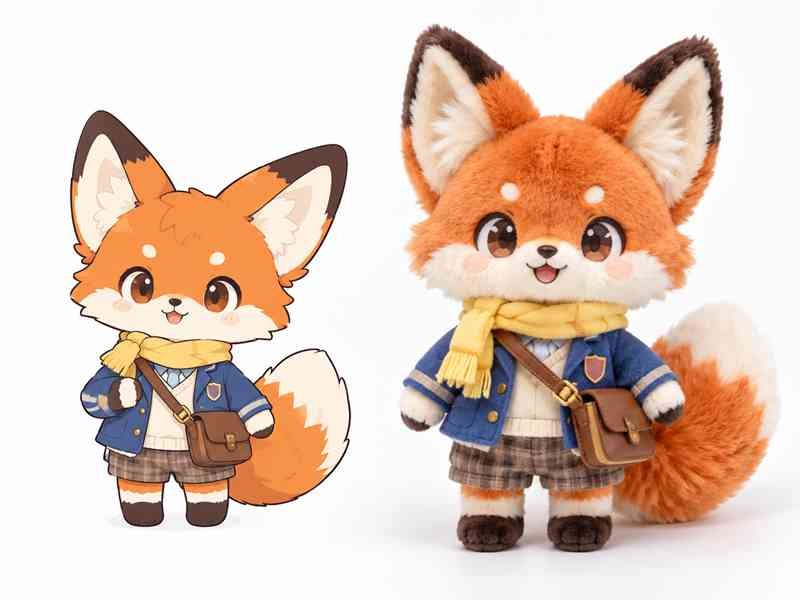
Character IP Plush
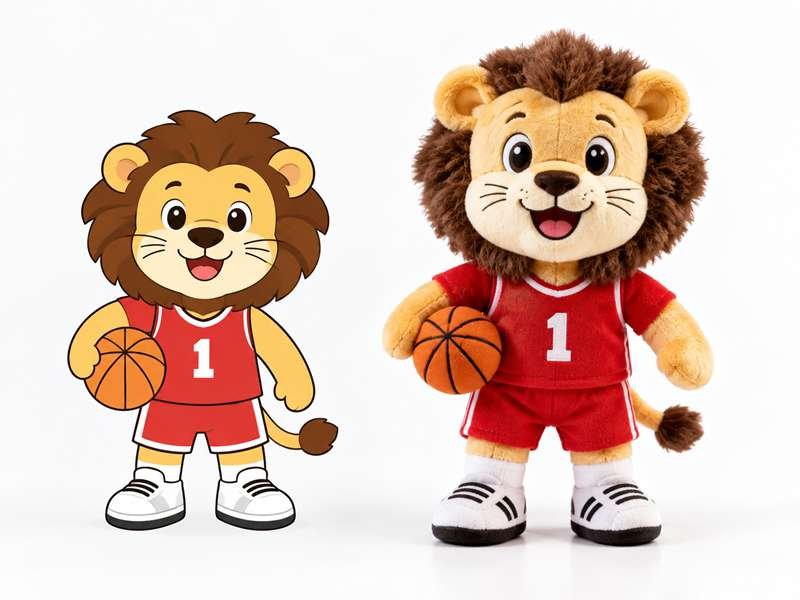
Mascot Plush
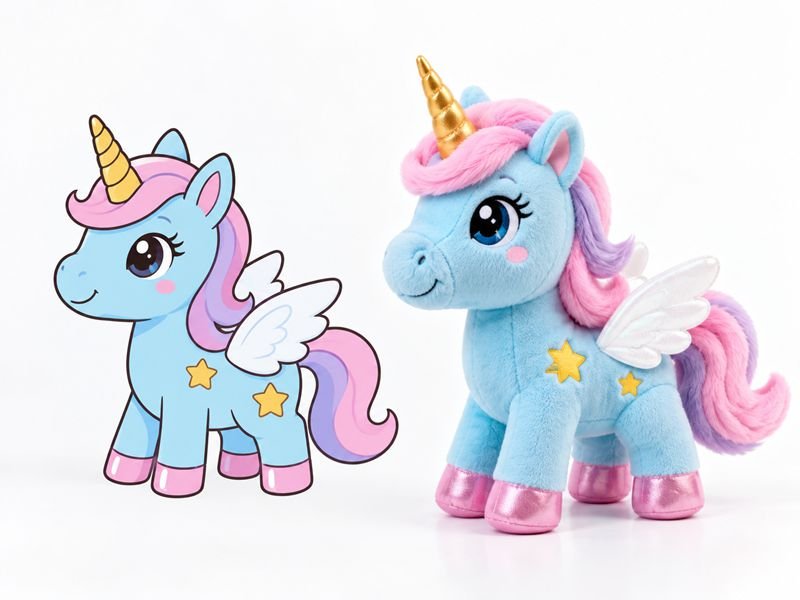
Collectible Plush
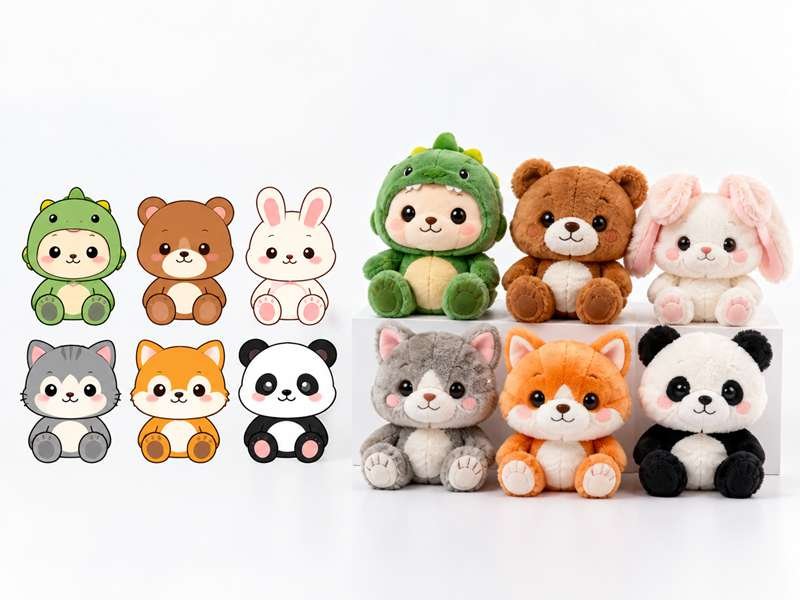
Blind Box Plush
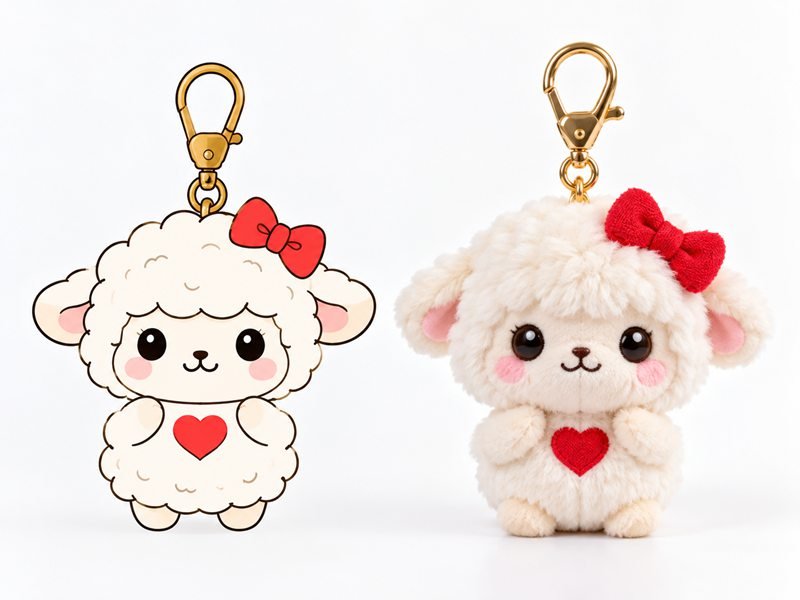
Plush Keychains
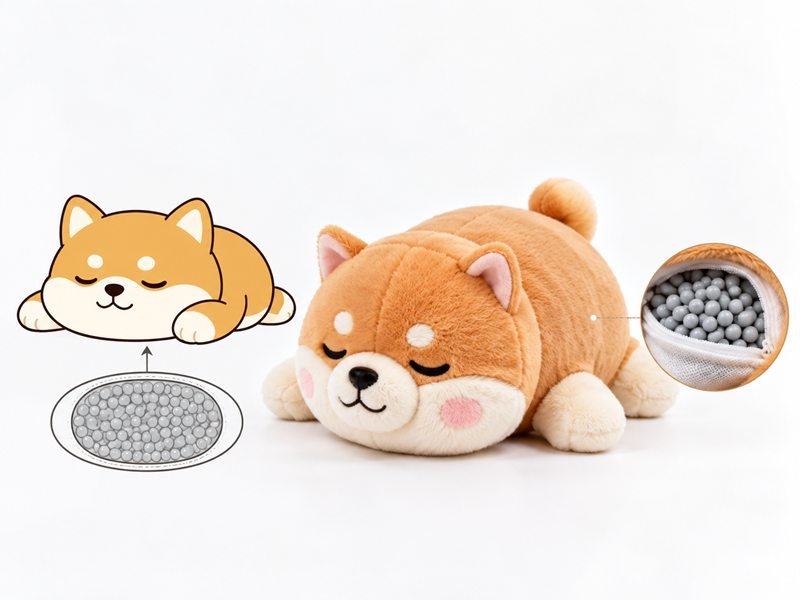
Weighted Sensory Plush
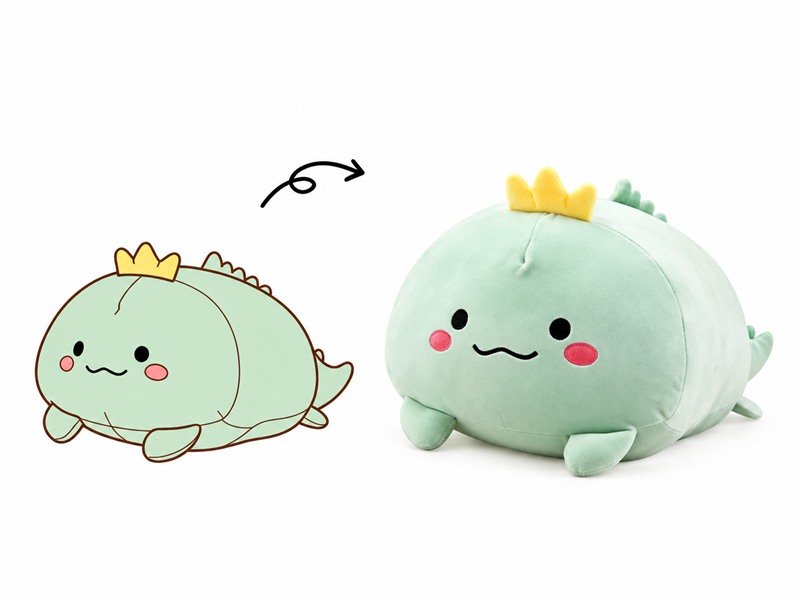
Lifestyle Plush Goods
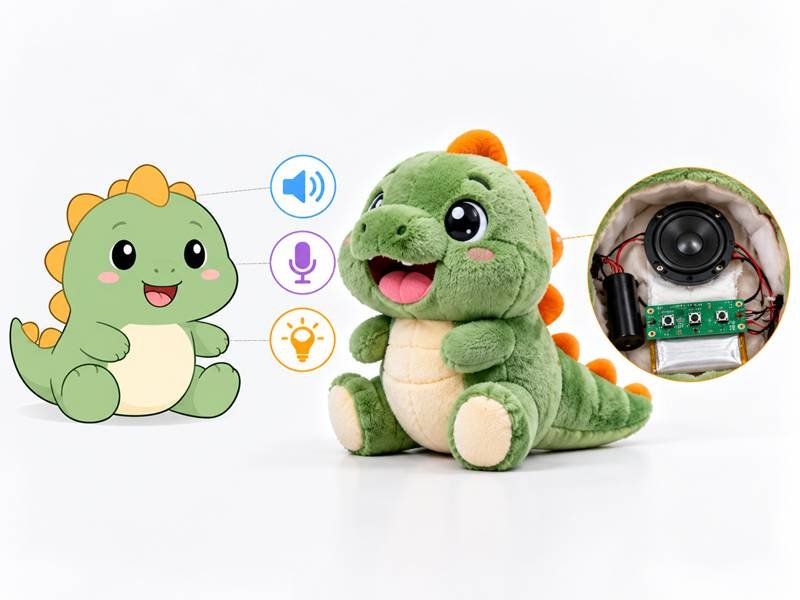
Electronic AI Plush
Module-ready plush needs defined cavities, access openings, cable routes, protective spacing, hard-point management, battery or module placement, serviceability, and assembly order. Ewin focuses on soft-product integration while specialist technology functions can remain with designated partners.
Development Support for Brand and Product Teams
Global Brand Teams
IP Owners
Licensing Teams
Toy Brands
Collectible Brands
Game Animation Studios
Retail Private Label
Multi-SKU Programs
Character Engineering Protects Recognition Before Pattern Cutting
Define the Geometry That Makes the Character Recognizable
A character is rarely identified by one dimension. Recognition comes from relationships: head-to-body ratio, face width, muzzle depth, eye spacing, eye height, ear angle, limb length, body width, hair mass, costume silhouette, and other signature geometry.
Ewin identifies which relationships are visually sensitive before the pattern is finalized. Facial areas deserve special control because small changes can alter expression. On some plush sizes, moving an eye only a few millimeters can make the face appear older, younger, happier, flatter, or less recognizable.
The same principle applies to stylized proportions. A large game-character head, tiny body, oversized feet, or asymmetrical hairstyle may look correct in artwork but create balance, sewing, or stuffing challenges in soft construction.
Character engineering therefore defines what must stay visually fixed and where soft-product translation can be adjusted without losing identity.
Review Pose, Balance, and Volume as One System
Sitting, standing, lying, hanging, or display poses create different structural demands. Pose depends on panel geometry, filling distribution, limb angle, foot size, center of gravity, internal support, clothing, accessories, and the weight of hard components.
A standing mascot may need wider feet or internal support even if artwork shows narrow legs. A seated collectible may need controlled bottom weighting and thigh geometry. A large head may require body or foot adjustment to avoid tipping. A long tail can change balance when made from dense material or fitted with an accessory.
Volume is also affected by material stretch and filling. Two fabrics cut from the same pattern can produce different visual sizes after stuffing. Character engineering therefore reviews proportion on the physical sample, not only on flat drawings.
The objective is a pose that looks intentional, remains stable, and can be repeated in production.
Use Multi-Angle Fidelity Review Instead of Front-View Approval
A plush can look correct from the front and still fail from the side or back. Development review should cover front, 45-degree, side, back, and intended sitting or standing views where the product shape depends on volume.
Multi-angle comparison helps expose a flat back of head, excessive muzzle projection, uneven ear depth, misplaced tail, poor hair volume, distorted clothing, or a body that loses the intended silhouette when viewed beyond the marketing angle.
Fidelity review also includes material and color because pile direction, shine, texture, embroidery, printing, and filling change perceived shape. The approved result should be judged as a complete product rather than a pattern alone.
Comments are converted into measurable or visible correction points so the next version can be reviewed against the same character priorities instead of relying on memory.
Pattern and Structure Engineering Make Designs Manufacturable
Build Three-Dimensional Volume From Two-Dimensional Panels
Plush patterns do more than trace a character outline. Panels must account for seam allowance, curvature, darts, gussets, pile direction, material stretch, turning openings, embroidery placement, filling pressure, and the way neighboring pieces pull against one another.
Head geometry is especially sensitive. A small change to a head gusset can alter face width, forehead height, eye angle, or back-of-head volume. Limbs, ears, tails, and costume pieces also need enough internal space to turn, fill, shape, and close without creating avoidable hard points.
Pattern count is a commercial decision as well as a visual decision. More panels can improve shape but add cutting, matching, sewing, inspection, and cost. Too few panels can simplify production while flattening the character.
The development goal is the simplest construction that still protects the intended shape and quality level.
Engineer Internal Structure Around Function and Assembly
Some plush products need more than fabric and filling. Weighted bags, magnets, hard facial components, PVC or silicone parts, support sheets, foam, electronics, zippers, removable modules, or hidden pockets introduce internal interfaces that must be planned before the shell closes.
Each component needs a defined position, fixing method, access sequence, surrounding reinforcement, and inspection point. Heavy or rigid items can create pressure points, shift center of gravity, stress nearby seams, or become impossible to install if assembly order is wrong.
Structure review also considers service or removal where required. A removable sound or electronic module may need an opening that stays accessible after stuffing. A magnet may need polarity control and retention. A weighted bag must remain isolated and fixed.
Good internal structure reduces rework because hidden parts are installed correctly before access disappears.
Run DFM Before Attractive Samples Become Expensive Problems
A sample room can sometimes build a complex design through slow, highly skilled handwork that is difficult to reproduce on a production line. DFM checks whether the approved appearance can be made repeatedly at the expected quantity, cost, tolerance, and schedule.
Ewin reviews sewing access, difficult curves, tiny components, handwork load, fixture needs, reinforcement, decoration placement, filling repeatability, component supply, testing implications, and packaging interaction before release.
If a detail creates fragile seams, unrealistic tolerances, excessive manual adjustment, or unstable material behavior, an alternative can be proposed while the product is still open for engineering. The aim is not to simplify blindly. Important character DNA should be protected while hidden complexity is reduced where it does not add visible value.
DFM makes the path from sample room to factory floor more predictable.
Fabrics Are Selected for Shape, Touch, and Process Fit
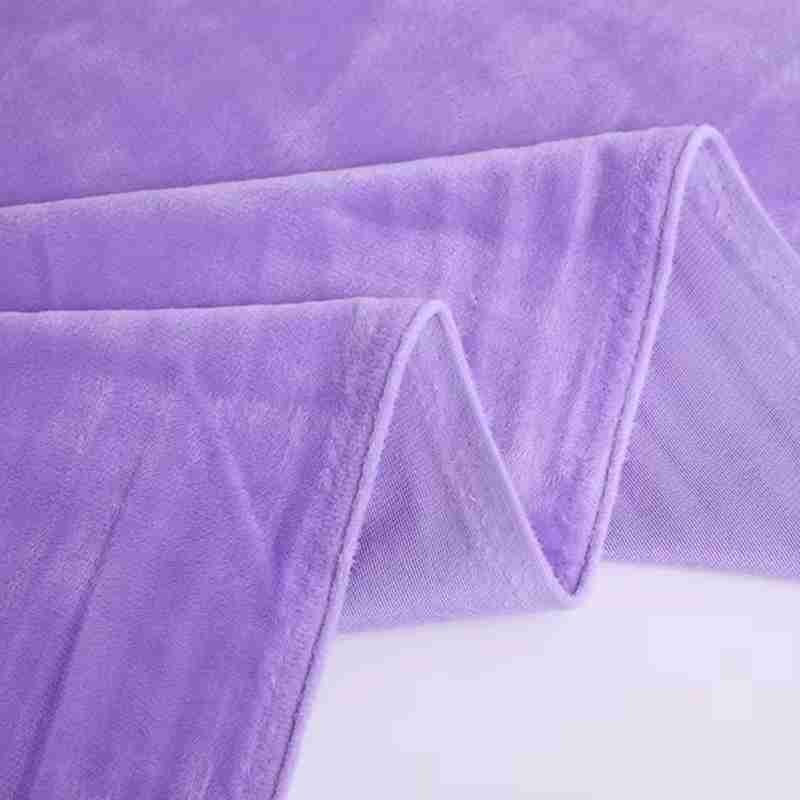
Minky
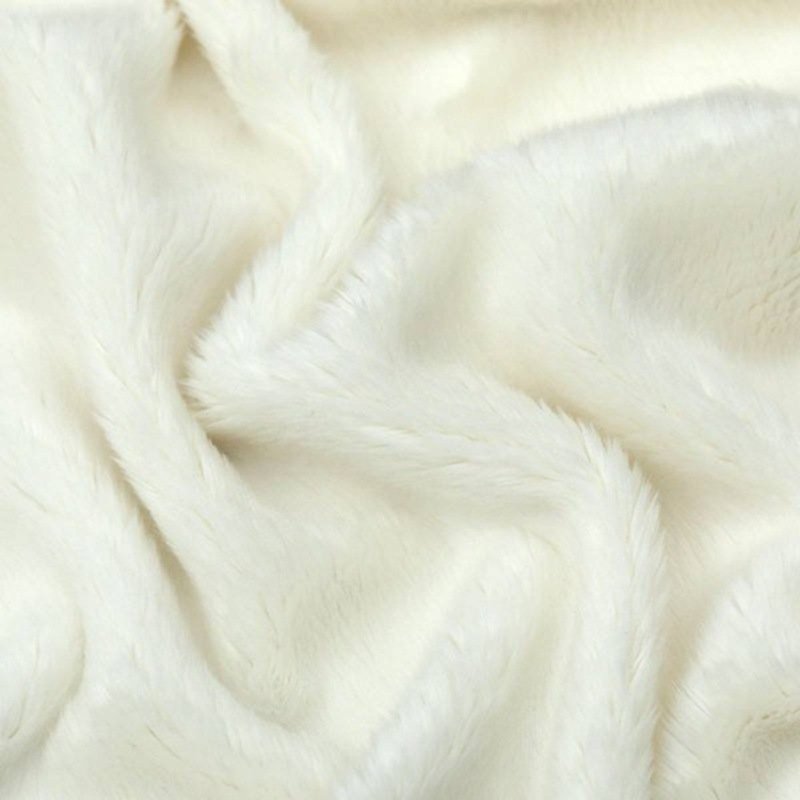
Velboa
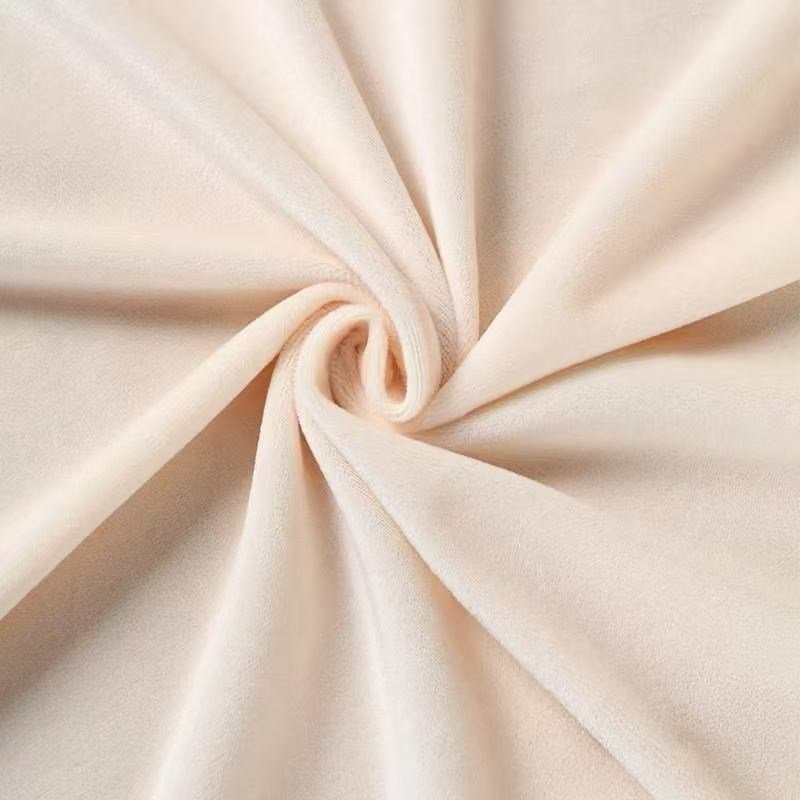
Super Soft Plush
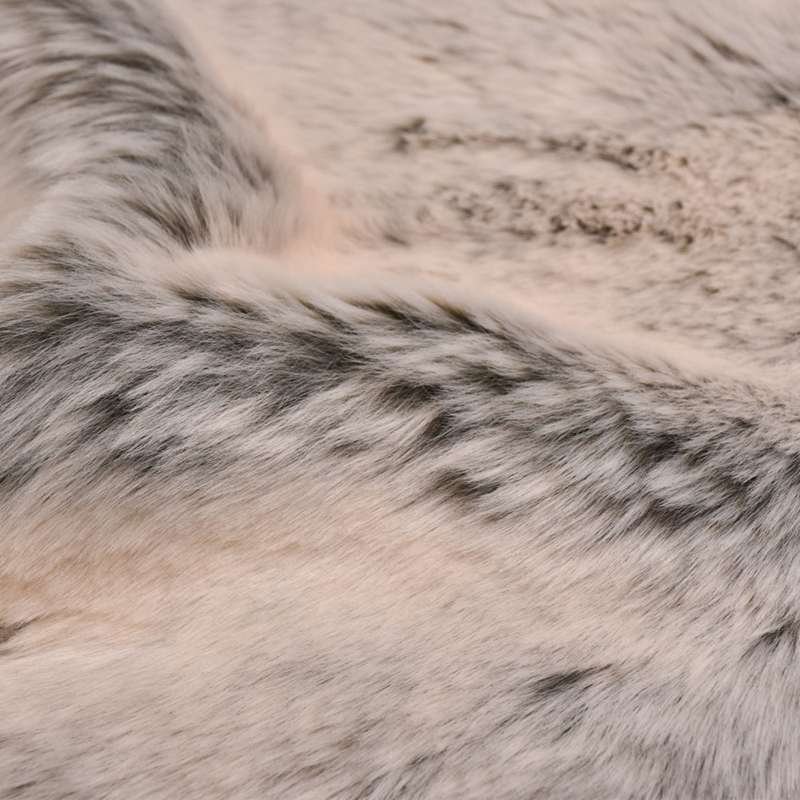
Faux Fur
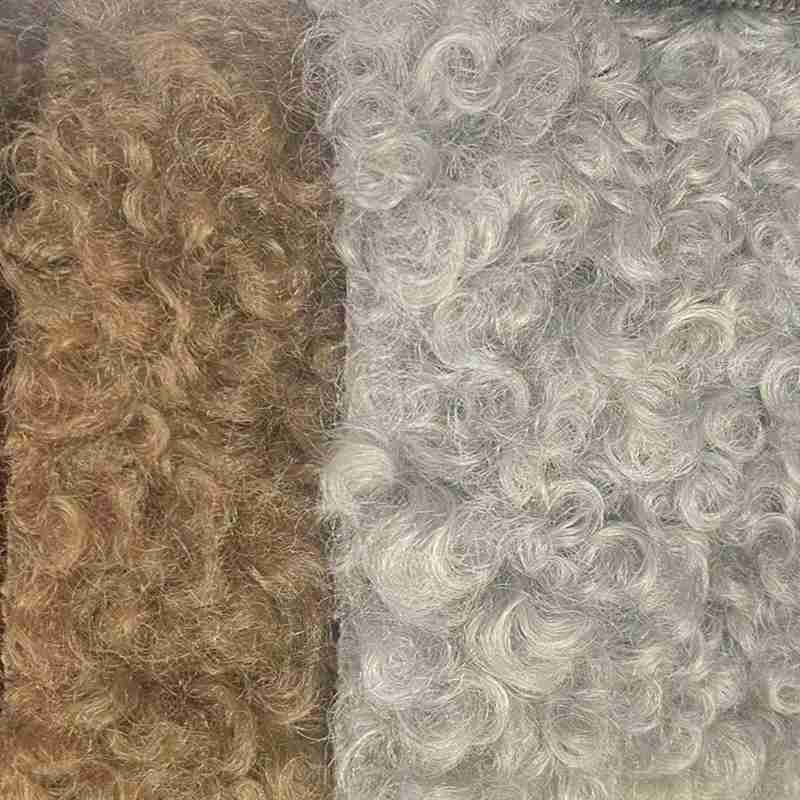
Sherpa
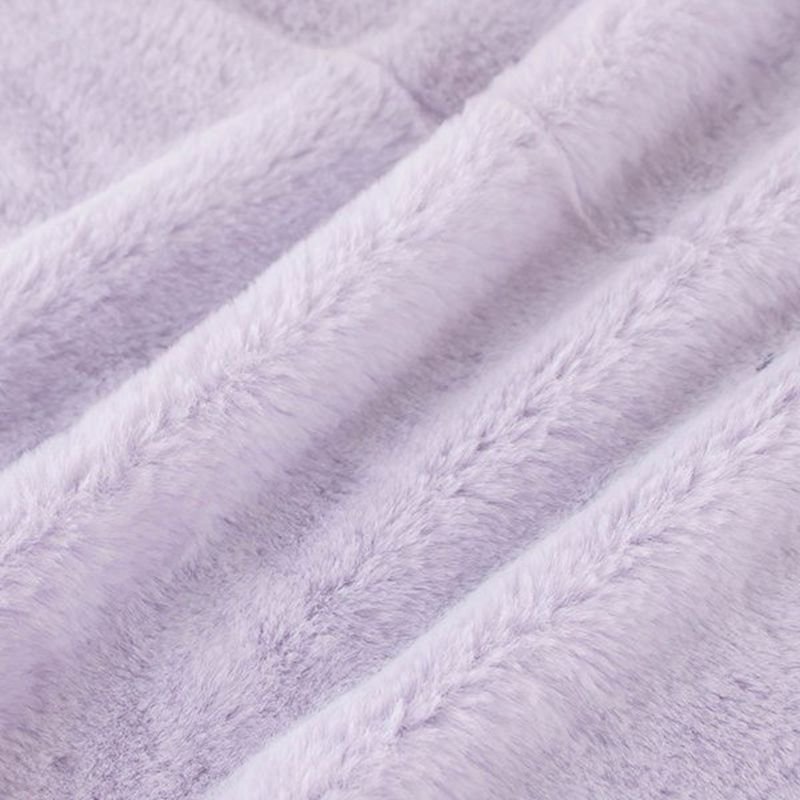
Fleece
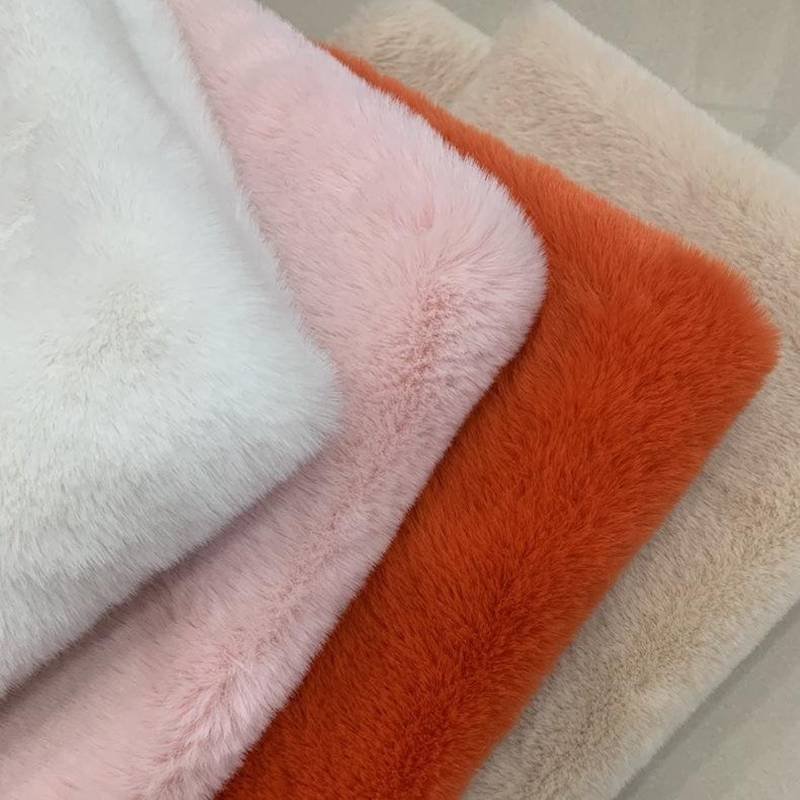
Stretch Fabrics

Specialty Surfaces
PU, coated fabrics, felt, tricot, mesh, and other specialty materials can create armor, paws, clothing, accents, or functional zones. Heat, flexibility, edge treatment, backing, adhesion, wear, and material compatibility require project-specific validation.
Trims and Auxiliary Materials Support Hidden Product Performance

Sewing Thread
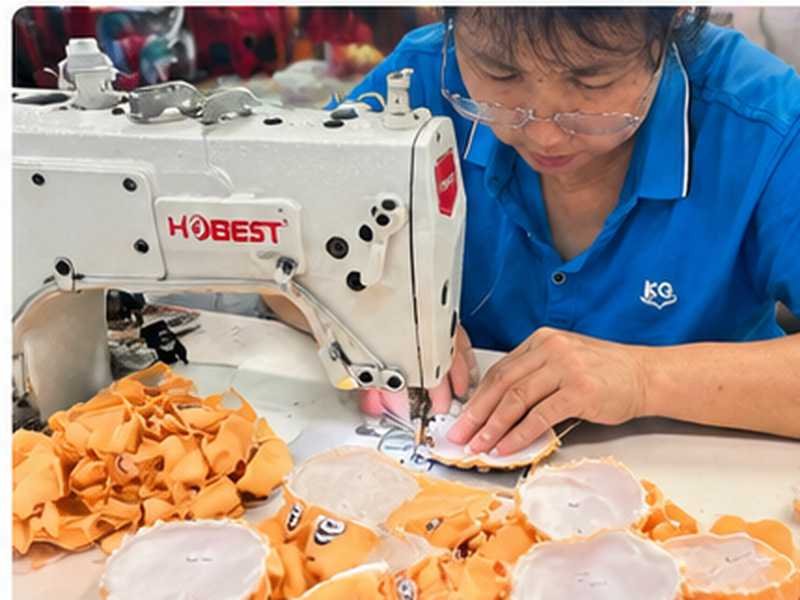
Linings
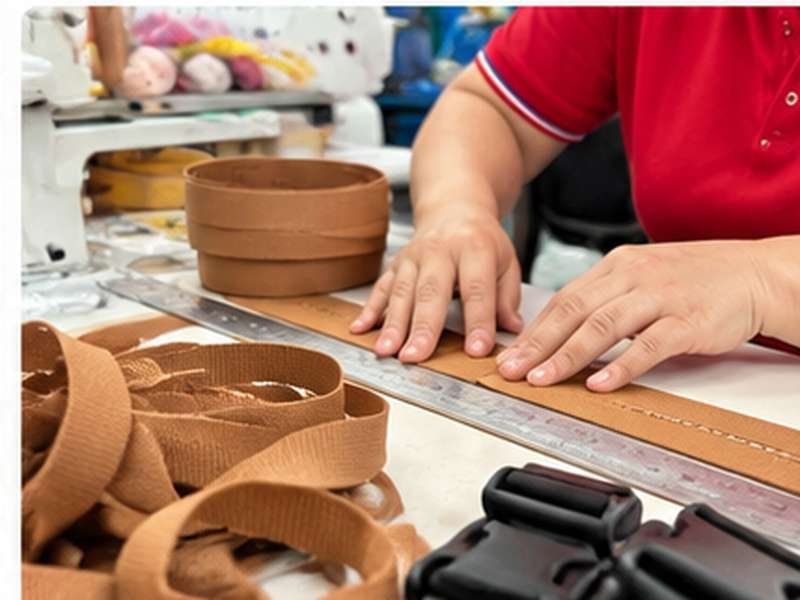
Webbing
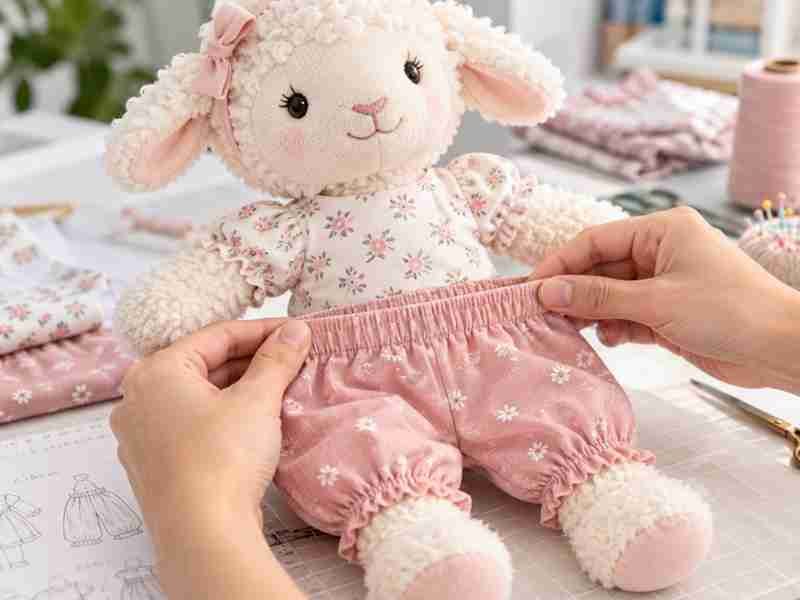
Elastic
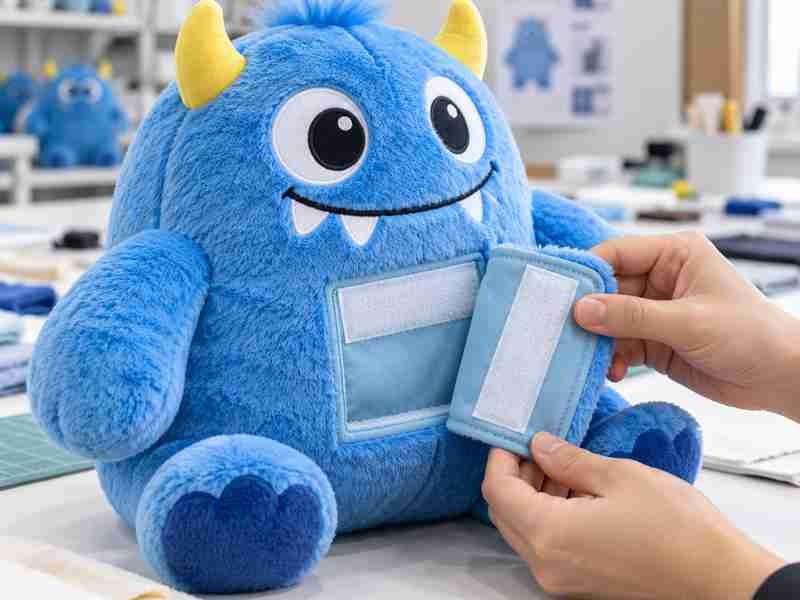
Hook and Loop
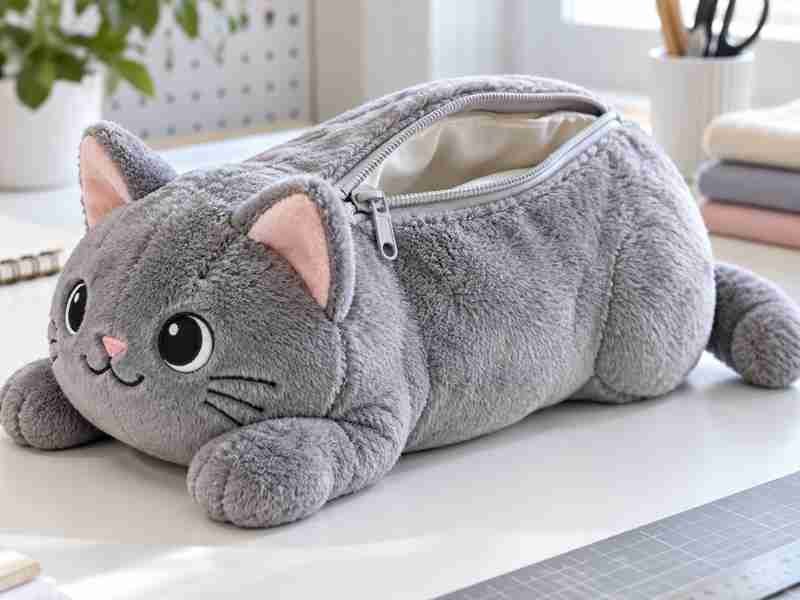
Zippers
Accessories and Components Need Defined Interfaces
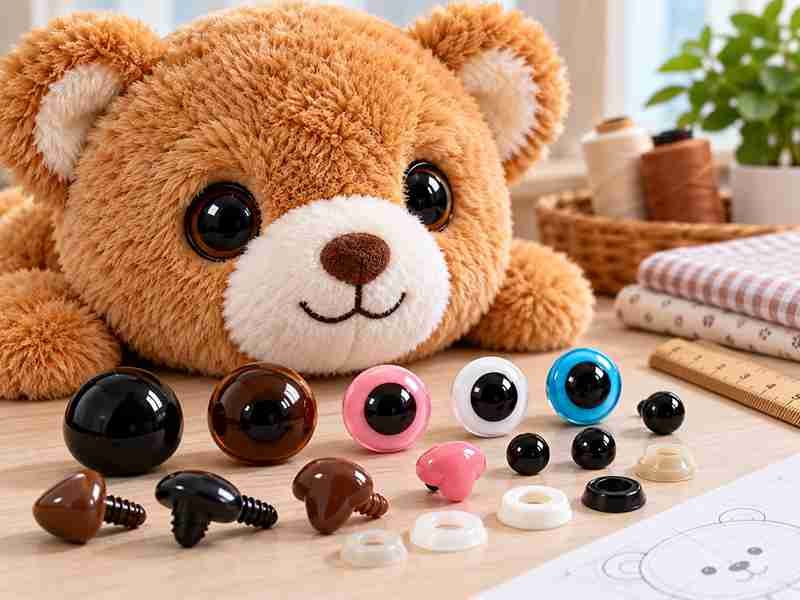
Plastic Eyes Noses
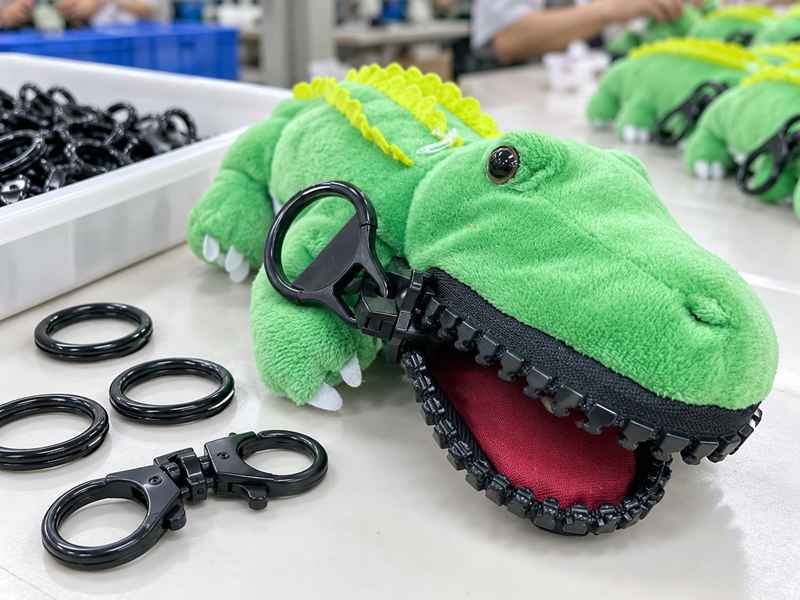
Keychain Hardware
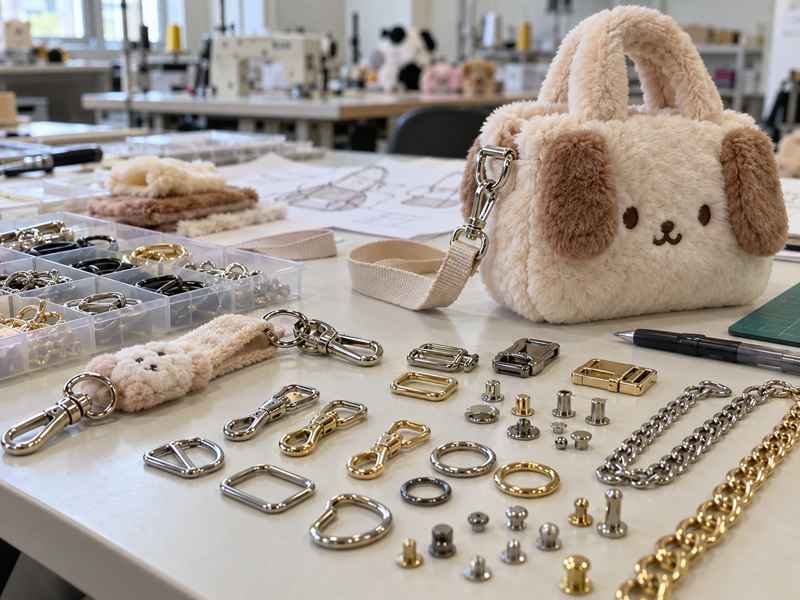
Metal Hardware
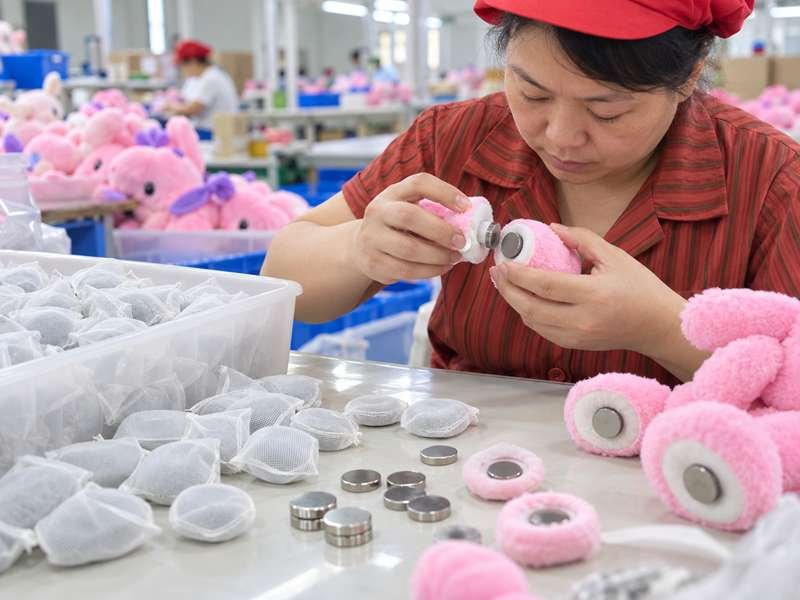
Magnets
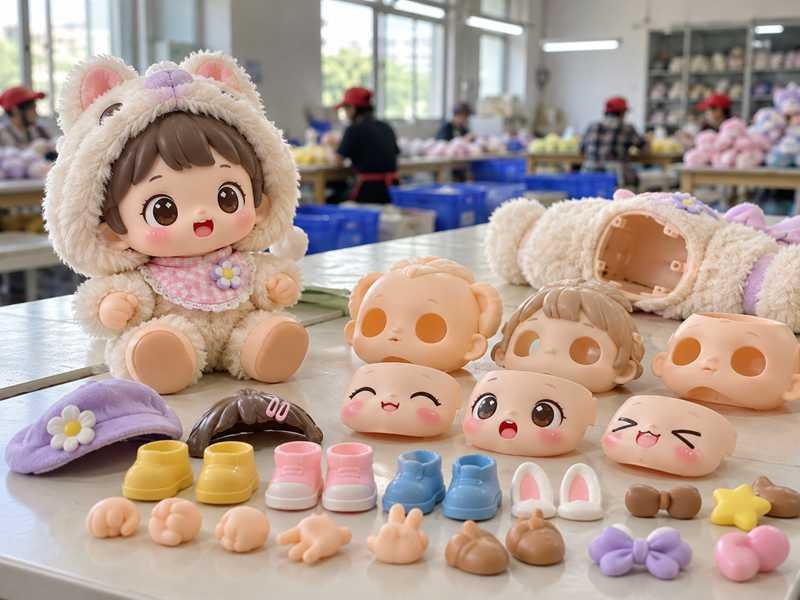
PVC Silicone Parts
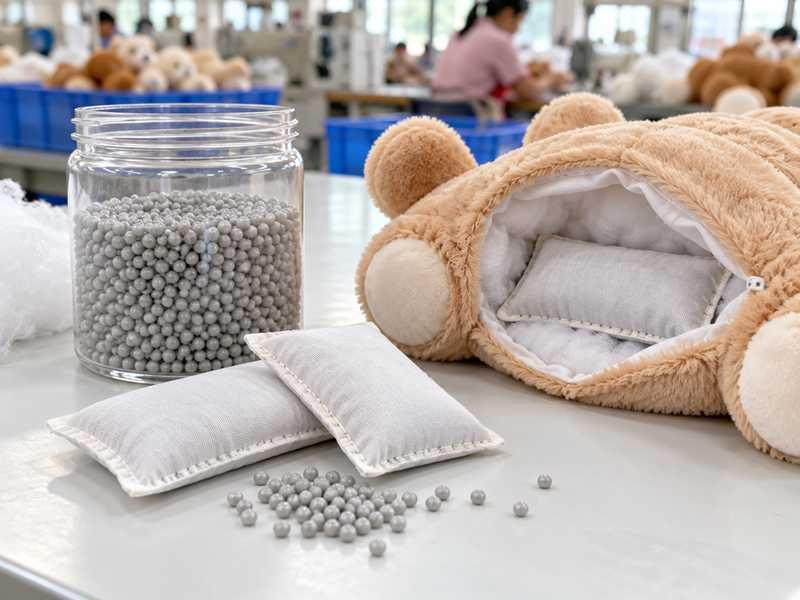
Weighted Inserts
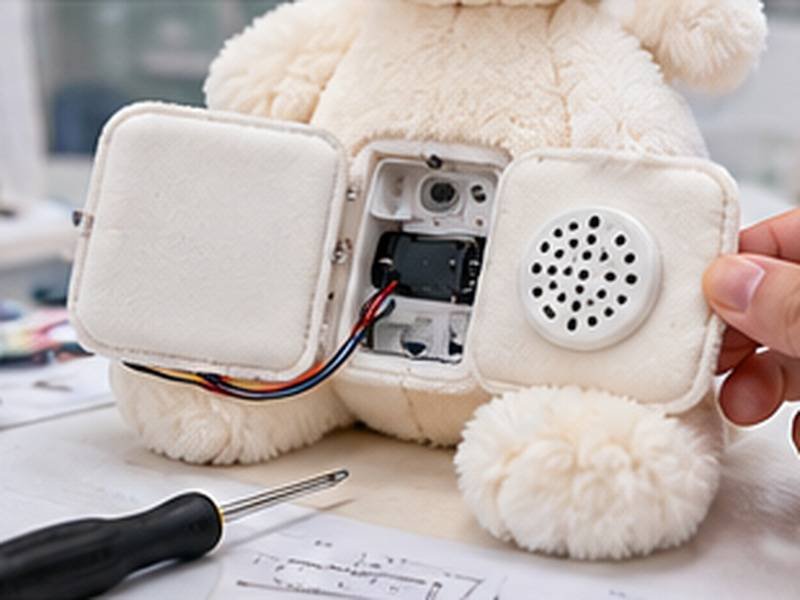
Electronic Modules
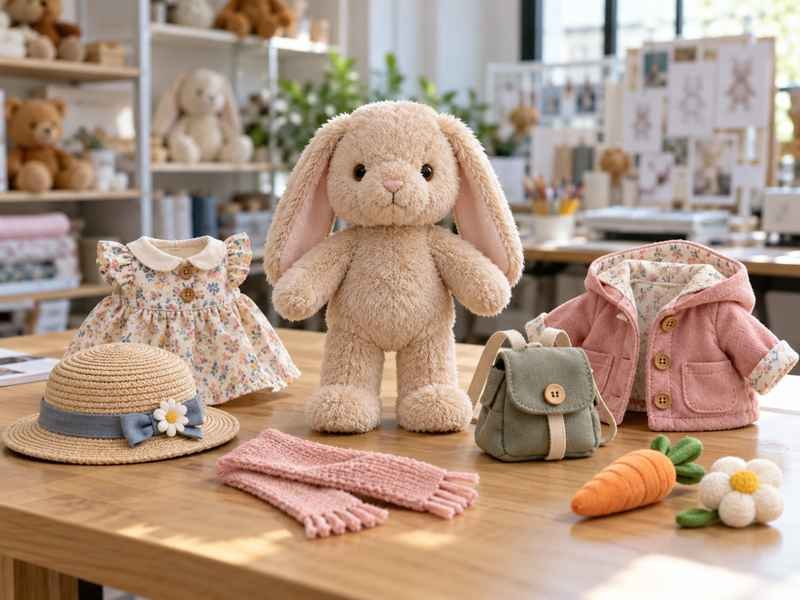
Removable Accessories
Props, clothing, bags, hats, or detachable pieces need secure but usable attachment. Fit, retention, small-part considerations, loss risk, packaging arrangement, replacement logic, and interaction with the main plush should be reviewed together.
Decoration Methods Are Chosen Around Material and Detail
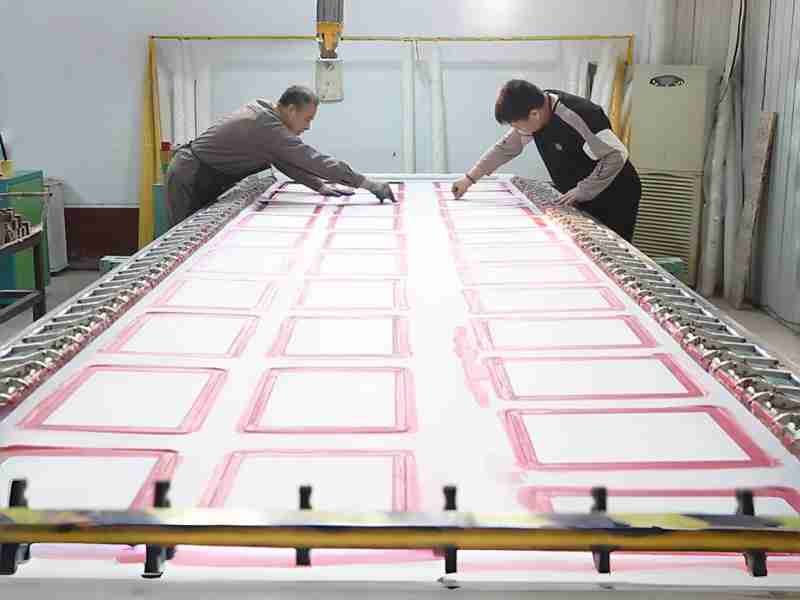
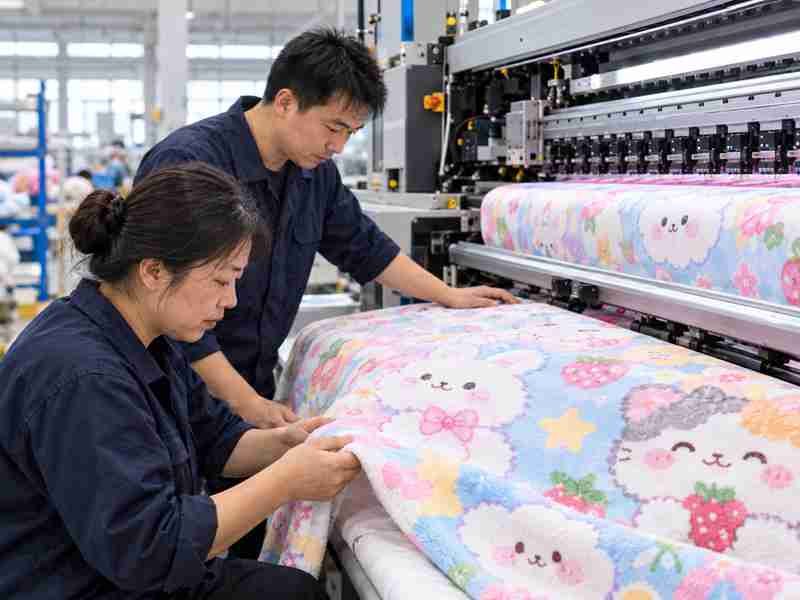
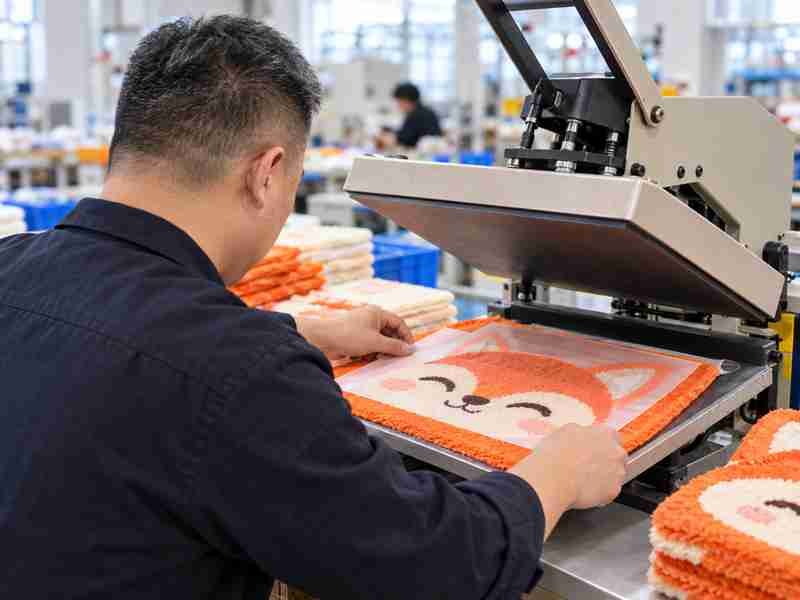
Logos, facial features, graphics, patches, and garment decoration need a process that preserves appearance without creating avoidable stiffness, distortion, cracking, or pile interference.
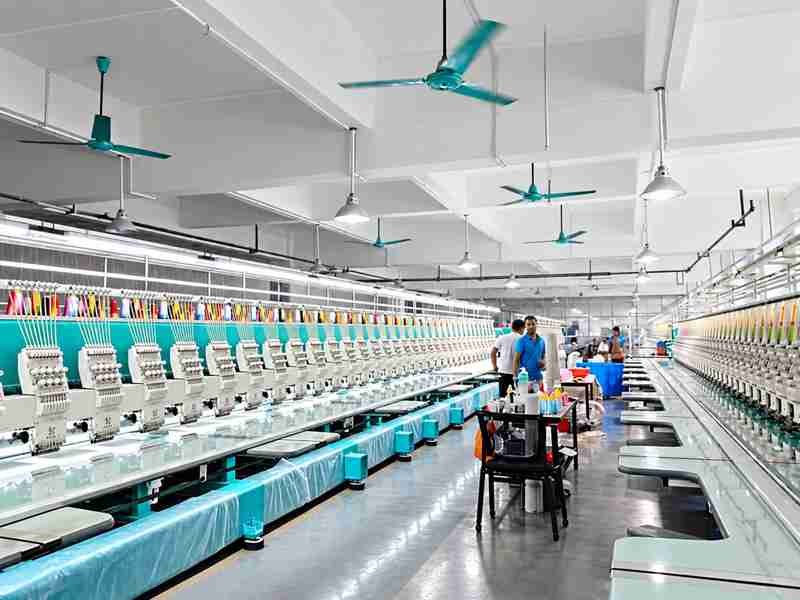
Embroidery
Screen Printing
Digital Printing
Heat Transfer DTF
Applique
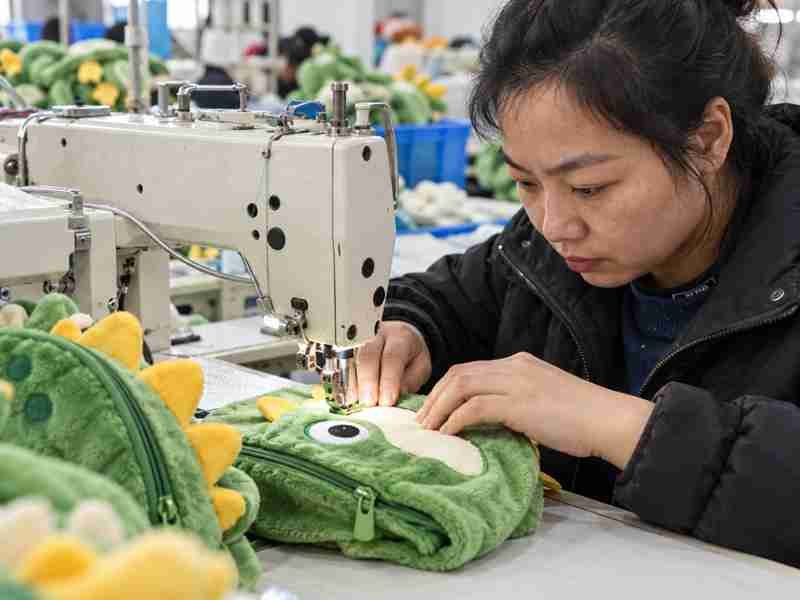
Applique creates large shapes, eye whites, belly panels, stripes, and layered material contrast without filling the whole area with dense stitches. Cut accuracy, edge treatment, alignment, seam distance, and curved-surface behavior require sample confirmation.
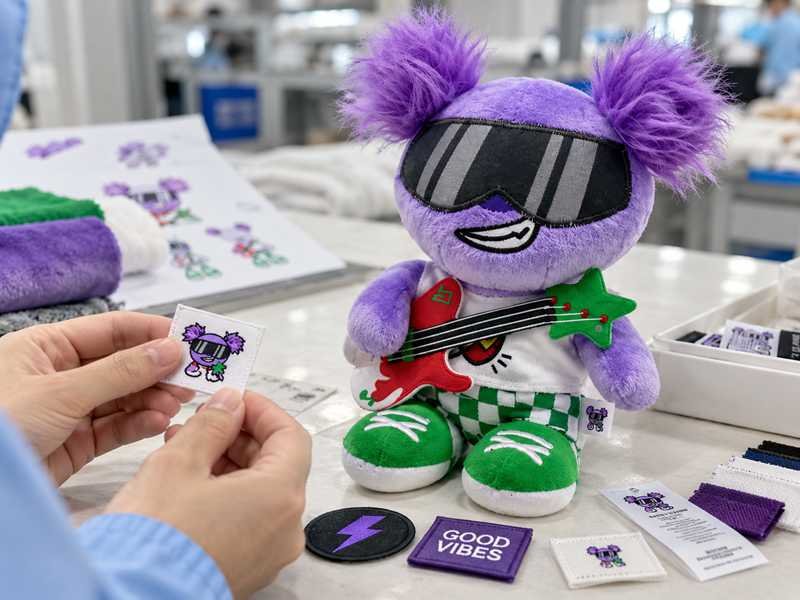
Woven Embroidered Patch
Filling Defines Handfeel, Volume, Balance, and Recovery
Filling Weight
Filling Distribution
Handfeel Target
Balance Recovery
Standing or seated posture depends on center of gravity, weighted sections, foot volume, and head mass. Packaging compression also matters because the product should recover to an acceptable shape after storage and transport conditions.
Sample Development Closes Different Questions at Each Stage
Prototype and V1 Establish the Product Direction
A Prototype is an engineering exploration sample. It is useful when the concept, three-dimensional structure, pose, balance, or key construction route remains uncertain. Temporary materials or simplified details can be acceptable when they are clearly recorded and not mistaken for final product commitments.
V1 is the first formal attempt to translate the project into a more complete product. Target fabrics, main colors, embroidery or print, filling approach, primary accessories, and intended structure should be represented closely enough for serious review.
Internal review before shipping should compare the latest artwork, target size, character geometry, material identity, decoration, components, filling, workmanship, and the specific questions the sample is meant to answer.
Neither Prototype nor V1 should become a bulk-production reference simply because the overall appearance is liked. Their value is to expose uncertainty early enough to correct it.
Revision Samples Convert Comments Into Controlled Changes
Revision work should begin from a clear change list rather than requests such as “make it better.” Each meaningful comment needs to identify what changes, what stays approved, and whether the change affects connected areas.
A local adjustment may be simple: move the eyes 3 mm, shorten the ears, reduce filling, or change thread color. A system change may affect several items at once. Widening the head can change eye spacing, ear position, pattern geometry, filling weight, clothing fit, and packaging dimensions.
Ewin keeps earlier versions available for comparison so improvements can be judged against the approved direction. Pattern, BOM, artwork, embroidery, measurements, and sample IDs should advance together when a revision changes their content.
The objective is comment closure with traceability, not endless aesthetic experimentation. Development should converge toward an approval candidate whose remaining questions are specific and limited.
PP and Golden Convert Approval Into Production Readiness
A Golden Sample represents the final approved product definition in physical form. It should correspond to the frozen BOM, released pattern, final artwork, color standards, filling references, accessories, labels, and packaging rather than simply being the best-looking item in the sample room.
A PP Sample serves a different purpose: it verifies that the frozen product can be reproduced under production conditions using the intended bulk materials, processes, labels, and packaging. Development, production, sourcing, and QC should confirm that the factory can repeat what the sample team approved.
If PP exposes a problem that requires changing the frozen definition, the change should return through controlled approval rather than being silently corrected on the line.
Bulk release should occur only when approval, freeze, production readiness, and QC references all describe one current SKU version.
Version Control Keeps Approved Decisions From Drifting
Every sample stage should have a defined purpose, approval status, and relationship to pattern, BOM, artwork, packaging, and production authority.
| Development Version | Main Purpose | Typical Review Focus | Bulk Production Authority |
|---|---|---|---|
| Prototype | Explore concept and structure | Silhouette, proportion, pose, feasibility, basic construction | No |
| V1 | First formal product version | Fidelity, size, target materials, decoration, structure, filling | No |
| Revision V2/V3 | Close defined comments | Specific changes plus linked impact | No |
| Approval Candidate | Confirm remaining issues are closed | Full visual and technical review | Not yet |
| Golden Sample | Define final approved physical product | Appearance, materials, process, dimensions, accessories, filling, packaging | Physical master reference |
| PP Sample | Verify production readiness | Frozen BOM, released pattern, final processes, labels, packaging | Release condition |
| Reorder Revision | Control approved changes to repeat production | Delta from previous Golden/BOM and affected files | After review and release |
Cost Engineering and DFM Protect Value Before Production
Protect the Features People Actually Notice
Cost engineering starts by identifying the product features that create recognition, touch, function, or shelf value. Character face, silhouette, signature fabric, important embroidery, key accessories, weighted feel, or premium packaging may be worth protecting even when other areas are optimized.
The goal is not to remove detail uniformly. A hidden seam with high labor content may be redesigned while the face remains untouched. A costly molded part may be replaced with appliqué if the visual result remains acceptable. A complex garment may retain its visible layers while simplifying hidden construction.
Ewin can compare the visual effect of each change against cost, production time, reliability, and target channel so commercial pressure does not gradually erase the product concept.
Clear priorities also make quoting more useful because cost discussions can focus on known trade-offs rather than vague requests for a lower unit price.
Remove Complexity That Does Not Add Product Value
Panel count, embroidery stitch area, custom-dyed materials, special trims, hand-applied accessories, internal supports, packaging inserts, and frequent SKU changes can all raise cost without always improving the product proportionally.
DFM looks for places where construction can be simplified without changing the visible result. Seam routes can be adjusted for better machine access. Similar materials can be consolidated. Hidden reinforcement can be standardized. Attachment methods can be changed to reduce rework. Packaging can be resized to reduce unused space while still protecting shape.
Any optimization should consider connected effects. A cheaper fabric may stretch differently and require pattern changes. Removing reinforcement can create attachment failures. Shrinking packaging can deform long pile or accessories.
Useful cost reduction comes from understanding the whole product, not from replacing one line item in isolation.
Compare Product Tiers With Known Trade-Offs
When one target cost cannot preserve every original specification, structured alternatives are more useful than an unexplained downgrade. Premium, Standard, and Cost-Optimized versions can be compared using clear changes in materials, decoration, accessories, construction, packaging, or process complexity.
A Premium version may keep specialty fabrics, layered details, molded parts, and gift packaging. A Standard version may preserve the same character geometry while simplifying hidden structure or decoration. A Cost-Optimized version may reduce material grades, accessory count, handwork, or packaging complexity while protecting the features most important to recognition.
Each tier should be reviewed as a complete product because one change can affect handfeel, testing, manufacturing, or shelf presentation.
This gives brand teams a controlled commercial choice instead of discovering after sampling that the approved design cannot meet the target landed cost.
Compliance Risks Should Enter Development Before Final Approval
Age Grade
Small Parts
Attachment Strength
Material Review
Functional Components
Market Requirements
Certificates, Compliance & Quality Assurance
Ewintoys follows structured quality and compliance practices for custom plush production. We hold relevant certifications and support additional testing, inspection, and compliance documentation based on specific product requirements and destination markets, helping brands meet different international standards with confidence.
























Quality Control Starts During Product Development
Quality gates should prevent unclear product definitions from entering production and catch design, material, process, and revision problems before they become batch defects.
| Development Gate | What Is Reviewed | Typical Risk Prevented | Main Reference |
|---|---|---|---|
| Input Review | Current artwork, size, market, quantity, fixed requirements, missing information | Development starts from incomplete or conflicting inputs | Project brief / asset list |
| Character Review | Silhouette, face, proportion, pose, signature details | Attractive sample does not resemble the intended character | Character reference / fidelity notes |
| Pattern Structure Review | Panel geometry, seam routes, openings, balance, supports, assembly | Sample-room construction cannot scale reliably | Pattern revision / engineering notes |
| Material Process Review | Fabric, color, decoration, trims, components, filling compatibility | Separately approved items fail when combined | Material samples / process swatches |
| Sample QC | Workmanship, dimensions, material identity, decoration, components, filling | Brand team receives avoidable execution defects | Sample ID / revision / review checklist |
| Revision Closure | Comment execution plus linked effects | Old issues return or new changes break approved areas | Revision log / marked references |
| PP Review | Frozen materials and production methods under line conditions | Golden Sample cannot be repeated at scale | Golden / frozen BOM / released pattern |
| Golden Freeze | Final physical and data definition | Production uses informal or mixed references | Factory Golden / QC Reference |
| Bulk QC | Ongoing consistency with released standards | Sample-to-bulk drift | Golden / CTQ / QC plan |
Packaging Development Starts Before the Product Is Finished
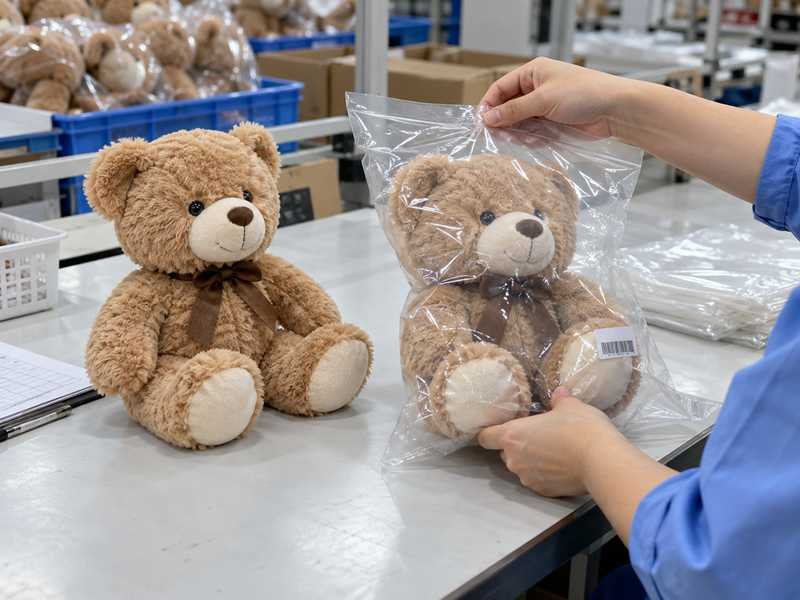
Polybag Packing
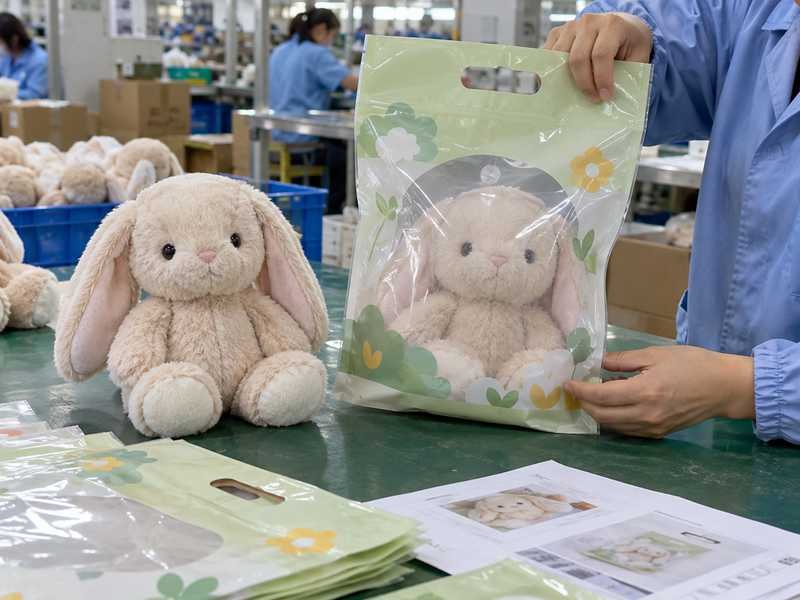
Printed Bag
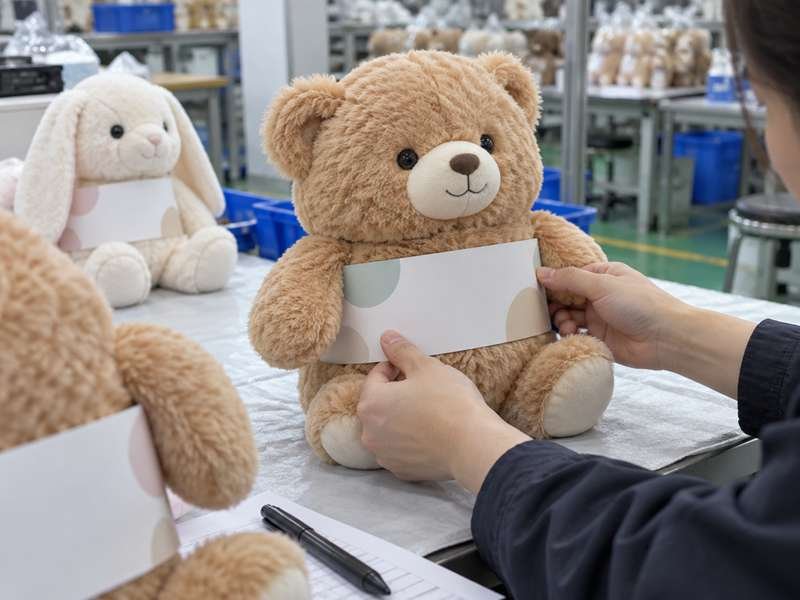
Belly Band
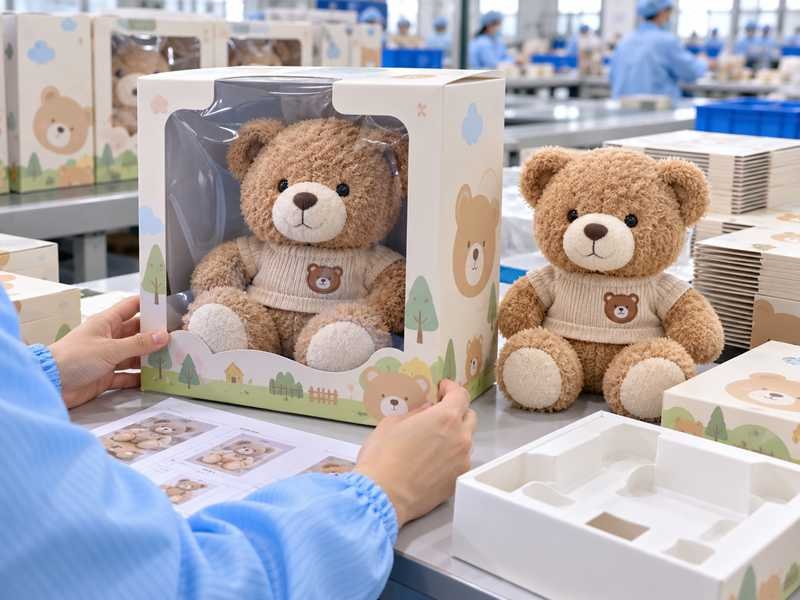
Color Box
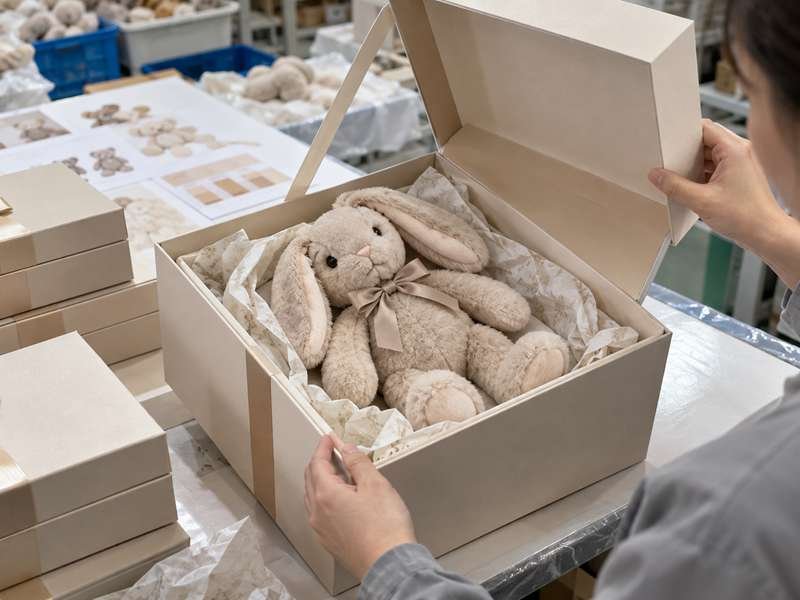
Gift Box
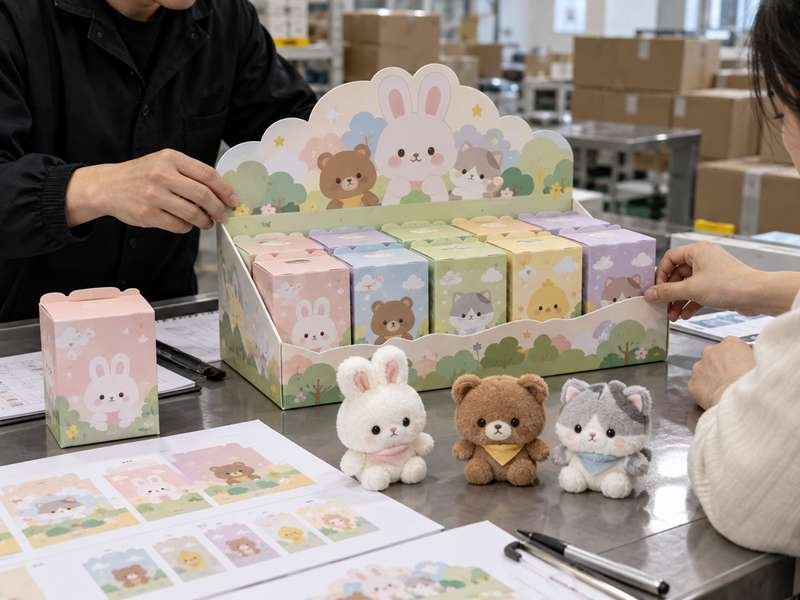
Blind Box Display
Golden Sample and Data Must Release Together
Golden Sample Sets the Physical Standard
The Golden Sample is the final physical reference for proportion, face, silhouette, handfeel, filling, clothing, decoration, component placement, finishing, labels, and overall presentation. It should be identified by Project ID, SKU, revision, approval date, and status so it cannot be confused with V1, testing, sales, or obsolete samples.
One physical sample cannot communicate every hidden requirement. Material IDs, thread codes, embroidery programs, filling weights, internal components, label artwork, packaging dimensions, and inspection criteria need data references beside the Golden.
Factory Golden and QC Reference samples should correspond to the same approved version. Controlled storage matters because a Golden Sample should not be modified, dismantled, or casually circulated after freeze.
The physical standard is strongest when it remains linked to the exact data standard used by sourcing, manufacturing, quality, and reorders.
Frozen BOM and Released Files Set the Data Standard
The frozen BOM records the materials and components behind the approved product: fabric identity, composition, GSM, pile, color, thread, trims, accessories, filling, labels, packaging, and other critical specifications. Released patterns define geometry, seam references, nap direction, mirror parts, and production-ready panel data.
Final artwork and embroidery or print programs control decoration. Measurement specifications define what is measured and how. Filling specifications hold weight or handfeel references. Accessory specifications define position and fixing. Packaging specifications define unit pack, labels, barcode, cartonization, and transport protection.
Before freeze, the BOM can evolve from Draft to Controlled as development progresses. After freeze, substitutions should not enter production informally. A material, component, artwork, or packaging change needs review for appearance, cost, testing, supply, assembly, and schedule impact.
Data freeze turns approval into repeatable execution.
Production Release Prevents the Factory From Reinterpreting the Product
A controlled production-release package should give manufacturing teams enough information to build the approved product without asking the sample room to explain every detail again.
The release package can include Factory Golden, QC Reference, frozen BOM, released pattern list, final artwork and decoration files, measurement specification, filling references, accessory position and attachment method, labels, packaging specification, approval evidence, and relevant QC or testing instructions.
Production, sourcing, and quality teams review readiness before bulk release. If a PP sample reveals an issue requiring a frozen change, the revised item should return through approval and update the affected files rather than being corrected quietly on the line.
The same release structure supports reorders. Future production can perform a controlled delta review against the prior Golden and BOM instead of rebuilding product knowledge from old emails, photographs, or memory.
Development Evidence Should Show Decisions, Not Just Finished Samples
Artwork to Pattern
V1 to Golden
Material Trials
Pattern Revision
Golden Sample Card
Release Package
Product Development Frequently Asked Questions
Ewin can start from sketches, artwork, character sheets, 3D renders, reference photos, physical samples, or mature technical packages. Target size, quantity, market, and launch timing help define the development route.