
Plush Toy Filling Library for Better Handfeel, Weight & Shape
Choose filling by product experience—not by habit. Ewin Toys helps brands define softness, support, weight distribution and shape retention before bulk production, reducing inconsistent handfeel, deformation and recovery issues after compression or shipping.
60+ Stuffing & Shaping Team | PP Cotton | PE Beans | EVA Support | Zone-Specific Fill Weight | Softness & Density Control | Weighted Areas | Compression Recovery Planning
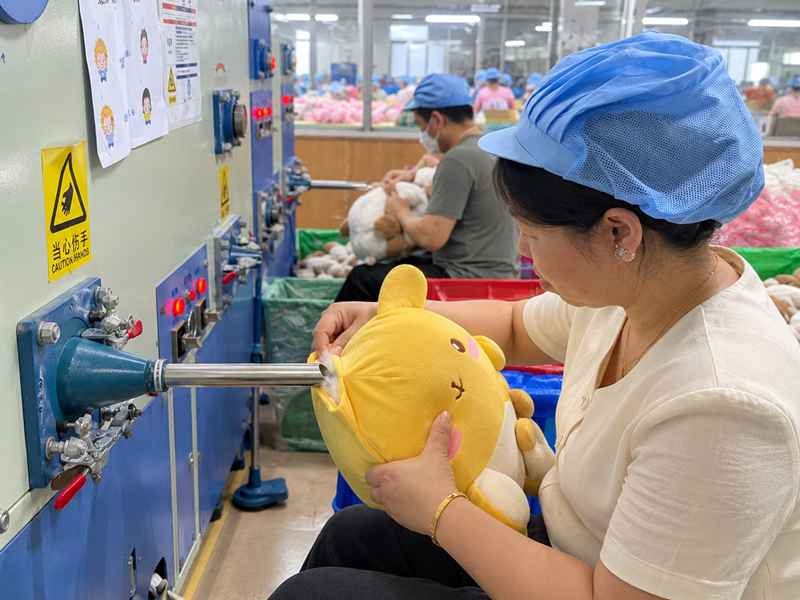
Filling Changes the Shape, Feel, Balance, and Recovery
Shape and Proportion
Handfeel and Firmness
Posture and Balance
Recovery After Packing
Compression and long storage can reduce fiber loft, flatten faces, bend ears, disturb long pile, or shift weighted structures. Filling and packaging should be reviewed together so the opened product can recover to the approved shape without relying on permanent deformation being corrected after delivery.
Select Filling by the Finished Product Requirement
Define the Result Before Selecting the Filling
Start with the finished product rather than a loose material sample. Ewin reviews product type, finished size, intended pose, desired softness, target weight, structure, accessories, electronic modules, packaging method, and any weighted or support requirement. A huggable pillow, a seated collectible, a 5-12 cm mini plush, and a module-ready character can all need different internal strategies even when the outer fabric looks similar.
The first decision is what each area must do. A face may need shape retention. A torso may need a softer center. Feet may need more local density. A weighted base may need a contained insert. Electronics may require no-fill space and surrounding padding. Defining the result first prevents a generic instruction such as “medium fill” from becoming the only production standard.
Compare Candidate Materials Inside the Actual Shell
Loose fiber cannot show how the finished product will behave. Candidate filling routes should be assessed in the sewn shell because fabric stretch, cavity geometry, seams, internal components, and product scale all change the result. Polyester fiber may provide body volume and softness. Recycled polyester can support recycled-content programs when its loft, handfeel, recovery, batch behavior, and evidence are acceptable. Weighted beads or bean-style particles need controlled containment. Foam or EVA may support areas where fiber alone cannot hold shape.
Physical trials can compare handfeel, local volume, balance, hard points, recovery, and interaction with accessories. If one material solves a shape problem but creates an unwanted rigid feel, the solution may be a mixed system rather than more of the same fill.
Freeze the Approved Filling Into Production Data
After approval, the filling decision should become a specification linked to the current SKU and revision. Useful fields include filling type, total fill weight where measurable, zone weight or zone reference, firmness target, weighted bag or bean bag position, support insert, no-fill areas around modules, and the Golden Sample used for comparison. Production can then work from the same source of truth instead of operator memory.
First-piece approval verifies the chosen route before scale-up. IQC confirms the correct filling material and relevant incoming conditions. IPQC checks weight, distribution, hollow areas, hard lumps, insert position, left-right balance, and finished shape. If material, supplier route, insert weight, compartment location, or support construction changes, the affected SKU should return through change review before the replacement becomes a new production standard.
Filling Strategies Change With the Plush Product Type
Product scale, pose, internal space, handfeel, function, and packaging route determine how filling and support should be organized.
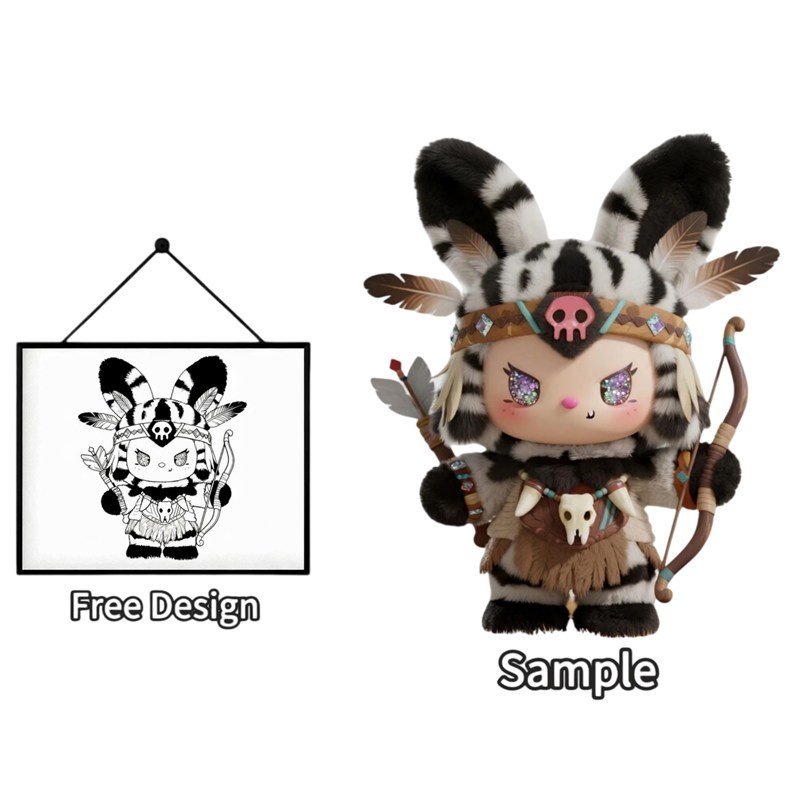
Character IP Plush
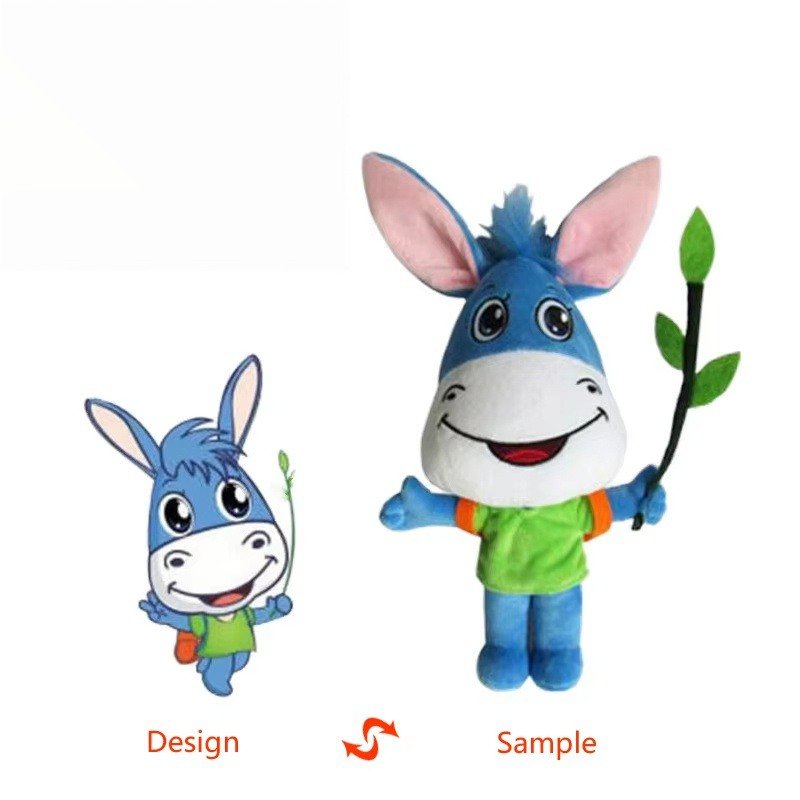
Mascot Plush
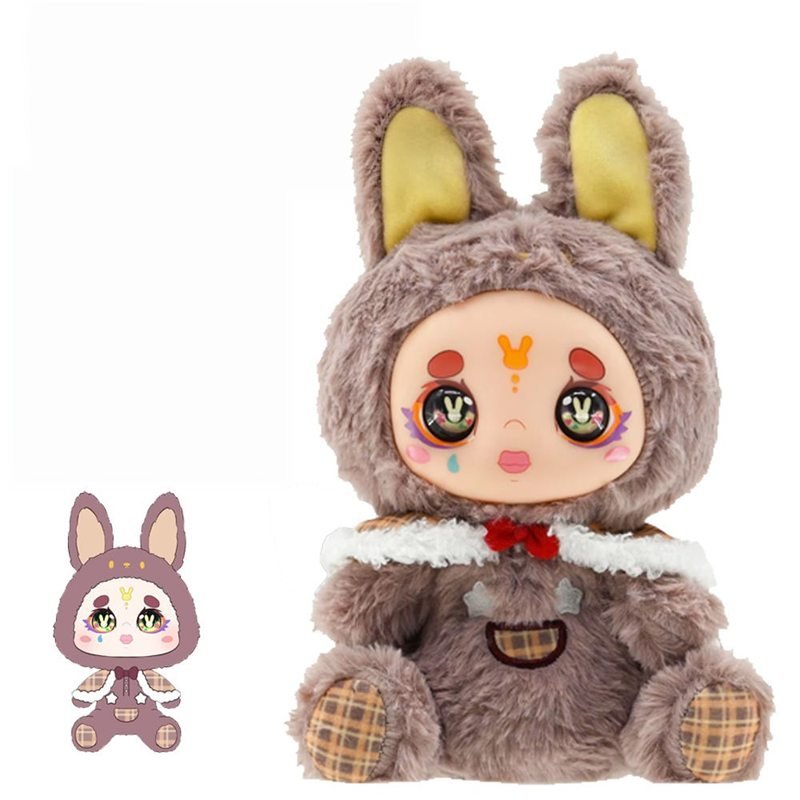
Collectible Plush
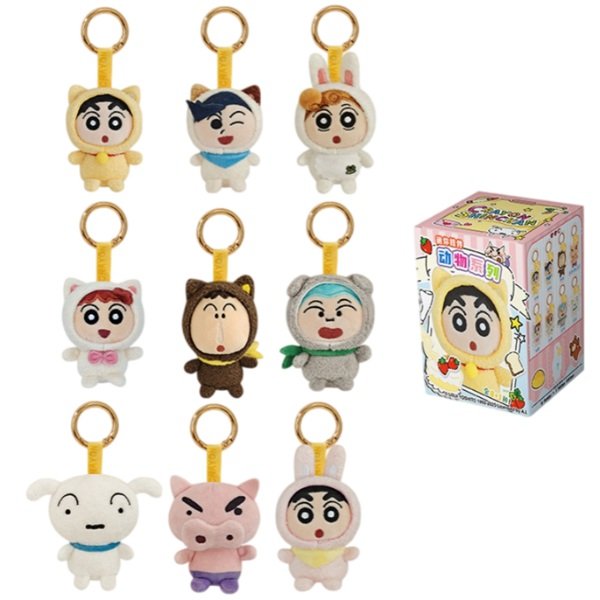
Mini Blind Box Plush
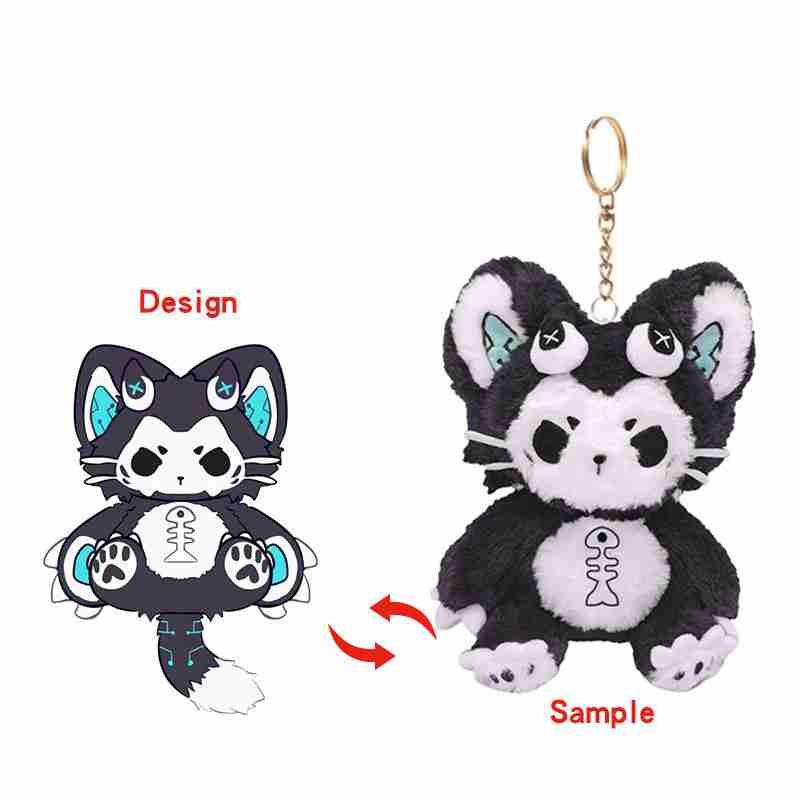
Plush Keychains
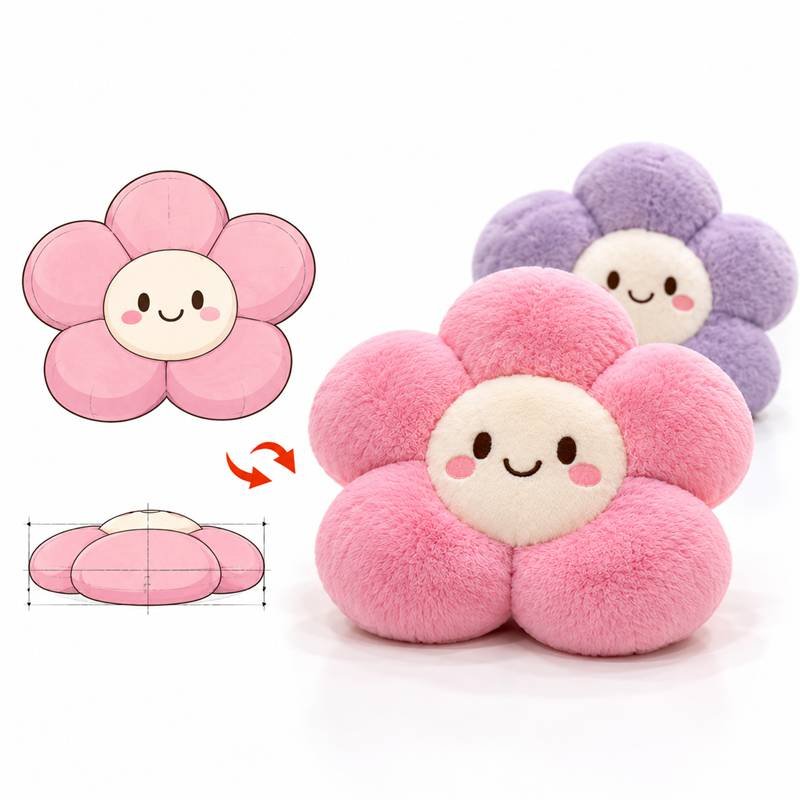
Plush Pillows
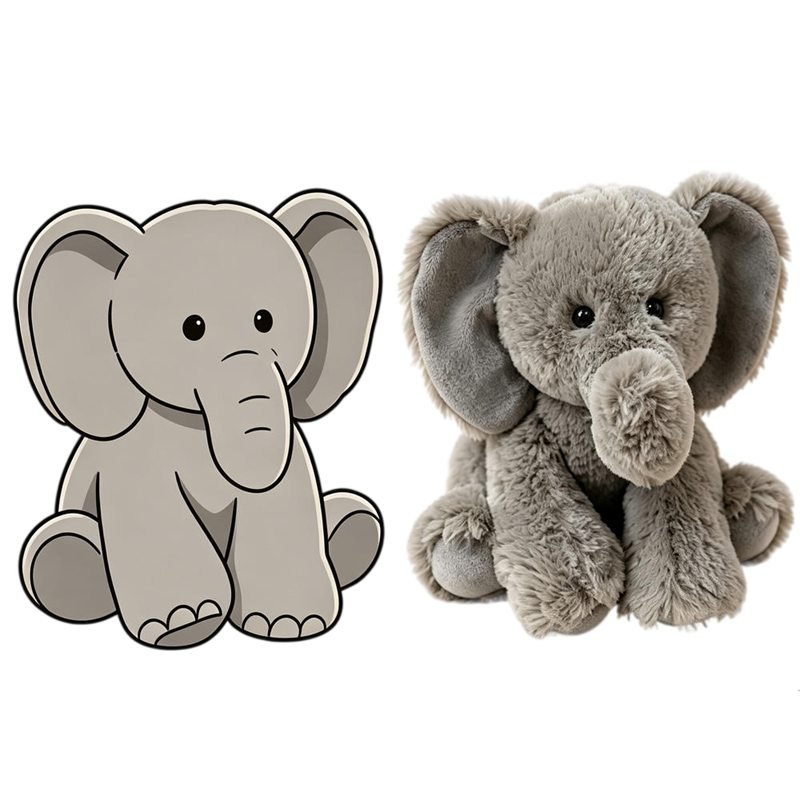
Weighted Plush
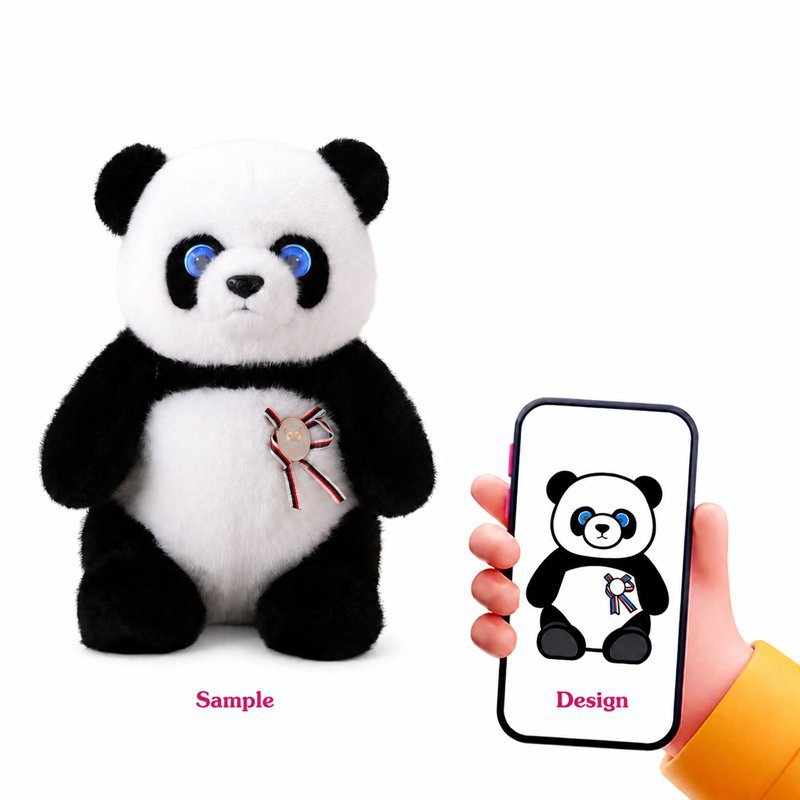
Electronic AI Plush
Different Program Teams Need Different Filling Evidence
Global Brand Teams
IP Owners
Licensing Teams
Toy Companies
Collectible Brands
Retail Private Label
Weighted Sensory Programs
Technology Teams
Core Fiber Fillings Build Volume, Softness, and Recovery

Polyester Fiber Fill
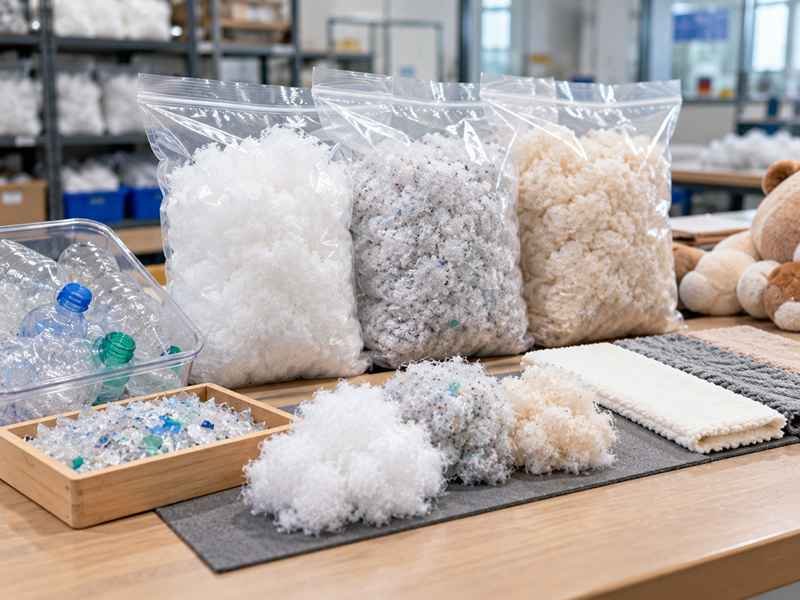
Recycled Polyester Fill
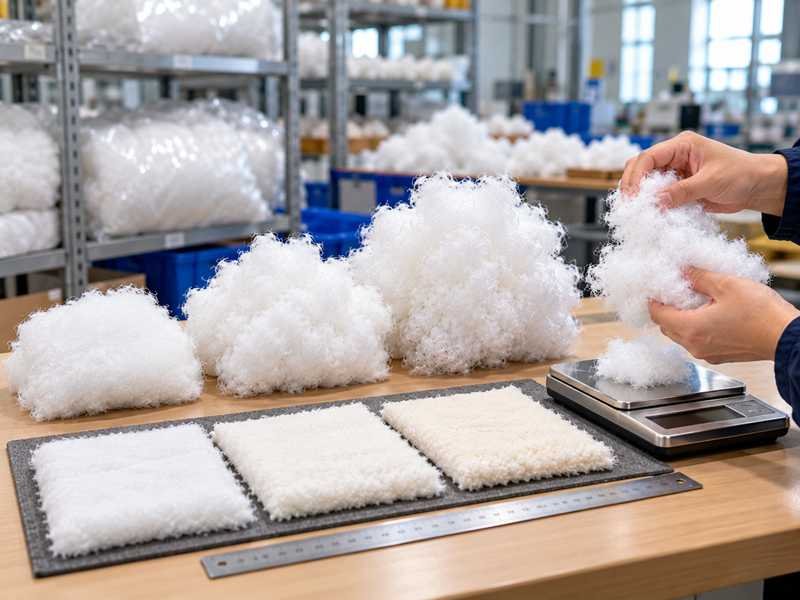
Fiber Grade and Loft
Weighted Fill Materials Need Controlled Internal Containment
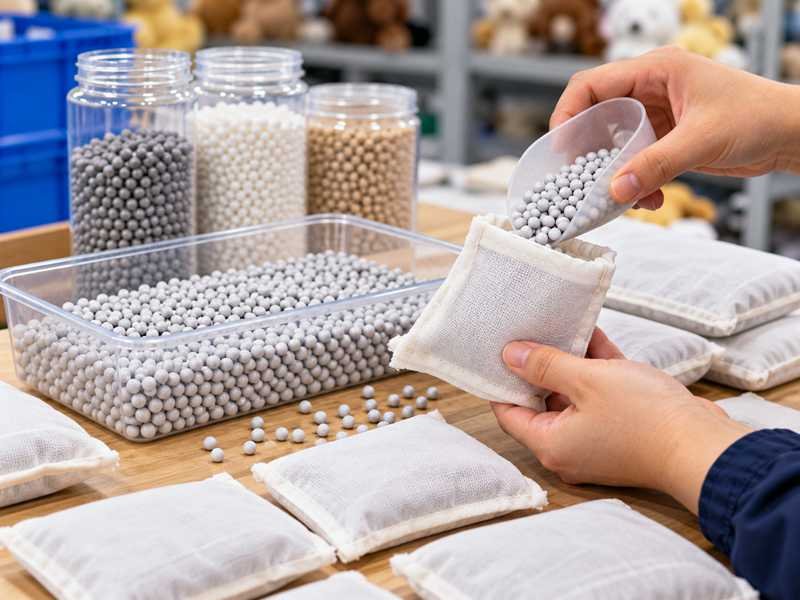
Weighted Beads
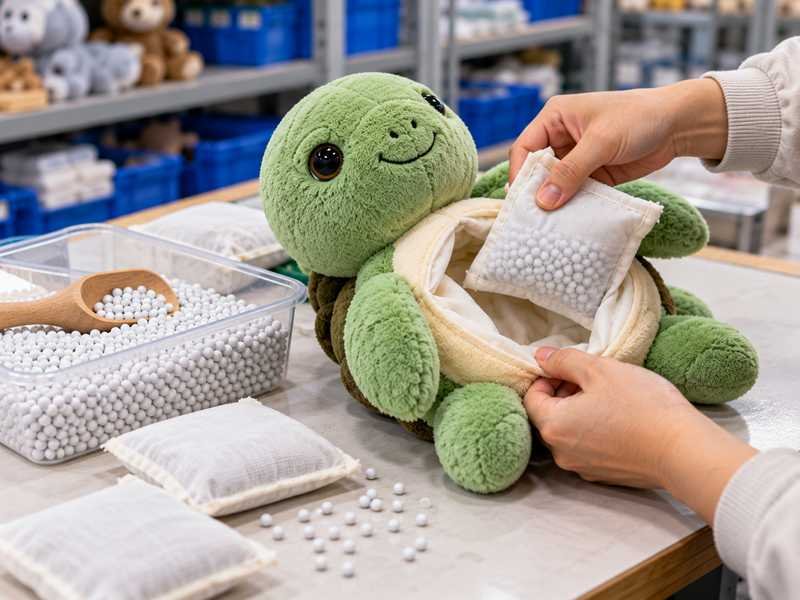
Bean-Style Particles
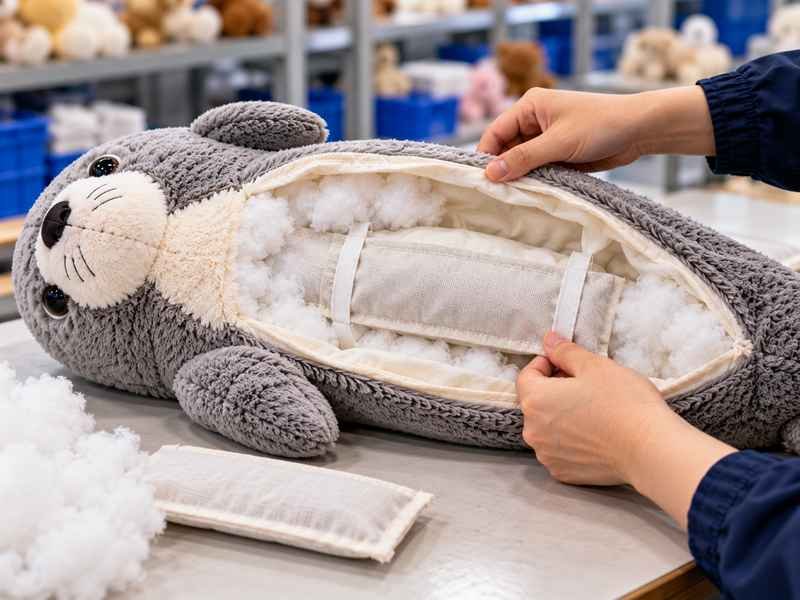
Weighted Inner Bags
Structural Inserts Support Shapes Fiber Cannot Hold Alone
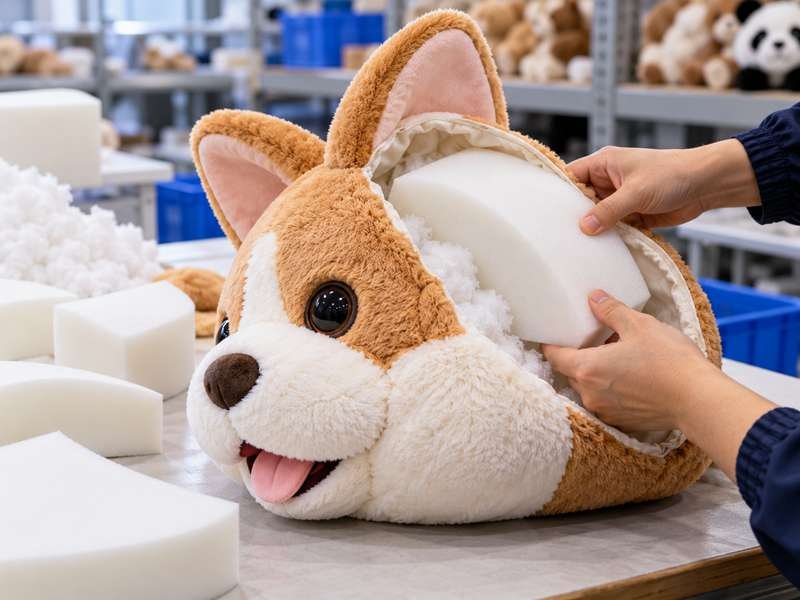
Foam Inserts
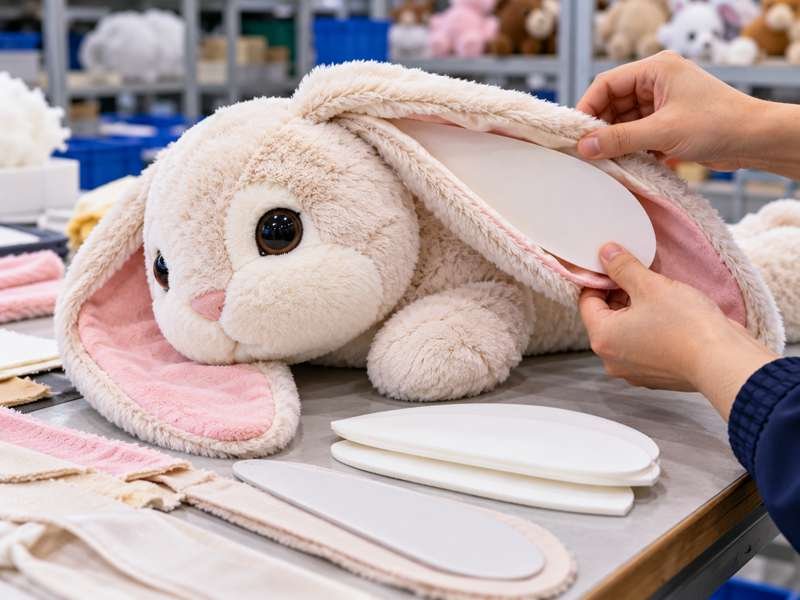
EVA Structural Pads
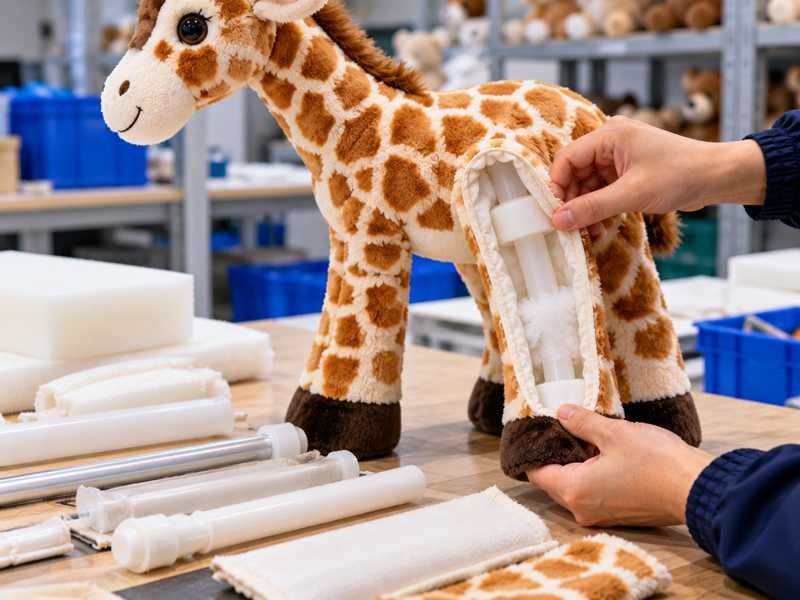
Internal Support Pieces
Mixed Filling Systems Solve More Than One Product Need
Zoned Fiber Filling
Fiber Plus Weighting
Fiber Plus Structure
Compare Filling Properties Before Locking the Product Specification
A filling decision should be evaluated by finished-product behavior, not by material name or loose handfeel alone.
| Filling Property | What It Controls | What to Review in Sample or Bulk |
| Material Type | Base filling route | Material ID, supplier route, approved use |
| Loft | Volume and softness | Body fullness, rebound, collapsed areas |
| Firmness | Shape support and tactile feel | Golden Sample handfeel, local stiffness |
| Fill Weight | Product mass and volume | Whole-product reference and tolerance route |
| Zone Distribution | Local proportion | Head, body, limbs, feet, tail, weighted areas |
| Recovery | Post-pack return | Shape after opening and approved recovery period |
| Structural Support | Posture and geometry | Foam, EVA, support-piece interaction |
| Weighting Ability | Sensory mass and stability | Media, inner bag, location, center of gravity |
| Cavity Compatibility | Functional product clearance | No-fill zones, padding, access, openings |
| Containment Need | Particle control | Inner bag material, seams, closure, fixation |
| Batch Behavior | Repeat production | Loft, color, visible impurities, consistency |
| Approval Reference | Production repeatability | Golden Sample, BOM, revision, filling sheet |
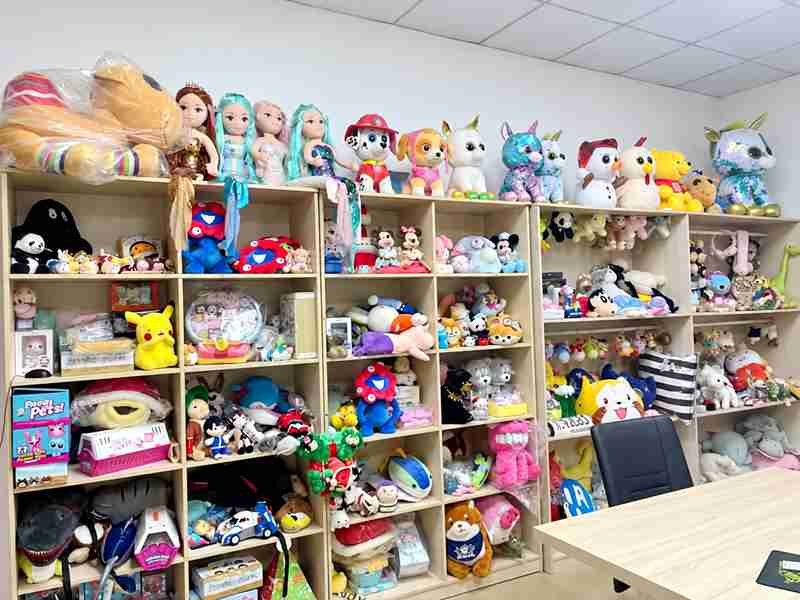
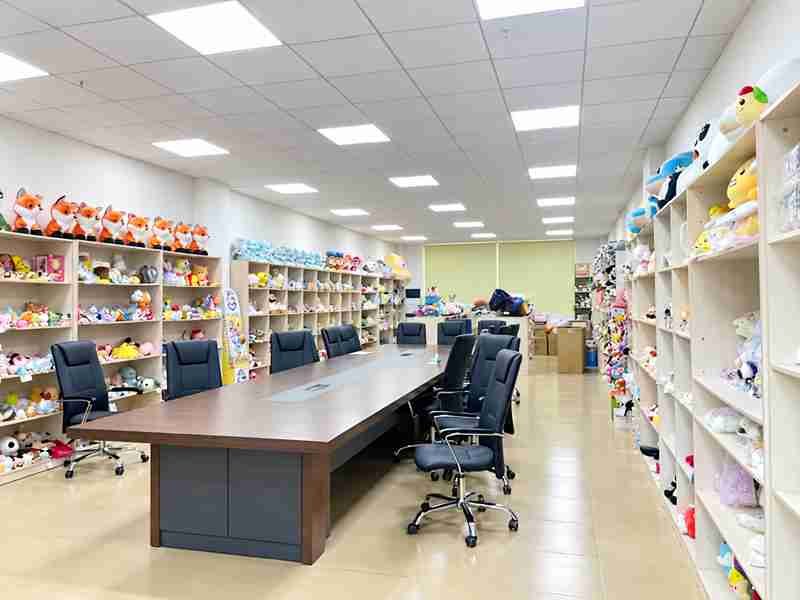
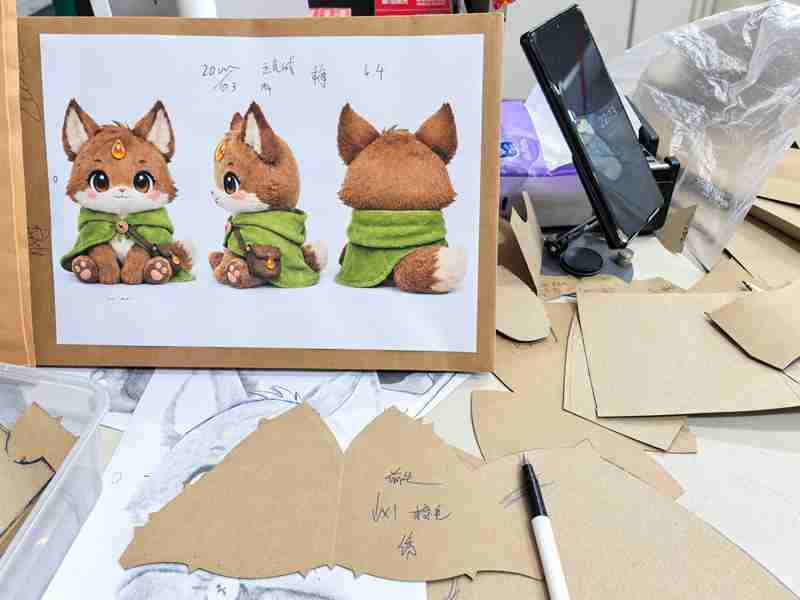
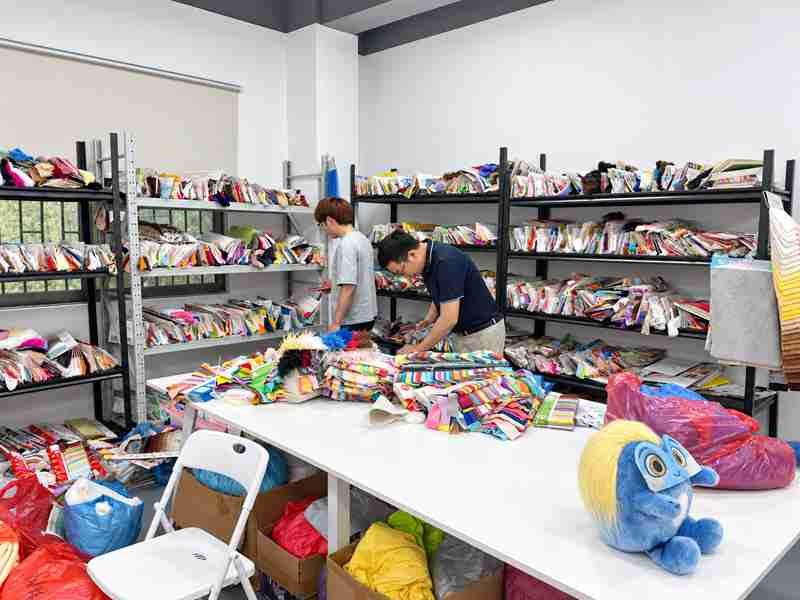
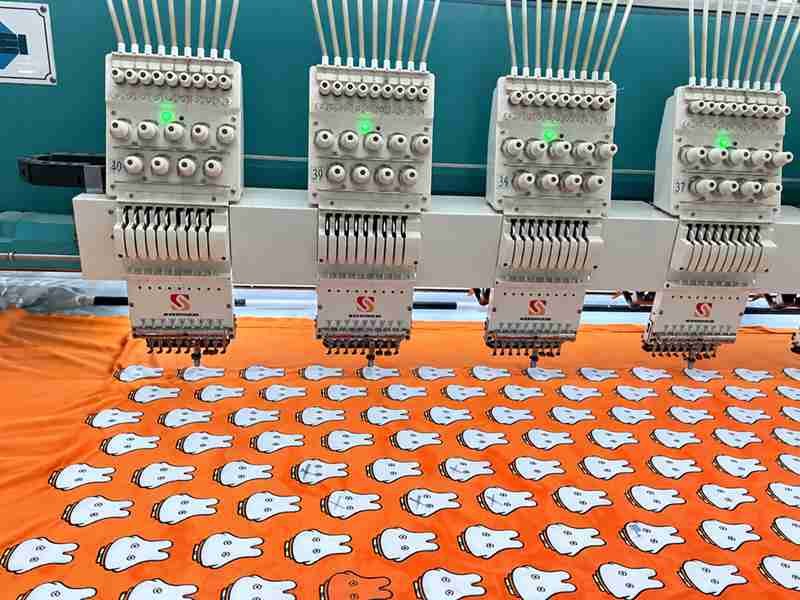
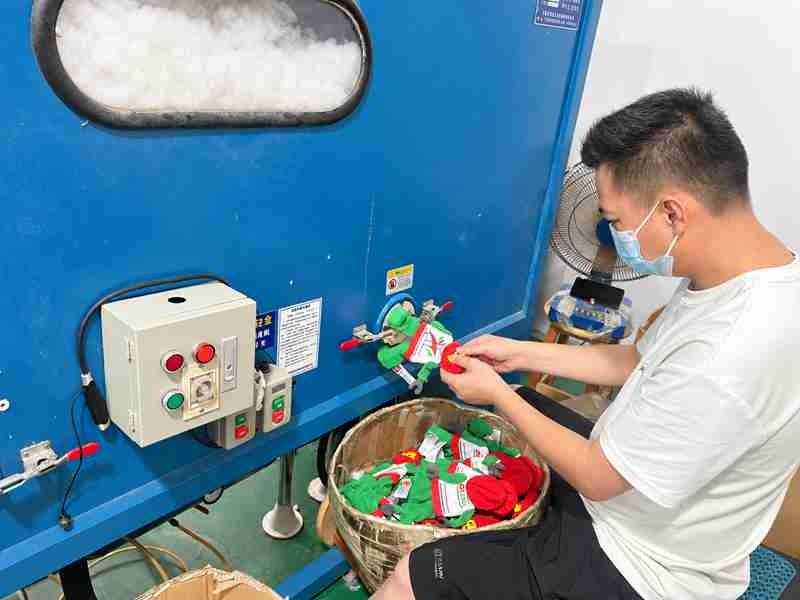
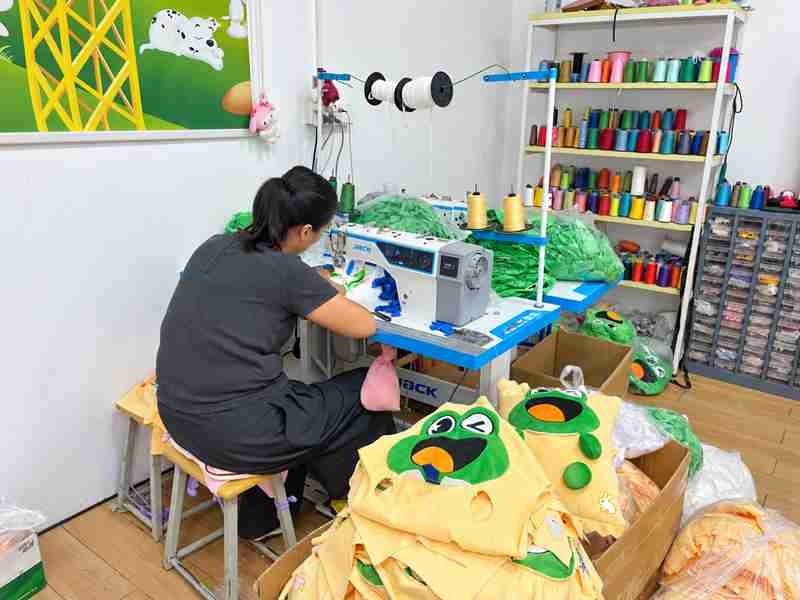
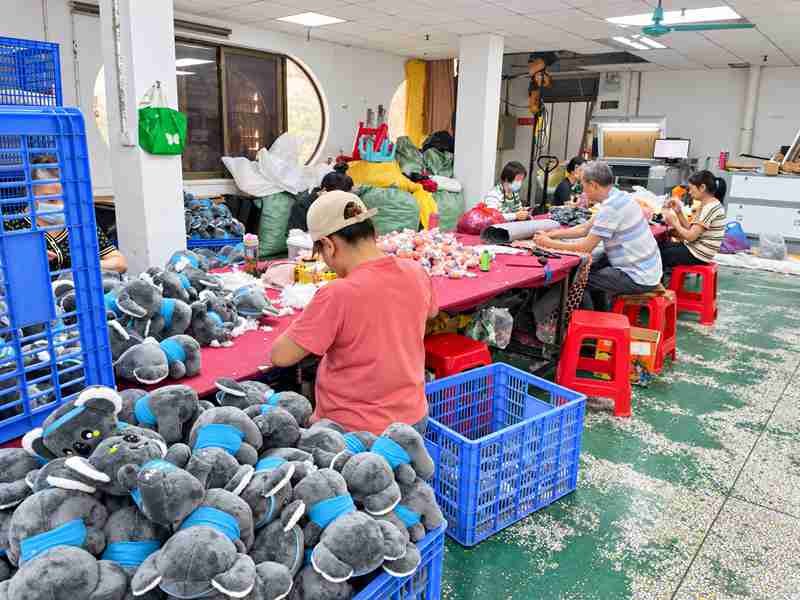
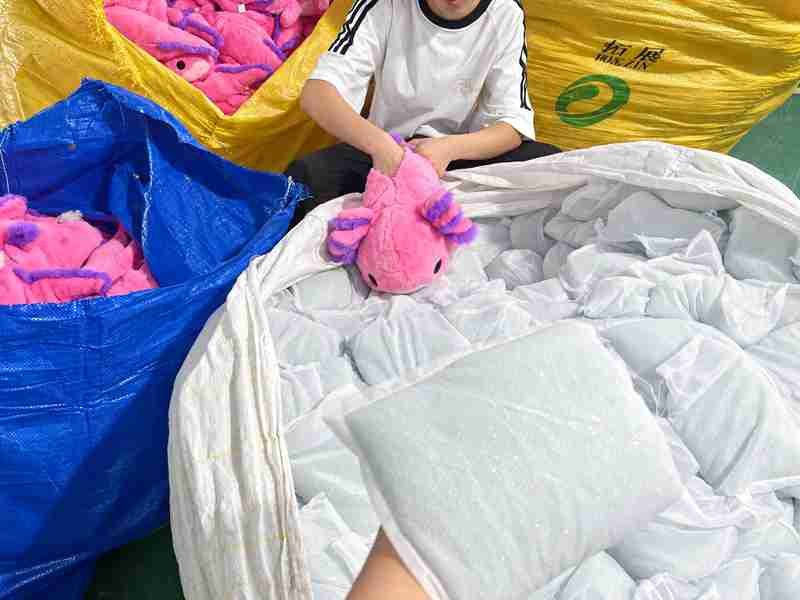
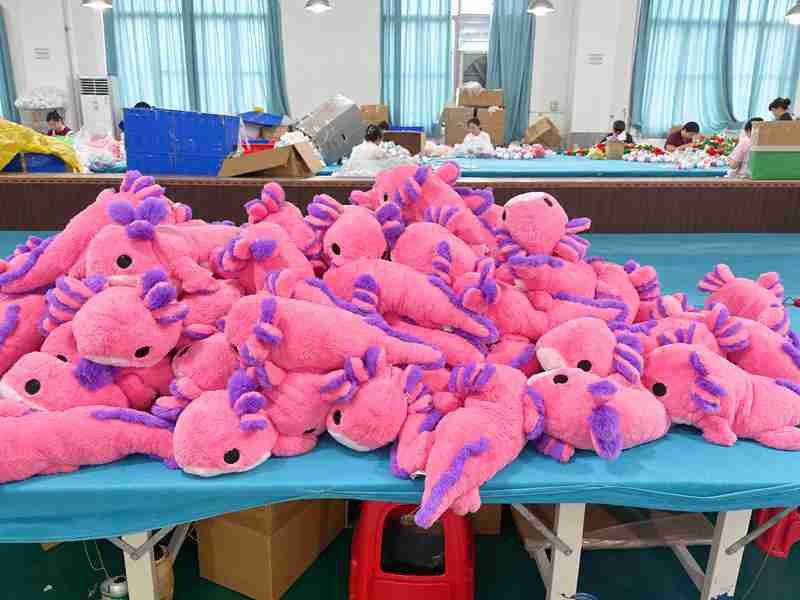
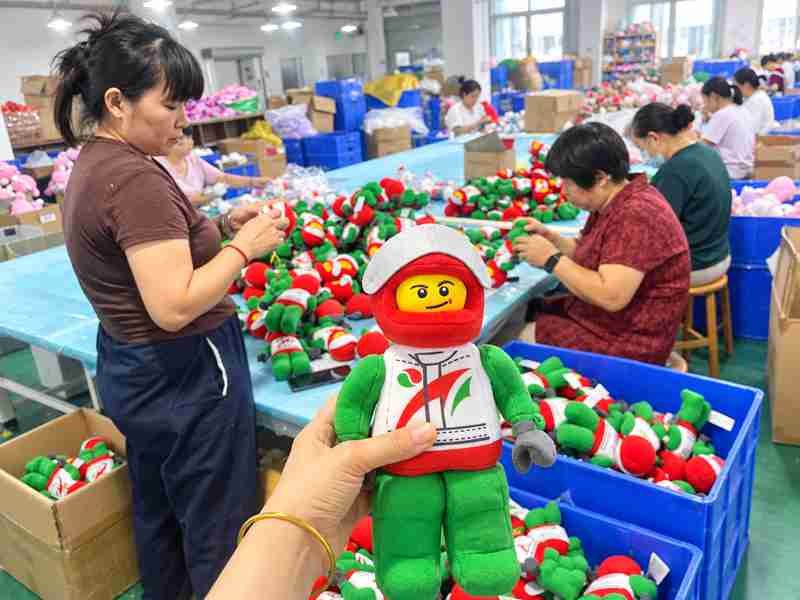
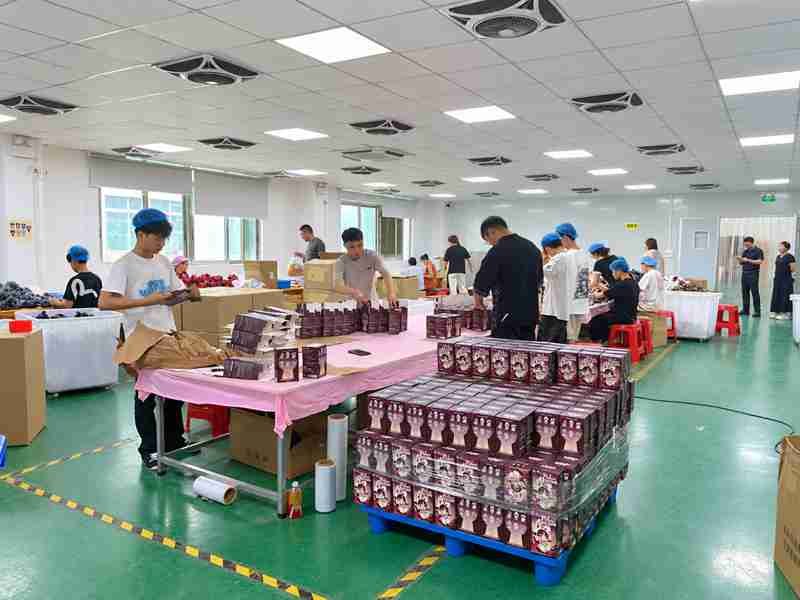
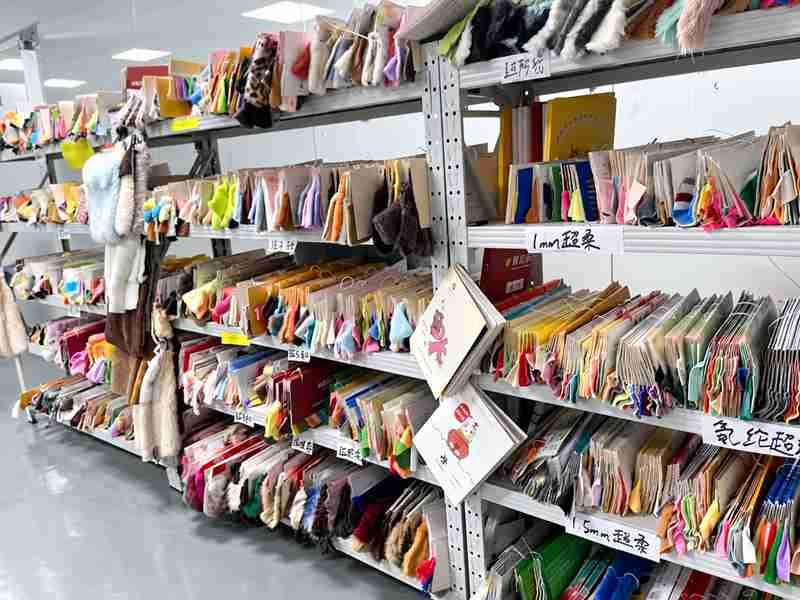
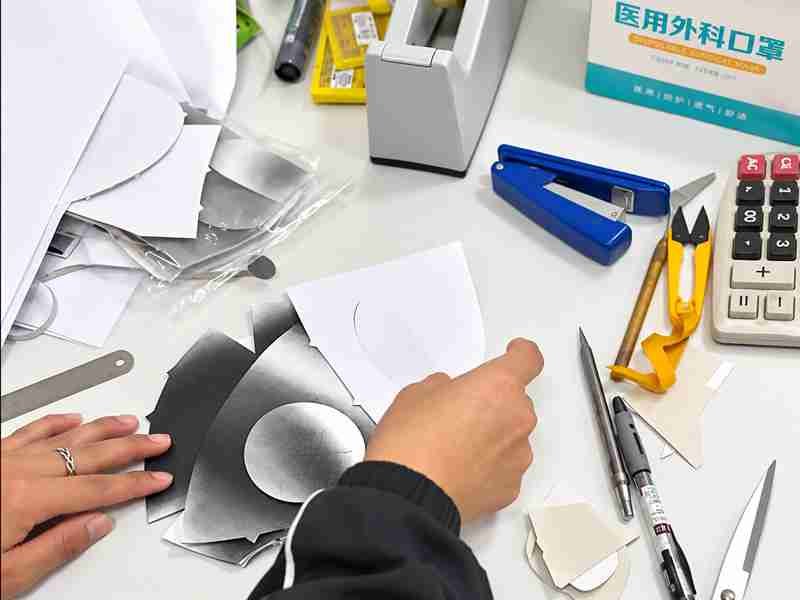
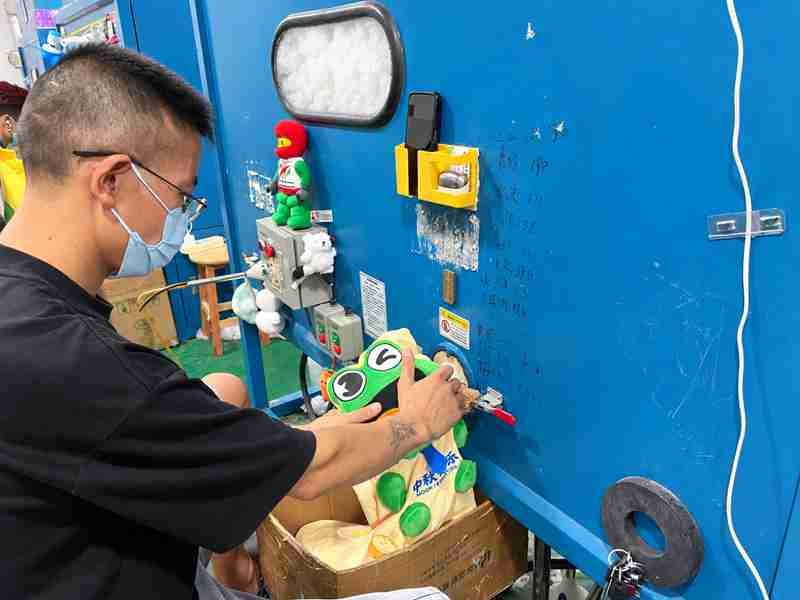
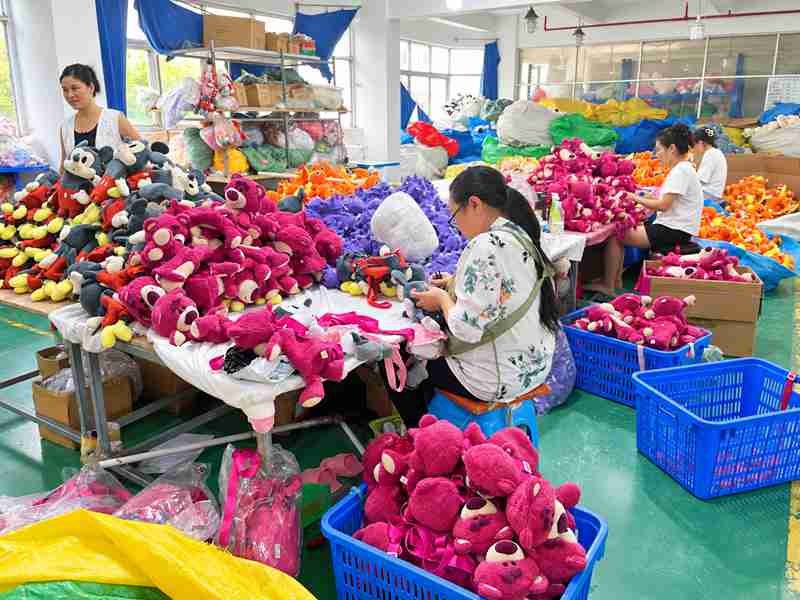
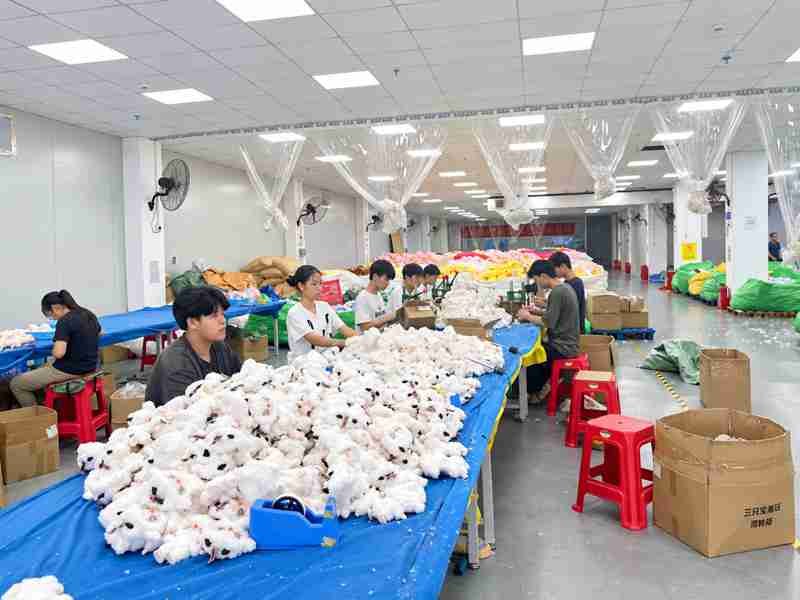
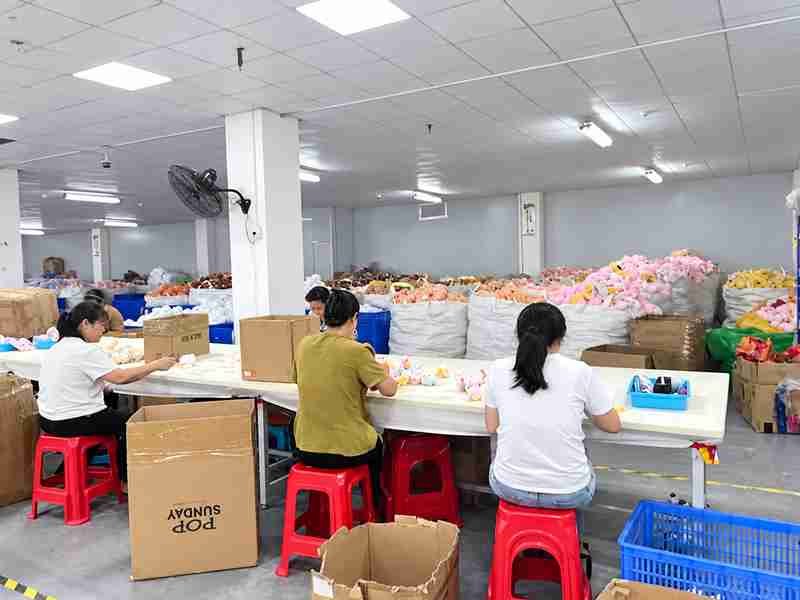
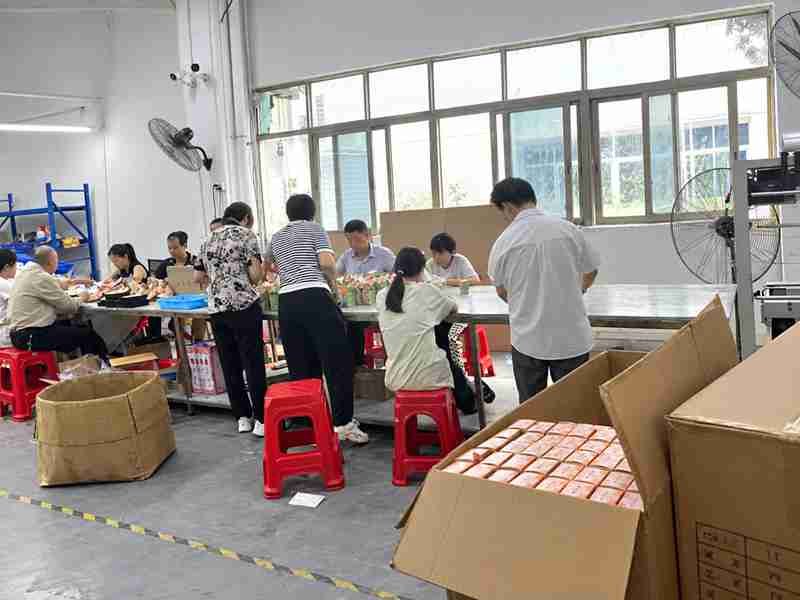
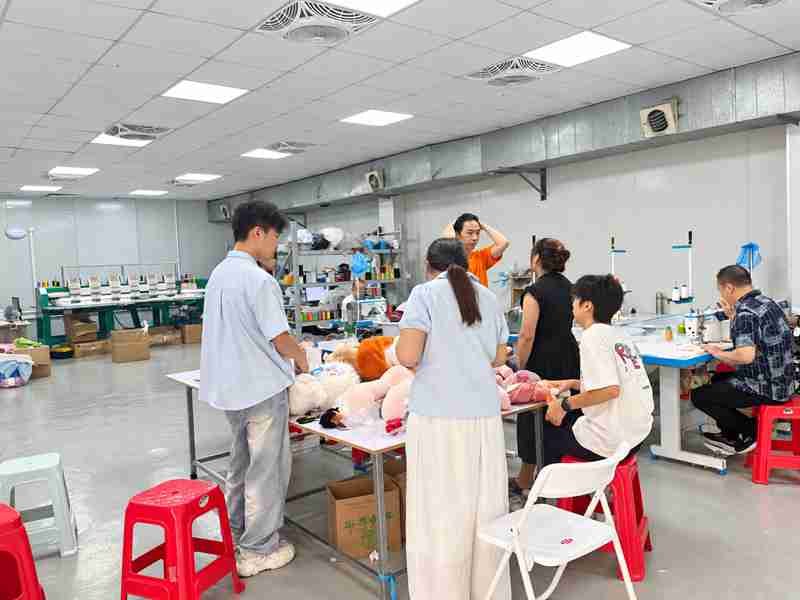
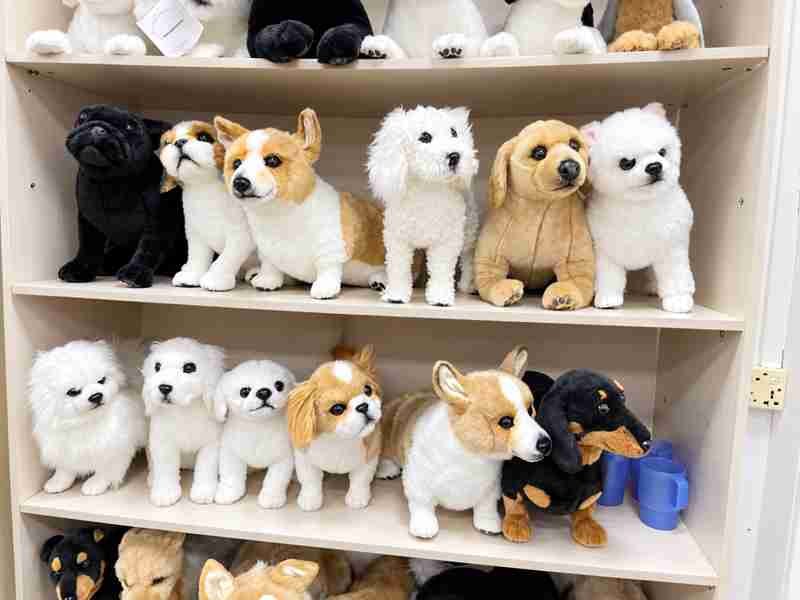
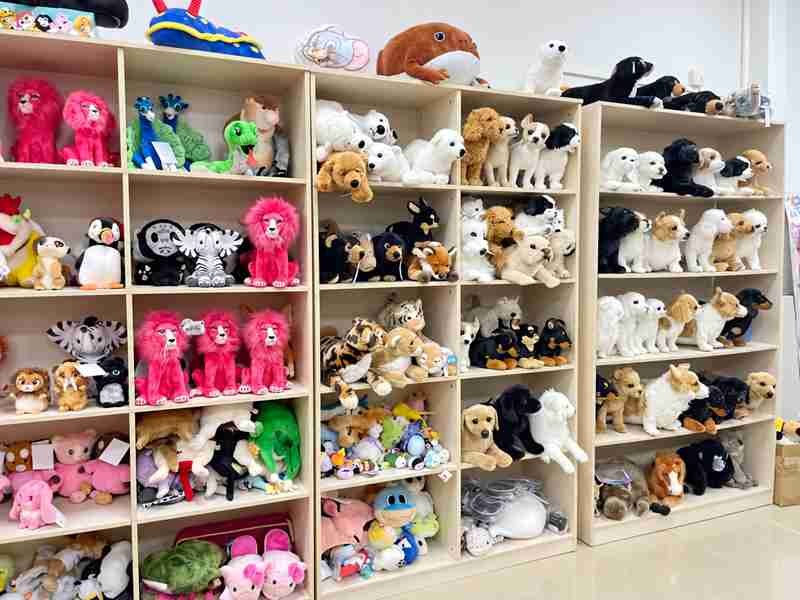
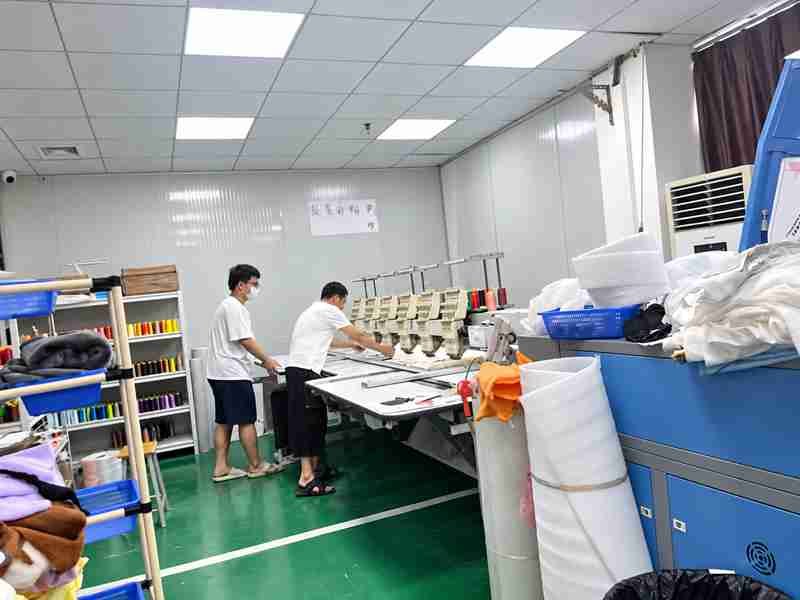
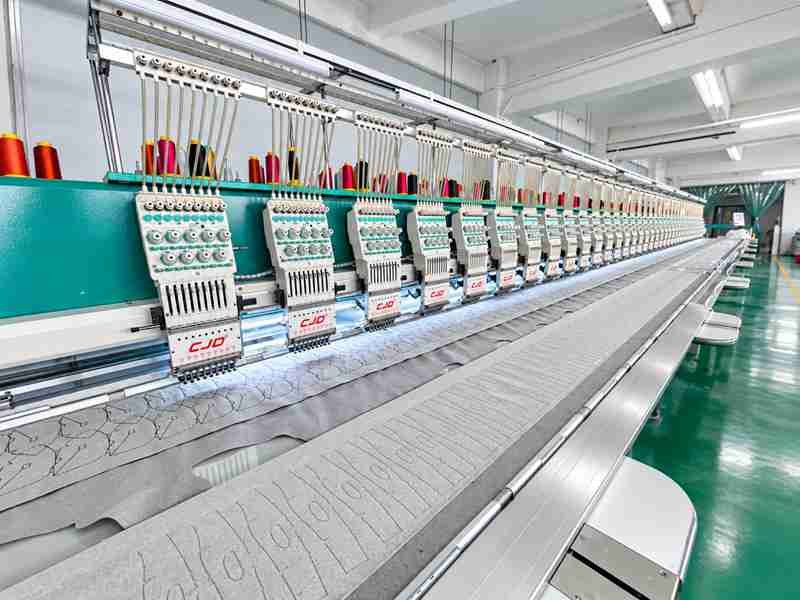
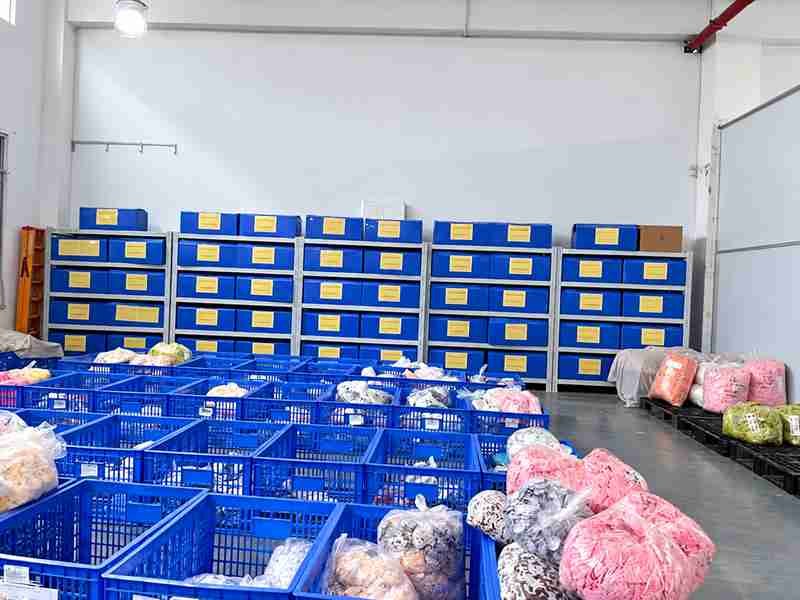
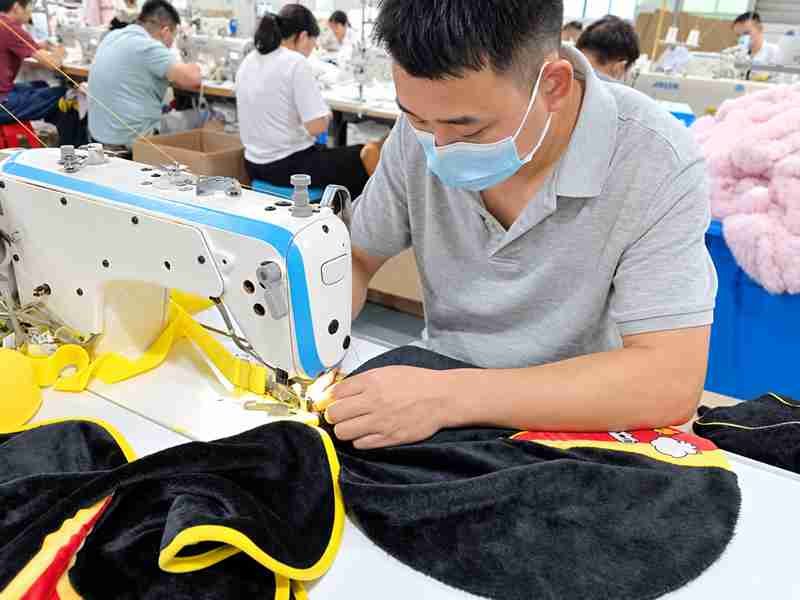
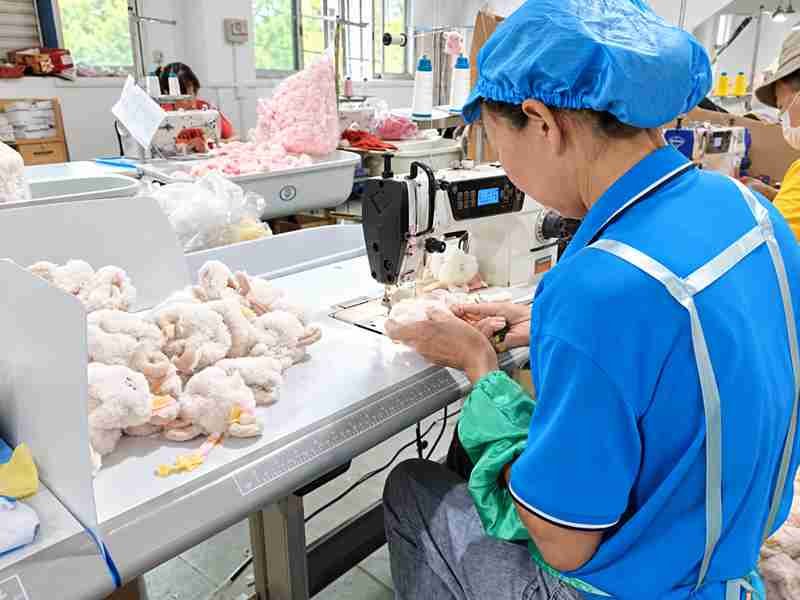
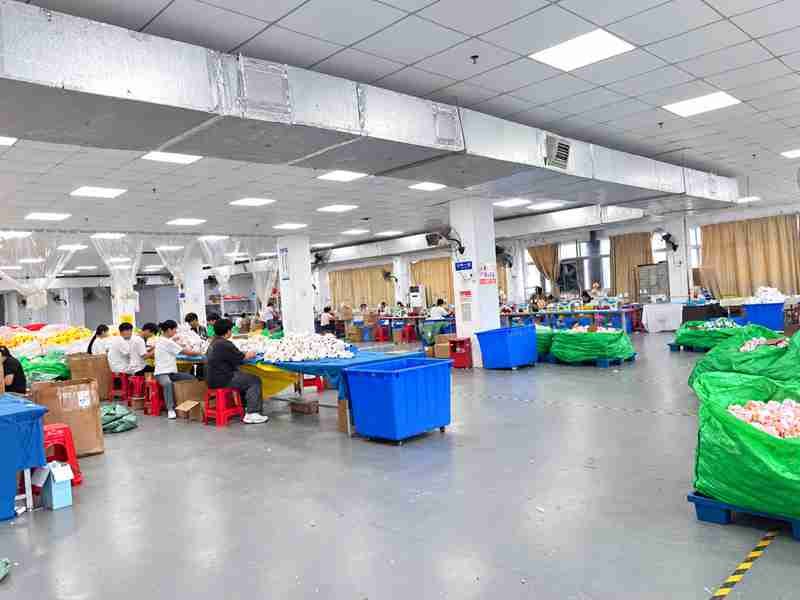
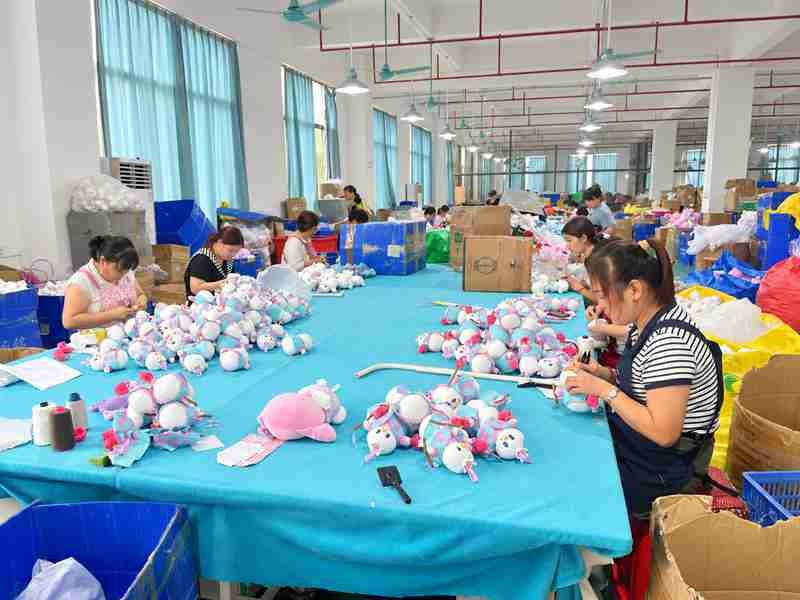
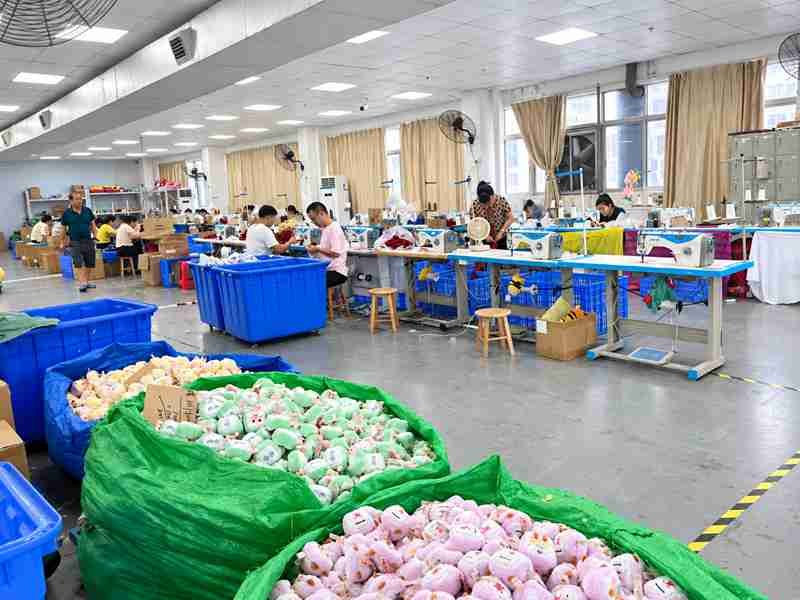
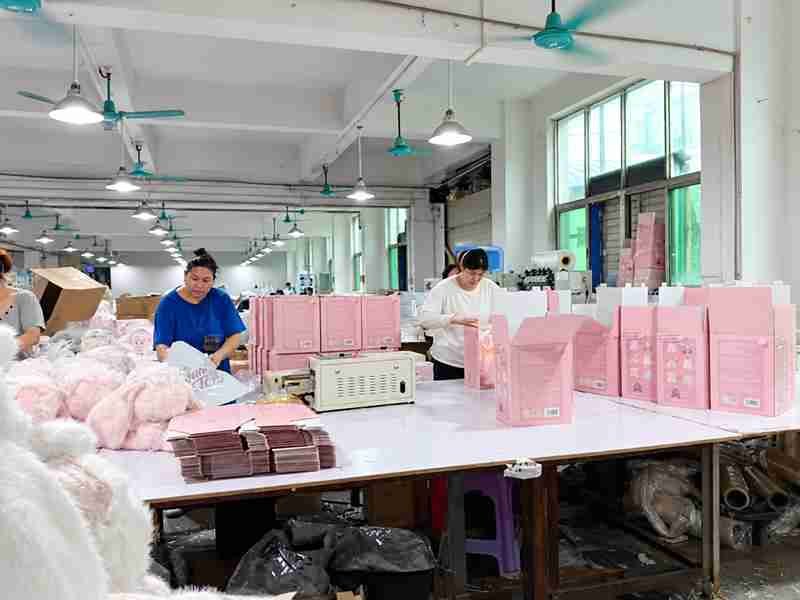
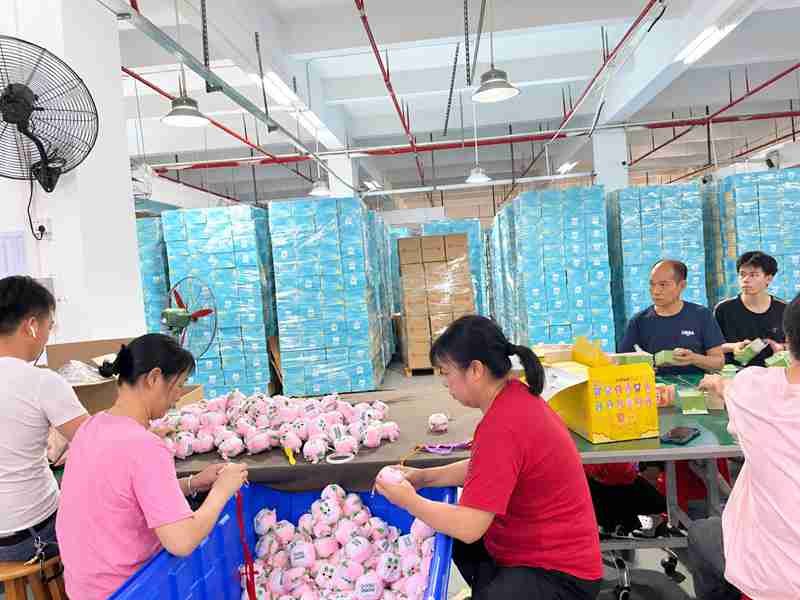
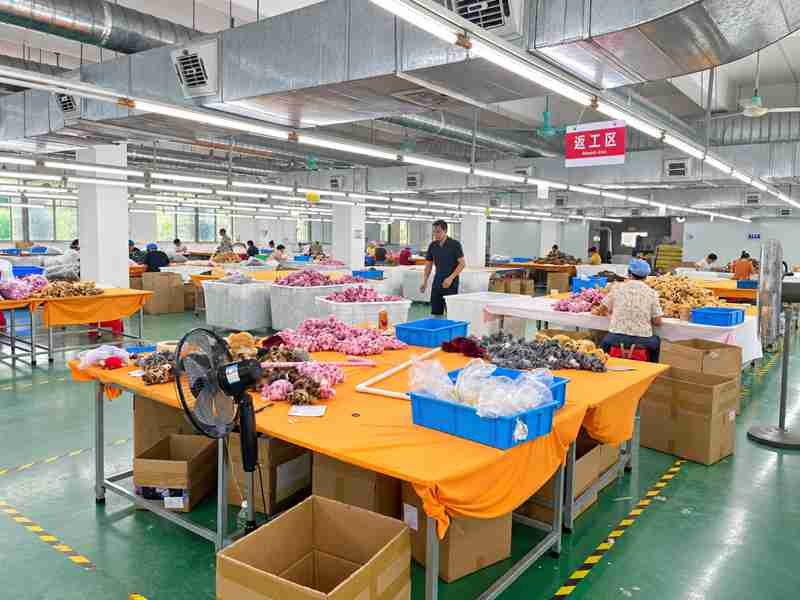
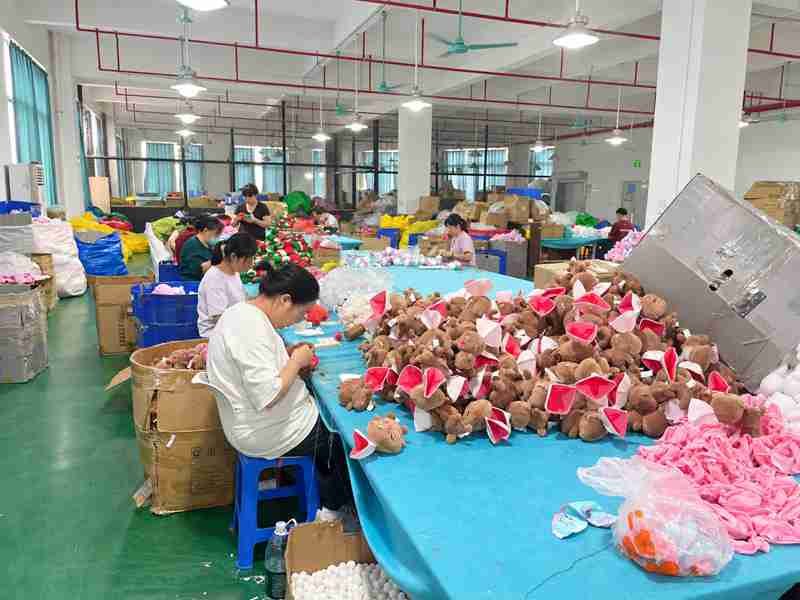
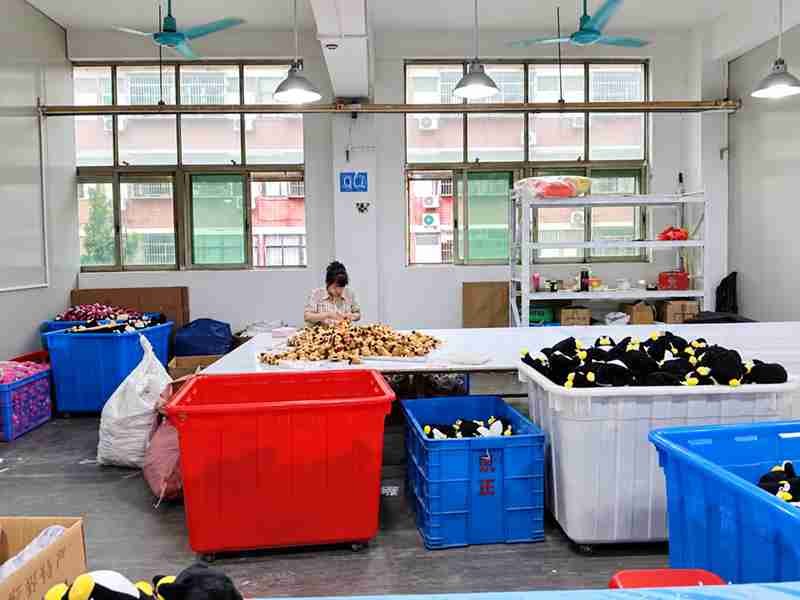
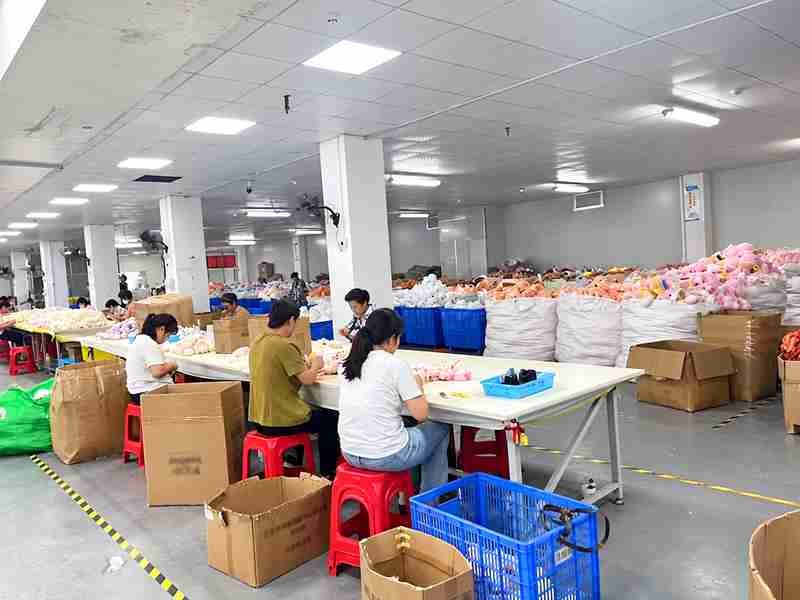
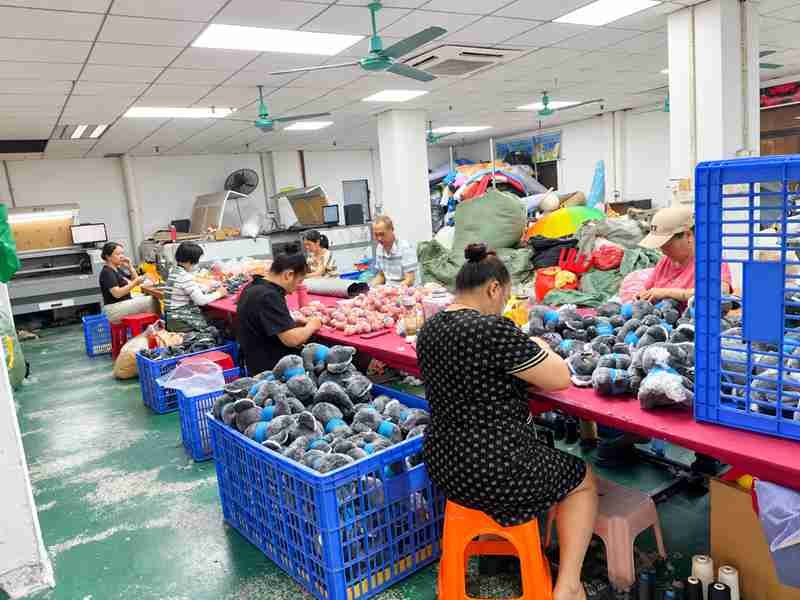
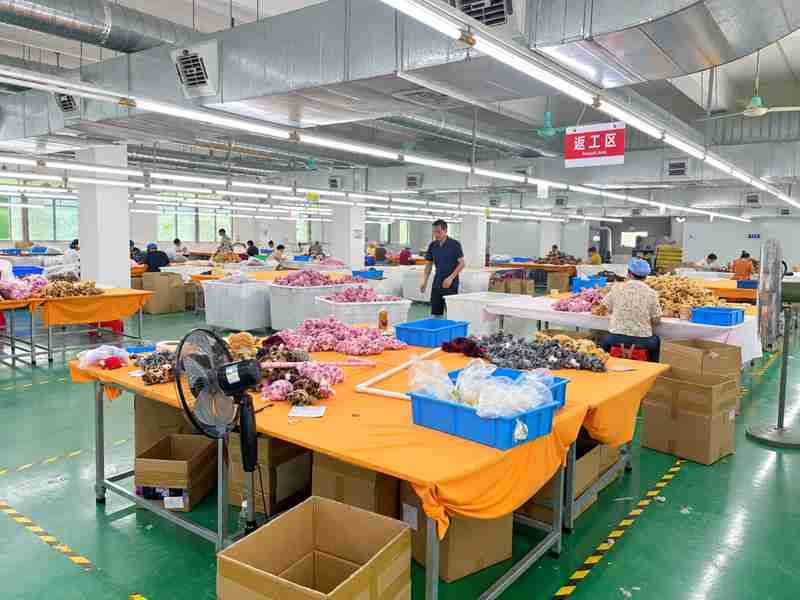
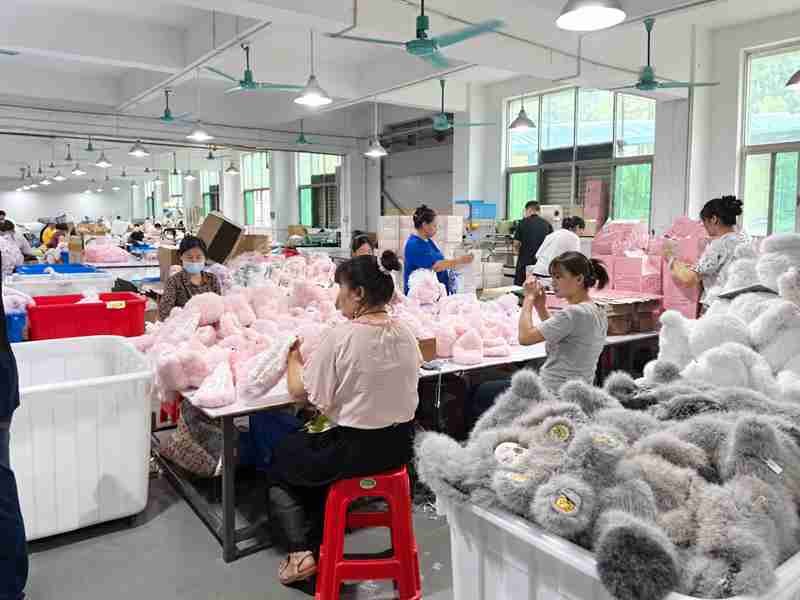
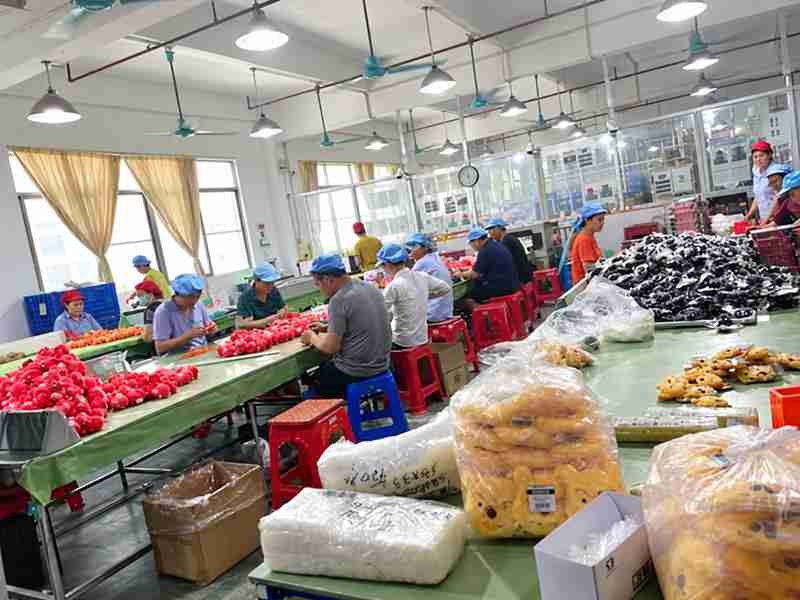
From Prototype to Production: Our Real Plush Factory Show
At Ewintoys, every plush project follows a structured development and production process, from initial design review and pattern making to sampling, mass production, quality inspection, and final delivery. Our real factory images provide a transparent view of how ideas are transformed into high-quality plush products through professional craftsmanship, engineering control, and careful production management.







































Match Filling Strategy to Product Function and Form
The best starting route depends on product scale, posture, softness, weighting, internal modules, and shape-retention needs.
| Product Type | Main Filling Goal | Typical Starting Direction | Key Review Point |
|---|---|---|---|
| Character Plush | Fidelity and comfortable handfeel | Zoned polyester fiber | Face and head proportion |
| Mini Plush | Compact shape definition | Controlled fine fiber distribution | Corners, limbs, closure pressure |
| Collectible Plush | Premium feel and posture | Zoned fiber with support where needed | Silhouette and display consistency |
| Plush Pillow | Softness and recovery | Even high-loft fiber route | Broad distribution and pack recovery |
| Sitting Plush | Stable base and body softness | Fiber with controlled base density | Center of gravity |
| Weighted Plush | Mass and tactile stability | Fiber plus contained weighted media | Bag position and fixation |
| Electronic Plush | Handfeel around module space | Zoned fiber with protected no-fill areas | Access and module pressure |
| Structured Plush | Local shape retention | Fiber plus foam or EVA support | Hard points and visible transitions |
Zone Filling Protects Local Shape Without Overfilling Everything
Control the Head and Face Around Character Fidelity
The head is often the most filling-sensitive part of a character. Muzzle, forehead, cheeks, eye area, chin, ears, hair base, and neck can react differently to the same fiber pressure. Overfilling can spread facial features, enlarge the head, flatten seam geometry, or push embroidery and molded features away from the approved relationship. Underfilling can create hollow cheeks, weak muzzles, collapsed foreheads, or asymmetry.
Ewin can use zone references together with the released shell and Golden Sample. Where needed, the team can define denser support around one area and softer volume around another rather than treating the entire head as one cavity. Small faces and mini plush may require specialist hand filling or tool-assisted placement so fiber reaches narrow corners without distorting the shell. The goal is a repeatable character face, not simply a head that meets one scale reading.
Set Body and Limb Density Around Handfeel and Pose
The body often carries the main tactile impression, while arms, legs, tails, wings, or appendages need enough material to hold form without becoming stiff. A huggable torso may use a softer center while shoulders or hips need more local support. Thin limbs can look empty if fiber does not reach the ends, yet excessive pressure can make them rigid or pull the shell away from the intended pose.
Zone planning also helps prevent one cavity from stealing material from another. Two products can weigh the same while one has an overfilled head and hollow body, or one leg is firmer than the other. First-piece review should compare left-right symmetry, handfeel, posture, local volume, and the way the parts move against the Golden Sample before the route is released.
Use Feet and Base Zones to Support Sitting or Standing
Feet, legs, and the lower body often determine whether a plush sits, leans, or stands as intended. A seated character may need controlled base volume or a contained weighted insert. A standing mascot may need denser feet, firmer lower legs, a flatter base, or structural support. Large-head characters can shift balance quickly when too much mass sits above the center line.
Ewin reviews base shape, foot volume, leg density, accessories, head weight, support pieces, and any weighted media as one system. Bottom weighting can improve stability, but it should not compensate for a fundamentally unstable pattern. The approved route should define enough information for production to recreate posture without relying on repeated manual adjustment after every unit is filled.
Engineer Weighted Plush as a Contained Internal System
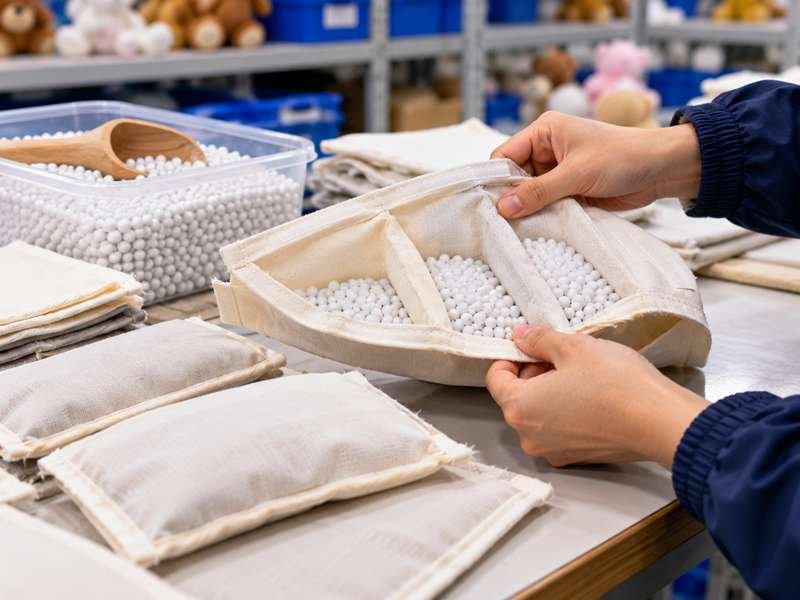
Build the Weighted Media Into a Dedicated Inner Structure
Weighted beads or bean-style particles should stay inside a separate bag or controlled compartment rather than move freely through the main shell. The bag material, seams, closure, shape, and dimensions are reviewed around particle size, intended mass, product use, and the load created during handling. A suitable inner structure protects the outer shell from direct particle movement and makes the weight easier to place consistently.
Compartment design can also control movement. A single chamber may suit a compact base, while divided sections may be considered when migration needs tighter restriction. Position marks help operators place the insert in the same area across production. The surrounding cavity still needs enough fiber so the bag does not create a visible ridge or hard plate through the outer fabric.
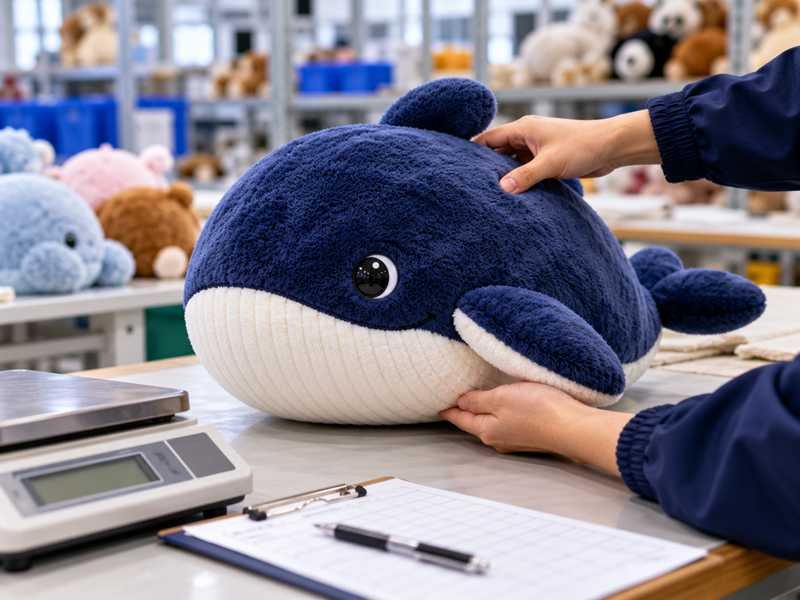
Control Mass, Position, Orientation, and Center of Gravity
Weighted material changes more than the number on a scale. Moving the same bag a few centimeters can alter how a character sits, whether a head falls forward, whether the body leans, and where the mass is felt when the product is held. Ewin can combine total product weight with insert weight, position reference, orientation, fixation, and surrounding fiber distribution.
First-piece checks are especially important for large-head, seated, sensory, and multi-compartment products. The team can compare the physical result before many units are filled. If the product is unstable, correction may involve base geometry, foot density, support inserts, head weight, or pattern changes rather than simply adding more weighted media.
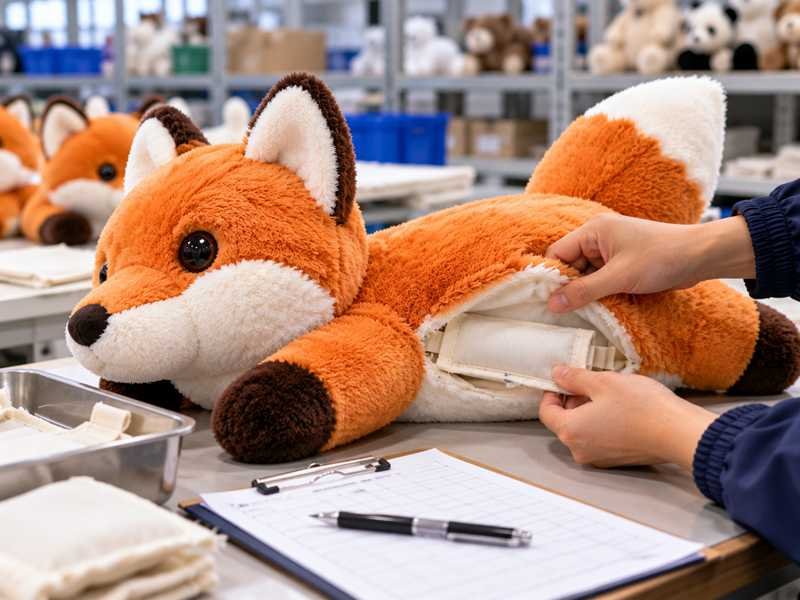
Verify Containment Before the Product Is Closed
Before the final opening is sealed, the weighted structure should be checked for correct SKU, target mass, seam condition, closure, position, orientation, fixation, and surrounding fiber. Once the product is closed and finished, a hidden problem becomes difficult to inspect without destructive rework.
Production records can link the weighted component to the current BOM, SKU, revision, lot, or manufacturing batch where traceability is needed. If particle type, bag construction, insert weight, compartment design, or location changes, the product should return through review because the change can affect handfeel, seam load, center of gravity, and approved pose.
Functional Plush Needs Filling Around Modules and Access Areas
Create No-Fill and Buffer Zones Around Functional Hardware
Electronic or interactive plush can contain speakers, microphones, switches, sensors, batteries, housings, cable routes, access covers, or other approved modules. Filling cannot simply occupy every empty cavity. Speaker and microphone areas may need clear openings. Buttons require reachable travel. Battery access must remain usable. A rigid housing may need padding around its edges so it does not create a visible hard point or push the shell outward.
Ewin can review cavity geometry, no-fill zones, surrounding fiber, padding, access openings, seam routes, garment clearance, and product balance together with the approved module. The soft-goods structure may need to change before the sample is final. A correct technology module inserted into an unsuitable shell can still create poor handfeel, distorted character shape, blocked function, or difficult assembly.
Keep Filling References Synchronized With Hardware Revisions
A hardware revision can change dimensions, weight, button position, speaker location, access, heat, or cable routing. Even a small change may reduce cavity clearance or require a different amount of surrounding fill. For that reason, the approved filling reference should stay connected to the current module revision rather than becoming a permanent generic instruction for the product family.
Physical review should confirm fit, handfeel, function, surface appearance, balance, and access after stuffing. If the brand or technology partner changes the module later, the affected shell, filling zones, padding, and packaging should be checked again before production release. Ewin’s role remains focused on plush shell engineering, cavity integration, soft-goods protection, assembly, and manufacturability around the approved technology.
Sample Development Turns Filling Preferences Into Approved References
Review Material and Handfeel Before Freezing the Full Product
When filling direction is uncertain, early material comparison can save a complete rebuild later. Polyester fiber, recycled polyester, weighted media, foam, EVA, or mixed systems can be judged around loft, firmness, recovery, local support, and compatibility with the shell. The loose material is only a starting point; approval comes from how the product feels and looks after the material is inside its intended cavity.
For fiber routes, a small trial can compare fullness and recovery. Weighted products can evaluate bag construction and position before the exterior is treated as final. Foam or EVA can be trimmed and adjusted to remove hard transitions. Module-ready products can confirm no-fill zones and protective padding before final seam openings, access covers, or shell geometry are frozen.
Use V1 and Revision Samples to Correct Distribution Problems
V1 should reveal more than whether the chosen material fits inside the shell. Review face volume, body handfeel, limb symmetry, posture, balance, weighted insert position, support visibility, hard points, module pressure, and packability. Comments should identify where material needs to move, not only whether the product feels “too soft” or “too firm.”
Revision work can adjust total fill, local zones, insert mass, bag position, foam thickness, or support geometry while keeping the effect visible in the next numbered sample. If a filling change also affects the pattern, fabric, component, or closure, the related files should move together. The goal is a traceable route from first physical result to approved internal construction.
Lock the Golden Filling Reference Before Bulk Release
A Golden Sample should represent the approved physical result together with the frozen production definition. Filling records can identify material, total weight where applicable, critical zone references, firmness target, weighted insert, support insert, no-fill areas, internal component position, and the current sample revision. The Golden provides the visual and tactile comparison that written numbers cannot fully replace.
A PP or first-piece stage can then verify whether production-intended materials and processes reproduce the same result. If bulk material loft, insert weight, support construction, or shell behavior differs, the route should return through review instead of quietly changing the fill on the line. Sample approval becomes useful only when production can identify exactly what was approved.
Certificates, Compliance & Quality Assurance
Ewintoys follows structured quality and compliance practices for custom plush production. We hold relevant certifications and support additional testing, inspection, and compliance documentation based on specific product requirements and destination markets, helping brands meet different international standards with confidence.
























Record Filling Specifications Beyond Soft, Medium, or Firm
A useful filling specification connects measurable references with the approved physical result and the exact SKU or revision.
Specification Field | Production Control Purpose |
Filling Type | Identifies polyester, recycled polyester, weighted media, foam, EVA, or approved mixed route |
Material ID / Supplier Route | Keeps the approved material tied to sourcing and incoming control |
Total Fill Weight | Provides a whole-product reference where measurable control is useful |
Zone Weight / Zone Reference | Protects head, body, limbs, feet, tail, or other sensitive areas |
Firmness Target | Links tactile expectation with Golden Sample comparison |
Weighted Insert Mass | Controls the contained mass used in weighted products |
Weighted Bag Position | Protects posture, balance, tactile location, and repeat placement |
Support Insert | Identifies foam, EVA, or approved structural support and location |
No-Fill Area | Protects module cavities, access, switches, openings, or cable routes |
Sample Revision | Shows which V1, revision, PP, or Golden reference was approved |
Quality Checks | Defines weight, distribution, balance, appearance, and containment review |
Change Control | Records material, mass, zone, insert, supplier, or construction changes |
Bulk Filling Must Reproduce the Approved Sample, Not Memory
Confirm the Correct Filling Material Before It Reaches Production
The line should receive the filling material identified for the current SKU and revision. Incoming control can verify material identity, supplier route, lot information where applicable, visible cleanliness, color where relevant, loft behavior, and any project-specific requirement. Recycled filling may need supporting evidence tied to the exact material and intended claim rather than a general sustainability statement.
Material changes can alter the amount needed to reach the same shape or handfeel. A different fiber loft, foam density, EVA hardness, or particle behavior may change volume, recovery, balance, or seam pressure. Purchasing availability alone should not authorize a substitution. If the incoming route differs from the approved reference, development and quality teams should review the impact before the material enters bulk filling.
Release the Filling Route Through First-Piece Approval
Before large quantities are filled, first pieces can be weighed and compared with the Golden Sample for shape, local volume, handfeel, posture, symmetry, balance, and internal insert position. Quantitative filling or precision weighing can help where repeated mass control matters, while specialist hand filling remains important for faces, narrow limbs, muzzles, tails, mini parts, and complex cavities.
A correct scale reading is not enough. Two pieces may have the same total weight while one has an overfilled head and hollow torso. First-piece review therefore checks distribution and the final visual result together. When the first route is accepted, operators have a clearer reference before output expands.
Use IPQC to Catch Distribution and Insert Problems Early
In-process control can check hollow zones, hard lumps, left-right imbalance, distorted faces, weak corners, insert movement, containment, no-fill areas, closing readiness, and comparison with the approved handfeel. Weighted products should confirm bag position and fixation before closing. Functional products should confirm the module is not being pressed outward or blocked by fiber.
Equipment can support repeat delivery, but every product does not need the same machine route. Automatic, dual-head, quantitative, central fiber-feeding, precision weighing, and specialist hand filling each serve different construction needs. The control target remains the approved finished product, not the equipment setting by itself.
Packaging Pressure Must Not Destroy the Approved Filling Result
Match Compression Level to the Actual Filling System
Soft-bodied plush with resilient fiber may tolerate controlled compression better than products with foam, structural pads, weighted bags, rigid accessories, electronic modules, long pile, large heads, or display-sensitive faces. The pack method should start from the exact SKU rather than a universal rule that all plush can be vacuum packed.
Weighted inserts can shift if the product is compressed in the wrong orientation. Foam can take a set if pressure is excessive. A dense head may flatten differently from a soft torso. Electronic housings can create pressure marks against surrounding fiber and fabric. Packaging trials should therefore use the intended unit pack, orientation, carton configuration, and realistic recovery expectation.
Evaluate Recovery After the Product Is Opened
Recovery should be judged after the product has had time to regain volume, not only in the first seconds after opening. Where compression risk is relevant, Ewin’s filling reference can include an appearance review after about 24 hours together with the normal brushing, fluffing, or light reshaping steps expected for the product.
Review points can include face volume, head profile, ears, limbs, sitting or standing posture, pile loft, clothing, hard internal points, and any area containing foam or weighted structures. A product may regain overall volume yet still fail because one ear remains bent, the face stays flattened, or the weighted insert has shifted.
Lock the Approved Pack-Out With the Filling Reference
Once a pack route is accepted, the approved orientation, compression method, unit pack, carton quantity, opening guidance, and any restoration step should remain linked to the SKU. Packaging changes can affect the fill result even when the product itself has not changed.
Reorders should confirm whether pack materials, compression level, carton count, storage assumptions, or shipping route changed. Multi-SKU programs may require different limits for different characters because large heads, long ears, foam supports, weighted bottoms, electronics, and premium clothing do not react to pressure in the same way.
Frequently Asked Questions
Send Your Plush Filling Requirements for Engineering Review
Share the information needed to define the internal product result: company, product type, artwork or character sheet, finished size, quantity by SKU, target market, desired handfeel, target product weight, sitting or standing requirement, weighted mass if applicable, preferred filling route, recycled-content requirement, foam or EVA support, electronic modules, no-fill areas, packaging method, compression requirement, current sample stage, and launch timing. Upload current sample photos, internal structure drawings, filling problems, or competitor references when available. Ewin Toys can review material choice, zone filling, weighted containment, structural inserts, sample validation, Golden Sample control, bulk filling checks, and packaging recovery before the filling route is released.