
How Is Plush Fabric Shedding
Pile direction can create another misleading visual effect. Many plush fabrics appear lighter or darker depending on the direction in which their pile is brushed. A patch rubbed against the nap may
Use engineering guides, material references, production methods, quality resources, and program planning tools to make better plush product decisions before sampling or manufacturing begins.
Ewin Toys organizes manufacturing knowledge around the decisions product, sourcing, licensing, quality, and operations teams make during a real plush program. Topics connect artwork, pattern engineering, fabrics, filling, accessories, functional modules, samples, mass production, testing, packaging, and replenishment. The knowledge comes from a 60+ person Plush Product Development Center working with a 95,000+ m² manufacturing system and a 1,900+ workforce, so technical articles stay connected to how products are actually developed and produced.
Choose the stage closest to your current project and move directly to guides that help close the next manufacturing decision.
Start here when you have artwork, a rough product idea, or a sourcing brief but still need to define size, product type, quantity, development route, target market, cost drivers, and supplier requirements. Guides in this path help teams prepare cleaner RFQs and avoid early assumptions that create expensive sample revisions later.
Use this path when character fidelity, pattern structure, materials, filling, decoration, accessories, or functional features still need engineering. Content focuses on converting visual intent into manufacturable decisions, so a character or concept can move from artwork into measurable product specifications rather than remaining a subjective visual reference.
Use sampling guides when V1, revision, PP, or Golden approval is the immediate task. Articles explain what each sample stage should prove, how to record changes, how material or component substitutions affect approval, and which production references should be frozen before bulk work begins.
Use manufacturing and NPI resources after the product direction is stable. Topics include released patterns, BOM control, artwork versions, material readiness, first-off checks, production sequence, in-process quality points, multi-SKU separation, and the handoff from an approved sample into repeatable line production.
Choose this route when target market, age grade, testing, material risk, magnets, hard parts, electronics, labels, or documentation need review. Guides help teams understand which product decisions can change the compliance route and why finished-product evidence should stay linked to the correct SKU and revision.
Use packaging and delivery resources when the product needs unit packaging, barcode data, retail presentation, carton planning, 3PL receiving, e-commerce protection, multi-SKU consolidation, or reorder preparation. The goal is to keep commercial identity connected to the correct finished product after manufacturing is complete.
The Ewin Toys Knowledge Hub shares practical insights, technical expertise, and manufacturing experience across custom plush product development. These resources are created for brands, IP owners, licensors, and creative teams looking to better understand character interpretation, material selection, pattern engineering, sampling, production consistency, quality control, safety compliance, and the key decisions that help move a plush concept successfully into mass production.
Pile direction can create another misleading visual effect. Many plush fabrics appear lighter or darker depending on the direction in which their pile is brushed. A patch rubbed against the nap may
Pile direction can create another misleading visual effect. Many plush fabrics appear lighter or darker depending on the direction in which their pile is brushed. A patch rubbed against the nap may
Pile direction can create another misleading visual effect. Many plush fabrics appear lighter or darker depending on the direction in which their pile is brushed. A patch rubbed against the nap may
Pile direction can create another misleading visual effect. Many plush fabrics appear lighter or darker depending on the direction in which their pile is brushed. A patch rubbed against the nap may
A strong manufacturer review goes beyond sewing capacity. Look at product-development depth, pattern engineering, sample control, material sourcing, quality stages, compliance support, packaging, confidentiality, multi-SKU control, and evidence connecting approved samples to bulk production. Use the guide to build a supplier-evaluation checklist around the risks your program actually carries.
Character artwork does not contain a sewing pattern, filling map, material specification, seam route, accessory attachment method, or bulk QC reference. This guide follows the decisions needed to translate visual identity into structure, prototype revisions, Golden approval, BOM, and production instructions without losing the character features that matter most.
A Golden Sample should work with the released pattern, approved materials, current decoration files, component records, filling references, packaging, and QC plan. The guide explains what a Golden is expected to control, what it cannot control by itself, and how change review protects the approved product during repeat production.
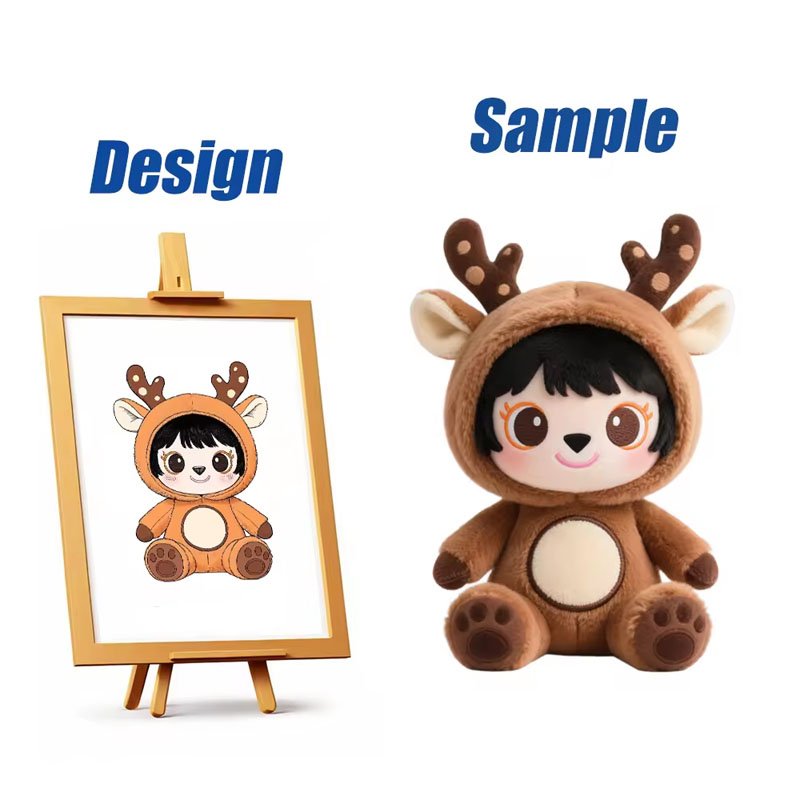
Learn how front, side, rear, expression, costume, and prop references influence proportion, volume, seam placement, fabric direction, decoration, and pattern decisions. Strong source files reduce interpretation gaps before the first physical sample is cut.
Fidelity depends on more than copying a drawing. Face spacing, head-to-body ratio, muzzle volume, ear angle, hair direction, limb thickness, posture, filling, and clothing fit can all shift the final impression. Reviews should identify which visual features are non-negotiable before engineering changes begin.
Pattern engineering converts three-dimensional form into sewable panels with seam allowance, curves, notches, openings, fabric direction, reinforcement, and assembly logic. Guides explain why pattern changes can alter proportion, handfeel, decoration position, and repeatability after stuffing.
Series development needs shared visual language without forcing every character into the same construction. Learn how a collection can reuse approved fabric families, eye language, filling feel, packaging architecture, and quality rules while preserving SKU-specific patterns, artwork, accessories, and Golden references.
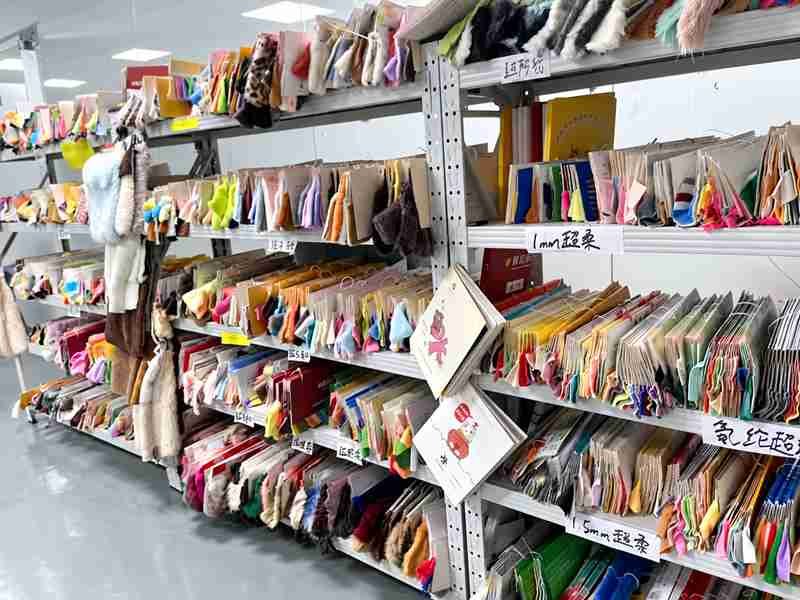
Compare Minky, Velboa, short-pile plush, PV Plush, faux fur, Sherpa, fleece, and specialty textiles by handfeel, pile, density, stretch, surface appearance, decoration compatibility, pattern behavior, and product type. Fabric choice affects far more than softness.
Use direct comparison when both fabrics appear suitable but the product needs a clearer decision around pile, sheen, stretch, detail visibility, printing or embroidery route, size, cost, and character appearance. The physical swatch and sample should close the final decision.
Pile height can hide small embroidery, soften seam definition, change silhouette, and alter how a face reads at small scale. Nap direction also changes color perception and surface flow. Cutting references should define direction before bulk pieces are nested and cut.
Learn how polyester fiber, recycled polyester filling, weighted media, foam inserts, structural pads, and mixed filling systems affect shape, firmness, balance, recovery, and internal function. Total fill weight alone does not define the finished feel.
Eyes, noses, rings, chains, clips, magnets, molded parts, removable clothing, weighted inserts, and structural pieces need more than a product name. Part ID, dimensions, material, color, weight, fixing method, position, supplier route, and SKU mapping support repeatable sourcing and assembly.
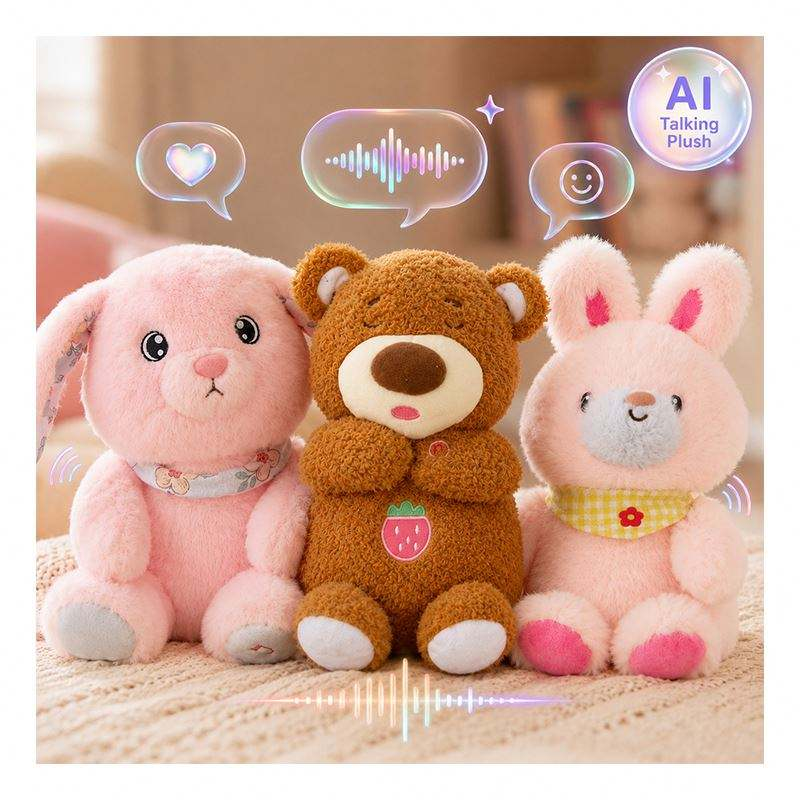
Sound, recording, light, sensors, switches, speakers, microphones, motor systems, batteries, and approved smart modules change the plush architecture. Guides focus on cavity geometry, access, padding, filling zones, cable routes, retention, revision control, function checks, and responsibility boundaries with technology partners.
Pantone targets are useful, but pile direction, sheen, texture, print route, lighting, and dye lot can change how color appears on a finished plush. Physical swatches and product samples give approval teams a more reliable reference than a screen value alone.
A supplier, composition, GSM, pile, backing, finish, color, fill grade, hard part, or module change can affect appearance, construction, testing, or packaging. Material substitutions should enter an impact review instead of being treated as silent purchasing decisions.
Select decoration methods around scale, fabric behavior, softness, visual priority, durability, and stable production rather than style preference alone.
Embroidery can create durable facial lines, logos, text, and controlled graphic details, but pile height, backing, stitch density, thread color, curvature, seam clearance, and final stuffing all affect placement and appearance. Small details should be proven at actual production size.
Print feasibility depends on the exact textile, surface pile, stretch, color, artwork scale, ink route, heat exposure, and expected handfeel. Guides compare when printing is a better choice than embroidery and when a fabric trial should precede the full sample.
Layered textile details can add shape, color blocking, logos, clothing features, or character accents without using a hard molded part. Edge finish, seam route, thickness, alignment, fabric fraying, wash or handling expectations, and surrounding pile influence the final result.
Character clothing, PVC or silicone details, labels, trims, and mixed soft-hard elements change assembly order and packaging. Development should control fit, scale, attachment, surface protection, tolerance, and the relationship between decorative elements and the underlying plush structure.
A first engineering sample should expose major questions around proportion, structure, fabric behavior, decoration scale, accessory fit, filling, balance, and function. V1 does not need to pretend every commercial detail is already final; it should make the most important unknowns visible enough to revise intelligently.
Revision comments work best when they identify the feature, location, expected result, and reference used for comparison. Changing many unrelated variables at once makes it harder to learn why the sample improved or regressed, especially across several characters or approval teams.
A PP sample supports pre-production confirmation under the intended production route, while a Golden Sample becomes the approved physical reference used with released files and specifications. The exact sequence can vary by program, so responsibilities and approval status should remain explicit.
When fabric, print, molded components, magnets, hardware, or functional modules carry higher risk, small material or process trials can close a key question before a full character sample is rebuilt. Targeted trials reduce wasted revision work when one uncertain element controls the result.
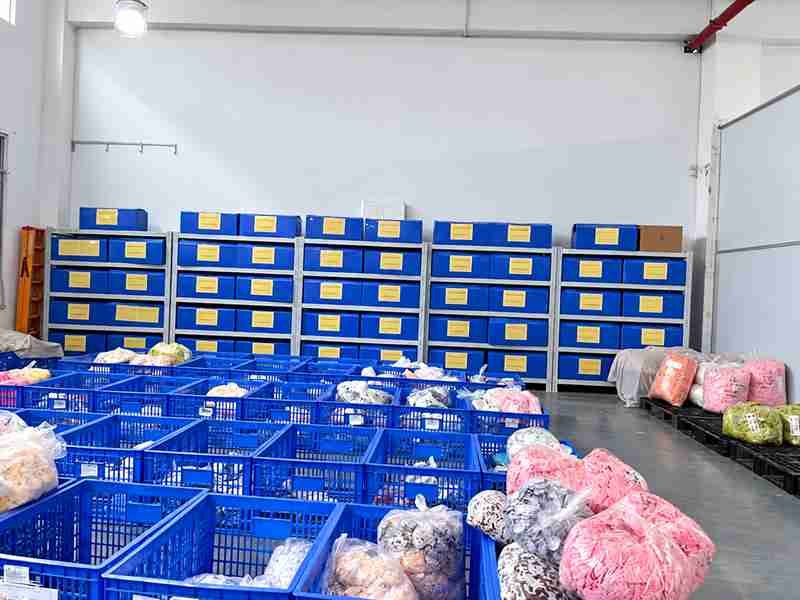
Bulk production needs a current definition of fabric, filling, thread, decoration, accessories, molded parts, modules, packaging, and supplier routes. BOM freeze should align with the approved sample and any permitted alternatives so purchasing does not introduce an unreviewed product change.
Photos, measurements, change notes, sample IDs, approval dates, material references, and Golden status become valuable again during mass production, complaint review, replenishment, or supplier transfer. A sample history is useful only when later teams can identify which version was actually approved.
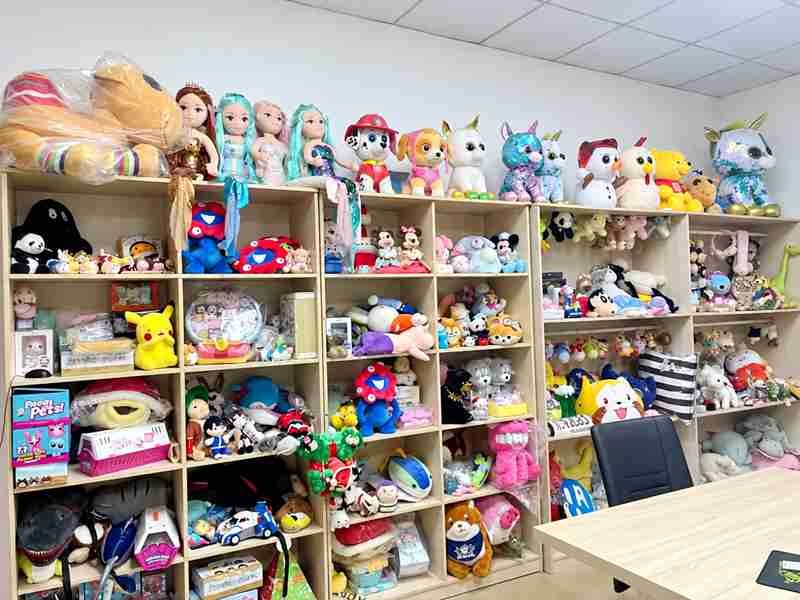
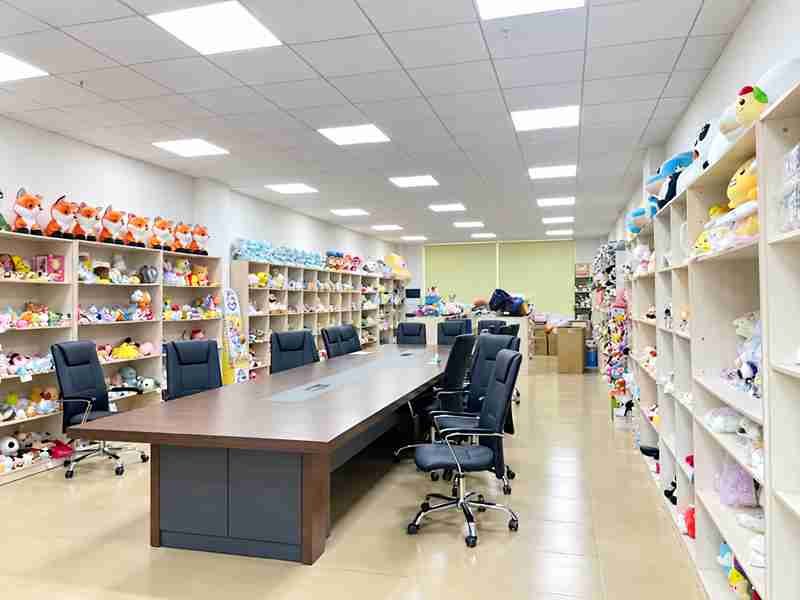
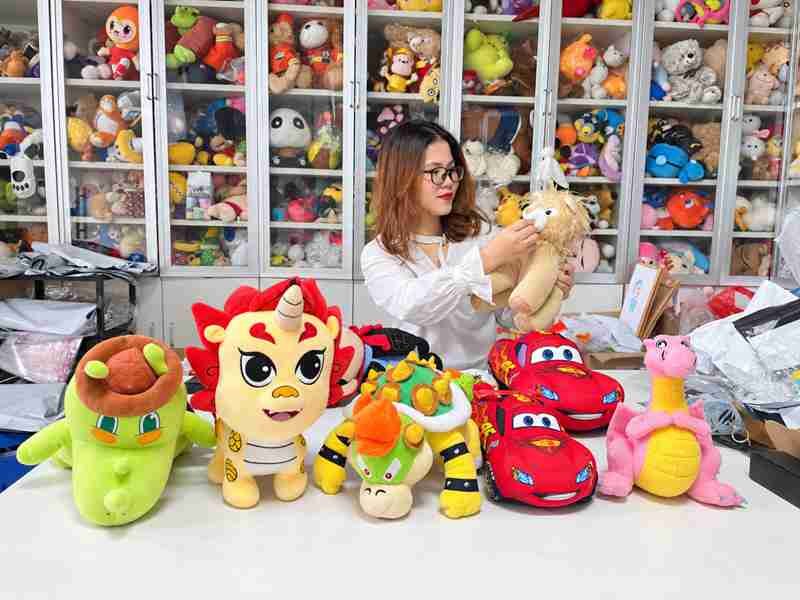
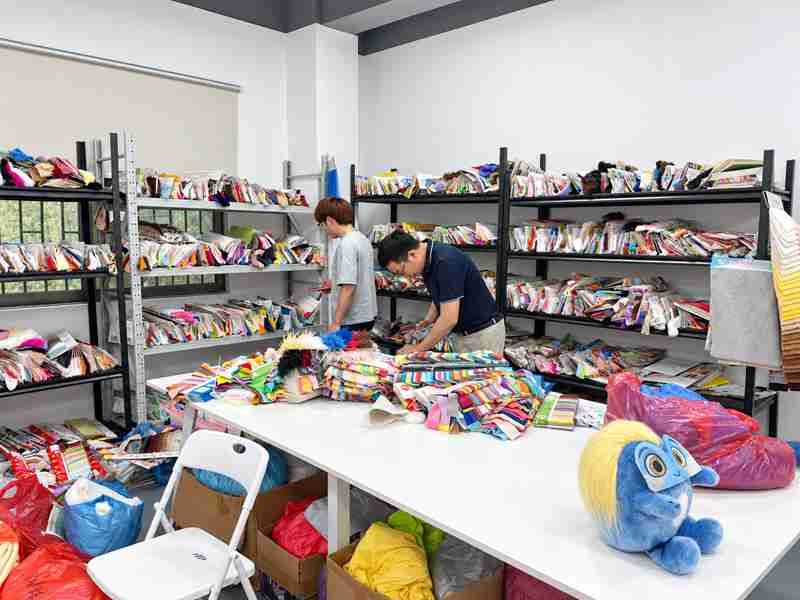
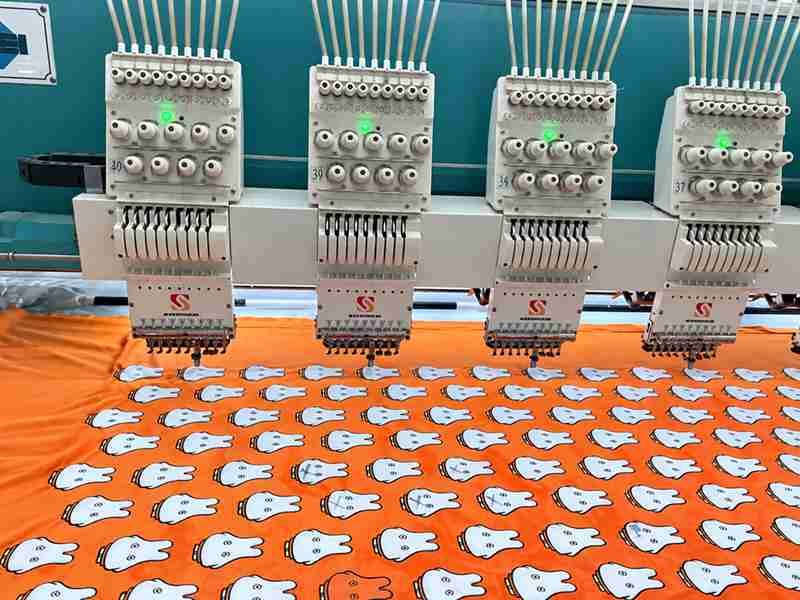
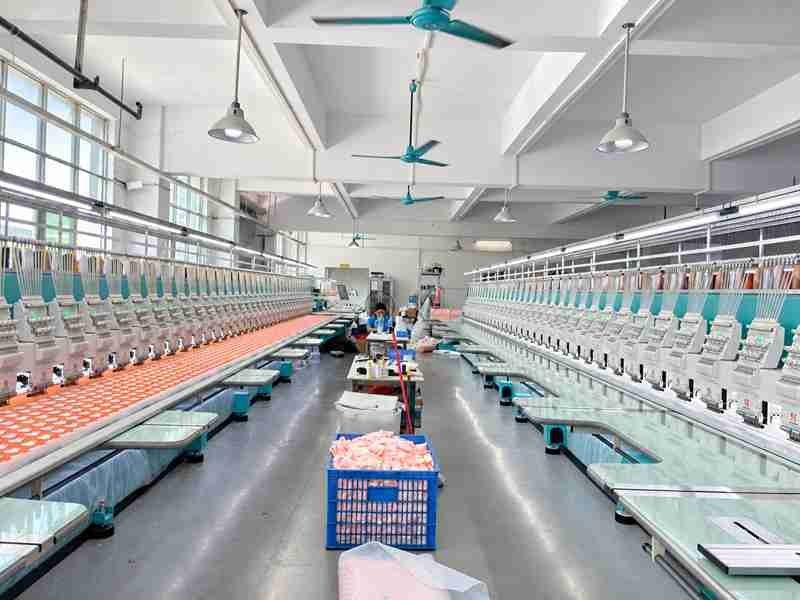
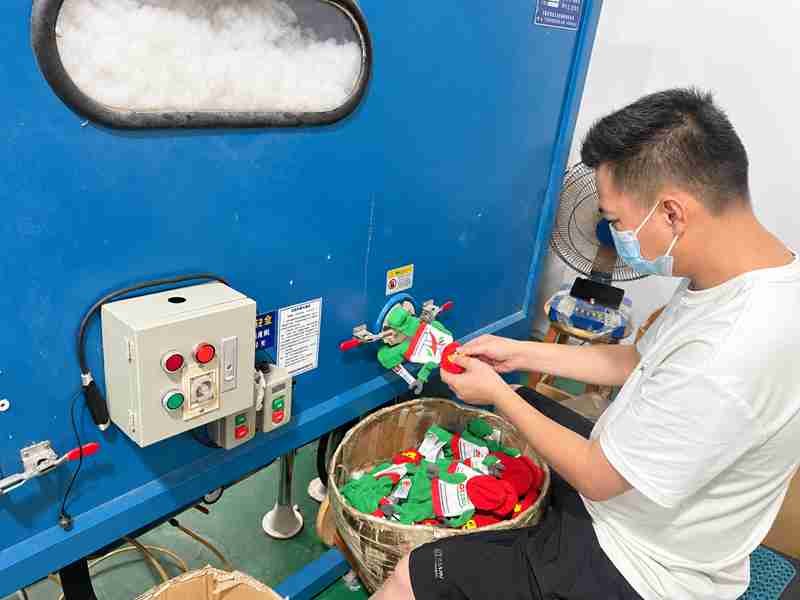
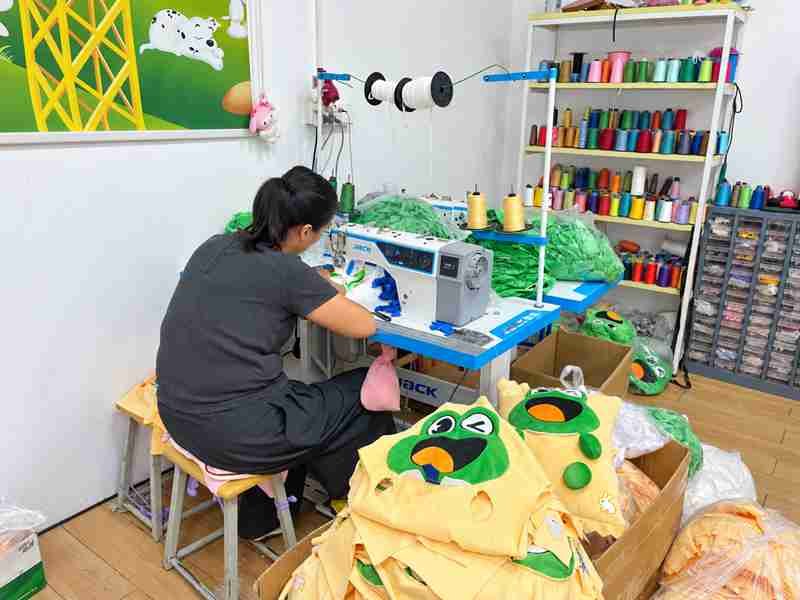
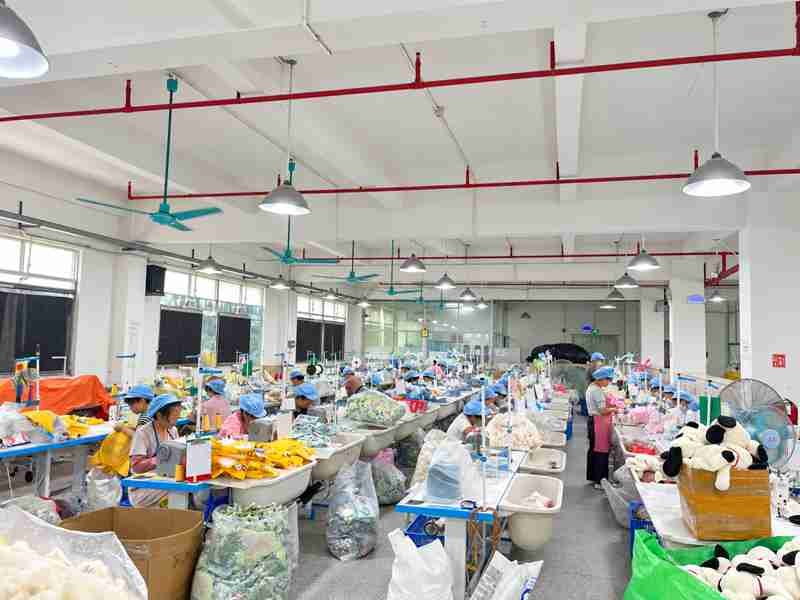
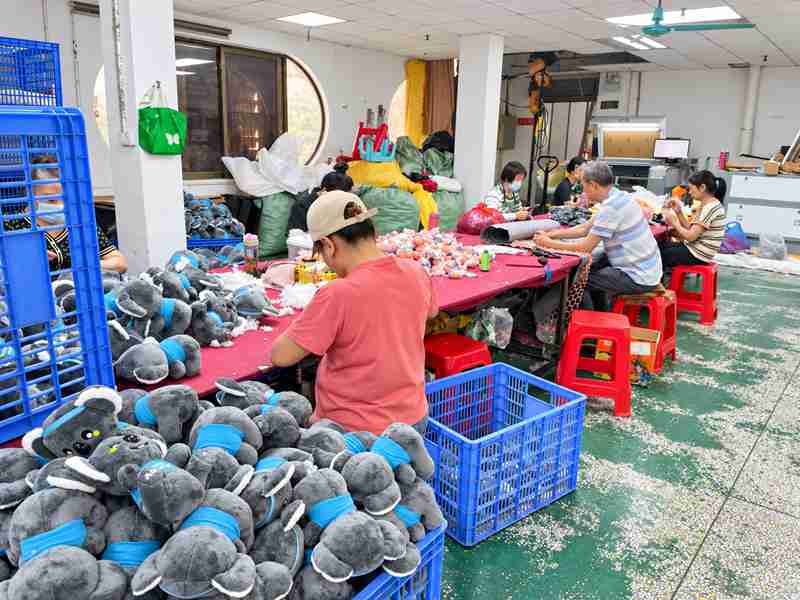
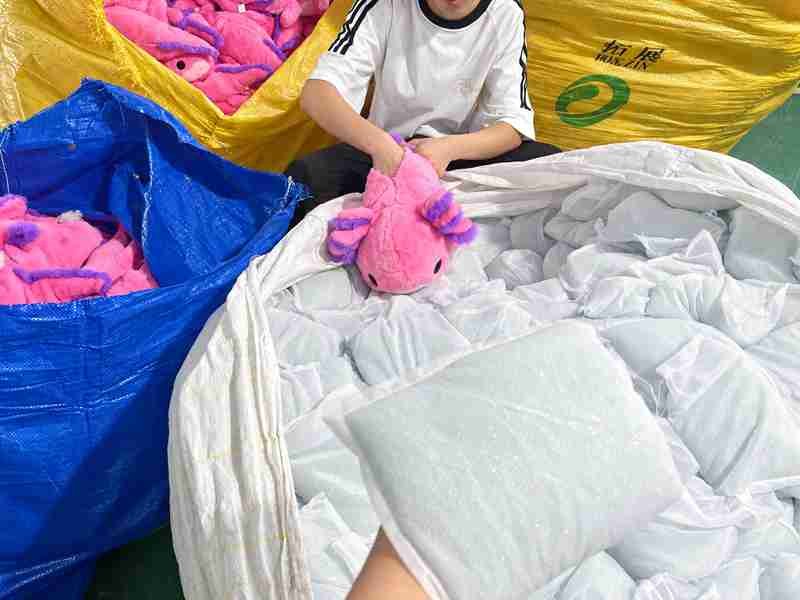
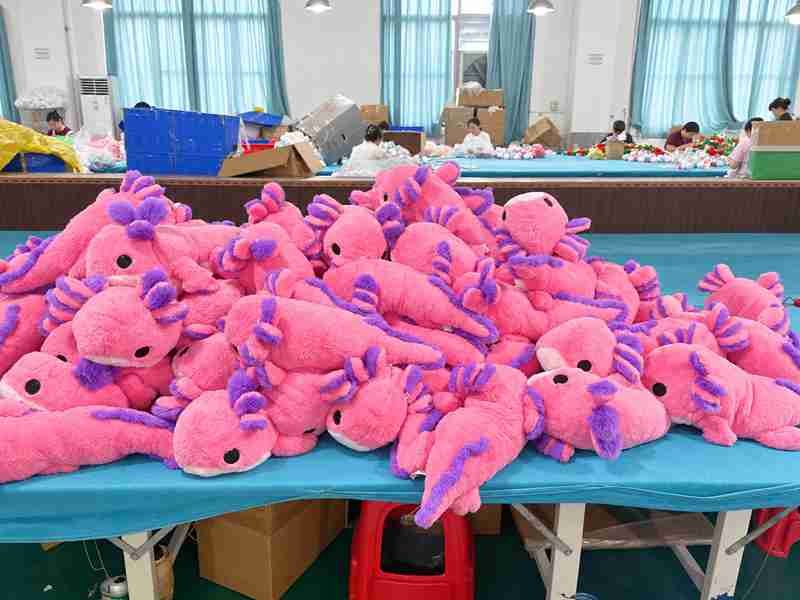
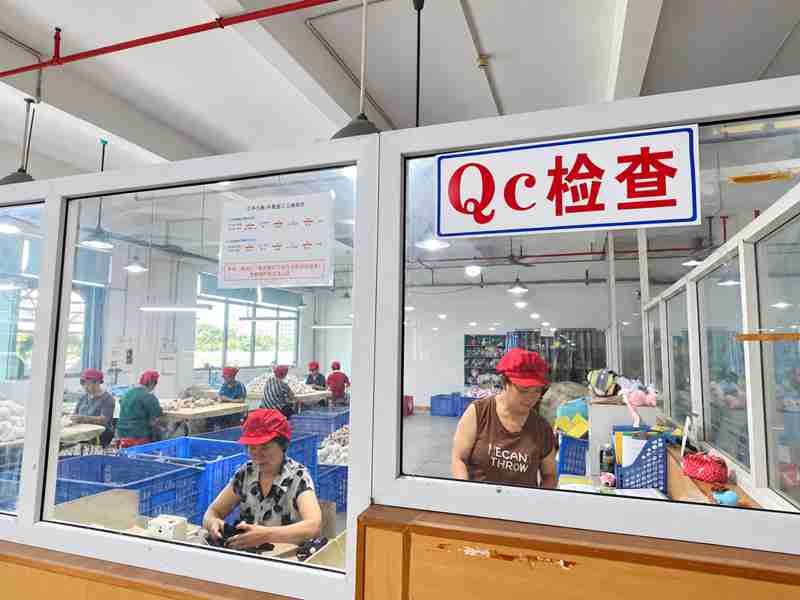
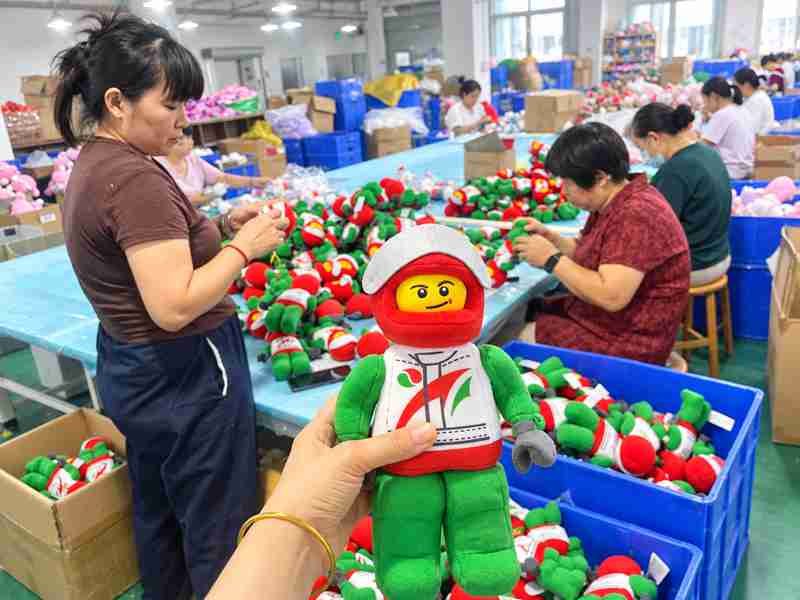
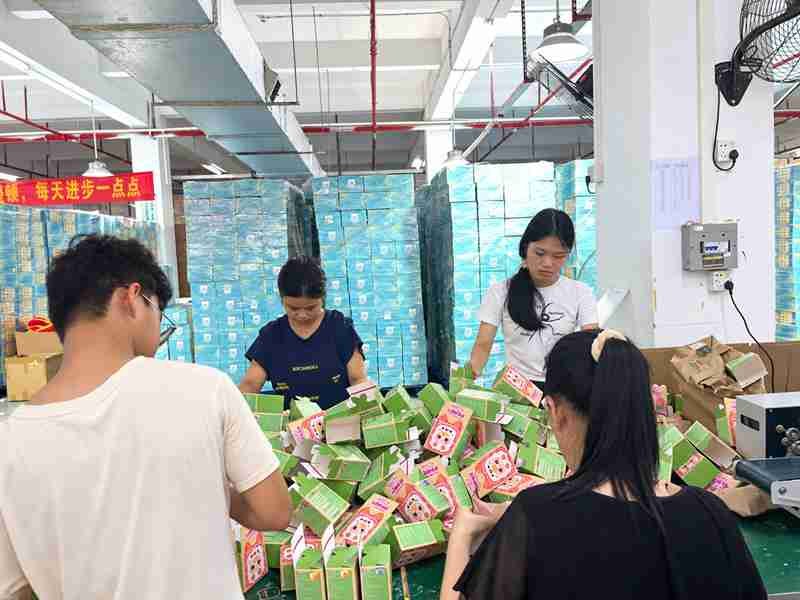
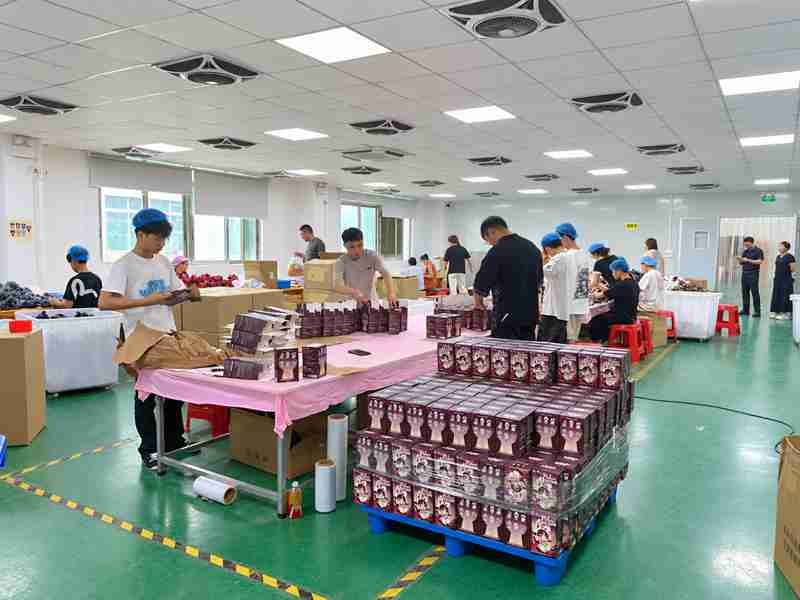
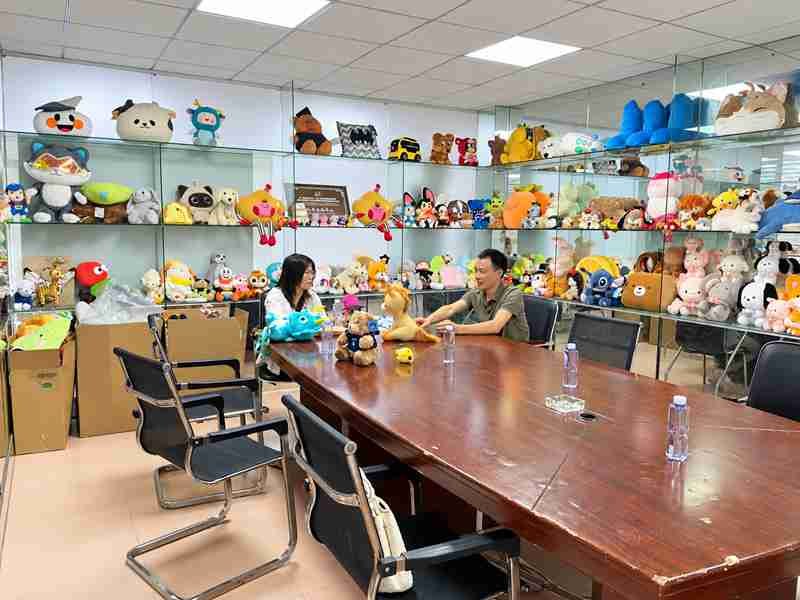
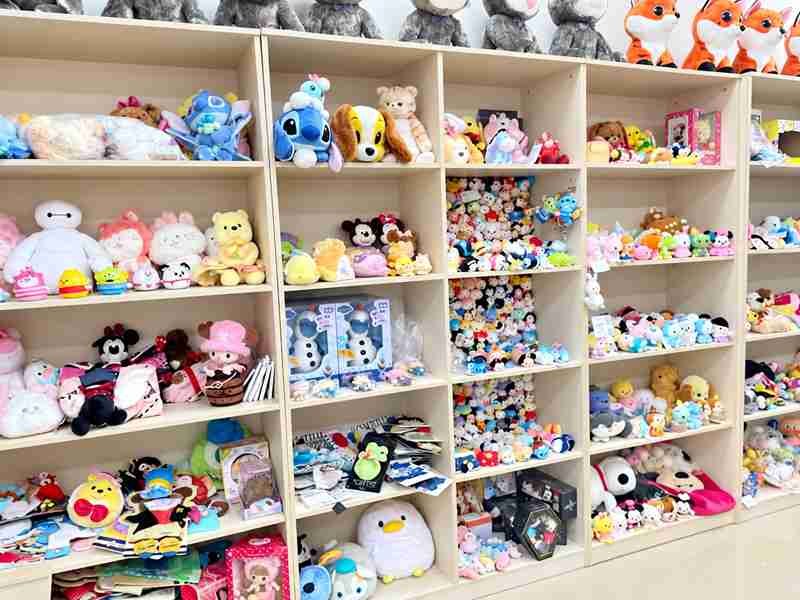
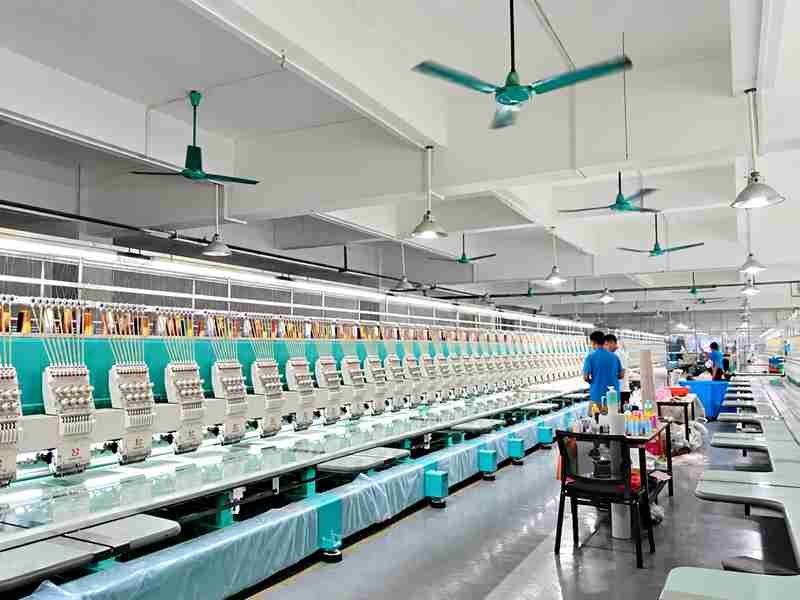
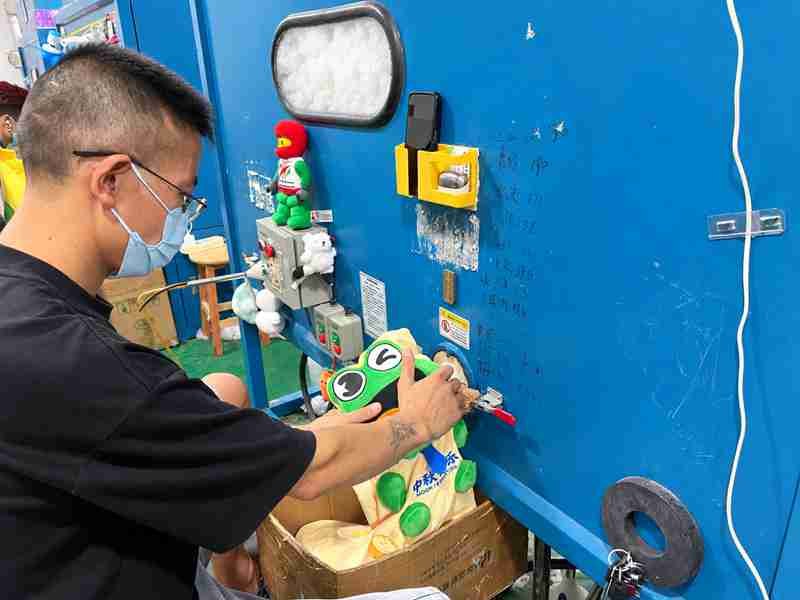
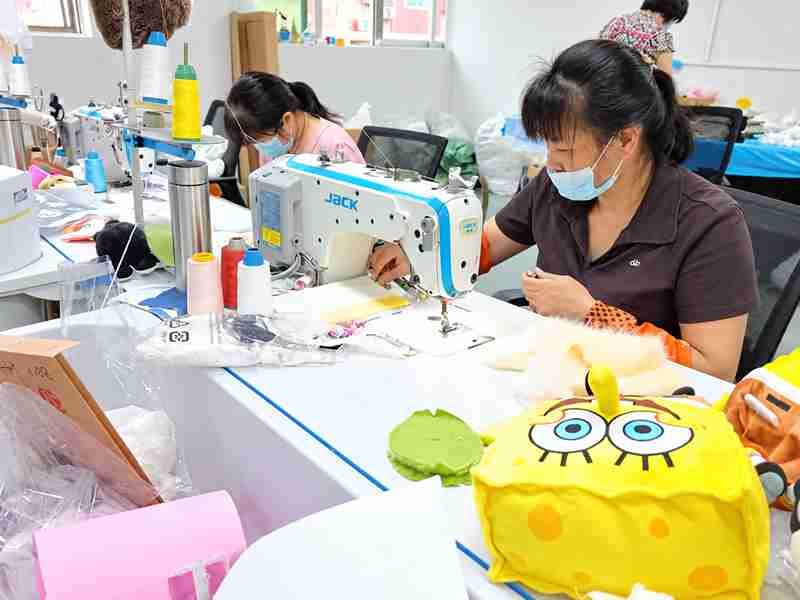
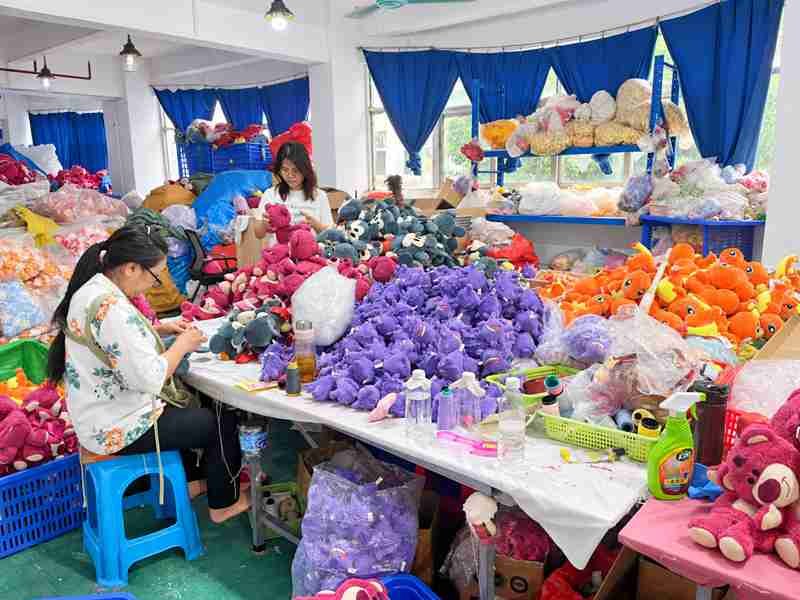
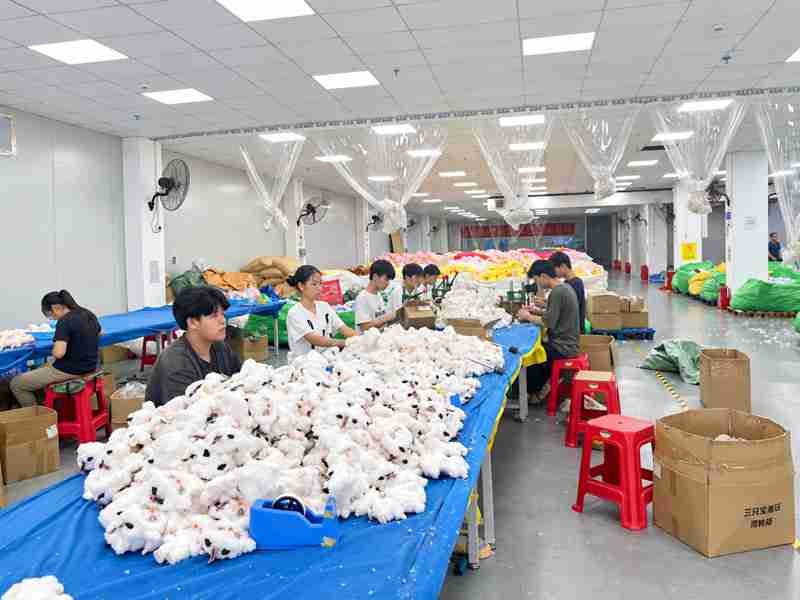
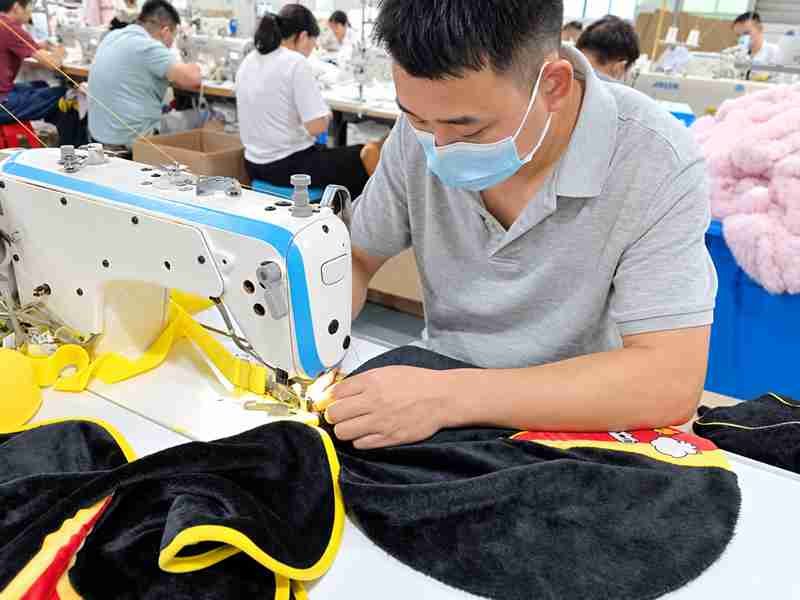
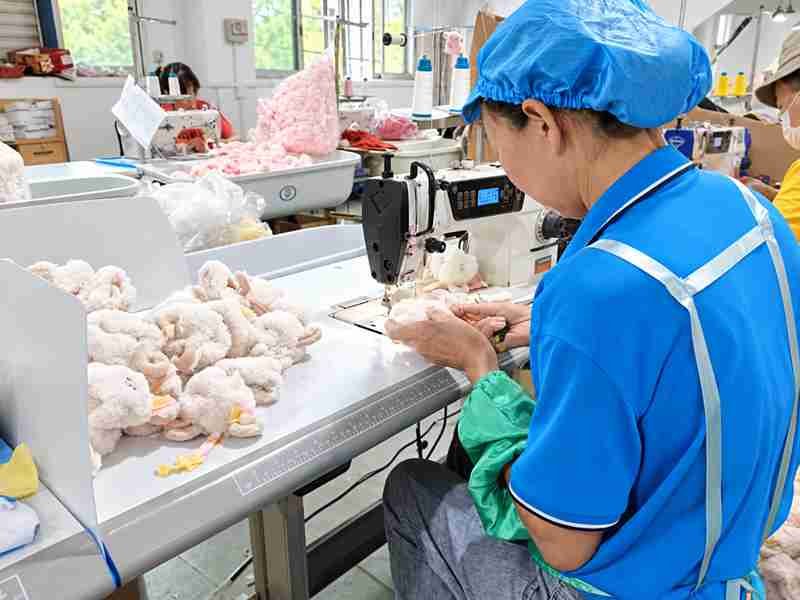
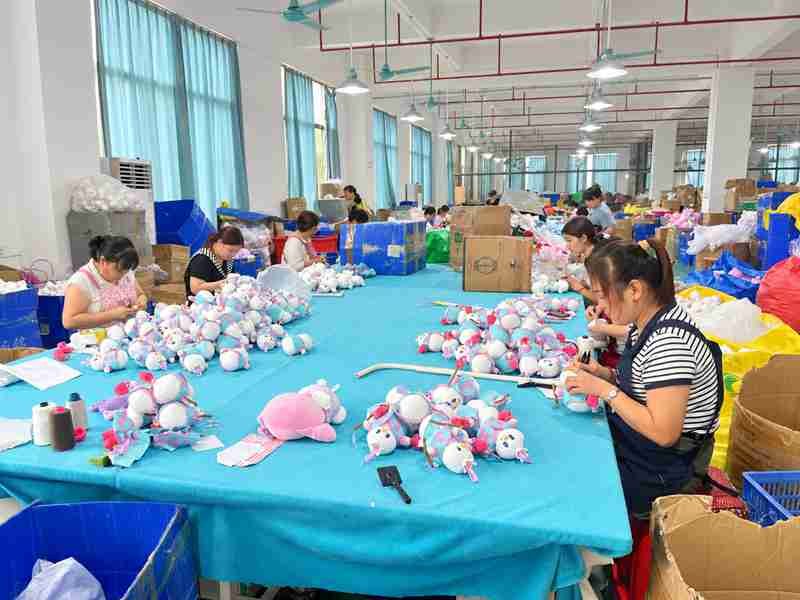
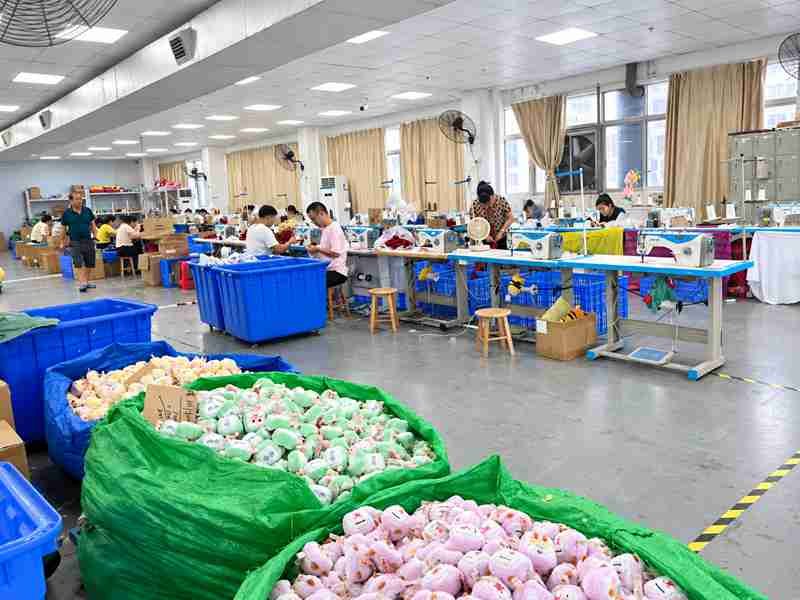
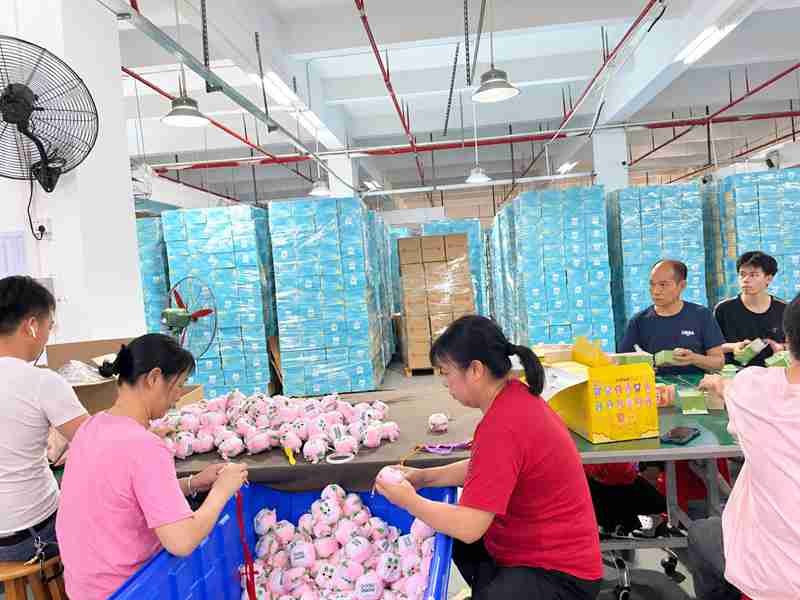
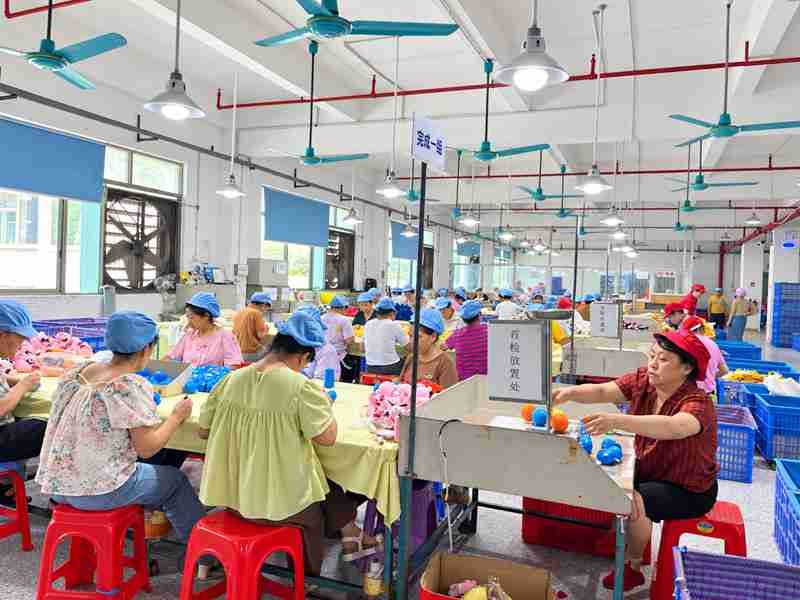
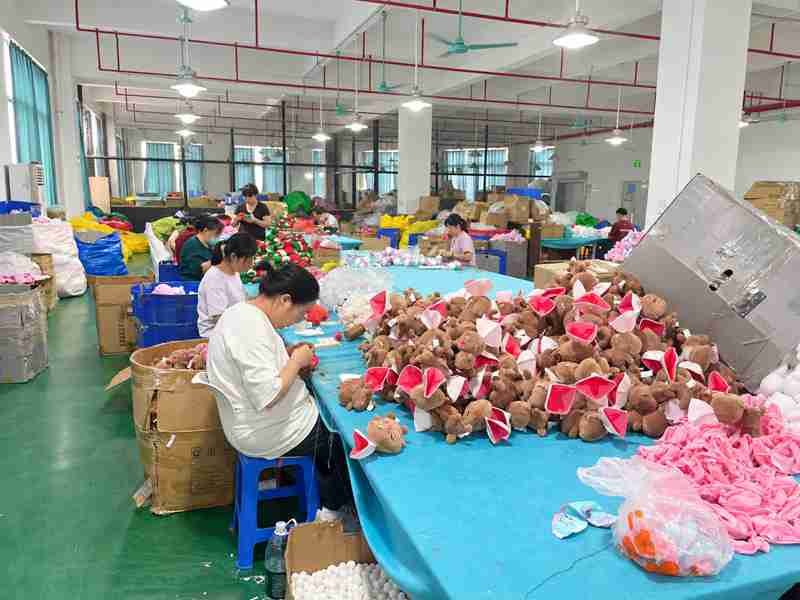
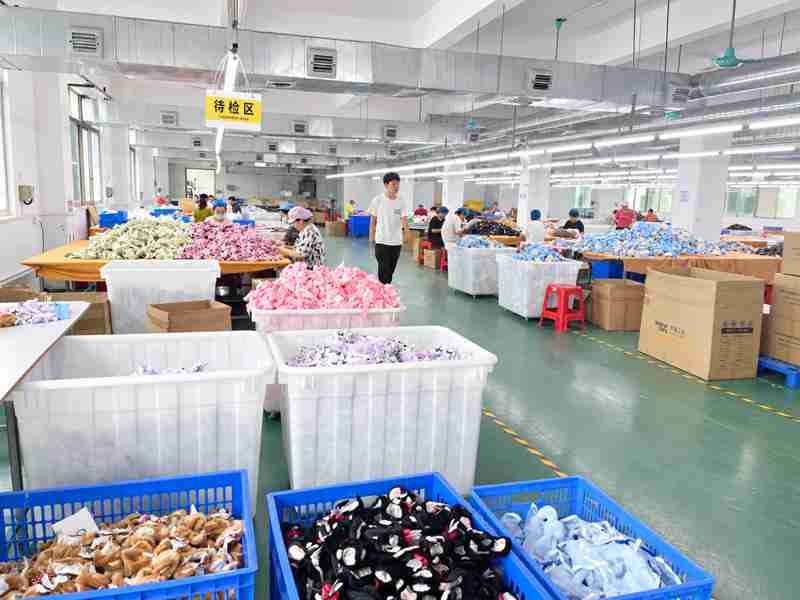
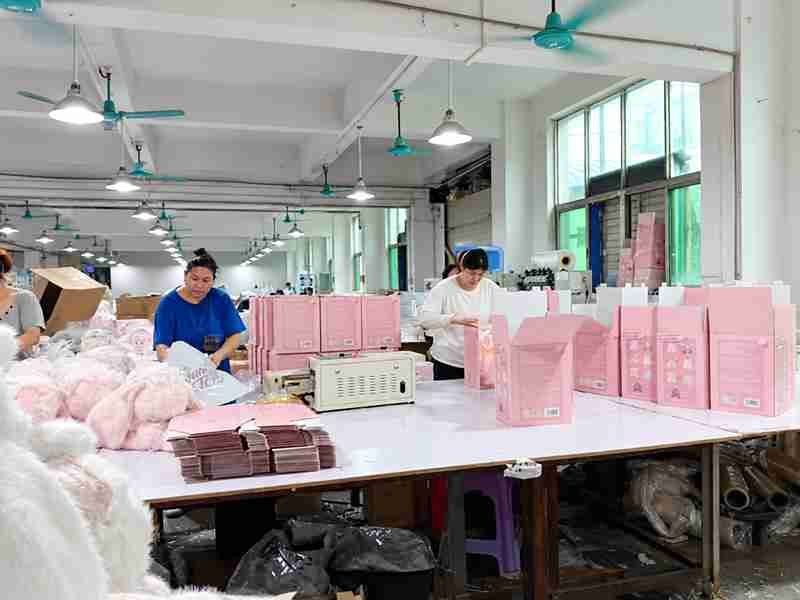
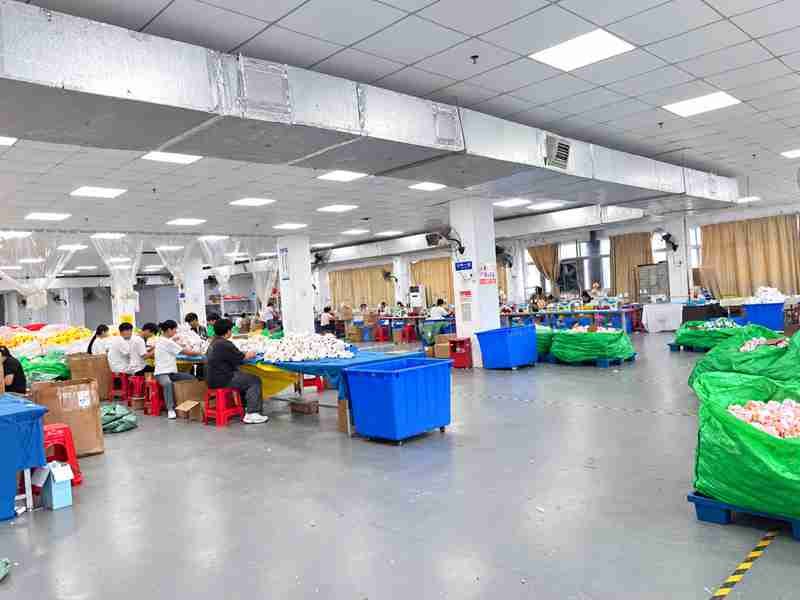
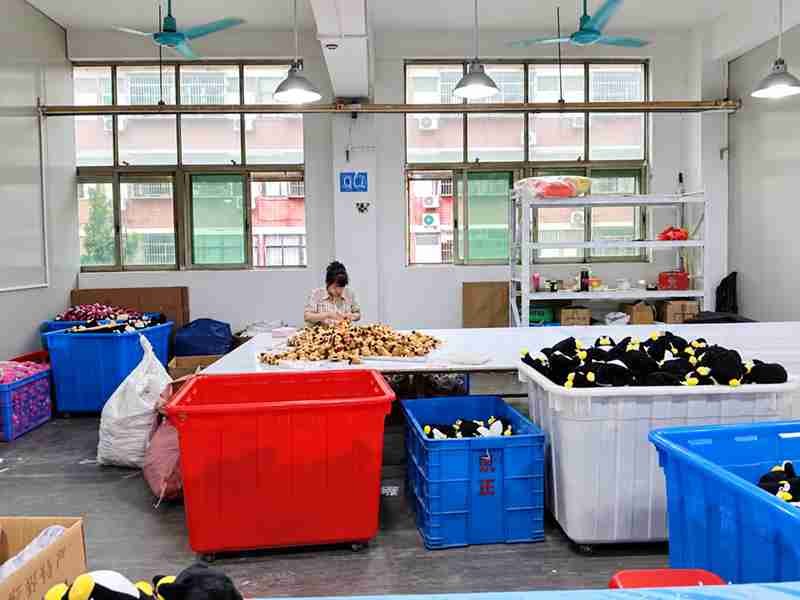
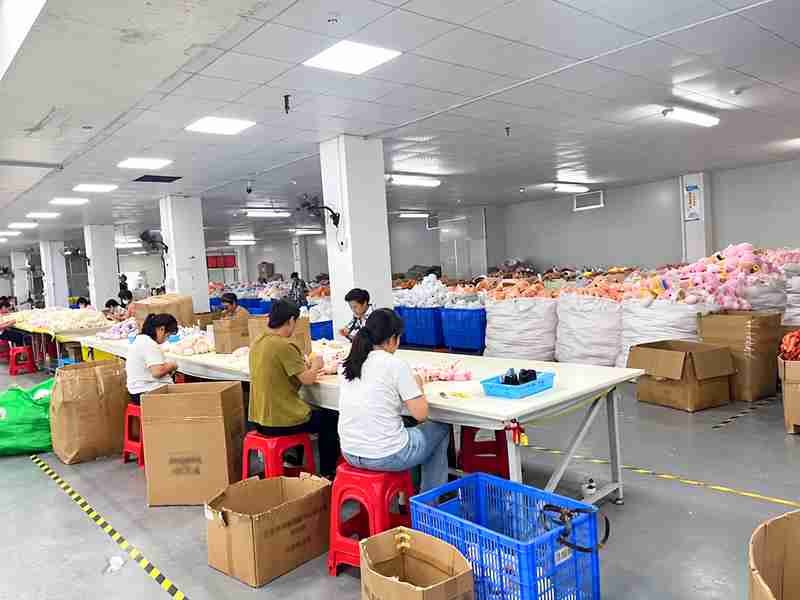
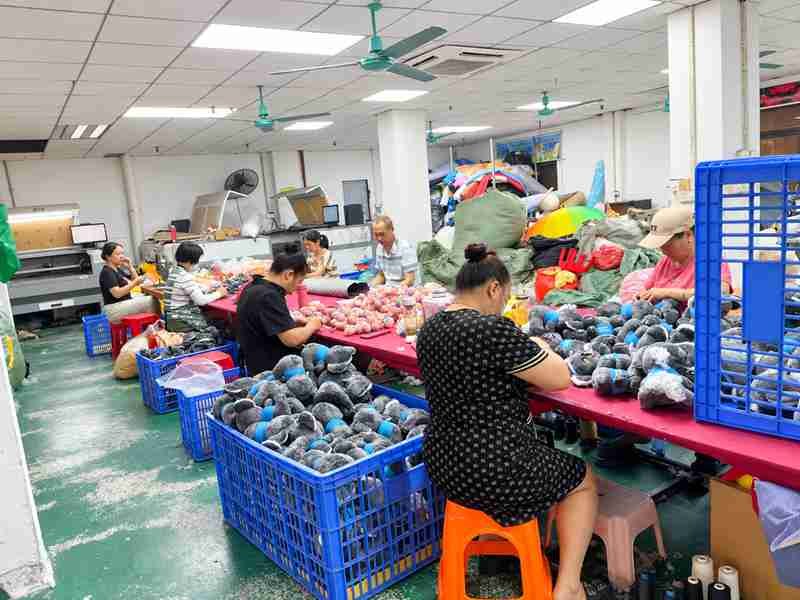
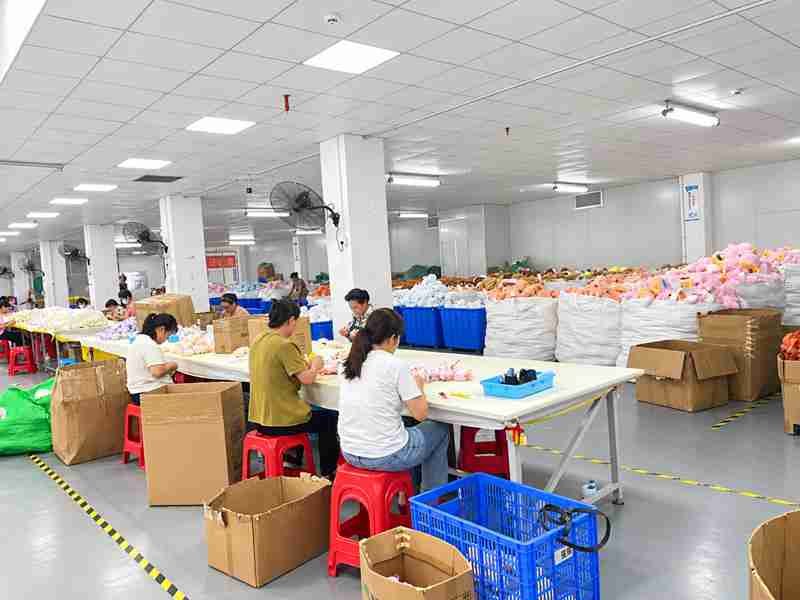
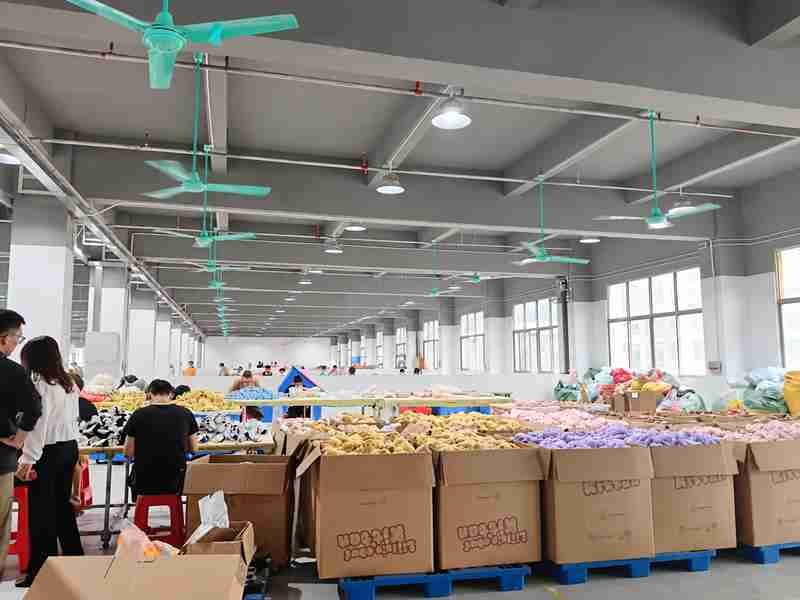
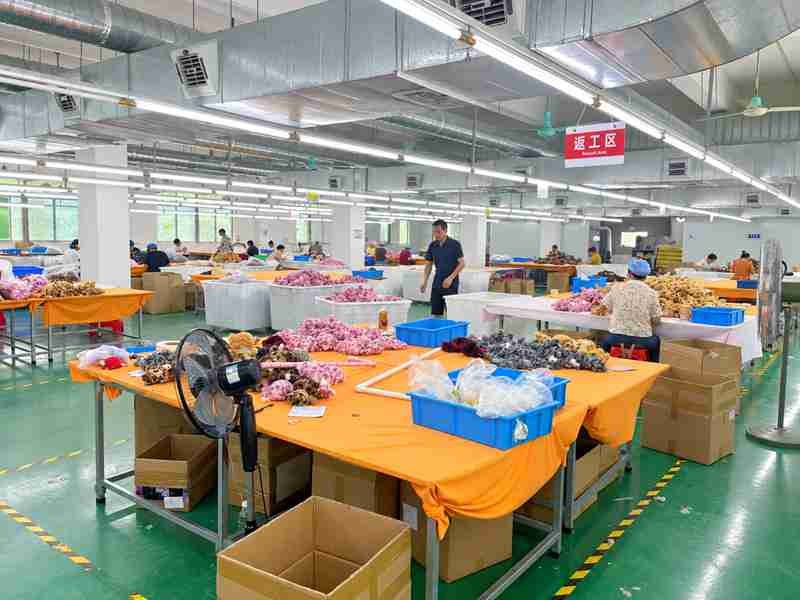
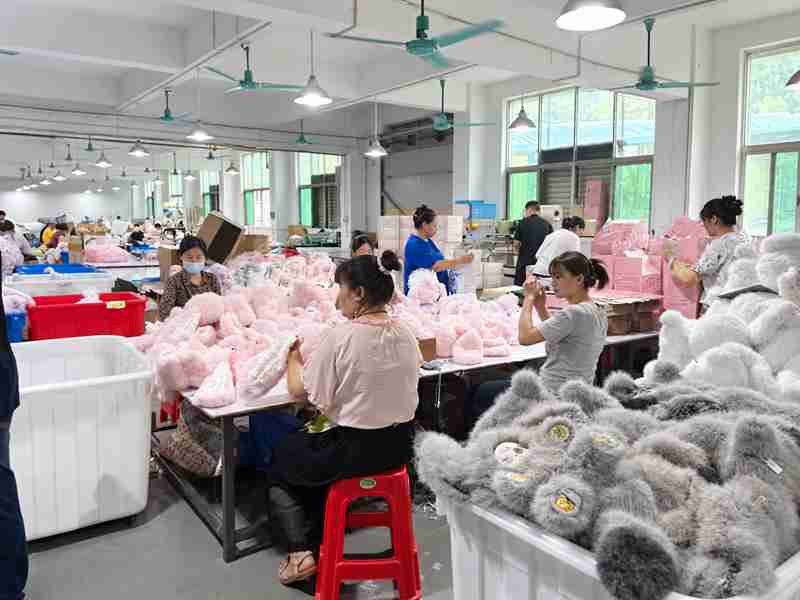
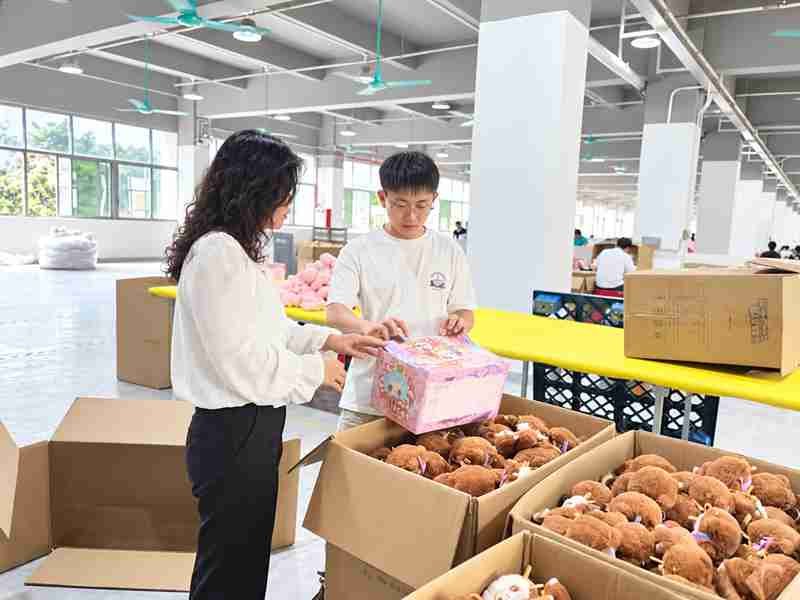
At Ewintoys, every plush project follows a structured development and production process, from initial design review and pattern making to sampling, mass production, quality inspection, and final delivery. Our real factory images provide a transparent view of how ideas are transformed into high-quality plush products through professional craftsmanship, engineering control, and careful production management.



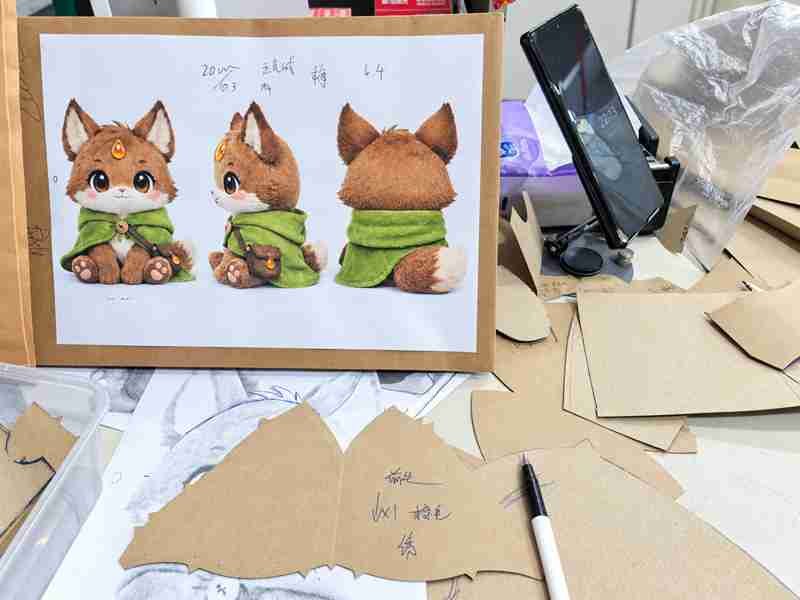
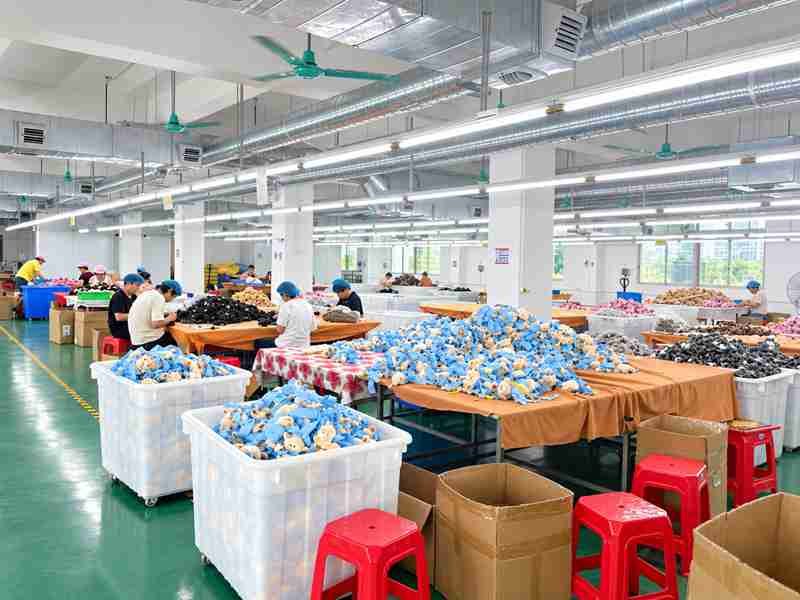





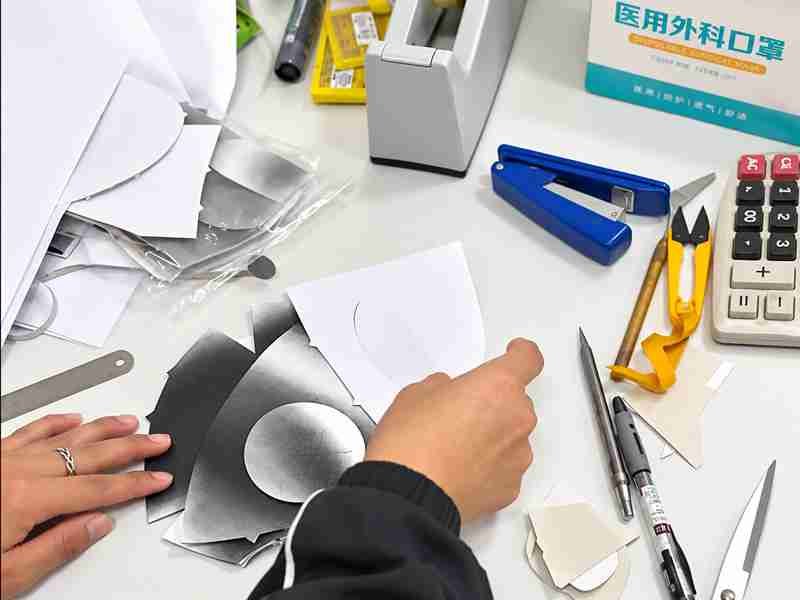
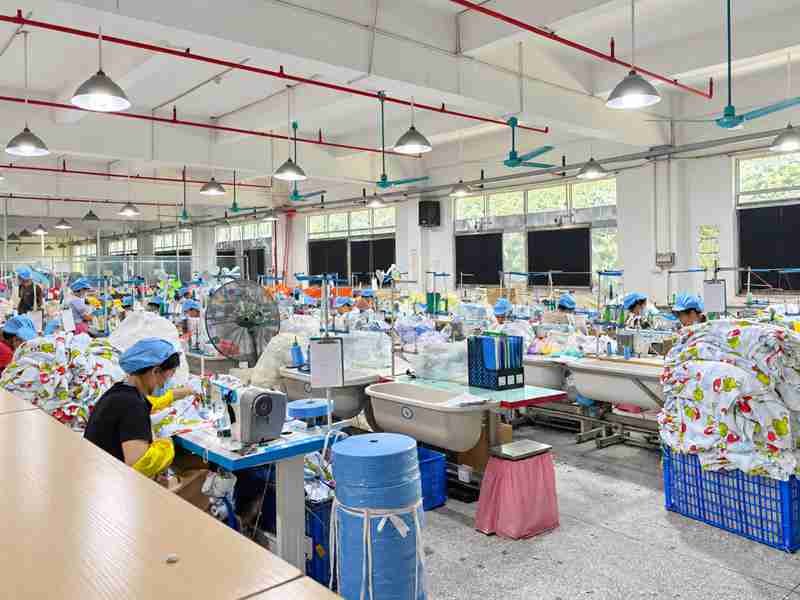
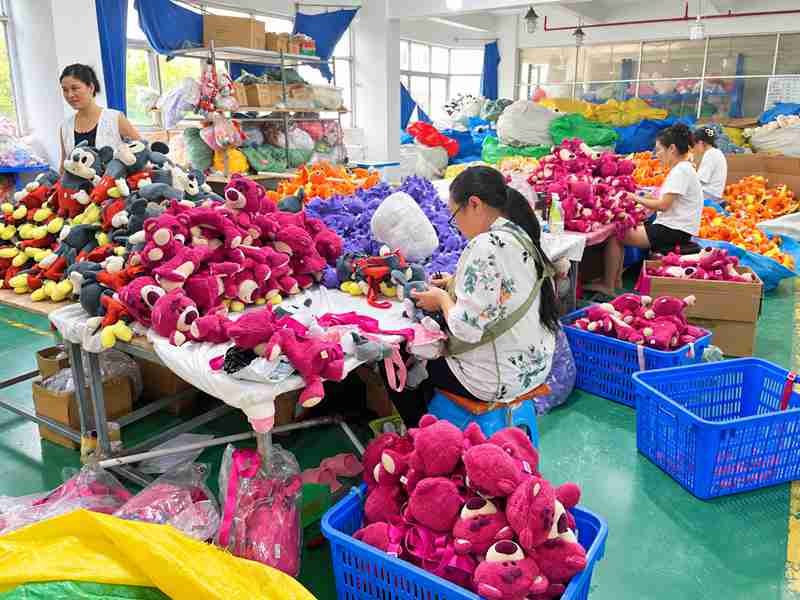
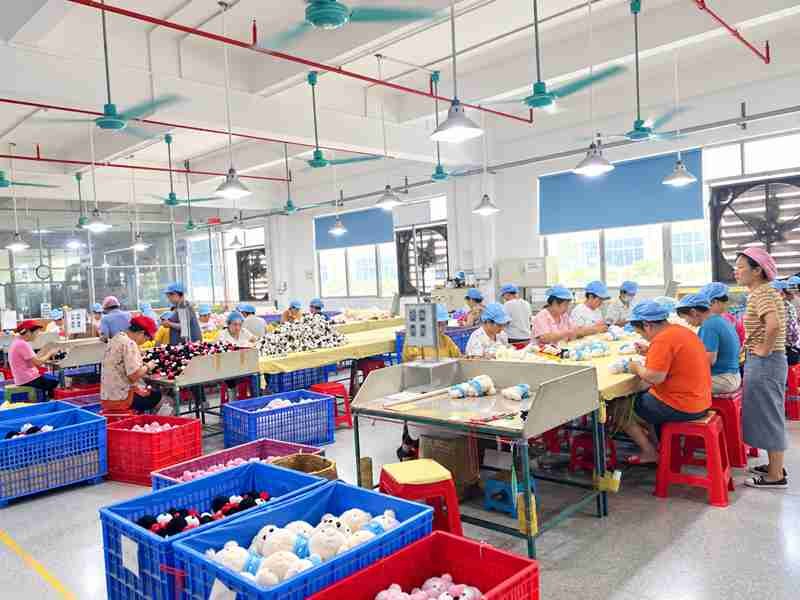
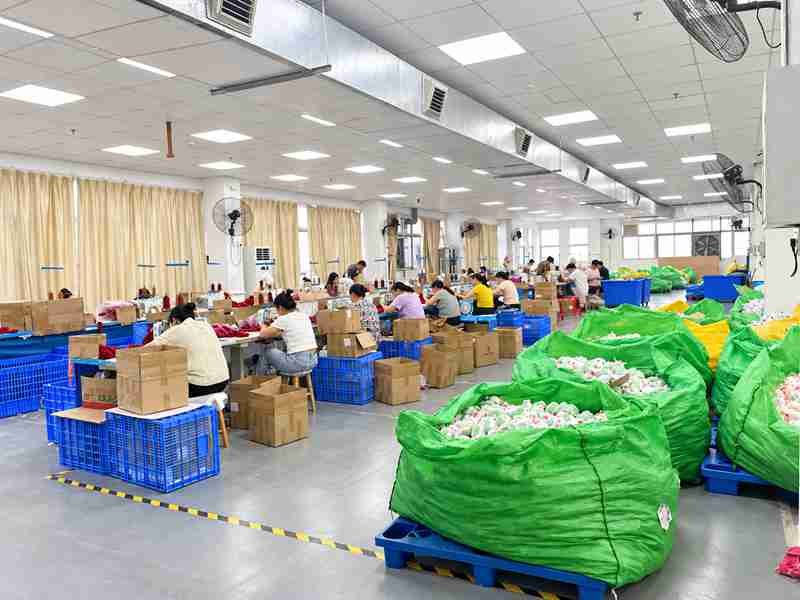
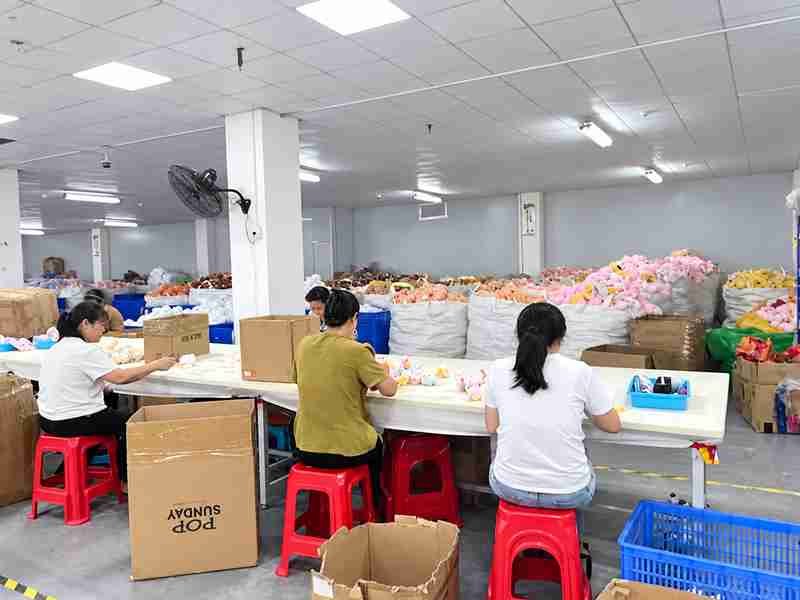
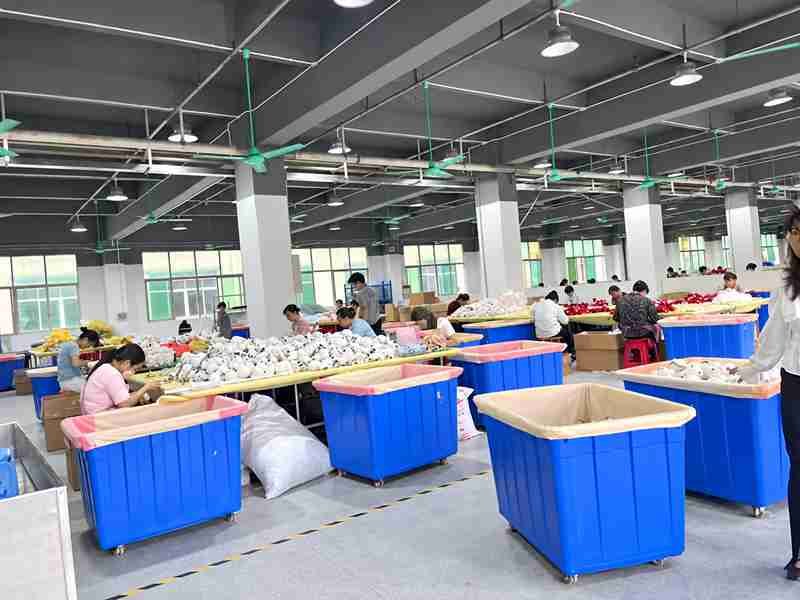
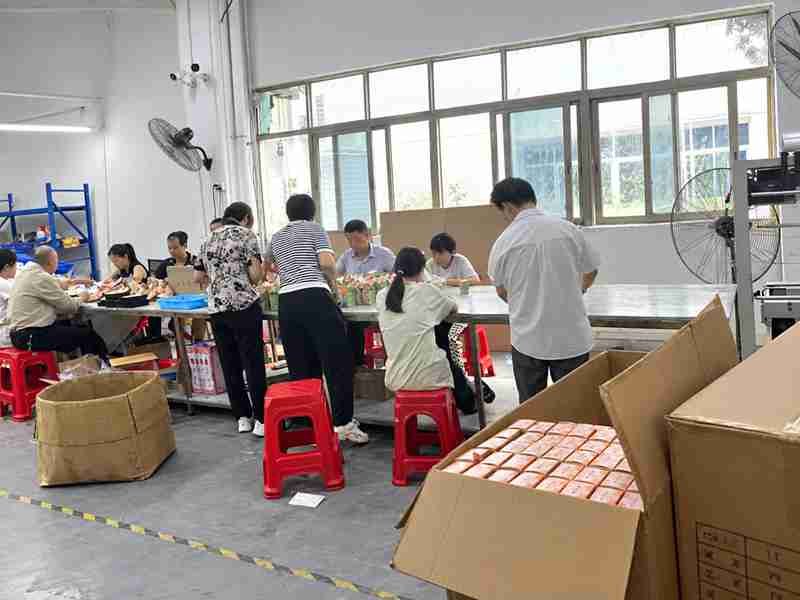

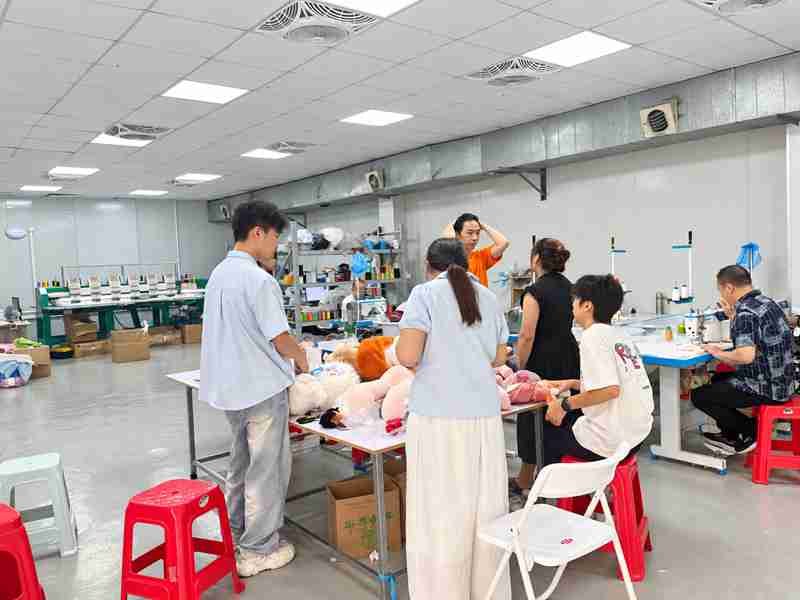

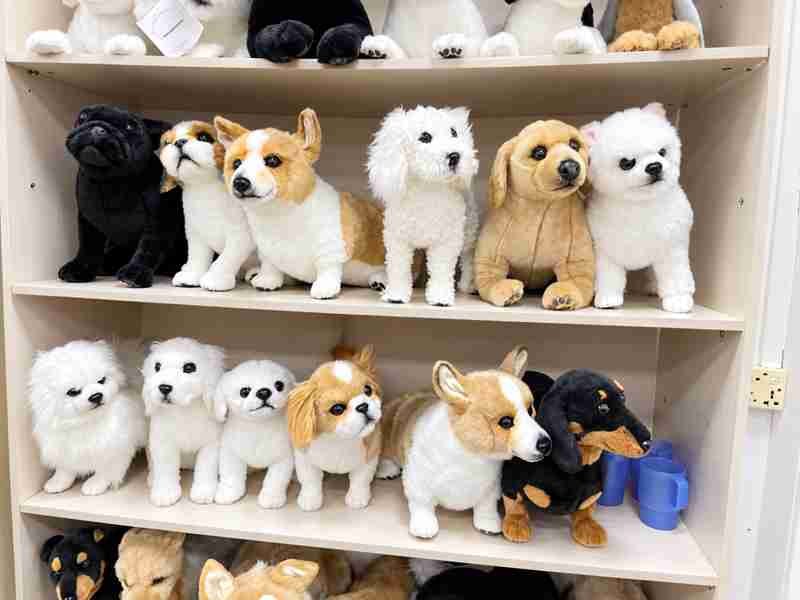
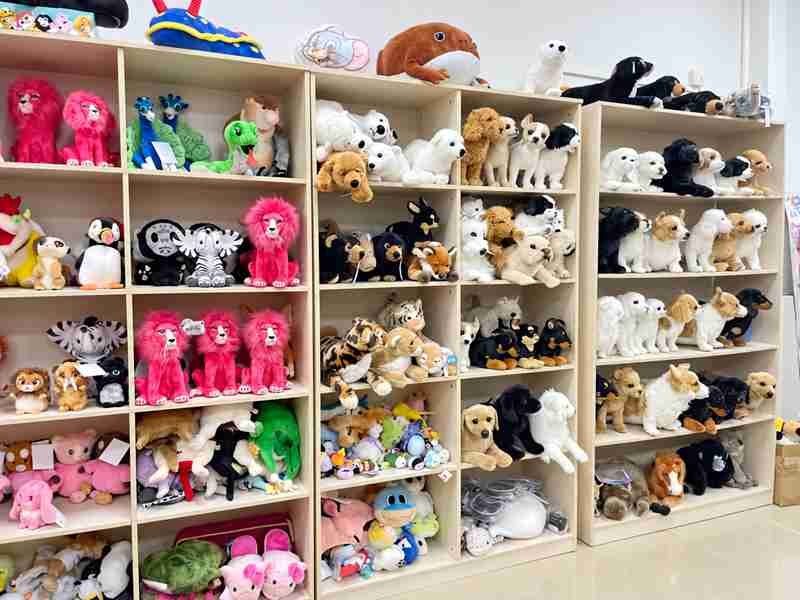
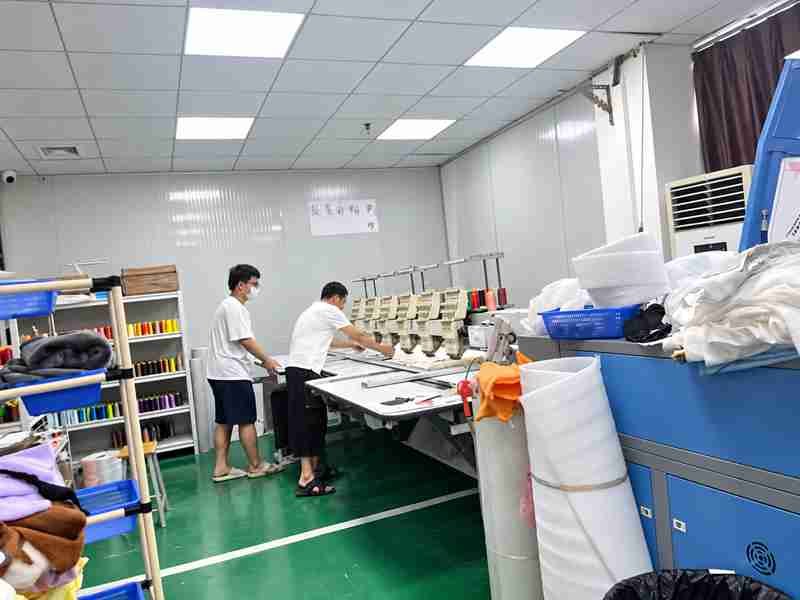
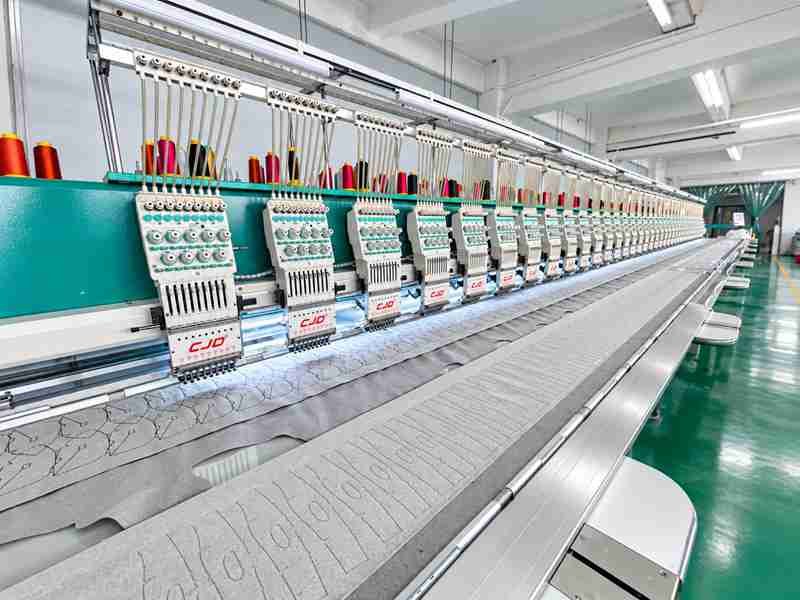
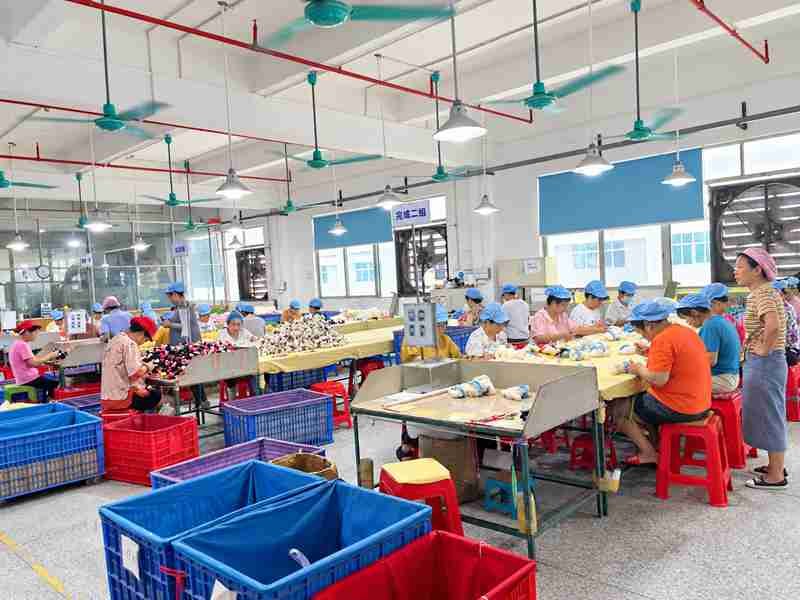
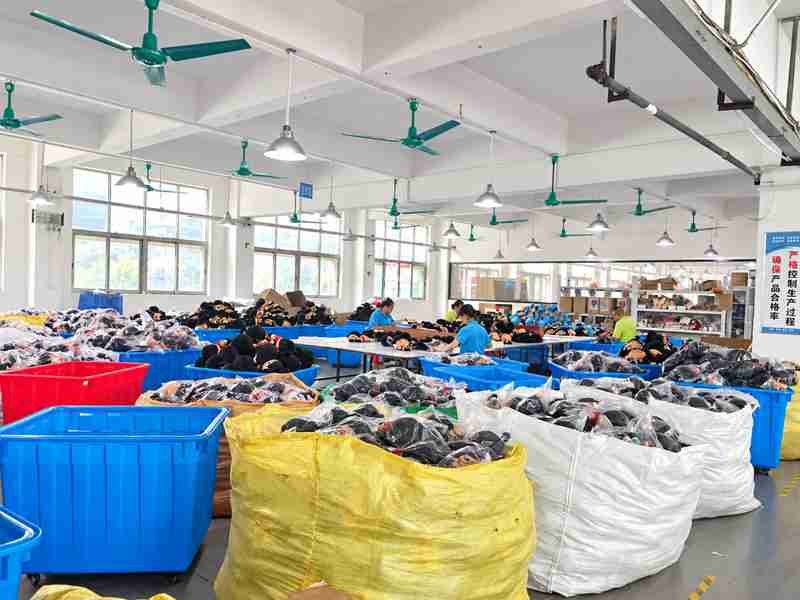
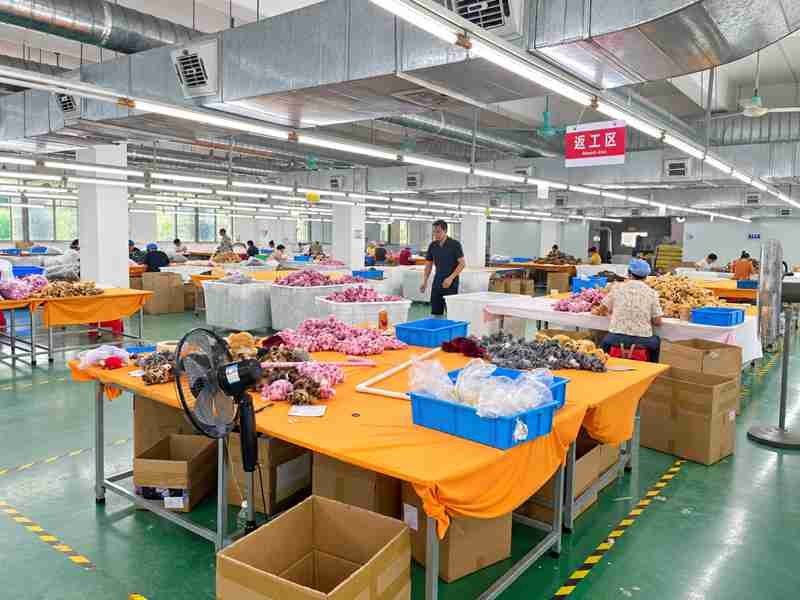

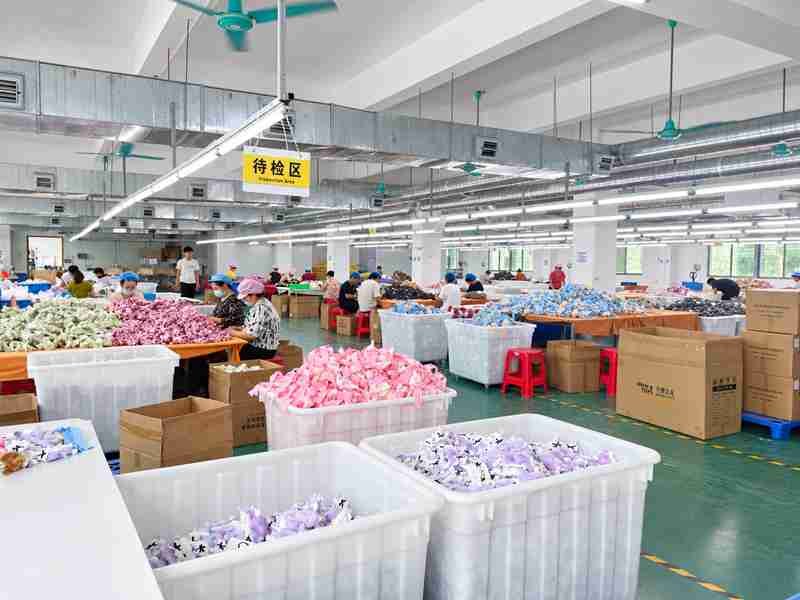


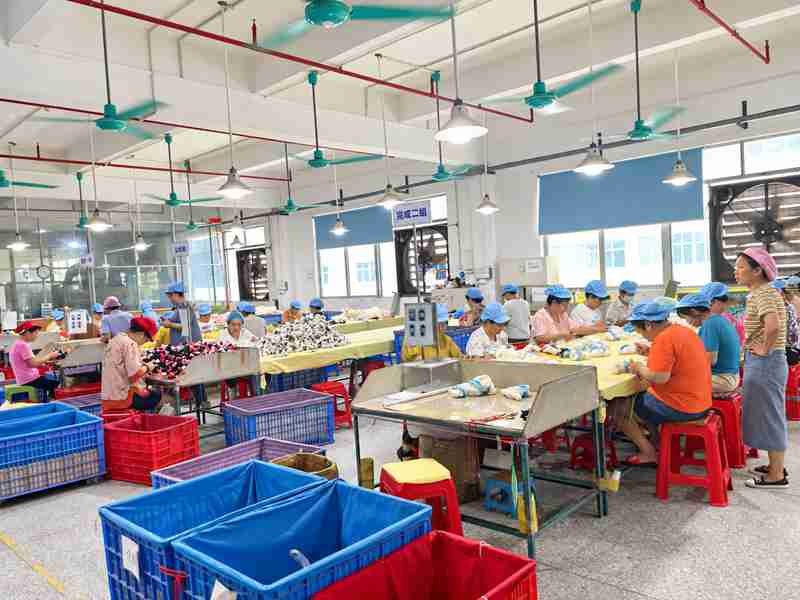
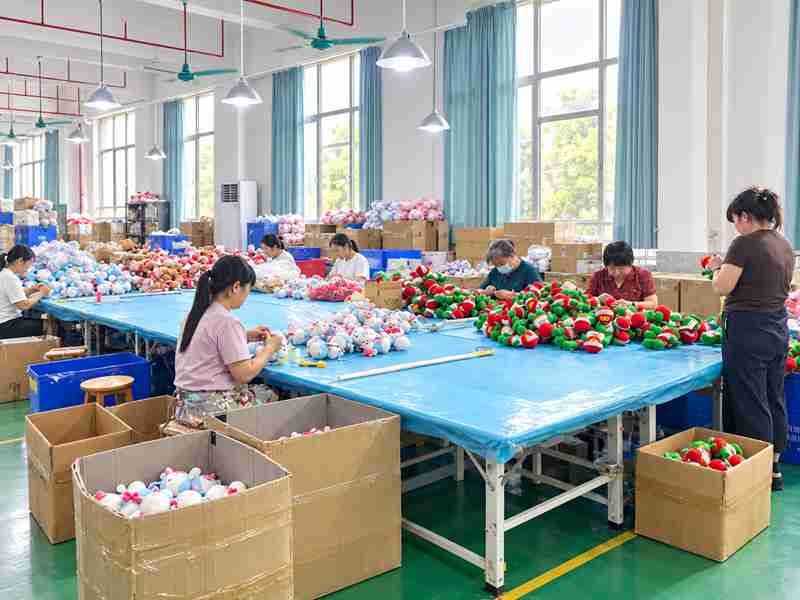
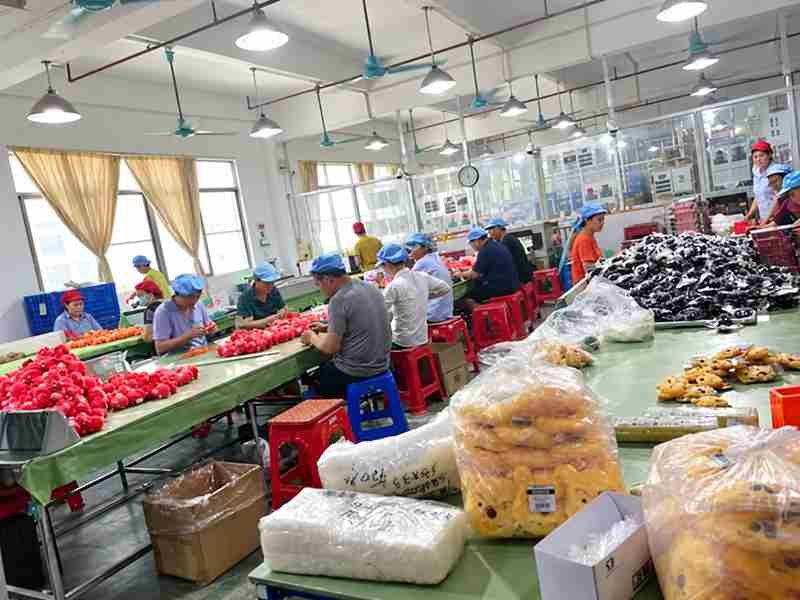

Cutting decisions control panel geometry, pile direction, print alignment, symmetry, and material use. Guides explain why nap arrows, mirrored parts, grain or stretch direction, and cutting identification matter before sewing begins.
Decoration moves from approved artwork into machine files, positioning, color control, backing, print setup, and first-piece confirmation. Production references should keep size, location, orientation, thread or ink route, and the correct SKU version visible.
Sewing converts flat panels into the product structure approved during sampling. Seam allowance, stitch route, reinforcement, opening position, accessory anchors, clothing assembly, and soft-hard interfaces can change durability and final geometry if uncontrolled.
Stuffing defines face volume, body softness, limb feel, posture, and balance. Total weight is only one reference; head, muzzle, torso, feet, limbs, weighted compartments, and module areas can need different fill targets.
Closing seams and high-stress attachment areas deserve specific workmanship controls. Keychain anchors, fixed clothing, weighted compartments, module access, and frequently handled zones may require reinforcement before final shaping and inspection.
Manual shaping can redistribute filling, restore symmetry, refine the face, position limbs, correct local hollows, and recover pile after sewing. Brushing, thread trimming, local fill adjustment, and final appearance review help the product match the approved reference.
A first-off item gives production and quality teams a common reference before the line continues. In-process checks then focus on the features most likely to drift, including decoration position, seam construction, filling, components, function, and SKU identity.
Manufacturing is not complete when the plush passes appearance inspection. The correct product still needs the correct label, unit pack, barcode, carton, assortment, market version, and destination information before release.
Each quality stage answers a different question: incoming materials, process execution, finished-product condition, and shipment release. Guides show how approved references and CTQ points can be assigned to the stage where defects are easiest to prevent or detect.
AQL sampling can support finished-goods inspection, but the inspection plan still needs clear defect definitions, product specifications, packaging requirements, and any critical safety or function checks. AQL should not replace process control or product-specific compliance testing.
Eyes, noses, keyrings, loops, magnets, props, and other attached parts can create retention and accessibility risks. Review should consider fixing method, surrounding substrate, age grade, breakage mode, and the applicable mechanical evaluation for the intended market.
U.S. toy programs may involve ASTM F963 together with applicable CPSIA and CPSC requirements. Guides focus on how product type, age, materials, components, testing evidence, tracking information, and responsible-party documentation fit together rather than treating one standard name as a complete compliance answer.
European projects can involve EN 71 testing, chemical requirements, technical documentation, conformity assessment, labeling, and other obligations depending on product scope. Content separates the role of test reports from the wider market-entry responsibilities attached to the finished toy.
Magnets, batteries, wires, hard modules, sensors, controls, and access openings change the risk map beyond all-soft plush construction. Guides connect functional design with retention, accessibility, electrical review, battery access, enclosure, labeling, and market-specific requirements.
A new supplier, material, coating, hard part, magnet location, battery access, seam route, stuffing system, or module revision can make old evidence less representative. Change impact should be reviewed before an earlier report is reused for the revised product.
Reports, supplier declarations, market documents, approved labels, BOMs, and Golden references should remain linked to the product version they represent. Strong evidence loses value when teams cannot tell which SKU, material route, or construction was actually tested.
Ewintoys follows structured quality and compliance practices for custom plush production. We hold relevant certifications and support additional testing, inspection, and compliance documentation based on specific product requirements and destination markets, helping brands meet different international standards with confidence.






















Explore character fidelity, approval stages, confidentiality, licensed details, Golden references, version control, market testing, packaging artwork, and launch timing. Licensed programs benefit from keeping every approved visual and technical element tied to the correct SKU throughout development and production.
Use guides on product families, premium materials, limited editions, blind boxes, series consistency, accessory control, packaging, replenishment, and repeat manufacturing. Collection growth needs both shared standards and clear boundaries around the details that make each SKU unique.
Character programs can combine plush, mini collectibles, keychains, props, clothing, hard components, gift sets, and interactive products. Content focuses on approval flow, launch dates, complex costumes, visual fidelity, version control, and coordinated development across several characters.
Retail guides connect margin, product specification, market compliance, unit packaging, barcode, labels, case pack, carton, inspection, supplier qualification, set dates, and replenishment. Commercial requirements should influence development early enough to avoid late redesign or pack-out changes.
Large programs need product IDs, sample revisions, BOMs, testing status, packaging, barcodes, production waves, shipment matrices, forecast visibility, CAPA, and reorder records. The goal is to manage a program as a controlled system rather than a collection of unrelated purchase orders.
Use guides on module cavities, speaker and microphone placement, sensors, controls, batteries, filling zones, access, assembly, testing, and version synchronization. Ewin focuses on plush-shell productization while electronics, firmware, apps, AI models, wireless systems, or cloud services can remain with specialist partners.
Supplier-transfer resources start from the existing product definition, sample, known defects, packaging, compliance evidence, tooling, and commercial requirements. A new source should rebuild and validate the production route rather than silently assuming the old specification is complete.
Theme parks, museums, sports organizations, universities, corporate programs, and events often work around mascots, limited editions, keychains, graduation items, branded merchandise, and fixed dates. Guides connect authorization, visual identity, quantity, retail presentation, pack-out, and delivery planning.
When a plush looks generally correct but still feels unlike the character, review proportion, face spacing, muzzle volume, eye position, ear angle, hair direction, fabric pile, filling, posture, and clothing before asking for broad subjective changes.
Asymmetry can come from pattern geometry, sewing tolerance, embroidery position, stuffing distribution, closing, pile direction, or manual shaping. Diagnosis works better when left-right measurements and construction references are compared before the pattern is changed.
Local hollows, hard lumps, weak support, or inconsistent firmness can result from material behavior, fill distribution, zone targets, access openings, operator method, or internal inserts. Compare the finished item with the Golden reference and the intended filling specification.
Failures around keyrings, fixed clothing, weighted compartments, accessories, or high-stress seams should be traced through substrate, stitch construction, reinforcement, load direction, part geometry, surrounding material, and use condition instead of simply adding more thread everywhere.
Color mismatch can involve dye lot, lighting, pile direction, surface sheen, print route, backing, supplier variation, or the approved reference itself. Compare the same nap direction and physical standard before deciding the material is outside the accepted route.
Embroidery may look correct while flat but shift after curved assembly and stuffing. Placement, backing, stitch density, pattern curvature, seam allowance, fill pressure, and target size all influence the final face or logo position.
A correct-looking part can fail if orientation, polarity, location, pocket construction, retention, hardware opening direction, or assembly sequence is wrong. Functional components need explicit installation references and finished-product checks, not only incoming part inspection.
Carton pressure, vacuum or compression, hard accessories, long pile, ears, hats, module housings, or weighted inserts can affect the unboxed product. Packaging trials should evaluate how the real item recovers before the route is frozen.
Trusted by brands, IP owners, and creative teams worldwide. Ewintoys helps transform original ideas and characters into high-quality plush products through professional development, manufacturing, and quality control.




























Prepare company details, artwork, product type, approximate size, quantity by SKU, target market, age grade where relevant, packaging direction, launch date, materials, functions, and any non-negotiable features before requesting a manufacturing review.
Check available views, character proportions, expressions, color references, logos, clothing, props, print or embroidery artwork, scale references, and missing angles. Better source files reduce avoidable interpretation before pattern engineering starts.
Compare candidate fabrics by composition, GSM, pile, density, nap, stretch, thickness, backing, surface appearance, decoration compatibility, product type, sample status, and supplier route instead of choosing only by softness.
Review shape, dimensions, face, handfeel, materials, decoration, components, clothing, function, construction, filling, labels, packaging, and identified CTQ points. Record which version was approved and what still remains conditional before production release.
Compare manufacturers across development, engineering, sampling, material control, manufacturing, quality, compliance, confidentiality, packaging, delivery, multi-SKU control, communication, evidence, and corrective-action capability rather than factory size alone.
Confirm Golden Sample, frozen BOM, released pattern, current artwork, approved materials, component revisions, filling references, packaging files, QC plan, test status, SKU coding, and open issues before the production line receives the project.
Define critical, major, and minor defect examples; dimensions; appearance; decoration; seams; filling; accessories; function; labels; packaging; and carton requirements. Inspection becomes more reliable when defect criteria come from approved product evidence rather than generic wording.
Track SKU ID, design version, sample stage, BOM status, artwork, components, packaging, barcode, test status, production wave, inspection status, shipment destination, and reorder changes in one controlled program view.
Ewin Toys supports global brands, IP owners, and creative teams with plush product development, prototyping, production management, quality control, packaging coordination, and global delivery support—from initial concept through finished production.
We will contact you within 24 Hours, please pay attention to the email with the suffix“@ewintoys.com”.
# Confidential project? NDA requirements can be discussed before sensitive files are shared.