Plush Toy Sewing & Assembly for Consistent Bulk Production
Protect character shape, seam integrity and detail placement as approved designs move into mass production. Ewin Toys coordinates sewing, closing, accessory fitting and final assembly to help complex plush structures remain repeatable across larger orders.
1,200+ Sewing Team | 130+ Handwork & Assembly Staff | Multi-Station Sewing | Garment & Accessory Assembly | Closing & Finishing | Complex Structure Execution | In-Process Quality Control
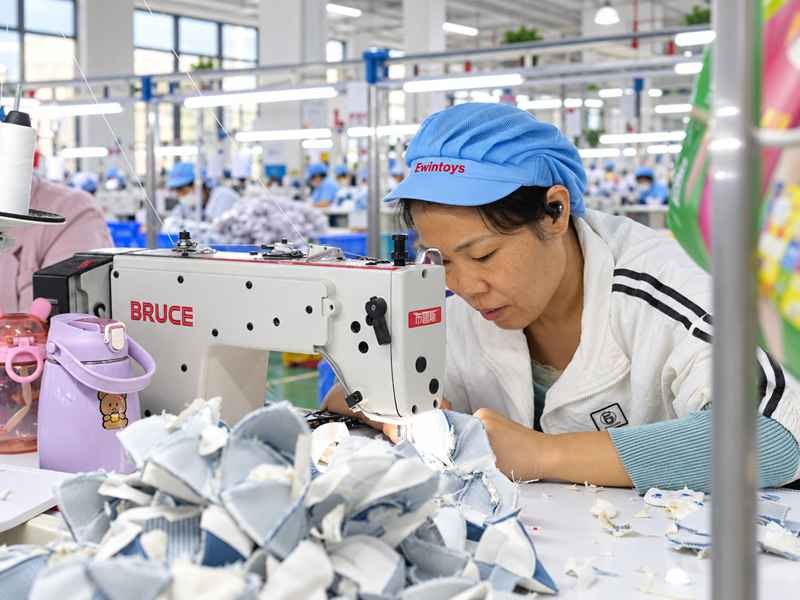
Why Sewing Controls the Final Plush Result
Shape and Proportion
Structural Strength
Bulk Consistency
A good sample is not enough. Repeat production needs released patterns, clear process breakdowns, skill-matched workstations, first-piece approval, in-process checks, and a Golden Sample reference so several operators reproduce the same construction rather than their own interpretation.
From Production Release to a Controlled Sewn Structure
Release the Correct Product Definition
Bulk sewing should not start from a photo, an old sample, or verbal instruction. Ewin Toys releases production against the approved product version so the sewing team works from one controlled definition.
- Golden Sample: the approved physical reference for shape, seam appearance, attachment position, clothing fit, and overall finish.
- Released Pattern: the current panel shapes, notches, left-right identification, seam allowance, grain or nap direction, and construction marks.
- Frozen BOM: the confirmed fabrics, threads, linings, accessories, internal bags, hardware, labels, and other components.
- Final Decoration Files: approved embroidery, print, applique, color, and placement references that must match the sewn structure.
- QC and Packaging Requirements: defined checkpoints so sewing, assembly, inspection, and final pack-out use the same product revision.
Break the Product Into Manufacturable Operations
A plush shell may look simple from the outside while requiring many separate sewing and assembly steps. Ewin divides the approved construction into operations that can be trained, checked, balanced, and repeated.
Typical operation planning may include face panels, head gussets, ears, limbs, body joins, lining, clothing, zipper or access openings, hanging loops, internal bags, hard-part interfaces, and final closing points. Complex curves or narrow openings may move to a specialist workstation rather than staying on a general sewing station.
Operation order also matters. Some parts must be embroidered before sewing. Some hardware must be installed before an opening becomes inaccessible. Electronic cavities, weighted inserts, and removable modules need defined assembly access. A workable sequence reduces rework and keeps hidden components in the intended position.
Control the Handover to Stuffing and Assembly
The sewing department does not work as an isolated island. A sewn shell must leave the line ready for the next operation without creating new problems downstream.
Before transfer, key checks can include panel identity, seam completeness, opening size, orientation, accessory anchors, internal reinforcement, loose thread, fabric caught in seams, and any component that becomes hidden after stuffing. Products with left-right parts, multiple color panels, clothing layers, or similar SKUs need especially clear identification.
After sewing, the product moves into stuffing, closing, hand assembly, shaping, and further inspection. A clean handover prevents later teams from compensating for sewing errors with extra filling, forced shaping, or unnecessary rework.
Sewing Methods Matched to Plush Construction
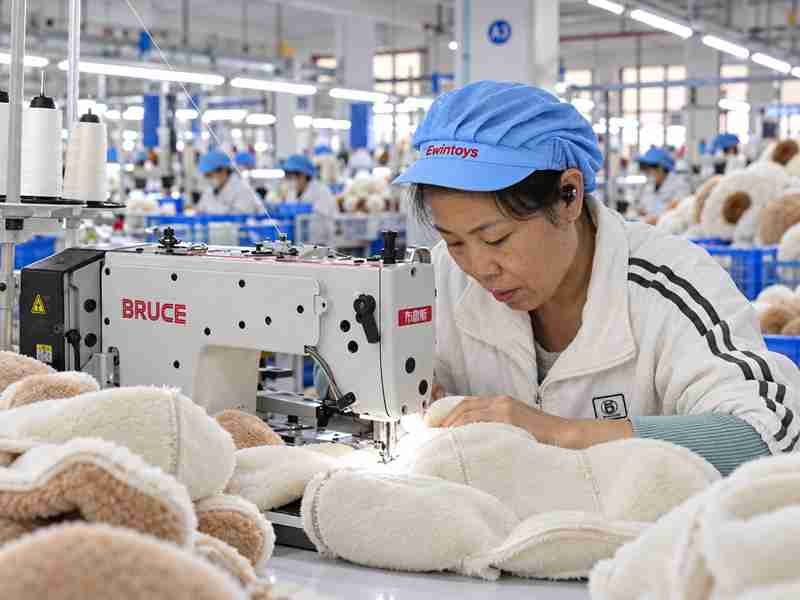
Computerized Lockstitch
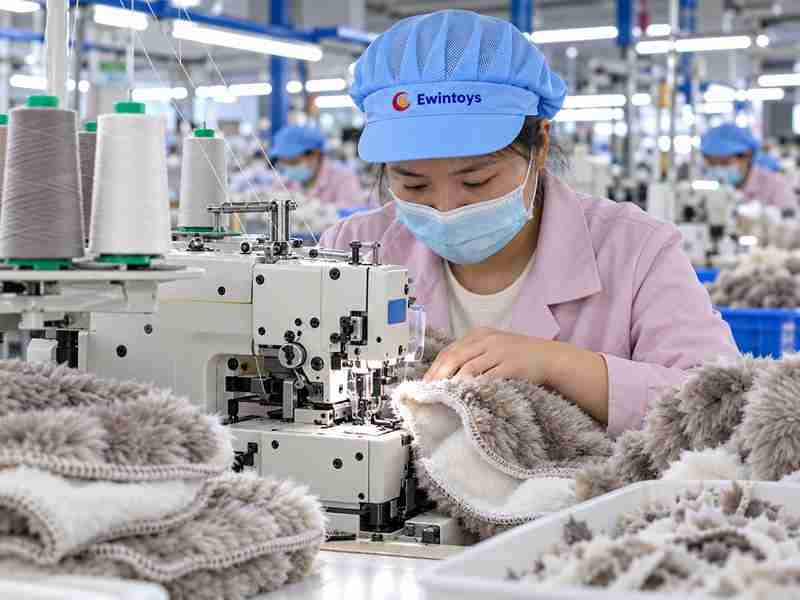
Overlock Sewing
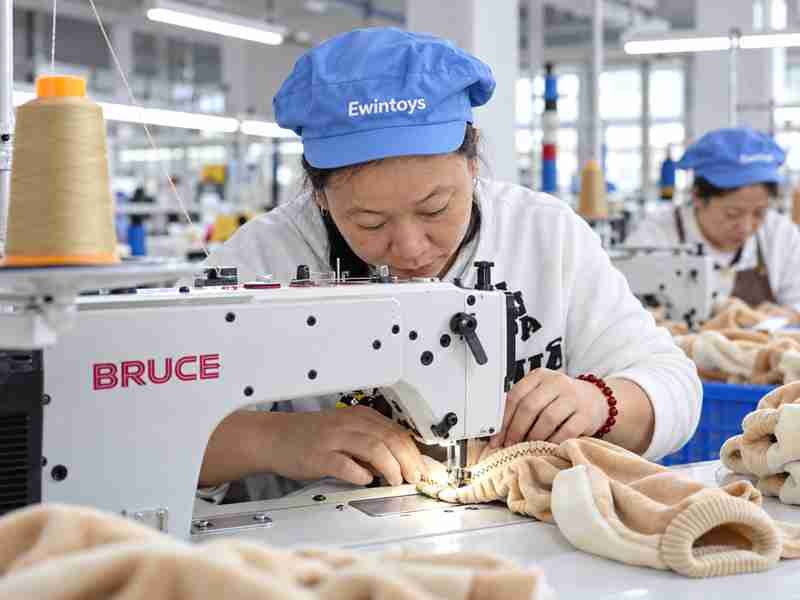
Zigzag Sewing
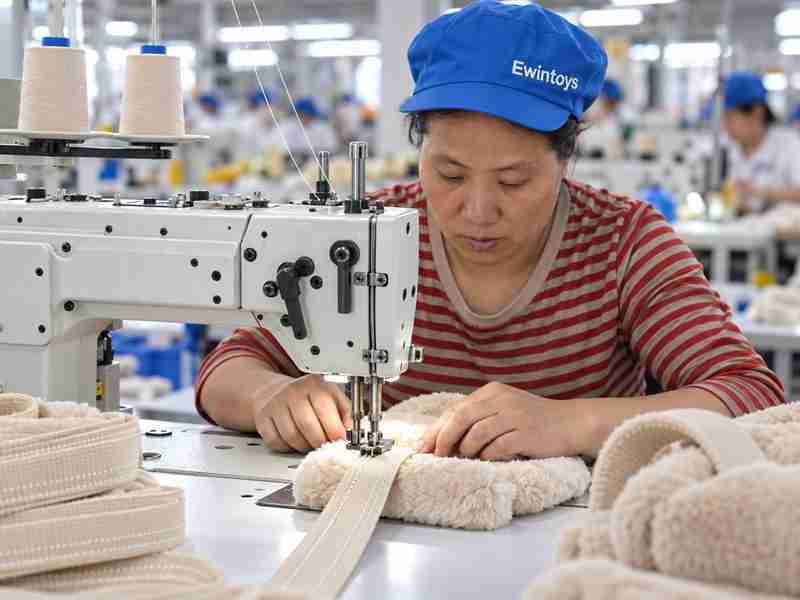
Double-Needle Sewing
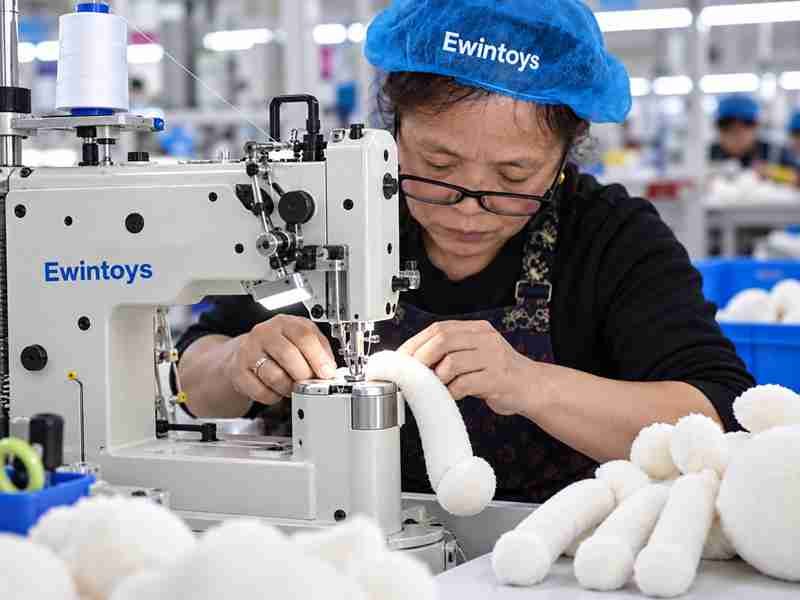
Cylinder and Post-Bed
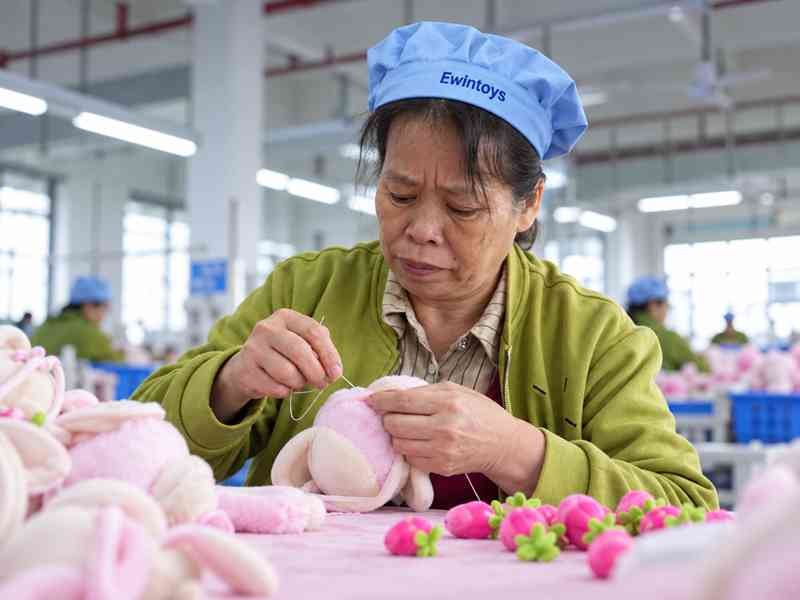
Blind Stitch
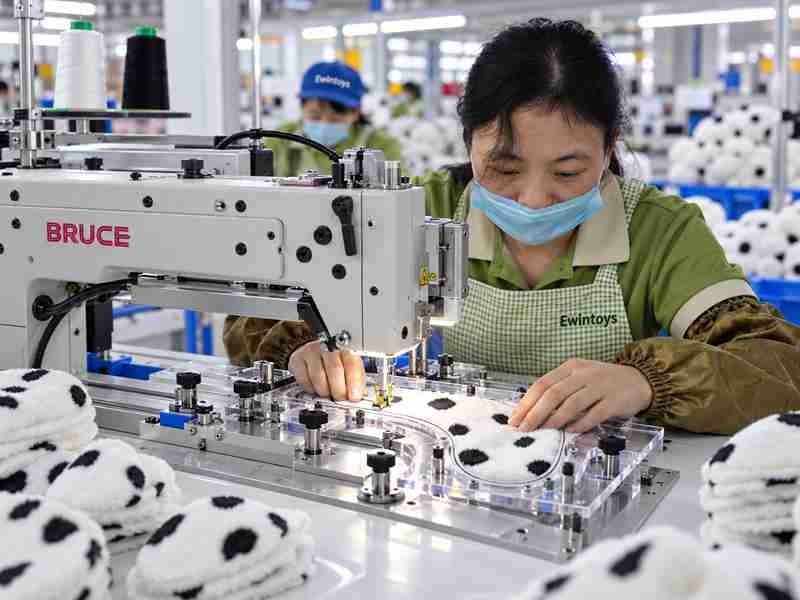
Pattern and Template Sewing
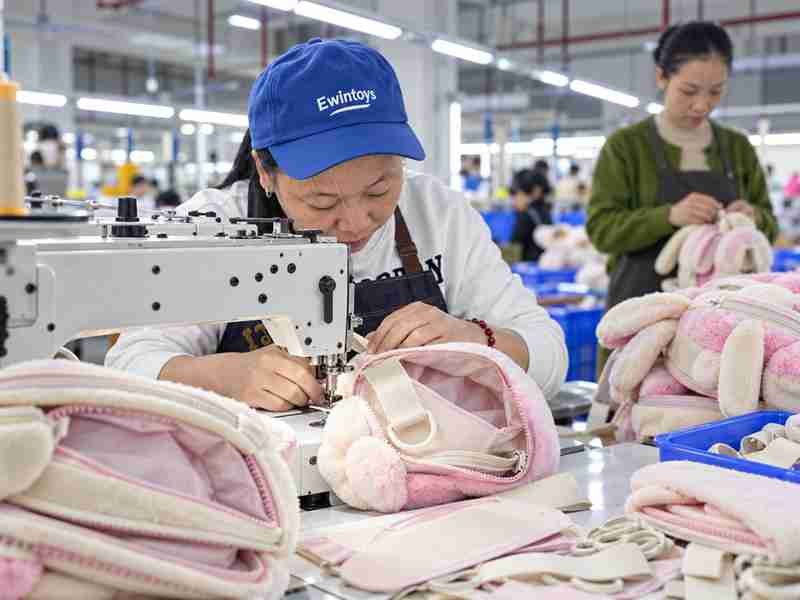
Specialist Structural Sewing
Plush Product Types Across the Sewing System

Standard Plush
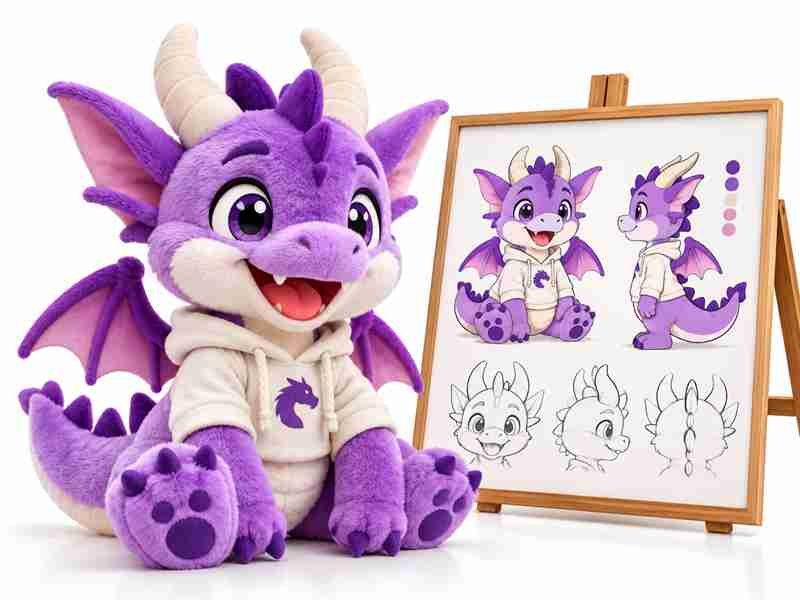
Character and IP Plush
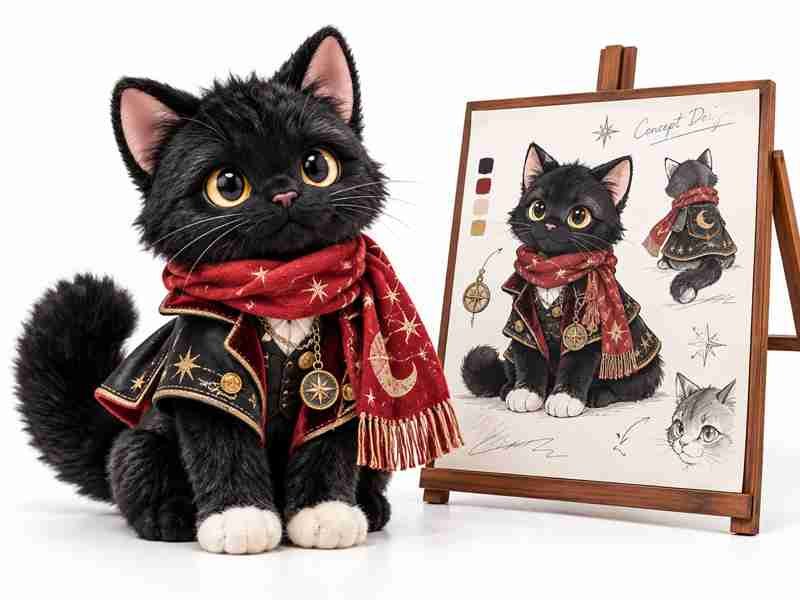
Collectible Plush
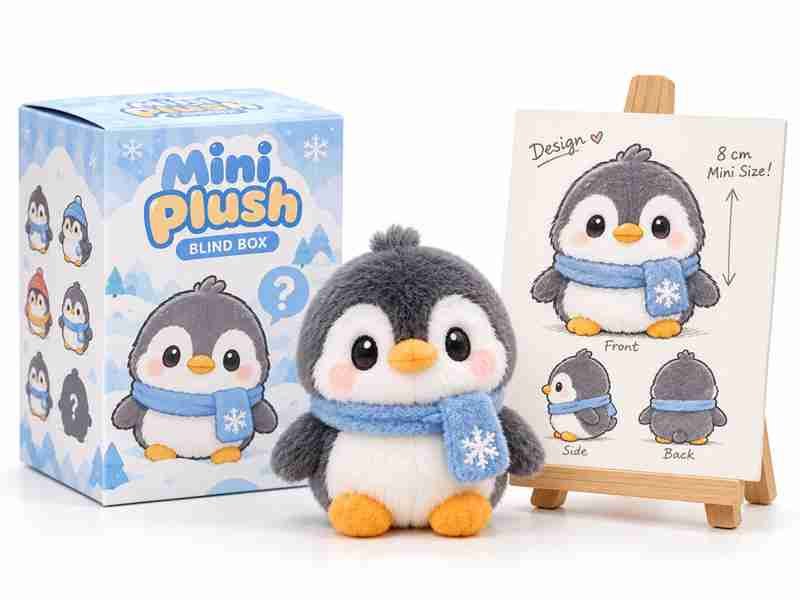
Mini and Blind Box
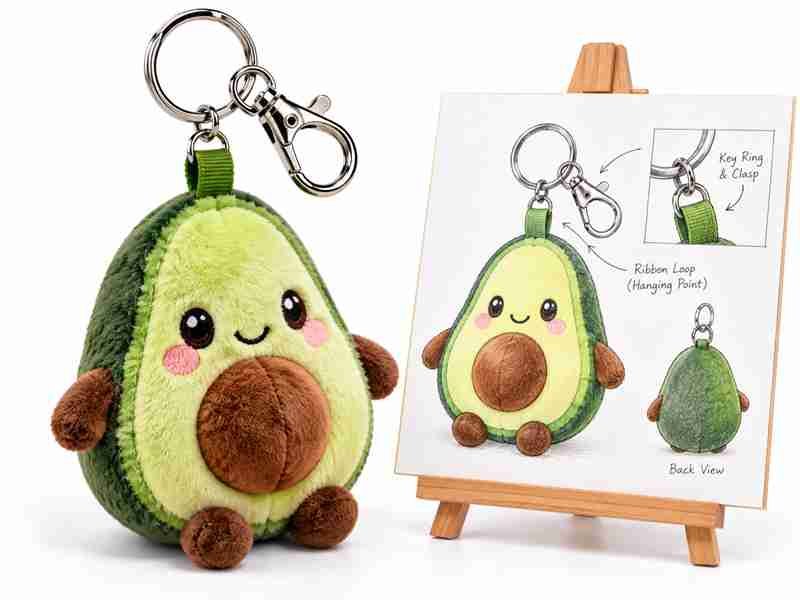
Keychains and Charms
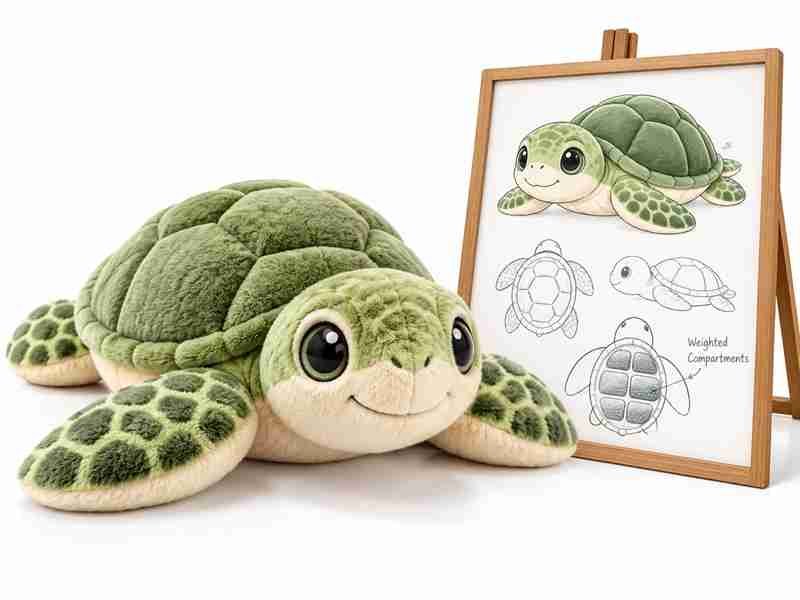
Weighted and Sensory

Plush Plus Hard Parts
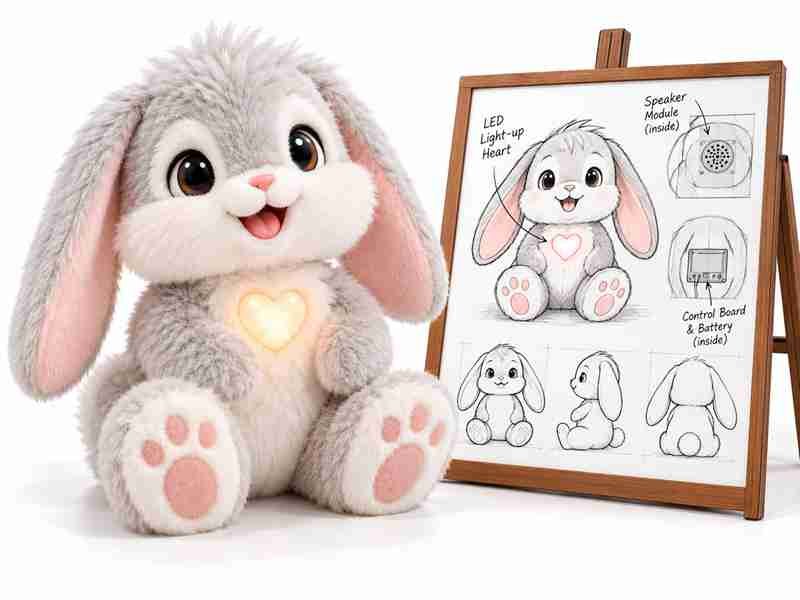
Electronic and AI Plush
Complex Seams Need More Than Skilled Hands
Curved Seam Control
Face Construction
Stress-Point Reinforcement
Small Opening Sewing
Hidden Seam Finishing
Interface Sewing
Handwork and Assembly Standardized for Repeat Production
Position Every Manual Detail
Hand assembly becomes risky when the instruction is only “make it look like the sample.” Ewin converts approved appearance into measurable and visible references that operators can follow.
Clothing, bows, patches, tails, ears, jewelry, hardware, molded components, and decorative pieces may require defined position, angle, spacing, orientation, fixing method, and assembly sequence. Photo standards help show appearance, while dimension references control areas where position affects character identity or symmetry.
The same principle applies inside the product. Weighted bags, support pieces, magnets, electronic modules, removable units, and reinforcement patches need controlled placement before the opening is closed. A hidden component installed five centimeters away from its intended position can change balance, shape, function, or safety even when the outside initially looks acceptable.
Manual work is therefore treated as a production operation with an approved method, not as uncontrolled finishing.
Close the Product Without Damaging the Shape
Closing is one of the last structural seams and often carries more visual responsibility than its size suggests. Before closing, the team confirms filling or internal components are complete and the opening is ready to be sealed.
The closing method, thread, stitch density, seam allowance, and reinforcement are selected around the location and expected load. After closing, inspection looks for visible thread, open gaps, trapped fur, local hard points, puckering, distorted openings, or a seam line that pulls the surface away from the Golden Sample.
Long-pile fabrics require extra attention because fur can become trapped inside the seam and make a strong joint look poor. Premium products may use less visible finishing routes where the structure allows it.
A clean closing operation reduces later trimming, repair, and cosmetic rework.
Assemble Components in the Right Sequence
Assembly order can decide whether a product is easy to manufacture or difficult to repair. Clothing, hardware, molded parts, zippers, internal structures, and electronic components may become inaccessible after later seams are closed.
Ewin reviews the assembly route before bulk production so components enter at the right stage. A keychain anchor may need reinforcement before stuffing. A removable electronic module may need an access opening before closing. A hard facial component may require backing and positional checks before surrounding seams are completed.
Work instructions can include sequence, fixing method, position reference, pull or torque requirement where relevant, and the point at which inspection must occur. Defects are easier to contain when a component is checked before it becomes hidden inside the finished product.
Keep Approved Samples Reproducible in Bulk Sewing
Lock the References Before Bulk Sewing
A finished sample shows the result, but production also needs the instructions behind the result. Ewin links the approved sample to the released pattern, frozen BOM, final decoration files, component specification, and relevant quality points.
Released patterns control the geometry operators sew. The BOM controls the materials passing through the machine. Decoration files control positions that must align with seams. A Golden Sample gives the visual and tactile reference. Together, those references reduce the chance that a production team copies only what can be seen from the outside.
Revision control matters especially in multi-round development. If V2 changes the head panel but a workstation still uses the V1 pattern, the final plush can look wrong even when the operator sews accurately. Production release therefore needs one current revision at every workstation and supplier interface.
Approve First Pieces Before Full Line Output
New styles and SKU changeovers create the highest risk of misunderstanding. A first-piece review checks whether released instructions are producing the expected construction before large quantities accumulate.
Checks can focus on seam path, panel orientation, symmetry, curve formation, opening position, reinforcement, accessory anchors, internal structure, and any Critical-to-Quality areas identified during development. Where decoration, sewing, and stuffing interact, the first piece can also confirm that visual references remain aligned after the structure gains volume.
A failed first piece should trigger correction before the process accelerates. The objective is not to repair a large batch later; it is to verify that the workstation, method, operator understanding, and released files are aligned at the beginning.
Control Changes Instead of Hiding Them
Material substitution, pattern updates, accessory revisions, packaging changes, or a request to improve one visual area can affect sewing elsewhere. A change that appears small may alter stretch, seam bulk, opening size, stitch path, or assembly order.
Ewin keeps changes connected to the relevant SKU and revision so production is not split between old and new definitions. When a change affects manufacturability or quality, the updated instruction should reach sewing, handwork, inspection, and any related supplier before the next release.
Repeat orders follow the same logic. Previous data can be reused, but the team still checks what changed in material lot, component source, artwork, packaging, quantity, or target channel. Reproducibility comes from controlled continuity, not blind repetition.
Certificates, Compliance & Quality Assurance
Ewintoys follows structured quality and compliance practices for custom plush production. We hold relevant certifications and support additional testing, inspection, and compliance documentation based on specific product requirements and destination markets, helping brands meet different international standards with confidence.
























Quality Gates Inside Sewing and Assembly
| Control Gate | What Is Checked | Typical Risk | Production Reference |
|---|---|---|---|
| Material and Bundle Check | Correct fabric lot, panel identity, orientation, left-right parts, decoration status | Mixed lots, wrong panels, reversed pieces | Frozen BOM, Released Pattern, bundle ID |
| First-Piece Review | Seam path, curve, symmetry, openings, reinforcement, anchor points | Wrong method repeated across a full batch | Golden Sample, work instruction, CTQ list |
| IPQC – Sewing | Seam allowance, stitch condition, shape formation, stressed seams, panel matching | Puckering, twisting, burst seam, asymmetry | Released Pattern, process standard |
| IPQC – Assembly | Accessory position, fixing method, internal parts, hardware, clothing, module interfaces | Loose parts, misalignment, wrong assembly order | Golden Sample, assembly instruction |
| Fill and Closing Check | Opening, internal completion, closing seam, trapped fur, hard points | Exposed filling, weak closure, visible repair | Filling spec, closing standard |
| FQC | Overall fidelity, dimensions, handfeel, function, visible seam finish | Good process parts combined into a poor final product | Golden Sample, approved specification |
| Needle / Metal Control | Needle event status, detector calibration, affected product isolation, release status | Broken needle or unwanted metal contamination | Needle-control record, calibration log |
Prevent Common Sewing and Assembly Failures
Burst Seams
Left-Right Asymmetry
Distorted Faces
Loose Attachments
Trapped Fur
Wrong Component Version
Poor Closing Finish
Rework Damage
Repeated opening, resewing, trimming, or component replacement can damage fabric and change the approved form. Early first-piece and in-process checks reduce rework load and keep problems from moving downstream into stuffing, finishing, or packaging.
Who Uses Ewin Sewing and Assembly Programs
Global Brand Teams
IP and Licensing Teams
Toy and Collectible Companies
Entertainment and Gaming
Retail and Private Label
Enterprise Multi-SKU Programs
Trusted by Global Brands and IP Owners
Trusted by brands, IP owners, and creative teams worldwide. Ewintoys helps transform original ideas and characters into high-quality plush products through professional development, manufacturing, and quality control.































Scale Sewing Capacity Without Losing Process Control
Match Skill to Product Complexity
Ewin’s sewing organization includes 1,200+ personnel, but complex work cannot be treated as fully interchangeable labor. Standard body seams, character faces, long-pile construction, clothing, hidden seams, bag-style structures, and electronic cavities require different skill levels.
Production planning therefore considers which operations need general, skilled, or specialist work. Complex IP or anime products may place more weight on face, hair, clothing, and small-part sewing. Keychains concentrate difficulty into tiny openings and hanging points. Collectibles often shift the bottleneck toward handwork and shaping.
Skill matching protects quality and also improves planning accuracy. A factory may have many sewing stations, yet only a portion may be suitable for one difficult construction. Capacity review becomes more credible when product complexity and critical operations are identified before dates are committed.
Balance the Line Around the Real Bottleneck
A production line moves only as fast as the slowest repeated operation. Complex head sewing, small openings, hand-attached clothing, reinforcement, or module installation can create work-in-process piles if the operation is not balanced with surrounding steps.
Ewin can use standard time, workstation skill, first-piece performance, rework load, and line balance to understand where the route may slow down. The aim is not to force every station to work at the same speed. The aim is to allocate people, machines, sub-assembly, and inspection so one difficult step does not overwhelm later operations.
Product families also behave differently. Simple plush often concentrates on sewing and stuffing efficiency, while collectible pieces may bottleneck in handwork and shaping. Electronic or AI plush can bottleneck at assembly and function gates. Planning around the real constraint supports more reliable launch discussions.
Control Changeovers Across Multiple SKUs
A multi-SKU program creates risk every time the line changes from one character, size, colorway, or package version to another. Similar panels, accessories, labels, and clothing can be mixed if changeover relies only on memory.
Controlled changeover should cover released files, material and component staging, workstation instructions, line clearance, first-piece approval, and identification of the new SKU or revision. The team also needs to account for lost time while machines, templates, operators, and inspection references change.
Sequencing related SKUs can sometimes reduce changeover burden, but similarity can also increase mix-up risk. Planning therefore considers both efficiency and identification control. The goal is a program where several SKUs move through production without losing version clarity.
Production Records Keep Sewing Work Traceable
Traceable records connect the finished plush back to the product version, material batch, sewing group, inspection result, and controlled exception history.
Record Field | Why It Matters |
Project ID / SKU / Revision | Identifies the exact product and approved version being manufactured |
Frozen BOM Revision | Confirms which fabrics, threads, accessories, internal parts, and labels belong to the run |
Pattern Revision | Prevents an old head, body, limb, or clothing pattern from returning to production |
Material / Color Lot | Helps investigate color, stretch, pile, handfeel, or seam-performance differences |
Cutting Bundle / Sewing Group | Connects panels and production work to the relevant line, group, date, or batch |
IPQC / FQC / OQC Result | Shows where the product was checked and whether it passed, was held, or required rework |
Needle Detection Status | Confirms the product entered the applicable needle-control route before release |
Exception / CAPA / Change Record | Links significant defects or approved changes to correction and follow-up actions |
Physical Checks Related to Sewing and Assembly
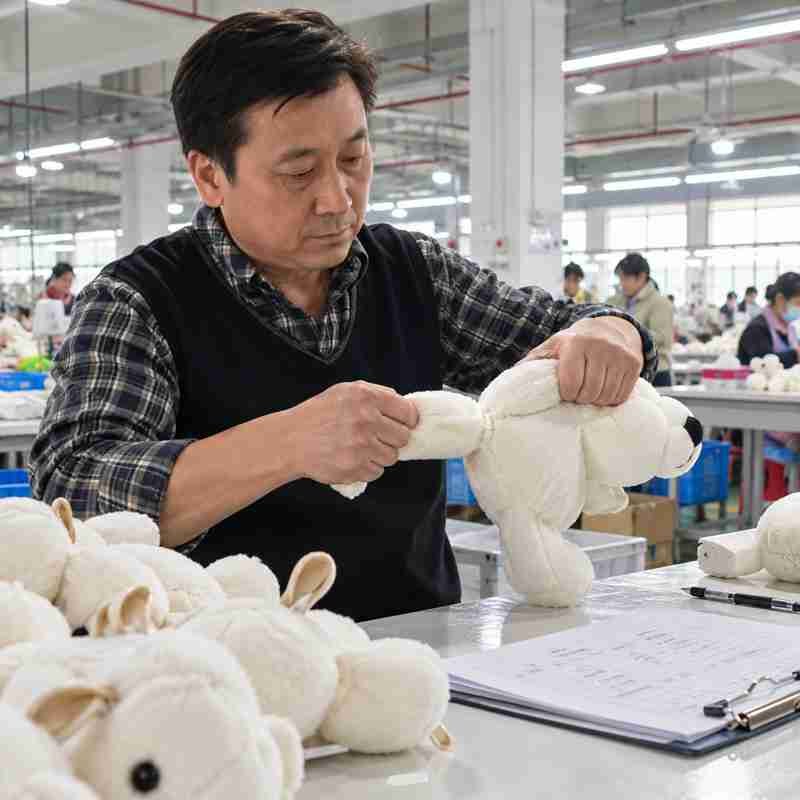
Seam Strength
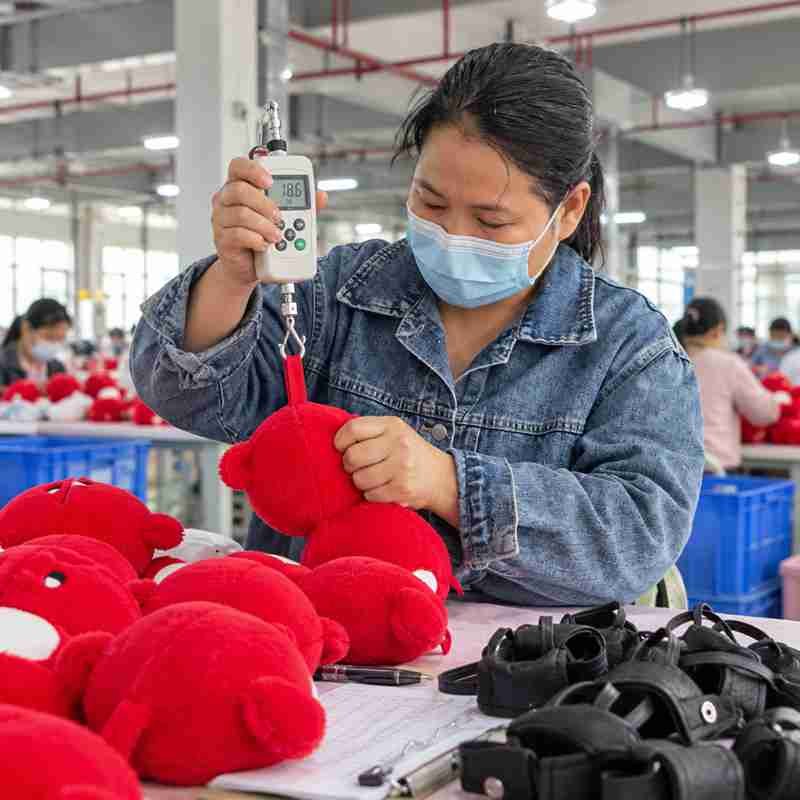
Pull and Tension
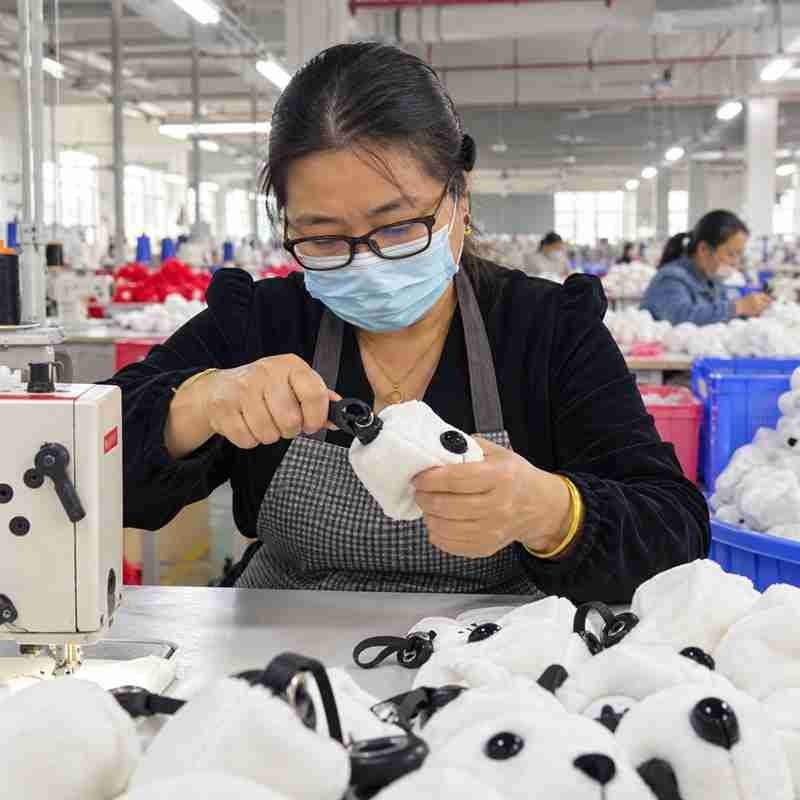
Torque
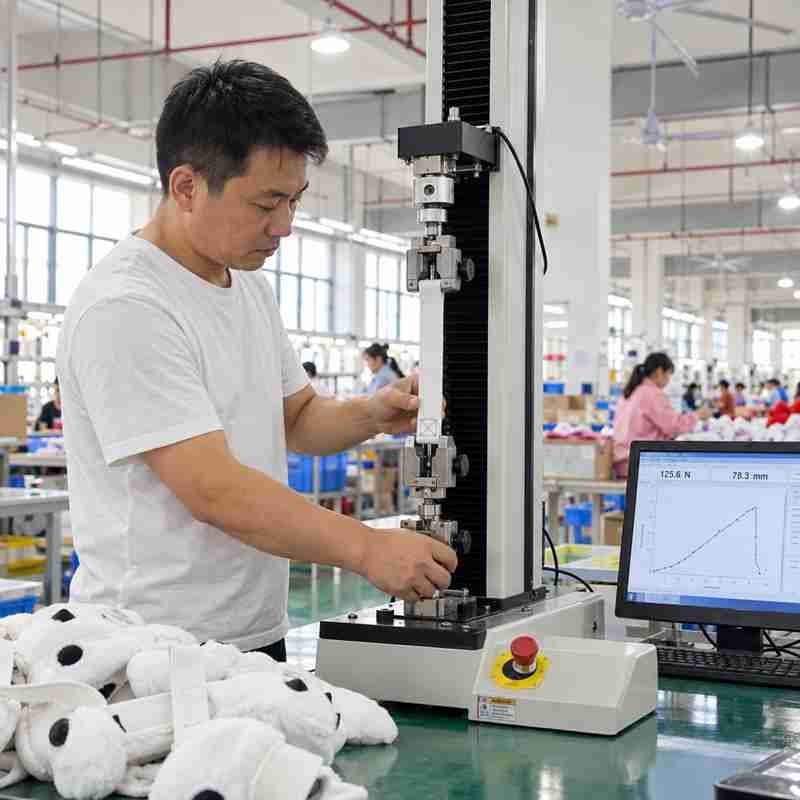
Tensile Strength

Needle Control
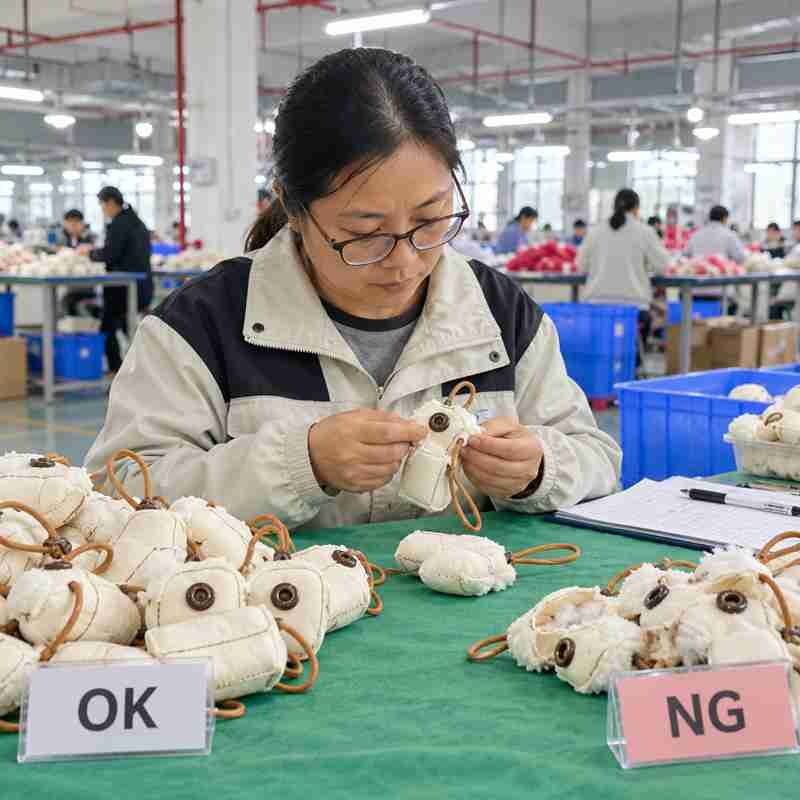
Small-Part Review
Frequently Asked Questions
Yes. Complex heads, faces, hair, clothing, small parts, and unusual curves are routed through released patterns, skill-matched operations, first-piece approval, and focused in-process checks before full production output.