
About Ewin Toys — Built for Serious Plush Programs
Ewin Toys helps global brands, IP owners, retailers and collectible companies move from creative concepts to reliable, scalable plush production with stronger control over development, engineering and execution.
95,000+ m² Manufacturing System | 1,900+ Manufacturing Workforce | 60+ Product Development Team | 100+ Quality Personnel | OEM & ODM Capability | Multi-SKU Program Support | Global Project Delivery
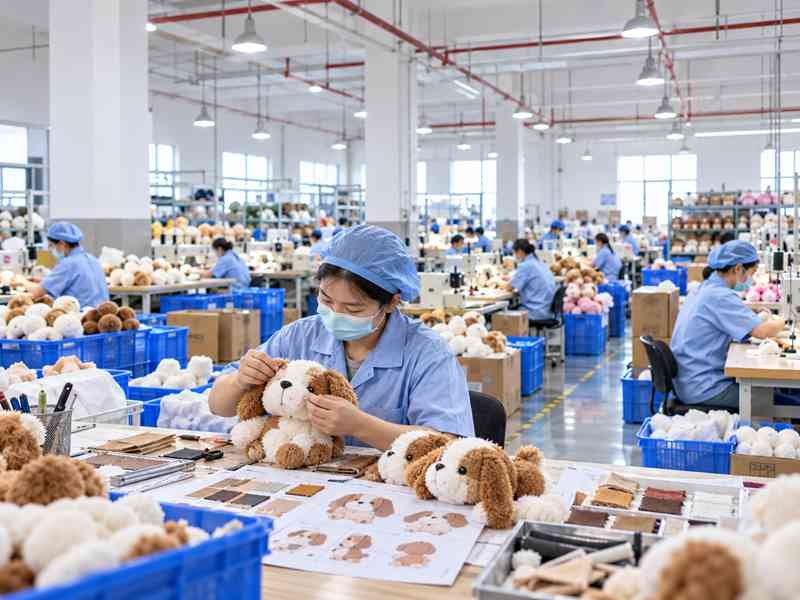
Our Story Is About Building Better Manufacturing Control
Ewin grew by adding the engineering, control, and project disciplines needed when custom plush moved beyond simple cut-and-sew production.
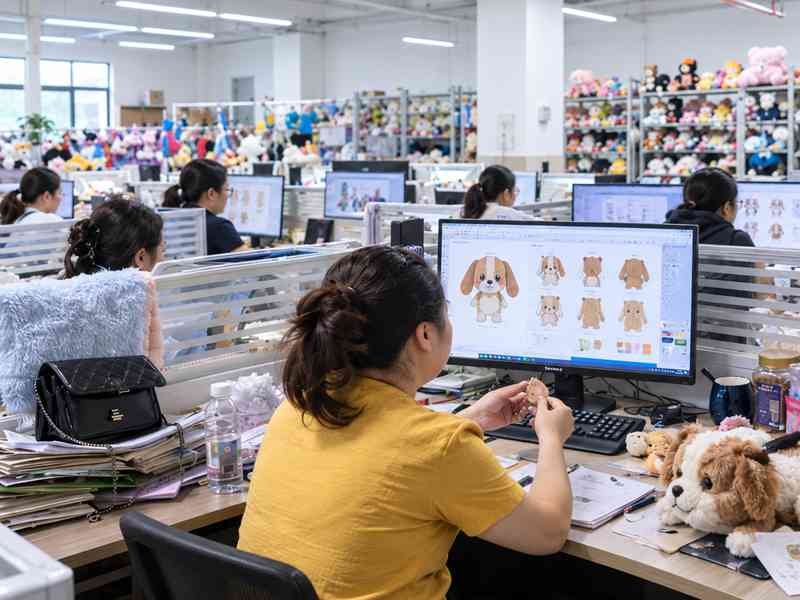
From Plush Making to Product Engineering
Custom plush projects rarely fail because a factory cannot sew two pieces of fabric together. Problems usually start earlier: artwork lacks three-dimensional information, proportions shift during pattern development, materials change the character expression, accessories create safety or assembly issues, and a good sample is difficult to repeat in bulk. Ewin’s operating model developed around solving those gaps before they become production problems.
Development responsibility: The team treats artwork as an input, not a finished manufacturing specification. Pattern, structure, material, decoration, filling, dimensions, and assembly details must become executable instructions.
Commercial responsibility: Cost is reviewed against product definition, not only after a sample is finished. That gives brands room to protect character details while changing non-critical cost drivers.
Production responsibility: Approved decisions are carried forward into controlled files and manufacturing references so the factory does not rely on memory when scale increases.

Building Development Into the Manufacturing System
A sample room can prove that one piece is possible. A development organization must prove that the product can be reviewed, revised, documented, costed, and handed into production without losing the decisions already approved. Ewin built a 60+ person Product Development Center as a dedicated capability layer inside the wider manufacturing system.
Project inputs: Teams can start from sketches, 2D artwork, character sheets, 3D renders, reference products, or physical samples depending on how mature the project is.
Development outputs: Work can progress into pattern files, material selections, sample versions, measurements, decoration details, BOM information, filling notes, accessories, packaging inputs, and other production instructions.
Manufacturing connection: Development is not separated from the factory. Sample decisions are reviewed with manufacturability, process risk, quality control, scale, and delivery in mind before production release.
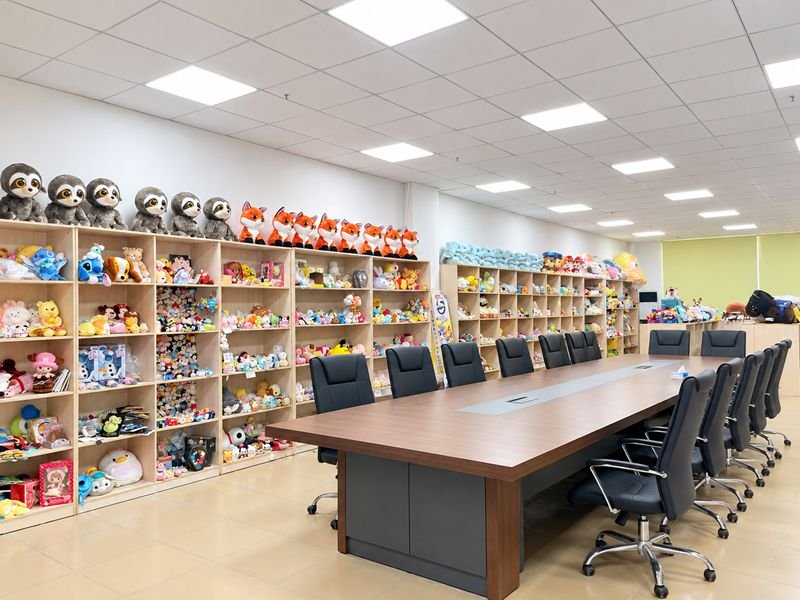
Growing From Single SKUs to Managed Programs
A single mascot and a 50-SKU licensed collection require different levels of control. As projects become larger, the challenge moves from making one correct sample to keeping many products, files, approvals, packages, barcodes, testing states, production waves, and shipment dates aligned at the same time. Ewin’s organization is designed to manage that complexity through one coordinated project route.
Identity control: Each SKU needs a clear product identity, approved sample version, BOM, artwork, packaging version, and applicable quality or compliance status.
Program control: Production readiness, packaging status, shipment allocation, and launch priorities can be tracked by SKU rather than managed as one undifferentiated order.
Escalation control: When materials, samples, QC, or delivery timing become constrained, the issue can be routed to the relevant technical or operational team instead of remaining inside one sales conversation.
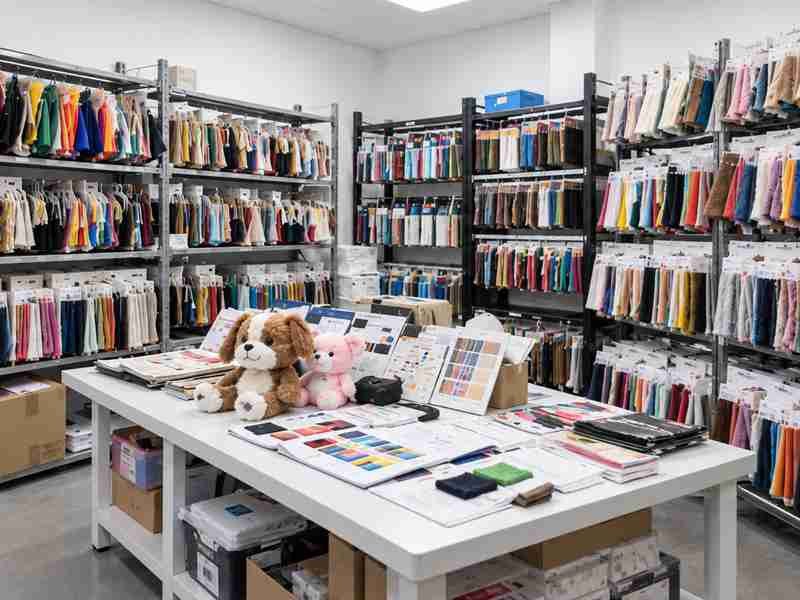
What Ewin Is Building Today
Ewin today is structured as more than a production supplier. The company combines product development, engineering, manufacturing, quality, packaging, program coordination, and delivery preparation so a project can move through one connected operating model from concept to commercial release. The objective is not to add more services for appearance; it is to reduce the number of handoff gaps where custom projects commonly lose control.
For defined products: Ewin can work as a manufacturer against approved specifications, samples, BOMs, packaging requirements, and commercial conditions.
For incomplete concepts: Ewin can take a deeper development role, helping convert visual or functional intent into a manufacturable product definition before bulk production.
For long-term programs: Reorders, forecast visibility, version reviews, material planning, packaging updates, and multi-wave shipments can be managed as continuing supply work rather than treating every PO as an unrelated new project.
Ewin Toys at a Glance
The numbers matter when they explain how development, manufacturing, and project delivery are resourced rather than acting as decoration.
95,000+ m2 System
1,900+ Workforce
60+ Development Team
Approx. 2,490 Workstations
Development to Delivery
Program-Level Control
Trusted by Global Brands and IP Owners
Trusted by brands, IP owners, and creative teams worldwide. Ewintoys helps transform original ideas and characters into high-quality plush products through professional development, manufacturing, and quality control.





















Why Ewin Built a Development-Led Manufacturing Model
Complex plush programs need more than sewing capacity; they need decisions made early enough to protect product, cost, quality, and launch timing.
Define the Product
- Reduce assumptions before sampling.
- Make revisions measurable and transferable.
Control Sample-to-Bulk
- Freeze critical decisions before release.
- Keep later changes visible and approved.
Manage Complexity
- Use version and SKU-level control.
- Escalate technical issues to the right function.
Connect Product to Market
- Plan channel requirements early.
- Protect launch and replenishment decisions.
Choose the Cooperation Model That Fits Your Project
Ewin can enter at different project stages, from build-to-spec manufacturing to deeper development and long-term program coordination.
OEM Manufacturing
- Best fit: mature specifications.
- Key control: build-to-approved-standard.
ODM Development
- Best fit: incomplete technical definition.
- Key control: development before production commitment.
Artwork-to-Product Development
- Best fit: IP and character programs.
- Key control: fidelity plus manufacturability.
Prototype-to-Mass Production
- Best fit: new product validation.
- Key control: versioned approval path.
Multi-SKU Program Manufacturing
- Best fit: collections and assortments.
- Key control: SKU-level program visibility.
Long-Term Supply Programs
- Best fit: replenishment and annual programs.
- Key control: reuse proven data, verify changes.
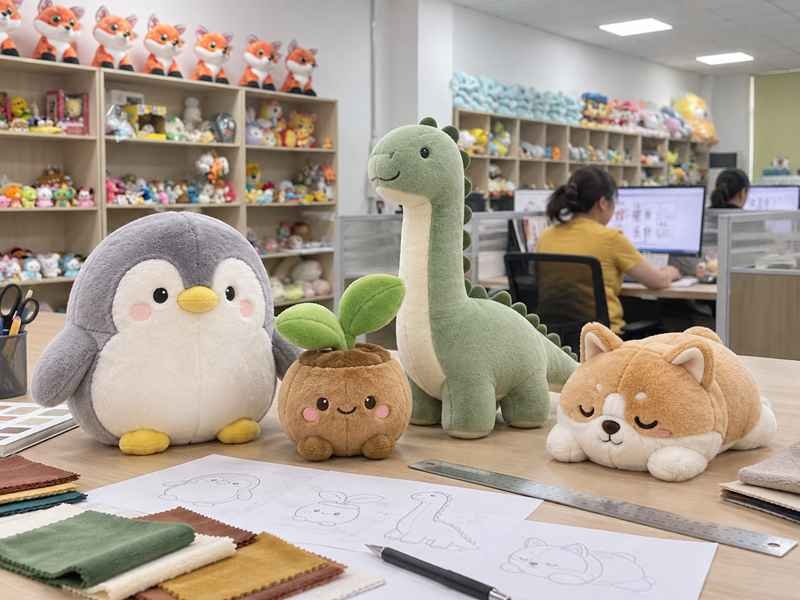
Plush Product Types Across the Ewin System
The product range is organized by construction and commercial use, helping each program enter the right engineering and manufacturing route.
Custom Plush Toys
- Engineering focus: shape, materials, pattern, filling.
- Commercial fit: broad custom programs.
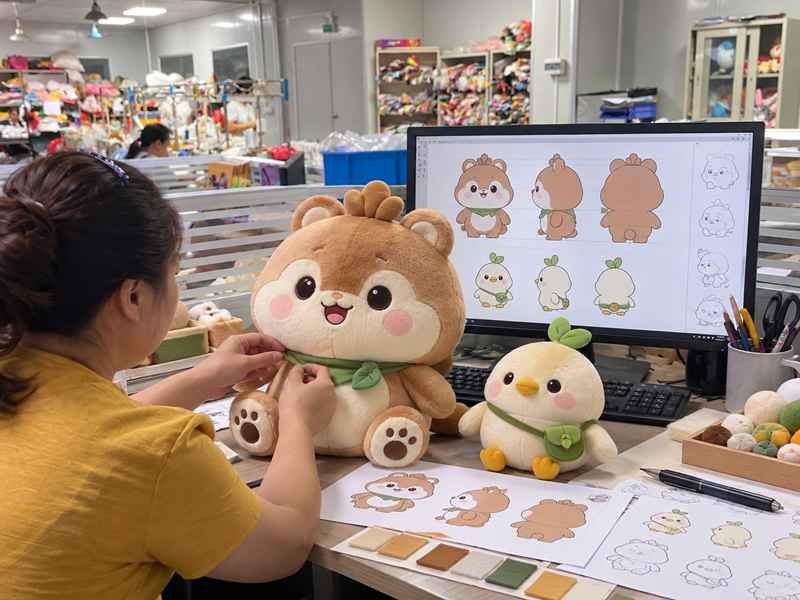
Character & Mascot Plush
- Engineering focus: character fidelity.
- Commercial fit: brands, teams, entertainment, institutions.
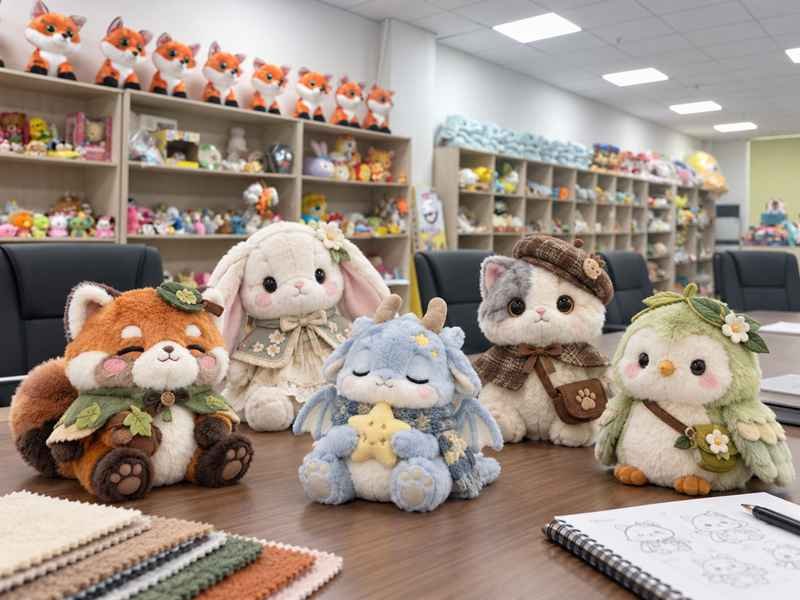
Collectible & Kidult Plush
- Engineering focus: premium detail and consistency.
- Commercial fit: art toys and collectible brands.
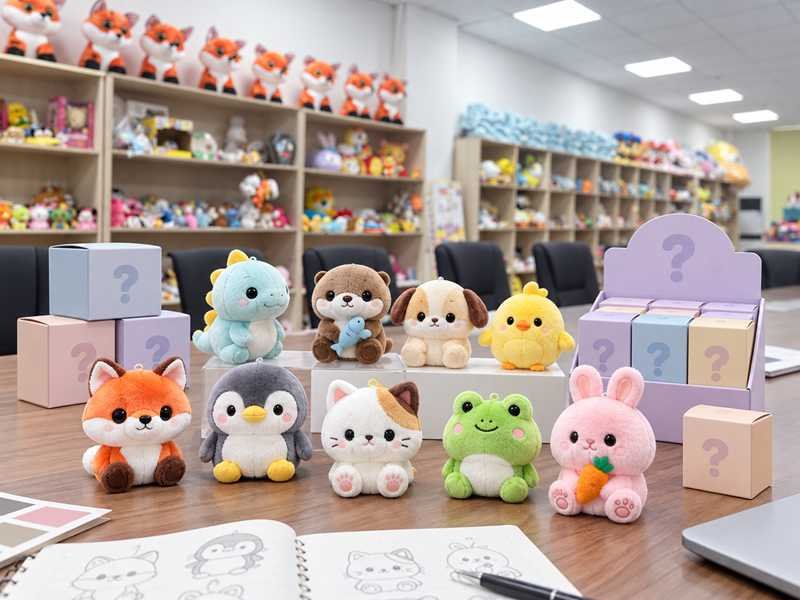
Mini & Blind Box Plush
- Engineering focus: simplified detail without identity loss.
- Commercial fit: collectible series and blind programs.
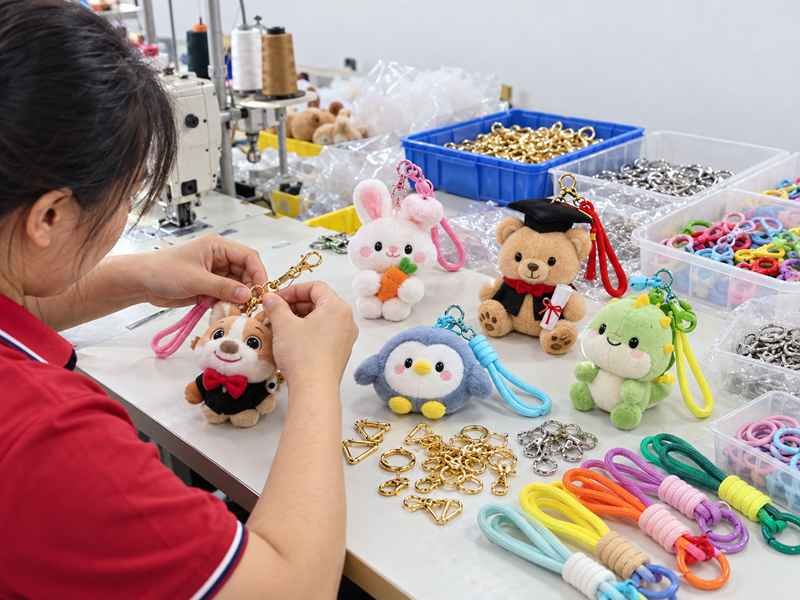
Keychains & Bag Charms
- Engineering focus: small-part detail and hardware integration.
- Commercial fit: fashion, gifts, IP accessories.
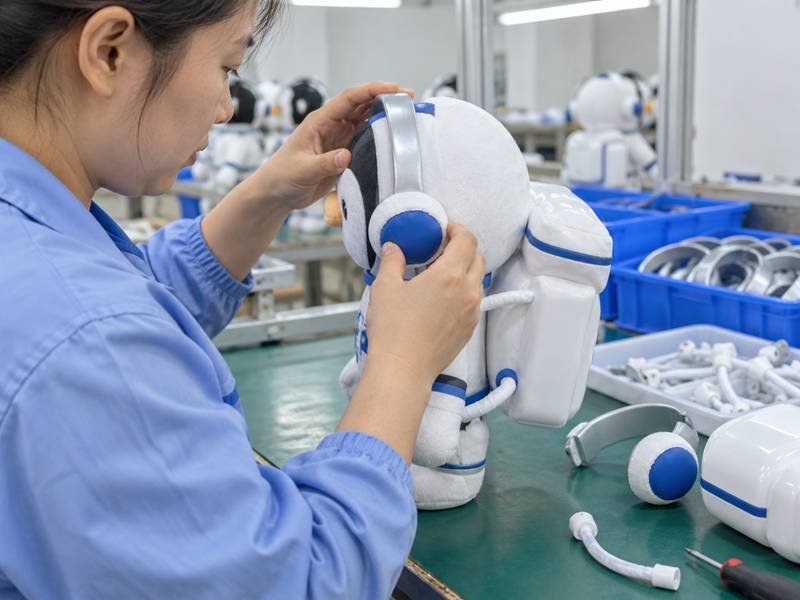
Plush + Hard Components
- Engineering focus: tolerance and integration.
- Commercial fit: stylized and collectible products.
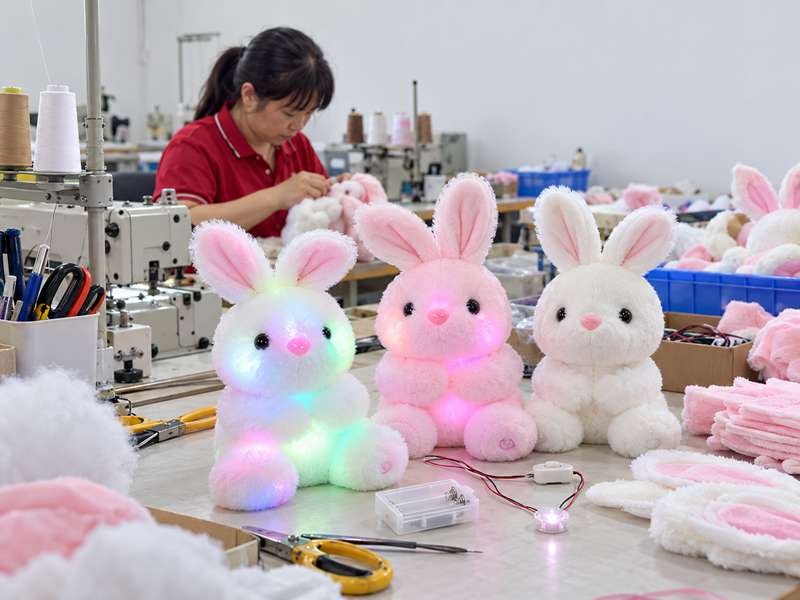
Electronic & AI Plush
- Engineering focus: cavity and module integration.
- Commercial fit: interactive plush programs.
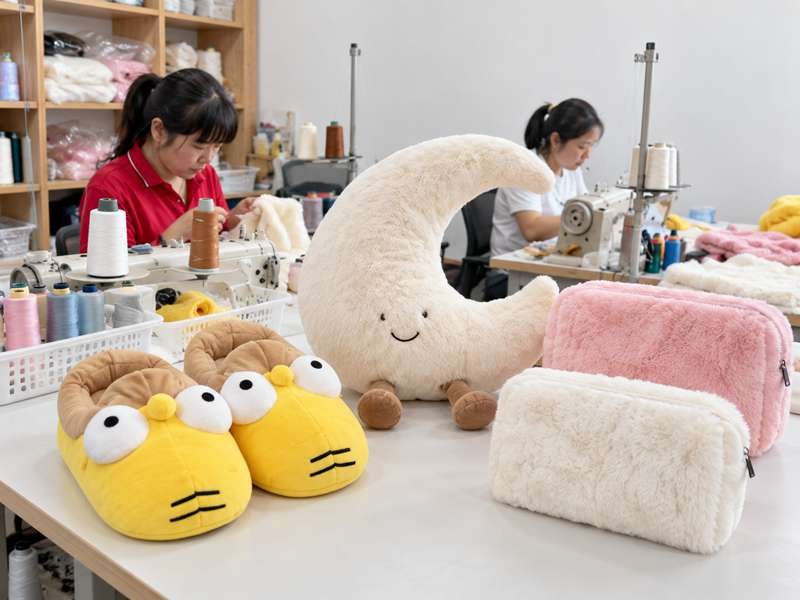
Lifestyle Plush Merchandise
- Engineering focus: function plus character language.
- Commercial fit: merchandise and lifestyle collections.
Who Ewin Toys Is Built to Work With
Different organizations measure manufacturing success differently, so Ewin adjusts project control around the role, channel, approval path, and commercial program.
Global Brand Teams
- Common priorities: consistency, launch timing, replenishment.
- Useful inputs: brand standards, forecast, approved references.
IP & Licensing Teams
- Common priorities: fidelity, confidentiality, approval evidence.
- Useful inputs: character bible, approval route, market plan.
Toy & Collectible Companies
- Common priorities: series control, detail, production repeatability.
- Useful inputs: collection plan, SKU list, launch waves.
Retail & Private Label
- Common priorities: retail readiness, landed cost, on-shelf timing.
- Useful inputs: routing guide, packaging brief, target price.
Entertainment & Game Companies
- Common priorities: launch date, fidelity, confidentiality.
- Useful inputs: release calendar, artwork, approval contacts.
Merchandise Agencies
- Common priorities: communication, timeline, cost options.
- Useful inputs: client brief, target date, quantity range.
E-Commerce Programs
- Common priorities: pack condition, inventory risk, replenishment.
- Useful inputs: channel, SKU data, fulfillment requirements.
Technology Plush Companies
- Common priorities: integration, structural protection, revision sync.
- Useful inputs: module envelope, interfaces, hardware samples.
Start With the Product Information You Already Have
A project does not need a perfect technical pack on day one; Ewin can review different input types and identify what still needs definition.

Hand Sketch
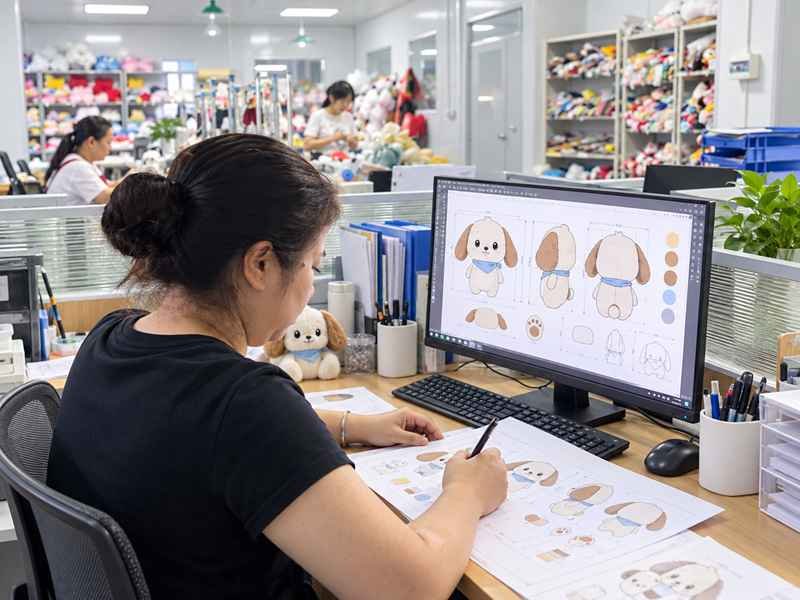
2D Artwork
Character Sheet
3D Render
AI Concept
Physical Sample
Inside the Ewin Product Development Center
The development team converts visual ideas and project requirements into samples, files, and manufacturing decisions that production teams can repeat.
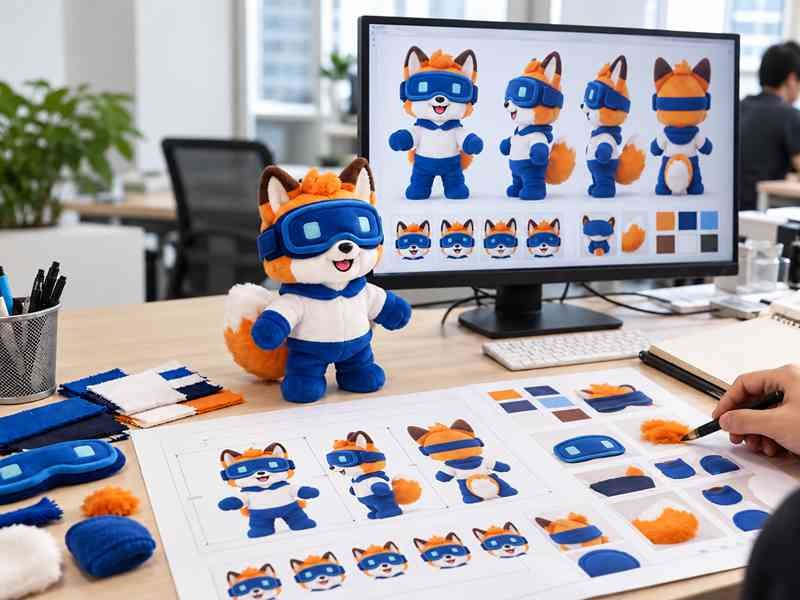
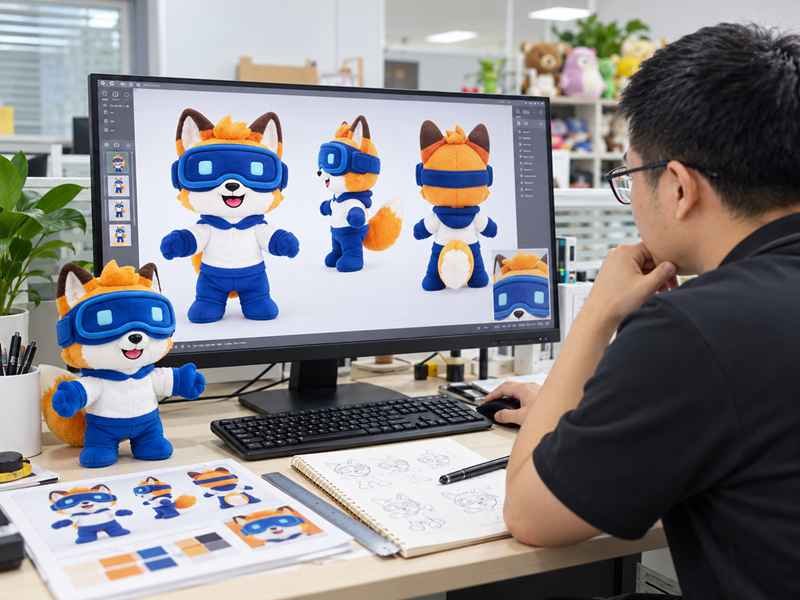
Character, Pattern and Structure Development
The first development job is to decide how the product will exist in three dimensions. Pattern work controls silhouette, proportion, seam placement, turning openings, pile direction, and the way stuffing creates volume. Structure work addresses pose, balance, internal support, hard components, electronics, clothing, and other features that cannot be solved by surface artwork alone.
Character review: Teams identify the visual points that carry recognition, such as head-body ratio, face outline, eye spacing, mouth placement, signature ears, clothing proportions, or color boundaries.
Pattern review: Panels are adjusted to create the intended volume while staying sewable and repeatable in production.
Structure review: Internal construction is checked for function, manufacturability, safety, and the effect on handfeel or appearance before the sample direction is frozen. For complex products, the review also considers assembly access, component replacement, packaging pressure, and where later QC can verify the critical structure.
Materials, Decoration and Component Review
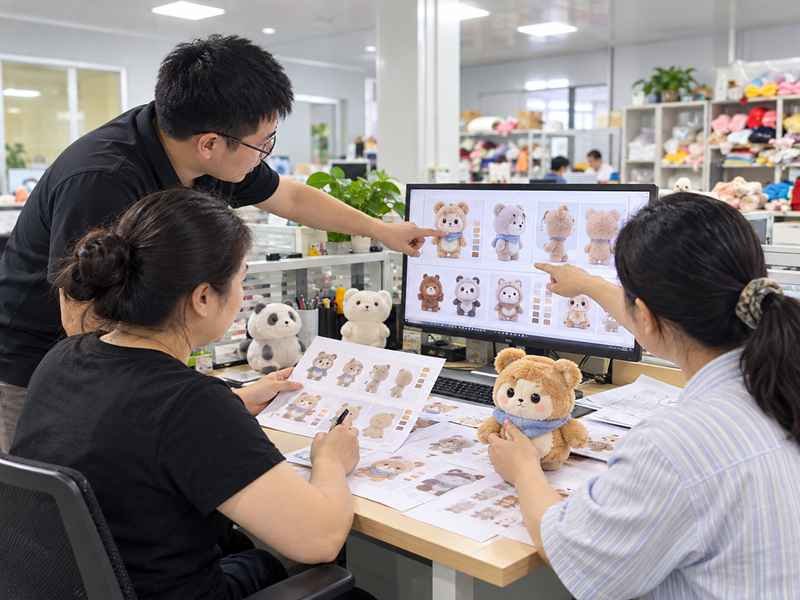
Material decisions affect more than handfeel. Pile height, density, stretch, color, nap direction, backing, embroidery behavior, print compatibility, accessory weight, and filling all change how a character looks and how easily production can repeat the approved result. Ewin reviews materials together with the product rather than treating swatches as isolated purchasing decisions.
Material fit: Select fabrics and fillings against appearance, touch, structure, production route, target market, cost, and availability.
Decoration fit: Embroidery, printing, applique, heat transfer, clothing, and molded parts are checked for location, tolerance, distortion, and assembly sequence.
Component fit: Eyes, noses, hardware, electronics, magnets, zippers, clips, or other parts are reviewed for attachment, interaction with the soft body, and applicable safety considerations. A component that fits visually but changes balance, creates pressure, or needs difficult assembly can require a structure revision before approval.
Sampling, Revision and Approval Control
Sampling should answer defined questions. A prototype can validate silhouette and construction; V1 creates the first controlled external review; revision samples close comments; material or color samples validate specific choices; PP samples check production readiness; and the Golden Sample becomes the physical reference for bulk manufacturing. Ewin keeps those stages distinguishable so comments do not disappear between versions.
Revision record: Meaningful sample changes should identify what changed in pattern, dimensions, materials, color, decoration, filling, accessories, cost, or timing.
Approval status: A sample can remain under review, be conditionally approved, or reach full approval before Golden/BOM freeze.
Production handoff: Final sample decisions are transferred into controlled manufacturing information instead of relying on verbal instructions between the sample room and production floor. That handoff should make clear which sample is current, which comments are closed, and which files production must use.
DFM and Production Documentation
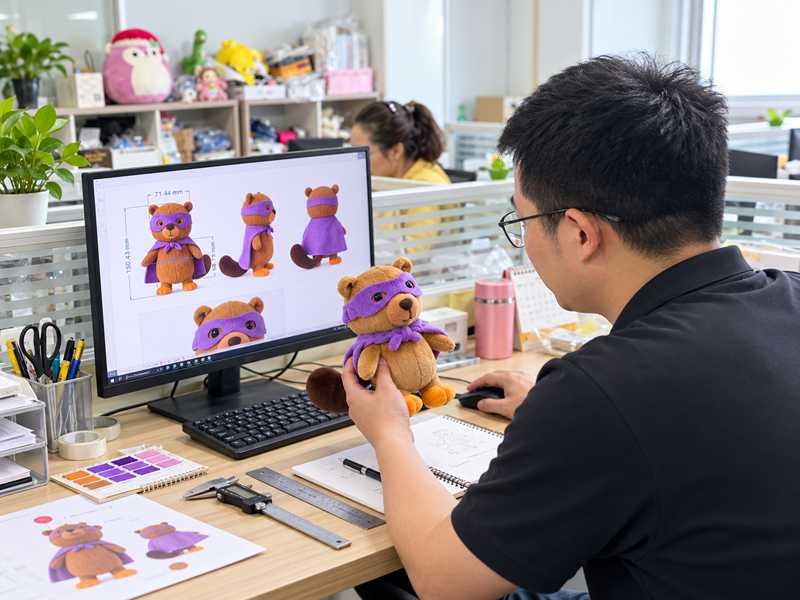
A visually approved sample still needs a production route. Design for Manufacturing reviews whether materials can be sourced consistently, panels can be cut efficiently, decoration can be positioned reliably, seams are accessible, filling can be controlled, accessories can be installed repeatedly, inspection points are clear, and packaging protects the finished product. Documentation then turns those decisions into a repeatable reference.
DFM review: Identify fragile details, excessive handwork, difficult tolerances, hidden cost drivers, and construction steps likely to create variation at scale.
Manufacturing definition: Pattern, BOM, artwork, measurements, filling, accessory, packaging, and QC information are connected to the approved product version.
Change control: If an approved feature changes later, the revised file and sample reference should move together so production does not use a mixed product definition. The same review also checks whether the change affects cost, testing, packaging, lead time, or previously approved appearance.
Certificates, Compliance & Quality Assurance
Ewintoys follows structured quality and compliance practices for custom plush production. We hold relevant certifications and support additional testing, inspection, and compliance documentation based on specific product requirements and destination markets, helping brands meet different international standards with confidence.
























How Ewin Turns a Character Into Production
The development route closes visual, structural, cost, and manufacturing questions step by step before the product is released to bulk production.
Concept Definition
Character Engineering
Fidelity Review
Pattern & Structure
Prototype Revision
DFM Review
Failure Prevention
Golden Sample Freeze
Manufacturing Infrastructure Behind the Approved Product
Once the product definition is approved, connected production functions move it through controlled manufacturing, inspection, packing, and warehouse release.
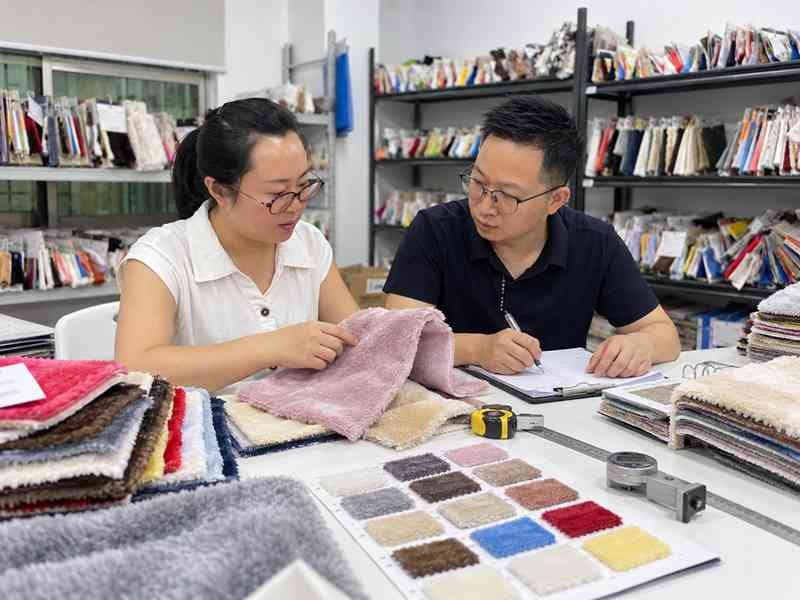
Materials & Fabric
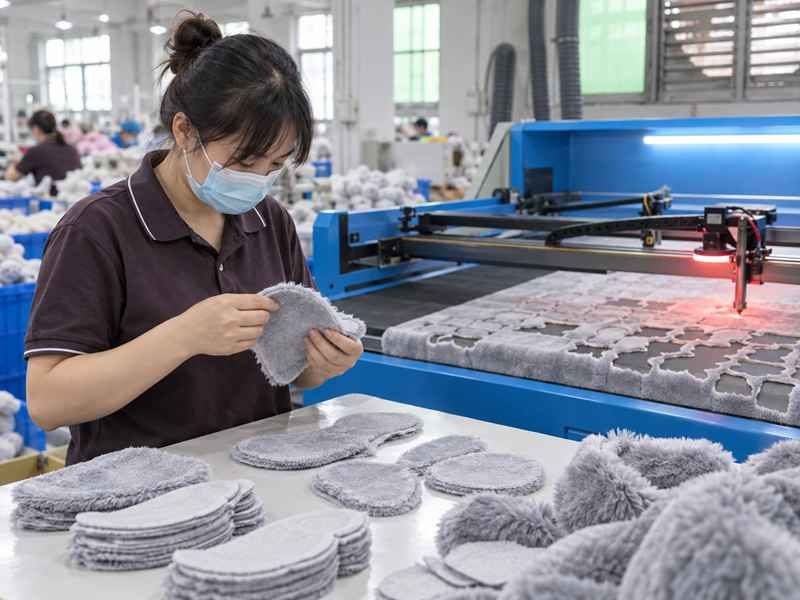
Cutting
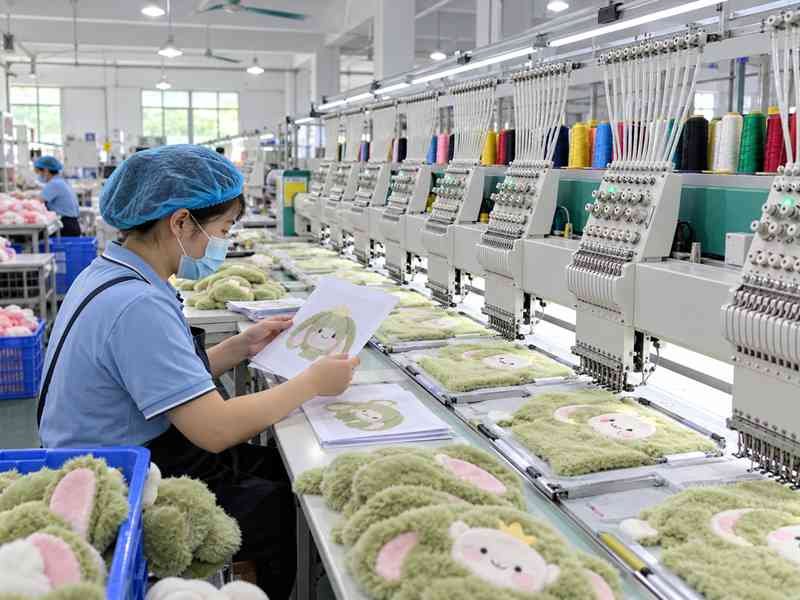
Embroidery & Printing
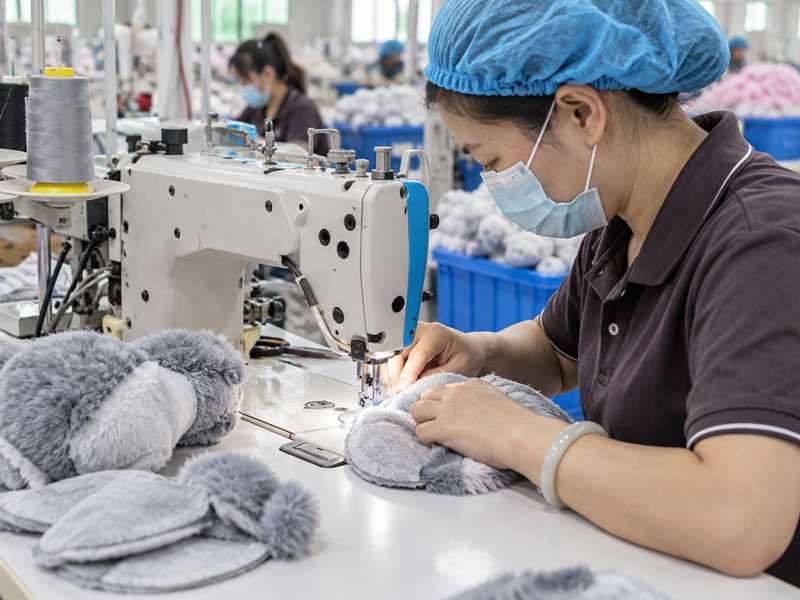
Sewing
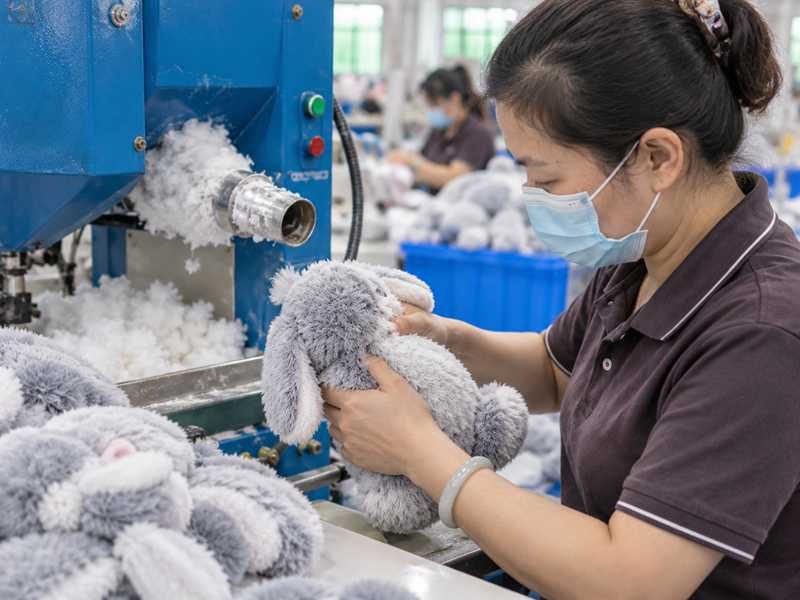
Stuffing & Shaping
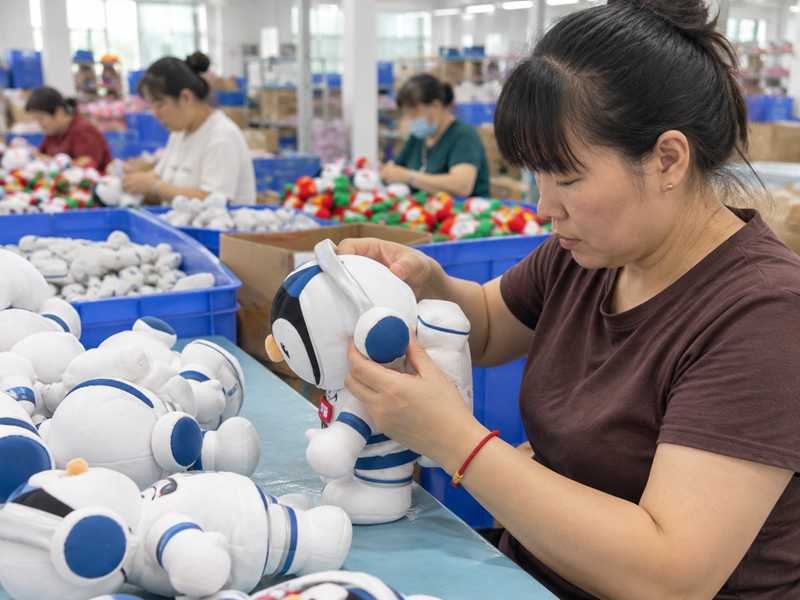
Hand Assembly
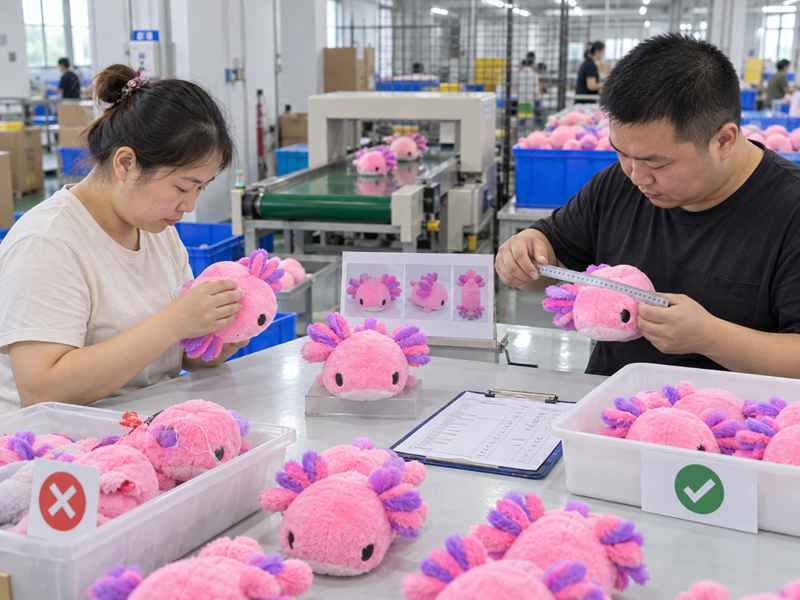
Quality Inspection
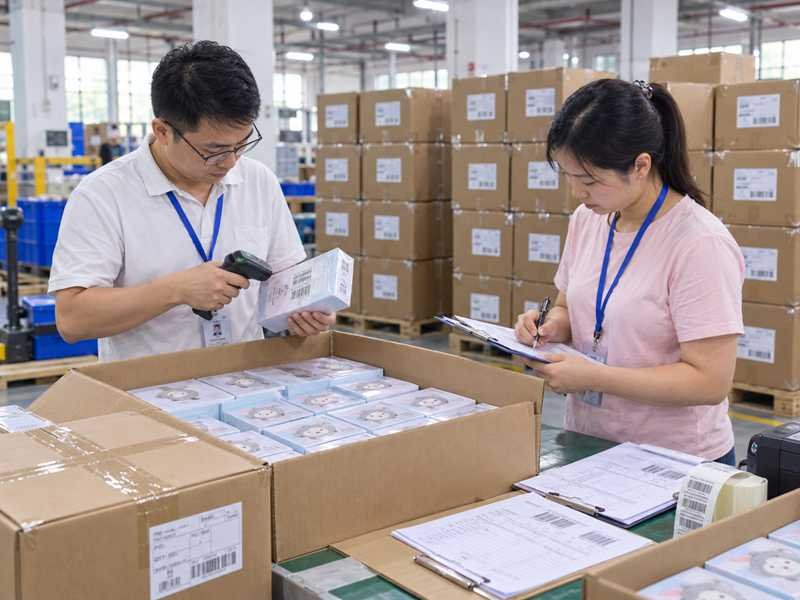
Packaging & Warehousing
Approved Samples Must Become Repeatable Production Standards
Ewin connects physical approval, controlled data, and manufacturing release so bulk production is not based on memory or an informal sample reference.
Use the Golden Sample as the Physical Reference
The Golden Sample is the approved physical definition of what the finished product should look and feel like. It helps production and quality teams compare proportion, shape, facial expression, material appearance, decoration, filling, accessory placement, clothing, and overall presentation against one controlled reference rather than several earlier sample versions.
Physical control: The Golden Sample should be identifiable by project and SKU so it cannot be confused with a revision, sales sample, test sample, or obsolete version.
QC use: A factory reference can support finished-product comparison, while customer and QC references can be maintained where the project requires separate controlled samples.
Limitation: A Golden Sample alone cannot define every hidden material, dimension, process, or packaging requirement. It must be connected to production data. Where several controlled physical samples are needed, customer, factory, and QC references can be identified separately so each team knows which approved object it is using.
Freeze BOM, Pattern and Current Production Files
The data definition carries what the physical sample cannot show. A frozen BOM identifies approved materials and components; the released pattern defines the shape and panels; artwork files control embroidery or print; measurements, filling notes, accessories, labels, and packaging define other repeatable requirements. Those references should point to the same approved product version.
BOM control: Material name, color, composition or specification, supplier route where applicable, and approved sample reference reduce substitution ambiguity.
File control: Obsolete pattern, artwork, label, or packaging versions should not remain active after a new release.
Change control: Later changes should create a controlled revision so cost, quality, testing, packaging, and production consequences can be reviewed before implementation. An approved substitution should never leave the BOM, sample reference, test basis, and production files describing different versions of the same SKU.
Release Production Through Defined Quality Gates
Production release should occur after the required product and commercial decisions are sufficiently frozen for execution. Manufacturing then uses stage controls rather than waiting until final inspection to discover problems. Incoming materials, decoration, sewing, filling, assembly, finished goods, and packaging can each have relevant checkpoints tied to the approved product definition.
IQC: Confirm key incoming materials and components against the applicable specification.
IPQC: Check critical process points while production is still able to correct the cause rather than sort only at the end.
FQC/OQC: Compare finished products and shipment preparation against the approved references, quantities, packaging, labels, and release requirements before handoff.
Result: Sample approval becomes a manufacturing system, not a display piece sitting outside the production process. When the same references are used by sourcing, production, quality, packaging, and reorder teams, later decisions can be traced to one released product definition instead of several informal copies.
Quality Control Follows the Product Through Production
Quality is managed through staged checks, defined references, corrective action, and traceable project records rather than one final inspection claim.
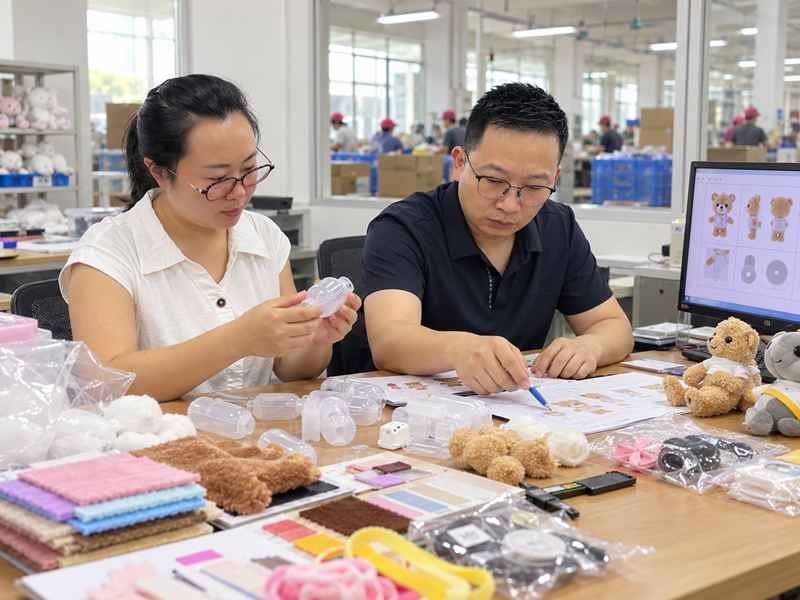
Incoming Quality Control
- Compare against approved material references.
- Hold exceptions before production use.
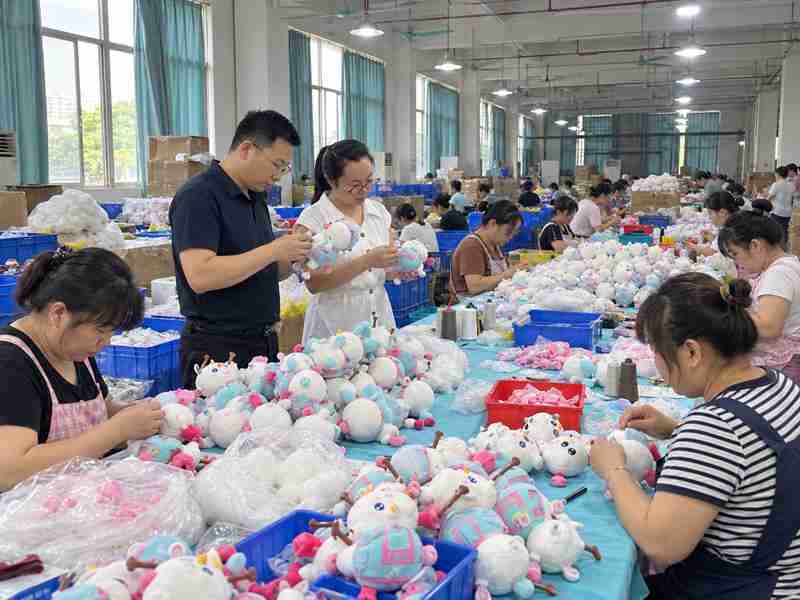
In-Process Quality Control
- Inspect at the process where risk occurs.
- Correct causes, not only finished symptoms.
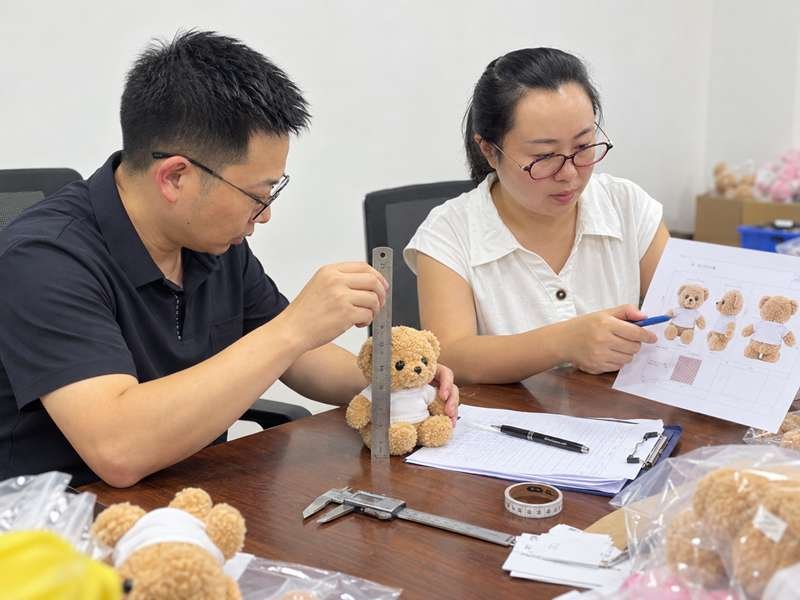
Finished Product Control
- Use the current Golden/QC reference.
- Record recurring defects for prevention.
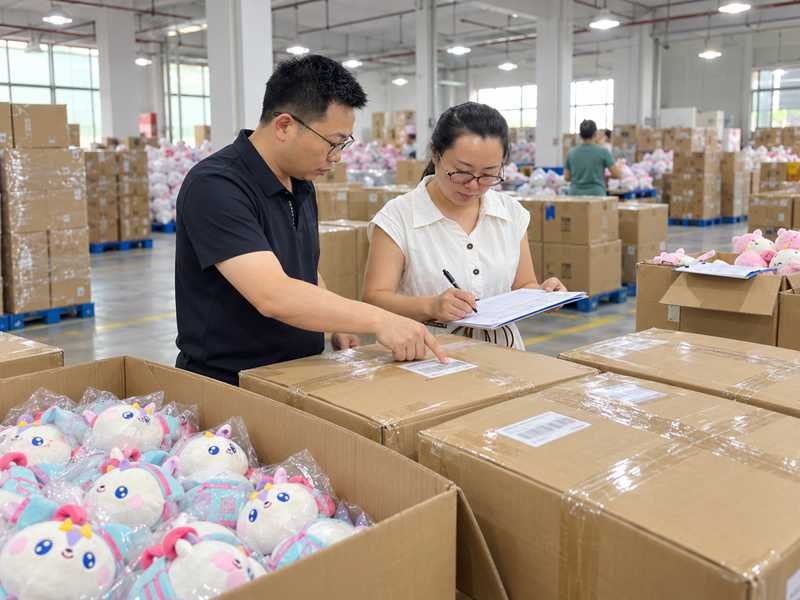
Outgoing & CAPA Control
- Trace problems to affected product or batch records.
- Verify corrective action before closure.
Compliance and IP Protection Start Before Production
Market requirements and confidential assets should influence material, construction, testing, labeling, file access, and change decisions from the beginning.
Target-Market Review
- Define market and age grade early.
- Recheck scope after meaningful product changes.
Testing Coordination
- Separate internal checks from third-party reports.
- Avoid using one report for a changed SKU without review.
IP Confidentiality
- Share only what execution requires.
- Keep confidential samples and files controlled.
Change Control
- Identify the affected SKU and version.
- Reapprove critical changes before release.
One Project Window Coordinates Cross-Functional Execution
A single project route helps technical, commercial, production, quality, packaging, and delivery teams work from the same approved information.
Project & Account
- Keeps communication and milestone ownership clear.
- Escalates unresolved risks to the relevant function.
Product Development
- Owns sample convergence and technical definition.
- Connects approved development to manufacturing files.
Engineering & Technical Review
- Reviews manufacturability and risk.
- Supports controlled changes after approval.
Sourcing & Materials
- Aligns sourcing with the frozen product definition.
- Flags long-lead or project-dependent constraints.
Production & Quality
- Uses Golden/BOM/current files as common references.
- Connects correction with CAPA when required.
Packaging & Delivery
- Keeps pack-out tied to SKU and destination.
- Coordinates shipment readiness with production status.
Built to Manage Multi-SKU and Enterprise Programs
Larger programs need a control system that keeps product, approval, production, packaging, and shipment data aligned by SKU and release wave.
| Program Control | What Ewin Keeps Aligned | Why It Matters |
|---|---|---|
| Product ID | One clear identity for each SKU, character, size, or variant | Prevents different products from sharing ambiguous files or approval records. |
| Sample Version | Current prototype, revision, PP, or Golden status | Stops obsolete samples from being treated as the latest approved product. |
| BOM | Materials, components, colors, and approved specifications | Keeps sourcing and production tied to the released material definition. |
| Artwork / Process Files | Embroidery, print, decoration, and other controlled files | Prevents production from using old artwork or unapproved placement. |
| Packaging Version | Unit pack, insert, warning, label, carton, and channel configuration | Keeps sellable units consistent with the correct SKU and market. |
| Barcode / SKU Data | UPC, EAN, FNSKU, retailer, or internal mapping supplied for the program | Reduces packing and receiving errors across several SKUs. |
| Testing / Compliance | Applicable test plan, report, label, and market status | Makes compliance evidence product- and version-specific. |
| Production Wave | Planned release group, readiness, quantity, and target timing | Helps collections move in controlled waves instead of one opaque order. |
| Shipment Matrix | Destination, carton, split, consolidation, and release status | Keeps completed SKUs aligned with the correct warehouse or market. |
| Reorder Delta | What changed since the last approved production | Allows proven data to be reused without blindly copying outdated details. |
Packaging and Delivery Complete the Manufacturing System
Ewin connects the approved product with channel-ready packing and shipment preparation so manufacturing decisions remain useful after the production line ends.
Unit Packaging
Label & Barcode
Channel-Ready Pack-Out
Carton Engineering
Multi-SKU Consolidation
Global Delivery Coordination
Frequently Asked Questions
Ewin Toys operates as a plush product development and manufacturing company with integrated development, manufacturing, quality, packaging, warehousing, and delivery functions rather than acting as a pure trading intermediary.
Yes. Projects can begin with sketches, 2D artwork, character sheets, 3D renders, reference products, or physical samples and move through pattern, material, prototype, revision, and production-definition work.
OEM suits products with mature specifications or approved samples. ODM involves deeper product-development participation where structure, materials, pattern, features, cost, or packaging still need engineering before production.
The product system includes core custom plush, characters and mascots, collectibles, mini and blind-box plush, keychains, hybrids, electronic or AI-enabled plush, and lifestyle merchandise using plush construction.
Yes, project confidentiality can be handled through NDA, controlled files, restricted sample access, photography controls, and need-to-know disclosure. Public use of client IP still requires the appropriate authorization.
Production should release from the approved Golden Sample together with frozen BOM, released pattern, current artwork, measurements, accessories, packaging, and QC requirements rather than from an informal visual reference.
Quality control can include IQC, IPQC, FQC, and outgoing release checks, supported by approved references, defect prevention, traceability, and CAPA when meaningful problems require root-cause correction and verification.
Yes. Multi-SKU programs can be controlled through product IDs, sample versions, BOMs, packaging, barcode data, testing status, production waves, shipment matrices, and one coordinated project route.
Yes. Ewin can coordinate approved unit packaging, labels and barcodes, display or e-commerce pack-out, carton engineering, multi-SKU consolidation, pre-shipment checks, and project-based delivery preparation.
Send your company information, product reference, approximate size, quantity or SKU plan, target market, sales channel, launch timing, packaging needs, and available files for project review. Discuss Your Project
Tell Ewin What You Want to Build
Share enough information for the team to understand both the product and the commercial program behind it. Include your company, business email, product type, artwork or reference, approximate finished size, quantity by SKU, target market, sales channel, launch date, packaging direction, and current project stage. If the product already exists, upload the approved sample photos, BOM, measurements, artwork, packaging files, or current supplier specification. If the project is still early, a sketch, character sheet, 3D render, written brief, or physical reference is enough to begin a feasibility review. Ewin can then determine the right cooperation model, development route, manufacturing questions, quality or compliance inputs, and the next useful step before quotation or sampling begins.
Suggested information:
- Company
- Business Email
- Company Website
- Customer Type
- Product Type
- Artwork / Reference
- Finished Size
- Quantity / SKU Plan
- Target Market
- Sales Channel
- Target Launch Date
- Current Project Stage
- Packaging Requirement
- Main Project Requirement