Why Ewin Toys — More Than a Plush Factory
Choose a partner that can solve development problems before they become production problems. Ewin Toys combines product development, engineering, manufacturing and program management in one system, helping brands improve character fidelity, control revisions, stabilize bulk production and scale complex plush programs with less risk.
60+ Product Development Team | 20+ Senior Pattern Specialists | 95,000+ m² Manufacturing System | 1,900+ Workforce | 100+ Quality Personnel | Golden Sample & BOM Control | Multi-SKU Program Management
Compare the Controls Behind the Factory Quote
Product Fidelity
Development Capability
Sample-to-Bulk Control
Cost Structure
Capacity Fit
Quality Control
Program Management
Delivery Readiness
Product Types Supported by Ewin Engineering
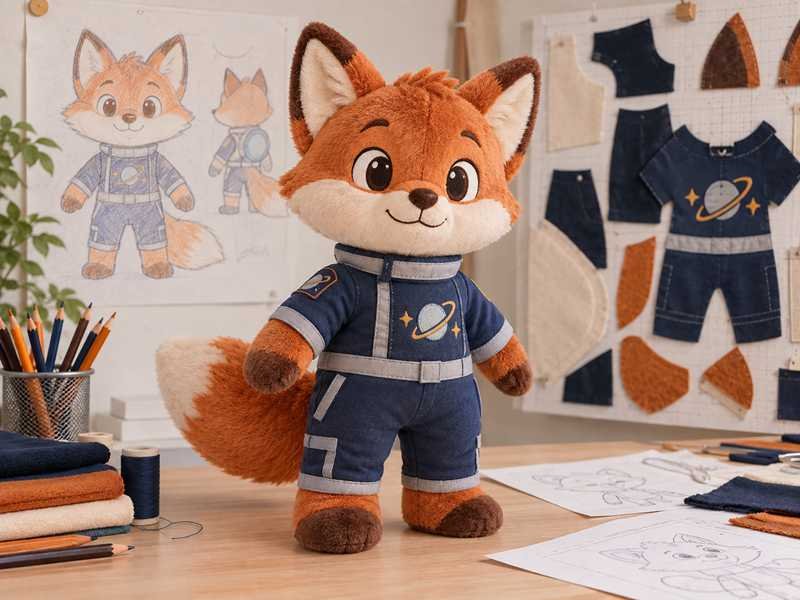
Character & Mascot Plush
- Ewin advantage: character engineering before scale-up.
- Best fit: branded IP, teams, institutions, destinations, and entertainment programs.

Collectible Plush
- Ewin advantage: detail and series consistency.
- Best fit: designer, kidult, limited-edition, and premium collectible programs.
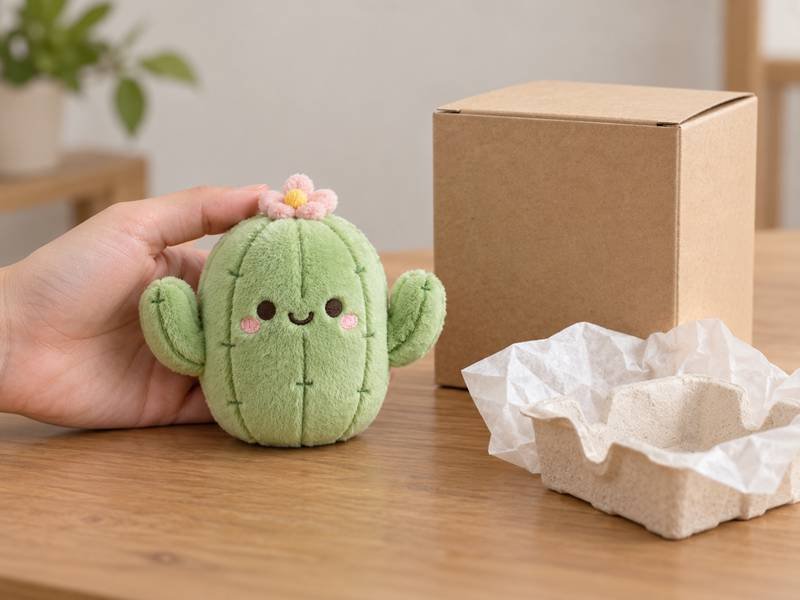
Mini & Blind Box Plush
- Ewin advantage: small-detail engineering plus SKU control.
- Best fit: mini collections, blind boxes, blind bags, and character series.
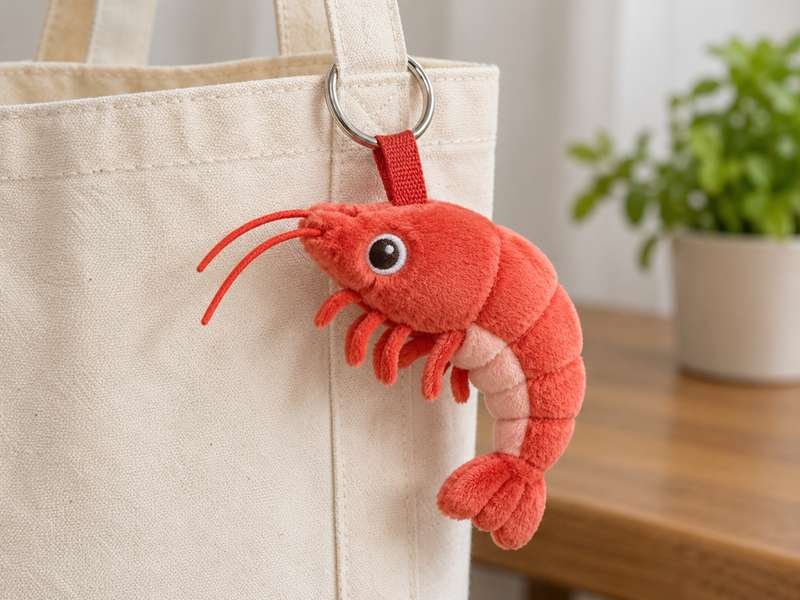
Keychains & Bag Charms
- Ewin advantage: hardware and soft-goods integration.
- Best fit: fashion, gift, licensed, lifestyle, and accessory programs.
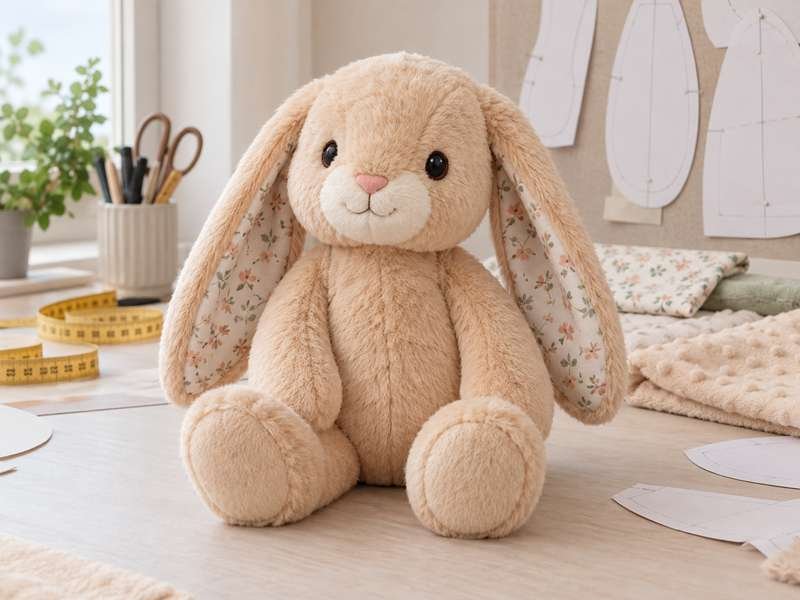
Standard Custom Plush
- Ewin advantage: repeatable manufacturing rather than informal copying.
- Best fit: retail, corporate, gifting, promotional, and private-label programs.
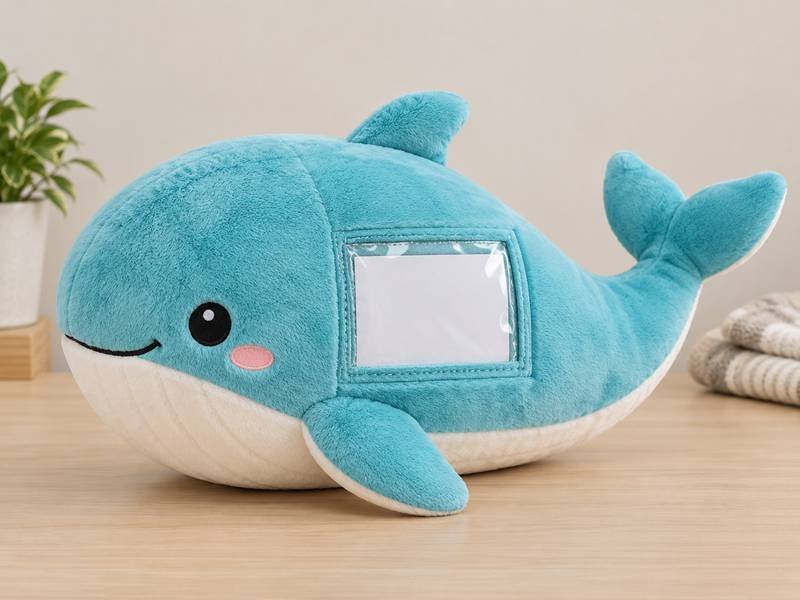
Hybrid Plush Products
- Ewin advantage: controlled soft-hard integration.
- Best fit: stylized characters, collectible products, and functional hybrids.

Electronic & AI Plush
- Ewin advantage: manufacturable soft-goods integration.
- Best fit: interactive, sound, light, and AI-enabled plush programs.
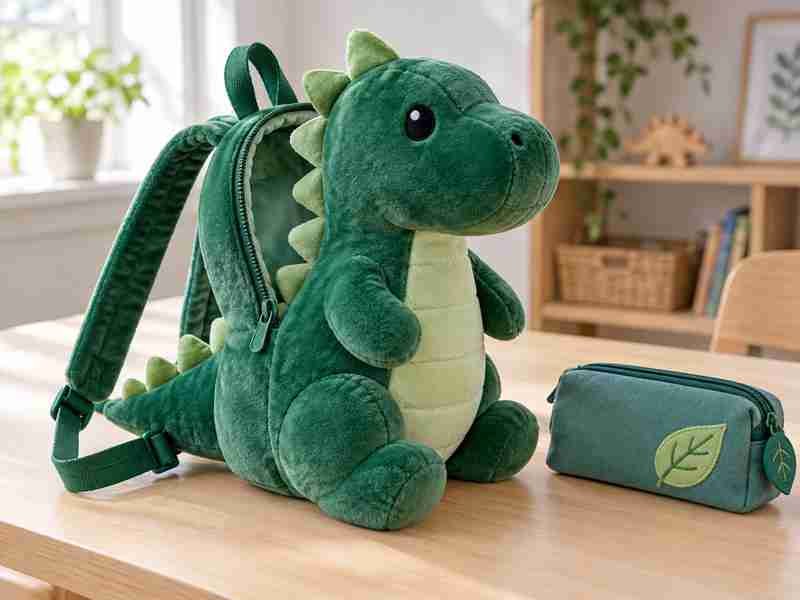
Lifestyle Plush Merchandise
- Ewin advantage: function plus character expression.
- Best fit: merchandise, retail, IP, and lifestyle collections.
Built for Different Commercial Approval Structures
Global Brand Teams
- Strong fit: recurring programs and multiple launches.
- Main controls: version, material, packaging, forecast, and reorder review.
IP Owners
- Strong fit: character-led and licensed programs.
- Main controls: fidelity, access, approvals, Golden Sample, and version history.
Licensing Companies
- Strong fit: multi-party approval structures.
- Main controls: revision record, legal copy, SKU identity, and release status.
Toy Companies
- Strong fit: product families and seasonal programs.
- Main controls: engineering fit, quality gates, production waves, and capacity review.

Collectible Brands
- Strong fit: designer and premium collections.
- Main controls: sample convergence, material approval, handwork, and presentation packaging.
Retail & Private Label
- Strong fit: retail programs and private-label ranges.
- Main controls: commercial specification, packaging, QC, and delivery readiness.
Merchandise Agencies
- Strong fit: event, campaign, and client-managed merchandise.
- Main controls: project ownership, timeline, revision, and commercial scope.
Technology & AI Teams
- Strong fit: technology-led plush products.
- Main controls: cavity, interface, module revision, assembly, and quality verification.
Character Engineering Protects What Makes the Design Recognizable
Protect the Character DNA Before Sampling Begins
Artwork often contains many visual details, but only some of them carry the strongest recognition. Before pattern development, Ewin can identify key points such as head-body ratio, face outline, eye spacing, mouth position, signature ears, color boundaries, pose, clothing proportions, or distinctive accessories.
Recognition points: The review separates features that should remain fixed from construction choices that can change without damaging the character identity.
Approval language: Instead of asking whether the sample is simply “cute enough,” comments can refer to specific relationships such as eye spacing, muzzle length, head width, body height, or silhouette.
Series value: For families of characters, the same review logic helps preserve a shared visual language while allowing individual personalities to remain distinct.
Translate Flat Artwork Into a Three-Dimensional Structure
A 2D illustration does not define depth, side profile, seam routes, center of gravity, filling behavior, or how a curved form will be created from flat fabric. Ewin converts visual intent into pattern panels, structure, material behavior, filling zones, and assembly decisions before the factory treats the artwork as production-ready.
Pattern logic: Curves, darts, gussets, openings, panel direction, and seam placement create volume rather than tracing the outline literally.
Material effect: Pile height, stretch, backing, thickness, and nap can change apparent proportion and hide or reveal facial details.
Structure effect: Clothing, hard parts, weighted inserts, magnets, electronics, or standing poses can change balance and internal construction, so the engineering route must reflect the actual product.
Design for Manufacturing Without Losing the Character
A sample can be visually impressive but difficult to repeat if it depends on uncontrolled hand shaping, fragile details, inaccessible seams, or materials with poor availability. Ewin uses DFM to protect the features that define the character while making the construction more repeatable for cutting, sewing, filling, assembly, inspection, and packaging.
Preserve: Keep high-value character details, critical colors, facial relationships, and approved visual features stable.
Optimize: Review panel count, seam complexity, embroidery density, hidden handwork, accessory fixing, or packaging where changes do not alter the intended character.
Release: Move only the approved solution into pattern, BOM, process notes, QC references, and production planning so the scale-up team receives a manufacturable definition rather than a one-off sample.
Fabric Control Protects Appearance and Bulk Consistency
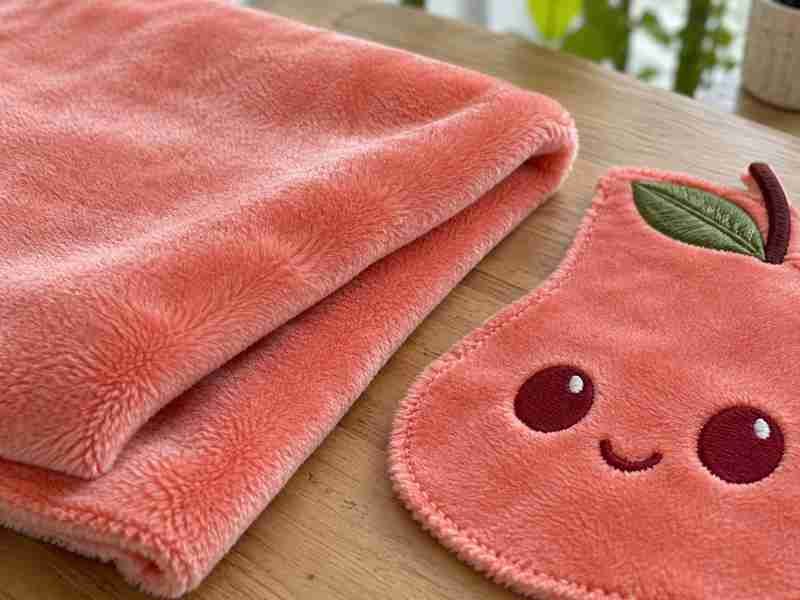
Short-Pile Plush
- Why Ewin: material fields remain tied to the product definition.
- Risk reduced: bulk fabric that feels or photographs differently from the sample.

Medium-Pile Plush
- Why Ewin: surface behavior is reviewed with the character.
- Risk reduced: lost facial detail or inconsistent bulk texture.

Sherpa & Teddy
- Why Ewin: texture and detail are approved together.
- Risk reduced: small features disappearing after material substitution.
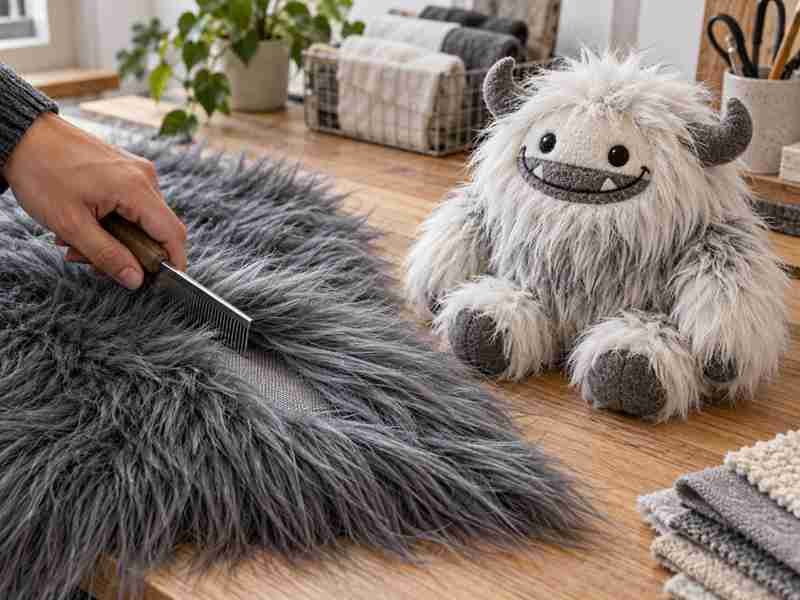
Faux Fur & Long Pile
- Why Ewin: pile direction and finishing become production controls.
- Risk reduced: mismatched sheen, hidden details, and inconsistent grooming.
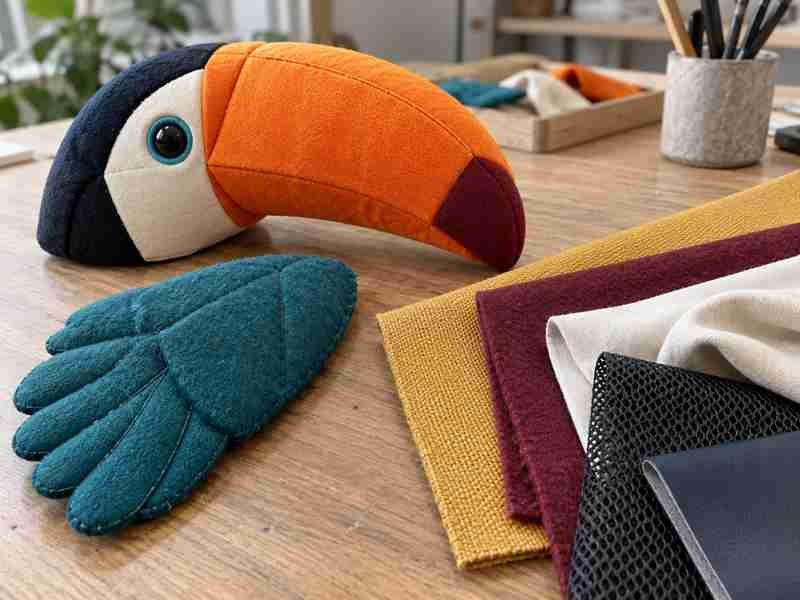
Flat & Structural Fabrics
- Why Ewin: each material has a defined use location.
- Risk reduced: fit changes caused by stretch, stiffness, or backing differences.
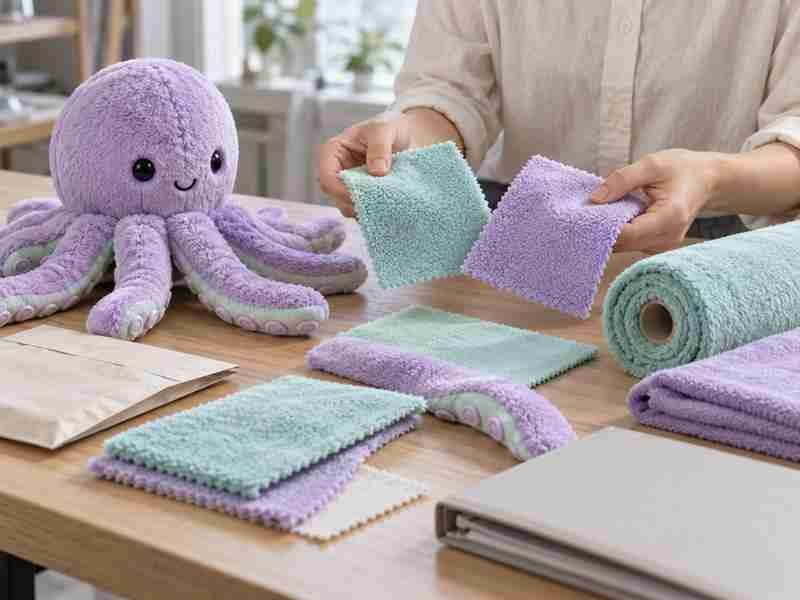
Recycled Material Routes
- Why Ewin: material claim and product specification remain linked.
- Risk reduced: unsupported claims or inconsistent recycled-material batches.
Supporting Materials Stay Inside the Product Definition
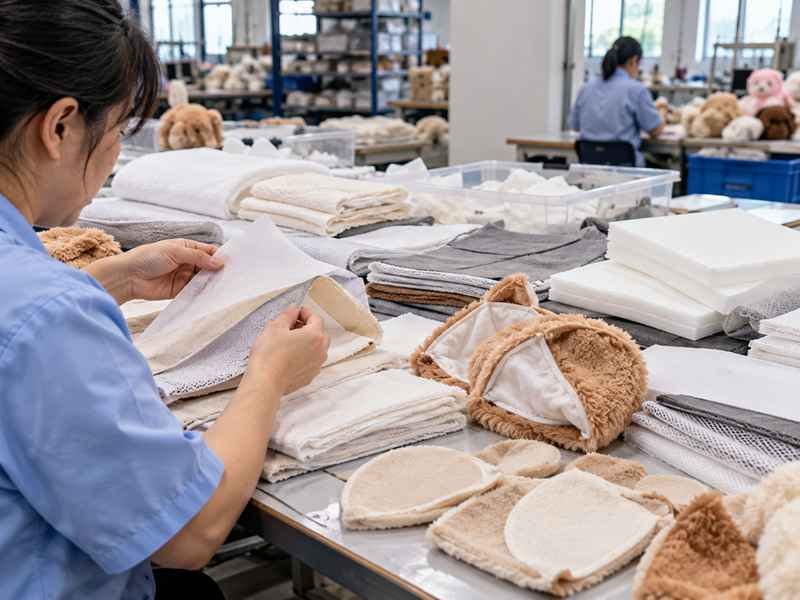
Linings & Interlinings
- Control: material ID and use location.
- Value: less variation between approved sample and later production.
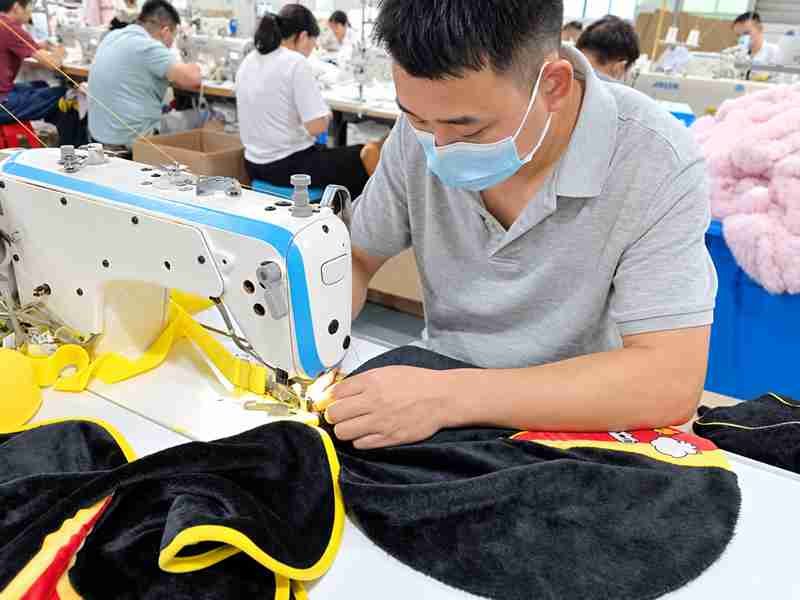
Sewing Threads
- Control: size, color, use location, structural role.
- Value: fewer seam or appearance changes after sourcing adjustments.
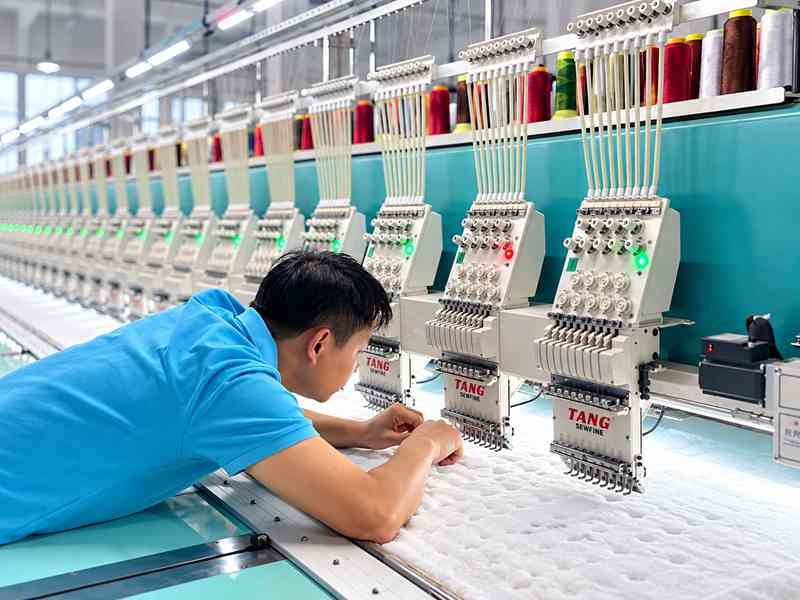
Embroidery Threads
- Control: thread and program version.
- Value: more stable face and logo reproduction across production.
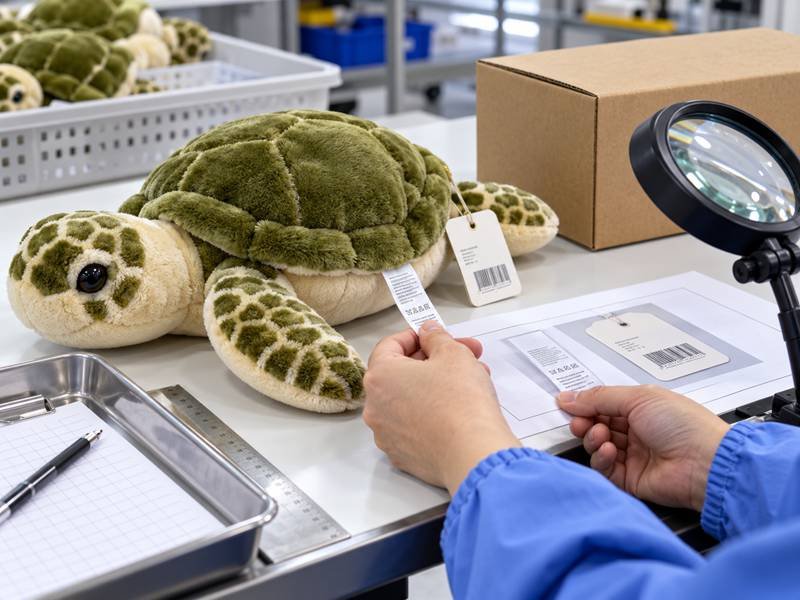
Labels & Wash Labels
- Control: artwork revision and placement.
- Value: lower risk of old or wrong labels entering a current order.
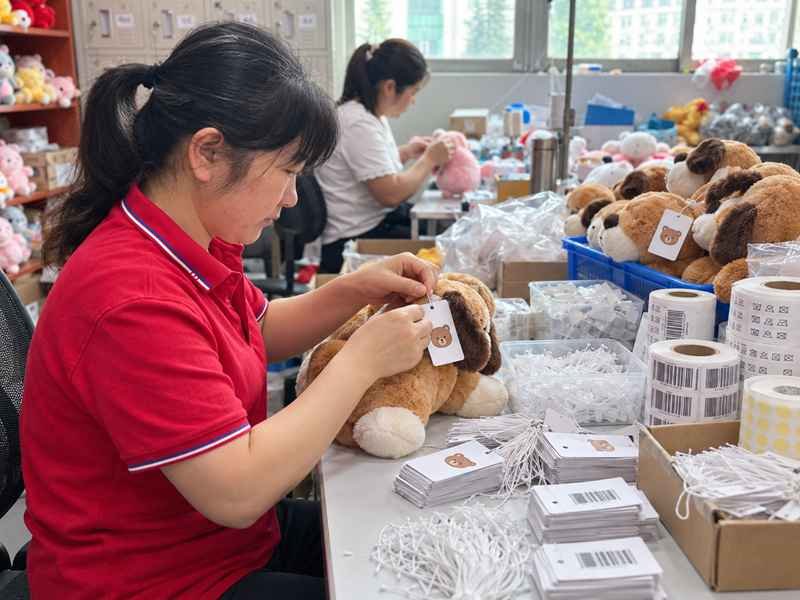
Ribbons & Elastic
- Control: dimensions and attachment.
- Value: more consistent fit and function across operators and batches.
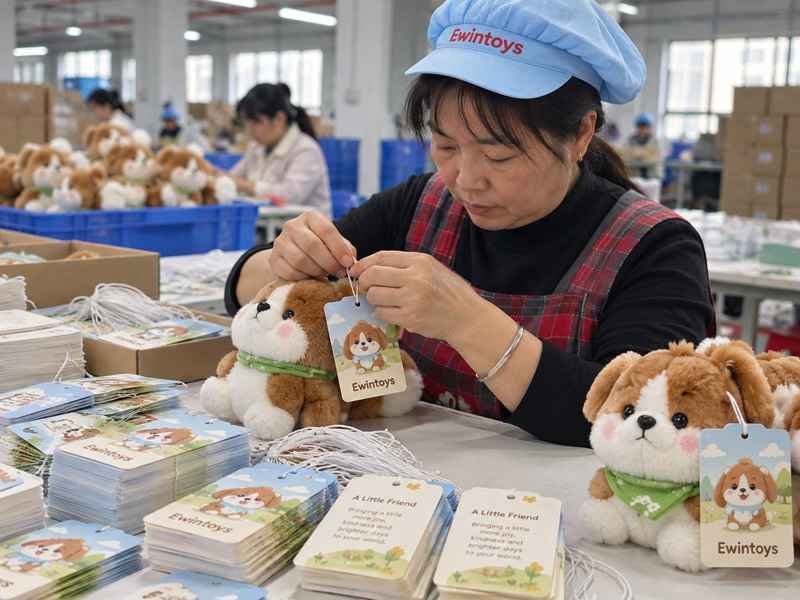
Hangtags & Consumables
- Control: specification and packaging revision.
- Value: fewer retail-identity and finishing errors at final pack-out.
Components Are Specified Before They Reach Assembly
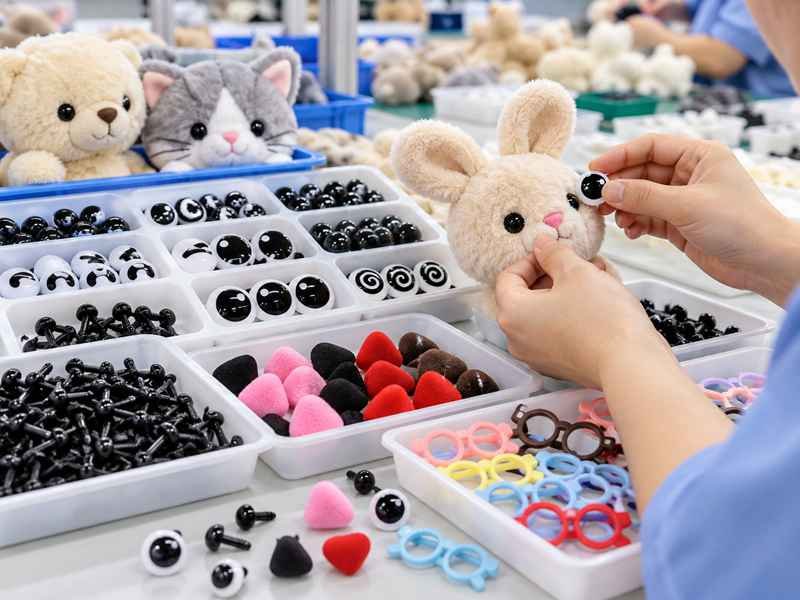
Eyes & Noses
- Control: Part ID, size, fixing, placement.
- Value: lower risk of wrong components or weak attachment entering production.

Metal Hardware
- Control: material, finish, dimensions, fixing.
- Value: more reliable attachment and fewer scratch, finish, or orientation issues.
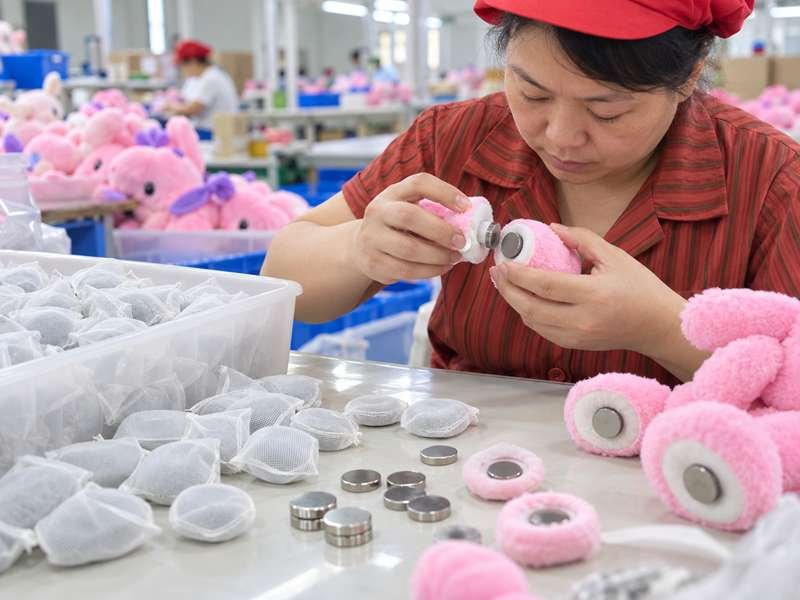
Magnets
- Control: grade, location, polarity, fixing.
- Value: consistent function across samples and bulk production.
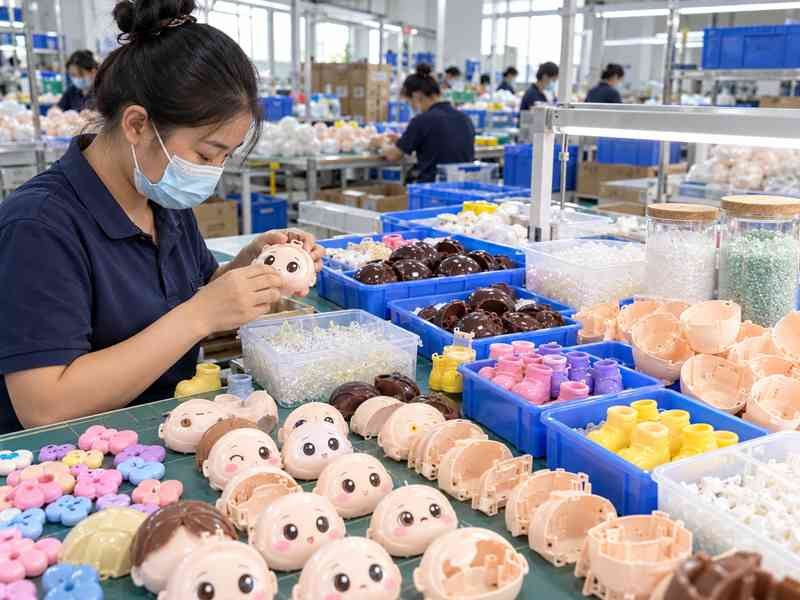
Molded Components
- Control: drawing, material, tolerance, interface.
- Value: fewer fit and assembly surprises after tooling or scale-up.
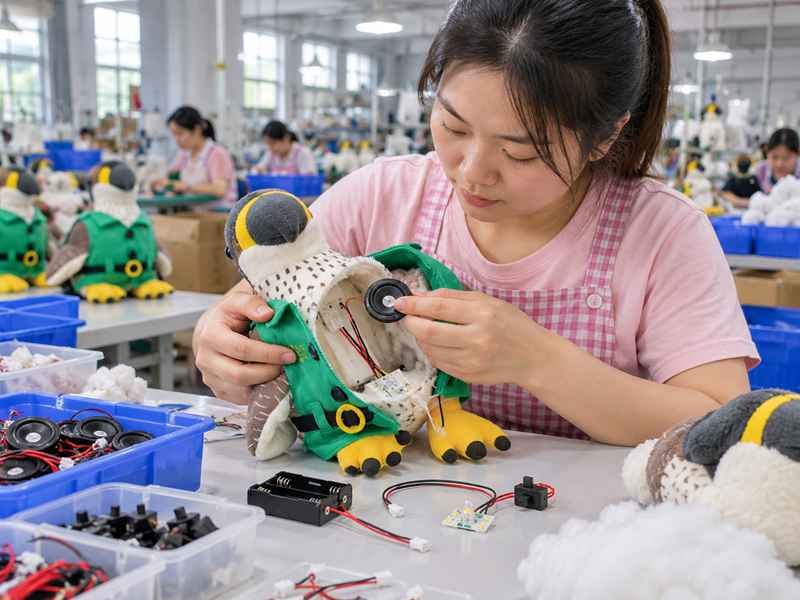
Electronic Modules
- Control: module revision and installation method.
- Value: fewer incompatibilities between electronics and plush structure.
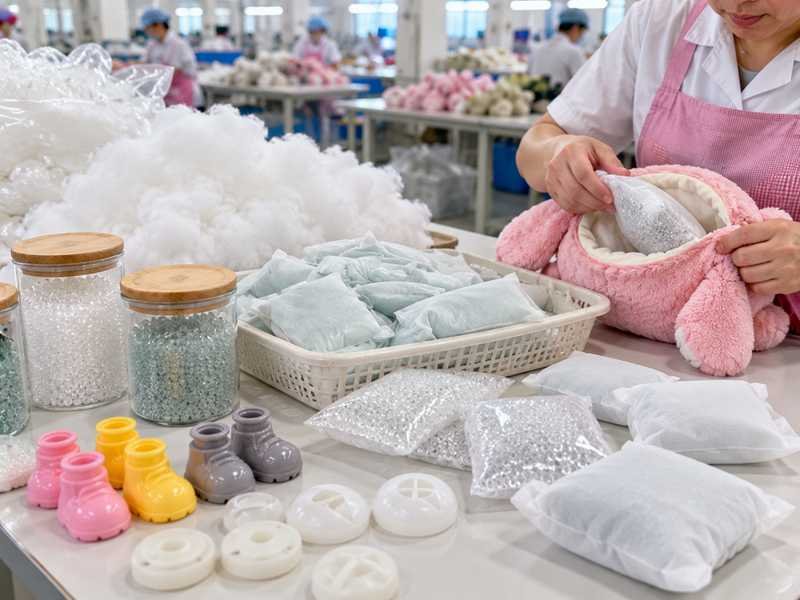
Filling & Inserts
- Control: material, weight, zone, firmness.
- Value: more consistent shape, balance, and approved handfeel.
Sample Development Is Built to Reach an Approval
Start From the Information Already Available
A project can begin with a hand sketch, 2D artwork, character sheet, 3D render, reference product, AI-generated concept, or physical sample. Ewin first separates what is already fixed from what still needs product engineering.
Input review: Product type, approximate size, target market, quantity direction, channel, packaging, launch timing, and critical visual details give the sample team context for engineering decisions.
Gap review: The team identifies missing side profiles, unclear dimensions, unrealistic seams, material questions, accessory interfaces, or other points that could create repeated revisions later.
First objective: The initial sample is given a clear purpose – feasibility, shape, structure, material, detail, function, or production-readiness – rather than trying to solve every decision at once.
Use Controlled Versions Instead of "Latest Sample"
Prototype, V1, V2/V3, material samples, testing samples, PP samples, and Golden Sample stages serve different purposes. Ewin keeps those stages distinguishable so comments, approvals, and later production teams know which physical object and data set are current.
Revision discipline: Each meaningful revision can record changes to pattern, dimension, material, color, decoration, filling, accessory, cost, or timing.
Approval discipline: Already approved points should remain stable while the next version addresses the remaining open issues.
Commercial value: A visible version history reduces the chance of repeating old mistakes, reviving rejected features, or asking the brand to review the same issue several times.
Review Samples Before Sending Them for Approval
Sample quality is not only the client’s job to discover. Internal review can compare the sample with artwork, development notes, measurements, materials, decoration, filling, accessories, and the intended revision objectives before it becomes an external approval round.
Sample QC: Obvious workmanship issues, missing components, incorrect materials, wrong decoration, or unresolved technical points can be caught before shipment.
Fidelity review: Important character relationships such as face, silhouette, proportion, and signature details can be checked against the defined priorities rather than relying on memory.
Revision efficiency: Better internal review helps external comments focus on genuine design decisions instead of basic execution defects, making sample rounds more useful.
Convert Approval Into Manufacturing Information
A final sample has limited value if its decisions remain only in the sample room. Ewin transfers approved product information into Golden Sample, BOM, released pattern, artwork files, measurements, filling notes, accessories, packaging, and QC references before bulk production.
Physical reference: The Golden Sample shows the overall approved result.
Data reference: BOM and released files define material and process details the sample cannot reveal precisely.
Production reference: Manufacturing and quality teams receive the same approved SKU definition, reducing the gap between development intent and line execution.
The result is a sample process built to converge into production, not simply a rapid prototype service.
Sample Approval Must Survive the Move Into Bulk
Golden Sample Sets the Physical Standard
The Golden Sample is the approved physical reference for proportion, face, silhouette, handfeel, filling, clothing, decoration, component placement, and overall presentation. It should be identifiable by project, SKU, revision, and approval status so production does not confuse it with a prototype, test sample, sales sample, or obsolete revision.
What it solves: Production and quality teams can compare the current bulk result against one agreed physical reference.
What it cannot solve alone: A sample cannot show material IDs, hidden component details, exact embroidery files, filling weights, label artwork, or packaging data.
Ewin approach: Keep the Golden Sample connected to controlled files and specifications so the physical and data definitions describe the same SKU.
Frozen BOM and Released Files Set the Data Standard
The frozen BOM records materials and components behind the approved sample: fabric identity, composition, GSM, pile, color, thread, accessories, filling, labels, packaging, and other critical items. Released pattern and artwork files carry the geometry and decoration data the physical sample cannot communicate precisely.
Version discipline: BOM status can mature from DRAFT to CONTROLLED to FROZEN as development closes.
Substitution discipline: A later material or component change should be reviewed for appearance, cost, testing, assembly, packaging, and lead-time impact before release.
Production value: Sourcing, production, QC, packaging, and reorders can use the same data instead of rebuilding knowledge from emails or photographs.
Change Control Prevents Silent Product Drift
Products continue to evolve. A new fabric supplier, accessory change, updated label, revised module, packaging adjustment, or cost optimization can affect more than one department. Ewin’s objective is not to forbid change; it is to make the change visible and controlled.
Change review: Identify what is changing, which SKU or version is affected, whether a new sample or test is required, and which files must be updated.
Release review: Keep the new Golden/BOM/pattern/artwork relationship clear after approval.
Reorder value: Use a delta review to reuse proven information while checking what changed since the previous production run, reducing the risk of mixing old and current versions.
Review Production Flow

Production Release
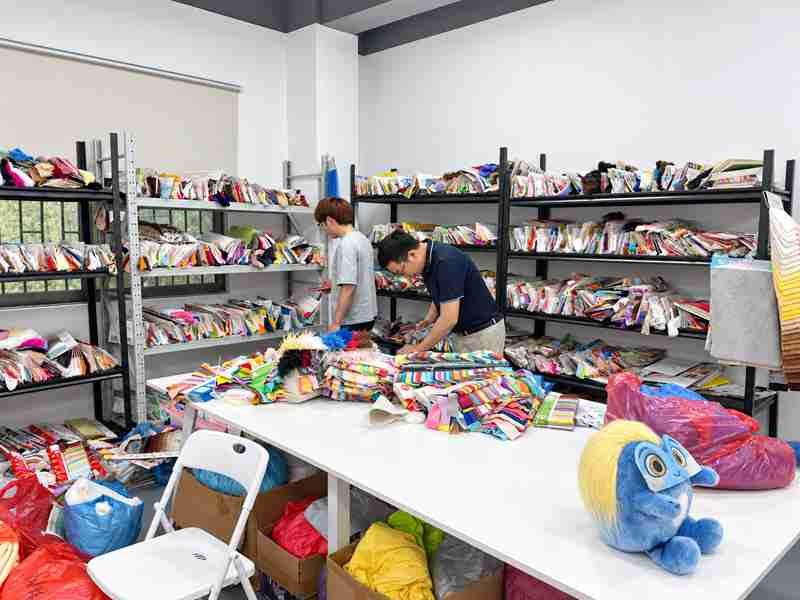
Golden Sample, frozen BOM, released pattern, current artwork, measurements, accessories, QC requirements, and packaging revision define which SKU can enter bulk manufacturing. The production team should not begin from an unlabeled sample or old file set.
Material Issue
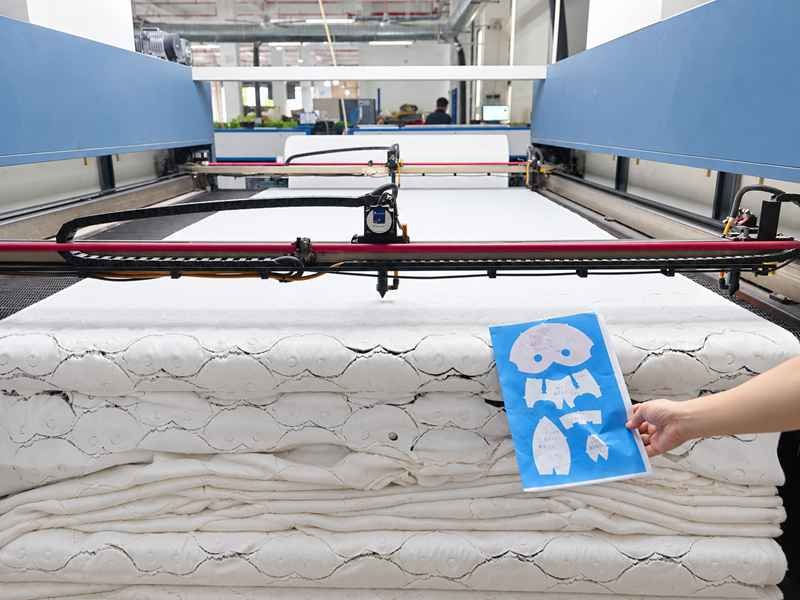
Cutting
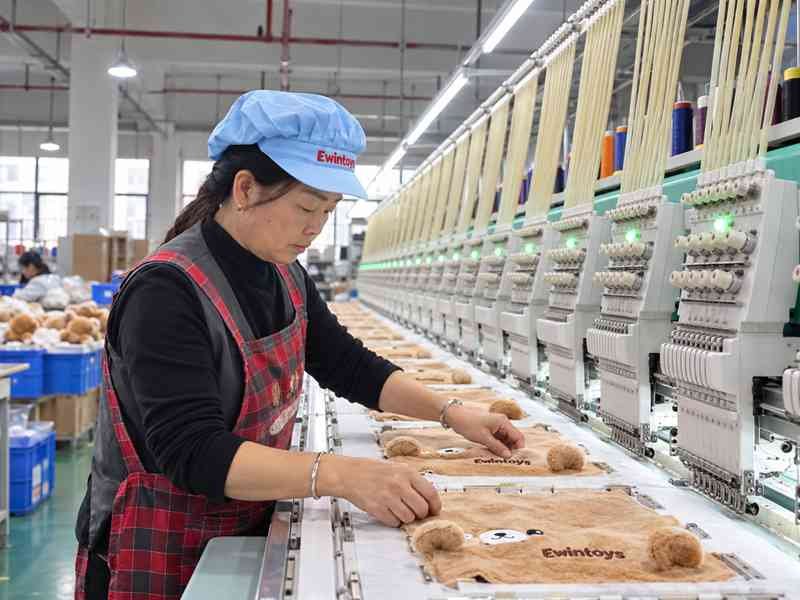
Decoration
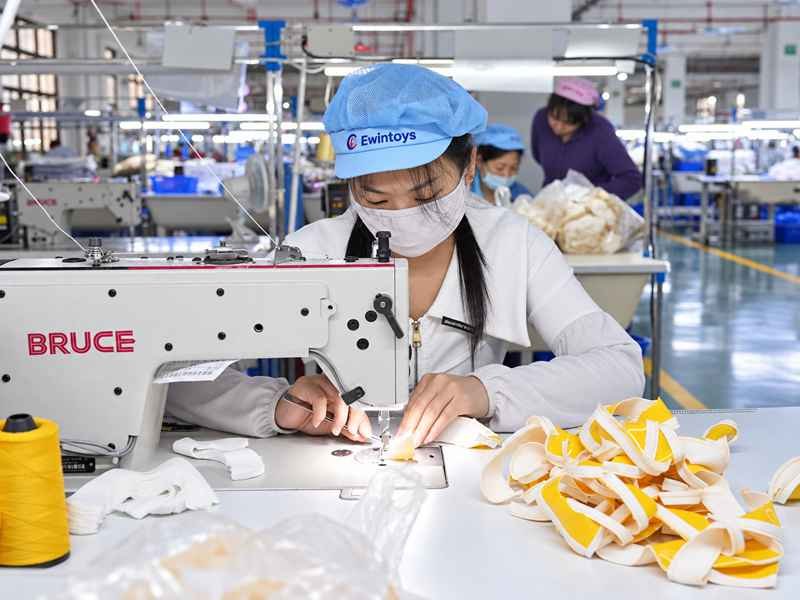
Sewing
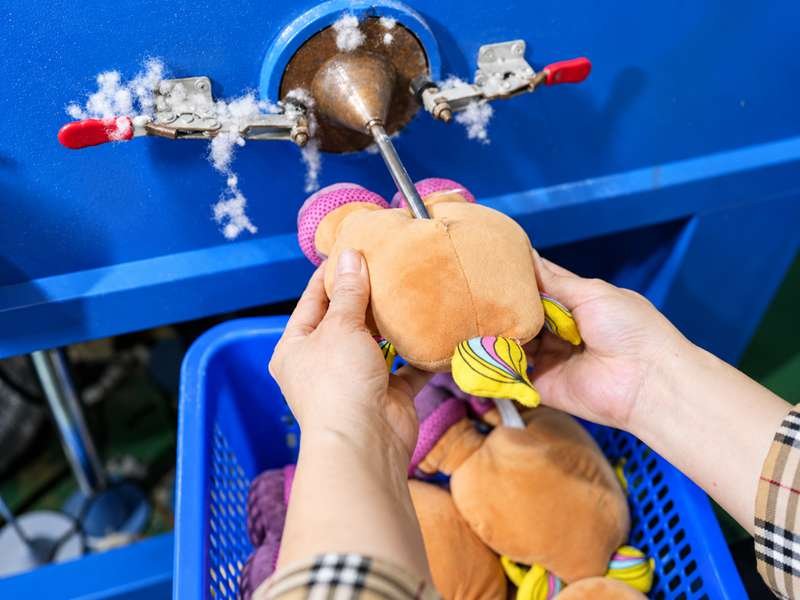
Stuffing & Assembly
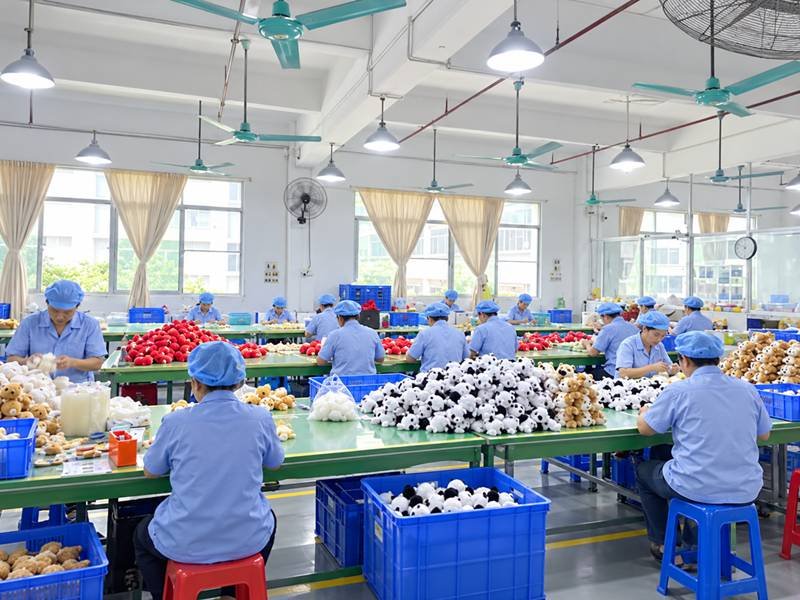
IPQC & Finishing
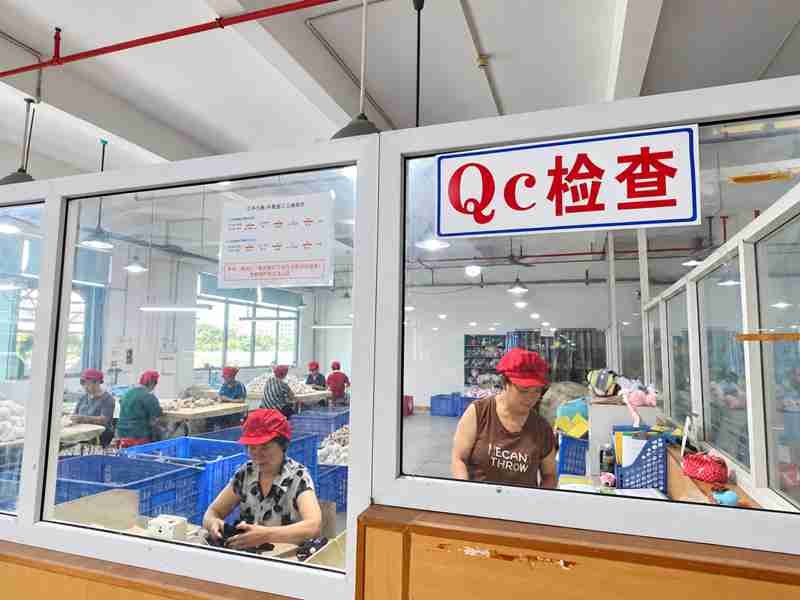
In-process QC reviews critical workmanship, dimensions, decoration, filling, attachment, symmetry, function, and appearance while correction is still possible. Finishing removes presentation defects and prepares the product for final inspection.
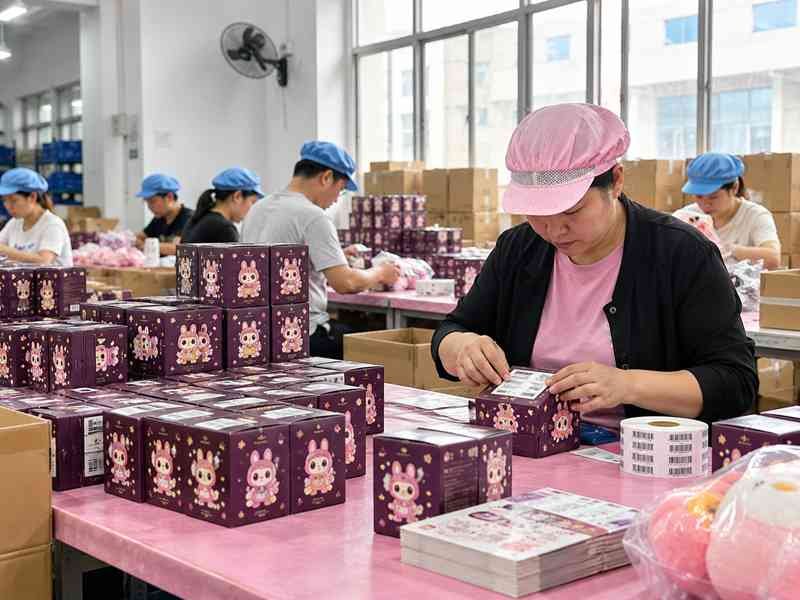
Final Pack-Out
Quality Control Is Built Into the Production Route
IQC - Incoming Control
- Value: wrong inputs are stopped before production.
- Evidence: incoming records, approved swatches, lot and component checks.
IPQC - Process Control
- Value: defects are contained before they spread.
- Evidence: first-piece checks, process records, work-in-progress inspections.
FQC - Finished Control
- Value: final product is judged against the approved version.
- Evidence: inspection results, defect records, physical references.
OQC - Outgoing Release
- Value: manufacturing quality stays connected to delivery readiness.
- Evidence: pack-out checks, carton data, release status, shipment records.
Trusted by Global Brands and IP Owners
Trusted by brands, IP owners, and creative teams worldwide. Ewintoys helps transform original ideas and characters into high-quality plush products through professional development, manufacturing, and quality control.




















Cost Engineering Protects the Details Worth Paying For
Start With the Real Cost Drivers
Custom plush cost is created by more than fabric and labor. Size, panel count, material family, GSM, pile, fabric utilization, embroidery stitches, print, clothing, accessories, filling, handwork, packaging, SKU split, compliance scope, and production efficiency all influence the final unit economics.
Specification first: Compare supplier quotations only when they are based on the same product, quantity, material, packaging, quality, testing, and trade assumptions.
Driver review: Identify the few elements that create the largest cost movement instead of asking every department for an arbitrary percentage reduction.
Commercial value: A clear cost structure helps purchasing teams understand whether a lower quote comes from a real engineering improvement or simply from a different material, workmanship, or packaging assumption.
Protect Character DNA and Safety-Critical Features
Cost reduction should not begin by cutting the features that make the product recognizable or safe. For character projects, face proportions, signature colors, important accessories, silhouette, and licensed design details can be treated as non-negotiable visual points. Safety and compliance requirements also remain outside ordinary cost-cutting discussions.
Protect: Keep critical character features, structural safety, required testing, and channel-mandated information stable.
Review: Examine hidden panels, low-value handwork, embroidery density, filling distribution, material choices, packaging structure, and other drivers where alternatives may preserve the approved product intent.
Decision: Use the approved sample or character priorities as the reference when judging whether a lower-cost option is still commercially acceptable.
Compare Options Before Bulk Commitment
Ewin can structure cost discussions around Premium, Standard, Cost-Optimized, or other project-specific routes when more than one technically acceptable solution exists. The goal is not to force every project toward the cheapest version; it is to make the trade-off visible before production is frozen.
Option comparison: Show what changes in material, process, detail, packaging, MOQ, or lead time between routes.
Sample validation: When a cost change can affect appearance or handfeel, validate it physically before treating the savings as approved.
Bulk control: Once a route is selected, freeze the corresponding BOM, sample, process, and packaging definition so the production team does not combine features from different price options.
Compliance and IP Risk Move Upstream
Market & Age Grade
- Product risk depends on target market, age grade, materials, construction, small parts, magnets, electronics, labels, packaging, and intended use. Ewin reviews those inputs early so the development route can reflect the applicable requirements rather than waiting until finished goods are ready for testing.
- Value: fewer late redesigns caused by overlooked market requirements.
- Boundary: compliance is SKU-, version-, and market-specific.
Material & Component Risk
- Eyes, noses, magnets, batteries, weighted materials, hard parts, coatings, fabric, filling, and trims can create different safety or documentation needs. Ewin connects component selection with structure, fixing, age grade, and target market before mass production.
- Value: safety-related choices are reviewed before sourcing is frozen.
- Boundary: approved materials and components remain linked to the tested version.
Testing Coordination
- Ewin can perform relevant internal physical and process pre-checks and coordinate applicable third-party laboratory testing where formal evidence is required. Internal QC and third-party regulatory testing remain clearly separated.
- Value: obvious physical or construction risks can be found earlier.
- Boundary: Ewin does not treat one report as universal coverage for changed products or markets.
IP Confidentiality
- Confidential programs can use NDA handling, controlled file access, restricted photography, sample management, supplier disclosure limits, and need-to-know project practices. Unreleased artwork or branded products are not automatically suitable for public factory tours, marketing, or case studies.
- Value: confidentiality becomes part of execution, not a slogan.
- Boundary: public use of client IP requires appropriate authorization.
Multi-SKU Programs Need SKU-Level Control
Large collections become manageable when design, sample, material, packaging, testing, production, and shipment information stay connected to each SKU.
| Control Object | What Ewin Keeps Aligned | Procurement Value |
| Design ID | Character, size, color, or variant identity | Prevents similar SKUs from sharing ambiguous files or approval comments. |
| Sample Version | Prototype, V1, revision, PP, Golden status | Stops obsolete samples from returning to the project as current references. |
| BOM | Fabrics, trims, components, filling, labels, packaging | Keeps sourcing and production tied to the approved material definition. |
| Artwork Files | Embroidery, print, applique, logos, legal copy | Prevents old decoration or text versions from entering production. |
| Packaging | Unit pack, insert, warning, retail or e-commerce format | Keeps sellable units aligned with the correct SKU and market. |
| Barcode / SKU Data | UPC, EAN, FNSKU, retailer or internal mapping supplied for the program | Reduces pack-out, scanning, and receiving errors. |
| Testing Status | Applicable market, age grade, test plan, report or open item | Keeps compliance evidence linked to the correct product version. |
| Production Wave | Quantity, timing, readiness, line or release group | Helps collections move in planned waves instead of one opaque order. |
| Shipment Status | Destination, consolidation, split, carton, release status | Connects finished SKUs to the correct warehouse or launch wave. |
| Reorder Delta | Product, material, packaging, label, or market changes | Reuses proven data without silently carrying old versions into the reorder. |
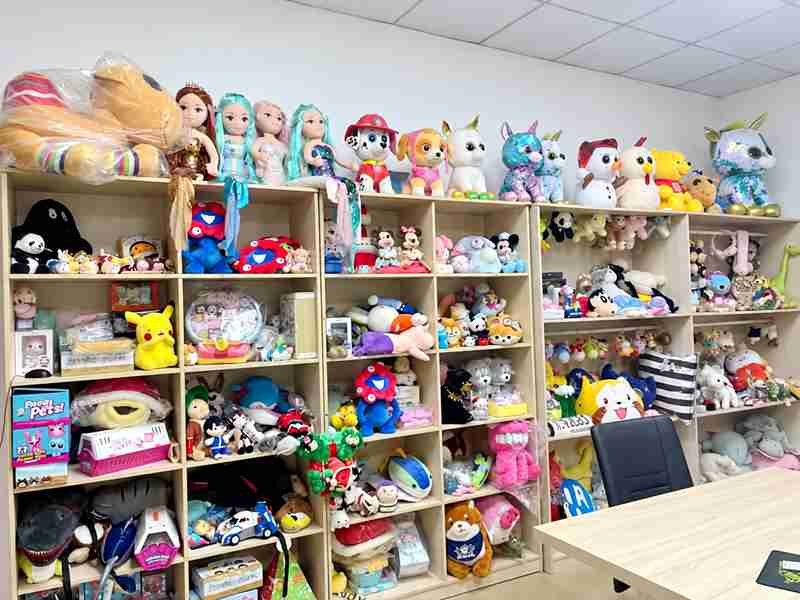
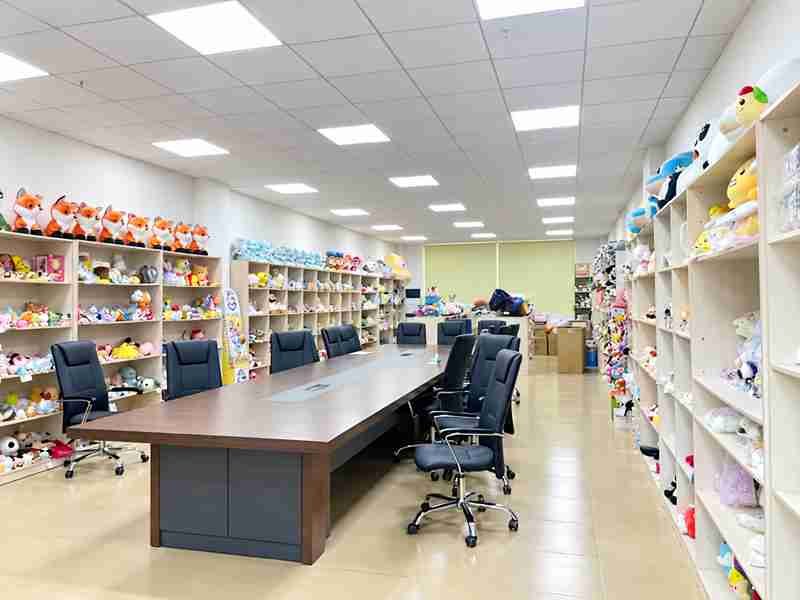
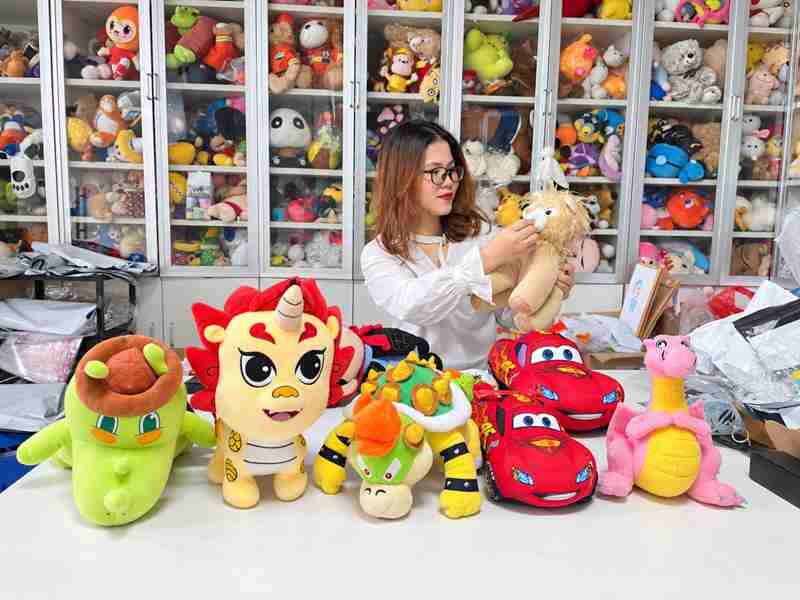
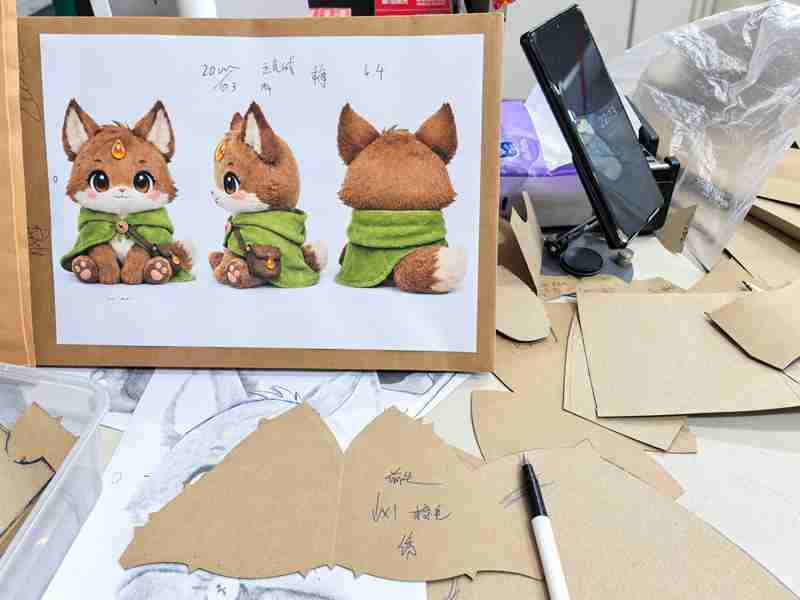
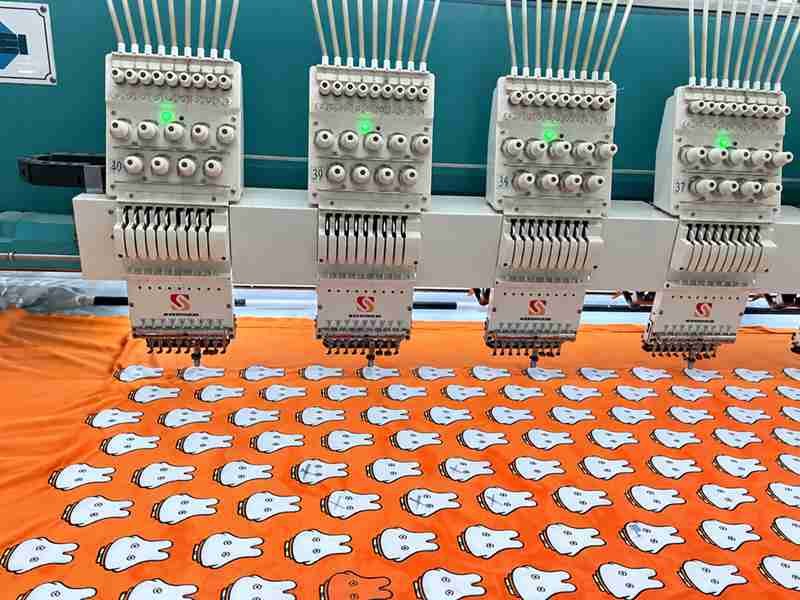
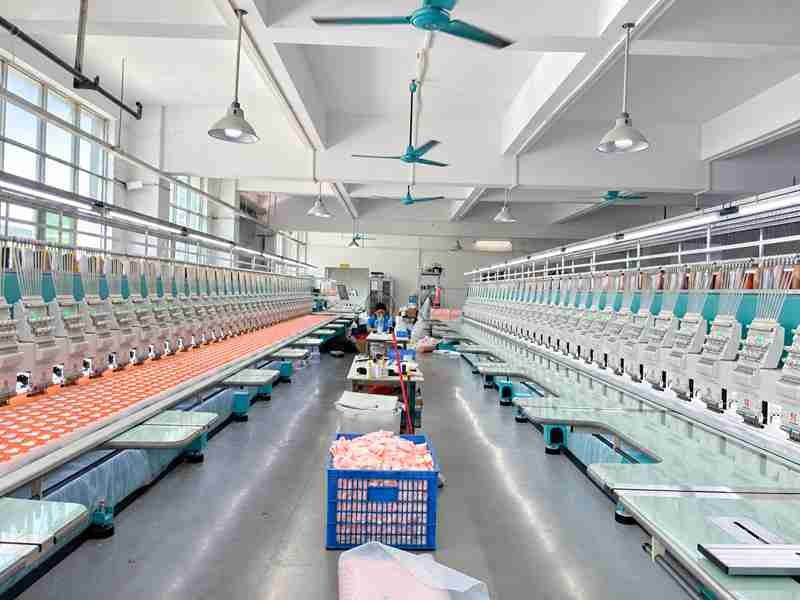
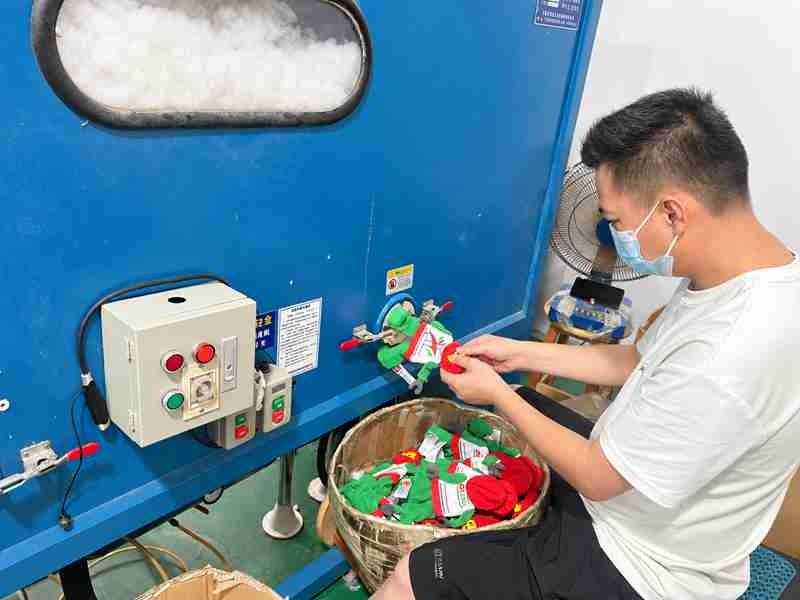
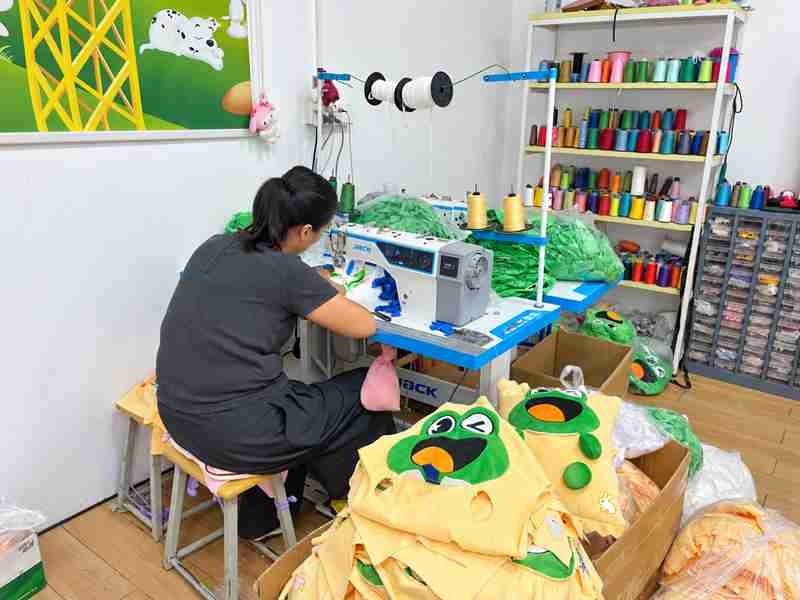
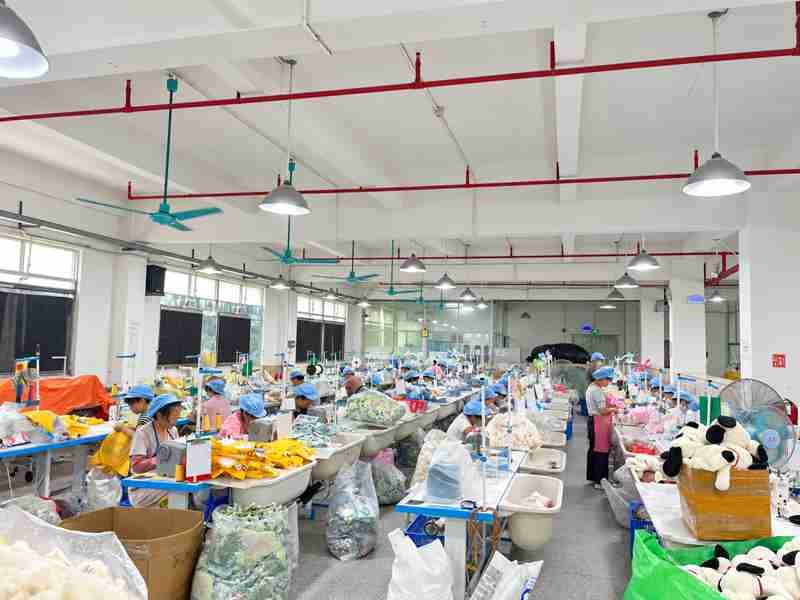
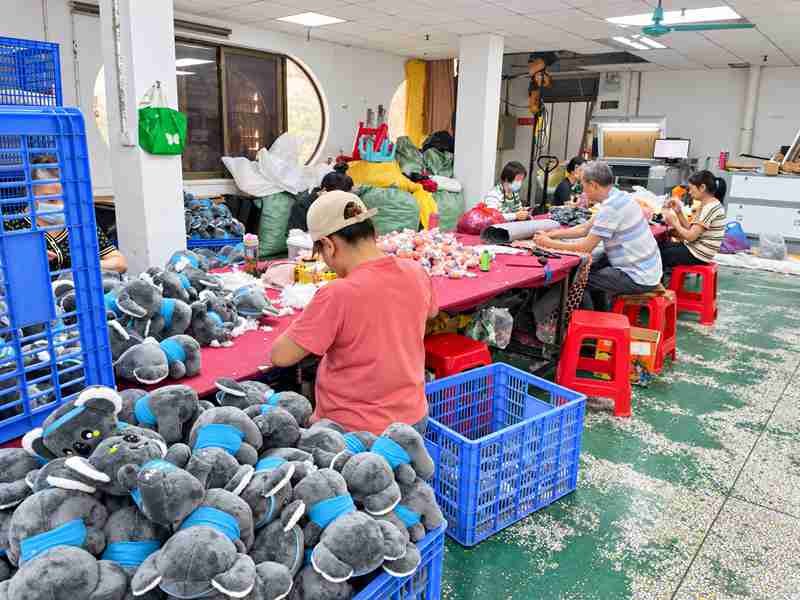
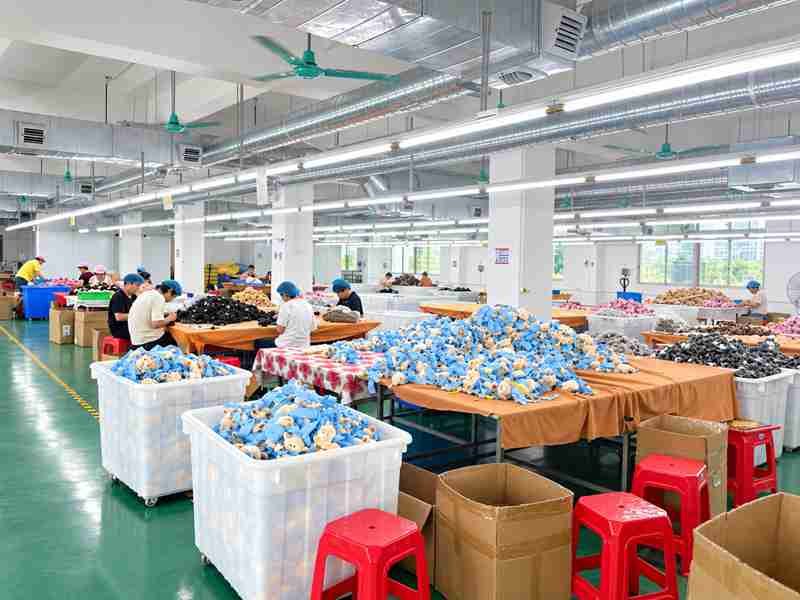
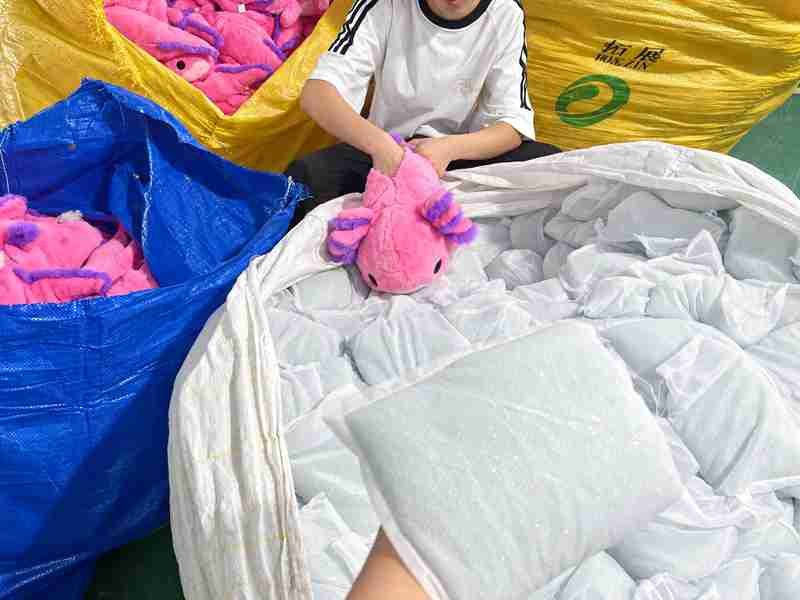
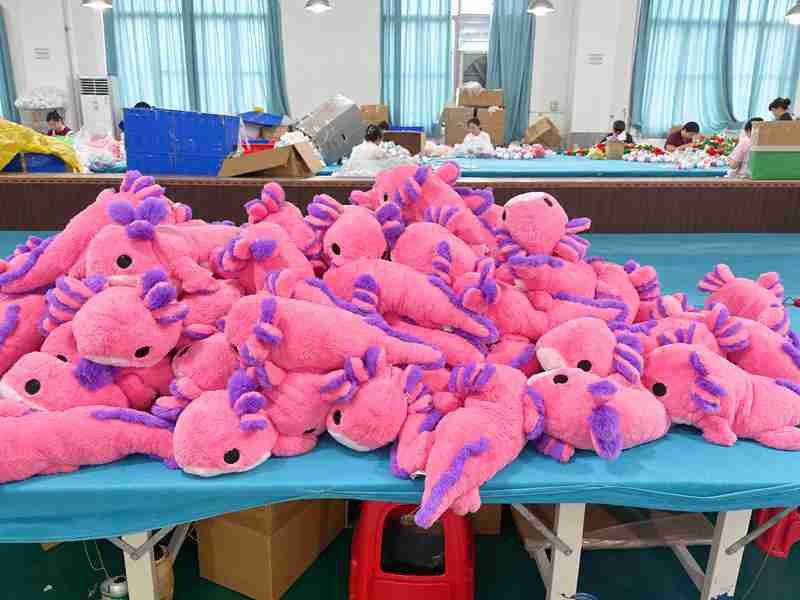
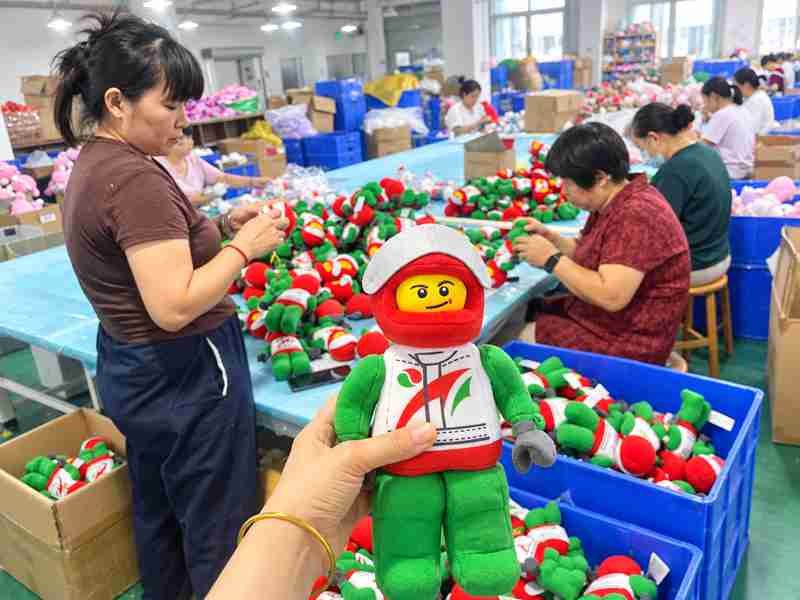
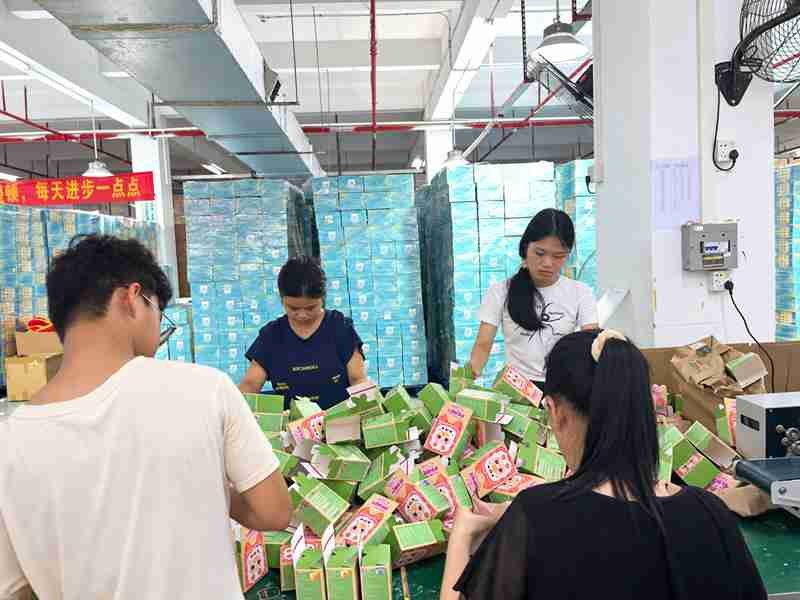
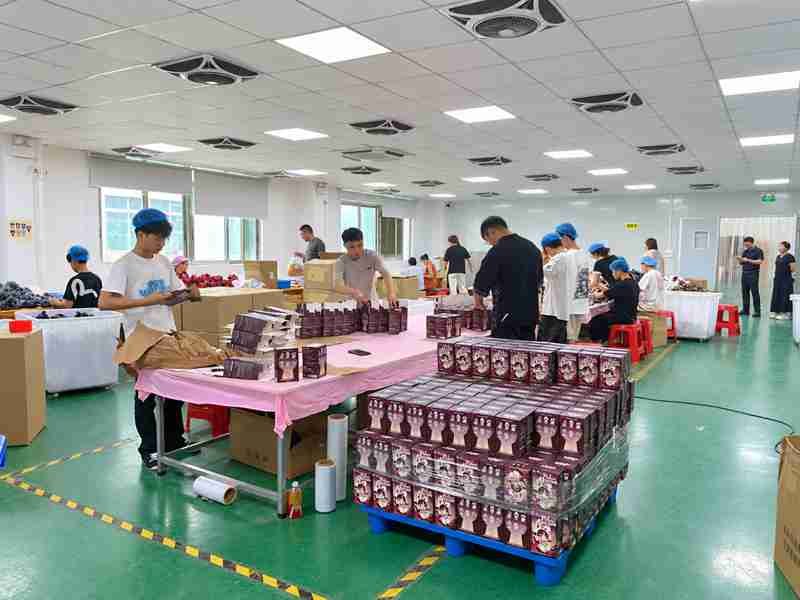
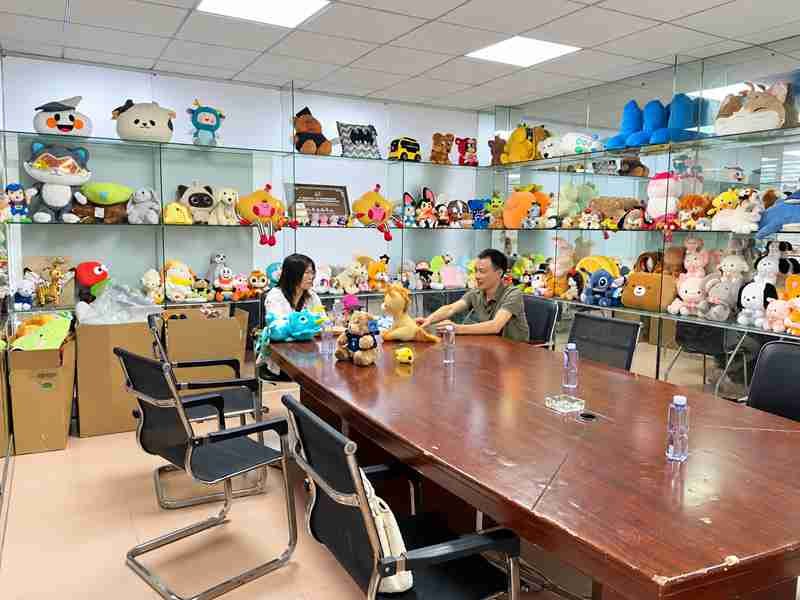
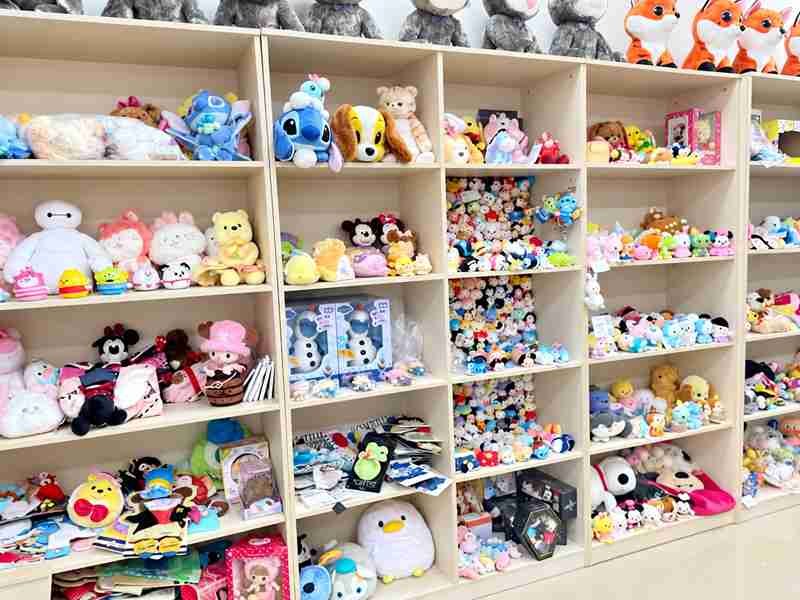
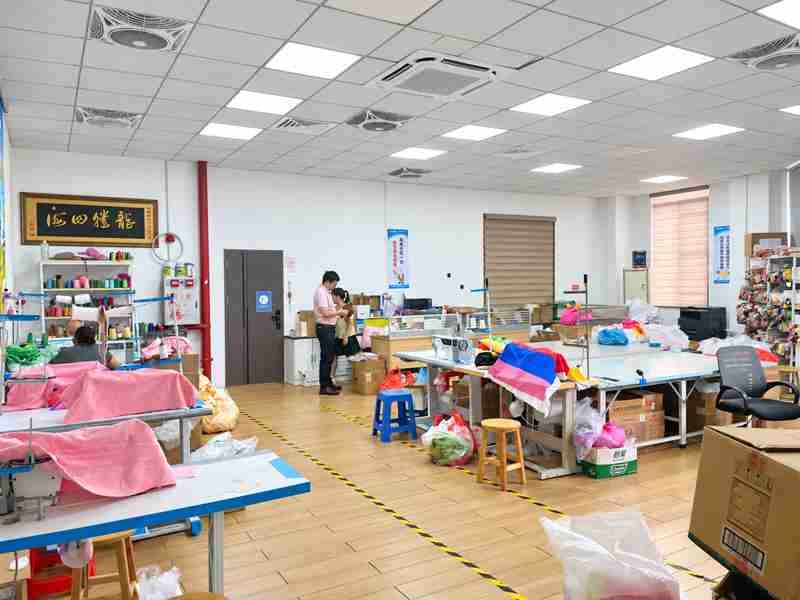
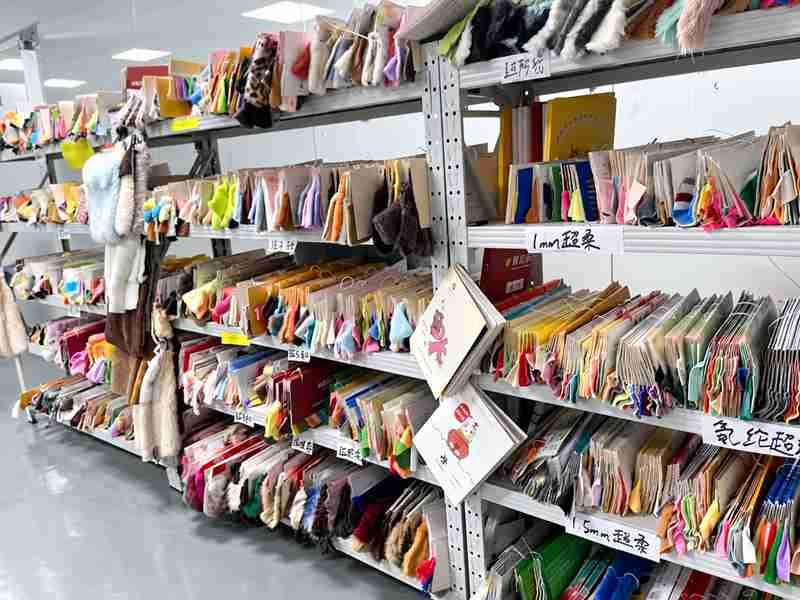
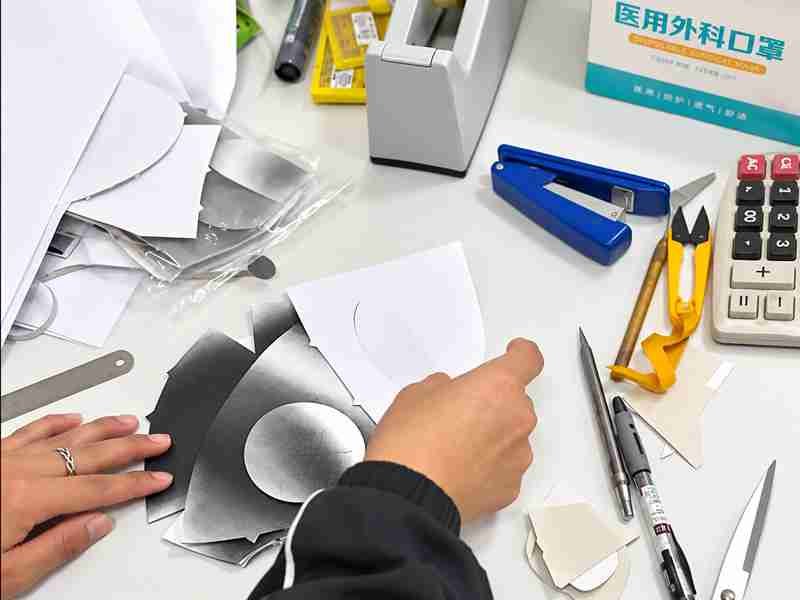
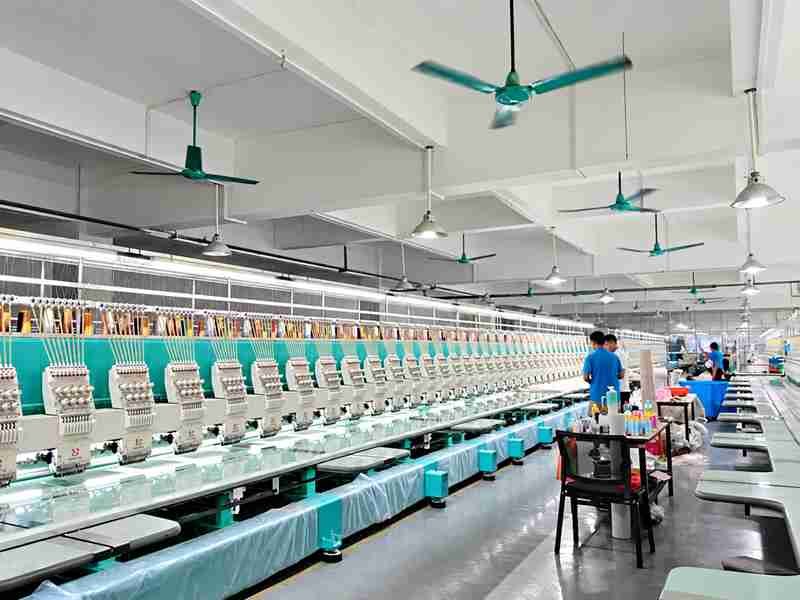
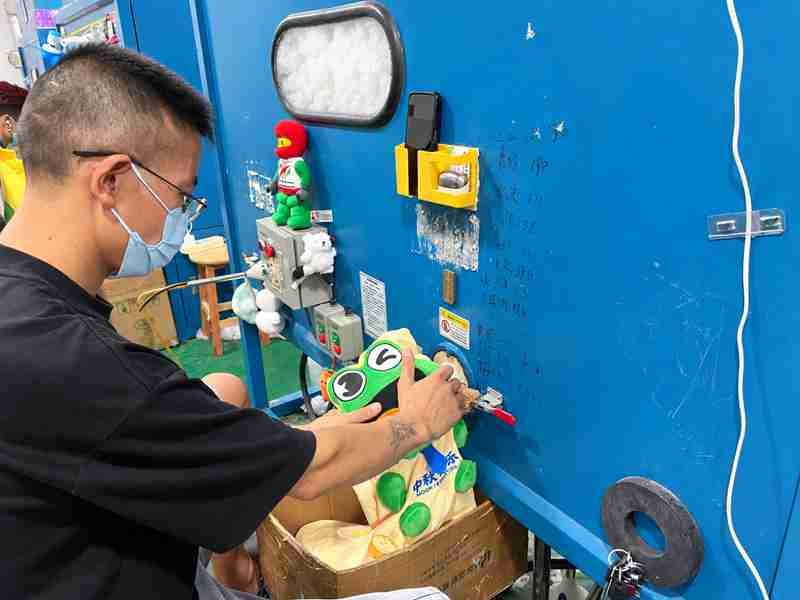
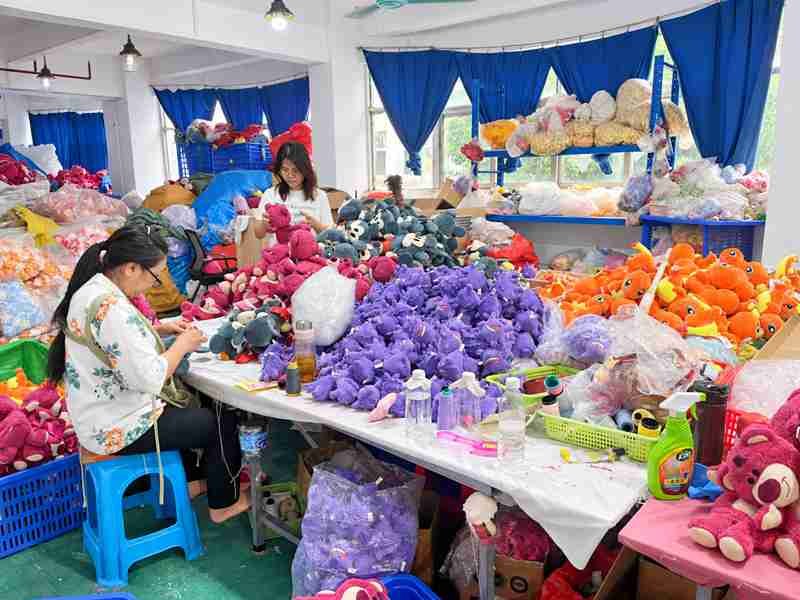
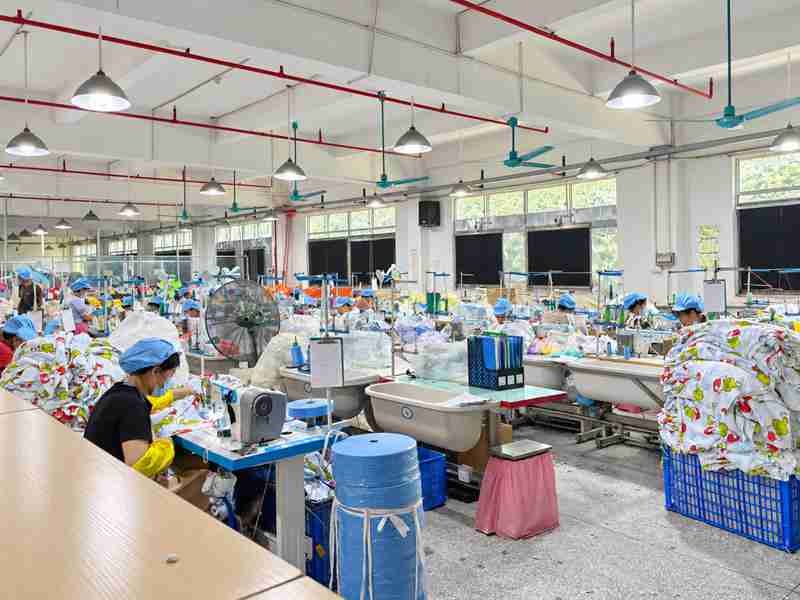
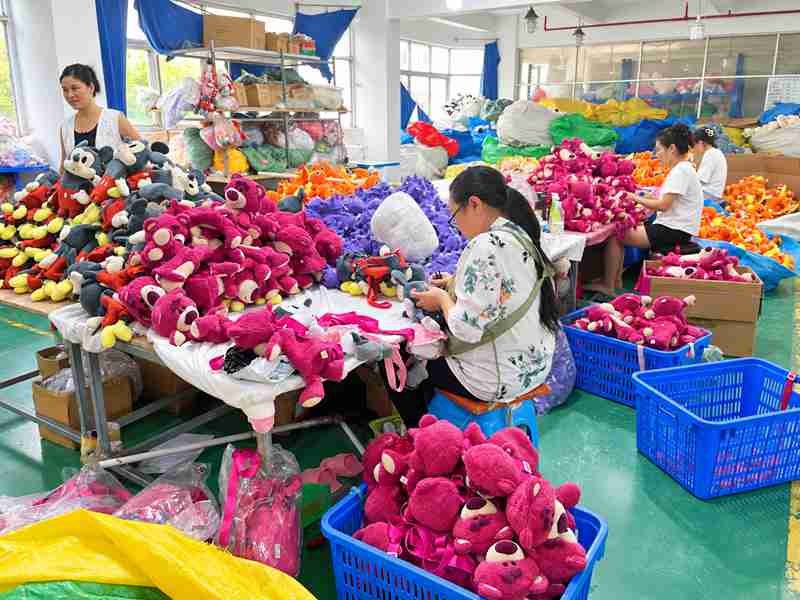
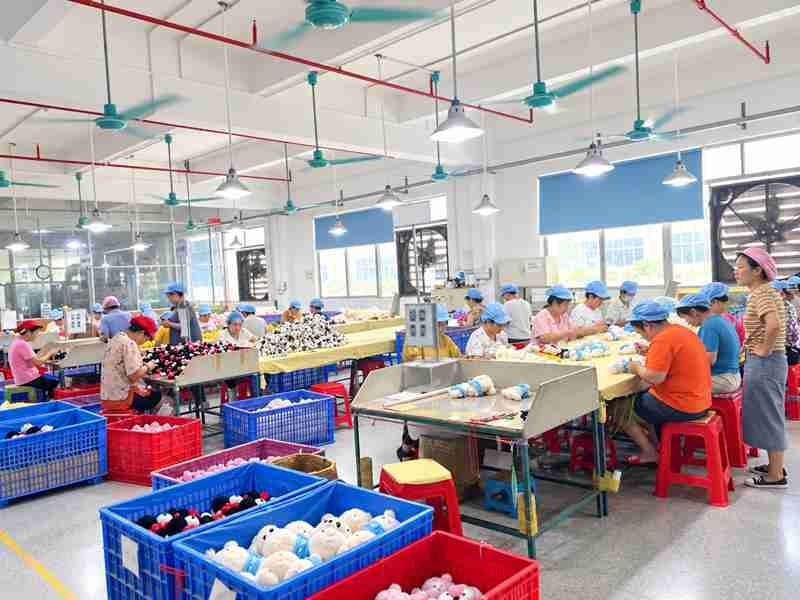
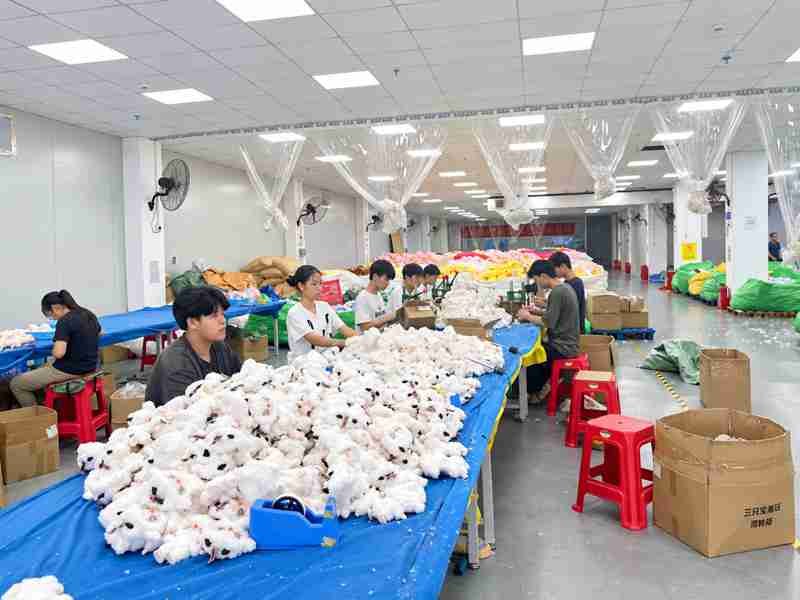
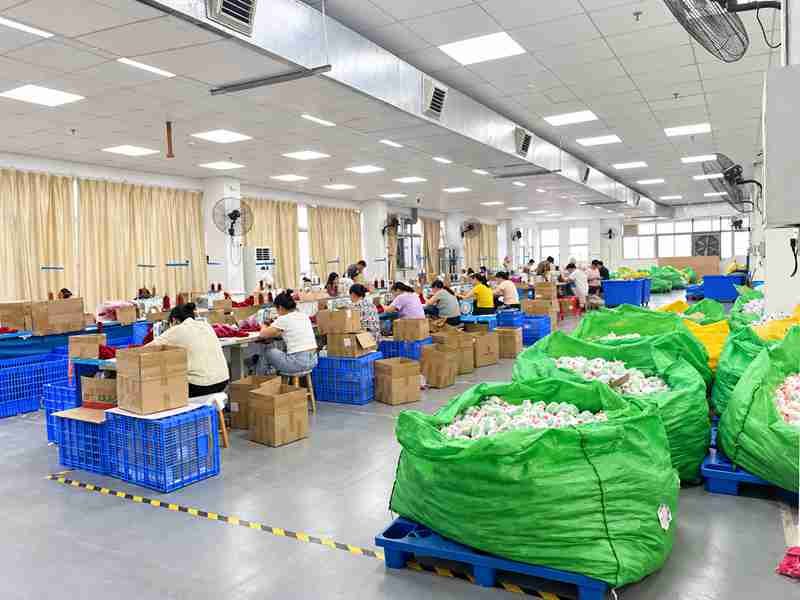
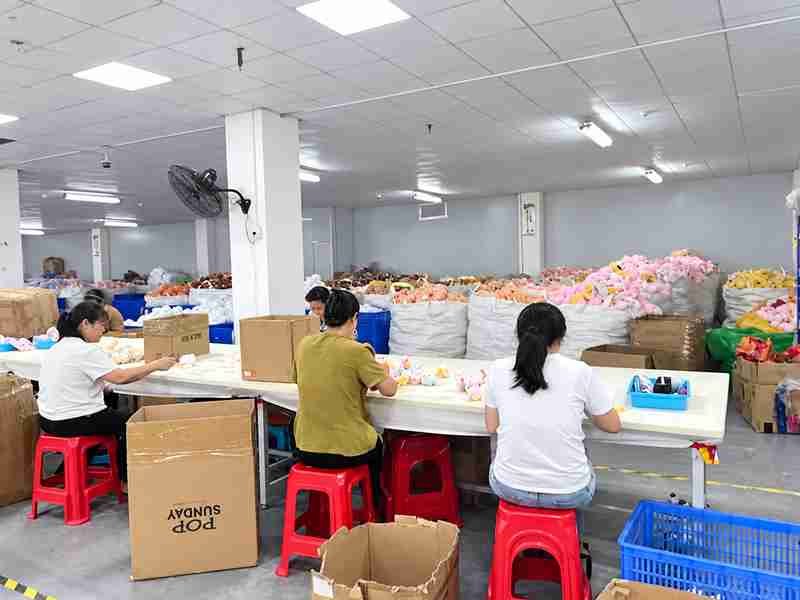
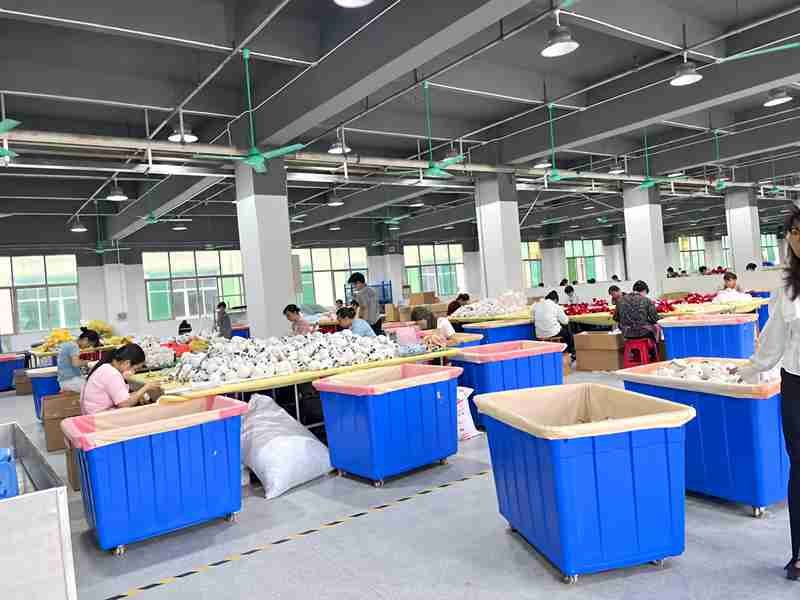
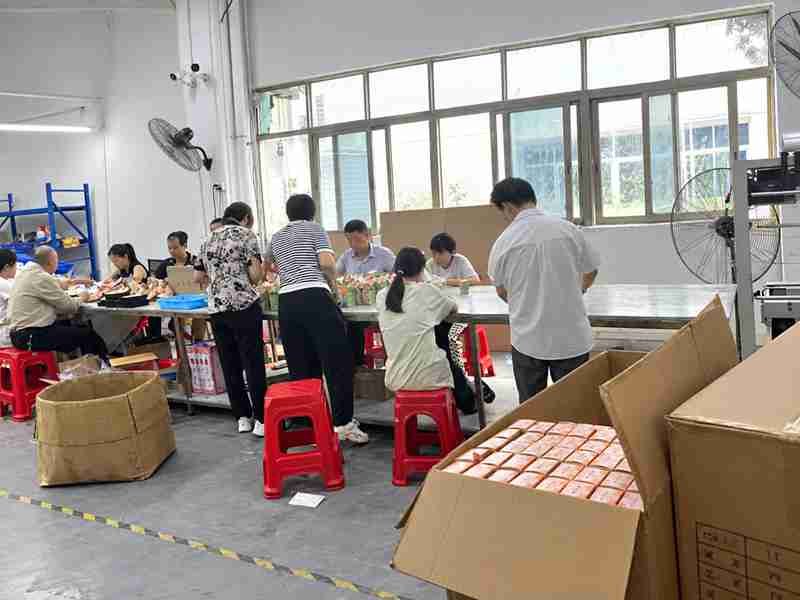
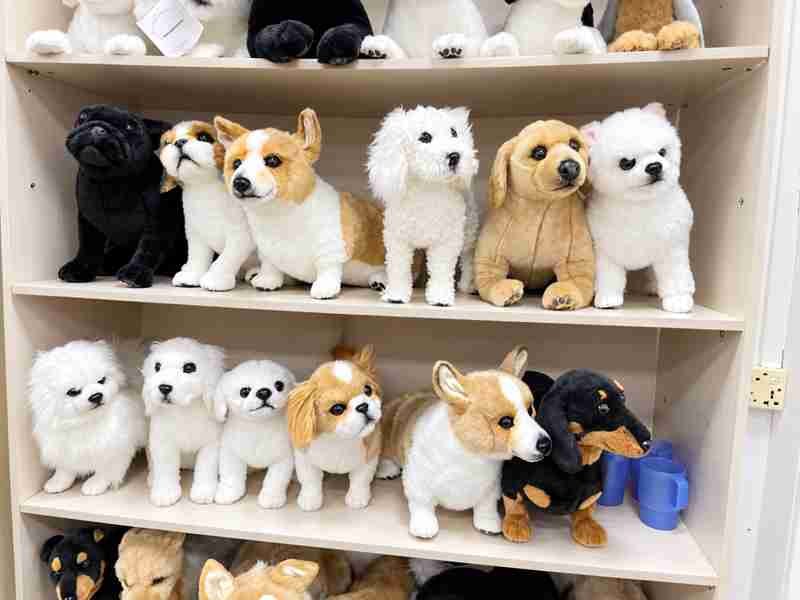
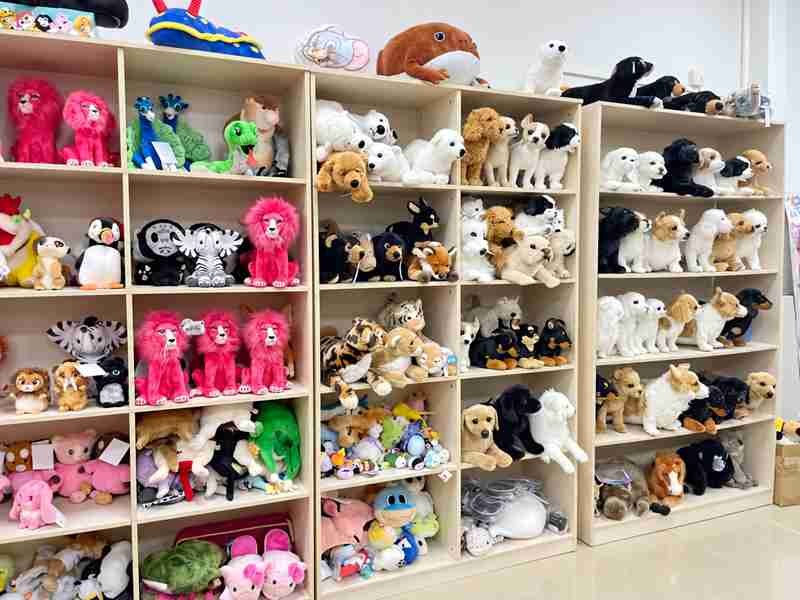
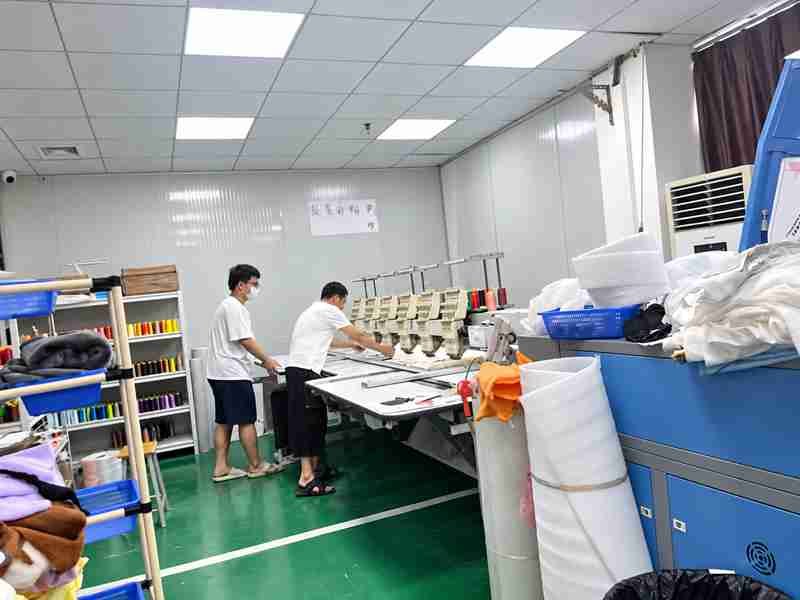
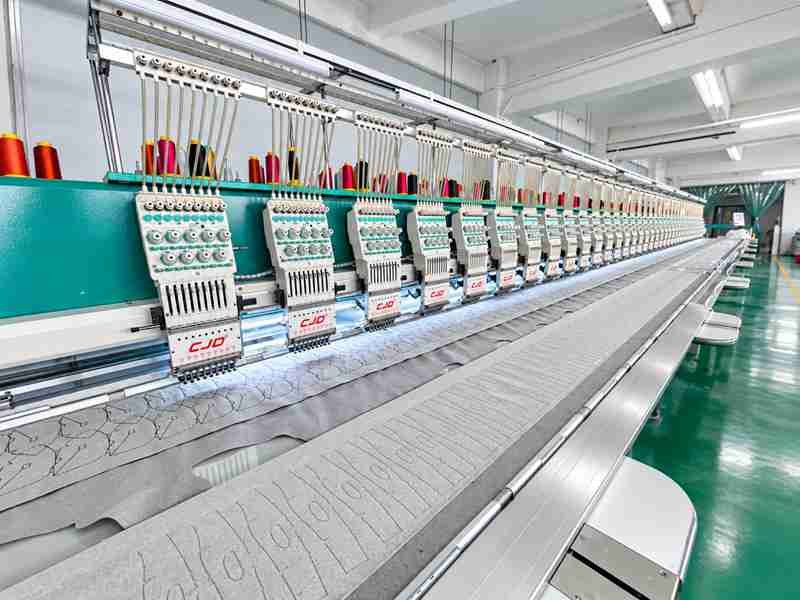
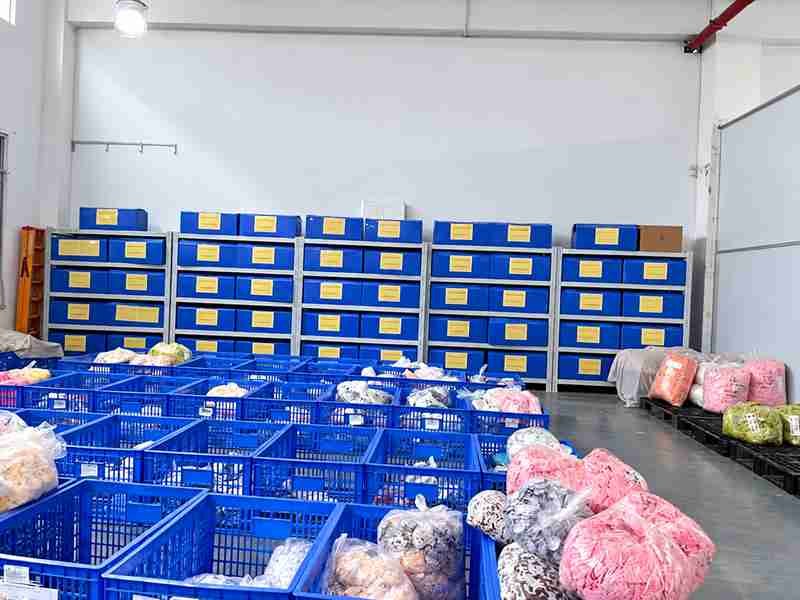
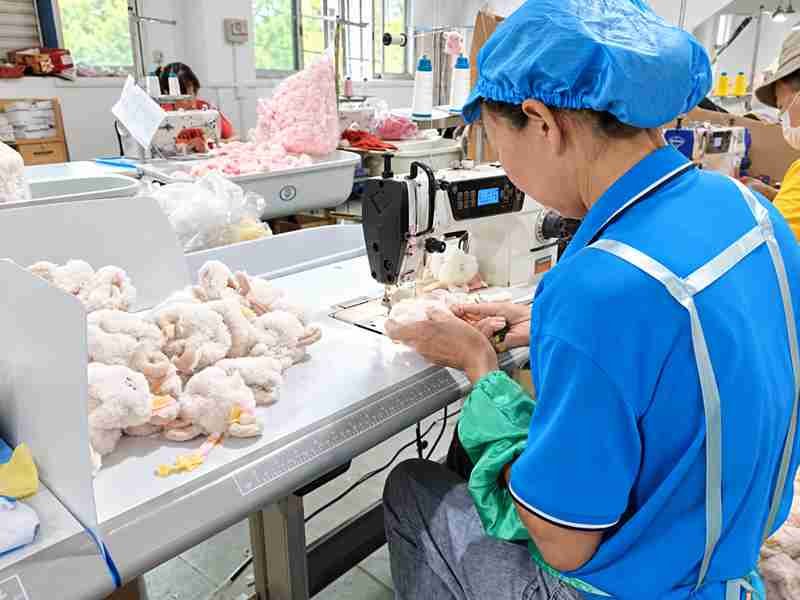
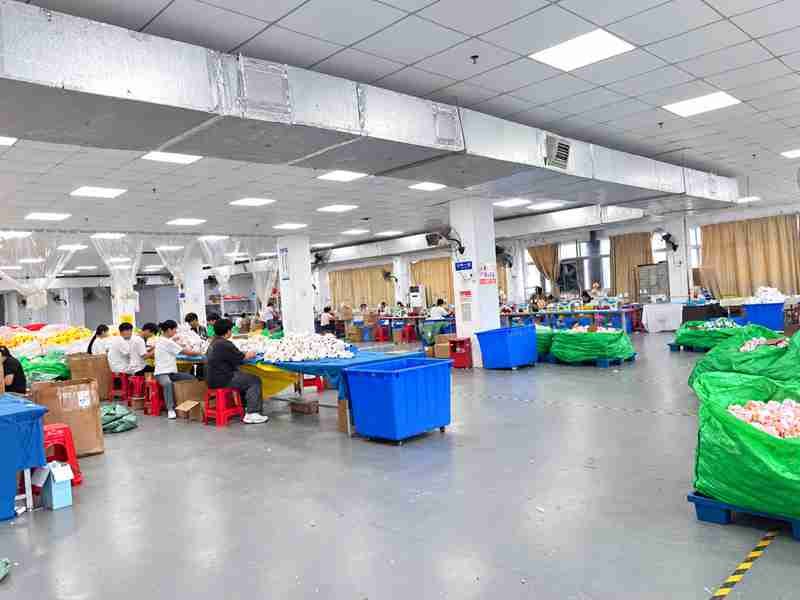
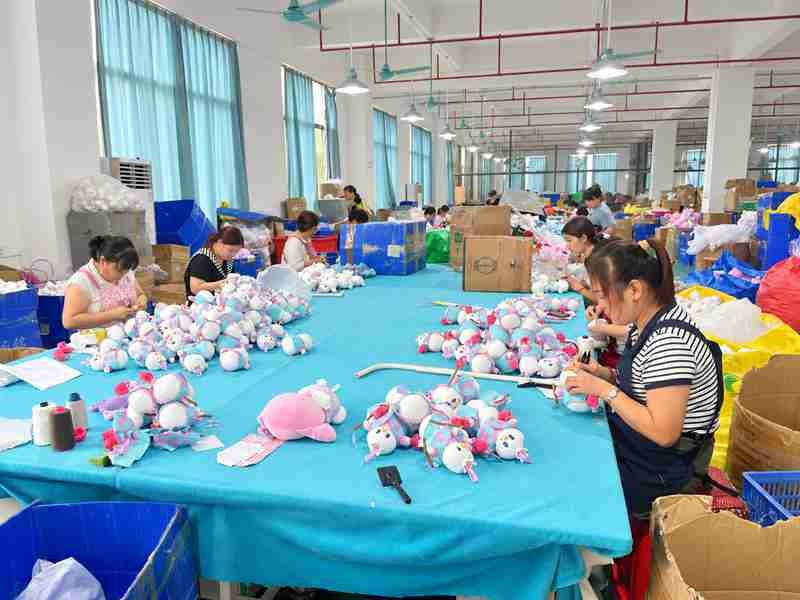
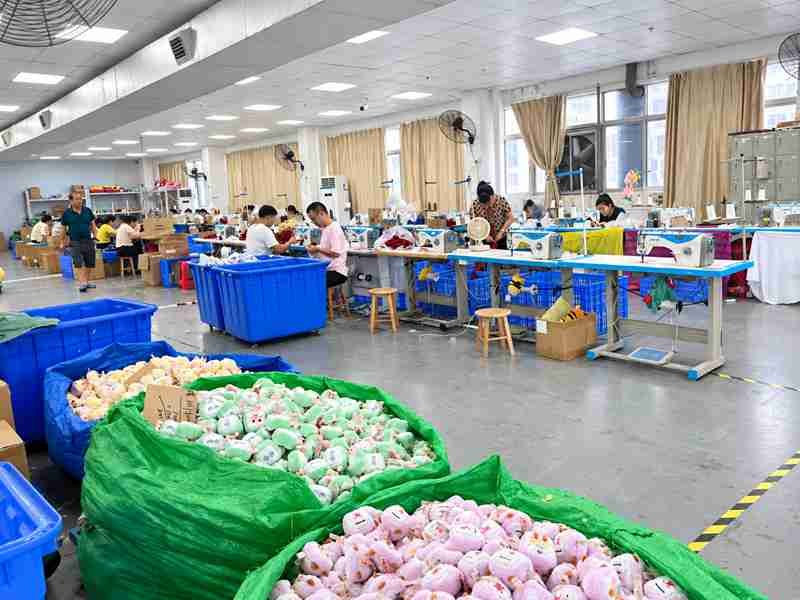
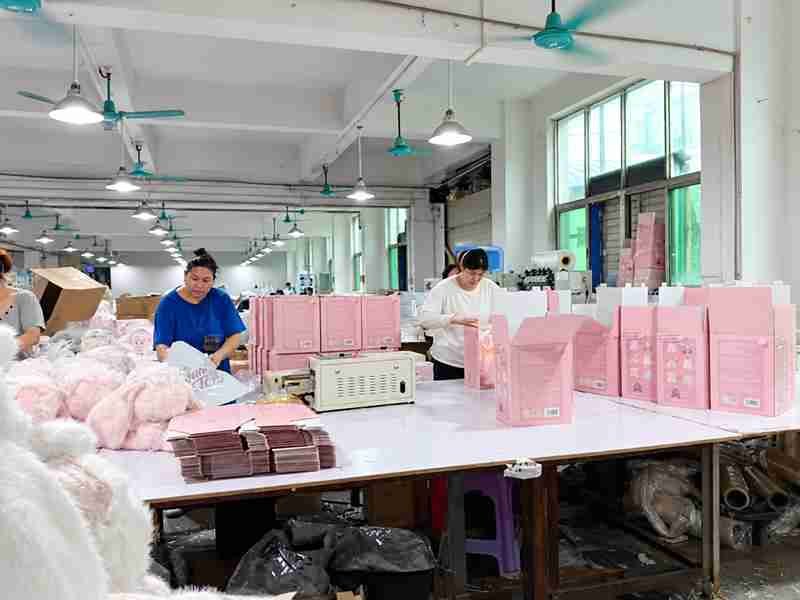
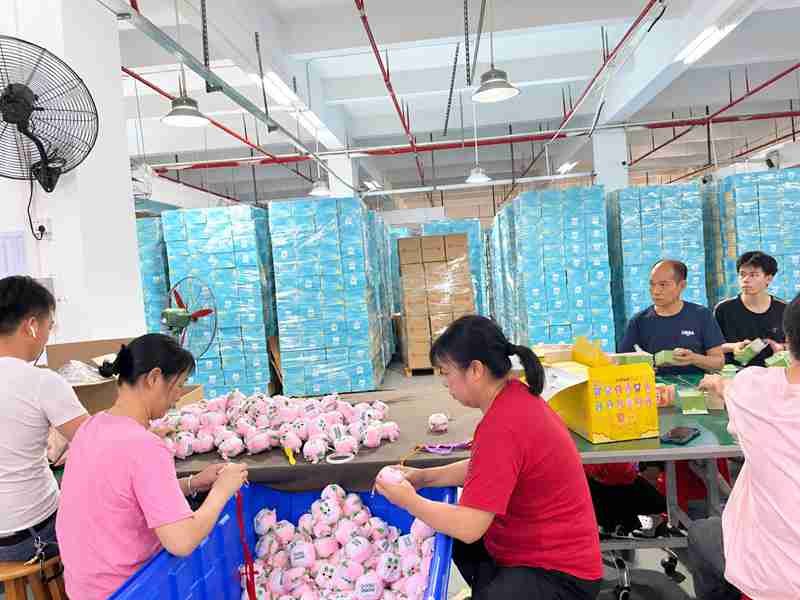
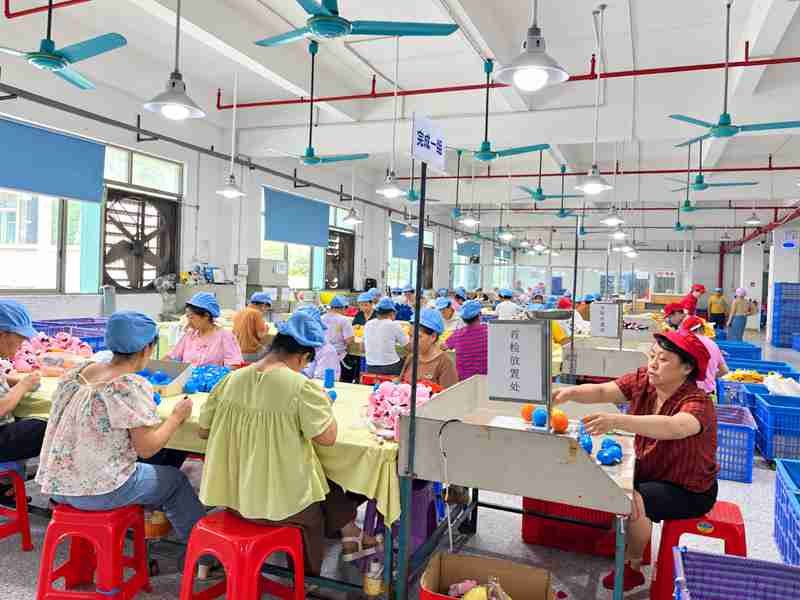
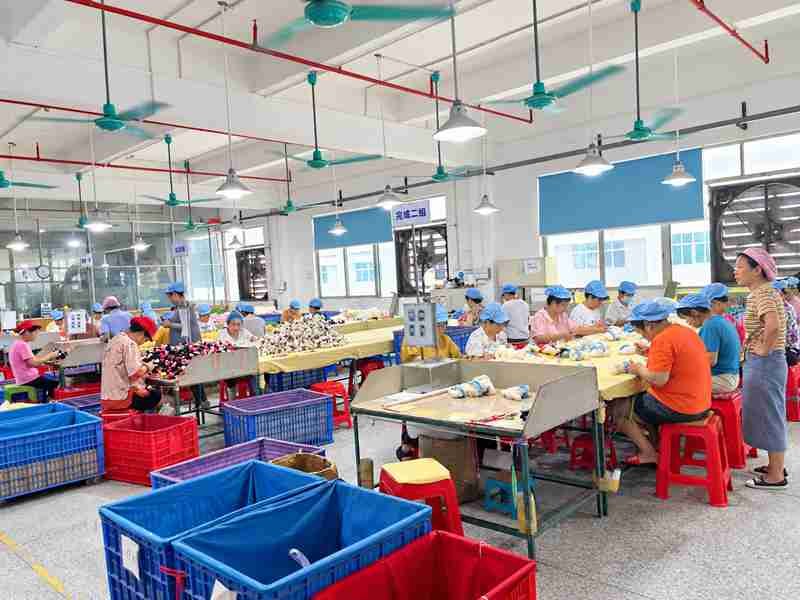
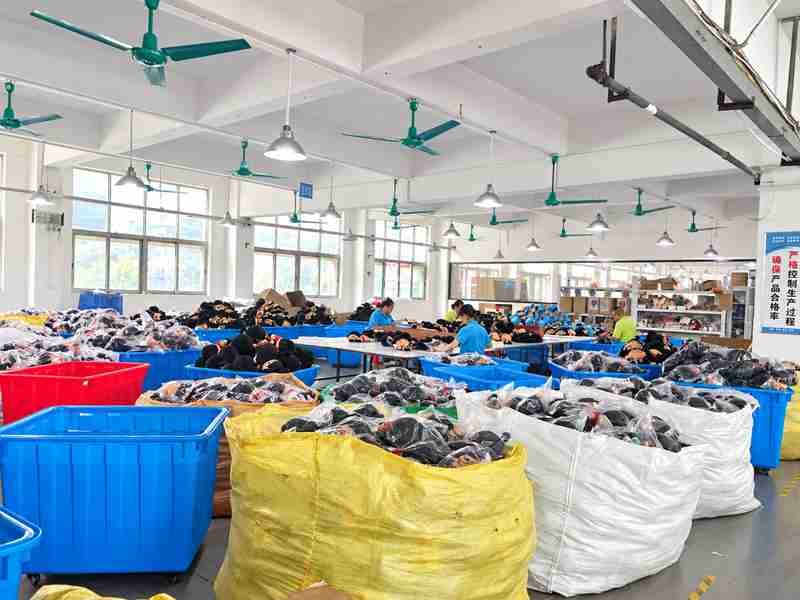
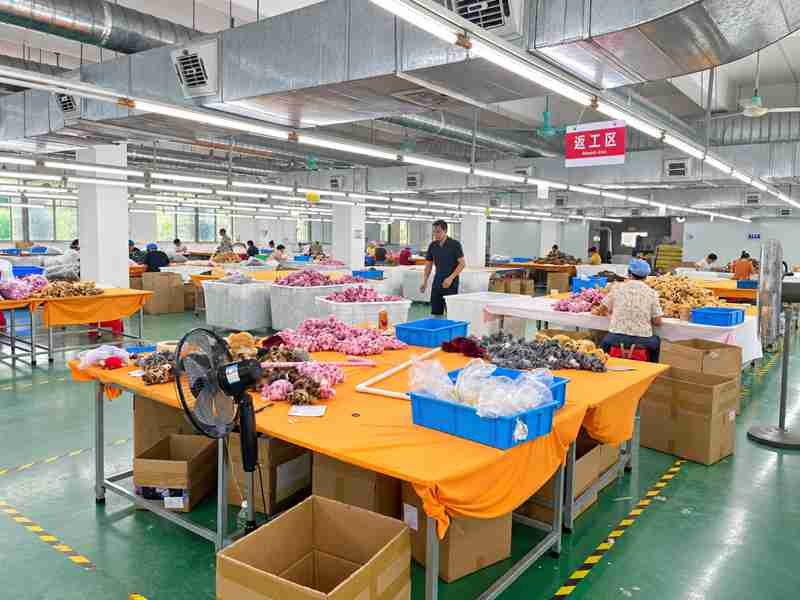
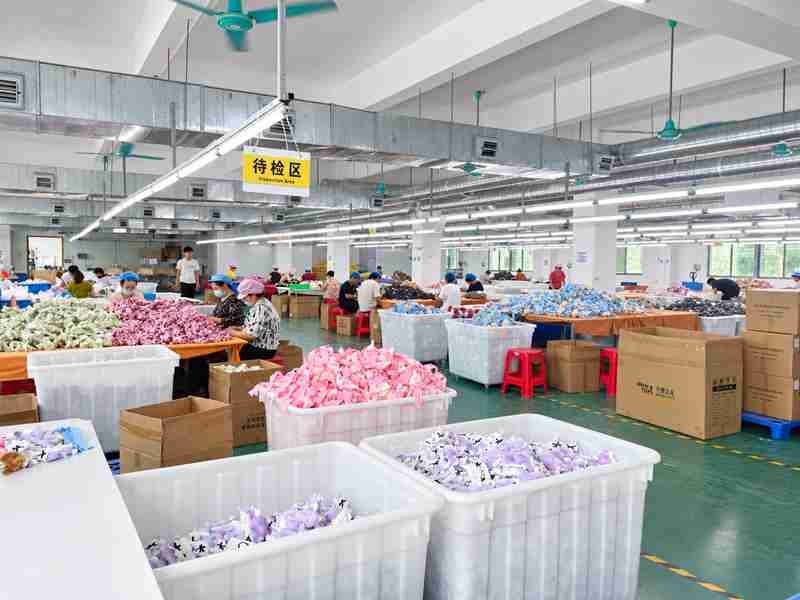
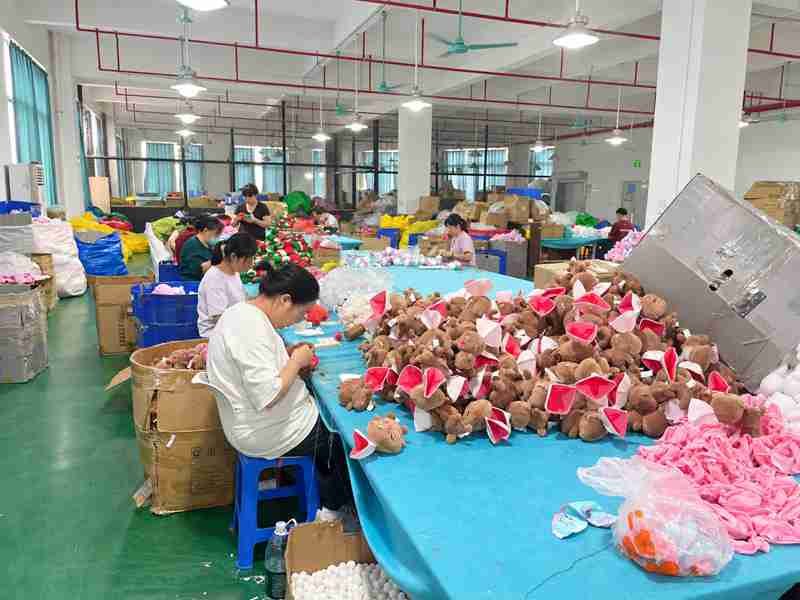
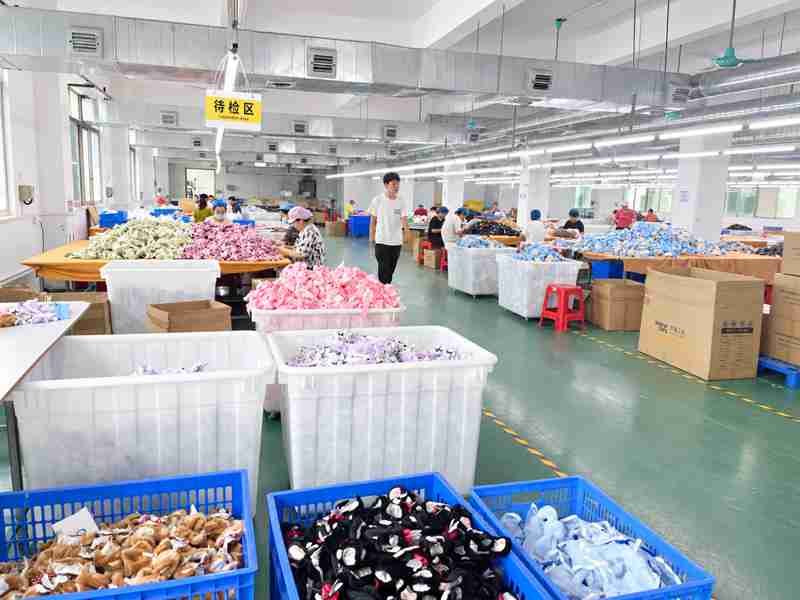
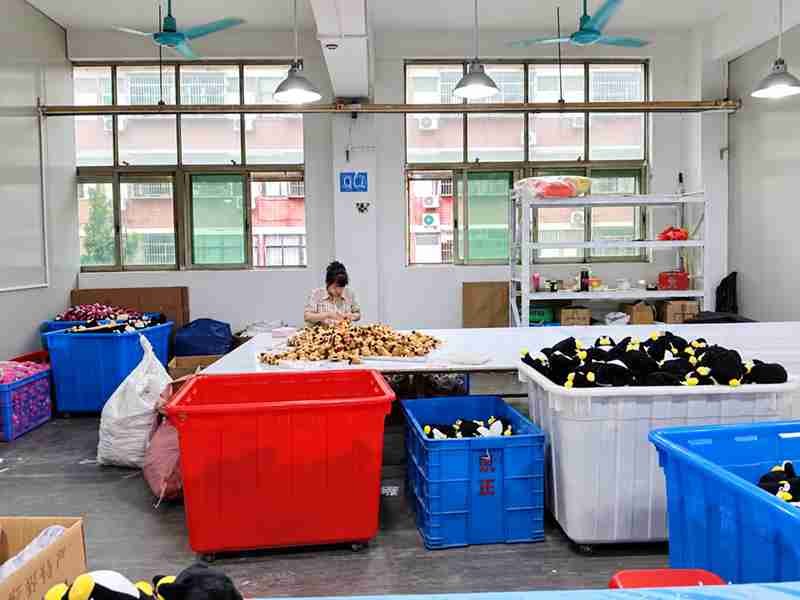
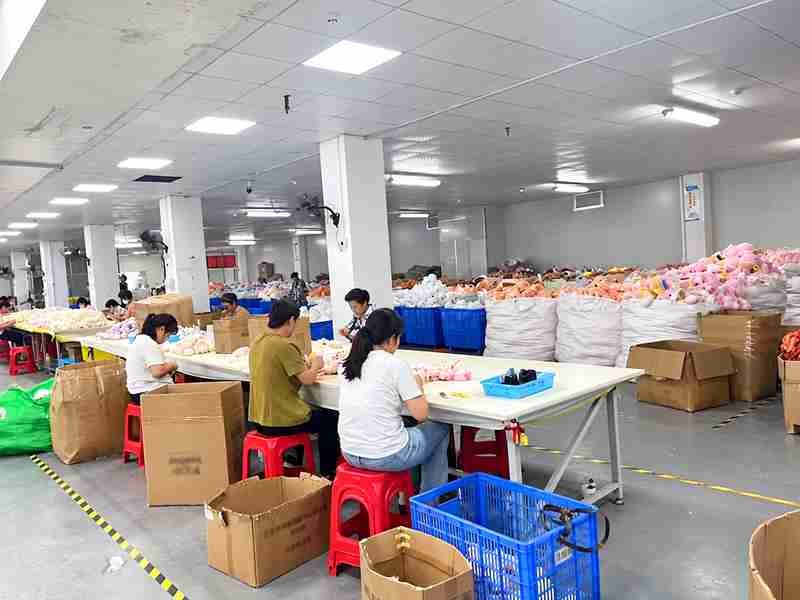
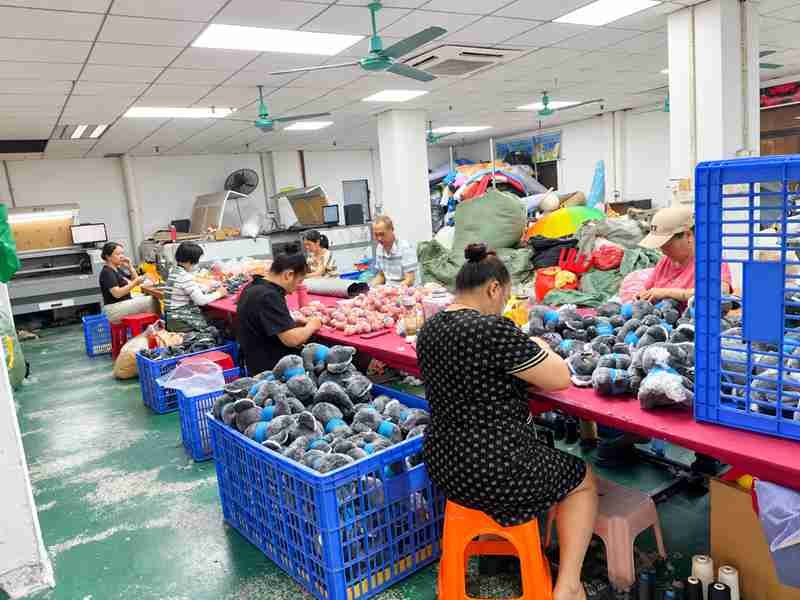
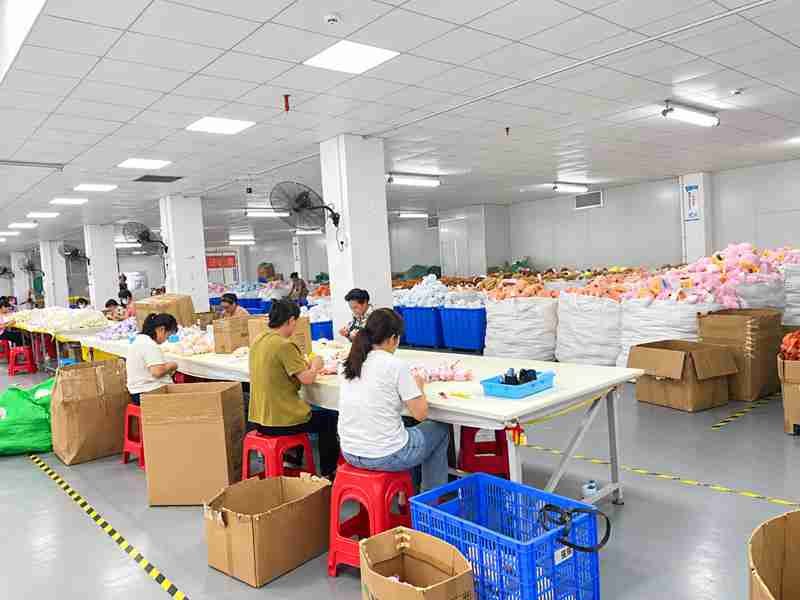
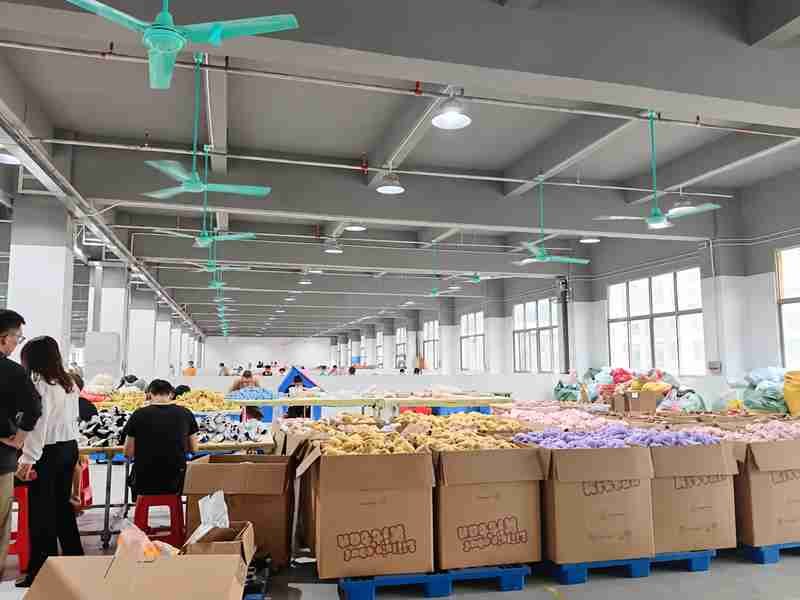
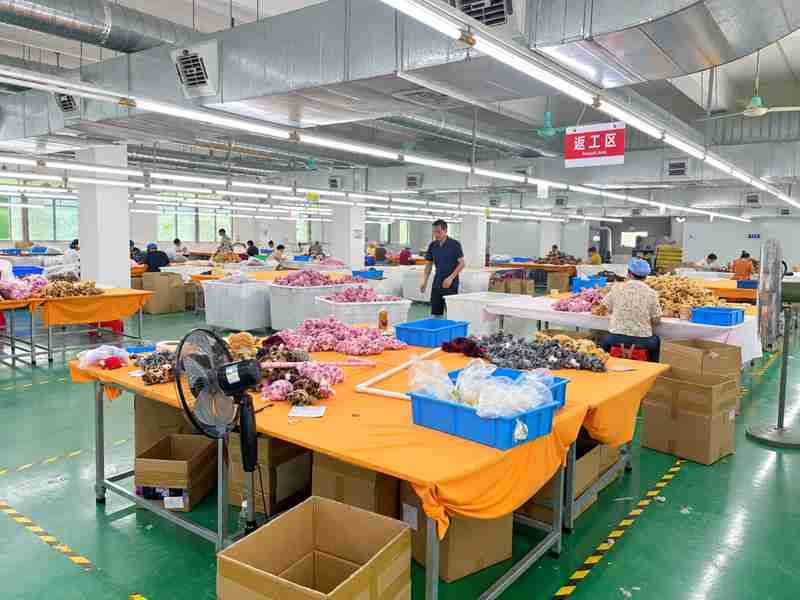
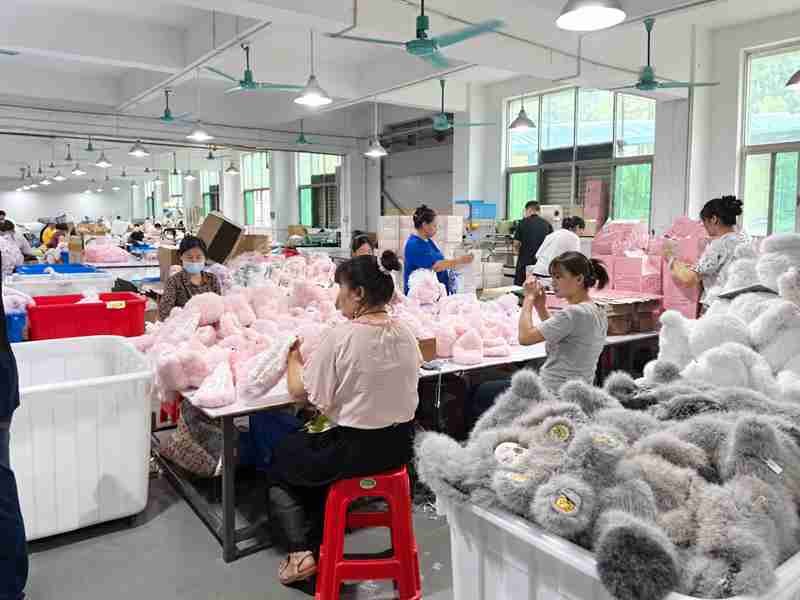
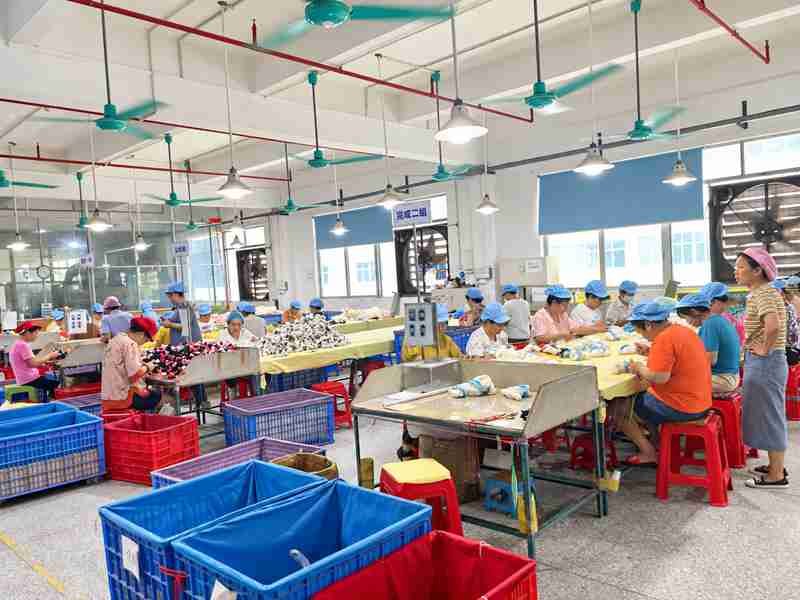
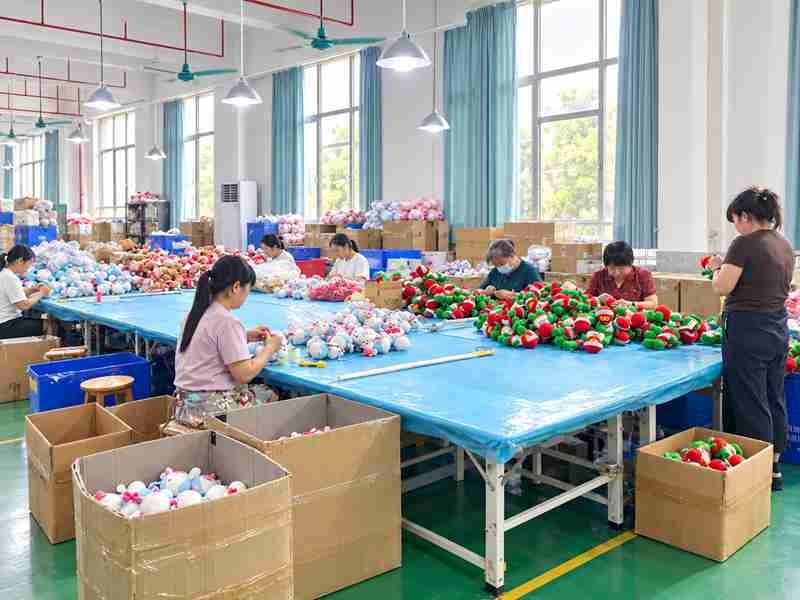
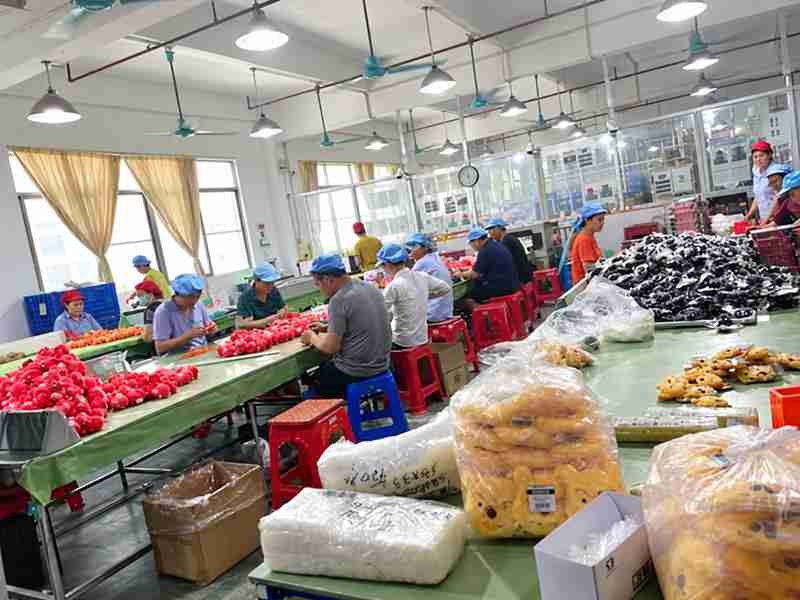
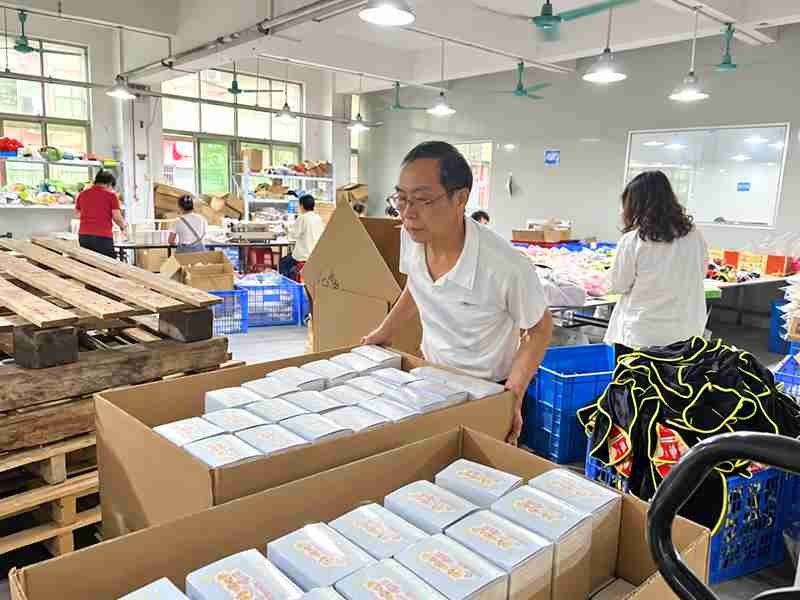
From Prototype to Production: Our Real Plush Factory Show
At Ewintoys, every plush project follows a structured development and production process, from initial design review and pattern making to sampling, mass production, quality inspection, and final delivery. Our real factory images provide a transparent view of how ideas are transformed into high-quality plush products through professional craftsmanship, engineering control, and careful production management.















One Project Window Connects the Required Functions
Project & Account
The project window keeps scope, approvals, timing, commercial assumptions, and open issues visible across functions. It coordinates the next responsible owner when a decision moves from sales into development, sourcing, production, quality, or delivery.
- Value: fewer conflicting instructions.
- Control: current owner, decision, due date, and status.
Product Development
Development translates artwork and requirements into patterns, samples, materials, dimensions, decoration, components, and revisions. The team remains connected when production needs clarification on an approved feature or later change.
- Value: technical context survives the handoff.
- Control: sample versions, development notes, approved references.
Engineering
Engineering focuses on structure, DFM, tolerance, component fit, failure prevention, and repeatability. Complex products need technical decisions before production scheduling alone can solve the project.
- Value: manufacturing risk is identified earlier.
- Control: structure, process, interface, and change review.
Sourcing & Materials
Sourcing connects approved specifications with supplier availability, MOQ, color, lead time, batch, and production timing. A substitution returns to review when it can change appearance, safety, cost, testing, or approved performance.
- Value: fewer silent material changes.
- Control: material ID, approved alternatives, lot and readiness status.
Production & Quality
Production executes the released product definition while quality functions verify incoming materials, critical processes, finished goods, and outgoing preparation. Both teams use the same Golden/BOM/current-file references.
- Value: correction and inspection use one product standard.
- Control: production status, QC gates, defects, CAPA, release.
Packaging & Delivery
Packaging and delivery connect the approved SKU to unit pack, barcode, carton, quantity, destination, and shipment requirements. Channel inputs are included before final packing so commercially correct products leave the factory.
- Value: fewer last-minute repacking and destination errors.
- Control: packaging version, carton data, staging, shipment release.
Packaging and Delivery Remain Part of Product Control
Unit Packaging
Retail Packaging
E-Commerce Prep
Barcode & Labels
Carton Engineering
Global Delivery
Supplier Problems Should Be Diagnosed Before They Repeat
Sample Failure
- First review: artwork, key points, pattern, materials, revision history.
- Goal: stop repeating the same vague comments.
Bulk Mismatch
- First review: approved sample versus released production data.
- Goal: rebuild one controlled product definition.
Testing Failure
- First review: failed item, version, market, materials, construction.
- Goal: redesign or correct before retesting.
Production Delay
- First review: SKU readiness, materials, approvals, process load, packaging.
- Goal: choose wait, replan, split, or scale resources based on facts.
Communication Breakdown
- First review: open issues, versions, owners, approval history.
- Goal: replace scattered messages with controlled decisions.
Capacity Shortage
- First review: product mix and launch requirement.
- Goal: capacity plan based on the actual program.
Certificates, Compliance & Quality Assurance
Ewintoys follows structured quality and compliance practices for custom plush production. We hold relevant certifications and support additional testing, inspection, and compliance documentation based on specific product requirements and destination markets, helping brands meet different international standards with confidence.
























Verify Ewin Before You Approve the Supplier
Development Center
Material Control
Manufacturing Route
QC Capability
Packaging & Warehouse
Project Review
Bring artwork, a current sample, SKU list, QC issue, supplier comparison criteria, or launch plan. An on-site or live video tour can then focus on the exact manufacturing questions your team needs to verify.
Frequently Asked Questions
Ewin combines development, engineering, manufacturing, quality, packaging, and program control, with emphasis on character fidelity, version discipline, sample-to-bulk transfer, and SKU-level execution rather than price alone.