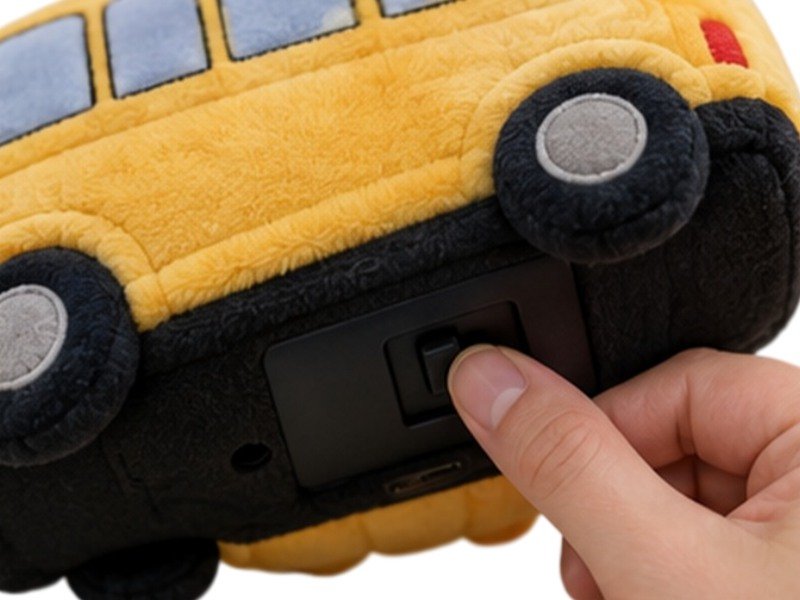
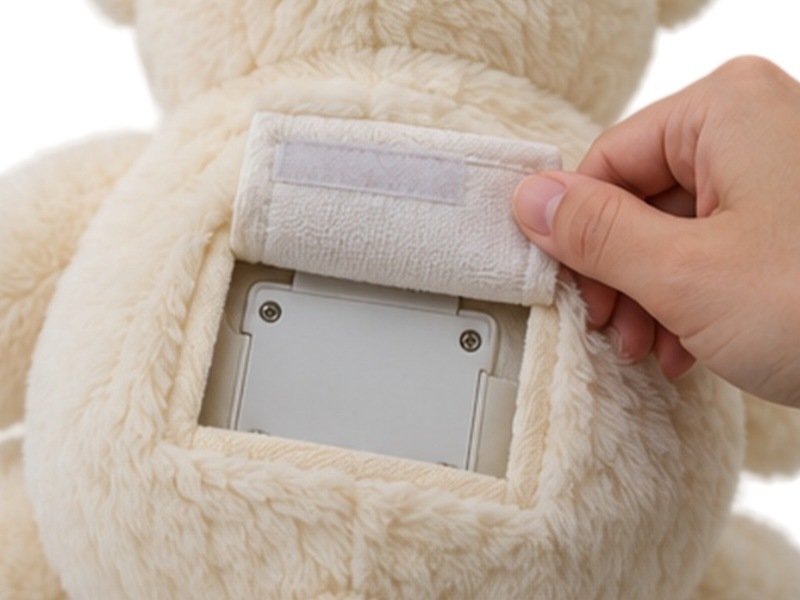
A Trusted China Plush Partner for Global Brands !

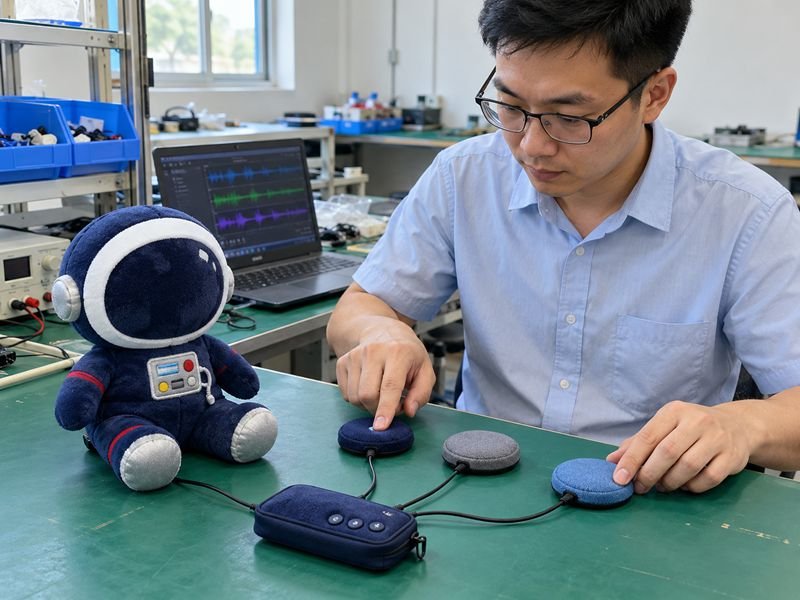
Plush Toy Module Library for Smarter Functional Development

Choose the right electronic function before committing to structure, cost and compliance. Ewin Toys helps brands compare module options around intended interaction, power requirements and plush construction, reducing redesign risk during prototyping.

Sound Modules | Recording Modules | LED Light Modules | Touch Sensors | Motion & Motor Systems | Interactive Modules | Battery & Charging Options | Speaker / Mic Integration | 60+ Product Development Team
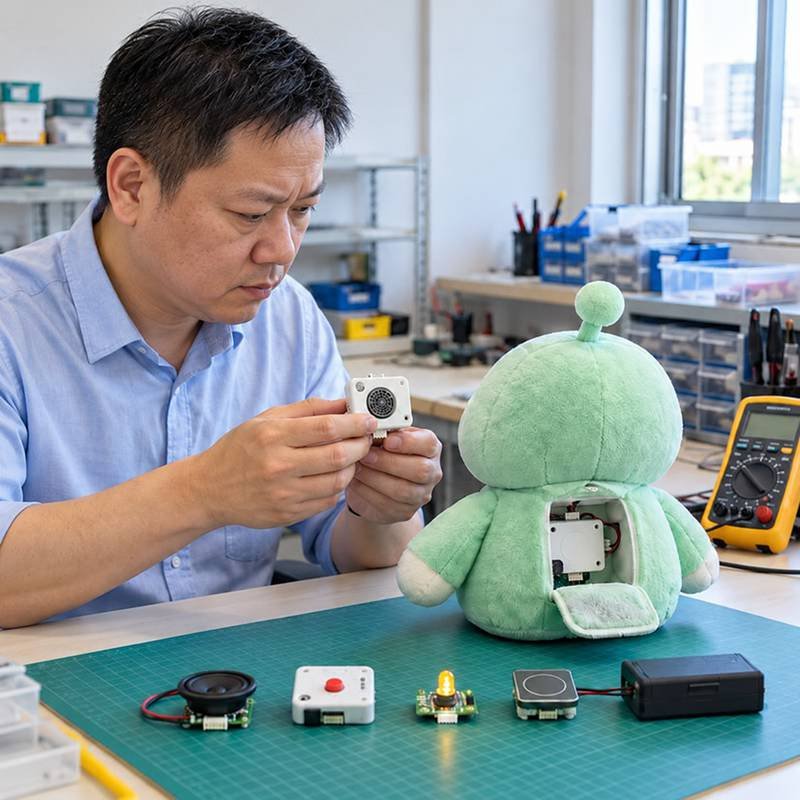
A Functional Module Changes the Entire Plush Product

Electronic functions affect more than interaction; they can change product geometry, softness, access, balance, assembly, testing and packaging.

Product Geometry

A module occupies real internal volume. A speaker, PCB, battery housing or motor may require more head or torso depth, a dedicated cavity, a revised seam route, or a different opening. Product proportions should be reviewed before the exterior sample is treated as final.

Handfeel and Protection

Rigid hardware can create obvious hard points if padding and filling are not planned around it. Ewin reviews module position, surrounding fiber, protective layers and shell clearance so the product can keep an acceptable soft feel without allowing hardware to move inside the body.

User Access

Buttons, switches, microphone areas, battery access and service openings need predictable positions. Fabric thickness, pile, padding and seam placement can change how easily a control is reached, so user access belongs in the pattern and sample review rather than a late assembly decision.

Packaging and Handling

A finished module can be damaged or accidentally activated during packing. Packaging review considers pressure on switches, speaker or microphone openings, connectors, battery areas and rigid housings so the approved plush reaches retail without deformation or avoidable functional problems.

Move From Functional Idea to Production-Ready Module Integration

Ewin turns the desired interaction and approved hardware envelope into a controlled plush structure before bulk manufacturing begins.

Define the Function Before Selecting the Physical Route

A useful brief starts with what the finished plush must do, who will use it, and where the interaction must happen. A talking character, recordable gift, touch-responsive learning toy and AI-enabled companion may all contain a speaker, but their input method, battery access, microphone requirement, module location and service needs are different. Ewin reviews target market, age grade, product size, character geometry, expected interaction, existing hardware and technology ownership before the soft-goods structure is frozen. If the brand already owns a module, useful inputs include revision, dimensions, weight, connector positions, speaker and microphone locations, battery system, switch location and installation orientation. If hardware selection is still open, the development discussion should define the physical requirement first rather than promise an electronic solution that has not been validated. The objective is a clear interface between the functional requirement and the product that will be sampled.

Translate the Hardware Envelope Into Soft-Goods Architecture

Once the hardware envelope is known, the plush needs a physical route that can hold, protect and expose the required functions. Ewin can review cavity geometry, internal pockets, padding, no-fill zones, speaker and microphone openings, button access, cable paths, zipper or hook-and-loop openings, battery access and surrounding pattern geometry. Module location also affects balance and external proportion; a heavy board in a small head may require a different position than the same board in a larger torso. Fabric pile can cover microphone or light areas, while excessive filling can block buttons or press against speaker openings. Pattern, filling and module integration therefore need to be reviewed together. The physical sample should show whether the character still looks correct, whether hard areas are controlled and whether the module can be assembled and inspected without destructive rework.

Freeze One Approved Hardware and Plush Revision Together

Bulk production needs more than a successful prototype. The current module revision, cavity, access opening, fixing method, cable route, padding, filling reference, assembly sequence and function-check points should all belong to the same SKU version. A change to hardware dimensions, connector position, battery housing or sensor location can require a new soft-goods impact review even when the exterior artwork is unchanged. Ewin can link the approved module identity to the BOM, Golden Sample, assembly instruction and QC route so sourcing, production and inspection teams work from one definition. For multi-SKU programs, shared modules can reduce repeated engineering, but every character still needs confirmation that fit, balance, access and exterior shape remain correct. Production release should occur only after unresolved module or compliance changes are closed, preventing an obsolete hardware revision from entering an otherwise approved plush product.

Plush Product Types That Commonly Use Functional Modules
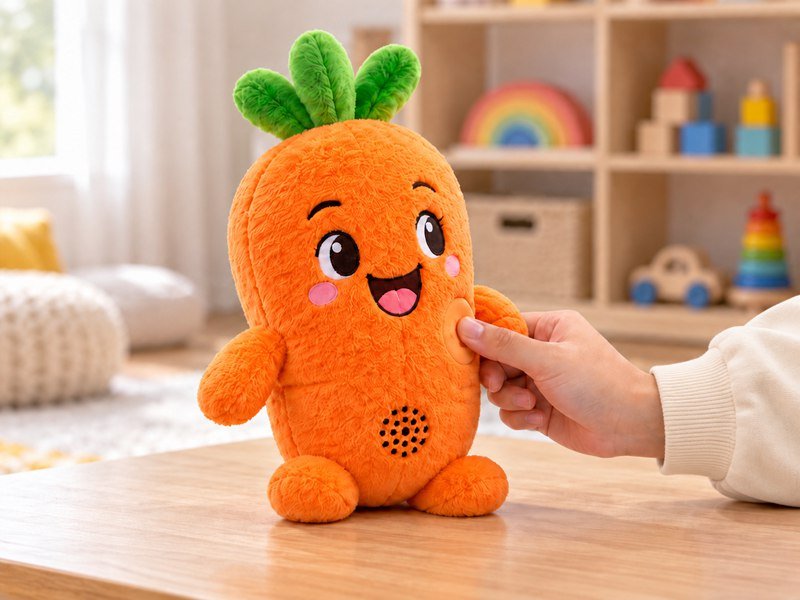
Different plush formats create different requirements for cavity size, controls, audio, movement, power, balance and service access.

Talking Character Plush

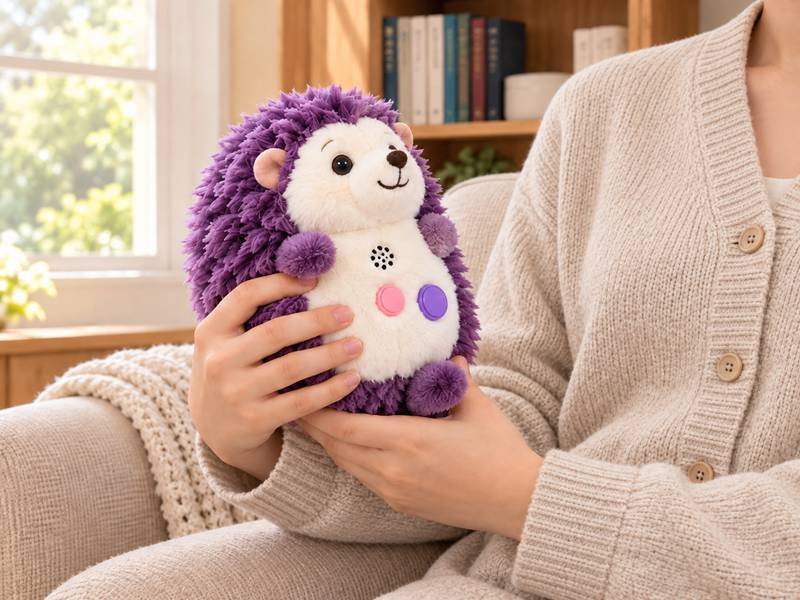
Pre-recorded speech, music or sound effects can turn a licensed character or mascot into an interactive product. Speaker placement, trigger access, module retention and surrounding filling need to preserve the approved silhouette while keeping sound output usable.

Recordable Plush

Record-and-playback products add a microphone, user control and playback path. The shell must provide clear access without exposing hard parts unnecessarily, while the module revision and recording behavior remain tied to the approved sample.

Educational Plush

Learning products may combine voice prompts, buttons, touch zones or other approved sensors. Product size, label instructions, control position and age grade influence both the physical architecture and the testing route selected before production.

Electronic Collectible Plush

Collectibles may use restrained sound or light features without sacrificing display quality. Ewin can protect module placement, premium fabrics, pose, packaging condition and access so electronic hardware does not dominate the visual design.

Moving Plush

Motorized or vibration-based concepts require clearance, internal support, noise review, power planning and protection from surrounding fabric and filling. Movement should be proven in the finished sample rather than assumed from a bench-tested mechanism.

Sensor-Responsive Plush

Touch, pressure, motion or brand-supplied sensors need predictable placement inside a soft product. Padding, fabric thickness, pattern geometry and control zones are reviewed so the input can be reached and repeated consistently.

Smart Companion Plush

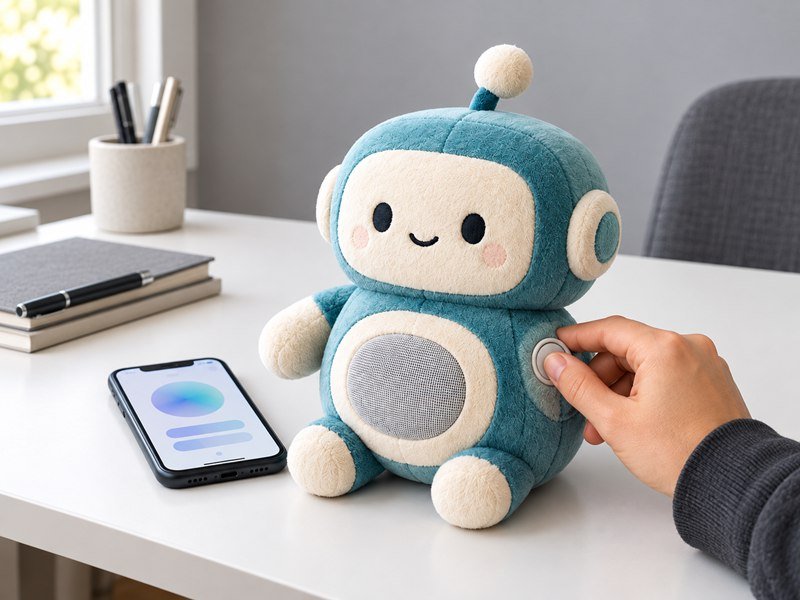
Companion concepts can combine microphone, speaker, buttons, sensors, batteries and a supplied smart module. Ewin focuses on the physical plush architecture, module protection, access, assembly and manufacturing controls around the approved technology.

AI-Enabled Plush

AI-enabled plush can use an approved hardware system with microphone, speaker, battery and wireless functions. Firmware, applications, AI models, connectivity and cloud services may remain with the brand or specialist partner while Ewin manages soft-goods productization.

Different Teams Need Different Module Integration Evidence

A successful functional plush program must answer design, engineering, compliance, procurement, technology and repeat-production questions for several internal teams.

Global Toy Brands

Large toy brands need repeatable hardware identity, controlled revisions, documented assembly, finished-product function checks and market-specific compliance planning. A working sample is useful only when the same module and integration route can be transferred into bulk production.

IP Owners

IP owners usually protect character proportion, expression, voice positioning and signature features. Module size, speaker openings, switches or access panels should support the licensed character instead of forcing visible design compromises that were never approved.

Game Entertainment Studios

Game and entertainment teams may bring character audio, voice logic or digital assets while relying on Ewin for physical productization. The plush needs enough internal space and control access without losing the recognizable character silhouette.

Education Brands

Educational teams often need predictable control placement, clear audio, repeat use and age-appropriate product architecture. Functional review should connect the learning interaction with the final hardware, instructions, labeling, testing route and production version.

Collectible Brands

Collectible programs value surface quality, pose, premium materials and display condition. Electronic features must therefore be integrated with controlled openings, limited hard points and protective packaging instead of turning the product into a visibly technical device.

Retail Private Label

Retail programs need clear cost, module availability, target-market testing, packaging, labeling and replenishment planning. Ewin can keep the approved hardware revision connected to the product definition so later reorders do not silently receive a different internal system.

Technology Companies

Technology companies may already own a PCB, sensor, speaker, battery or wireless architecture but need a plush manufacturing partner. Ewin can translate the approved hardware envelope into cavity, padding, pattern, filling, assembly and QC requirements.

AI Product Teams

AI product teams may own firmware, apps, models and cloud services while needing a scalable physical product. Clear ownership of hardware, software and compliance responsibilities prevents gaps between the technology stack and the finished plush manufacturing route.

Sound Playback Modules for Character Voice and Audio
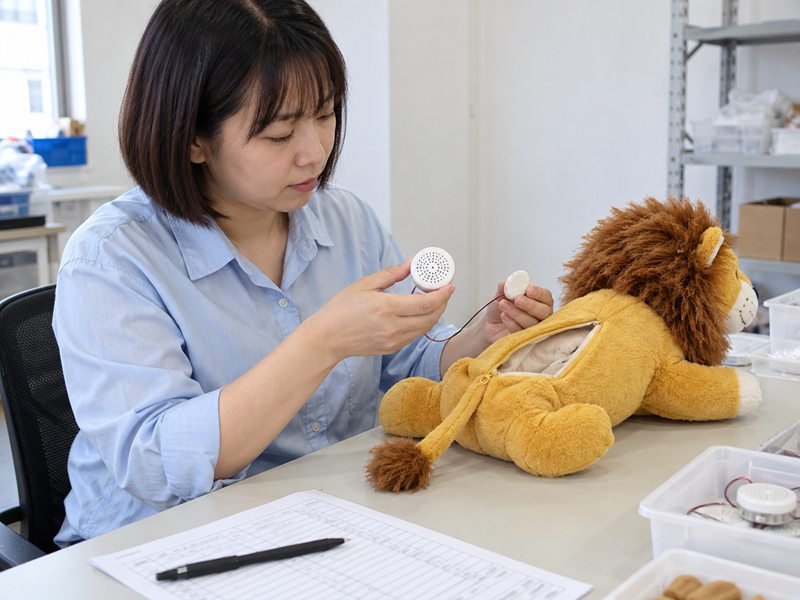
Sound functions should be selected around playback behavior, trigger method, speaker position, product size and the approved audio experience.

Pre-Recorded Playback

A fixed playback module can deliver character phrases, music or sound effects when the product needs a defined audio set. Integration review covers module size, speaker area, control method, access, retention and how surrounding filling affects output.
Plush Toy Safety Testing Standards for Global Markets

Multi-Sound Playback

Projects with several audio files may require a specific trigger sequence, memory capacity or control layout supplied by the hardware solution. Ewin focuses on fitting the approved module into the plush while keeping user controls and speaker output accessible.

Triggered Sound

Sound can be activated through an approved button, squeeze trigger, sensor or other control route. Trigger position needs to remain easy to find through the fabric without creating a hard area or shifting during repeated handling.

Recording and Voice Modules Need Clear Input and Access

Recording functions add microphone placement, user controls and service requirements beyond ordinary one-way sound playback.

Record and Playback

Recordable products need a defined method for recording, saving and replaying audio according to the selected hardware. Ewin reviews microphone access, button position, module fit, speaker output, battery access and finished-product handfeel around the approved module.

Microphone Input

Microphone performance can change when thick fabric, long pile, dense filling or poor opening placement covers the input area. The physical product should provide a controlled acoustic route without creating an unnecessarily visible technical opening.

Character Voice Playback

Brand-supplied character audio can be integrated into an approved playback system once file and hardware responsibilities are clear. Sampling should verify volume, speaker alignment, trigger behavior and whether the finished exterior remains faithful to the character design.

Light and LED Modules Need Fabric-Aware Placement
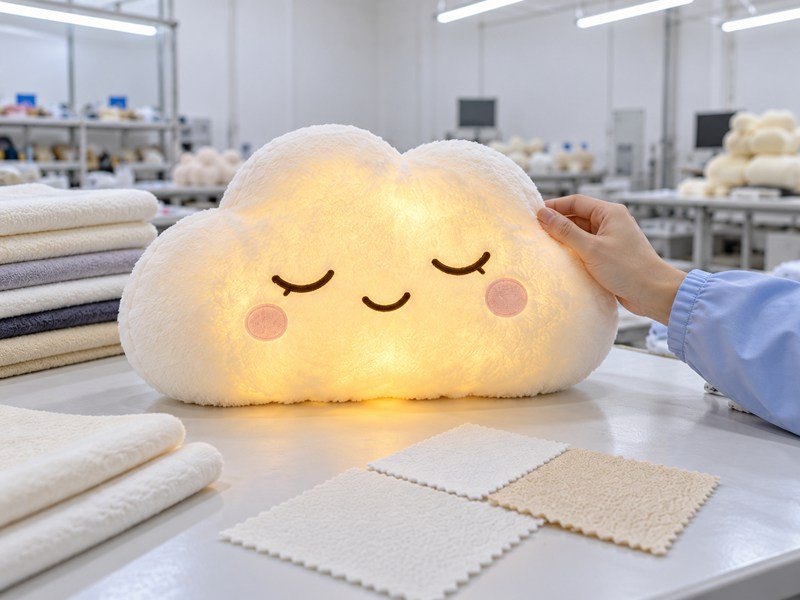
Visible light depends on module position, fabric thickness, color, diffusion, power and the exact area intended to illuminate.

Internal LED Lighting

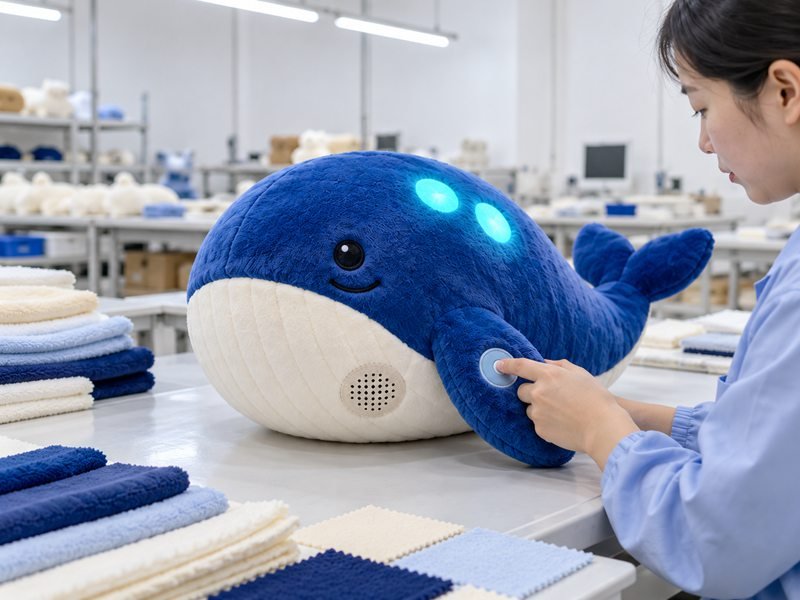
LEDs placed behind fabric need enough brightness and suitable diffusion to remain visible without creating a concentrated hard point. Sampling checks the actual outer material because pile, backing, color and thickness can change the perceived result.

Localized Light Zones

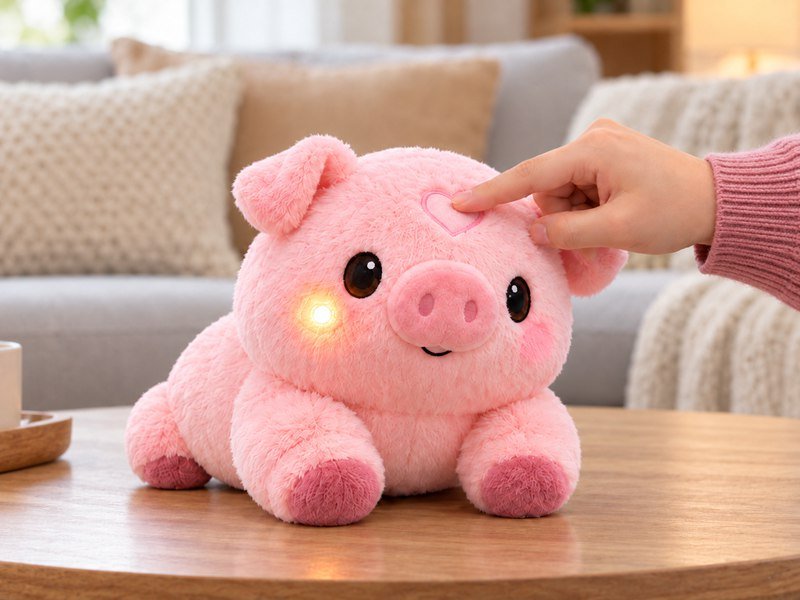
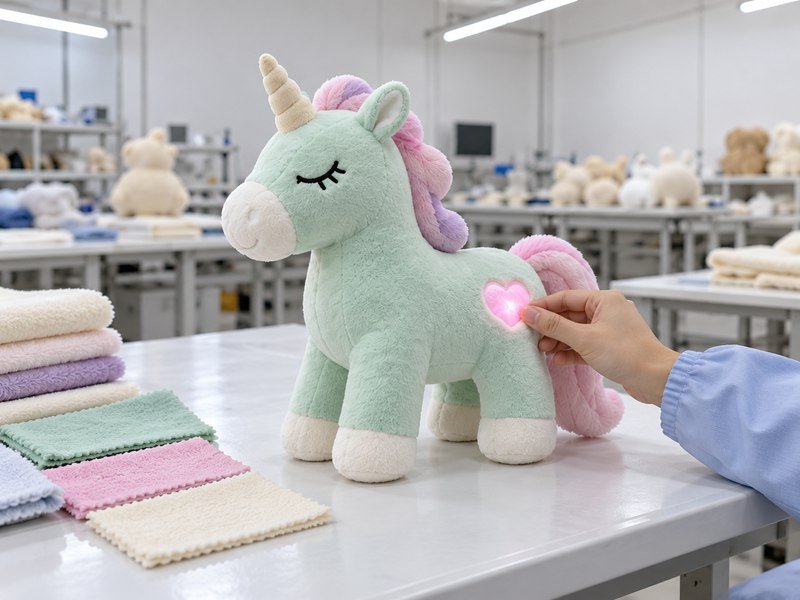
Eyes, badges, hearts, accessories or other local areas may use a focused light feature. The light source, diffuser, internal support, wire route and exterior alignment should be developed together so the feature stays correctly positioned.

Combined Sound and Light

Projects can combine approved sound and light hardware when the selected module supports the required behavior. Ewin reviews internal space, power demand, openings, control access and assembly sequence around the finished plush configuration before release.

Touch and Sensor Modules Create New Soft-Goods Interfaces

Sensor-based interaction needs controlled placement through flexible fabric, padding and filling rather than relying on electronic performance alone.

Touch Input

A touch sensor should sit in a location users can find and activate consistently. Fabric pile, thickness, embroidery, appliqué, padding and internal movement can change sensitivity, so the integrated sample is the real approval reference.

Pressure Input

Pressure-sensitive functions can be placed in hands, paws, body zones or other approved locations. The trigger needs enough local compression to respond without making the surrounding product feel rigid or visibly deformed.

Motion Input

A supplied motion sensor can respond to movement or handling, but orientation and retention matter. The module should remain in the approved position so repeated movement does not change behavior or cause internal impact against the shell.

Squeeze Trigger

Squeeze activation can use a dedicated switch or sensor under a soft body area. The surrounding filling should provide enough support for activation while still matching the intended handfeel and product shape.

Button-Linked Sensor

Some products use a visible or hidden button connected to an electronic input. Button travel, fabric layers, padding and local seam placement need review so activation remains clear through repeated handling.

Brand-Supplied Sensor

When a technology partner supplies a specific sensor, Ewin can engineer the soft-goods interface around its dimensions, orientation, access, protection and connection route. Electronic performance remains within the agreed technical responsibility scope.

Movement Modules Need Space, Support, Power and Protection

Motorized functions should be reviewed inside the final plush structure because fabric, filling, balance and internal supports can restrict movement.

Vibration or Simple Motion

Small movement concepts may use vibration or other approved compact mechanisms. Ewin reviews internal support, local padding, module retention, noise transfer, product balance and whether the motion distorts the character or creates an uncomfortable hard area.

Controlled Mechanical Movement

A module designed to move a head, limb or other feature needs physical clearance and a compatible soft-goods structure. The mechanism, support points, seam routes and surrounding fabric should be proven in a functional engineering sample before scale-up.

Brand-Supplied Motor System

When a brand or technology partner provides the motor system, useful inputs include dimensions, weight, motion envelope, power requirement, mounting points and moving-part clearances. Ewin can review the plush architecture and manufacturing route around the approved mechanism.

Buttons, Switches and Controls Must Work Through Soft Materials

Controls need predictable travel, position and user access even when fabric, pile, padding and filling sit between the hand and hardware.

Press Buttons

A press button should be easy to locate and activate without requiring excessive force. The final sample confirms local padding, fabric layers and housing position rather than approving the control only before it is installed.

Squeeze Controls

Squeeze controls can be hidden inside a hand, paw or body zone. Filling distribution and button placement need enough local support to activate reliably while preserving the approved softness and exterior contour.

Hidden Switches

A concealed switch can protect visual appearance but still needs a defined location and access method. Production instructions should show orientation and position so operators do not bury the control under excessive filling.

External Service Switches

Some products require an accessible on/off or mode control. The opening, cover, label and surrounding structure should protect the module while keeping the switch reachable for the intended user or service process.

Touch Control Zones

Touch-sensitive areas can be integrated under suitable fabric where the approved sensor supports the interaction. Surface decoration, pile and padding should not be changed later without checking the functional response again.

Access Covers

Zippers, hook-and-loop flaps or other approved covers can provide access to modules or battery areas. Closure position, appearance, child access, durability and compliance implications should be reviewed before the exterior design is frozen.

Speaker and Microphone Placement Shape the Audio Experience

Audio modules need clear physical routes through fabric, filling and product geometry so sound input and output survive final assembly.

Keep the Speaker Area Clear Without Creating a Hard Spot

A speaker can work correctly on a bench and still sound weak after it is buried behind dense filling or an unsuitable fabric stack. Ewin reviews speaker diameter, housing position, required opening or acoustic path, local padding and surrounding fiber so output can reach the exterior while the user does not feel an exposed hard edge. Long pile, thick backing and layered clothing can also affect the path between speaker and listener. The visual design may require a hidden route rather than an obvious hole, so the engineering sample should compare appearance and sound together. If a module or speaker position changes later, the cavity and filling reference may also need revision. Production instructions should identify the speaker orientation and protected zone so bulk assembly does not rotate the part or pack fiber directly across the intended output area.

Give the Microphone a Predictable Input Route

A microphone needs access to the surrounding voice environment, but plush surfaces can muffle or scatter input. Ewin can review microphone position, nearby fabric, pile direction, opening geometry, padding, clothing and cavity space around the approved hardware. A microphone placed deep inside a dense head may perform differently from the same component located near a controlled mesh or thin-fabric area. The final position should also remain protected from loose fiber and internal movement. Sampling should verify the microphone after the shell is filled and closed, because the finished product is the real acoustic condition. If the technology partner defines sensitivity, beam pattern or software processing, those electronic specifications stay within the agreed technical scope while Ewin controls the physical route and repeatable assembly position.

Keep Audio Hardware Synchronized With the Plush Revision

Speaker, microphone and module revisions need to remain linked to the same product version. A new speaker thickness, microphone connector, cable length or housing can affect cavity depth, seam clearance, padding, balance and installation sequence even when the electronics still perform correctly. Ewin can map the approved audio hardware to Part or Module ID, revision, orientation, cavity, access route and function-check point. During bulk production, operators should use the current work instruction rather than a previous sample from memory. The finished function check can confirm playback, input access and obvious exterior deformation after the product is assembled. For multi-SKU ranges using one common audio system, each character still needs fit and acoustic verification because different head shapes, fabrics, clothing and fill densities can change the physical conditions around the same hardware.

Battery and Power Architecture Must Be Planned Early

Power hardware affects product size, access, labeling, safety review, serviceability, weight and the sequence used to close the plush.

Define the Approved Power Hardware Before Pattern Freeze

Battery type, holder or compartment dimensions, cable positions, switch arrangement and charging or service requirements should be defined with the electronics owner before the final plush pattern is released. Ewin does not need to own the battery-system design to engineer the physical product around it. The approved hardware envelope determines cavity size, access opening, local reinforcement, padding and possible label placement. A battery system can add noticeable weight to a small head or limb, so balance and handfeel should be reviewed in the real product. If the selected module changes from one power system to another, the impact is not limited to sourcing; shell geometry, opening size, instructions, packaging and compliance may all need review. Production should therefore use a controlled power-hardware revision rather than a generic description such as “battery module.”

Build Access Around the Intended User and Compliance Route

Some projects require a serviceable or replaceable battery arrangement, while others use a sealed or brand-controlled system. The correct route depends on product classification, age grade, target market and the approved electronics architecture. Ewin can engineer zippers, flaps, internal pockets, protective layers and surrounding seams around the specified access requirement. The access method should not create an unintended weak point, visible bulge or path for filling to escape. Where screws, rigid covers or other battery-compartment features are part of the product, their position and accessibility should be included in the testing and compliance plan. Instructions and labels also need to match the actual power system. Access should be approved in the finished functional sample rather than added only after the exterior plush has already been signed off.

Protect Power Components During Assembly and Packaging

Power parts, connectors and cables need protection from pulling, pinching, sharp folds and excessive pressure during filling, closing and packing. Ewin can define cable routes, local padding, no-fill areas and installation order so the module is not forced into position after the body is already full. Function checks should confirm that the product powers on, controls remain reachable and the hardware has not shifted during assembly. Packaging also needs review because carton pressure can press a switch, deform a battery housing or concentrate force through a rigid component into the outer fabric. If the product ships with a removable tab, service instruction or other power-control feature supplied by the electronics design, its position should remain visible and consistent. Bulk QC should use the current module and battery revision tied to the released SKU.

Wireless and AI Plush Need Clear Responsibility Boundaries

Connected products work better when plush manufacturing, hardware, firmware, software, wireless and cloud responsibilities are assigned before development is frozen.

Ewin Engineers the Physical Product Around the Approved Smart Hardware

Ewin can develop the plush shell around an approved smart module that uses microphones, speakers, sensors, batteries, buttons or wireless hardware. Soft-goods work can include cavity geometry, padding, speaker and microphone routes, service access, cable accommodation, retention, filling zones, garment clearance and finished-product balance. The character should not be distorted simply to make space for electronics, so module location and body geometry need to be reviewed together. If the technology system requires an antenna or other wireless-sensitive area, the hardware owner should provide the physical constraints needed for integration. Ewin can then keep surrounding materials and structure consistent with the approved product design. The engineering sample should prove module fit, physical interaction and user access before the exterior product becomes the Golden reference for mass production.

Keep Firmware, Applications, AI Models and Cloud Ownership Explicit

Ewin’s core role is plush product development and manufacturing. Firmware, mobile applications, AI models, cloud services, connectivity logic, data services and other specialist technology can remain with the brand or an approved technology partner unless a separate scope has been confirmed. Clear ownership prevents a common problem in smart-toy development: each team assumes another party is validating the same requirement. The technology owner can define electronic performance, software behavior, network architecture and module-level specifications, while Ewin translates the approved hardware into a manufacturable soft product. Project documentation should identify who owns PCB revision, firmware release, app compatibility, wireless configuration, AI behavior and compliance evidence. The plush BOM and Golden Sample should reference the physical module revision that has actually been validated, not a generic “AI module” name that could hide a later hardware change.

Synchronize Hardware Changes With the Soft-Goods Revision

A smart-module update can affect the plush even when software improvements seem unrelated to the exterior design. New connectors, a thicker battery, different microphone position, heavier speaker, revised antenna area or altered board dimensions can require changes to cavity shape, access, padding, cable routes, filling, packaging and assembly instructions. Ewin can review each hardware change for soft-goods impact before it reaches production. If the change affects mechanical safety, access, battery arrangement, wireless function or another tested condition, the compliance route may also need an impact assessment. Multi-SKU programs benefit from a shared revision matrix showing which characters use each hardware version. Release control should prevent old and new smart modules from being mixed inside the same production lot unless the affected product definitions have been reviewed and approved.

Define Every Module With a Complete Engineering Record

A controlled module record keeps development, sourcing, technology partners, assembly, testing and repeat production aligned to one hardware definition.

Module FieldWhat It ControlsWhy It Matters
Module IDUnique hardware identityPrevents similar modules from being substituted informally
RevisionCurrent approved versionKeeps old hardware from entering a released SKU
DimensionsCavity envelopeChanges pattern depth, access and surrounding filling
WeightProduct balanceCan shift pose or create head-heavy designs
Speaker PositionAudio output routeNeeds clearance from dense filling and unsuitable fabric layers
Microphone PositionAudio input routeNeeds predictable access through the finished shell
Sensor PositionInteraction zonePlacement affects response and repeatability
Control PositionUser activationButton or switch must remain reachable after filling
Battery SystemPower architectureAffects space, access, labels and compliance review
Connector PositionService and cable routeCan require a different opening or pocket
Cable RouteInternal protectionReduces pinching, pulling and movement during assembly
Mounting MethodRetentionControls module movement inside the plush
Padding RequirementHard-point isolationProtects handfeel and outer fabric
Function CheckProduction verificationDefines what must work after final assembly
SKU MappingProgram controlShows which product uses which hardware revision

Engineer the Plush Shell Around the Module Interface

The module and the soft shell must work as one product; cavity, padding, filling, access and pattern geometry cannot be developed separately.

Build a Cavity That Holds the Module Without Distorting the Character

Cavity engineering starts with the approved hardware envelope rather than a generic internal pouch. Ewin reviews module dimensions, weight, orientation, mounting points, connectors and required clearance against the target character geometry. A module in the head may change face volume or neck balance, while the same system in the torso may affect sitting posture or clothing fit. Internal pockets, support pieces or protective layers can be designed to keep the hardware in position while allowing assembly and inspection. The cavity should not be so tight that connectors or housings press through the fabric, nor so loose that the module shifts during handling. Pattern seams and openings also need enough access for operators to install the hardware without forcing it through a small turning gap. The approved engineering sample becomes the reference for cavity size, position and exterior result.

Control Padding and Filling Around Hard Hardware

Padding and filling influence both comfort and function. Too little protection can make the user feel the edges of a speaker, PCB or battery housing through the shell; too much fiber can block controls, cover audio openings or push the module away from its intended position. Ewin can define protected zones, no-fill areas and local filling references around the approved hardware. The surrounding material should also prevent loose fiber from entering openings or connectors where the design requires isolation. Large rigid modules may need broader load distribution so pressure does not concentrate on one small surface area. For sensor or button zones, the fill level may need to remain controlled so the input can still be activated through the soft exterior. Handfeel is therefore verified in the complete functional sample rather than judged from the loose padding or module alone.

Design Access and Pattern Openings Before the Exterior Is Frozen

A functional product may need a zipper, hook-and-loop flap, service opening, battery interface, control window, speaker area or microphone route. These features affect seam location, garment overlap, decorative artwork and product appearance, so they should be planned before the pattern reaches final release. Ewin can place openings where operators can install and inspect the hardware while minimizing visual disruption to the character. The access route also needs to match the intended user and compliance plan; a service opening for adult maintenance is not the same requirement as a user-accessible control. If module access changes after sampling, the new opening may alter structural strength, small-parts exposure or tested conditions. Final approval should therefore link the exterior pattern, access method, module revision and compliance status to the same product version.

Sample Development Proves the Module Inside the Finished Plush
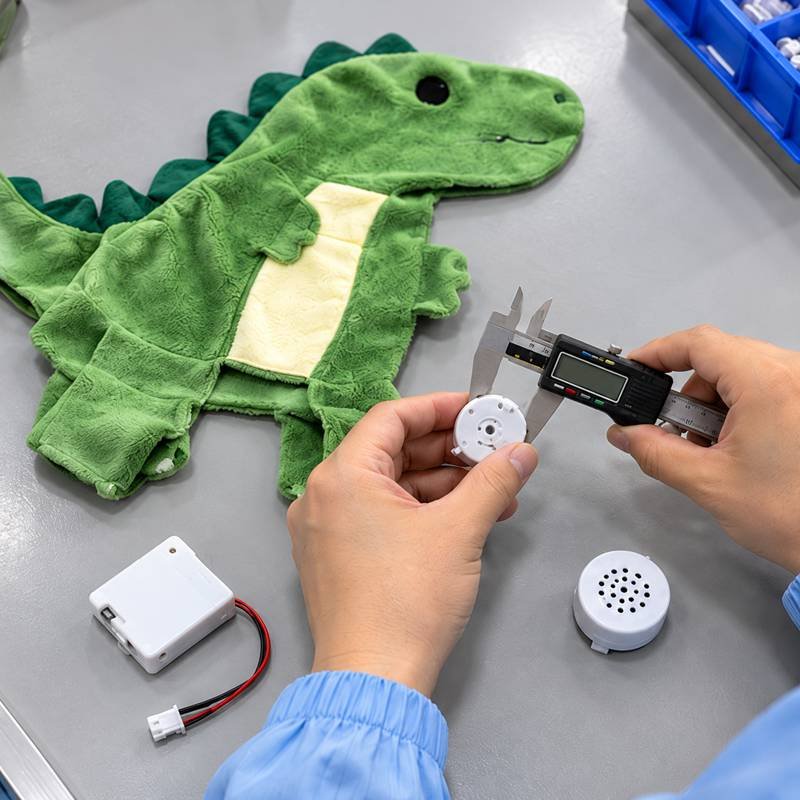
Functional sampling should validate the integrated product, not only the hardware operating on a bench before installation.

Review the Module and Interface Inputs Before Building V1
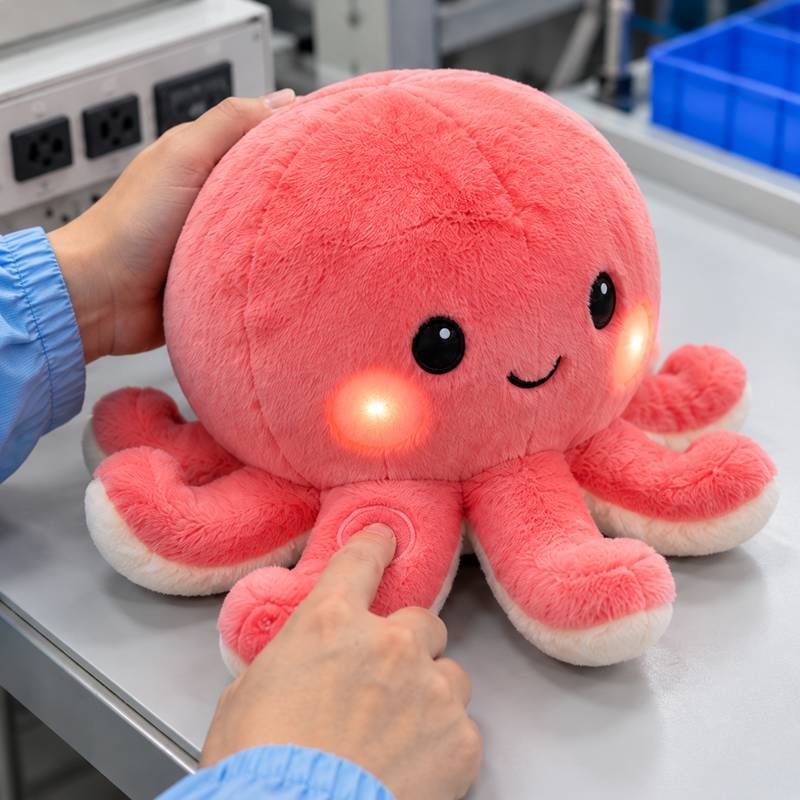
The fastest route is to close obvious hardware questions before the first functional sample is sewn. Ewin can review module ID and revision, dimensions, weight, speaker and microphone positions, sensor zones, switch location, battery system, connectors, cable lengths, access requirements and mounting method together with the character artwork and target size. If the module already exists, a physical unit or controlled drawing is more useful than a product name alone. The soft-goods team can then plan cavity geometry, pattern openings, filling zones, protective layers and assembly sequence around the actual hardware. Where a module remains under development by a technology partner, both teams should agree which dimensions and interfaces are stable enough for sampling. Building V1 around an obsolete or approximate module can create avoidable pattern and packaging rework later.

Use the Functional V1 to Check Appearance, Fit and Interaction Together
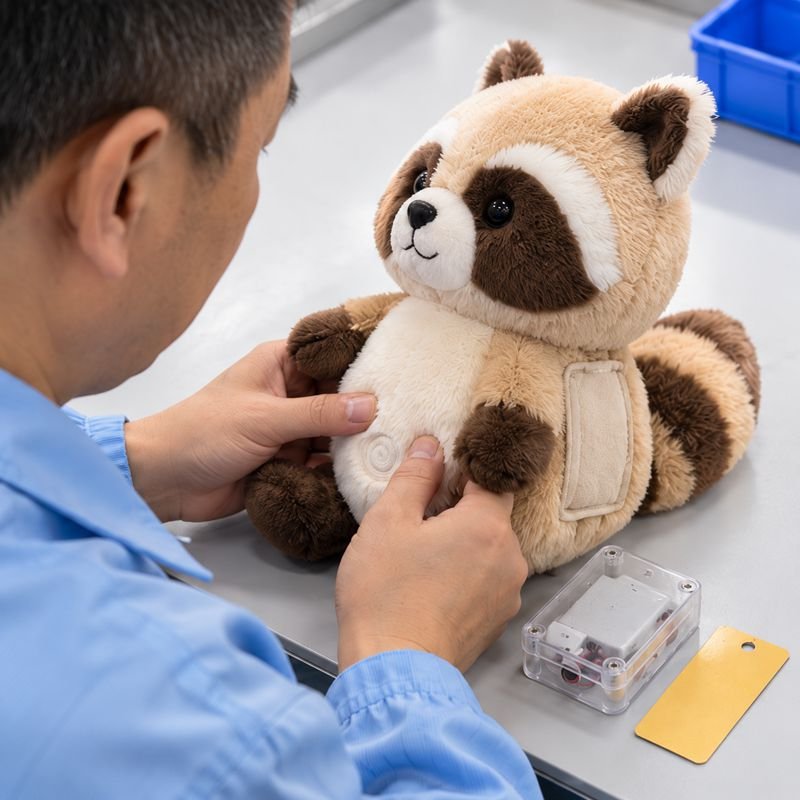
The first integrated sample should answer more than “does the module turn on?” Ewin reviews whether the hardware fits the cavity, remains in position, creates hard points, changes pose, blocks filling, distorts the face or torso, interferes with clothing, or makes controls difficult to reach. Sound, light, sensor or movement functions should be checked after the shell is filled and closed because fabric, padding and product geometry can change the result. Revision notes should identify whether a problem belongs to electronics, soft-goods structure or the interface between them. A microphone issue may require a new opening; a hard battery area may need different padding; a weak squeeze trigger may need a new control position. Each change should remain linked to the same sample revision so teams do not compare results from mismatched hardware and plush versions.

Freeze the Golden Functional Sample With the Approved Module Revision

A functional Golden Sample should represent the product configuration that production is expected to reproduce. Ewin can link the approved hardware revision to the cavity, access opening, fixing method, padding, filling reference, cable route, assembly instruction, function-check points and BOM. The Golden is not only a visual sample; it also shows the accepted location and physical interaction of the module inside the product. If formal testing is required, the tested sample and production definition should remain aligned so later hardware or construction changes do not silently move outside the evidence scope. Before bulk release, unresolved electronic or compliance changes should be closed and the latest files distributed to sourcing, assembly and QC. For repeat orders, any change in module supplier or revision should enter an impact review instead of being treated as a routine substitute.

Functional Testing Must Evaluate the Complete Plush System

Useful checks confirm the module still works after it is installed, filled, closed, handled and packed inside the finished product.

Test AreaWhat Ewin Reviews in the Finished Product
Module FitCavity clearance, movement, exterior pressure and assembly access
RetentionModule remains in the approved position during handling
Sound PlaybackAudio output, speaker alignment and trigger response
Microphone AccessInput opening, fabric obstruction and physical position
Light OutputVisibility, alignment, diffusion and exterior deformation
Sensor ResponseActivation from the intended touch, pressure or motion zone
Button / SwitchReach, travel, repeat activation and fabric interference
WiringRoute, protection, pinching, connector position and movement
Battery AccessApproved closure, accessibility and service route
Hard-Point ReviewUser can handle the plush without unintended rigid edges pressing through
Finished ShapeModule does not pull the product away from the approved silhouette
Packaging CheckPacking does not press controls, block openings or damage connectors

Certification and Compliance Depend on the Finished Product Configuration

Module reports can support a project, but they do not automatically establish compliance for the complete plush sold in each market.

Start With Target Market, Age Grade and Product Classification

The testing route should be mapped from where the product will be sold, who it is intended for and how it is classified. A sound or sensor module inside a children’s toy can create different obligations from the same hardware inside an adult collectible. For U.S. toy programs, the route can include applicable ASTM F963 and CPSIA/CPSC requirements; EU programs may involve the applicable toy-safety route, EN 71, REACH, CE marking and Declaration of Conformity responsibilities. Other markets can require different standards, labels and responsible-party actions. Ewin can review the finished product inputs before samples are sent for formal testing, including fabrics, filling, hard parts, module revision, battery system, access openings, age grade and packaging. Compliance should be defined during development so late changes do not force avoidable redesign.

Electronic, Battery and Mechanical Risks Need Combined Review

Electronic plush can introduce battery-compartment, wiring, temperature, enclosure, hard-part and function-related questions in addition to ordinary plush risks such as flammability, small parts, attachment strength and accessible sharp points or edges. The exact test scope depends on the approved product and destination market. Ewin can support engineering pre-checks, test-sample preparation, BOM and component information, and third-party laboratory coordination where required by the project. A module that carries its own supplier declaration or report is useful evidence, but the final toy still needs assessment in its installed configuration. Padding, openings, wires, battery access, buttons and module retention can change what becomes accessible after use and abuse. The tested sample should therefore match the construction intended for production rather than an earlier prototype.

Wireless and Smart Products Need Responsibility and Evidence Mapping

Connected products can add wireless, data, software and market-entry responsibilities beyond the conventional plush safety route. The technology owner should identify the radio architecture, hardware approvals, firmware responsibilities and any specialist requirements tied to the intended markets. Ewin can keep the physical module revision, shell structure, battery access, speaker or microphone areas and assembly method aligned with the finished-product compliance record. If a hardware update changes antenna location, battery system, connectors, enclosure or another physical feature, the team should assess whether existing evidence still represents the new configuration. Labels and instructions must also match the approved market route. Ewin should not describe every smart plush as holding the same certifications; evidence belongs to the specific SKU, revision, module and destination requirements that were actually reviewed and tested.

Certificates, Compliance & Quality Assurance

Ewintoys follows structured quality and compliance practices for custom plush production. We hold relevant certifications and support additional testing, inspection, and compliance documentation based on specific product requirements and destination markets, helping brands meet different international standards with confidence.


Bulk Assembly Needs Module Revision and Function Control

Scale-up succeeds when the same approved module, installation route and function checks remain linked to the correct SKU throughout production.

Control Module Revision Before It Reaches the Assembly Line

Incoming functional hardware should be identified by the approved module or component reference, revision and project mapping before it is issued to production. Similar-looking boards or housings can have different connectors, firmware, audio files, battery arrangements or physical dimensions, so visual similarity is not enough. Ewin can keep the current hardware identity connected to the BOM and work instruction used for each SKU. Incoming checks can confirm relevant dimensions, visible condition, supplied function or other project-defined attributes before assembly. For multi-SKU programs, kitting or separated material issue helps prevent one character from receiving another character’s sound module or control hardware. If a supplier proposes a substitute, the change should enter engineering and compliance impact review before use rather than being accepted as an ordinary purchasing replacement.

Standardize Installation Position, Orientation and Cable Routing

Operators need clear references showing where the module sits, which direction it faces, how it is retained, where cables run and which areas must remain free of excessive filling. Ewin can translate the approved Golden Sample into installation instructions, cavity references, pocket construction, padding requirements and control locations. First-piece review is useful before high-volume assembly because a module can still function while sitting in the wrong position, creating a hard point or changing the product’s balance. Speaker, microphone, sensor, magnet and switch orientation are especially sensitive to installation errors. Closing should not begin until the internal assembly is complete and the module can still be inspected. The goal is to prevent hidden problems from being sealed inside the plush, where correction would require destructive reopening and disturb the approved finishing standard.

Check Function After Final Assembly and Protect It Through Packing

A module should be tested after installation because sewing, filling, closing and handling can introduce faults that were not present before assembly. The defined function check can verify playback, light, sensor response, control access, movement or another approved feature according to the product scope. QC should also inspect obvious exterior deformation, loose hardware, blocked openings, cable pressure or shifted internal parts. Packaging then becomes the final physical protection step. Switches should not be held down accidentally, speaker or microphone zones should not be crushed, and rigid housings should not create pressure marks through the outer fabric. Shipment release should use the correct SKU, hardware revision, packaging version and compliance status together so a functionally correct product is not delivered in an obsolete or unsuitable commercial configuration.

Frequently Asked Questions

Ewin can engineer plush around approved sound, recording, speaker, microphone, light, sensor, motor, button, battery, wireless and smart modules, depending on product structure, market and project scope.

Yes. Ewin can integrate approved sound hardware with speaker placement, trigger access, cavity design, padding, filling control, assembly references and finished-product function checks.

Record-and-playback hardware can be integrated when the selected module supports the required behavior. Sampling should verify microphone access, controls, speaker output, battery route and finished-product handfeel.

Yes, where approved sensor hardware is available for the project. Ewin focuses on physical placement, protection, access, soft-goods interface, sample validation and repeatable assembly.

LED or light modules can be reviewed around fabric thickness, diffusion, position, wiring, power, control access and packaging. Final visibility should be approved in the complete sample.

Yes. Send the module revision, dimensions, weight, controls, speaker or microphone locations, battery system, connectors and access requirements so the plush architecture can be reviewed accurately.

Ewin can manufacture the plush product around approved AI or smart hardware, including cavities, microphone and speaker areas, access, protection, assembly and physical function checks.

Firmware, applications, AI models, wireless systems and cloud services may remain with the brand or an approved technology partner unless a separate development scope has been confirmed.

Testing can include fit, retention, sound, microphone access, light, sensors, buttons, wiring, battery access, hard-point review, exterior shape and packaging interaction after final assembly.

Requirements depend on target market, age grade, product classification, hardware, battery and wireless functions. Ewin reviews the product inputs before defining the appropriate testing and documentation route.

Send Your Functional Plush Project for Module Review

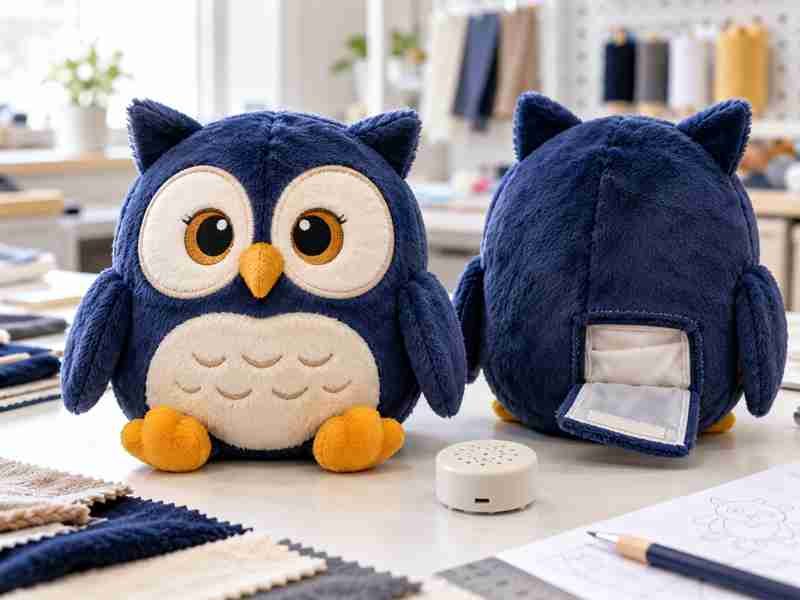
Share enough technical and product information for Ewin to evaluate the module inside the real plush construction before quoting or sampling. Useful inputs include company name, product type, character artwork, target size, quantity, SKU count, target markets, intended age, required interaction, existing module photos or drawings, module revision, dimensions, weight, speaker and microphone locations, sensor or motor details, button and switch positions, battery system, connector locations, wireless requirements, and any available electronic or compliance documents. Also identify who owns electronics, firmware, application, AI model and cloud services. If no module has been selected, describe what the user must be able to hear, press, record, sense, move or interact with so the physical development route can be reviewed first.

Start Your Custom Plush Project

We will contact you within 24 Hours, please pay attention to the email with the suffix“@ewintoys.com”. 

# Confidential project? NDA requirements can be discussed before sensitive files are shared.