
Custom Plush Keychain Manufacturer for Brands & Collectible Merchandise
Ewin Toys develops custom plush keychains with compact structures, clear character details and durable attachment solutions for everyday use. With 20+ years of plush manufacturing experience, our team supports small-format product engineering, material selection, embroidery, hardware integration and mass production for promotional items, licensed collections and retail accessories.
60+ Development Specialists | Compact Plush Engineering | Secure Keychain Attachments | MOQ 500 pcs | 5-7 Days Sampling
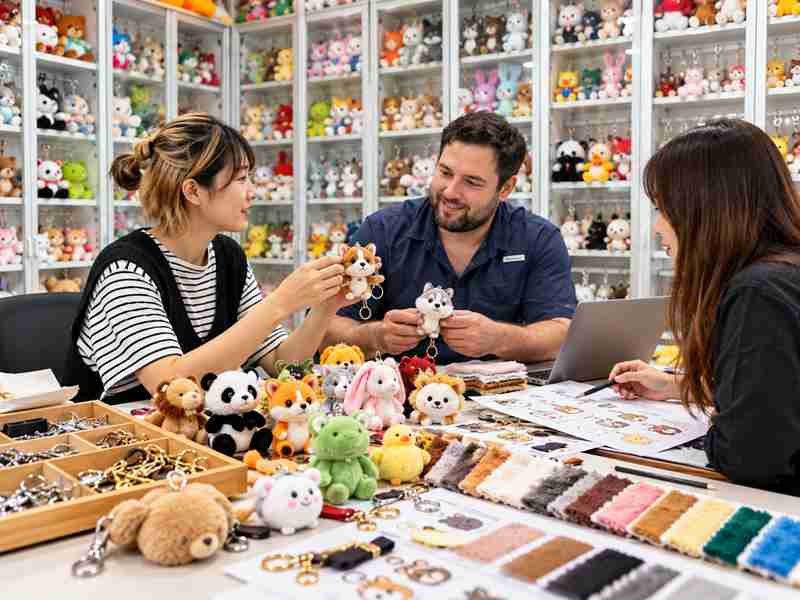
Built for Brand, IP and Retail Programs
IP & Licensing Teams
Toy & Collectible Brands
Retail & Private Label Programs
Game, Animation & Entertainment
Lifestyle & Fashion Brands
Promotional & Merchandise Programs
What Strong Plush Keychain Manufacturing Should Control
Miniature Engineering
Attachment Security
Sample-to-Bulk Control
Retail & Compliance Readiness
Custom Plush Keychain Styles for Different Programs

Character Plush Keychains
Mascot Plush Keychains
Animal Plush Keychains
Chibi Character Keychains
Mini 3D Plush Keychains
Flat 2D Plush Keychains
Plush Pendants
Plush Bag Charms
Collectible Series Keychains
Costume Character Keychains
Promotional Logo Plush
Hybrid Detail Keychains
Size Decisions Shape Detail, Cost and Attachment Strength
| Finished Size | Best-Fit Structure | Material Direction | Detail Route | Hardware Direction | Engineering Focus |
|---|---|---|---|---|---|
| 5–7 cm | Flat, chibi or very simplified shapes | Short pile; low bulk | Embroidery or print for micro details | Light ring, chain or loop | Keep panel count low; avoid tiny detachable pieces |
| 8–10 cm | Core retail keychain range | Short pile, minky, selected faux fur accents | Embroidery, appliqué, small clothing details | Split ring, lobster clasp, chain, O-ring | Good balance between character recognition and compact cost |
| 11–15 cm | Detailed character, animal or collectible keychain | More texture options and 3D shaping | Layered embroidery, appliqué, separate accessories where stable | Stronger loop and hardware review | More filling, sewing and packaging volume; attachment load increases |
| 16–18 cm | Bag charm or statement accessory | Premium short pile, faux fur, PU accents | Brand tags, metal or silicone details, clothing | Lobster clasp, O-ring, decorative chain | Review hanging direction, scratch protection and presentation packaging |
Choose Fabrics by Detail, Feel and Scale

Minky

Short-Pile Plush
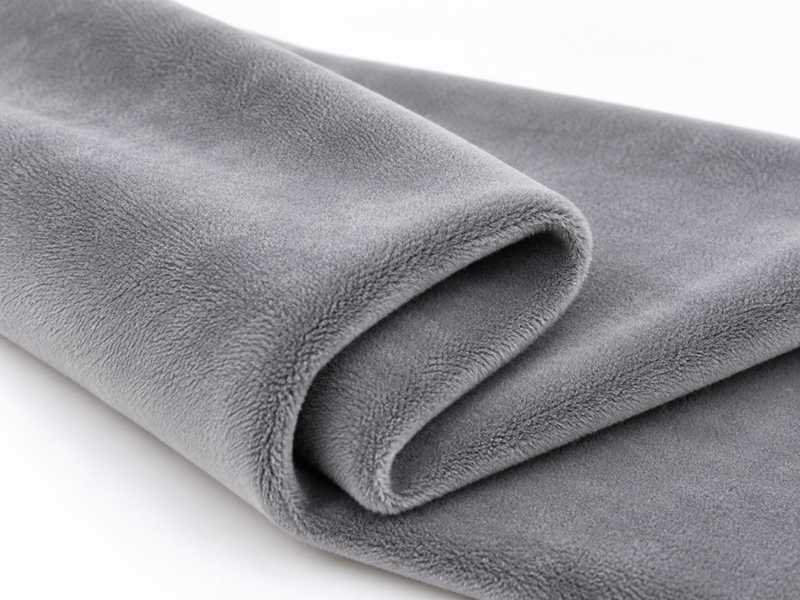
Velboa

Faux Fur

Sherpa & Curly Plush
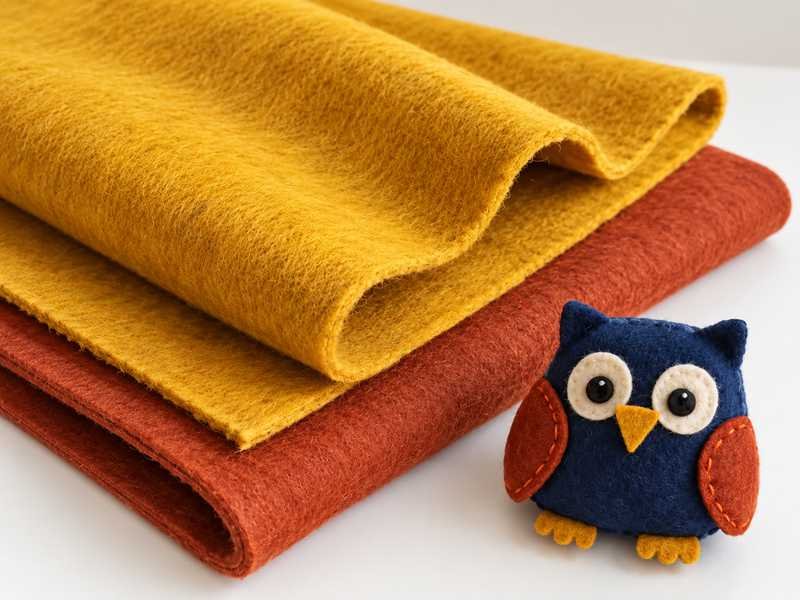
Felt & Non-Pile Detail Fabric
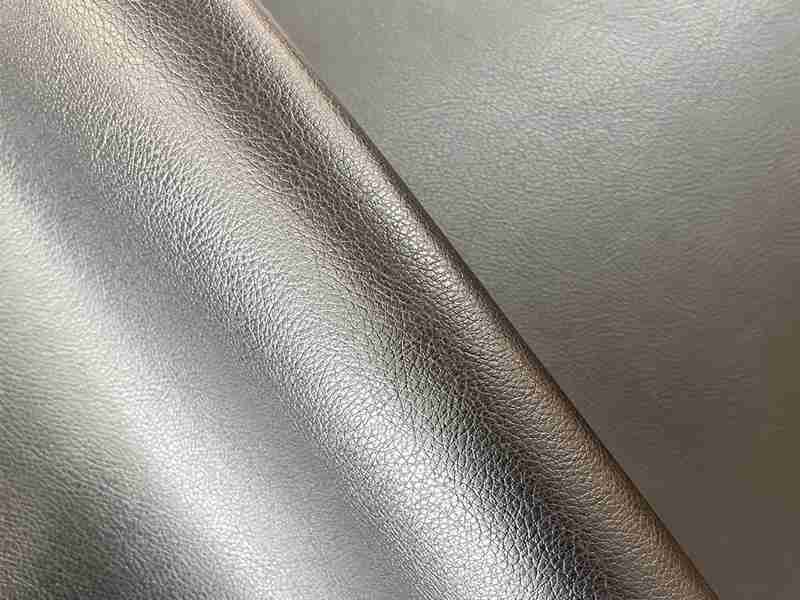
PU & Leather-Look Accents
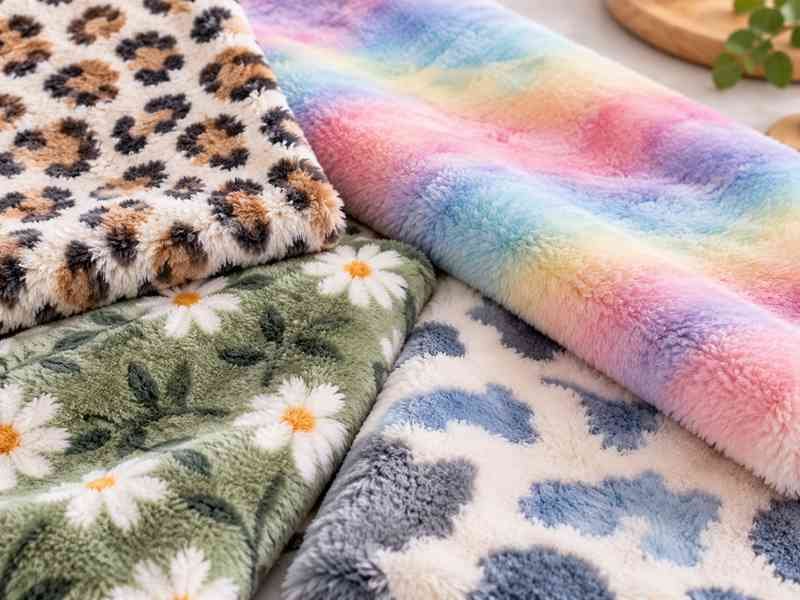
Printed Plush Fabric
Supporting Materials That Keep Small Products Stable
Polyester Fiberfill
Webbing & Fabric Loops
Interlining & Reinforcement
Embroidery Threads
Woven & Printed Labels
Protective Packing Materials
Hardware Options Engineered Around the Plush Structure

Split Key Rings
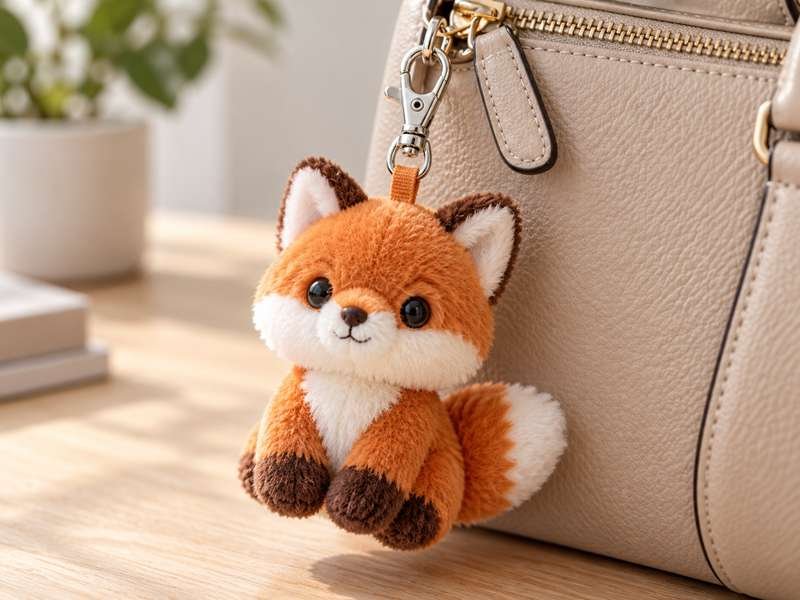
Lobster Clasps

O-Rings & Connector Rings

Ball Chains

Decorative Chains
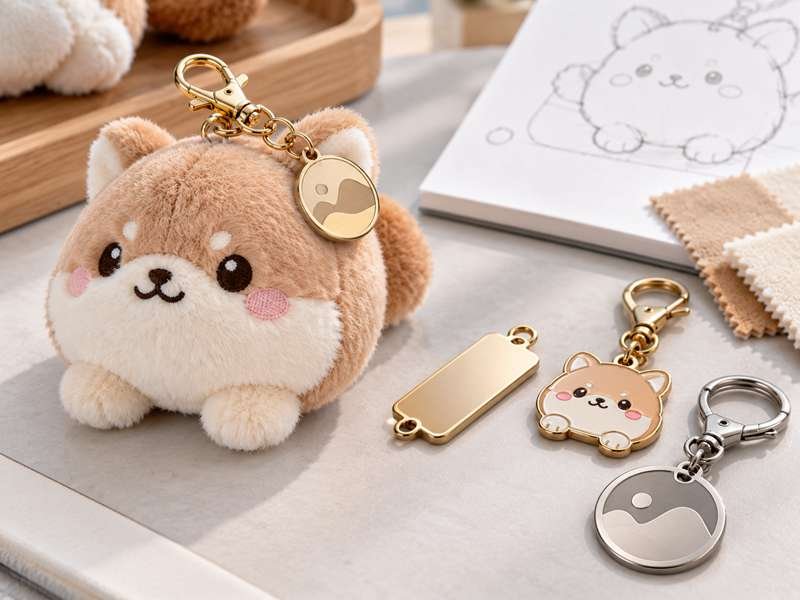
Custom Logo Hardware
Logo and Graphic Methods for Small Plush
Direct Embroidery
Appliqué
Screen Printing
Heat Transfer
Woven Brand Labels
Molded Logo Details
From Artwork to a Production-Ready Keychain Sample
Start With the Files You Already Have
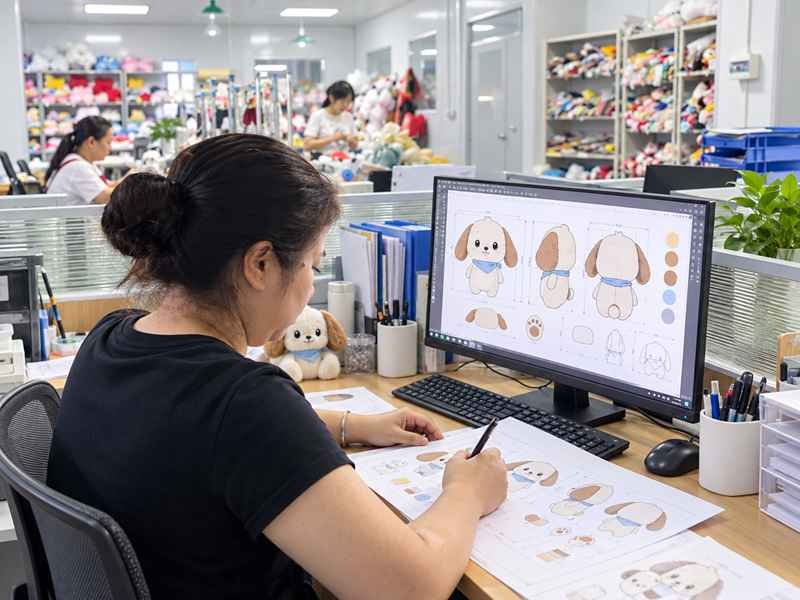
Projects can begin from a hand sketch, 2D artwork, character sheet, three-view drawing, 3D render, AI-generated concept, reference product or physical sample. The first development task is not sewing; it is deciding which visual elements must survive the conversion into a small soft product.
For character-driven keychains, Ewin first identifies the recognition points that cannot move: face outline, eye position and spacing, head-to-body ratio, ear or hair angle, signature colors, logo placement, costume features and major accessories. A 6–10 cm format may not support every line, panel or garment detail shown in a large illustration. Features that become unstable at small scale can be converted into embroidery, appliqué, print or simplified sewn shapes while preserving the visual hierarchy.
The input is then translated into a development brief covering target dimensions, hanging method, material direction, intended market, age grade where relevant, quantity band, packaging route and target date. Clear inputs reduce rework, but development does not require a perfect technical pack. The purpose of the first review is to turn available design information into decisions a pattern maker, sample sewer, embroidery technician and sourcing team can execute. For multi-character programs, the same brief can also define shared rules for scale, eye style, hardware finish and packaging so later SKUs develop from a common family standard.
Pattern Engineering for Small Plush Structures
Paper pattern development determines whether the keychain can hold the intended silhouette after cutting, sewing, turning and stuffing. Small products are especially sensitive because seam allowance and turning openings consume a larger share of the available surface. A shape that is easy at 25 cm may become difficult or bulky at 7 cm.
Pattern engineers divide the character into manufacturable panels, control curvature and seam placement, and decide where separate limbs, ears, tails or clothing still add enough value to justify the extra work. Face width, muzzle projection, body depth and head volume are checked against the artwork rather than judged from front-view height alone. Pile direction and fabric stretch are recorded where they affect symmetry or apparent color.
The top attachment is engineered together with the pattern. A webbing or fabric loop should enter a structurally supported area so pulling force is distributed into the body rather than concentrated on one weak seam. Prototype assembly then reveals where panels stretch, where seams distort the face and whether the product hangs in the intended direction. Pattern changes are made from the physical result before the construction is considered production-ready. A released pattern should therefore reflect both visual approval and manufacturing reality, including seam access, reinforcement placement and the space needed for repeatable assembly.
Prototype, Revision and Golden Sample Control
The first prototype is used to judge proportion, character recognition, material behavior, decoration position, stuffing balance and attachment construction as one product. Character-IP samples are commonly planned around 7–12 working days after executable files and key materials are ready; complexity, custom materials, molds or major revisions can extend the schedule.
Review should be specific. Instead of comments such as “make it cuter,” feedback works better when tied to visible points: narrow the face, move the eyes 2 mm inward, reduce muzzle projection, shorten the loop, change pile length or lower the filling pressure. Each meaningful revision should carry a clear version identity so an old embroidery file, pattern panel or hardware choice cannot re-enter later.
Once the approved result is reached, the physical sample is connected with the released pattern, BOM, material references, decoration files, filling target, hardware specification and packaging version. Ewin treats the Golden Sample as the visual and structural reference for production rather than as a stand-alone display piece. Bulk release should follow the approved specification set, making sample approval a manufacturing control point instead of only a design milestone. For series work, each SKU receives its own approval identity while shared materials, hardware or packaging rules are managed at program level to reduce avoidable variation.
Production Details That Protect Small-Format Consistency
Cutting, Pile Direction and Small Part Control
Cutting accuracy matters more as the product becomes smaller. A few millimeters of panel shift can change eye position, ear symmetry or body width after sewing. Pattern markers should therefore carry orientation information where pile direction or stretch affects the approved appearance. Mirrored left and right parts also need clear separation so ears, limbs or costume details are not assembled in reverse.
Longer-pile materials require additional control because hair can hide cutting edges and become trapped in seams. Face panels and areas with embroidery often benefit from shorter pile or controlled trimming so features remain visible. Small felt pieces, tabs, webbing loops and reinforcement parts should be bundled by design and version to reduce cross-mixing between similar SKUs.
Keychain programs also place pressure on sorting. Hardware, loops, labels and colorways may look similar when loose on a worktable, while one wrong component can create a visible retail error. Controlled kitting and line-side identification help keep the correct material and accessory set with each SKU before sewing and assembly begin. For multi-SKU collections, production planning should therefore treat identification as part of manufacturing, not only as a warehouse task after the plush bodies are finished. Clear bundle records also support later traceability if a material, color or accessory issue needs to be isolated.
Sewing, Stuffing and Attachment Assembly
Miniature sewing combines narrow curves, short seams and small turning openings. Stitch quality must hold the required shape without creating thick seam buildup that makes ears, hands or tails feel hard. Sewing sequence is also important: embroidery, appliqué, labels and reinforcement pieces often need to be completed before panels close, while hardware loops must be inserted at the correct stage and depth.
Stuffing is controlled for silhouette rather than maximum firmness. Too much fiber can widen the face, shorten visible limbs and increase load on the top attachment. Too little can cause heads or bodies to collapse when hanging. A reference fill weight, approved handfeel and finished shape give production teams clearer guidance than “soft” or “full” alone.
The attachment assembly is inspected as a structural zone. The textile anchor should sit inside the body far enough to distribute force, and surrounding stitches should not cut through the fabric under tension. Metal hardware is added according to the released specification, with orientation checked so the character faces properly when suspended. Heavier bag charms may need wider loops, deeper reinforcement or different hardware from a lightweight 6 cm promotional keychain. Assembly references should show both visible placement and hidden reinforcement so repeatability does not depend on individual operator memory.
Finishing, Identification and Pack-Out
After sewing and stuffing, compact plush products still need shape correction. Seams are brushed or picked where pile has been trapped, loose threads are removed, facial features are checked against the approved reference and hardware orientation is corrected before packing. Small products can look noticeably different when one ear is folded, one cheek is underfilled or one clasp turns the character sideways, so finishing is part of appearance control.
Identification follows the released SKU information. Woven labels, care labels, hangtags, barcode stickers, color codes and packaging artwork must match the correct design version. When a collection contains several similar characters or seasonal variants, pack-out should be based on defined SKU IDs rather than visual guesswork. Barcode scanning or label checks can be included where the channel requires it.
Packaging should protect both plush and hardware. Rings, clasps or decorative chains may need controlled positioning, separators or sleeves to avoid scratching printed surfaces and clear packaging. Carton configuration is then checked against unit count, assortment and shipping requirements. The manufacturing route ends only when finished goods, packaging identity and quantity agree with the released project specification, not when sewing is complete. Pre-shipment photos or inspection records can then document the approved pack-out and help confirm shipment readiness before release.
Keychain Quality Control From Materials to Shipment

Incoming Materials and First-Article Checks
Quality starts before sewing. Fabric color, pile, handfeel, GSM or supplier specification, embroidery thread, labels, webbing and hardware need to match the approved material references. Incoming control is especially important when several keychain designs share similar colors or metal finishes, because a wrong lot can spread across many SKUs before the visual difference is noticed.
First-article checks confirm that released information has reached the production line correctly. The first completed units are compared against the Golden Sample, released pattern, BOM and current decoration files. Critical points can include finished height, face width, eye spacing, embroidery position, loop length, hardware orientation, filling level and label placement. Any mismatch is corrected before normal output continues.
Small-format products benefit from measurement tools and visual templates because tiny placement errors can change the whole expression. A reference showing eye distance, ear angle or logo location is more repeatable than asking operators to “make it like the sample.” Incoming and first-article controls therefore protect both identity and efficiency: catching the wrong material or position early prevents rework from growing with production quantity. When special plated hardware or custom-printed packaging is used, approval references should also include finish, artwork and version details so procurement substitutions cannot silently alter the approved product.
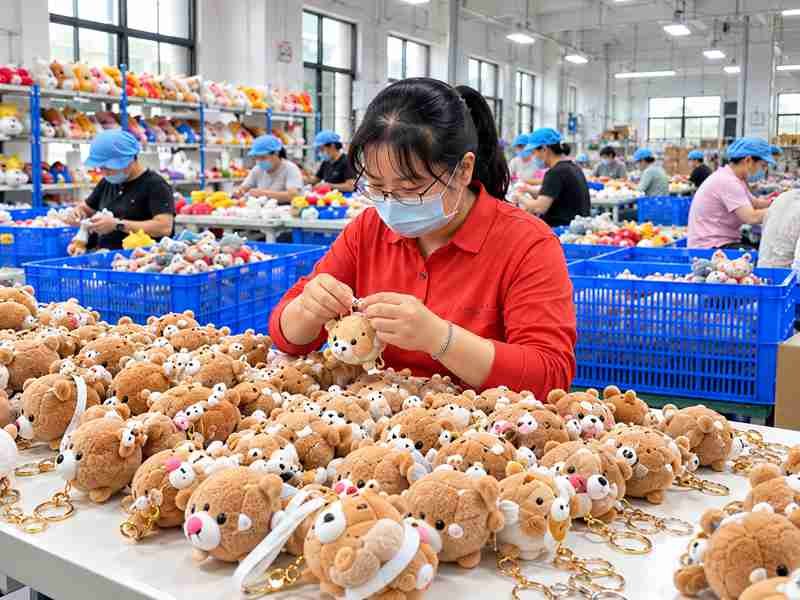
In-Process Checks for Shape, Sewing and Attachments
In-process quality control should sit close to the defect source. Cutting checks focus on panel identity, pile direction and mirrored parts. Embroidery and printing checks cover artwork version, color, position and surface quality. Sewing checks review seam alignment, skipped stitches, trapped pile, turning damage and whether small parts remain symmetrical after assembly.
For keychain products, the hanging structure deserves its own checkpoint. The textile loop, reinforcement area and hardware assembly are checked for correct construction before the body becomes difficult to reopen. Pull or attachment-strength checks can be defined according to project needs, intended market and product structure. Hardware should also be examined for sharp points, rough edges or finish defects where relevant.
Stuffing and finishing checks then compare the physical silhouette with the approved reference. Face width, body depth, ear angle, fill distribution and character orientation matter because small plush can drift quickly if every operator uses a different “feel.” Problems are held and corrected rather than passed forward. When a recurring issue appears, the response should move beyond sorting and identify the pattern, material, method or instruction that caused it. Defined reaction rules help line teams know when to stop, segregate and escalate instead of continuing production while waiting for informal instructions. That discipline protects later assembly and packaging from inherited defects.

Final Inspection, Needle Control and Shipment Release
Final inspection evaluates the product as a finished retail unit. Appearance, dimensions, decoration, filling, hardware, labels, packaging and SKU identity are reviewed against the project specification. Multi-SKU orders also need assortment and quantity checks so correct products reach the correct packaging and carton configuration.
Needle and metal contamination control is not treated as a single machine pass at the end. Controlled needle handling, broken-needle response, detector calibration and finished-goods checks work together so potential metal contamination can be isolated before packing or shipment release. Where metal hardware is intentionally part of the product, the detection route and inspection method need to reflect the actual construction and approved control plan.
OQC or pre-shipment release confirms that the lot is ready to ship. Packaging version, barcode or label identity, carton markings, unit count and shipping requirements are reviewed along with the finished keychains. Inspection records, photos or project-specific reports can support release where required. The purpose is simple: the approved design, correct SKU identity and agreed pack-out must remain aligned all the way to the shipping carton. For launch-driven programs, final release can also be tied to approved packing photos, assortment confirmation and destination-specific labeling so the finished goods handed to logistics match the commercial plan.
MOQ, Cost and Timing Depend on Product Definition
Commercial feasibility improves when quantity, SKU count, material sourcing, decoration, hardware, packaging, approval timing and required arrival date are reviewed together instead of being reduced to one unit price alone.
| Commercial Factor | Ewin Planning Reference | What Can Change It |
|---|---|---|
| Starting MOQ | Around 500 pcs/SKU is a common commercial evaluation point for standard custom plush projects. | Custom fabric colors, plated hardware, printed packaging, molds and multi-SKU splits can raise the effective MOQ. |
| Sample Planning | Character-IP prototypes are commonly planned around 7–12 working days after executable inputs and key materials are ready. | Major pattern changes, custom colors, molded components or repeated revisions extend the development path. |
| Size | 6–15 cm is a common keychain range; 7–18 cm is common for fuller bag-charm formats. | Larger size increases fabric, filling, hardware load, packaging volume and shipping cube. |
| Decoration | Embroidery, appliqué, printing, labels or molded details are selected by visual need. | Stitch density, color count, print area, extra panels and hand assembly influence cost. |
| Hardware | Standard rings, chains and clasps are easier to source and scale. | Custom plating, logo hardware, molds, special coatings or premium finishes can change MOQ and lead time. |
| SKU Complexity | Shared materials and hardware can improve procurement efficiency across a collection. | Every extra colorway, embroidery file, label, package and barcode adds version-control and sorting work. |
| Packaging | Simple bag-and-card packs are efficient for many retail programs. | Gift boxes, blind packs, inserts, display packs and protective hardware separation increase material and pack-out cost. |
| Delivery Planning | Production-ready date and required arrival date should be treated as separate milestones. | Destination, shipping mode, carton volume, customs route and retail set date affect the final schedule. |
Packaging Built Around Channel, Display and Protection

Polybag + Hangtag
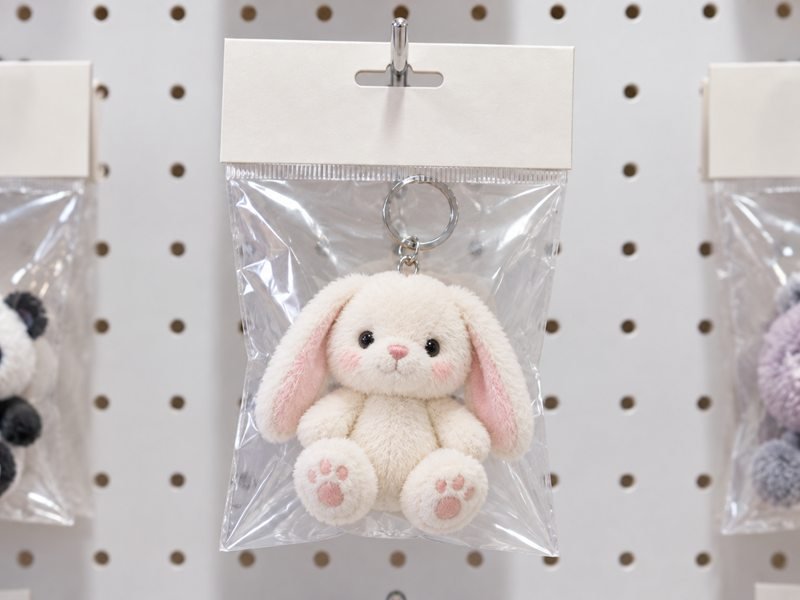
Header Card Pack

Backing Card Display

Gift Box
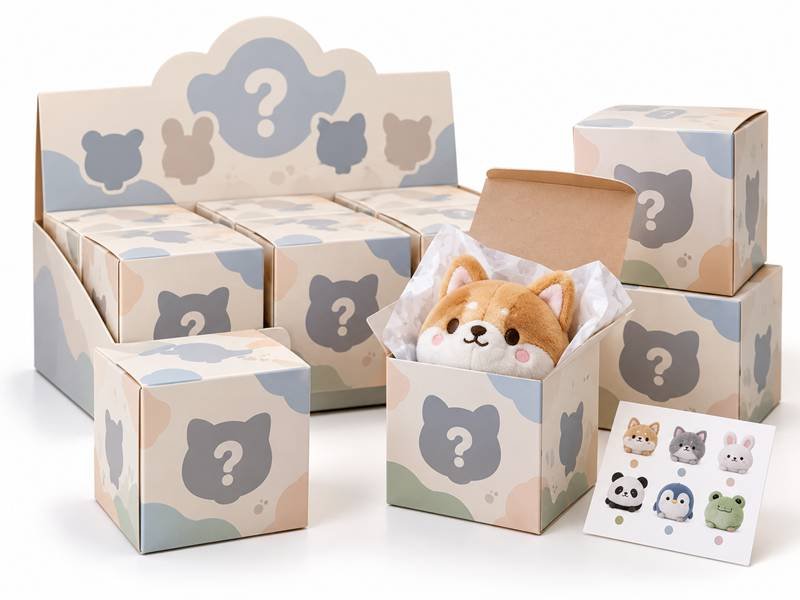
Blind Pack or Blind Box

Retail Display & PDQ
Compliance Planning Starts Before the Final Test
| Market / Region | Typical Compliance Direction | Key Planning Inputs |
|---|---|---|
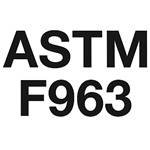
| United States | ASTM F963 / 16 CFR Part 1250, CPSIA requirements and CPC pathway as applicable | Small parts, mechanical/physical hazards, flammability, lead/phthalates and tracking information depend on product and age grade. |
| European Union | EN 71 framework, REACH restrictions and applicable EU toy-safety obligations | Material, mechanical, flammability, chemical and labeling inputs should be aligned with the final approved version. |
| United Kingdom | UK toy-safety requirements and applicable conformity/labeling route | Market-specific labeling and responsible-party requirements should be confirmed for the intended sales route. |
| Canada | Canada Consumer Product Safety Act and Toys Regulations requirements as applicable | Mechanical hazards, small parts, flammability, toxic substances and bilingual labeling inputs should be reviewed for the final product. |
| Other Markets | Project-specific review before testing | Australia, New Zealand, Japan, Korea and other destinations can apply different toy, age-grade, chemical or labeling requirements. |
| Ewin Support | Internal construction review plus third-party laboratory coordination where required | Testing scope should be confirmed after sample, materials, accessories, age grade and target market are defined; reports apply to the tested product/version. |
Multi-SKU Collections Need Shared Rules and Control
Shared Family Standards
SKU & Version Control
Shared Materials, Separate Risks
Wave Production & Reorders
Large collections do not always need every SKU to move through production on the same day. Sampling, approval, testing and production can be organized in controlled waves when launch plans allow it. Reorders should reference the approved SKU version, material lot controls and packaging files so a second production run does not quietly drift from the first approved release.
Development and Manufacturing Capacity Behind Each Program
60+ Product Development Center
95,000+ m2 Manufacturing System
Sample-to-Bulk Release
Cross-Functional Project Window
Plush Keychain Program Structures
United States Collectible Brand | 7,200 pcs
Japan Lifestyle Brand | 6,000 pcs
Germany Retail Promotion | 9,000 pcs
Certificates, Compliance & Quality Assurance
Ewintoys follows structured quality and compliance practices for custom plush production. We hold relevant certifications and support additional testing, inspection, and compliance documentation based on specific product requirements and destination markets, helping brands meet different international standards with confidence.























Frequently Asked Questions
Standard custom plush projects are commonly evaluated from around 500 pcs per SKU. Actual economic MOQ can move higher when special fabric colors, custom-plated hardware, molded components, printed packaging or many low-quantity SKUs create separate supplier minimums.
A common keychain range is about 6–15 cm. Around 8–10 cm often gives a useful balance between character recognition, compact packaging and manageable sewing. Smaller sizes usually need simpler panels and embroidery; larger bag charms can carry more detail but add weight and packaging volume.
Yes. Development can start from sketches, 2D artwork, character sheets, three-view drawings, 3D renders, AI concepts, reference products or physical samples. The first review converts available design information into size, structure, material, decoration, attachment and sample decisions.
Character-IP prototypes are commonly planned around 7–12 working days after executable files and key materials are ready. Custom-dyed fabric, molded parts, special hardware, major pattern changes or additional revision rounds can extend the development schedule.
Yes, but direct scaling is rarely the best route. Small formats need fewer panels, adjusted seam allowances, simplified accessories and decoration sized for readability. Core recognition points such as face shape, eye spacing, colors and signature costume elements should be protected first.
Programs can use split rings, lobster clasps, connector rings, ball chains, decorative chains and custom logo hardware depending on product weight and positioning. The textile anchor, reinforcement and hanging direction should be developed with the hardware rather than added after the plush body is finished.
Bulk release should reference the approved Golden Sample together with the current BOM, released pattern, material references, decoration files, filling target, hardware specification and packaging version. In-process and final controls then check the critical points defined for the SKU.
Yes. Packaging can include polybags, hangtags, header cards, backing cards, gift boxes, blind packs, blind boxes and retail display formats. Barcode, label, assortment and carton requirements should be included before packaging artwork is frozen.
Ewin can review construction inputs and coordinate third-party testing where required. Testing scope depends on target market, age grade, materials, hardware, small parts, labels and the final approved version. A general factory claim should never replace a product-specific test plan or report.
Yes. Multi-SKU programs can use shared family standards plus SKU-level control for artwork, sample version, BOM, decoration, hardware, packaging, barcode, testing, production and shipment. Shared components can improve sourcing efficiency without forcing every character into the same construction.

Send Your Plush Keychain Project for Review
- Artwork, character sheet, three-view drawing, render or reference photos.
- Target size in L × W × H, or the preferred height if thickness is not yet defined.
- Expected quantity per SKU and the number of designs or colorways.
- Preferred ring, clasp, chain or other hanging hardware.
- Selling market, intended age group and sales channel.
- Logo, embroidery, print, label and packaging requirements.
- Required arrival date and destination for logistics planning.