 Skip to content

Plush Manufacturer for Corporate Brands & Promotional Programs
Ewin Toys helps corporate brands turn mascots, campaign concepts and branded characters into production-ready plush for events, employee gifts, retail promotions and long-term brand programs. With 20+ years of plush manufacturing experience, our team supports concept development, brand-detail translation, sampling and coordinated production to help each program maintain a consistent corporate identity.
- 60+ Development Specialists
- Mascot & Logo Integration
- Brand Color Matching
- Custom Packaging Support
- Multi-SKU Program Coordination
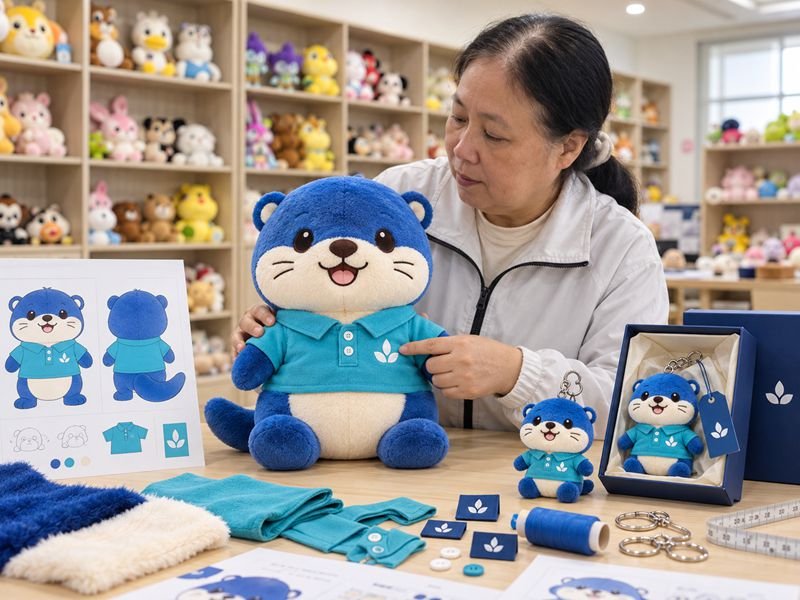
Corporate Plush Programs Built Around Brand Moments
Corporate plush works best when product format, branding method, packaging and delivery are planned around the purpose of the program instead of treated as separate purchasing decisions.
Employee Recognition Gifts
Employee gifting needs more than a logo placed on a toy. The plush should feel appropriate for internal culture, milestone awards or onboarding, while remaining easy to distribute. Ewin can translate a mascot or brand symbol into a giftable format, then coordinate labels, message cards, gift packaging and carton configuration around the distribution plan.
Client Appreciation Gifts
Client gifts often need a higher perceived value than event giveaways. Material hand feel, clean embroidery, presentation packaging and brand-color control matter because the product represents the company after the meeting or campaign ends. A compact mascot, character plush or boxed gift set can be developed around the intended recipient, budget range and delivery method.
Trade Show Giveaways
Trade show plush must balance recognition, packability and unit economics. Small mascot plush, keychains or product-shaped pieces can carry a logo without becoming bulky to transport or store. Development should consider booth date, carton volume, individual packaging, handout speed and whether the item needs a hangtag, QR card or campaign message attached.
Product Launch Campaigns
Launch programs usually have a fixed date and multiple approval points. Plush can support media kits, influencer seeding, retail activation or internal launch events, but artwork, sample revisions, packaging and shipping must be planned backward from the required arrival date. Ewin organizes the product definition so brand approvals can move into production without losing the approved version.
Corporate Mascot Programs
A corporate mascot can become a durable brand asset rather than a one-time gift. Core proportions, face details, brand colors, clothing, logo placement and approved materials should be controlled so later sizes or editions remain recognizable. Ewin can build a mascot family from a hero plush into mini versions, pendants, keychains and seasonal variations.
Brand Collaboration Merchandise
Collaborations bring two sets of visual rules into one product. Logo hierarchy, color ownership, character details, packaging copy and approval responsibility need to be clarified early. Plush development can combine co-branded clothing, labels, accessories or gift packaging while keeping each brand’s identifiable elements visible and manufacturable at the intended order volume.
Retail Merchandise Programs
Retail plush must work beyond visual approval. Packaging, barcode placement, SKU identification, case pack, shelf presentation and replenishment can influence the product structure. Ewin can coordinate the plush and its retail pack-out together so approved artwork, labels, packaging versions and carton information are managed at SKU level rather than added at the last minute.
Anniversary Seasonal Programs
Anniversary, holiday and annual campaign plush usually have a short selling window. Existing mascot patterns can often be adapted with new clothing, colorways, embroidery, accessories or packaging without rebuilding the entire product. Version control is important so seasonal changes remain separate from the core mascot specification and future reorders can return to the correct approved edition.
Different Corporate Teams Need Different Project Answers
A corporate plush program often passes through several departments. Clear specifications reduce repeated questions and help each team approve the part of the project it actually owns.
Brand And Creative
Brand and creative teams care about recognition first: face, silhouette, color, logo, clothing and overall personality. Ewin converts comments such as “the expression feels wrong” or “the red is too dull” into pattern, material, embroidery, color and filling changes that can be reviewed on the next sample instead of remaining subjective feedback.
Marketing And Events
Marketing teams usually work toward a campaign date, audience and message. Product size, packaging, card inserts, quantity and shipping plan should support how the plush will be distributed. Early visibility on approval milestones helps prevent a strong product concept from missing a launch, conference, employee event or seasonal activation because decisions arrived too late.
Procurement And Purchasing
Procurement needs comparable specifications, not only a unit price. Quantity, size, material, decoration, accessory, packaging, testing and shipping assumptions should be visible before price comparisons are made. Ewin can review cost drivers and offer Premium, Standard or Cost-Optimized directions where appropriate, while protecting brand elements that should not be downgraded simply to reduce cost.
Product And Merchandising
Product teams need the concept translated into a repeatable item with a defined size, structure, material set, decoration file and packaging version. For a family of products, shared materials, common body platforms and coordinated packaging can simplify approval and production while still keeping each SKU visibly different. Reorder logic should be considered during initial development.
Quality And Compliance
Quality and compliance teams need measurable release criteria. Golden Sample, dimensions, fabric specification, decoration artwork, filling reference, accessory attachment and packaging version create a clearer inspection basis than visual memory. Target market, age grade and product structure also determine which safety risks, testing inputs, warnings or documentation should be reviewed before mass production.
Supply Chain Operations
Supply chain teams focus on material readiness, SKU status, production release, packaging, shipment waves and arrival dates. A corporate program with several variants can fail through version or carton errors even when each plush looks good individually. SKU-level tracking connects sample, BOM, packaging, barcode, production and shipment status under one program plan.
Corporate Plush Products From One Brand Asset
One logo, mascot or campaign character can support a complete merchandise family. Product size, structure and branding method should match how each item will actually be used.

Corporate Mascot Plush
A full mascot plush is the strongest format for representing a company character in physical form. Corporate and IP gift programs commonly sit within the broader 10–40 cm range, although custom plush can extend from about 8 cm to 100+ cm. Development focuses on face recognition, body proportion, color, clothing, logo and stable sitting or standing presentation.

Mini Mascot Plush
Mini versions make a corporate mascot easier to distribute at events, include in welcome kits or sell as lower-priced merchandise. Simplification matters because small details cannot always shrink proportionally. Ewin reviews which face lines, clothing seams, logo elements and accessories must remain, and which should be enlarged, embroidered or converted into simpler shapes for cleaner repeatability.

Plush Keychains
Plush keychains commonly fall around 6–15 cm and work well for trade shows, campaign kits, retail add-ons and employee gifts. Small dimensions require disciplined pattern simplification, clear embroidery and strong attachment engineering. Metal rings, lobster clasps, chains or fabric loops should connect into the internal load path so the hanging point is not relying on surface stitching alone.

Plush Bag Charms
Bag charms commonly sit around 7–18 cm and suit fashion, lifestyle and premium corporate merchandise programs. Hardware finish, chain length, orientation and anti-scratch packing become part of the product specification. Short-pile plush, faux fur, PU details, embroidery and metal parts can create a more elevated result than a standard giveaway when the brand needs accessory-level presentation.

Logo Shape Plush
Not every corporate plush needs a character. A logo icon, symbol, app mark, product silhouette or brand object can become a soft sculptural item. The key challenge is converting flat geometry into a stable sewn form without losing recognition. Edge radius, thickness, seam placement, print or embroidery position and stuffing density determine whether the final object reads correctly from several angles.

Product Replica Plush
Food, beverage, electronics, tools, vehicles, packaging and signature products can be translated into plush for launches or promotional campaigns. Complex hard geometry usually needs selective simplification rather than literal copying. Ewin studies the most recognizable product features, then decides where printing, embroidery, appliqué, structured inserts or separate components are needed to preserve the product identity.

Employee Gift Plush
Employee gift plush can use a company mascot, culture symbol or campaign character and pair it with a message card, belly band or gift box. The product should feel personal enough to keep, yet efficient enough to distribute across offices or teams. Size, packaging cube, individual labeling and shipment grouping can be planned together with the visual development.

Client Gift Plush
Client gift editions can use softer materials, more detailed embroidery, refined accessories and presentation packaging to create a higher-value impression. Instead of adding decoration everywhere, Ewin can concentrate cost on the most visible brand signals: face, logo, signature color, clothing or box presentation. The result can be premium without introducing unnecessary production complexity.

Event Giveaway Plush
Event pieces need fast recognition, manageable carton volume and simple distribution. Mini plush, keychains, flat plush or compact product-shaped designs often work better than oversized items. A campaign card, QR code, tag or printed clothing element can carry temporary messaging while the core plush remains reusable for later events, reducing the need to redesign the full product each time.

Plush Pillows
Plush pillows commonly range around 30–70 cm and work for employee lounges, hospitality, brand spaces, consumer promotions or premium gift programs. Large printed logos, appliqué graphics or sculpted character heads can create high visual impact. Filling amount, seam strength, compression recovery and packaging volume need to be planned because shipping cube can become a major cost driver.

Corporate Gift Sets
A gift set can combine a plush mascot with a card, accessory, pouch, mug sleeve, branded textile item or presentation box. Each component needs a defined pack position so unpacking feels intentional. Ewin can coordinate unit packaging and master-carton pack-out around the final set rather than producing the plush first and trying to fit it into packaging afterward.

Limited Edition Plush
Limited editions are useful for anniversaries, executive gifts, collaborations and seasonal programs. Value can come from special fabric, numbered hangtags, unique clothing, metallic embroidery, special packaging or a controlled colorway. The important production rule is to separate the edition’s artwork, BOM and packaging revision from the core product so future reorders cannot accidentally mix specifications.
Start With The Brand Assets Already Available
A complete technical pack is not required to begin. Ewin can review the assets already available and identify what must be clarified before pattern development starts.
Logo And Brand Guide
A vector logo, color guide, font reference and basic usage rules already provide valuable manufacturing information. Ewin can review whether the logo is better suited to embroidery, print, appliqué, woven label or a separate patch. Pantone or approved color references should be identified early, especially when the plush body itself carries a corporate color rather than only a removable garment.
Mascot Artwork
Front, side and back views are ideal, but a strong single-view mascot illustration can still begin a feasibility review. Ewin identifies recognition points such as head ratio, eye spacing, mouth shape, ears, hair, costume and signature accessories. Missing side or rear information is then resolved during concept and pattern work instead of being silently guessed on the sewing line.
Existing Product Reference
An existing plush, promotional item or physical sample can provide useful size, hand feel, filling and construction references even when a new design is required. The goal is not to copy uncontrolled details; it is to define which features are worth retaining. Material, seam route, attachment method and packaging can be reviewed and translated into a new controlled specification.
Campaign Project Brief
A short brief can start with only the brand asset, target quantity, intended use, target arrival date and destination. From there, Ewin can identify missing decisions around size, audience, packaging, testing, logo method and product family. Early clarification prevents the quotation from being based on hidden assumptions that later change cost, appearance or timing after sampling has begun.
Protect Brand Recognition Through Controlled Plush Product Engineering
Brand fidelity is created through controlled decisions across shape, material, decoration and filling. Visual approval becomes more reliable when each recognition point has a manufacturing reference.

Proportion And Silhouette
Corporate mascots are often recognized before any logo can be read. Head-to-body ratio, ear size, limb length, posture and overall silhouette must therefore be translated deliberately from flat artwork into a soft three-dimensional form. Pattern changes should protect the character’s recognizable geometry while allowing seams, stuffing and fabric stretch to create a stable shape in repeated production.

Face And Expression
Eye spacing, pupil direction, mouth curve, eyebrow angle and muzzle projection can change personality with only a few millimeters of movement. Ewin maps facial decoration against the actual pattern rather than placing it from a flat image alone. Embroidery size, backing, pile height, stuffing pressure and seam positions are reviewed together so the approved expression survives sewing and filling.

Corporate Color Control
Brand colors should be defined through an approved physical reference or agreed color standard instead of informal names such as “bright blue.” Fabric construction, pile direction and surface luster can make the same dye appear different under light. Color approval should therefore consider the actual selected material, decoration thread, printed elements and neighboring materials in the finished sample.

Logo Placement Control
A logo that looks centered on a flat pattern can shift after sewing, stuffing or dressing. Placement needs a physical reference from seam, panel or garment edges and should be reviewed on the filled sample. Small type may need to be enlarged, simplified or moved to a flatter surface so brand legibility is protected instead of forcing an unsuitable process.

Clothing And Accessories
Uniforms, hats, neckwear, badges and product accessories often carry more corporate identity than the plush body itself. These parts must fit the three-dimensional character, remain aligned during handling and avoid hiding key facial features or logos. Attachment method, removable versus fixed construction, fabric stiffness and seam position are evaluated before final approval.

Family Consistency
A 25 cm hero mascot, 12 cm mini version and 8 cm keychain should not look like three unrelated characters. Ewin establishes the visual DNA that must remain consistent across sizes, then adapts pattern detail, embroidery scale, material pile and accessory complexity to each format. Shared standards make later seasonal editions and reorders easier to control.
Choose Materials Around Brand Feel And Detail
Material selection changes color, hand feel, logo clarity, silhouette and cost. Ewin compares pile height, GSM, stretch, surface character and decoration compatibility before final approval.
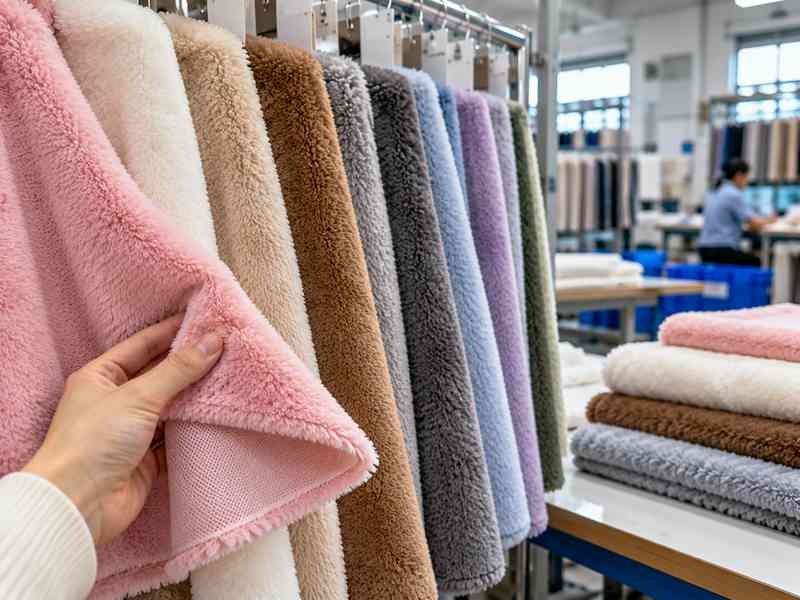
Velboa
Velboa offers a clean, short-pile surface that works well for detailed logos, printed elements and compact promotional plush. Ewin’s material reference range is approximately 160–260 g/m2 with 1–2.5 mm pile. The relatively controlled surface helps retain shape and makes small construction errors more visible, so pattern accuracy and seam finishing remain important.

Minky Short Plush
Minky is well suited to rounded mascot forms, faces and giftable products where a soft hand feel matters. Short pile keeps embroidered eyes and logos visible while the knitted base can wrap curved shapes smoothly. Development should still record GSM, pile height, stretch direction and approved color because generic material names alone are not precise enough for repeat production.
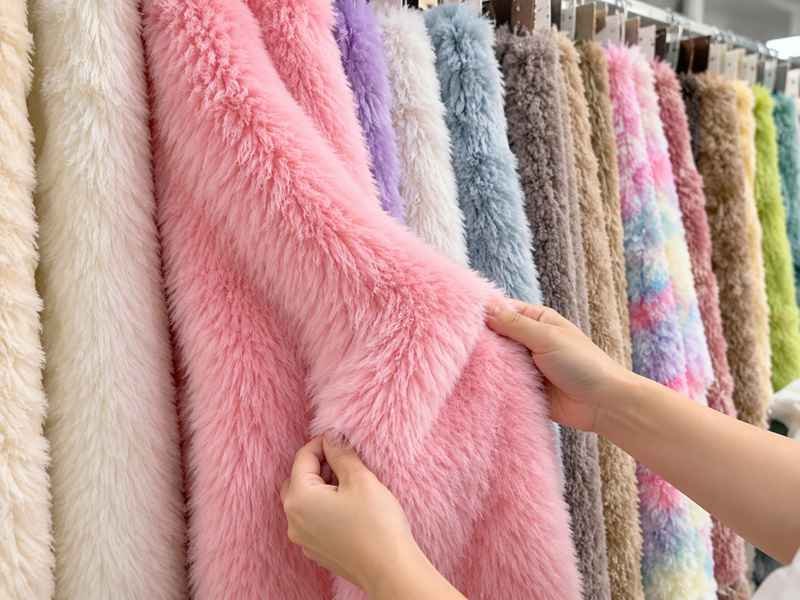
Faux Fur
Faux fur suits premium animals, expressive mascots and higher-value gift programs where texture is part of the visual identity. Longer pile can hide seams and create volume, but it can also swallow small embroidery and change apparent proportions. Face areas may need shorter pile, trimming, appliqué or separate fabric zones so important features remain readable after grooming.

Crystal Super Soft
Crystal super soft is a useful corporate-gift material when clean detail and a smooth, refined surface are required. A common development reference is around 180–280 g/m2 with roughly 1–3 mm pile. It supports embroidery and printing well, while the final BOM should identify the approved material because commercial naming can vary between textile suppliers.

Long Pile Plush
Long pile can create dramatic animals, monsters and statement merchandise. Development references can reach 30–80 mm pile depending on the intended effect. At these lengths, the pattern must compensate for hair direction and visual bulk; small logos are usually better moved to clothing, patches or labels instead of embroidered directly into deep pile.

Polar Fleece
Polar fleece offers a warm, stable surface and supports printing and embroidery well. A common engineering reference is around 160–320 g/m2 with a low 1–3 mm surface pile. It works particularly well for clothing, scarves, hats, flat character parts or promotional products where a textile feel is more suitable than a glossy plush surface.
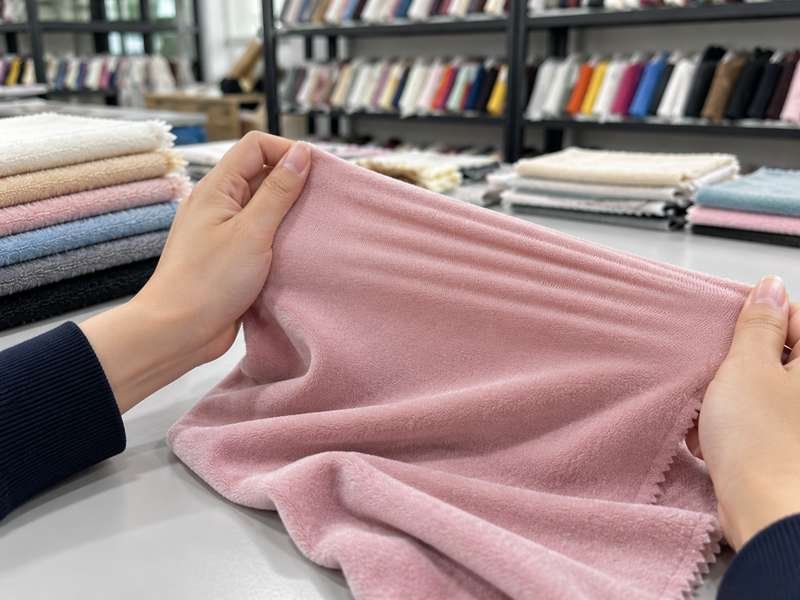
Stretch Plush
Stretch plush is useful for rounded heads, tight curves and forms that need smooth coverage over internal shaping. The same elasticity that improves curvature can also distort embroidery, dimensions and left-right symmetry if stretch direction is not controlled. Pattern grain arrows, embroidery backing and sewing tension should therefore be specified before the material is released for production.

Felt And Tricot
Felt and tricot are often supporting materials rather than main body fabrics. Felt can create crisp ears, badges, appliqué, soles or structural details, while thin tricot can carry fine print or flat color with minimal pile interference. These materials are useful when a brand element needs a sharper edge than soft plush fabric can provide on its own.
Logo Techniques Chosen For The Actual Surface
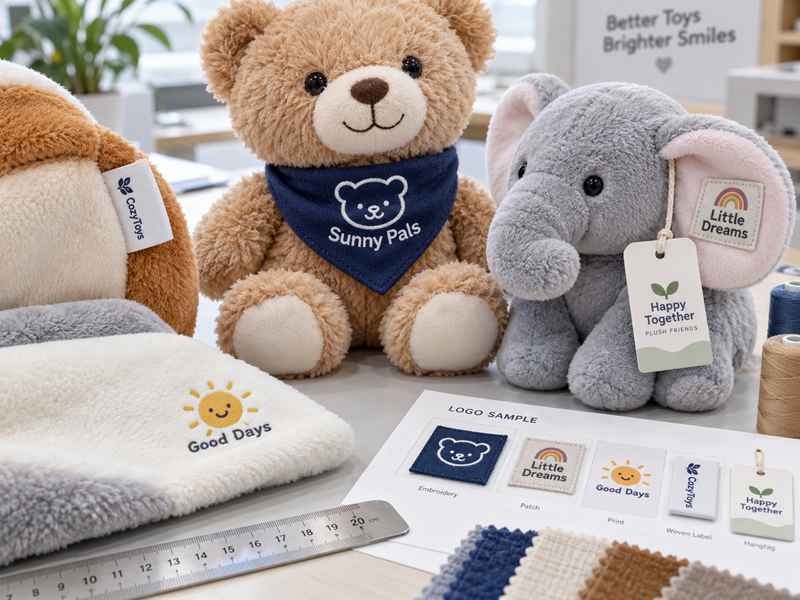
The best branding method depends on logo size, fabric pile, color count, curvature and expected handling. Ewin selects decoration after reviewing the finished location, not only the artwork file.
Computer Embroidery
Embroidery provides durable, dimensional branding for eyes, text, emblems and logos on short-pile plush, felt, canvas or garments. Stitch density, thread color, backing and final size need to be controlled. Very small letters can close up, while long pile may trap stitches, so simplification, larger scale or a short-pile logo zone may be recommended.
Screen Printing
Screen printing works well for solid corporate colors, large logos, garment graphics and repeated flat motifs. It performs best on smoother short-pile or textile surfaces where edges remain clear. Color count, registration, ink hand feel and curing conditions affect the result. Large printed areas should be sampled because heavy ink coverage can change the softness of the base material.
Digital Printing
Digital printing is useful for gradients, photographic artwork, complex color transitions and all-over patterns that would be inefficient to embroider. White polyester-based fabrics can support high-detail routes such as sublimation or digital transfer. Artwork resolution, seam placement and stretch should be considered so critical logos or faces do not distort where panels join or curve around stuffing.
Applique
Appliqué creates clean blocks of color or layered logo shapes without filling the entire area with dense stitches. It is effective for large letters, badges, clothing graphics and character markings. Edge stitching, base fabric compatibility and shape accuracy matter. Appliqué can also reduce stiffness compared with very dense embroidery when a large branded area must remain soft.
Woven Labels
Woven labels are useful for small brand names, legal lines and repeat identification where fine text would be difficult to embroider onto plush. Labels can be inserted in a seam, folded, looped or placed on clothing. Size, edge finish, fold direction and location should be approved because a label is both a brand element and a physical component of the product.
Printed Labels
Printed satin, nylon or similar labels can carry care information, composition, brand details, copyright copy or campaign information in a compact format. They are useful when several languages or more text are required. Artwork revision, dimensions and sewing position should be controlled with the packaging and compliance files so the final production uses the correct approved version.
PVC Rubber Patches
Soft PVC or rubber patches can create a modern raised logo on apparel, bags, accessories or hybrid plush products. They are useful when a brand wants crisp geometry that fabric processes cannot reproduce easily. Tooling, thickness, color, edge shape and attachment method affect cost and safety, so the part should be reviewed as a component rather than simply a decoration.
Branded Clothing
Sometimes the cleanest logo placement is on a T-shirt, scarf, hoodie, cap or removable uniform instead of the plush body. Clothing creates a flatter decoration surface and allows campaign messages to change while the core mascot remains stable. Garment fit, closure, label position and whether the clothing is removable or fixed should be defined during sampling.
Components And Accessories That Extend Brand Value
Accessories can turn a simple mascot into a campaign item, gift set or retail product. Each part needs a defined material, attachment method and approval reference.

Corporate Uniforms
Uniforms can reproduce staff clothing, branded jackets, aprons, sports jerseys or event outfits. Garments should be proportioned for the plush body rather than scaled directly from human clothing. Closures, collars, sleeve openings, logo location and removable versus fixed construction influence both appearance and labor. A garment pattern and decoration file should be released together.

Hats And Headwear
Caps, helmets, crowns, beanies and branded headwear create strong recognition but can distort ears or hide facial features if developed separately. The head accessory should be fitted on the filled sample, with attachment points planned so it stays correctly oriented during handling. Structured brims may need felt, foam, interfacing or a soft internal support.

Ribbons And Neckwear
Ribbons, neckerchiefs, ties and scarves are efficient branding surfaces for corporate gifts because they can carry printed or embroidered marks without changing the main plush pattern. Width, knot style, edge finish, safety and final orientation should be approved. For reorders or seasonal campaigns, neckwear can offer a controlled way to refresh the product.

Keychain Hardware
Metal rings, lobster clasps, bead chains and carabiner-style components can convert mini plush into portable merchandise. Finish, size, plating and load path must match the product. The attachment loop should connect securely into the body structure, and metal parts should be isolated during packing when necessary to avoid scratching embroidery, clear windows or other accessories.

Badges And Patches
Separate badges can represent departments, event years, sponsorship marks or collaboration logos. Embroidered, woven, felt, PVC or printed options provide different levels of detail and stiffness. Fixed patches reduce loose-part risk, while removable pieces create flexibility but add attachment and safety considerations. Final placement should be checked on the stuffed body rather than a flat panel.

Message Cards
Message cards can carry campaign copy, onboarding notes, anniversary stories, QR codes or redemption information without overloading the plush with temporary text. Card size, stock, finish, attachment and pack position should be planned with the unit packaging. When the message changes more often than the product, a card can preserve the core mascot specification across several programs.

Hard Components
Plastic, silicone, PVC or other hard components can add eyes, badges, tools, product features or structured accessories. These parts need clear dimensions, material, surface finish, color, fixing method and risk review. Sharp points, small-part concerns and assembly variation should be considered before tooling or purchase so the part supports the product instead of creating a late-stage problem.

Internal Structure Parts
Foam, interfacing, internal bags or soft supports can help ears, hats, flat logos, limbs or product shapes hold their intended form. The goal is not unnecessary rigidity; it is controlled presentation where ordinary fiberfill cannot maintain the approved silhouette. Internal elements should be defined in the BOM and verified on the sample because they affect hand feel and recovery.
Development From Corporate Brief To Golden Sample
Development turns visual brand assets into a controlled product definition. Every stage should remove uncertainty before the next investment in tooling, materials, packaging or mass production.
Convert Brand Intent Into Engineering Inputs
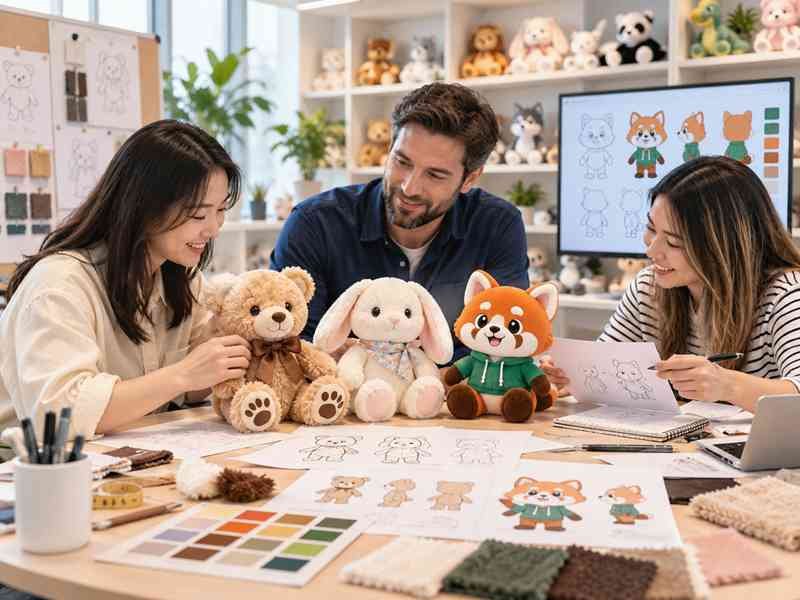
A corporate brief may begin with a logo, mascot illustration, existing promotional item or campaign concept rather than a full manufacturing specification. Ewin first separates visual requirements from commercial requirements: intended use, target quantity, target market, approximate size, audience, packaging expectation and required arrival date. The creative asset is then reviewed for recognition points such as silhouette, face, clothing, brand color and logo hierarchy. Pattern and material decisions should not begin from assumptions hidden in email. Missing views, unclear accessory construction or unknown logo dimensions are identified early. A preliminary product structure can then define body sections, likely seam routes, decoration zones, filling direction, removable or fixed accessories and packaging considerations. If the same mascot will later become a mini plush or keychain, shared visual DNA can be recorded at this stage so the family develops consistently. The output is a clearer development brief rather than a promise based only on a picture. This helps procurement compare specifications, creative teams understand what must be approved, and the sample room work from measurable decisions instead of interpretation. It also creates an early place to flag brand-color risk, small-detail limits, special material lead times, packaging dependencies and any item that could affect testing or the requested arrival date.
Build Pattern Structure And Prototype
Pattern making translates two-dimensional art into fabric panels that create the intended three-dimensional volume after sewing and stuffing. Curves, seam allowance, grain or pile direction, mirror symmetry, notch points and decoration placement all influence final appearance. A mascot with a simple outline can still require several pattern adjustments because soft material changes shape differently from a hard 3D render. The first prototype normally focuses on proportion, silhouette, posture and construction. Standard designs can be managed around an internal planning window of roughly 5–7 working days, character/IP projects around 7–12 working days, and complex functional structures around 10–20 working days, depending on material readiness and revision scope. These ranges are planning references, not fixed promises; timing begins when the required inputs are usable. During sampling, material swatches, embroidery files, prints, clothing and accessories are brought into the physical sample in controlled steps. Ewin compares the prototype against the brand asset and records changes in terms that the pattern maker, embroidery operator, material team and QC team can execute on the next revision. Where a brand has multiple approvers, photos, views and marked comments should reference the same sample revision so one department does not approve a version that another department has already replaced.
Approve Final Details And Freeze Production
Sample revision should converge toward a product definition rather than continue as open-ended visual changes. Comments are separated by category – proportion, face, material, color, embroidery, sewing, filling, accessory and packaging – and linked to the intended revision. Minor local changes may require only a short update; major shape or material changes can trigger new pattern work, another decoration file or additional material approval. The final approved sample becomes more useful when paired with the records needed for production: released pattern, current BOM, decoration artwork, color reference, dimensions, filling direction, accessory specification and packaging version. A Golden Sample then provides a physical approval reference for manufacturing and inspection. Ewin’s workflow treats the sample as part of a controlled NPI process, not as a standalone object that becomes disconnected from production files. For corporate programs with several approvers, the approval scope should also be clear: which sample revision was approved, what packaging version applies, and whether any later change affects cost, timing, testing or production release. This discipline is especially important when one mascot becomes several SKUs or seasonal editions. A final release review can confirm that product, logo artwork, labels, packaging and shipment assumptions all point to the same current version before the production team begins material issue and line setup.
Keep Approved Samples Aligned With Mass Production
Corporate programs are easier to control when every approved object has a current revision. Sample, BOM, artwork, pattern and packaging should release production together.
| Controlled Item | What Should Be Frozen | Why It Matters |
|---|---|---|
| Golden Sample | Approved physical appearance, hand feel, filling and assembly | Provides the visual and tactile reference for production and QC |
| Pattern | Current panel shapes, seam allowances, grain or pile direction, notches | Prevents production from using an earlier silhouette or fit |
| BOM | Fabric ID, color, GSM, pile, filling, accessories, labels and packaging | Stops unapproved material or component substitutions |
| Embroidery / Print | Artwork revision, final size, placement, thread or ink color | Protects face, logo and graphic consistency |
| Measurements | Key dimensions and agreed measurement method | Gives production and QC one dimensional reference |
| Packaging | Approved artwork, pack structure, barcode, labels and carton details | Prevents correct products from shipping in the wrong pack version |
| Change Record | What changed, who approved, effective revision and affected SKU | Keeps late changes from creating mixed specifications |
Manufacturing Details That Protect Brand Consistency At Scale
Mass production should reproduce the released product definition, not reinterpret the design. Process controls focus on the points most likely to change appearance, hand feel or brand detail.
Controlled Material Cutting
Fabric is checked against the released material and color before cutting. Pattern pieces are grouped by SKU, color and revision, while grain, stretch and pile direction are marked where they affect appearance. Incorrect nap direction can make matching panels look like different colors under light, so cutting discipline is especially important for corporate colors and symmetrical faces.
Pile Direction Planning
Short pile, velvet, faux fur and long-pile fabrics can reflect light differently depending on direction. Pattern arrows help keep the intended nap consistent across face, body and limbs. Long pile may also require extra seam-edge clearing or trimming. These choices protect visual symmetry and reduce the risk of one side appearing darker, flatter or less defined than the approved sample.
Decoration Before Assembly
Embroidery and many print processes are completed on flat panels before the plush is sewn. Placement references are linked to the actual pattern so logos, eyes and mouth details land correctly after seams close and the form is filled. Operators check file version, thread or ink color, orientation and panel identity before decorated parts move into sewing bundles.
Sewing Structure Control
Sewing sequence affects curve quality, symmetry and accessory alignment. Complex head shapes, inserted ears, gussets, clothing and multi-material seams need defined construction order and seam allowance control. Excess seam bulk can change a small mascot more than a large one. Operators use the released pattern and approved sample rather than judging shape only from a photograph.
Filling And Shape Control
Filling determines softness, posture and even facial expression. Too much fiber can widen cheeks, shorten limbs or make a sitting mascot stand; too little can collapse key contours. Filling type and target hand feel are established from the approved sample, while critical areas such as head, muzzle, body and limbs are shaped consistently before the closing seam is completed.
Accessory Attachment
Hats, badges, tails, keychain loops, clothing and hard components should be attached through a defined method rather than hand-positioned differently on each unit. Location, orientation and load path are checked against the approved sample. For removable components, closure type and fit are also controlled so the item remains functional without looking loose or misaligned.
Final Shaping And Grooming
After sewing and filling, plush often needs seam picking, brushing, trimming, thread removal and final shaping. Long pile may hide embroidery or seam lines until it is groomed. Final shaping restores the intended silhouette and prepares the product for inspection and packing. Presentation standards should reflect how the product is expected to look when opened by the recipient.
SKU Separation
Corporate programs can include similar products with different logos, clothing, tags or packaging. Physical separation, bundle identification and SKU references reduce mix-ups during sewing, finishing and packing. The risk becomes higher when only a small badge or label distinguishes variants, so production identification must remain visible until each unit enters its correct approved packaging.
Quality Control Focused On Corporate Brand Risk
Quality control should verify the details that can damage brand perception or disrupt distribution. Inspection references are tied to approved product, material and packaging definitions.
Incoming Material Control
Main fabric, clothing textile, embroidery thread, accessories, filling, labels and packaging are checked before use. Material ID, color lot, GSM, pile height, surface appearance and approved reference are important for visible components. Incorrect identity or version is held rather than accepted because it “looks close,” preventing material variation from spreading through a completed batch.
In-Process Checks
IPQC moves checks toward the operation where a defect can still be corrected efficiently. Decoration placement, seam alignment, accessory position and key dimensions can be reviewed before later sewing or filling hides the cause. Catching the wrong embroidery file before assembly is far less disruptive than opening finished plush after thousands of units have already moved downstream.
Measurement And Shape
Key dimensions are measured using an agreed method because soft products can be compressed or stretched during inspection. Length, width, height, limb position and face spacing should reflect the product’s critical-to-quality points rather than an excessive list of low-value measurements. Golden Sample comparison helps evaluate soft shape attributes that cannot be controlled through dimensions alone.
Decoration And Branding
Logo, face embroidery, print and appliqué are checked for color, file version, clarity, placement, orientation and surface condition. Brand colors are compared against approved references under consistent conditions where practical. Text legibility is especially important for corporate logos, and mixed artwork revisions should be prevented through file control before production rather than discovered during final inspection.
Final Product Inspection
FQC reviews finished appearance, workmanship, filling, seams, loose threads, stains, accessories, labels and functional points before packing. The final product should present the same visual identity as the approved sample, including posture and grooming. For programs with several SKUs, inspection also verifies that the correct product identity is matched with the correct label and packaging version.
Pre-Shipment Release
Before shipment, OQC or the agreed final inspection route can verify quantity, pack-out, carton marks, barcode scanability where applicable, packaging version and final inspection status. Pre-shipment photos or records can support release. The goal is not to create paperwork for its own sake, but to prevent correct plush from being delayed by avoidable packaging, labeling or carton mistakes.
Certificates, Compliance & Quality Assurance
Ewintoys follows structured quality and compliance practices for custom plush production. We hold relevant certifications and support additional testing, inspection, and compliance documentation based on specific product requirements and destination markets, helping brands meet different international standards with confidence.















Compliance And IP Protection Planned Before Production
Market, age grade, product structure and brand confidentiality influence development decisions. Ewin keeps compliance review and IP control connected to the specific program rather than relying on generic claims.
Target Market Review
Safety requirements differ by destination, product classification and intended age. A corporate mascot sold as a toy may need a different compliance route from a decorative promotional item. Ewin reviews destination, age grade, materials, small parts, accessories, labeling and packaging inputs so testing can be planned for the actual product version rather than assumed from a previous design.
Material Component Risk
Small metal parts, plastic eyes, batteries, magnets, hard badges, weighted inserts or scented elements can change the risk profile of a plush product. Even simple textile items need material and construction review. Components should be identified before sampling is finalized so attachment, accessibility, chemical or mechanical considerations can be addressed before mass production rather than after testing exposes a redesign need.
Testing Documentation
Applicable testing should be tied to the finished product version and target market. For U.S. toy programs, ASTM F963 and CPSIA-related requirements may be relevant; EU toy programs may involve EN 71 and related obligations. Ewin can support test planning and coordination, while specific pass claims should always be supported by the corresponding report for the actual submitted sample.
Labels And Warnings
Wash labels, warning labels, age information, copyright lines, country or origin-related copy, barcode data and packaging text should follow the approved artwork and market requirements. These items are controlled as versions because a packaging or legal-copy mistake can block a shipment even when the plush itself is correct. Final wording remains subject to the responsible brand and applicable requirements.
Confidential Brand Assets
Unreleased mascots, campaign concepts and collaboration artwork should be treated as controlled project information. Access to artwork, samples, photography and supplier information can be limited according to project needs. NDA arrangements, file permissions and restricted sample handling are more meaningful than vague confidentiality promises because they define how sensitive brand material is actually managed during development.
Controlled Change Approval
A late material, accessory or packaging change can affect appearance, compliance, cost and timing at the same time. Change control records what is being replaced, why, which SKUs are affected, whether a new sample or test is required and who approves release. Corporate programs benefit from this discipline because several internal stakeholders may otherwise assume different versions are current.
Packaging Options For Gifts Events And Retail
Packaging should protect presentation, carry the right brand information and fit the distribution channel. Ewin develops pack-out around the plush instead of treating packaging as an afterthought.

Protective Polybag
A clear polybag is efficient for warehouse handling, bulk distribution and products that do not require premium presentation. Bag size, ventilation, sealing, warning information and compression level are selected around the product. Long pile, structured hats and hard accessories may need more room or internal protection so the product can recover to the approved presentation after unpacking.

Branded Belly Band
Paper belly bands add branding and campaign information without fully enclosing the plush. They work well for employee gifts, retail display and eco-conscious presentation where the product should remain visible. Band width, print finish, fastening method and placement need to be tested on the actual plush so the band remains secure without flattening the face or damaging pile.

Hangtag Packaging
Hangtags can carry logo, campaign message, story, care information, copyright copy or QR content. They are flexible across giveaways and retail programs because artwork can change without altering the plush pattern. Tag size, hole position, string or fastener, orientation and attachment point should be approved. For multiple SKUs, tag version becomes part of product identity control.

Gift Box
Gift boxes suit executive gifts, client appreciation, anniversaries and premium employee programs. Box dimensions should come from the finished product and its required recovery space, not from artwork alone. Inserts, tissue, message cards and display orientation can improve the unboxing experience, while carton efficiency and shipping protection still need to be considered so presentation does not create avoidable logistics cost.

Window Color Box
Window boxes combine visual display with stronger shelf or gift presentation. The window should show the character’s most recognizable side without allowing the product to shift away from the opening. Box artwork, insert structure, product fastening and barcode location are reviewed together. This format is useful when a corporate plush also enters retail or reception-area sales.

Campaign Gift Set
Gift sets combine plush with cards, textiles, small accessories or branded merchandise in one pack. Component count, insert layout and pack sequence should make assembly repeatable. The set is approved as a complete unit, including what the recipient sees first. This is especially useful for onboarding, VIP mailers, collaboration kits and seasonal internal campaigns.

Display And PDQ
Display packaging can reduce store setup work when plush enters a retail, event-shop or branded-space program. Product orientation, assortment ratio, unit visibility and replenishment should be considered during design. The display itself then needs protection inside a master carton. SKU and barcode information must stay readable so staff can identify products quickly without opening individual packs.

Master Carton Pack-Out
Master-carton design affects protection, cube, assortment and shipment handling. Carton quantity, dimensions, gross weight, shipping mark and inner arrangement should match the approved pack-out. For multi-SKU programs, assortment ratios or separated cartons should be planned before production closes. Pre-shipment checks can confirm carton count, marking, packaging version and destination details before handoff.
Build The Program Backward From The Required Date
| Planning Stage | Main Decision | Timing Logic |
| Required Arrival | Destination, event or launch date | Establish the non-negotiable date before production assumptions |
| Shipping Plan | Air, sea, express, split shipment or other agreed route | Depends on destination, urgency, volume and landed-cost priorities |
| Pack-Out Release | Packaging, labels, barcode, carton marks, assortment | Must be approved before final packing begins |
| Mass Production | Released Golden Sample, BOM, pattern and artwork | Capacity is reviewed against SKU mix, process complexity and material readiness |
| Final Approval | Approved sample and packaging version | Late changes can reset material, artwork, testing or schedule decisions |
| Prototype / Revision | Standard, character or complex development route | Internal planning reference: about 5–7, 7–12 or 10–20 working days by complexity |
| Requirement Review | Usable artwork, size, quantity, market, packaging and target date | Timeline begins when key inputs are executable rather than still undefined |
MOQ And Cost Depend On The Product Definition
| Cost Or MOQ Driver | What Changes | Cost-Control Direction |
|---|---|---|
| Order Quantity | Setup and labor are spread over more or fewer units | Compare meaningful quantity tiers instead of one isolated price |
| Product Size | Fabric area, filling, labor, carton cube and freight | Protect recognition while testing whether a smaller format still works |
| Fabric | GSM, pile, stock color, custom dye and special texture | Use stock colors or shared materials where brand requirements allow |
| Logo Technique | Stitch count, color count, print setup, appliqué labor | Match technique to artwork instead of over-engineering every logo |
| Accessories | Clothing, hardware, PVC, molded or special parts | Keep signature details; simplify secondary pieces if needed |
| Packaging | Polybag, band, tag, gift box, display and inserts | Put presentation cost where the recipient actually experiences it |
| SKU Count | Separate artwork, material, setup, packing and inspection | Share body platforms, fabric or packaging where the collection permits |
| Compliance Inputs | Testing, labels, components and market requirements | Review before final sample so redesign costs are not discovered late |
Manage Multi-SKU Corporate Programs Without Losing Product Control
Corporate programs often grow from one product into collections, regional packs and repeat campaigns. SKU-level control keeps design, approval, packaging and shipment changes connected.
One Program Identity
A program should have one commercial and project framework even when it contains many products. Program ID, brand, market, launch date, responsible teams and shipment strategy create a common reference. Individual SKUs then sit beneath that structure, allowing the same schedule and escalation route to govern mascot plush, mini versions, keychains and gift sets together.
SKU Master Control
Each SKU should have a unique identifier connected to size, colorway, pose, accessory, sample revision, BOM, packaging and production status. Names such as “the red bear” or “small mascot” are not strong enough for complex programs. A SKU master helps different departments refer to the same product and reduces confusion when several variants look similar.
Shared Material Strategy
A collection can sometimes share body fabrics, embroidery thread, filling, labels or packaging components. Shared materials can improve consistency and simplify MOQ planning, but only when the brand specification allows it. Ewin reviews which elements can be standardized and which remain unique so cost reduction does not erase meaningful character or campaign differences.
Packaging Version Mapping
The same plush may require employee-gift packaging, retail packaging or region-specific legal copy. Packaging therefore needs its own revision mapping rather than being treated as one generic box or label set. SKU-to-packaging control links product, tag, barcode, language and carton configuration so the right item enters the right approved pack before shipment.
Shipment Wave Planning
Large corporate programs may need stock delivered to different offices, agencies, warehouses or event locations at different times. Consolidated, split or urgent partial shipments can be evaluated based on quantity, destination and deadline. The important control is keeping each shipment wave tied to the current product and packaging version so speed does not create mix-ups.
Reorder And Edition Control
A successful campaign often becomes a reorder, new region or seasonal edition. Reorders should begin from the latest approved Golden Sample, BOM and artwork rather than from memory. Edition changes are recorded separately so the core product can be reproduced consistently while new clothing, colors, cards or packaging are introduced under their own controlled revisions.
Corporate Plush Program Cases Across Different Markets
U.S. Employee Mascot Program
A U.S.-based employee services company planned a 4,800-piece internal recognition program around an existing illustrated mascot. The product was developed as a 22 cm seated plush with embroidered facial details, a removable branded T-shirt and a message card for milestone recognition. Development focused on matching the company’s signature blue across body fabric, shirt print and card artwork. Prototype comments were separated into head shape, eye spacing, T-shirt fit and logo size before the final sample was frozen. Bulk release used the approved sample, current BOM and garment artwork, with individual polybag protection and grouped cartons for distribution to several corporate locations.
Germany Industrial Brand Gift
A German industrial technology company wanted a physical version of a recognizable product icon for 3,200 client gifts used by sales teams and distributors. The concept began as a hard-edged 2D symbol that could not simply be copied into a soft form. Pattern development introduced controlled thickness, rounded corners and an internal support layer so the shape remained readable after stuffing. A small embroidered wordmark was moved from a curved side panel to a flatter front zone for better legibility. The final pack used a printed belly band and compact master-carton arrangement designed for regional distribution, while artwork, packaging and product revisions remained linked under one program file.
Singapore APAC Event Collection
A Singapore-based regional brand team prepared an APAC event collection totaling 6,000 units across three SKUs: a 20 cm mascot plush, a 10 cm mini plush and a plush keychain. The main challenge was keeping the mascot recognizable after size reduction while controlling event pack-out. Ewin-style development logic would preserve eye language, signature ears and corporate color while simplifying small clothing seams and converting fine logo detail into cleaner embroidery. Shared body fabric and thread colors would reduce unnecessary material fragmentation. Each SKU would retain its own sample, BOM and packaging version, then ship in planned assortment cartons for event distribution and later internal replenishment.
Why Corporate Brand Programs Fit Ewin Toys Manufacturing System
Scale matters only when it is connected to development, controlled manufacturing and project coordination. Ewin combines corporate-brand relevant resources instead of presenting isolated factory statistics.

Product Development Center
Ewin operates a 60+ person Plush Product Development Center supporting concept review, pattern development, material selection, prototypes and manufacturing specifications. The knowledge base records a development throughput of 1,700+ sample versions per month, covering first samples, revisions, material or color versions, sales samples, testing samples, PP and Golden Sample work rather than only first prototypes.

Integrated Manufacturing System
A 95,000+ m2 manufacturing system and 1,900+ manufacturing personnel support cutting, embroidery and printing, sewing, stuffing, hand assembly, finishing, quality inspection, packaging, warehousing and logistics. Corporate programs benefit when approved design information can move through these stages under one manufacturing framework instead of being reinterpreted by disconnected production steps.

Version Controlled Release
Ewin’s manufacturing logic connects the approved Golden Sample with frozen BOM, released pattern and current artwork and packaging revisions before bulk production. This structure is valuable for corporate programs because a late logo, color, label or packaging change can otherwise create mixed versions across thousands of units. Controlled release makes each approval more useful to production and QC.

Program And Delivery Coordination
Corporate programs often involve several SKUs, departments, pack versions and shipment dates. Ewin’s project structure can connect product identity, sample status, BOM, packaging, barcode where applicable, production and shipment planning under one coordination window. Capacity is reviewed against construction, SKU mix, material readiness, decoration load and delivery window rather than represented by one headline output number.
Frequently Asked Questions
Yes, color can be developed against Pantone references, approved swatches or other agreed physical standards. The actual fabric matters because pile direction, luster and texture change perceived color. Final approval should therefore be made on the selected material and sample rather than relying on a screen value alone. Approved fabric, color and decoration references are then recorded for production.
Yes. A logo, mascot artwork, brand guide, reference product or short campaign brief can begin feasibility review. Ewin identifies missing views, size assumptions, material direction, branding method, packaging needs and target timing before pattern work progresses. More complete source files reduce interpretation, but a finished technical pack is not required to begin development.
Standard custom plush programs are commonly evaluated from around 500 pcs per style, but effective MOQ is project-dependent. Custom-dyed fabric, special hardware, molded parts, printed packaging, electronics, tooling and multiple small SKU splits can raise the practical quantity. Ewin reviews the full product definition before treating MOQ as a fixed marketing number.
Lead time depends on complexity, material availability and revision scope. Internal planning references are roughly 5–7 working days for standard forms, 7–12 working days for character/IP projects and 10–20 working days for more complex or functional structures. Final timing starts after key development inputs are clear enough to execute.
Bulk production should be released from the approved Golden Sample together with the current BOM, pattern, embroidery or print files, color references and packaging revision. QC then checks production against these controlled references. The goal is to prevent a visually approved sample from becoming separated from the files actually used by material, sewing, decoration and packing teams.
Yes, multi-SKU programs can be organized through SKU-level control of product identity, sample revision, BOM, packaging, barcode where applicable, testing, production and shipment status. Shared materials and common body platforms can also be evaluated to simplify the collection without losing the defining differences between products, editions or regional packs.
Yes. Options can include polybags, belly bands, hangtags, gift boxes, window boxes, campaign sets, display packaging and master-carton pack-out. Packaging is developed around product size, presentation, distribution channel and shipping requirements. Message cards, legal copy, labels and customer-supplied barcode data can be included in the approved packaging version where required.
Yes. Planning can begin with the required arrival date and work backward through shipping, packaging release, mass production, final approval, prototype revision and requirement review. A reliable schedule depends on SKU count, quantity, material readiness, packaging, testing and destination, so the target date should be shared before assumptions are made about production timing.
Unreleased artwork, mascots and collaboration assets can be managed through NDA arrangements, access control and restricted handling of files, samples and photography according to project needs. Confidentiality is treated as part of the development workflow. Public use of client names, logos or project images should require the appropriate permission rather than being assumed from the manufacturing relationship.
Send the logo, mascot artwork or reference image available, target size or approximate size range, quantity, intended use, target market, desired packaging, required arrival date and destination. If several SKUs are planned, include the preliminary SKU list. Ewin can then identify the missing technical decisions needed for sampling and a more comparable commercial review.

Send Your Corporate Plush Program For Review
Corporate plush development moves faster when the first discussion includes the commercial purpose as well as the artwork. Send Ewin the files already available, even if the specification is not complete. The team can review product structure, branding method, likely materials, sample path, packaging questions and the information needed before a production quotation is finalized.
For the first review, include:
- Logo, mascot artwork, character sheet, reference product or campaign visual.
- Preferred product type and approximate size; if undecided, explain how the item will be used.
- Quantity by style or an estimated quantity range; standard projects are often first assessed from around 500 pcs per style.
- Corporate use case: employee gift, client gift, event, promotion, retail merchandise, collaboration or another program.
- Target market and intended age group where relevant to compliance planning.
- Packaging direction, such as polybag, tag, belly band, gift box, display pack or gift set.
- Required arrival date and destination so development, production and shipment can be reviewed against the real schedule.
- Any confidentiality, brand approval, multi-SKU or regional packaging requirements that should be built into the program from the start.
