
High-Fidelity IP Plush Development Partner for Brands & IP Owners
Transform original characters into production-ready plush collectibles with Ewin Toys’ 20+ years of plush manufacturing expertise. From 3D interpretation and pattern engineering to sampling and mass production, our development team helps protect character details, maintain consistency, and deliver plush products ready for global markets.
60+ Product Development Specialists | 5-7 Days Sampling | MOQ 500 pcs | Character Detail Restoration | IP Confidentiality Support
IP Teams That Need Fidelity Before Scale
IP Owners
Licensing Teams
Toy Brands
Collectible Brands
Game Studios
Merchandise Programs
IP Plush Formats Requiring Different Fidelity Decisions
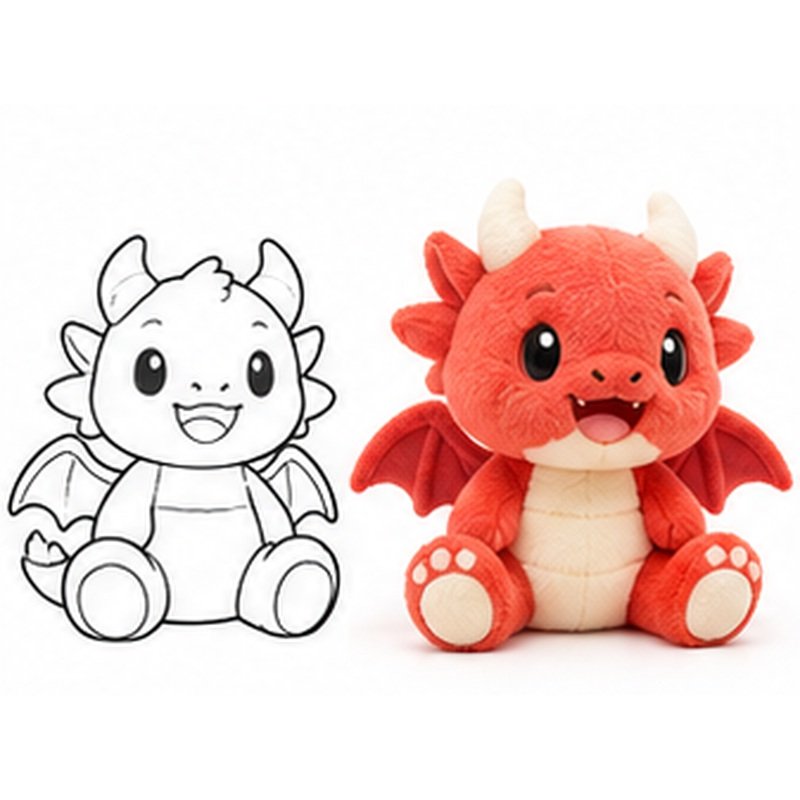
Character Plush

Mascot Plush

Anime Plush
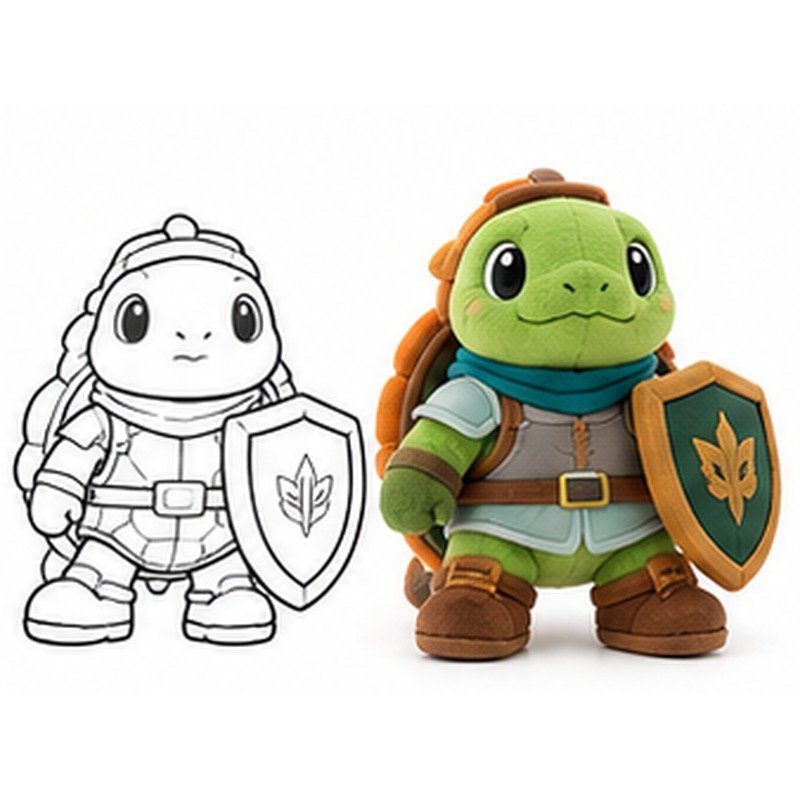
Game Character Plush

Collectible Plush

Designer Plush

Mini Plush
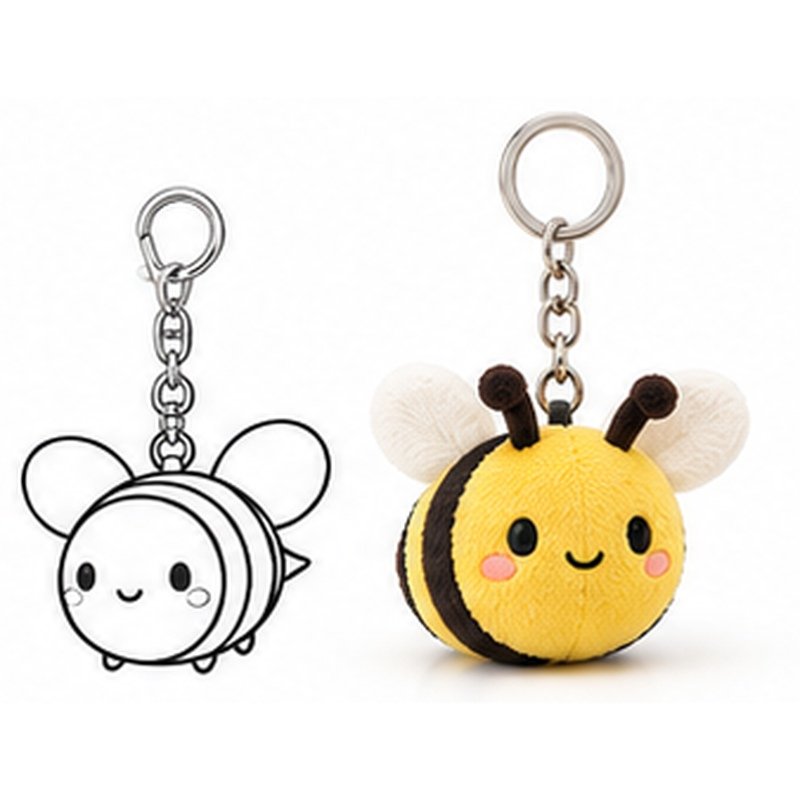
Plush Keychains
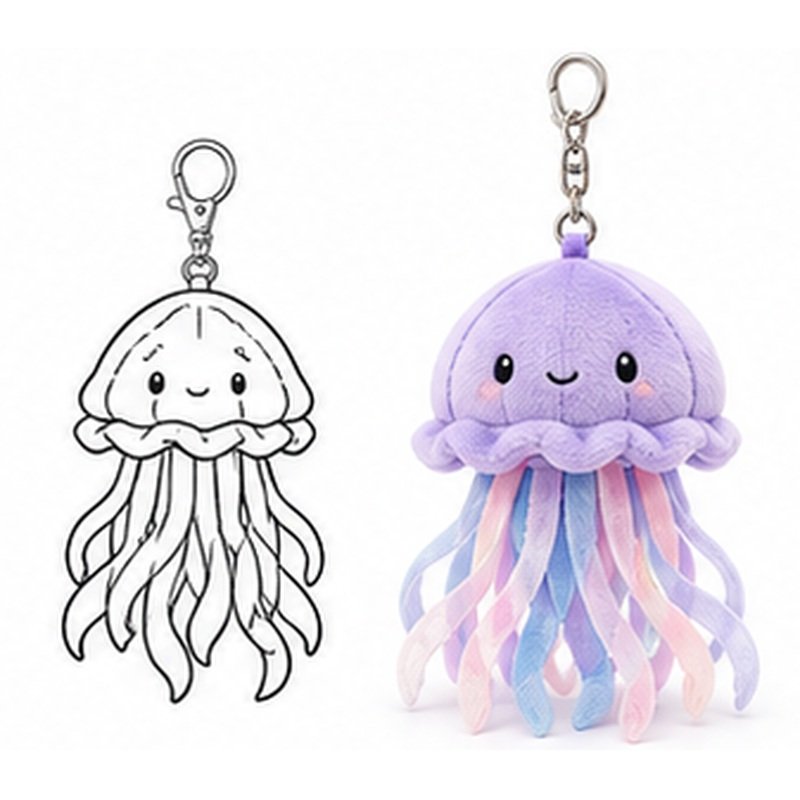
Plush Bag Charms
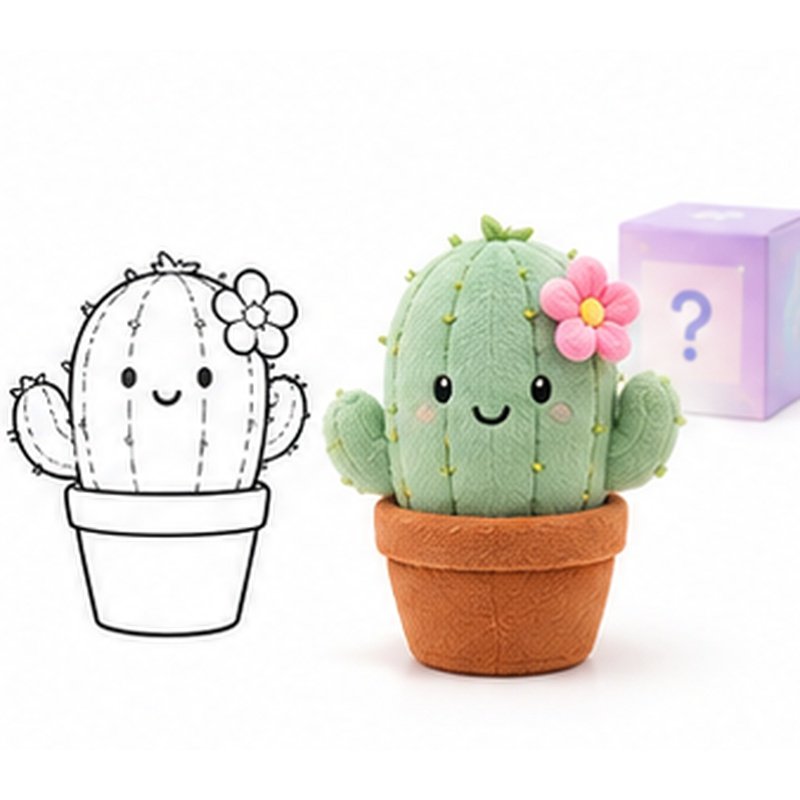
Blind Box Plush
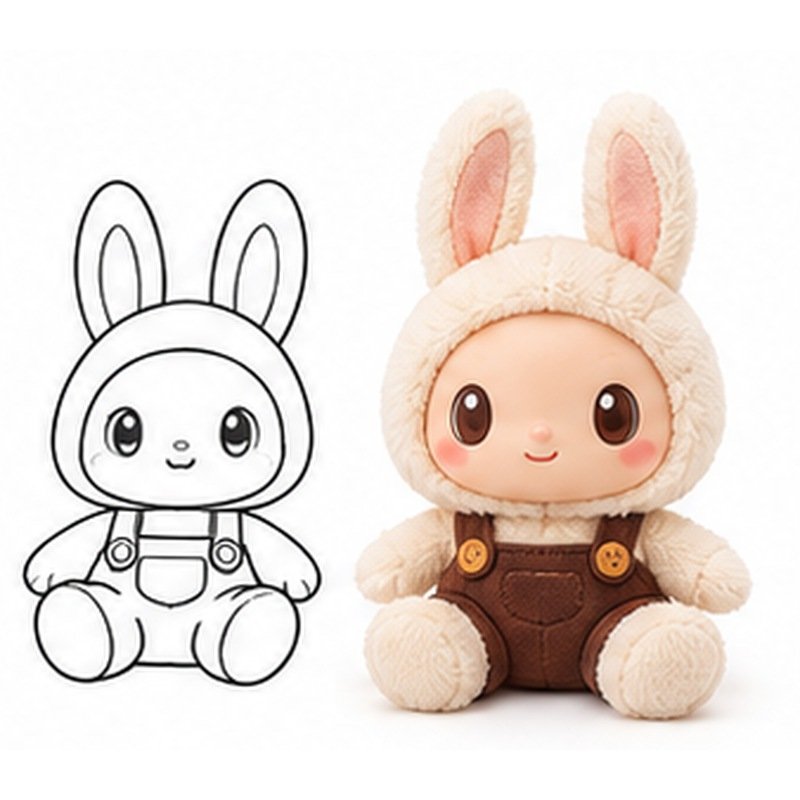
Hybrid Plush
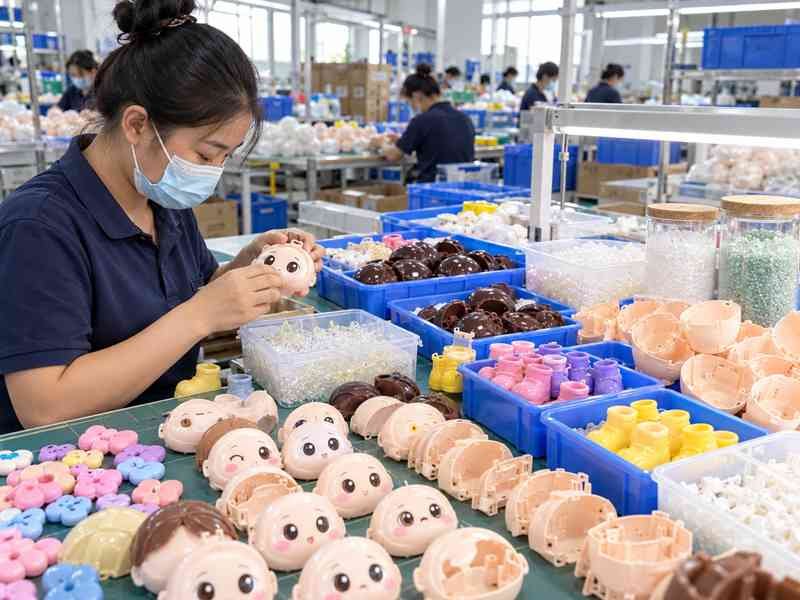
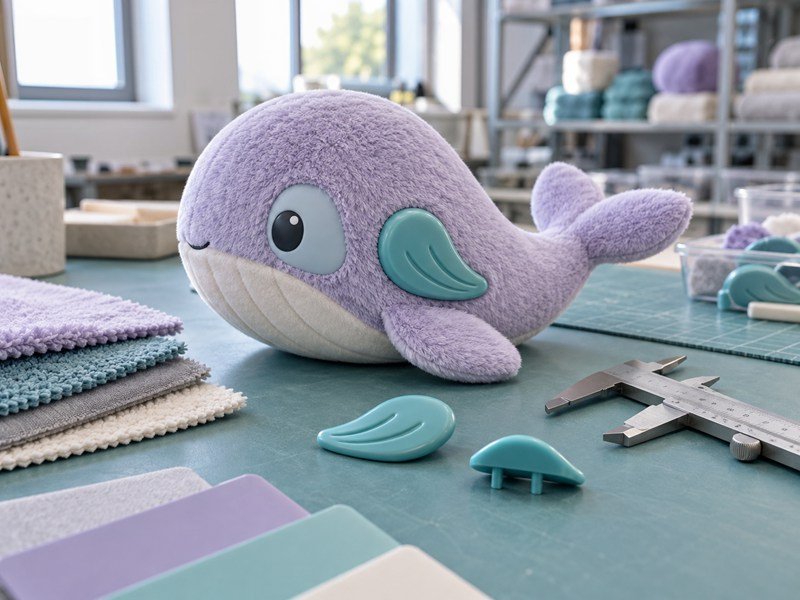
Vinyl-face, PVC-detail or other soft-hard hybrid plush can preserve highly specific character geometry that fabric alone cannot hold. Tooling, surface finish, attachment method and sharp-edge risk must be reviewed together with the plush pattern. Molded parts also change effective MOQ, sample sequence, packaging protection and compliance planning. Soft-hard interface dimensions should be frozen before tooling and production release.

Electronic Plush
High Fidelity Means More Than Looking Similar
Visual Fidelity
Recognition starts with silhouette, proportion, face, expression, color blocking and signature features. A plush can contain every decorative detail and still feel wrong if the eye line, head width or posture changes. Visual review should therefore prioritize character DNA first, then secondary details, and compare several viewing angles instead of relying on one front image.
Engineering Fidelity
Artwork has no seam allowance, stuffing pressure, stretch, pile direction or gravity. Engineering fidelity means the final pattern, materials, decoration and internal structure recreate the intended visual result using controls production can repeat. A beautiful hand-adjusted prototype is not enough if the same shape depends on one technician manually posing every unit.
Production Fidelity
Approval only creates value when bulk units continue to match the released definition. Production fidelity ties the Golden Sample to the current pattern, BOM, embroidery or print files, filling references, accessory position, packaging version and QC checkpoints. Changes should be reviewed before release so a late material or process substitution does not quietly alter the character.
Ewin Character Fidelity Review Method for IP Plush
Lock Character DNA Before Pattern Decisions
High-fidelity work should start by deciding which references are authoritative. A style guide, front-side-back character sheet, approved color artwork, existing physical sample and 3D render can conflict with one another. Ewin first establishes the primary reference and identifies critical IP features: silhouette, head-to-body ratio, eye line, face shape, hairstyle, ears, pose, color blocks, costume, logos and signature accessories.
Reference Lock: The development team should work from one controlled reference set rather than collecting screenshots from different seasons or media. When artwork is incomplete, assumptions for side depth, back details, accessory attachment and posture should be listed for approval instead of silently invented.
Feature Priority: Not every detail deserves equal engineering effort. A tiny hidden seam can move; the signature eye angle cannot. Ranking features by recognition value helps protect the character while giving pattern, cost and DFM work enough room to solve manufacturing constraints.
Multi-angle Review: Front, 45-degree, side, back and intended display pose should be checked because a sample can look accurate from one photograph while losing the character from another angle. This becomes especially important for large heads, long ears, tails, hair layers and sitting balance. A short review note should capture what remains open after each angle check so the next revision does not repeat an already-approved decision.
Revise in Stages, Then Lock the Approved Definition
ECFRM should move from large visual decisions to smaller details. Silhouette and proportion are reviewed first, followed by face and expression, surface language, costume and accessories, then pose, balance and manufacturability. Correcting the eye embroidery before the head volume is stable often creates repeat work.
Silhouette Review: Compare head width, body mass, ear angle, limb length, tail direction and overall pose before judging embroidery. The objective is immediate character recognition at a distance.
Face and Expression: Check eye spacing, eye height, mouth-to-nose relation, muzzle volume, brow direction and symmetry. Embroidery location must be reviewed together with face curvature and stuffing pressure because the same DST file can read differently on a different surface.
Surface and Costume: Confirm pile height, nap direction, color, print scale, appliqué, clothing layers, logos and accessory proportions. Long pile may hide fine facial graphics; elastic materials can pull embroidered features out of alignment.
Golden Sample Lock: Final approval should create a production reference package – approved physical sample, released pattern, BOM, current decoration files, key measurements, material/color references and critical process notes – so production and QC are not asked to interpret the character again. The approved pack should also identify which features are visually critical and which tolerances can be handled through normal production control without reopening creative approval.
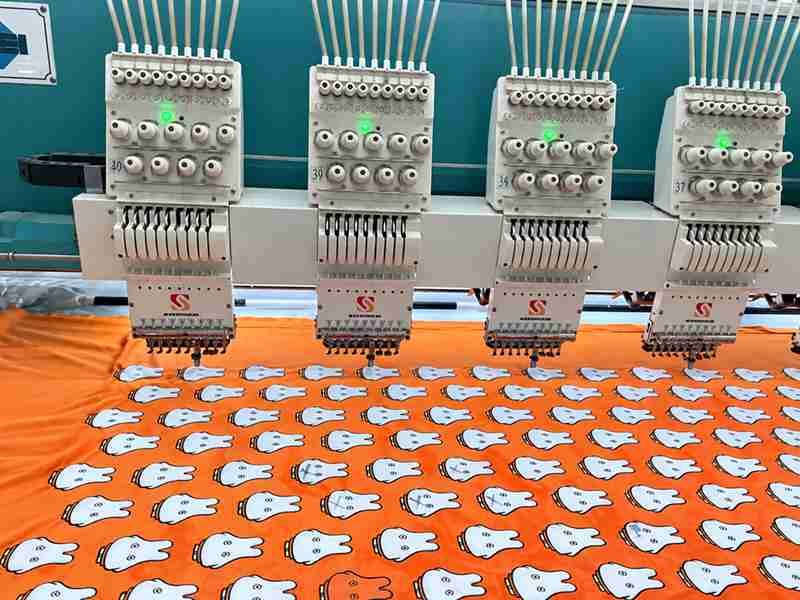
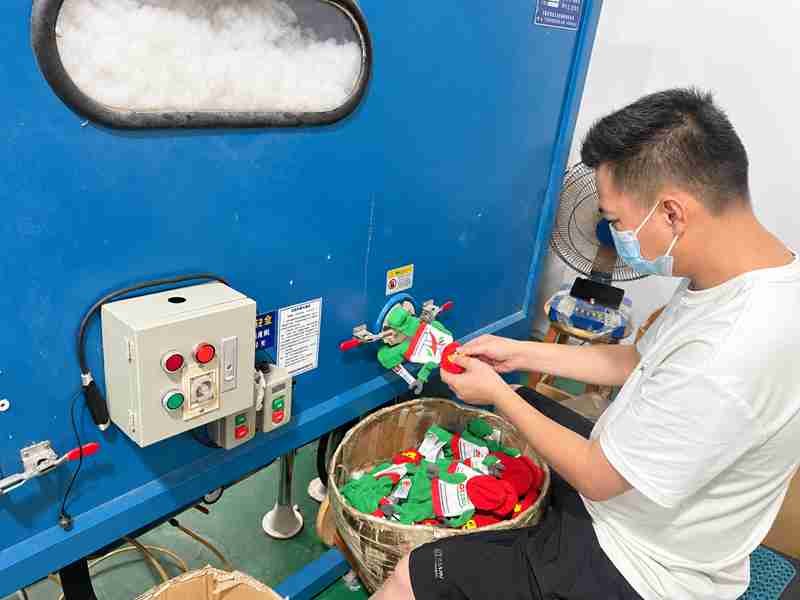
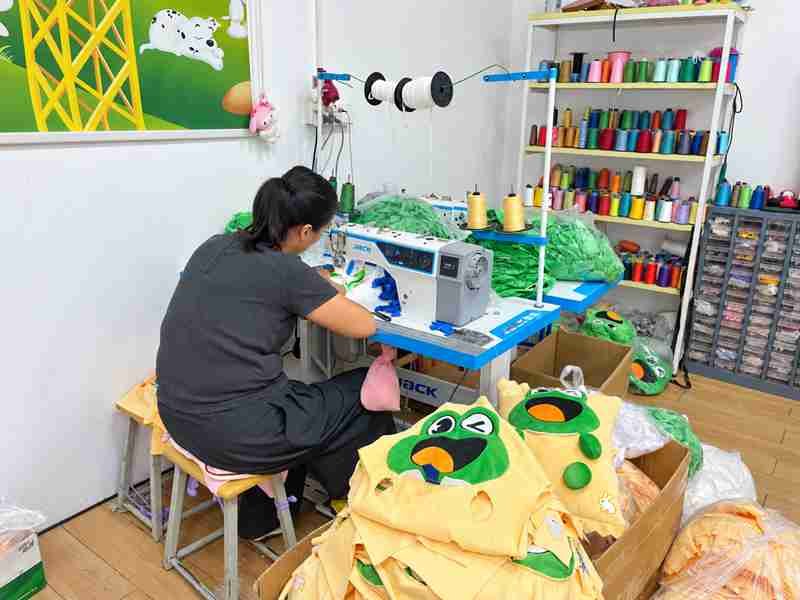
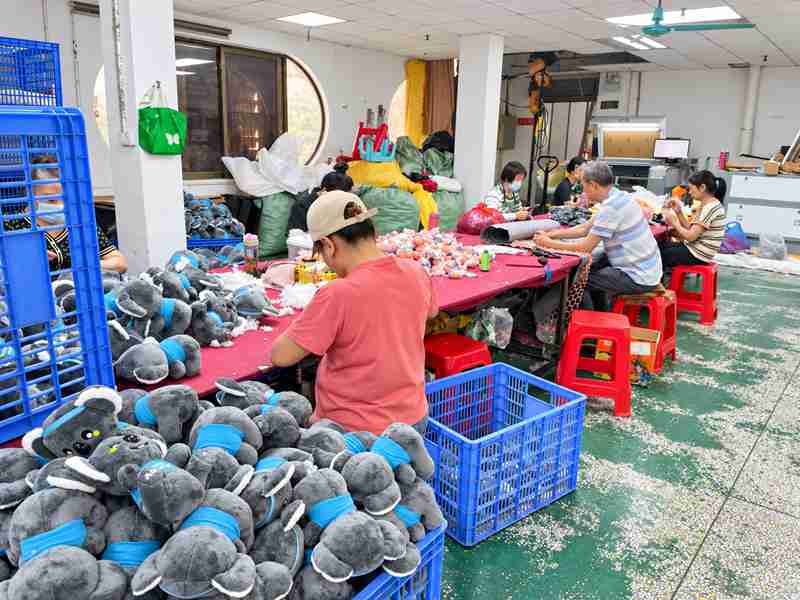
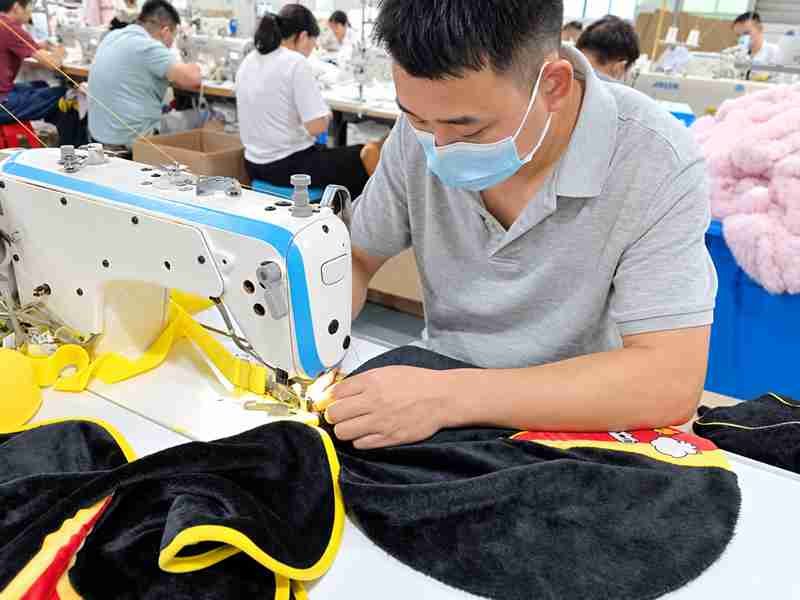
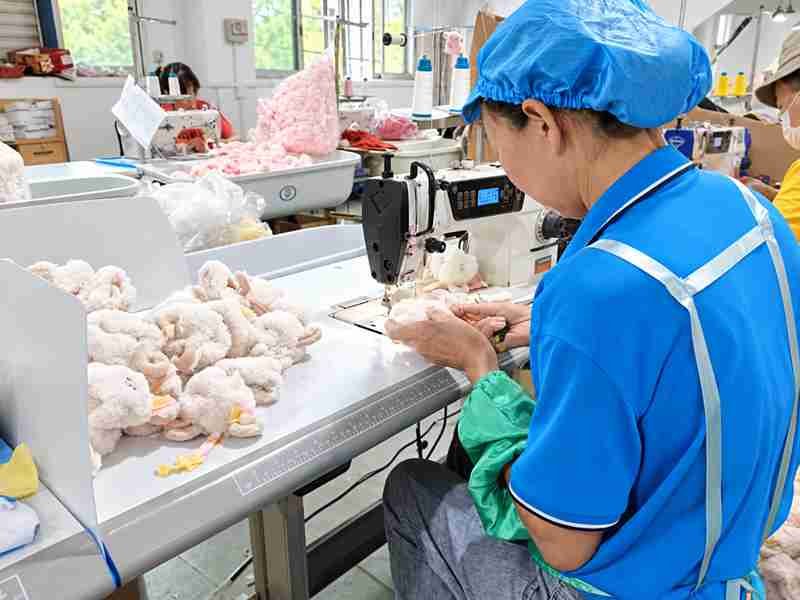
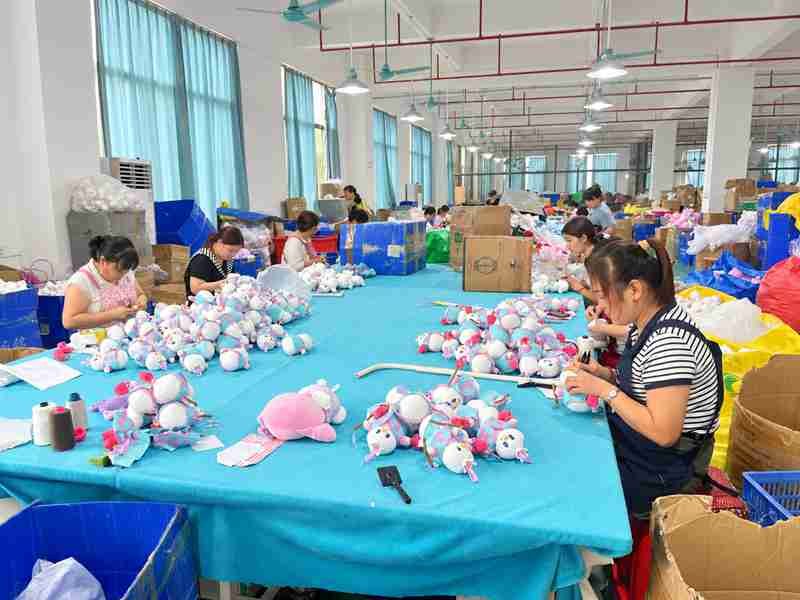
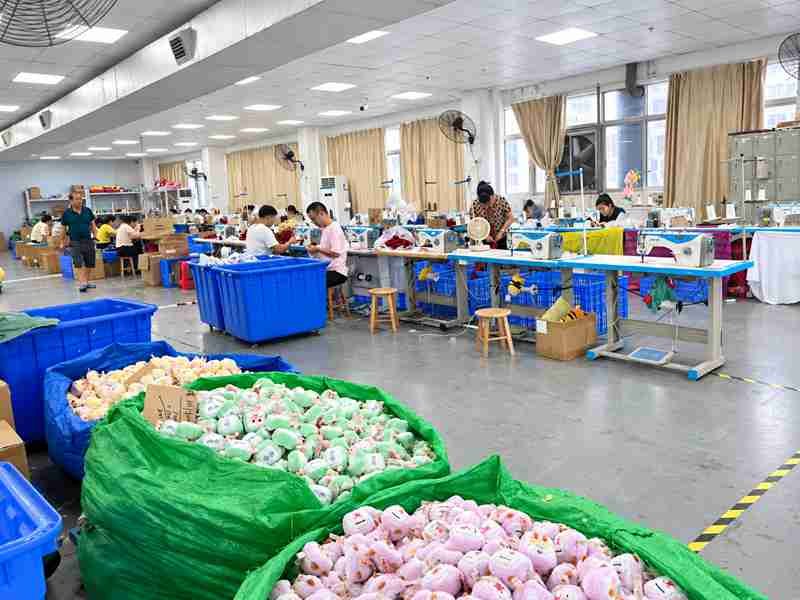
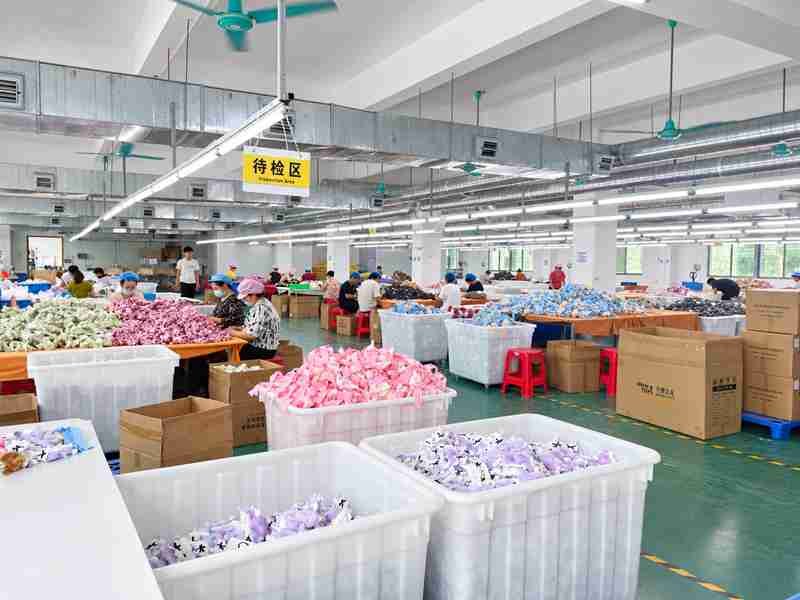
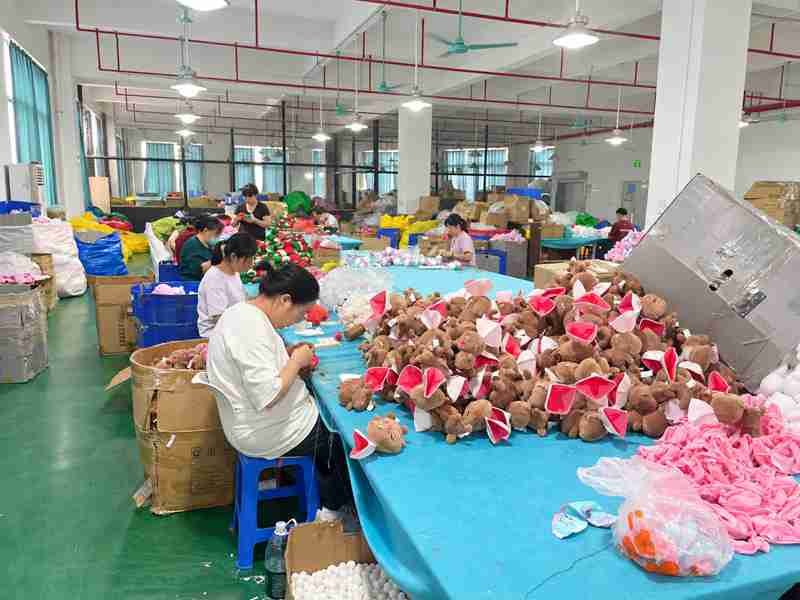
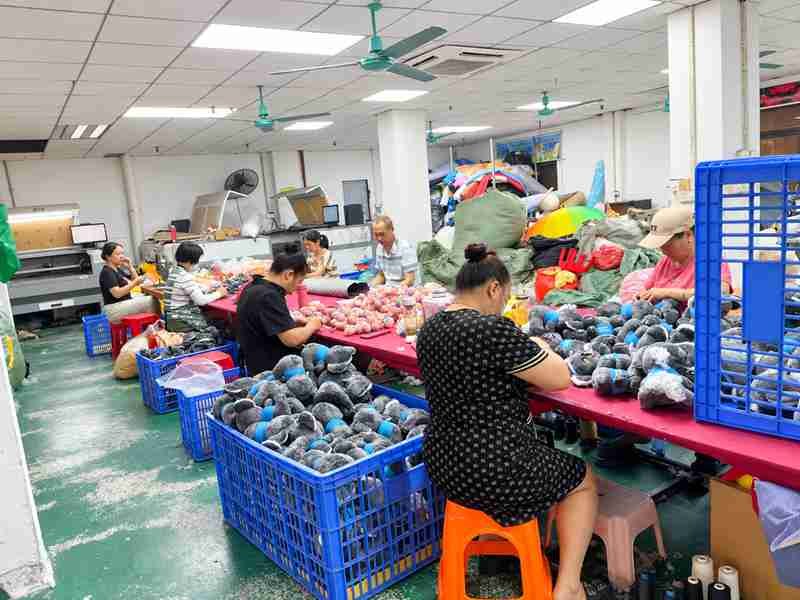
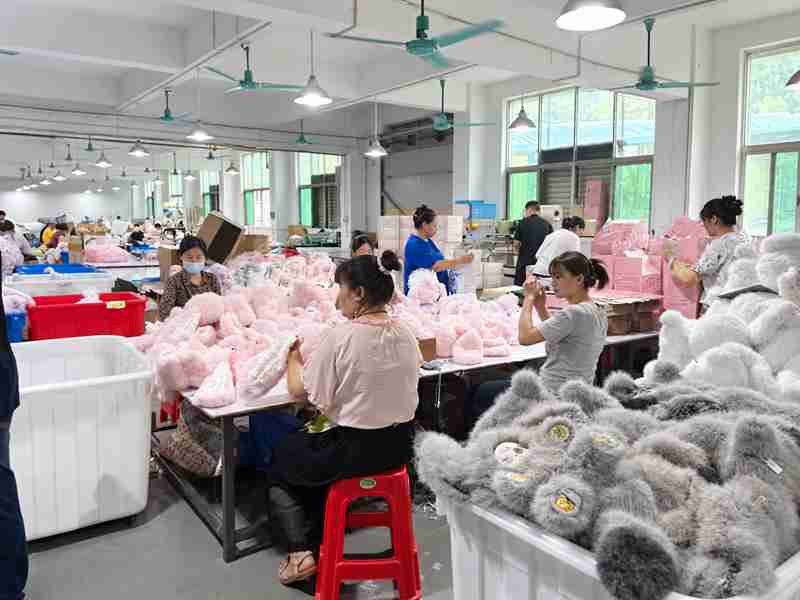
From Prototype to Production: Our Real Plush Factory Show
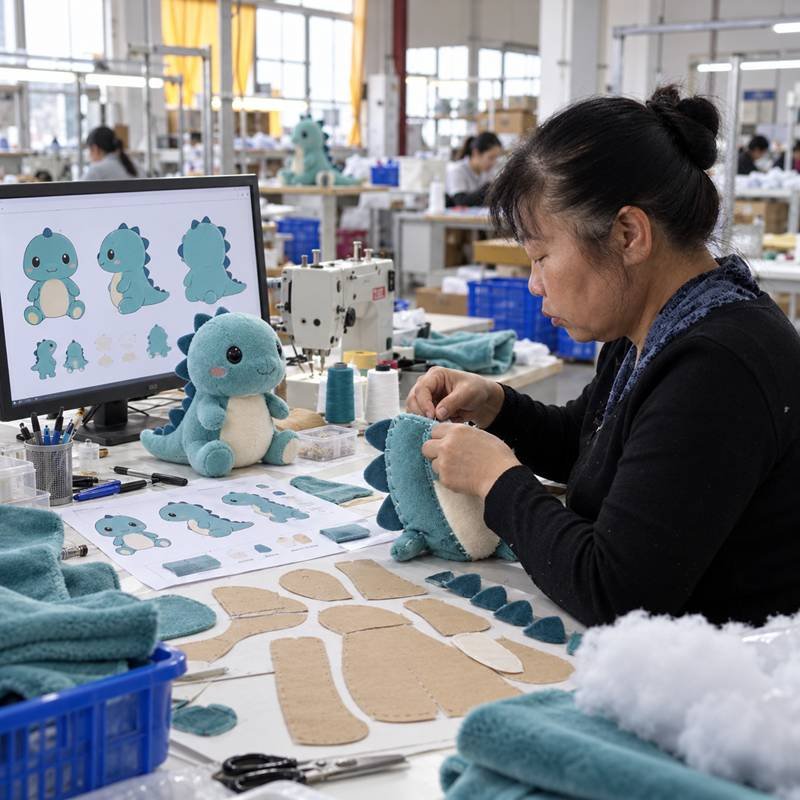
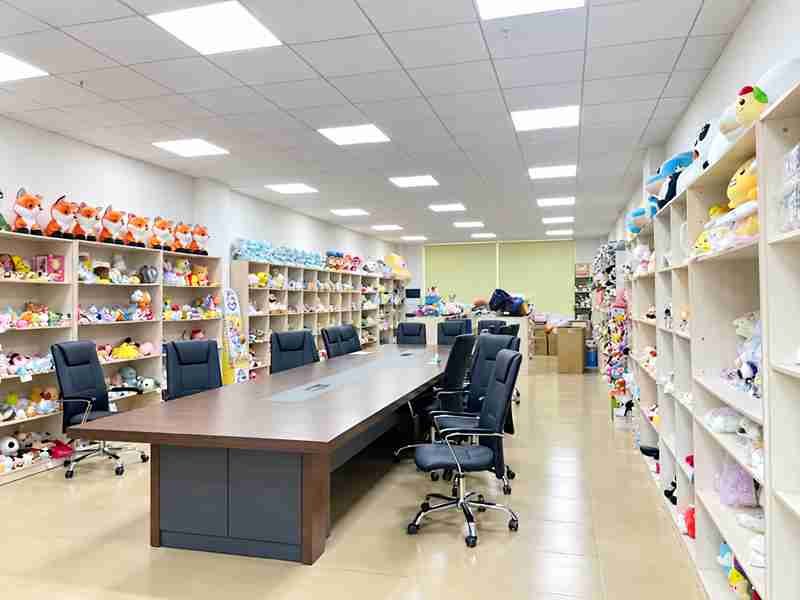
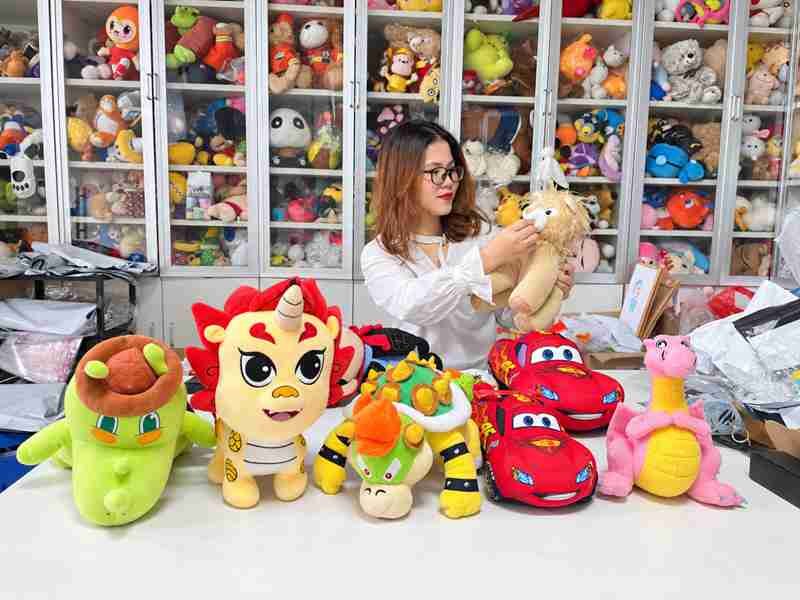
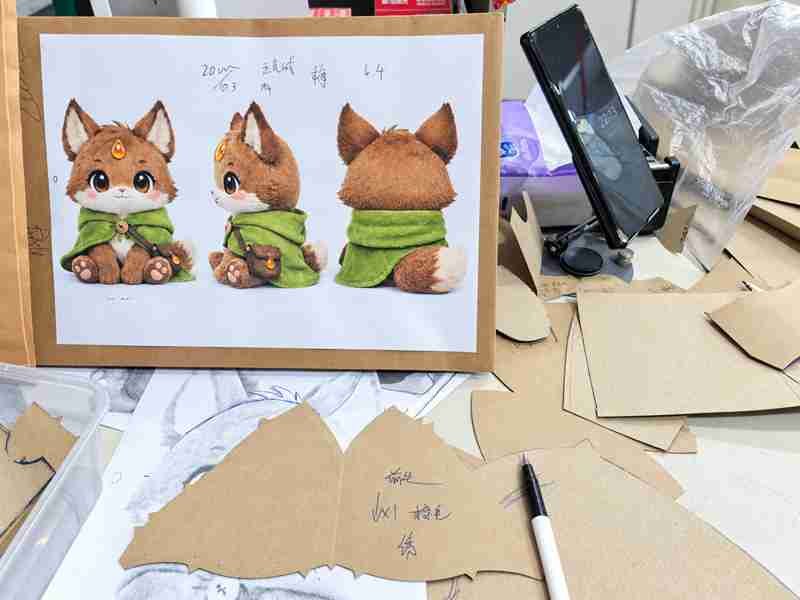
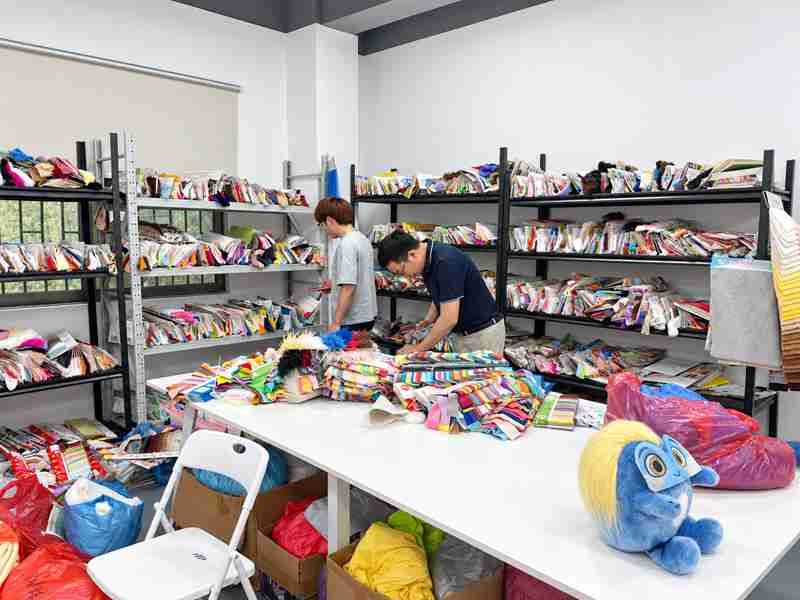
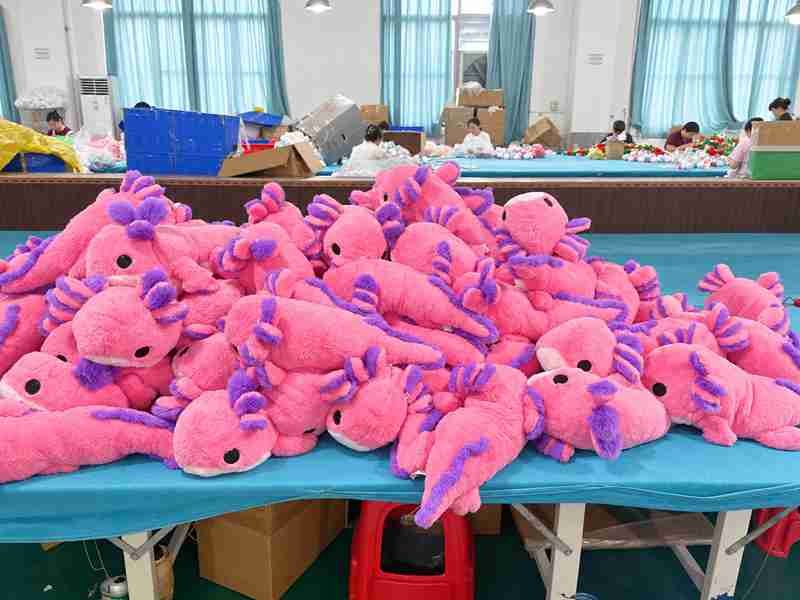
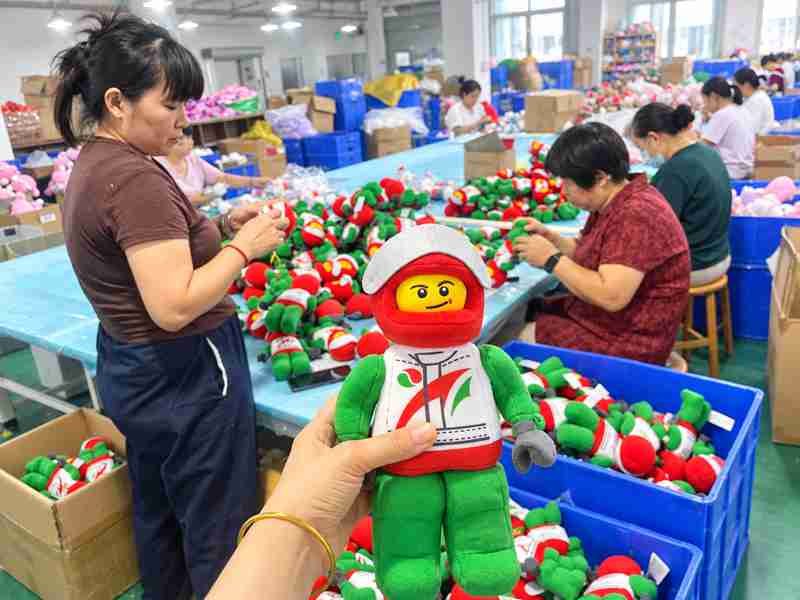
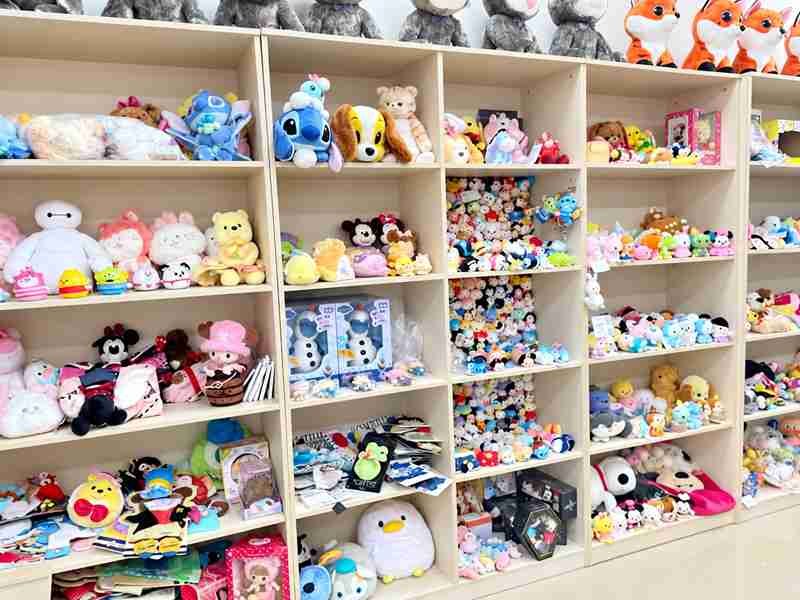
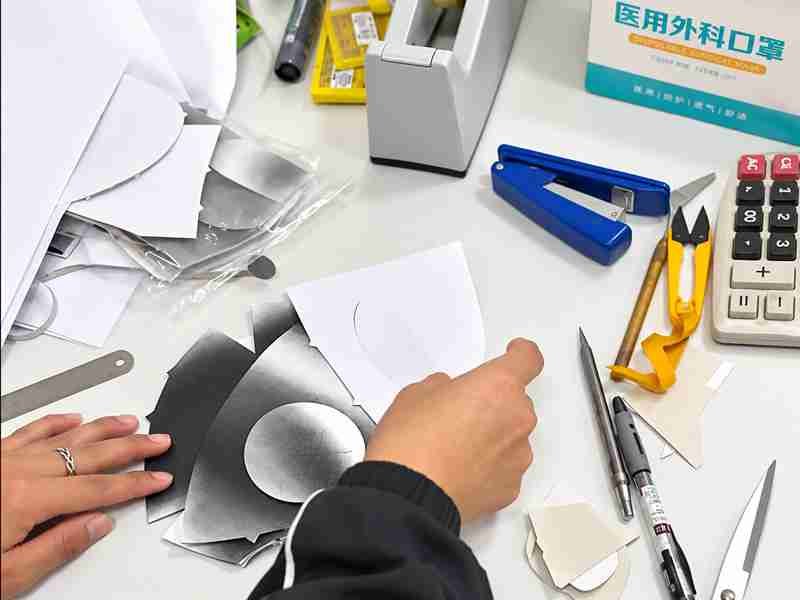
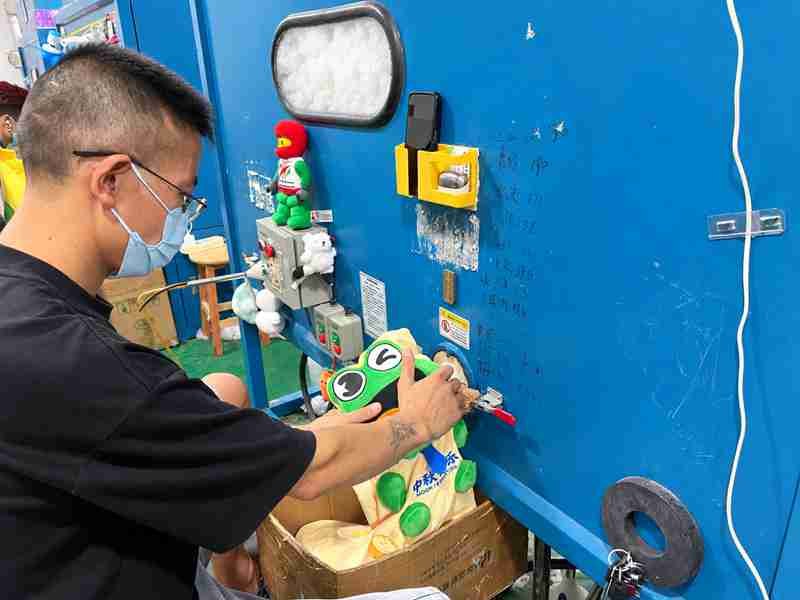
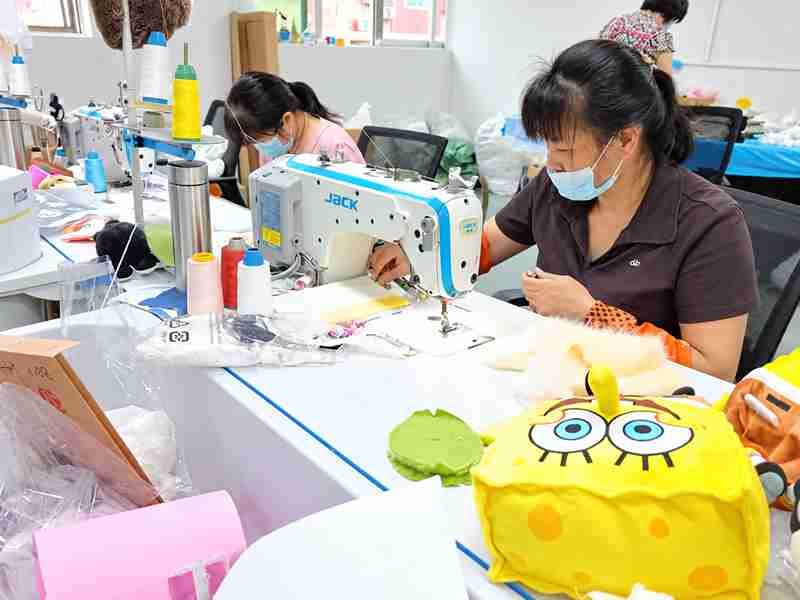
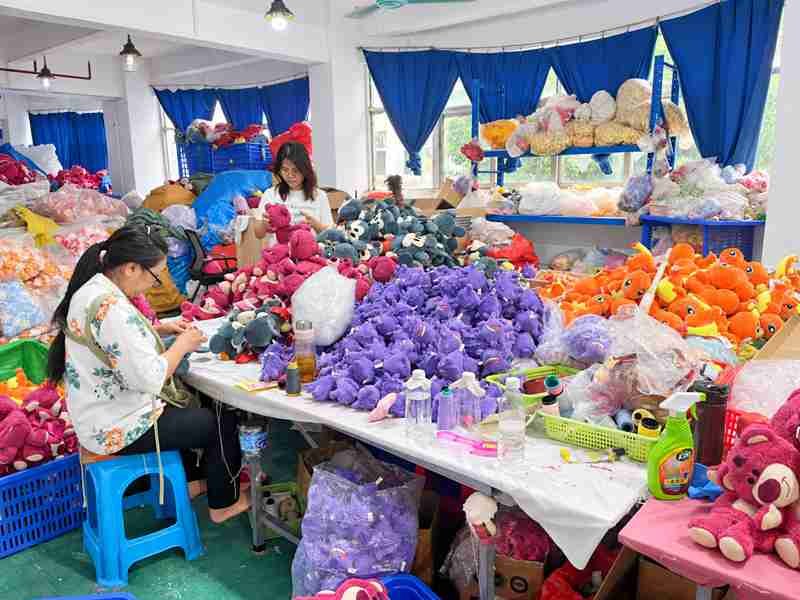
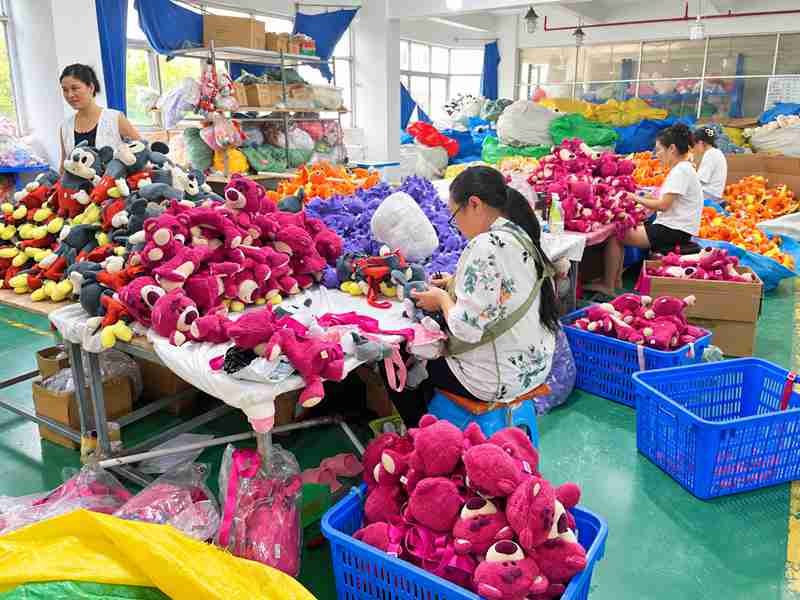
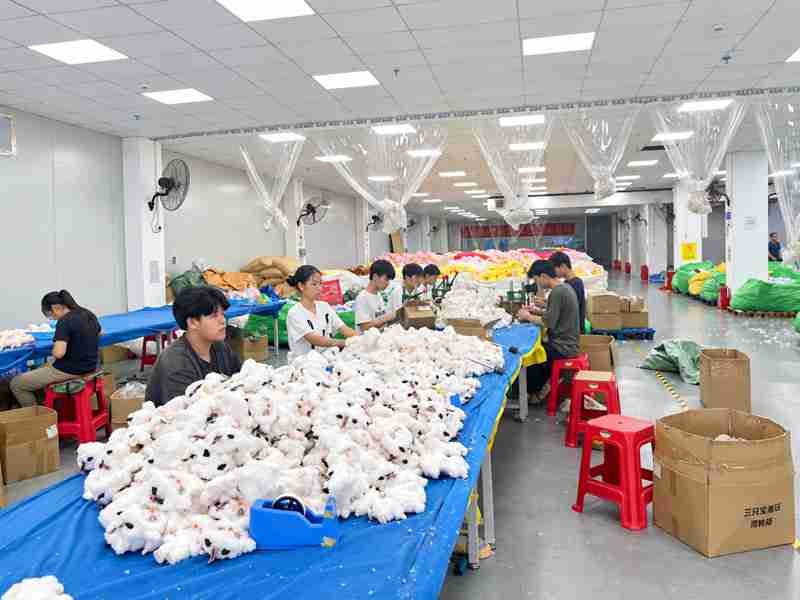
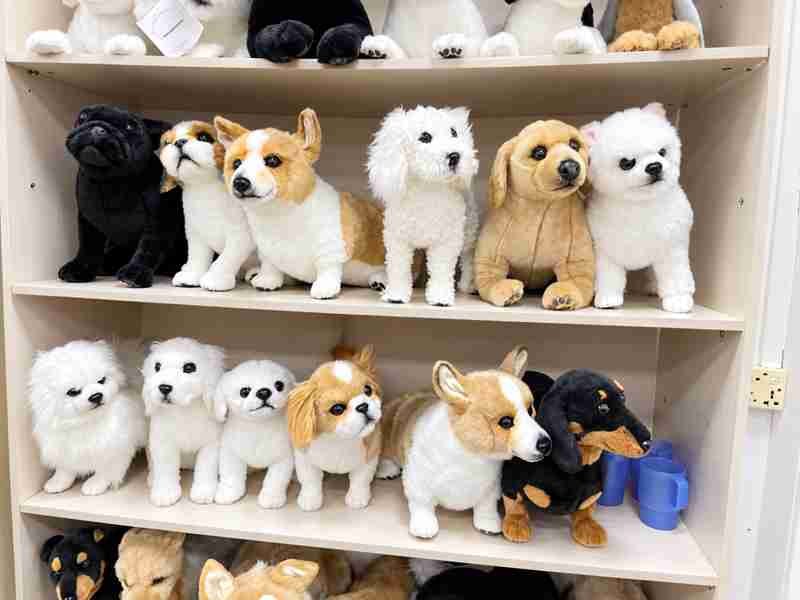
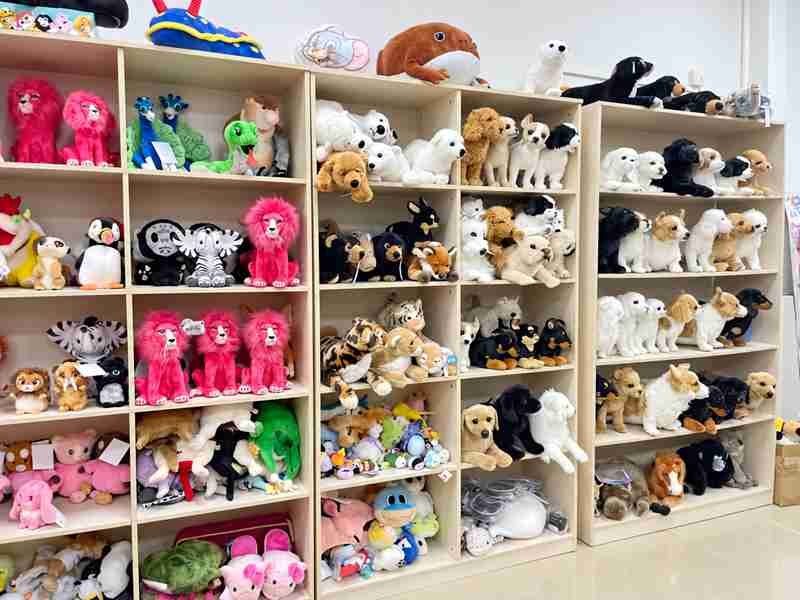
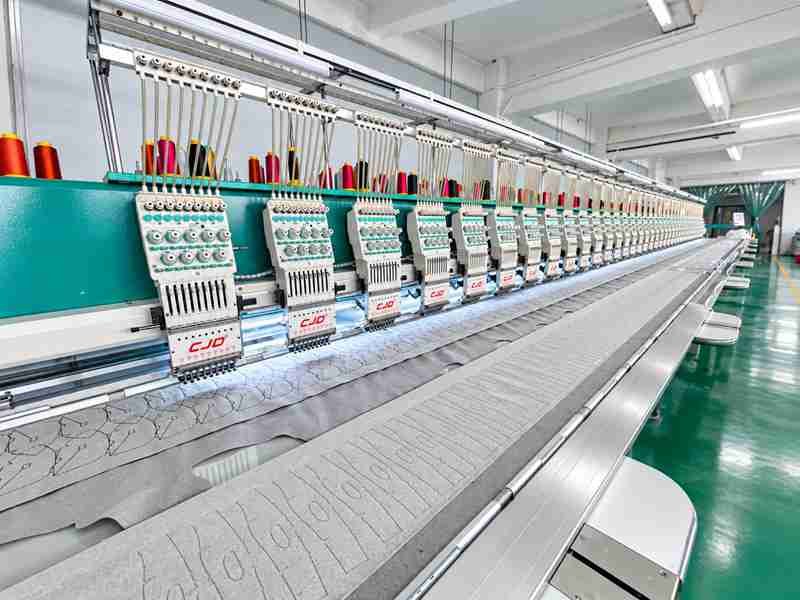
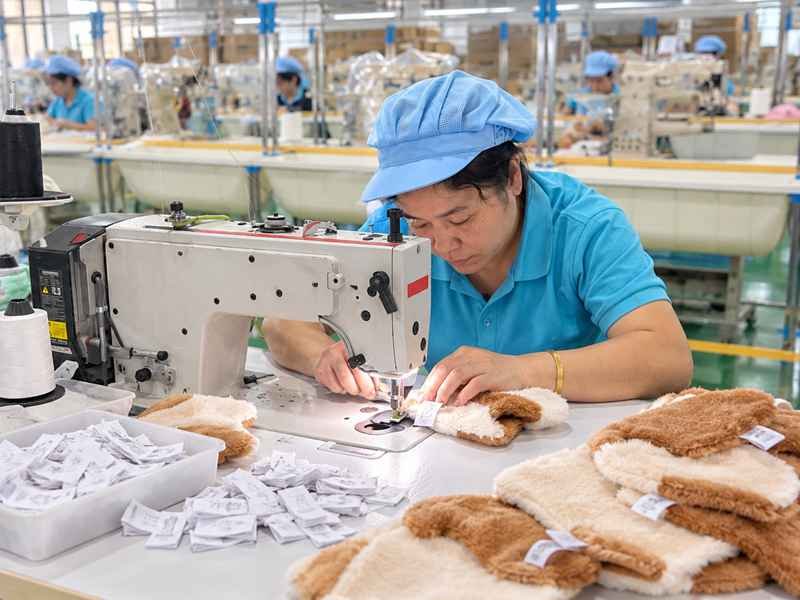
At Ewintoys, every plush project follows a structured development and production process, from initial design review and pattern making to sampling, mass production, quality inspection, and final delivery. Our real factory images provide a transparent view of how ideas are transformed into high-quality plush products through professional craftsmanship, engineering control, and careful production management.



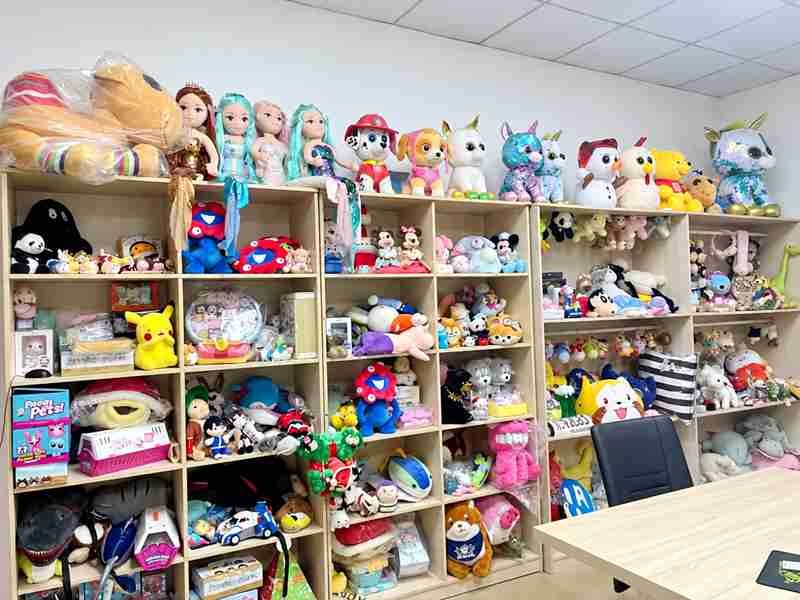















































Start With the Design Files Already Available
2D Artwork
Character Sheet
Three-View Drawing
3D Render
Physical Sample
Concept or AI Image
Pattern Engineering Protects Shape Before Decorative Detail
Translate Artwork Into Sewn Volume, Not Flat Tracing
Pattern engineering defines where volume comes from and where it is controlled. Head curvature, cheek fullness, muzzle depth, belly shape, limb taper and ear angle are created through panel geometry, darts, gussets and seam placement. Moving a seam by a small amount can change facial balance even when the artwork and embroidery remain unchanged.
Panel Strategy: Too few panels can flatten complex characters; too many can increase sewing variation, seam bulk and cost. The right panel count protects the most recognizable geometry while keeping assembly repeatable.
Seam Placement: Visible seams should follow natural boundaries when possible – hairline, color break, clothing edge or body contour. Seams crossing a face or printed area need stricter alignment because they can interrupt expression.
Curvature and Stuffing: Pattern curvature and filling distribution must be designed together. A face that looks correct under a lightly stuffed hand sample can change when bulk filling pressure rises. Critical head zones may need separate filling references or internal shaping notes.
DFM Check: Before release, the pattern should be reviewed for cutting efficiency, sewing access, turning openings, accessory installation and inspection points. High fidelity has little value if only one sample maker can assemble the structure reliably. A strong pattern release should also show production how the character gains volume, which seams are shape-critical and where operator handling could create visible drift.
Scaling Requires Re-Engineering at Small and Large Sizes
Plush patterns do not scale linearly across every size. Seam allowance stays physically significant, embroidery thread has minimum workable detail, long pile changes apparent dimensions and small limbs can lose enough internal volume to stop holding shape. A 30 cm character cannot simply be reduced to 8 cm and expected to read the same.
Mini Sizes: Simplify tiny fingers, hair spikes and layered clothing; shorten pile where facial graphics need clarity; reduce panel count; enlarge essential embroidery relative to body size; protect hardware connection points on pendants.
Main Retail Sizes: Around 18–30 cm often provides enough volume for facial shaping, clothing layers and accessories while remaining manageable for packaging. Exact size should still follow character detail, target price and channel requirements.
Large Display Sizes: Bigger products increase fabric consumption, filling weight and shipping volume. Long limbs, ears or heads may need localized support so the approved pose survives handling.
Series Scaling: If several sizes belong to one character family, establish common ratios and visual anchors rather than scaling every measurement by the same factor. The objective is recognizable family consistency, not mathematical enlargement, and each size should preserve the features that make the character immediately identifiable. Size approval should therefore compare finished silhouettes side by side, with attention to face readability, accessory proportion and packaging footprint at each size tier.
Material Choices That Preserve Character Recognition
Fabric names alone do not determine fidelity. Pile height, GSM, stretch, drape, nap direction, embroidery support and color availability change how the same pattern reads in three dimensions.
| Material | Engineering Reference | Best Fidelity Use | Main Risk to Review |
| Minky | 180–320 g/m2; common pile 1.5–3 mm | Faces, short-pile characters, soft collectible bodies, small plush | Stretch and nap can shift facial symmetry; dense embroidery may leave pressure marks. |
| Velboa | 160–260 g/m2; pile 1–2.5 mm | Clean facial detail, crisp embroidery, compact characters | Lower pile shows panel shape clearly, so pattern and seam quality become more visible. |
| Crystal Super Soft | 180–280 g/m2; pile 1–3 mm | Smooth premium hand feel, character bodies, mascots | Directional sheen and color-lot variation need approval under controlled light. |
| Short Pile Plush | 180–350 g/m2; pile 2–10 mm | General character, animal, mascot and keychain programs | Different densities under the same trade name can change silhouette and embroidery support. |
| Rabbit-Fur Style | 300–550 g/m2 | Premium hand feel, collectible animals, selected hair or body zones | Higher pile can hide embroidery edges and alter perceived contour. |
| Faux Fur | 300–600 g/m2; pile 20–80 mm | Long-hair characters, monsters, realistic animals, premium accents | Strong nap direction, trapped pile at seams, trimming and packaging recovery need control. |
| Polar Fleece | 160–320 g/m2; surface pile about 1–3 mm | Costumes, scarves, hats, flatter graphic zones | Less “plush” surface language; edges and stretch behavior should match the intended use. |
| Tricot | 70–180 g/m2; pile 0–1 mm | Fine printed or embroidered detail, skin panels, lining and thin graphic areas | Low body can show underlying structure and needs suitable support where volume is required. |
Decoration and Logo Methods for Readable Character Detail
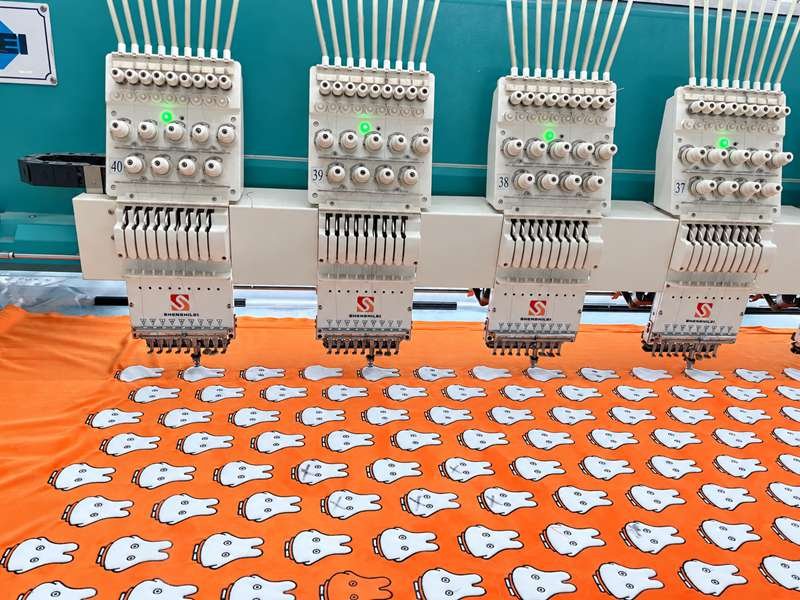
Embroidery
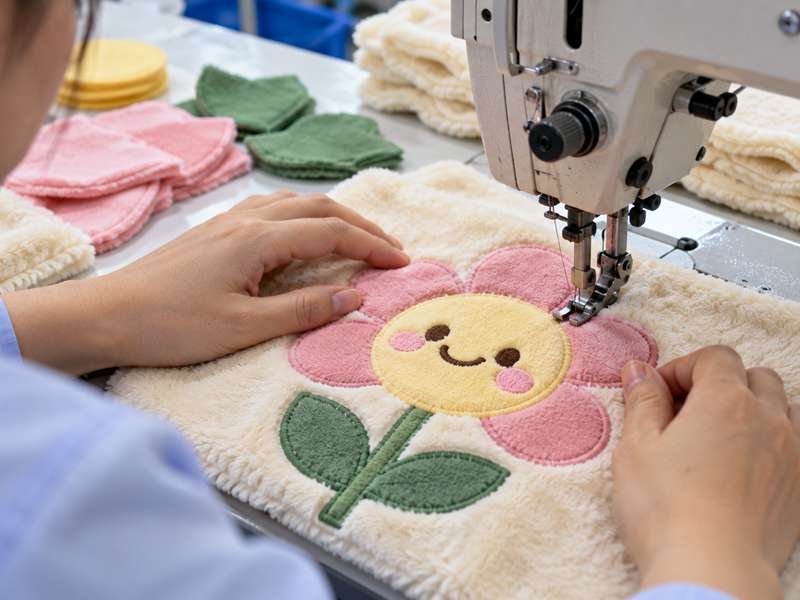
Appliqué
Useful for larger color blocks, graphic patches, eye whites, costume shapes and layered features where embroidery would become heavy or expensive. Appliqué introduces cut-part accuracy and edge-sewing control, so shape templates and placement references matter. Fabric thickness should remain compatible with the surrounding panel to avoid hard steps or puckering.
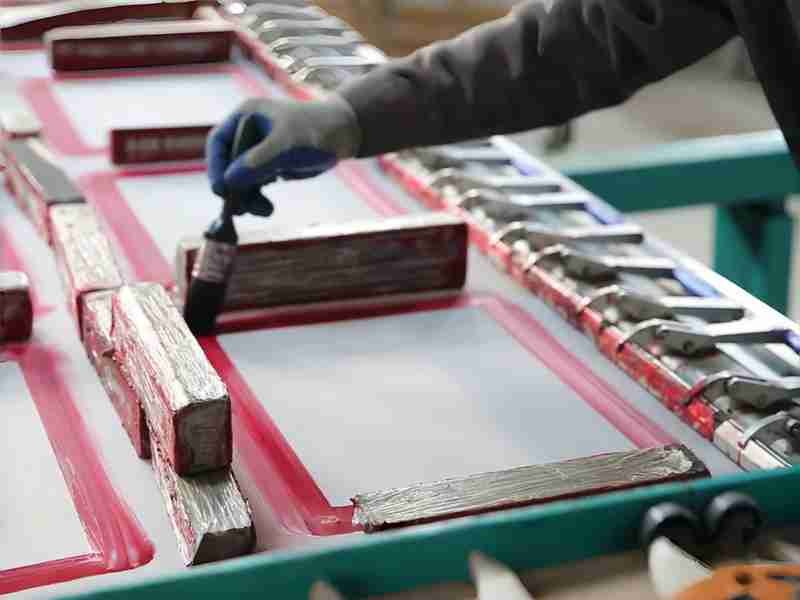
Screen Printing
Suitable for repeatable flat graphics and defined color areas when the base fabric accepts ink cleanly. Print placement must account for stretch, pile and later sewing. Large printed areas can feel different from surrounding fabric, so character art should be reviewed on the actual substrate rather than approved only from a digital proof.
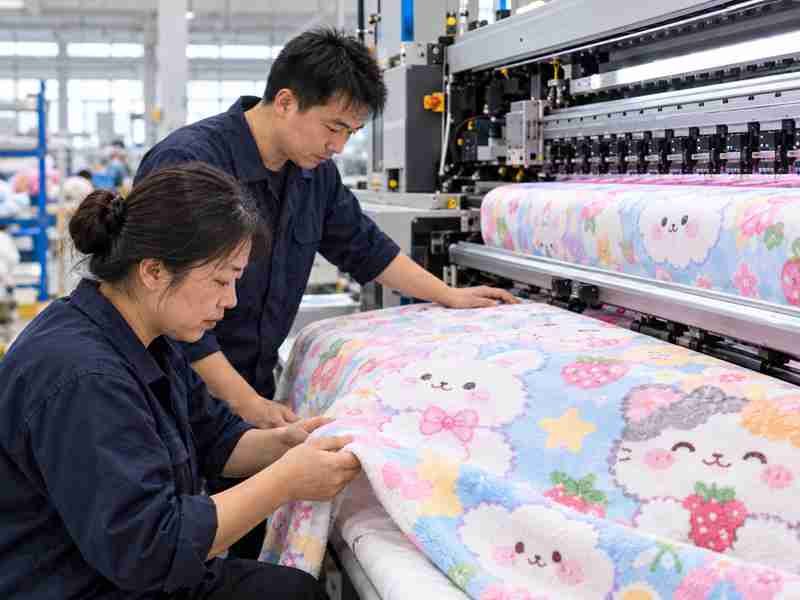
Digital Printing
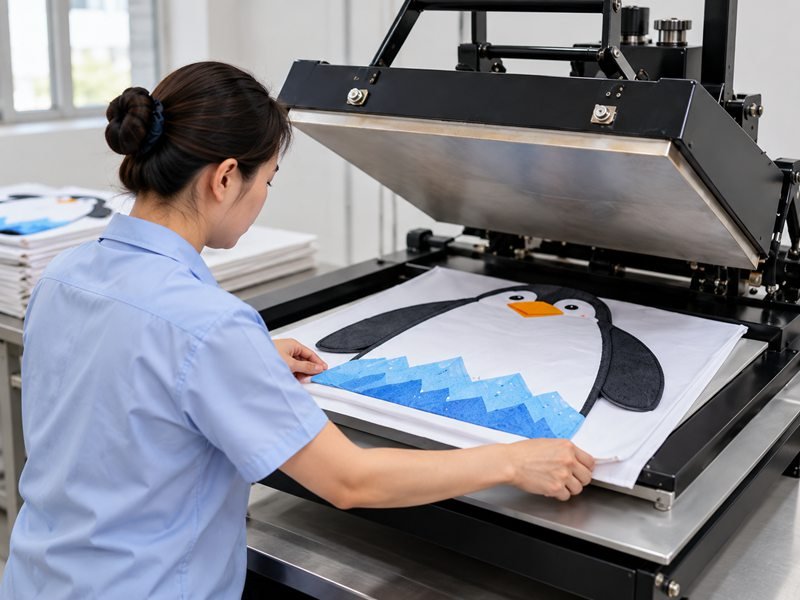
Heat Transfer
Woven Labels
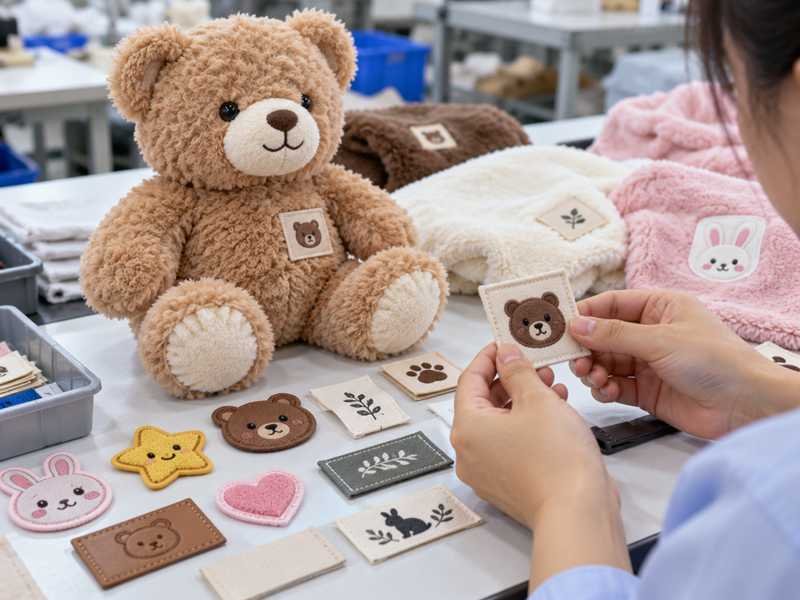
Patch Branding
Molded Branding
Components and Accessories Must Support the Character

Metal Hardware
PVC Details
Plastic Parts
Felt Layers

Foam Support

Internal Supports

Magnets and Closures
Electronic Modules
Prototype Revisions Should Converge Toward Production
Use Each Sample Version to Close the Right Decisions
A first sample should not be judged as if every downstream specification is already final. Early versions are most valuable for deciding proportion, silhouette, face volume, pose and major construction. Once the shape direction is accepted, material, color, embroidery, printing, costume and accessory decisions can be tightened around a more stable body.
Shape Prototype: Review head-to-body ratio, face curvature, limbs, ear or hair direction, balance and overall volume. Expensive final materials are not always necessary if the main question is geometry.
Material and Process Version: Bring in approved fabric direction, thread colors, prints, appliqué, clothing and components. Check how pile or stretch changes the shape that looked correct in the first version.
Revision Prototype: Apply comments through a version record. A useful revision note states what changed, why, which files or patterns changed and whether the modification affects cost, MOQ, lead time, testing or packaging.
Final / PP / Golden: Once the product definition is stable, confirm the materials and processes intended for bulk. The approved version should move forward with BOM, released artwork/pattern files and QC references rather than being treated as a visual sample only, especially when several departments will execute the final specification.
A short internal review before each sample leaves development can catch obvious proportion, workmanship or manufacturability issues before another approval cycle starts.
Internal Review Should Catch Problems Before Shipment
A sample sent for approval should already have passed an internal cross-check against the current reference. Ewin’s knowledge system calls for review across design fidelity, dimensional accuracy, material/color, workmanship, compliance readiness and mass-production readiness. That discipline protects approval time and reduces comments that could have been caught before the sample left the development team.
Design Fidelity: Compare the current sample against the controlled reference and previous revision comments.
Dimensional Control: Confirm the agreed measurement basis and critical dimensions, especially for face, head width, total height and accessory position.
Material and Color: Verify the intended pile, hand feel, color direction and decoration substrate.
Workmanship: Check symmetry, seam quality, embroidery, stuffing distribution, grooming and hand assembly.
Production Readiness: Identify details that rely too heavily on hand shaping, fragile placement or unusual operator skill. Resolve those risks before approval becomes a promise that bulk cannot hold. Where a shape depends on repeated manual adjustment, the review should ask whether a pattern, fixture, filling guide or attachment reference can move the result from personal technique into a repeatable method.
Approval Readiness: Before a sample is sent, confirm that the team is reviewing the same artwork, sample revision and material direction. That simple discipline reduces the common problem of creative approval being given to one version while sourcing or production continues with another.
Visible progress should come from fewer unresolved decisions after each version, not simply from making more samples. When comments arrive from design, licensing, sourcing and quality teams, they should be consolidated against one current version so contradictory requests do not create unnecessary rework.
Why an IP Plush Sample Can Still Look Wrong
Face Looks Flat
Eyes Feel Wrong
Head Feels Small
Long Pile Hides Detail
Pose Will Not Hold
Costume Keeps Shifting
Golden Sample and Multi-SKU Controls Protect Scale
Convert the Approved Sample Into Production References
Bulk production should not be released from a photo and a message saying “make it like this.” The approved product needs a controlled definition that manufacturing and QC can use on the floor.
Golden Sample: Keep the final physical reference in a controlled condition and identify its project, SKU and revision.
BOM Freeze: Lock fabric specifications, colors, accessory codes, labels, filling references and packaging components that materially affect the product.
Released Files: Pattern revision, embroidery DST, print artwork, label artwork and packaging version need clear release status. Old versions should not remain interchangeable on production stations.
Critical-to-Fidelity Points: Record the features most likely to drift – eye coordinates, head width, ear angle, filling weight, accessory position, hair direction or costume alignment.
Change Control: If a material, supplier, decoration file or construction method changes after approval, assess whether a new sample, comparison or test is required before production continues. This prevents quiet substitutions from becoming visible character drift. For visually sensitive programs, the release pack can include annotated photos that identify the exact face, pose, hair and accessory relationships that matter most, giving production and QC a faster reference than written notes alone.
Critical-to-fidelity points can then be marked for production and inspection, making face placement, silhouette, filling and accessory orientation easier to verify on random bulk units.
Manage Character Families as a Program, Not Separate Orders
A multi-character collection needs shared rules at series level and controlled differences at SKU level. Ewin’s program framework supports SKU-level design IDs, sample versions, BOMs, packaging, barcodes, testing status, production status and shipment planning under one coordinated structure.
Master Style Guide: Define common eye language, fill hand feel, color logic, logo position, label placement, packaging architecture and other rules that should remain consistent across the family.
SKU Revision Matrix: Each character still needs its own V1, revision and Golden status. Approval of one character does not approve the whole series.
Shared Materials: Where appropriate, common base fabrics, hardware or packaging dimensions can improve supply efficiency without forcing all characters into the same visual solution.
Production Waves: Large assortments can be released in controlled groups so unresolved SKUs do not block completed ones, while version and packing records remain linked.
Reorders: Start from the previous Golden/BOM and review material, packaging or process differences rather than rebuilding the definition from memory. A delta review is particularly important when a color is re-dyed, a supplier changes, packaging artwork updates or a new market adds different labeling and testing inputs.
Series reviews should also compare adjacent characters side by side so shared visual rules remain stable when separate teams are approving different SKUs at different times.
Production Details That Keep Approved Characters Consistent
Control Fidelity at the Process Where It Can Drift
Cutting: Pile direction, fabric stretch and panel orientation should follow released marker and pattern rules. Wrong nap can change color appearance and facial symmetry before sewing begins. Bundling by SKU and revision reduces mix-ups in multi-character programs.
Embroidery and Printing: Program revision, thread or ink color, panel orientation and placement references should be matched before decoration. Face embroidery on shaped panels deserves tighter positioning because later sewing and stuffing amplify small errors.
Sewing: Critical seams create volume. Operators need clear references for curved head seams, muzzle placement, ear angle, limb rotation, costume alignment and accessory anchors. Process inspection should catch geometry drift before filling hides internal construction.
Stuffing and Assembly: Filling material, weight reference and distribution determine softness, face volume, pose and balance. Accessories should be installed with defined direction and fixation rather than attached by visual estimation.
Finishing: Grooming, seam-pile release, thread trimming, shaping and costume adjustment create the final presentation. High-fidelity programs should define how much hand shaping is acceptable and which shape must already come from the pattern.
For character-sensitive features, the control point should sit close to the operation that creates the risk: nap at cutting, eye coordinates at embroidery, facial volume at stuffing and grooming, and accessory direction at assembly.
Scale Through Cross-Functional Manufacturing Control
Ewin’s manufacturing system connects development with cutting, embroidery/printing, sewing, stuffing, hand assembly, finishing, QC, packaging, warehousing and logistics. The value of scale is not the headline number alone; it is the ability to transfer a development definition into controlled work across departments without repeatedly re-interpreting the design.
Pre-production Alignment: Project, production, purchasing and quality teams should confirm Golden Sample, BOM, critical processes, QC points, packaging and release status before bulk begins.
Material Readiness: Approved fabric and accessories should be matched to the released specification and lot information before they enter production.
Process Visibility: Photos or video can be organized around material readiness, cutting, embroidery, sewing, stuffing, QC, packaging and shipment when the program needs remote visibility.
Scale-up Review: When quantity, SKU count or launch urgency increases, line allocation, shared materials, packaging capacity and inspection resources should be reviewed together. A stronger production plan protects fidelity by reducing emergency substitutions and uncontrolled shortcuts near the ship date. It also gives the brand a clearer view of which approvals are blocking progress, which materials are ready and which production waves can move forward without risking the unreleased or unfinished SKUs.
When a material, process or schedule change is proposed, development and quality should assess the effect on the approved character before purchasing or production substitutes anything into the released specification.
Quality Control Focused on Character and Manufacturing Risk
Incoming Material QC
In-Process QC
Physical Risk Checks
Final Appearance QC
Needle and Foreign Matter
Traceability and CAPA
Compliance and IP Protection Start Before Final Testing
Build Compliance Inputs Into Product Development
For U.S. children’s plush projects, ASTM F963 and CPSIA/CPSC requirements can affect mechanical testing, accessible materials, small parts, tracking information and the supporting documents used by the responsible party. European projects may require EN 71, chemical requirements and the relevant conformity route. Other markets apply their own systems.
Market and Age First: Intended market and age grade should be known before final structure, because a 12 cm collectible with metal hardware may follow a different risk path from a soft child-directed plush of the same character.
Component Review: Plastics, PVC, metal, coatings, magnets, batteries, cords and detachable parts can expand mechanical, chemical or electrical testing needs.
Pre-screening: Higher-risk materials or components can be reviewed or pre-tested before the final sample when appropriate, reducing the chance that an already-approved visual design must be rebuilt after testing.
Third-Party Testing Support: Ewin can support project-based testing with external laboratories according to the target market and product definition. A website-level claim should not imply that every Ewin product automatically passes every market requirement; specific compliance conclusions belong to the actual SKU, version and report scope.
Packaging copy, tracking information and warning placement should be reviewed against the same market and age definition so the final pack does not become a late compliance redesign.
Protect Unreleased IP Through Controlled Project Handling
An NDA is the entry point, not the complete confidentiality system. Unreleased characters, licensed artwork, launch assets and prototypes can require controlled access through development, sourcing and production.
File Access: Limit sensitive artwork and source files to the project team that needs them. Version control also reduces the risk of someone manufacturing from an outdated or unapproved asset.
Project Identification: Use project IDs and controlled sample labeling so restricted items are not mixed with unrelated showroom or general sample inventory.
Photography and Display: Sensitive samples should not enter public display, factory-tour photography or marketing use without permission.
Supplier Flow-Down: External embroidery, printing, tooling, accessory or backup resources involved in a restricted project should receive only the information required for their task and follow equivalent confidentiality obligations.
Close-Out and Overrun Control: Sample return, destruction, access removal and unauthorized production controls should follow the agreed project requirements. Public use of any client name, logo or sample requires explicit publication permission. For long-running programs, confidentiality controls should stay active through reorders and supplier changes instead of ending after the first sample approval, because new artwork, colorways and launch assets can remain commercially sensitive. Access lists and approved disclosure scope should be updated when project members, subcontracted processes or launch materials change.
Certificates, Compliance & Quality Assurance
Ewintoys follows structured quality and compliance practices for custom plush production. We hold relevant certifications and support additional testing, inspection, and compliance documentation based on specific product requirements and destination markets, helping brands meet different international standards with confidence.























Packaging Should Protect Shape, Brand and Channel Needs
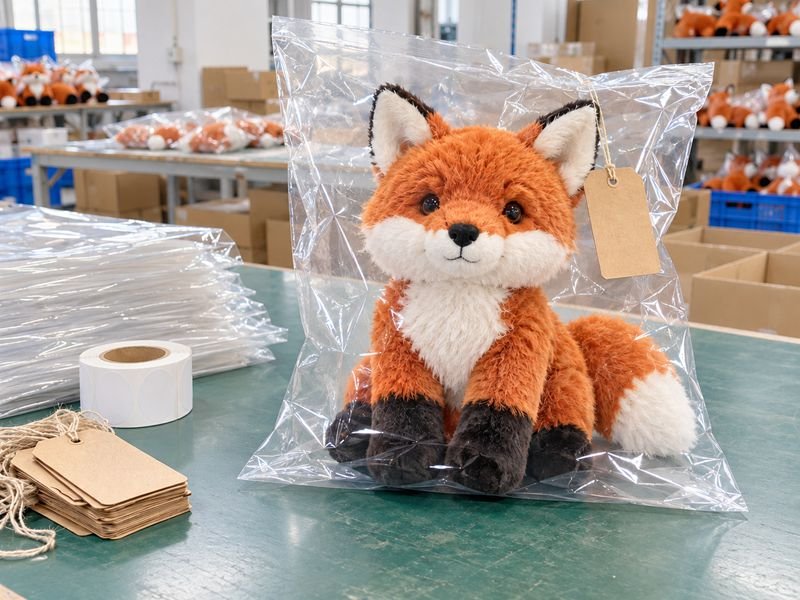
Polybag and Hangtag

Vacuum Compression

Color Box

Gift Box
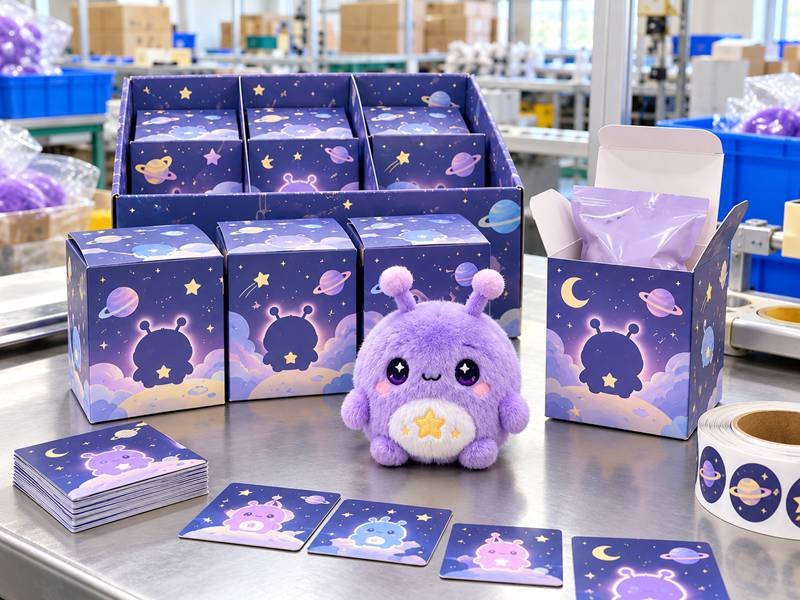
Blind Box System

Display and PDQ
Commercial Planning Without Sacrificing Character DNA
| Decision Area | What Changes the Commercial Result | How to Plan It |
|---|---|---|
| MOQ | Fabric dyeing, custom hardware, printed packaging, tooling, SKU split and target compliance can move the effective quantity. | Use around 500 pcs per character only as an initial evaluation point for many standard custom plush projects; confirm actual MOQ after material, component and packaging review. |
| Sample Scope | Pattern complexity, custom colors, molded parts, electronics, clothing layers and revision depth. | Define what the sample must prove before quoting a fixed route. Shape-only validation and production-intent Golden Samples are different jobs. |
| Unit Cost | Size, filling, panel count, fabric grade, embroidery, printing, accessories, handwork, packaging and testing. | Protect character DNA first; optimize hidden structure, stitch density, equivalent materials or packaging where those changes do not damage recognition. |
| Multi-SKU Cost | Number of characters, shared materials, individual decoration files, packaging versions, barcodes and sampling effort. | Use shared base materials or box structures where sensible, but keep independent Golden/revision status for each SKU. |
| Launch Timing | Approval cycles, material readiness, testing, packaging artwork, production loading and shipping route. | Work backward from the launch or required arrival date; unresolved approvals should be treated as schedule dependencies, not hidden inside a factory lead-time promise. |
| Reorders | Material lots, discontinued components, packaging updates and prior CAPA history. | Start from the last frozen BOM/Golden reference and complete a delta review before repeating production. |
High-Fidelity IP Plush Development Scenarios
U.S. Collectible Launch
German Game IP
Japan Artist Series
Frequently Asked Questions
Yes. Front artwork can begin a feasibility and character review, but side depth, back details, hairstyle, pose and accessory construction may need assumptions or additional references. Ewin can list those open decisions before pattern work goes too far, so the team knows which details are confirmed and which still need approval.
No. Projects can start from artwork, character sheets, three-view drawings, 3D renders, physical samples, reference products, AI concepts or mixed inputs. A stronger first brief includes intended size, quantity range, target market, age grade, sales channel and timing because those factors affect structure, materials, compliance and packaging.
Ewin uses a structured character-fidelity approach that moves from reference lock and silhouette to face, surface details, pose, balance and DFM, then locks the approved Golden Sample and released production references. The objective is not a marketing fidelity percentage; it is a revision process that identifies which engineering variable is making the character feel wrong.
Revision count depends on the quality of the starting references, character complexity, material availability and how many decisions are changed after each review. The better approach is to give each version a clear purpose – shape first, then material/process, then final production intent – so one change does not repeatedly reopen earlier decisions.
Yes, when the project has appropriate rights and the reproduction objective is defined. The target may be faithful reproduction, a size change, material improvement, cost optimization or a new related version. Measurements, construction, hand feel, embroidery, filling and accessories should be reviewed before deciding whether disassembly, scanning or equivalent-material development is necessary.
Bulk release should link the Golden Sample to the current pattern, BOM, decoration files, filling references, accessory instructions, packaging version and QC checkpoints. Material or process changes after approval should be assessed before use. Production and final inspection then compare against released references rather than informal photos or memory.
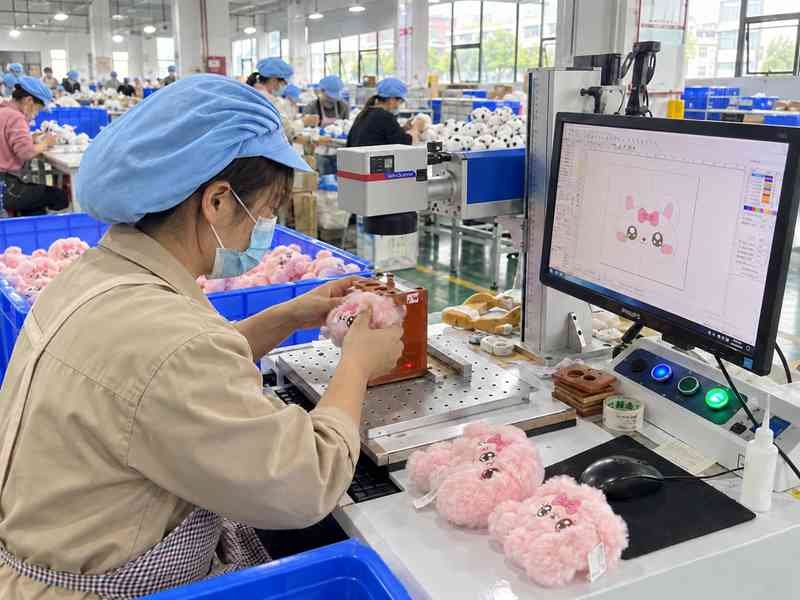


Send Your Character for a Fidelity Development Review
- Artwork, character sheet, three-view drawing, 3D render or current sample photos
- Intended size and pose: sitting, standing, hanging or other display state
- Quantity per SKU and number of characters in the series
- Target market, age grade and sales channel
- Must-preserve character features, material preference and known approval rules
- Packaging direction and target launch or required arrival timing