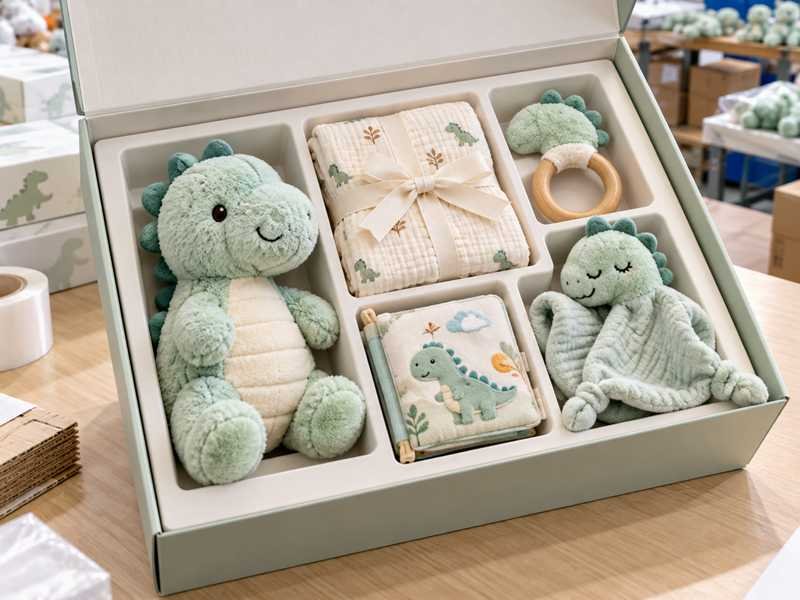
A Trusted China Plush Partner for Global Brands !

Custom Stuffed Animal Manufacturer for Brands & Retail Programs

Bring original animal concepts, mascots and branded characters into production with carefully developed shapes, expressions, fabrics and filling structures. With 20+ years of plush manufacturing experience, Ewin Toys supports stuffed animal projects from artwork review and pattern development through sample approval and consistent mass production for retail and promotional programs.

MOQ 500 pcs | 5-7 Days Sampling | 60+ Development Specialists | Custom Fabrics & Filling | ASTM F963 / CPSIA / EN 71 Compliance
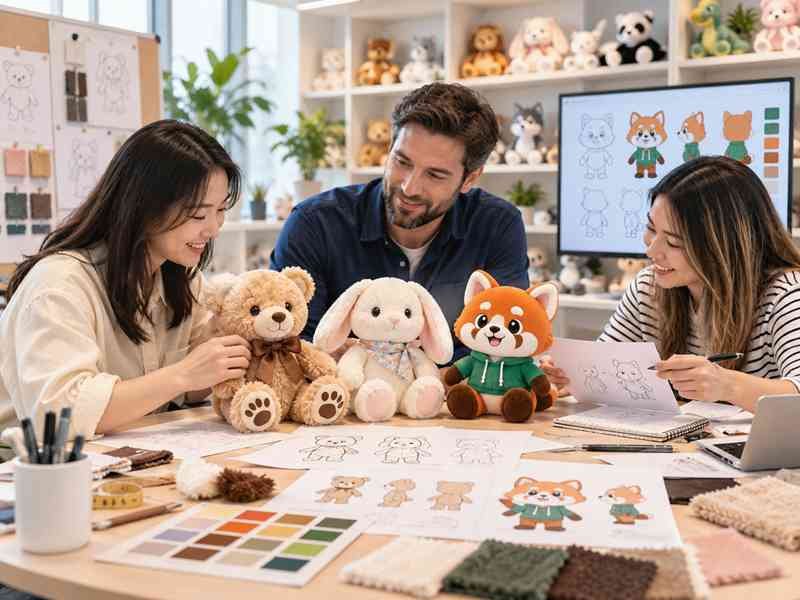
Ewintoys 01-01 Custom Stuffed Animal Manufacturer for Brands & Retail Programs

Stuffed Animal Programs Built Around Commercial Brand Needs

Different programs create different risks. Ewin Toys organizes development around the product purpose, approval process, retail channel and production scale required by each program.

Toy And Collectible Brands

Toy and collectible programs need more than a soft sample that looks appealing in photos. Product teams normally need repeatable proportions, controlled materials, stable face placement, packaging compatibility and a clear path from prototype approval to bulk release. Ewin supports animal concepts that must work across a collection, including shared fabrics, coordinated color standards, repeated body platforms and version-controlled decoration files.

IP And Licensing Programs

Licensed animal characters require close attention to silhouette, facial recognition, color placement, accessories and approval records. Ewin can develop from character sheets, artwork, 3D references or physical samples, then control pattern, embroidery, material and revision changes through the sampling process. Confidential project handling and controlled versions help reduce the risk of outdated artwork, unapproved details or inconsistent series execution.

Retail And Private Label

Retail programs usually combine price targets, packaging rules, launch dates and quality requirements. Ewin reviews stuffed animal construction together with carton efficiency, labeling, barcode needs, decoration choices and target-market requirements. A cost-sensitive program can be engineered around the visible details that matter most instead of reducing quality evenly across every component, seam and material.

Zoo And Destination Retail

Zoo, museum, aquarium and destination merchandise often depends on species recognition rather than generic cuteness. Ear shape, muzzle length, tail proportion, color zoning, fur direction and posture need to read correctly at shelf distance. Ewin can build animal families around shared materials or packaging dimensions while keeping each species-specific pattern, face and body proportion under separate control.

Custom Stuffed Animal Styles For Different Retail Programs

Animal construction changes with species, pose, fur, face treatment and channel. The categories below show how product direction affects pattern work, materials and production control.

Realistic Animal Plush

Realistic animal plush depends on species-specific anatomy rather than a universal body pattern. Muzzle length, ear angle, leg proportion, spine curve, belly depth and tail position all influence recognition. Faux fur, directional pile, color zoning and selective trimming may be combined to create a more natural surface. Final appearance should be reviewed from front, side and three-quarter views before bulk release.

Pet-Inspired Plush

Pet-inspired plush can range from stylized companion animals to breed-sensitive dogs and cats. A recognizable result often comes from head width, nose projection, ear set, coat texture and body posture rather than printed markings alone. Multi-breed collections benefit from a shared material strategy, but each breed still needs its own pattern logic, face proportions and approved color placement.

Zoo Animal Plush

Zoo animal collections often include lions, elephants, giraffes, pandas, primates and other recognizable species. Long necks, trunks, manes, horns, tails and large ears introduce different sewing and stuffing challenges. Retail programs also need packaging that protects protruding features without compressing them out of shape. Species labels, hangtags and story cards can be planned with the unit pack.

Farm Animal Plush

Farm animal programs may cover cows, pigs, sheep, goats, horses and poultry in realistic or cartoon proportions. Wool-like sherpa, short plush, printed fabrics and contrasting muzzle materials can create different visual levels. Stable standing or sitting poses require deliberate leg geometry and filling distribution, especially when hooves, horns, ears or tails must remain symmetrical after packing and transport.

Sea Animal Plush

Whales, dolphins, sharks, rays, octopus, turtles and other sea animals often use broader body panels and fewer upright support points than four-legged animals. Pattern work focuses on smooth curves, fin and flipper placement, seam location and balanced stuffing. Printed surface graphics, appliqué and embroidery can add species markings without creating unnecessary hard components or excessive small-piece assembly.

Forest And Wildlife Plush

Foxes, deer, wolves, bears, raccoons and woodland species often rely on coat direction, muzzle shape and ear geometry for recognition. Long-pile materials may need controlled trimming around the eyes and nose so facial details stay visible. For multi-species retail sets, shared fabric colors can simplify procurement while separate face, tail and body patterns preserve species identity.

Dinosaur Animal Plush

Dinosaur stuffed animals combine animal forms with ridges, spikes, tails, plates, claws and exaggerated heads. Soft construction must preserve the intended silhouette without turning decorative features into unsafe hard points. Appliqué, felt, embroidery and stuffed extensions can replace rigid details when age grade or retail use requires a softer result. Pattern balance is especially important for long tails and large heads.

Bird And Avian Plush

Bird plush requires careful wing placement, chest volume, beak shape, tail feathers and standing or perched balance. Different species may need printed plumage, layered felt, embroidered feather lines or short-pile color blocking. Small beaks and feet can become difficult to sew consistently at reduced sizes, so pattern simplification and decoration choices should be reviewed before sample approval.

Cartoon Animal Plush

Cartoon animals prioritize character recognition over natural anatomy. Oversized heads, shortened limbs, rounded muzzles, unusual eyes and exaggerated ears can work well when pattern engineering preserves the original visual hierarchy. Embroidery, appliqué and mixed fabrics help translate flat artwork into soft volume. Bulk control should focus on face coordinates, key proportions and the approved stuffing level that defines the expression.

Baby Animal Plush

Baby animal styling often uses rounder heads, shorter muzzles, softer proportions and simplified details. For child-focused programs, embroidered facial features may reduce detachable component risk, while low-pile materials can improve face clarity and cleaning behavior. Product review should connect age grade, accessory design, seam strength, labeling and target-market requirements before the final construction is frozen.

Weighted Animal Plush

Weighted animal plush adds mass and stability while keeping a soft external form. Weight placement needs to be contained in a controlled inner structure so pellets or inserts do not migrate into the head, limbs or seam areas. Center of gravity, sitting posture, total product weight, internal compartment design and closure strength should be defined during sampling rather than added after the shape is approved.

Seasonal Animal Plush

Seasonal stuffed animals may use animals as the core body with holiday colors, clothing, hats, scarves, printed fabrics or themed accessories. Development should keep the animal recognizable while making decoration efficient enough for a fixed campaign date. Removable or layered accessories can increase assembly time, so attachment method, packing sequence and carton efficiency should be considered before the seasonal artwork is finalized.

Match Animal Design Decisions Before Pattern Development Starts

A strong sample begins with the right engineering choices. Species, pose, fur and face construction should be decided together because one choice often changes several downstream processes.

Animal DirectionPose PriorityRecommended Surface ApproachFace / Feature DirectionMain Manufacturing RiskTypical Program Fit
Realistic dog or catSitting / standingShort or medium faux fur, controlled pile3D muzzle, embroidery or secured eye/noseBreed proportion, pile hiding detailsPet, lifestyle, gift retail
Long-fur animalSitting / four-legDirectional long pile, trimming planVisible eye and nose zoneHair trapped in seams, uneven groomingPremium retail, wildlife
Zoo speciesSpecies-specificMixed short/long pile, color zoningSpecies landmarksHorn, trunk, mane or ear distortionZoo, museum, education
Farm animalSitting / standingSherpa, velboa, short plushSimple muzzle and hoof cuesLeg symmetry, texture mismatchGift, children, farm retail
Marine animalFlat / curved bodySmooth short pile or printed plushEmbroidered mouth and eyesFin alignment, body curveAquarium, education, retail
Cartoon animalAny stylized poseMinky, velboa, mixed fabricsEmbroidery and appliquéFace coordinates, head-body ratioIP, DTC, collectible
Baby animalSeated / huggingSoft low-pile materialEmbroidered facial featuresOverstuffing, age-grade detail choiceNursery, children, gifting
DinosaurStanding / crouchingShort plush with soft extensionsEmbroidery, felt, stuffed spikesTail/head balance, small extensionsToy, museum, educational
BirdPerched / rounded bodyShort pile, printed or layered detailsBeak and eye treatmentFeet/beak repeatabilityZoo, museum, education
Weighted animalSitting / lyingSoft outer plush + inner weight systemSoft facial constructionWeight migration, seam loadWellness, specialty retail
Seasonal animalCore pose + accessoryStable base fabric + clothingStandard face with themed trimAccessory assembly, launch deadlineHoliday, promotion, retail
Multi-animal collectionShared size familyShared fabric platform where suitableSeparate species face controlsVersion mix, color and SKU confusionBrand collections, large programs

Start Development With Inputs The Sample Team Can Use

A clear starting package reduces avoidable revisions and lets pattern, material and commercial decisions move together instead of being solved one by one.

Build The First Review Around The References Already Available

Ewin can begin from a hand sketch, 2D artwork, character sheet, 3D render, animal photo set, reference product or physical sample. A complete technical drawing is helpful but not required at the first review. The development team first identifies the elements that define the animal: species, head shape, muzzle length, ear set, eye position, body length, leg proportion, tail shape, intended pose and surface character. For a realistic animal, front, side and three-quarter reference views are especially useful because a single image can hide body depth and rear geometry. For a stylized design, artwork should show which proportions are deliberate rather than anatomically natural. Commercial inputs matter at the same stage. Target size, estimated quantity, market, age group, sales channel, packaging direction and target launch date can change material selection and construction. A long-pile realistic animal for a museum gift shop may need different face trimming, packaging and labeling from a 20 cm cartoon animal sold through mass retail. Early review should therefore combine visual references with project constraints instead of waiting until a sample is already sewn. When dimensions are not yet fixed, Ewin can also compare a few workable size directions against the intended use, visible detail level, filling volume and packaging limits. Clarifying these points before pattern cutting gives the first prototype a better chance of answering the real project questions instead of becoming an expensive visual experiment.

Convert Creative Direction Into A Controlled Manufacturing Definition

After the visual direction is understood, the project needs a manufacturing definition that can survive revision and later scale. Pattern panels define three-dimensional volume, while the BOM identifies materials, colors, accessories, filling and packaging. Decoration files control embroidery, printing and appliqué positions. Measurement references define the dimensions that matter most to silhouette and fit. Stuffing guidance protects hand feel and posture. For animal products, pile direction and color zoning also need to be linked to pattern pieces so left and right sides do not reflect light differently. Ewin can review these elements during prototype development and update them when comments are approved. The goal is not to create paperwork for its own sake. A controlled definition gives production, QC and packaging teams the same reference after sample approval. It also makes cost and MOQ discussions more useful because the quotation is tied to a defined construction instead of an early concept that may still change significantly. For collections, the same structure can identify which items are genuinely shared and which must remain SKU-specific, such as muzzle patterns, ear shapes, printed markings, barcodes or packaging artwork. That separation helps purchasing, sampling and production work from the same assumptions. It also makes later change review faster because the affected specification can be identified without reopening the entire product definition.

Pattern Engineering Protects Animal Shape During Mass Production

The visible animal form comes from panel geometry, seam placement, filling and pile direction. Good pattern work must preserve appearance while remaining repeatable on production lines.

Engineer Species Proportion, Pose And Balance Before Decoration

Animal recognition starts with volume. A dog with the wrong muzzle projection, a horse with a short neck, a rabbit with ears set too low or a dolphin with a thick tail can look incorrect even when colors and embroidery are accurate. Pattern engineering therefore begins by dividing the animal into controllable three-dimensional forms. Head panels define cheek width and forehead curve. Muzzle pieces create projection and mouth angle. Body panels establish chest, belly and back depth. Limb geometry affects sitting, standing or lying posture. Ear, tail, horn, fin and wing patterns must hold their intended direction after turning and stuffing. Pose also changes filling strategy. A sitting animal needs a stable base and balanced hip volume. A standing four-leg animal needs leg symmetry and center-of-gravity control. A flat marine animal may need smoother stuffing distribution across wide panels. Long-pile species add another variable because fur flow can visually change body shape. Pattern arrows, mirror-piece control and trimming zones should therefore be considered before bulk cutting. Decoration comes later because the correct eye or nose cannot rescue a distorted three-dimensional silhouette. Pattern review should also consider the final size because a feature that works at 35 cm may become difficult to sew or read clearly at 15 cm. Small feet, narrow muzzles and layered ears may need simplified geometry, while larger formats can support more internal shaping. These decisions protect both species recognition and production repeatability.

Release Patterns Only After Manufacturability Risks Are Closed

A sample pattern can sometimes rely on hand correction by an experienced sample maker. Bulk production cannot depend on hidden adjustments that only one person understands. Before pattern release, seam access, turning openings, curve difficulty, panel matching, embroidery placement, pile direction, accessory installation and filling sequence should be reviewed for repeatability. Small facial panels may need simplification so they can be sewn without twisting. Deep concave curves may require seam relocation. Long tails may need a different turning or filling method. Dense embroidery near a seam can stiffen fabric and alter the final curve. When a change affects shape, pattern revision should be linked to the current sample and BOM version. Ewin uses the approved sample as a physical reference, but production also needs the released pattern and current specification to prevent informal substitutions. The result should be a stuffed animal whose main CTQ points – face shape, eye position, ear angle, body proportion, color blocks and posture – can be inspected consistently rather than judged only by general appearance. Before release, sample-room corrections should be translated into formal pattern or process instructions wherever they affect repeatability. A hand-trimmed face, manually twisted tail or one-off stuffing adjustment is not a stable production method unless the same result can be defined, trained and checked across the bulk run. 

Select Fabrics By Animal Area, Pile And Decoration Needs

Fabric choice affects recognition, hand feel, sewing behavior, embroidery clarity, color consistency and purchasing conditions. Selection should follow the animal area and intended finish.

Material DirectionBest Used ForKey Visual / Hand-Feel EffectDecoration CompatibilityEngineering NotesProcurement Effect
Minky / super-soft short pileBody, face, baby-style animalsSmooth, soft, clean color surfaceEmbroidery, appliqué, selected printingGood for visible facial details; stretch must be controlledCommon colors are easier to source than custom-dyed shades
Velboa / short plushBody, muzzle, structured areasShort, even pile with clear shapeEmbroidery, printing, appliquéUseful where precise seams and markings matterStable option for many standard programs
Faux furRealistic coat, mane, tailNatural hair movement and depthEmbroidery only in controlled low-hair zonesRequires pile direction, trimming and seam-hair releaseLong pile and special colors can raise material MOQ
Sherpa / curly fleeceSheep, lamb, textured animal bodiesCurled, wool-like textureAppliqué, selective embroiderySurface texture can hide fine stitchingTexture and color availability should be checked early
Printed plushSpotted, striped or patterned animalsRepeats markings without many color panelsPrinting-led; embroidery can add face detailPrint alignment and repeat scale affect pattern placementPrinting setup and minimum material runs affect quantity planning
Stretch plush / knitRounded or elastic formsSmooth curves and flexible volumeEmbroidery requires stabilizationSpreading tension and recovery must be controlledMaterial lot behavior should be approved before bulk cutting
Felt / fleece detailsEars, claws, spikes, small flat partsCrisp low-bulk shapesEmbroidery, appliqué, layered constructionUseful for soft structural details without hard molded partsLow unit cost but many small parts increase assembly labor
PU / soft synthetic accentNose, paw pad, collar or local trimContrast surface and cleaner edgePrinting or embossed effects as applicableFold, cracking and edge handling require reviewCustom color or finish can create separate supplier MOQ

Choose Components That Support Appearance, Safety And Assembly

Small components can change the look, age suitability, assembly time and inspection plan. Ewin reviews each part as part of the complete stuffed animal structure.

Eyes

Embroidered eyes give precise position control and avoid detachable hard pieces, making them useful for many child-focused and stylized designs. Plastic or safety eyes can create stronger depth and shine for realistic or collectible animals, but shape, size, washer system, installation method and pull resistance need to be defined. Long fur may also require trimming around the eye zone so expression remains visible.

Noses And Muzzles

A muzzle can be built from stuffed fabric panels, short-pile contrast material, embroidery or a soft molded component depending on style and age grade. Three-dimensional projection strongly influences species recognition. When a molded nose is used, attachment method and surrounding seam structure need review. Embroidered noses reduce part count but may stiffen thin fabric if density is too high.

Paw Pads And Claws

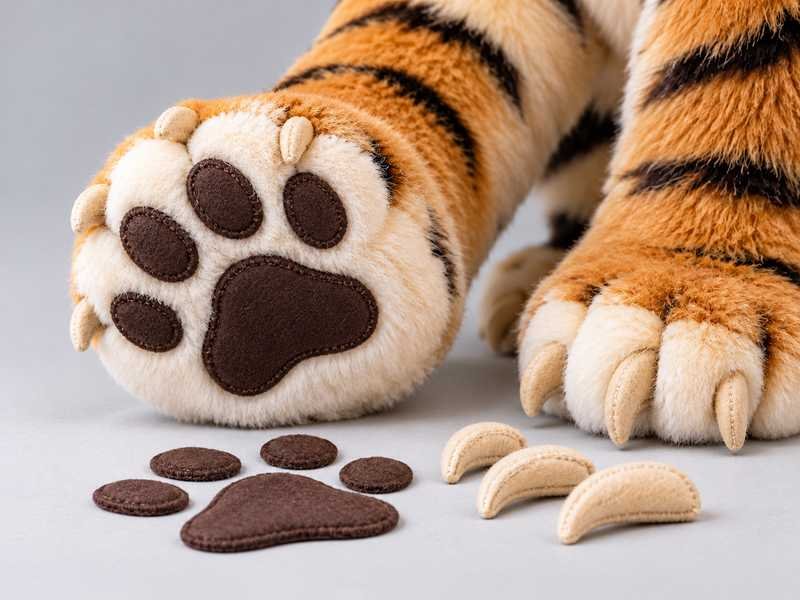
Paw pads can use embroidery, appliqué, felt, printed fabric or contrasting plush. Claws can be embroidered, sewn as soft fabric pieces or omitted when they add little recognition value. Small protruding parts increase sewing difficulty and inspection points. A simpler pad shape may improve repeatability without changing the animal identity, especially on smaller retail sizes.

Ears Horns And Tails

Long ears, horns, antlers, fins and tails should be engineered for orientation and recovery after packing. Soft stuffed extensions, layered felt or fabric reinforcement can help hold form without introducing unnecessary rigid parts. Base seam strength matters because these features are natural handling points. Mirror-pair control also prevents left-right angle differences during sewing and stuffing.
Internal Support Materials

Internal Support And Weight

Some poses need internal support, localized denser filling or a controlled weight insert. Weighted products require an inner containment structure that keeps pellets or weight media away from seams and migration paths. Any support element should be reviewed for feel, access risk, wash expectations and target-market requirements. The outside shape and the internal system should be approved together.

Labels Fasteners And Accessories

Woven labels, care labels, hang loops, collars, bows, clothing, key hardware or removable accessories can add brand value but also create additional sourcing and QC requirements. Attachment position should avoid distorting the animal body or interfering with packing. Removable pieces need age and use review. Production specifications should identify material, color, size, attachment method and approved artwork version.

Brand Decoration Should Follow Fabric And Product Structure

Logo and graphic methods work differently on short pile, long pile, curved panels and removable accessories. Placement and construction should be approved on the physical sample.

Embroidery

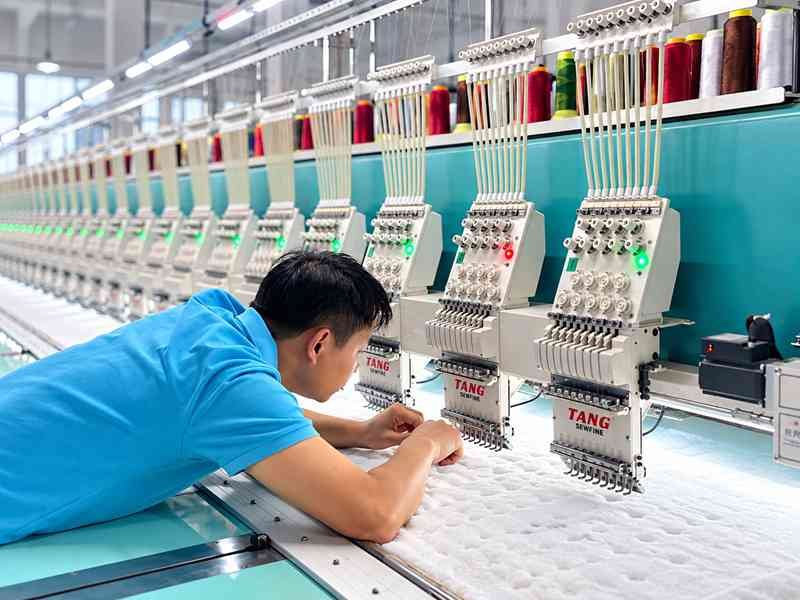
Embroidery works well for eyes, mouths, small brand marks and controlled graphic areas. Stitch density, backing, thread color and panel location all affect softness and shape. On long pile, hair can cover fine detail, so embroidery may need a trimmed zone, shorter-pile insert or simplified artwork. Decoration should normally be completed on flat panels before sewing when accurate positioning is required.

Appliqué

Appliqué is useful for larger color blocks, belly marks, paw pads and shapes that would become stiff if fully embroidered. A contrasting fabric layer can create texture while reducing stitch count. Edge method, seam allowance and placement tolerance need to be controlled. Appliqué also works well when brand artwork includes bold flat shapes that can be translated into soft textile layers.

Screen Printing

Screen printing can suit simple graphics, logos or repeated markings on compatible fabrics. Ink behavior, fabric texture, stretch and color coverage need testing before final approval. Printing on a panel is generally easier to position than printing after assembly. Large printed areas can change hand feel, so the graphic should be sized around both visual impact and the intended tactile experience.

Digital And Transfer Printing

Digital, sublimation or heat-transfer routes can reproduce complex patterns, gradients and multi-color artwork where the chosen fabric supports the process. Printed animal markings can reduce the number of sewn color panels, but repeat scale and placement still need control. Heat and pressure may alter surface feel on some plush materials, so the production route should be confirmed through sample trials.

Woven And Sewn Labels

Woven labels, satin labels and printed care labels are effective for brand identity, legal information and product tracking without changing the animal face. Fold type, edge finish and location should be selected to avoid scratching, twisting or creating an awkward visible seam. Final artwork, language, SKU and production data need version control so obsolete labels do not return to later batches.

Branded Clothing And Accessories

A T-shirt, scarf, collar, hat or other accessory can carry a logo while keeping the main animal body clean. Clothing introduces its own material, sewing, decoration, fit and assembly requirements. Removable garments may increase packing and handling time. Fixed garments may hide body seams or affect testing access. Branding should therefore be developed together with the finished stuffed animal, not as an afterthought.

Control Sample Revisions Before Releasing Stuffed Animals To Bulk

Prototype development should close shape, material and production risks in stages. Every approved change needs to reach the pattern, BOM, decoration files and production reference.

Move From V1 To Approval With Visible Revision Control

The first complete prototype is a translation of the current project definition, not a promise that every visual detail is already final. Ewin reviews proportion, species recognition, pose, face placement, fur direction, material behavior, accessories and stuffing together because these variables interact. A wider muzzle may change nose placement. A longer pile may hide embroidery. More stuffing can alter eye distance and body length. Revision comments should therefore be written as specific actions: adjust ear angle, reduce belly depth, raise eye position, change pile direction, shorten tail, modify embroidery size or replace a hard component. When a major revision affects construction, the related pattern, BOM or artwork file should be updated instead of relying on photos or verbal notes. Standard projects with readily available materials can move faster than long-pile, printed, multi-accessory or functional designs, so sample timing should be confirmed after complexity and material availability are reviewed. The goal is controlled convergence: each round should close identified issues and reduce uncertainty before final approval. Photo and video review can speed communication between shipments, but dimensional or tactile decisions should still be tied to the current physical sample when required. When comments concern several areas at once, the team should separate cosmetic changes from pattern, material and structural changes so one revision does not accidentally reopen an already approved feature.

Freeze The Approved Definition Before Production Release

A finished sample becomes useful for manufacturing only when the definition behind it is also controlled. Ewin links the approved physical reference with the current pattern, BOM, decoration files, measurement guidance, filling reference, accessory specification and packaging instructions. The Golden Sample provides the visible benchmark. BOM Freeze prevents unapproved material, color or component substitutions. Released pattern and artwork revisions tell production which files are current. Critical-to-quality points translate the sample into inspection language for face shape, eye position, ear angle, dimensions, stuffing, color blocks and appearance. If an approved change occurs later because of supply, packaging or regulatory reasons, the affected documents should be revised through a controlled change process rather than edited informally on the production floor. The purpose is simple: the stuffed animal approved during development should be the stuffed animal production is instructed to reproduce, inspect, pack and repeat on future orders. Production readiness also means checking whether final materials are available, decoration files are released, packaging information is current and inspection references are accessible to the teams that need them. A visually approved sample should not move into bulk while key inputs remain undefined or controlled only through informal messages. Clear release conditions reduce avoidable rework when materials, packaging and production scheduling begin to move at the same time.

Understand MOQ And Cost Before Locking The Final Specification

A stuffed animal quotation depends on the approved product definition. Ewin reviews quantity together with fabric, structure, decoration, filling, packaging and SKU complexity instead of using one universal price rule.

Cost / MOQ DriverWhat Changes The CostWhat Can Be OptimizedWhat Should Not Be Reduced Blindly
Order quantityMaterial buying, setup, fixed cost allocation, line efficiencyConsolidate common materials or similar SKUsRequired quality and safety controls
Effective MOQFabric color, custom print, molded parts, packaging, SKU splitShare fabrics, hardware or packaging formats across a seriesUnique species identity or approved artwork
SizeFabric area, filling weight, carton volumeReview proportion or pack-out efficiencyCritical silhouette and intended use
Fur and fabricGrade, pile height, color, direction limits, supplier MOQCompare equivalent surface optionsApproved feel, key texture and visible color
Panel countCutting, matching, sewing time, error riskRemove non-visible or non-essential panel complexityPanels needed for muzzle, body curve and species shape
Color zoningMultiple fabrics, small cutting batches, matchingUse print or appliqué where suitableImportant markings required for recognition
Face treatmentEmbroidery, appliqué, molded eye/nose, trimmingSimplify non-critical detail densityEye position, expression and secure attachment
FillingWeight, density, local support, weighted insertsTune non-critical zones and packing recoveryShape stability and approved hand feel
AccessoriesClothing, collars, metal, molded parts, removable itemsReduce hidden layers or combine functionsRequired branding, function or safe fixation
PackagingPolybag, display box, gift box, insert, carton densityImprove box size and carton utilizationProduct protection and channel requirements
Multi-SKU mixNumber of animals, colors, sizes, packaging versionsBuild SKU families around shared materialsVersion separation and SKU-level control
Compliance scopeMarket, age grade, materials, components, retailer rulesPlan test grouping where technically acceptableApplicable mandatory requirements

Manufacturing Control Must Preserve Shape From Cutting To Packing
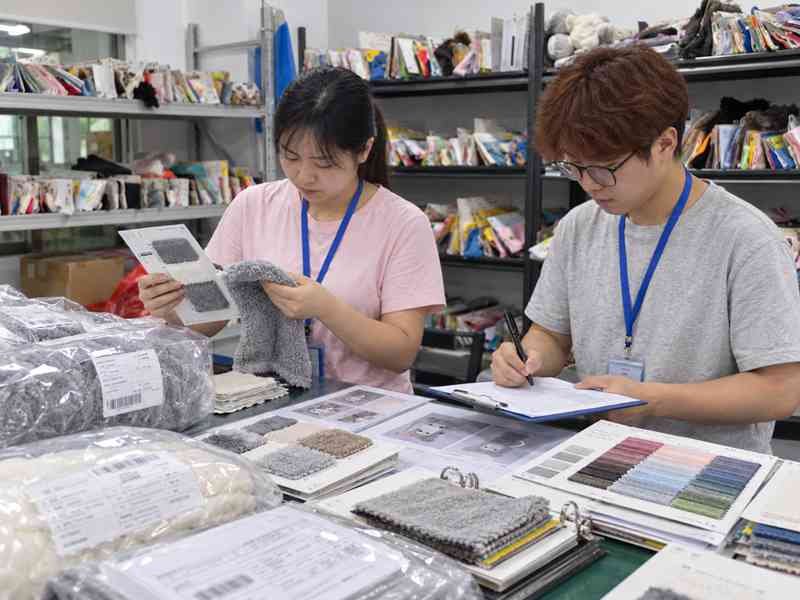
Stuffed animals pass through several processes that can change proportion, symmetry and surface appearance. Production controls should follow the approved pattern, material direction and Golden Sample.
Incoming Material Control

Material Inspection And Spreading

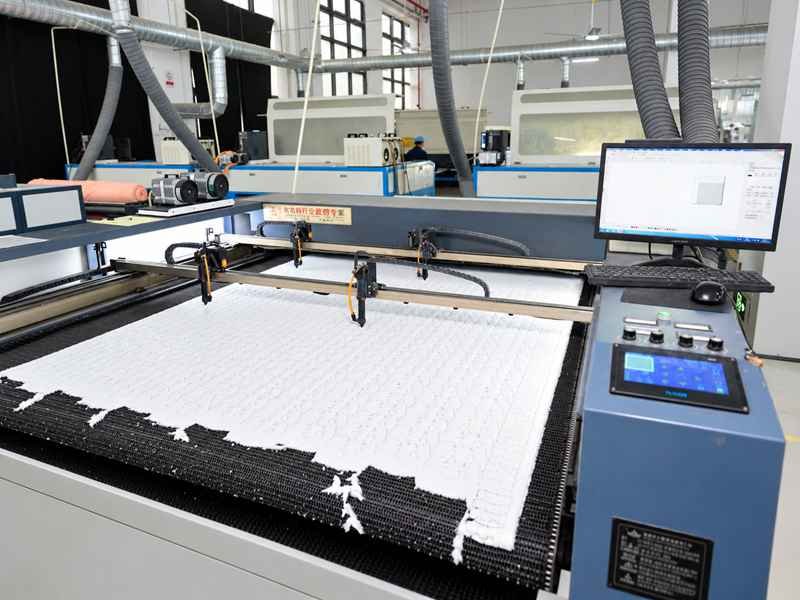
Incoming plush, lining, felt, labels and components should match the approved BOM before cutting. Color lot, GSM or construction, pile character and visible defects are checked against project requirements. During spreading, directional fabrics must keep the correct nap orientation and elastic materials should not be stretched into a false size. Multi-color and multi-SKU programs also need clear bundle identification before panels enter cutting.

Cutting And Panel Control

Released patterns are converted into production panels with attention to outline accuracy, mirror pairs, seam allowances, color groups and pile arrows. Complex facial pieces or small appliqué parts may require more precise cutting routes than large body panels. Bundle control keeps matched parts together and reduces the risk of mixing left/right pieces, outdated revisions or similar colors across several animal styles.
Embroidery Threads​

Embroidery And Printing

Eyes, mouths, markings, logos and printed patterns are checked for file version, thread or ink color, size and position before panels move forward. Decoration can distort soft fabric when density, backing or tension is wrong, so first-piece review should consider both artwork accuracy and panel behavior. Printed markings also need orientation and repeat control where they must align with species-specific pattern areas.

Sewing And Assembly

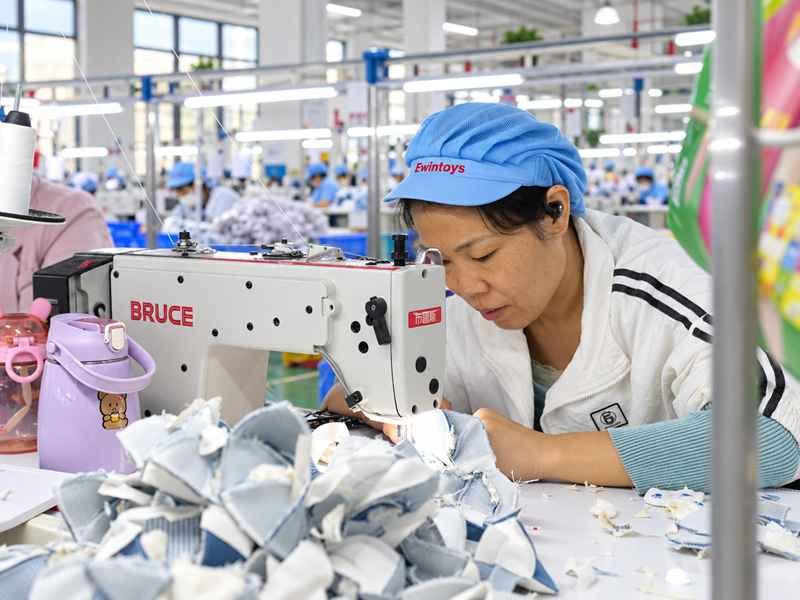
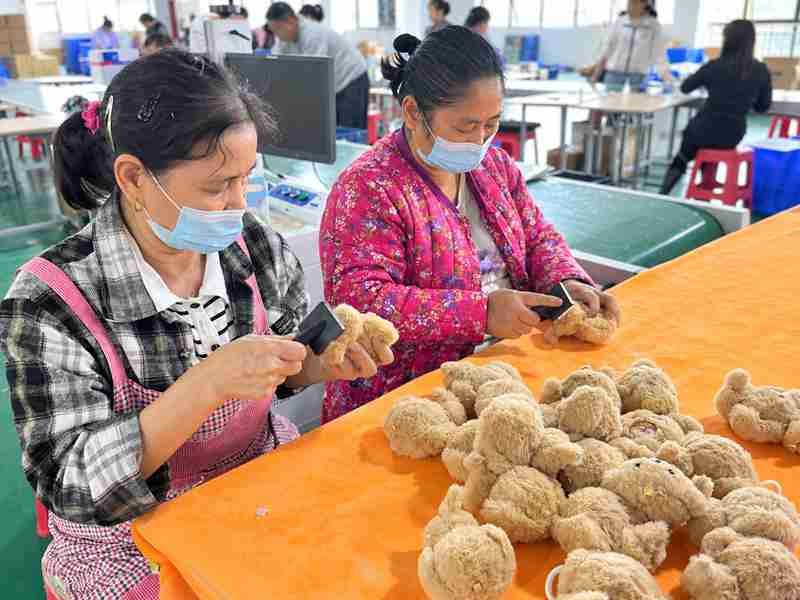
Sewing joins the engineered volume defined during sampling. Operators need the correct panel set, seam path and assembly order for head, muzzle, limbs, ears, tails and accessories. Long pile should be kept out of seam allowance where possible so hair can be released after sewing. First-piece checks can catch twisted limbs, uneven ears, incorrect part orientation and seam tension before a full batch is completed.

Stuffing And Weight Control

Stuffing changes face shape, body depth and pose. Fiber should be opened consistently before filling, and weight or local density references should follow the approved product. Head, muzzle, belly, limbs and tail may require different fill levels. For weighted designs, the internal insert must remain in its approved compartment. Finished weight and hand feel are checked against the reference rather than left to individual preference.
Shaping And Finishing

Shaping Grooming And Finishing

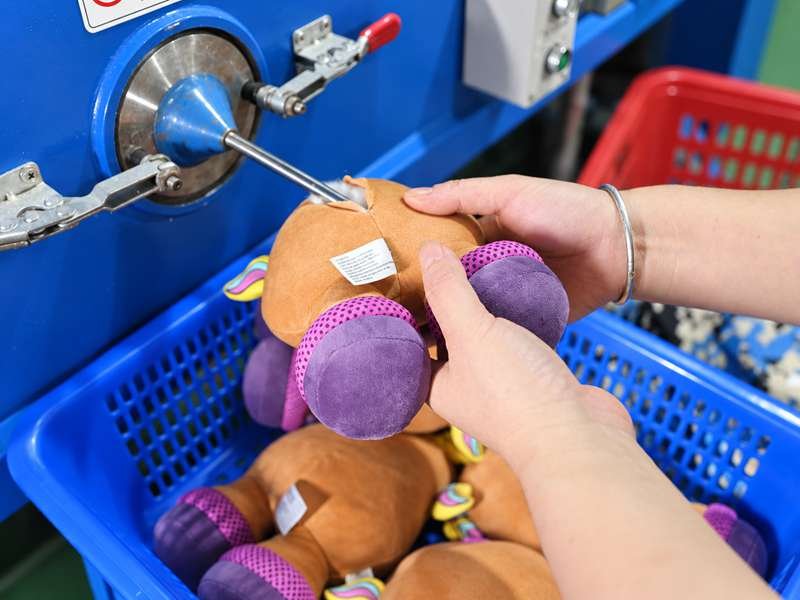
After closure, the animal is shaped so seams settle, limbs align and the approved silhouette returns. Long-pile areas may require combing, seam-hair release or localized trimming around eyes, muzzle and contour lines. Steam shaping can help recover compressed surfaces where suitable. Finishing also removes loose fibers and makes asymmetry, open seams or decoration defects easier to identify before final inspection.

Accessory And Closure Check

Collars, clothing, bows, labels, hang loops, eyes, noses and other accessories are checked for position and attachment. Closing seams should match the approved location and remain visually controlled after filling. Parts used as natural handling points, including ears, tails and external accessories, need particular attention because assembly weakness may not appear until the product is pulled or repeatedly handled.
Master Carton and Shipment Prep

Packing And Release

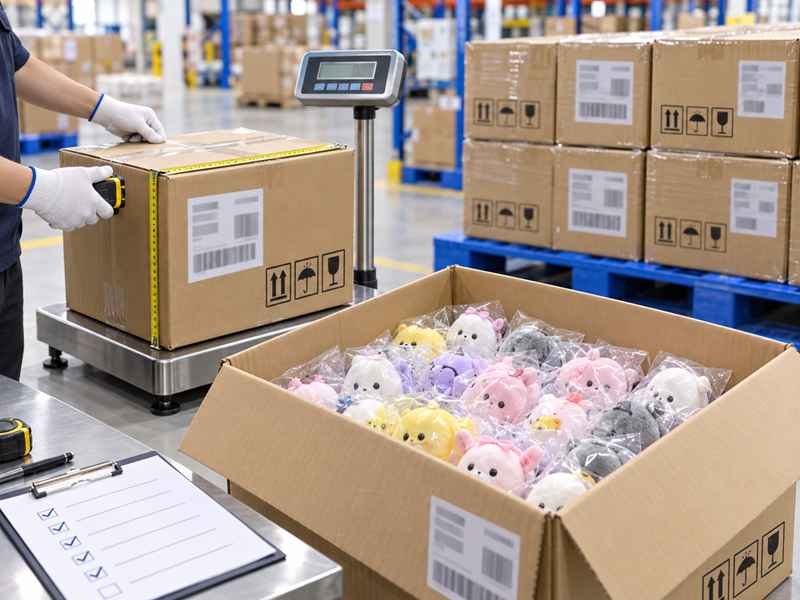
Packing should protect the approved shape, not only fit the maximum number of pieces into a carton. Long fur, tall ears, tails, horns and protruding limbs can deform under excessive compression. Unit pack, label version, barcode, SKU, carton quantity and shipping mark are verified before release. Final packed goods should still trace back to the correct product, production batch and current approved specification.

Certificates, Compliance & Quality Assurance

Ewintoys follows structured quality and compliance practices for custom plush production. We hold relevant certifications and support additional testing, inspection, and compliance documentation based on specific product requirements and destination markets, helping brands meet different international standards with confidence.


Quality Control Should Focus On Animal-Specific Failure Modes

General inspection is not enough for complex animal forms. Ewin connects incoming, in-process and final checks to the defects most likely to change appearance, safety or repeatability.

Material Lot And Color Control

Animal collections often combine several colors and pile types in one product. Incoming material should be checked against the approved BOM, color standard and surface direction before production. Long-pile or printed materials need additional visual review because shading, print repeat and pile reflection can make two acceptable rolls look different after assembly. Batch identification helps prevent uncontrolled mixing across production lots.

Symmetry And Measurement Control

Paired ears, eyes, legs, wings, fins, horns and color panels can expose small assembly differences quickly. Critical dimensions should be defined around visible anatomy rather than only overall height. Head width, eye spacing, muzzle projection, ear angle, body depth, leg length or tail position may become CTQ points where they strongly affect recognition. Golden Sample comparison supports the measurement data.

Pile Direction And Seam Finish

A reversed panel can appear darker or lighter under retail lighting even when the fabric color is identical. Long hair can also become trapped inside seams, creating thin lines or irregular edges. Process checks should confirm pattern arrows, bundle orientation and seam-hair release. Finished inspection should also review trimming consistency around eyes, nose and other details that must remain visible through the fur.

Attachment And Seam Strength

Eyes, noses, labels, collars, tails, ears and decorative pieces may be pulled during normal handling. Attachment method and surrounding fabric structure should therefore be reviewed before bulk production and checked as required during QC. Seam strength is especially important around tight curves, small limbs and heavily stuffed areas. A good-looking sample does not compensate for an attachment or closure that is not stable enough for the intended use.

Filling Shape And Weight

Underfilling can make a product look collapsed, while overfilling can change expression, stretch seams and increase carton volume. Weight-controlled filling and reference hand feel help reduce batch-to-batch variation. QC should compare head, body and limb firmness as well as total product weight where relevant. Weighted animals require separate checks for insert position, containment and the effect of weight on sitting or lying posture.

Needle Detection And Final Release

Needle control should be connected to sewing and handwork management rather than treated as a single final machine pass. Finished goods can be checked with metal detection according to the production control plan, with abnormal items isolated and investigated. Final release also verifies appearance, dimensions, labels, packaging, SKU identity and carton information so quality approval covers the product as it will actually be shipped.

Plan Compliance Around Market, Age Grade And Final Construction

Compliance work starts before final testing. Market, intended age, materials, detachable parts, labels and packaging should be reviewed while the product is still being engineered.

Define Market And Age First

A child-focused stuffed animal sold in the United States, an adult collectible sold in Europe and a museum gift with detachable accessories do not create the same compliance questions. Ewin begins by identifying target market, intended age, sales channel and product construction. Those inputs guide the review of small parts, sharp points, seam strength, flammability, materials, labels and packaging before the final sample is submitted for testing.

United States Programs

For US children’s plush projects, applicable requirements can involve ASTM F963, CPSIA-related material limits, tracking information and other project-specific obligations. The exact test scope depends on age grade, materials, components and product design. Ewin can prepare the final configuration, supporting BOM information and required samples for third-party laboratory review. A product-specific pass statement should only be tied to the corresponding final report and configuration.

European Market Programs

EU-bound toy projects may require review against applicable EN 71 requirements and the broader obligations associated with placing toys on the market. Construction, material selection, detachable components, labels and packaging information should be finalized before the compliance file is closed. Ewin can coordinate production information and sample preparation with an independent laboratory while keeping final conclusions tied to the approved product version.

Small Parts And Attachments

Plastic eyes, noses, bells, collars, buttons, tags and decorative accessories can change the risk profile of a stuffed animal. Part size, fixation, accessibility and intended age need review before the sample is locked. In some programs, embroidery or soft sewn details may be a better construction choice. Attachment testing and inspection requirements should be based on the final design rather than assumed from a generic product category.

Materials And Flammability Inputs

Fabric composition, coatings, prints, fillings and accessory materials can affect the compliance plan. Long-pile surfaces, printed materials and mixed constructions may need different sample preparation or evidence than a single short-pile body. Ewin records material and component choices in the project BOM so laboratory submissions and production control refer to the same configuration. Material changes after approval should trigger a compliance impact review.

Labels Reports And Third-Party Testing

Care labels, warnings, tracking data, importer or responsible-party information and retail packaging content need to match the target market and final SKU. Ewin can support third-party testing coordination with laboratories such as SGS, Intertek, TüV or BV according to project needs. Test reports and compliance documents should remain linked to the product version, market and materials they actually cover rather than being used as broad factory-wide claims.

Packaging Should Protect Fur, Shape And Retail Presentation
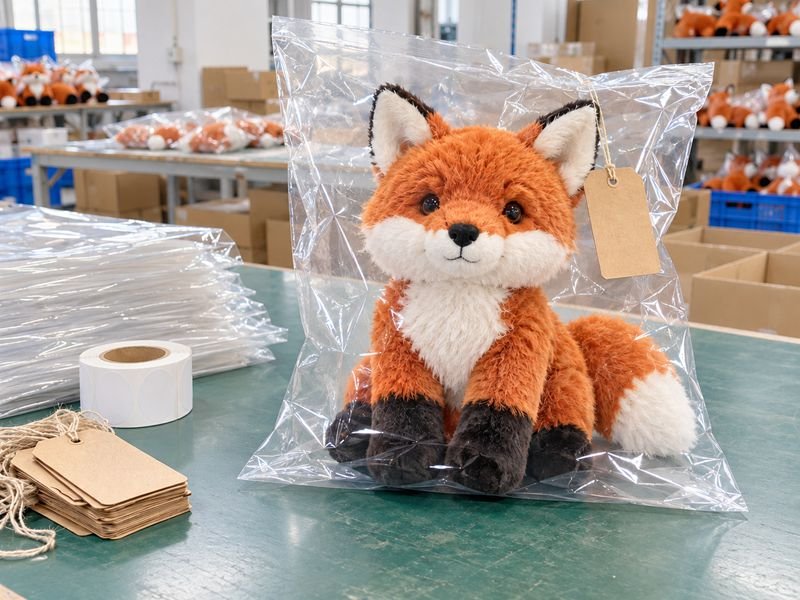
Stuffed animal packaging must protect the approved silhouette while fitting the sales channel, labeling plan and shipping method. Long fur and protruding features need extra care.
Ewin toys 4-1 Polybag and Hangtag packing

Polybag And Hangtag

A polybag with hangtag is efficient for many standard retail, promotional and e-commerce programs. Bag size should allow the animal to enter without folding ears, tails or limbs into permanent positions. Venting, warning text and sealing method depend on program requirements. Hangtag placement should remain visible without pulling the fabric or covering key species features after packing.
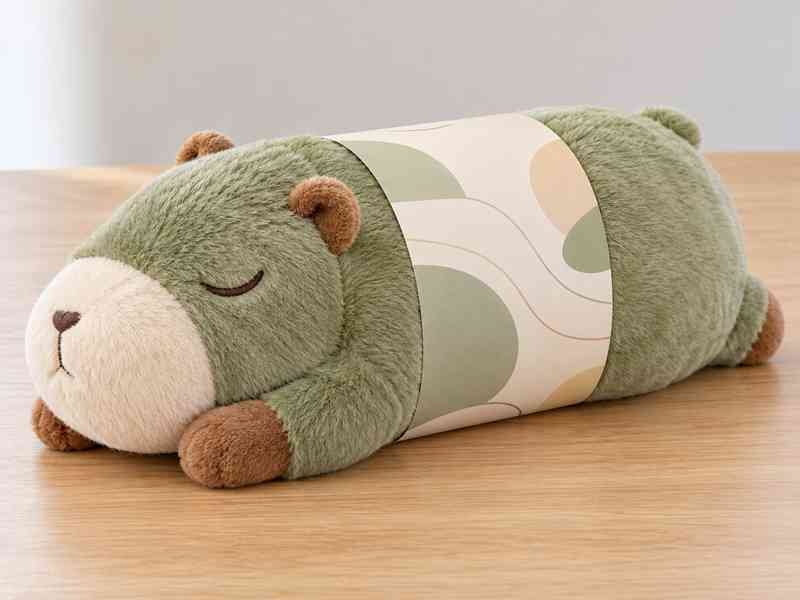
05-02 Belly Band Packaging Development Sage capybara plush with geometric belly band-4

Belly Band

A printed belly band can add branding and product information while keeping most of the plush visible and touchable. Band width, tension and locking method should be tested on the final stuffed shape so it does not compress the belly, flatten fur or slide during handling. Bands work well for simple retail presentation when a full color box would add unnecessary volume.
Ewin toys 4-4 Gift Box packing

Open Display Pack

Open display cartons can support zoo, museum and specialty retail programs where shoppers need to see or touch the animal. The base should stabilize the product without creating visible deformation. Tie points or supports need review for removal safety and presentation. Carton height must also allow ears, horns, fins or tails to remain within the intended silhouette during transport.

Window Box

A window box provides stronger shelf presentation and protects the stuffed animal from handling. Internal space should match the final dimensions and pose, not an early sample. Long fur can press against a window and look flattened, while long ears or tails may need an insert or controlled fold. Barcode, warning and branding areas should be integrated before packaging artwork is frozen.

Gift And Story Box

Premium animal collections can use gift boxes, story cards, habitat information or collectible inserts to increase perceived value. Internal trays or supports should hold the product without crushing the muzzle, ears or coat. Packaging development should consider pack-out labor and carton utilization because a visually premium box can also create significant volume and handling cost if its dimensions are not engineered carefully.
6. Bulk, Packing & Delivery​ 5

E-Commerce And Master Carton

E-commerce packs need to survive handling while keeping dimensional weight under control. Unit protection, barcode or FNSKU as applicable, carton labels, carton count and compression method should be validated with the finished product. Vacuum or heavy compression is not automatically suitable for long-pile or structured animals because recovery may be inconsistent. Shipping trials should reflect the approved packing method.

Multi-Animal Collections Need Program-Level Control Beyond Single SKUs

Large collections become easier to manage when shared materials and packaging are planned intentionally while each animal keeps its own controlled identity and approval history.

Build A Shared SKU Architecture

A collection may contain several species, colors or sizes that launch together but do not share the same pattern or decoration. Ewin can organize project IDs, SKU names, version status, pattern references, BOMs and packaging variants so each animal moves through development without losing its individual record. A clear SKU architecture also helps prevent a change approved for one style from being applied automatically to the rest of the collection.

Share Materials Where It Helps

Common fabrics, thread colors, labels, filling and packaging dimensions can improve material purchasing efficiency across a series. Shared materials should be chosen because they fit the animal design, not only because they reduce the number of suppliers. Species with different pile, texture or color needs may still require dedicated materials. Ewin can compare shared and unique components before sampling so procurement efficiency does not weaken product recognition.

Control Versions Packaging And Barcodes

Multi-SKU programs create more opportunities for version and pack-out errors than a single animal. Artwork, embroidery files, labels, barcodes, packaging graphics and carton information should be linked to the correct SKU and revision. Production and packing teams need current released files, while obsolete versions should be clearly removed from active use. Final inspection should verify both product identity and the packaging identity surrounding it.

Plan Forecasts Reorders And Shipments

Once a collection moves beyond the first order, forecast, material reservation and reorder consistency become more important than the original sample alone. Ewin can review repeat orders against the prior Golden Sample and BOM, then identify changes in materials, labels, quantity, market or packaging before production. Consolidated or split shipments can be planned around SKU readiness, retail dates and destination requirements instead of forcing every style into one identical schedule.

Ewin Toys Combines Development Evidence With Manufacturing Control

Supplier qualification should be based on visible development, production and quality capability. Ewin presents the functions that directly support custom stuffed animal programs.

Product Development Center

Ewin Toys operates a 60+ person Plush Product Development Center covering pattern, sample, material and engineering work. The development organization can move from hand sketches, 2D artwork, 3D renders, reference products or physical samples into pattern, BOM, prototype and manufacturable specifications. For stuffed animals, the value is especially visible in species proportion, pose, pile direction, face development and controlled sample revision.

Integrated Manufacturing Base

Ewin’s manufacturing system is built around a 95,000+ m2 base and a 1,900+ workforce structure. Core operations include cutting, embroidery and printing, sewing, stuffing, hand assembly, shaping, quality inspection, packaging, warehousing and logistics. A large facility alone does not guarantee a strong product, so the stuffed animal program should still be tied to released patterns, approved materials and current production instructions.

Sampling And Version Control

Ewin’s sample-development organization is structured to handle prototype, revision, testing, pre-production and Golden Sample requirements across many projects. The company knowledge base records a 1,700+ samples/month development capacity across different sample types. More important than the headline number is version control: sample status, pattern revision, BOM, artwork and approval records are connected so a later production team can identify the correct released definition.

Quality Packaging And Delivery Control

IQC, IPQC, FQC and OQC connect material checks, process checks, finished appearance and final pack-out. Needle detection, pull or seam checks, measurement, color and product-specific inspection can be included according to the QC plan. Packaging, barcodes, labels and carton information are also controlled as part of release. Target-market third-party testing can be coordinated separately when required by the final product and destination.

Stuffed Animal Program Examples For Project Planning

The examples below show how Ewin can structure larger brand programs. Quantities and project profiles are representative planning scenarios and are not public claims about named clients.

United States Zoo Retail Collection

A US zoo and museum retail group plans six 24 cm species for gift shops, with 1,500 pcs per animal and 9,000 pcs total. Reference inputs include animal photography, preferred pose, target retail price and packaging space limits. Development begins by separating species landmarks from features that can share a material platform. Faux fur is reserved for selected animals, while common short-pile fabrics and shared label construction reduce procurement fragmentation. Each species receives its own pattern, face approval and Golden Sample. Open display packaging is sized to protect ears, tails and manes, while carton planning keeps mixed-SKU replenishment manageable across several retail locations.

Germany Pet Lifestyle Program

A German pet lifestyle brand develops four dog-breed plush styles at 22 cm, 2,000 pcs per breed and 8,000 pcs total for specialty retail and online sales. Breed recognition depends on muzzle length, ear set, coat color blocks and fur texture, so the project starts with front, side and three-quarter references rather than one promotional image. Two shared base materials are combined with breed-specific long-pile areas and embroidery. Pattern revisions focus on head proportion and sitting balance before packaging artwork begins. Each SKU receives separate barcode and label control, while common carton dimensions simplify warehousing and repeat-order planning.

Australia Educational Animal Range

An Australian educational toy brand prepares three native animal designs at 28 cm, 1,200 pcs per style and 3,600 pcs total for school, museum and specialty retail channels. The brief prioritizes clear species recognition, soft child-friendly face treatment and durable handling. Embroidered eyes are selected to reduce detachable facial parts, while ears, tails and paws are designed as soft textile structures. Sampling reviews posture, symmetry and stuffing before the final materials are frozen. Compliance planning begins with intended age and market requirements, then final test samples are prepared from the approved configuration. Story cards and unit packaging are coordinated with the final SKU artwork and carton plan.

Frequently Asked Questions

You can send artwork, sketches, animal photos, character sheets, 3D renders, reference products or a physical sample. Helpful project details include target size, quantity, market, age group, packaging direction and required delivery timing. A complete technical drawing is useful but not required for the first feasibility review.

Many standard custom plush projects can begin commercial assessment around 500 pcs per style. Effective MOQ can change when long-pile fabric, custom dyeing, printing, molded parts, special packaging or many small SKUs create separate supplier minimums. Collection planning can sometimes improve efficiency by sharing suitable materials or packaging across several animals.

Sampling time depends on pattern complexity, material availability, custom colors, printing, accessories and revision scope. A simple short-pile animal can move faster than a realistic long-fur animal with several color zones or special components. Ewin confirms the working timeline after the development inputs and required materials are reviewed.

Yes, photo references can be used as development inputs. Realistic results depend on enough views to understand head, muzzle, body depth, limbs, ears and tail. The sample team then interprets those features into pattern pieces, materials, pile direction, color zoning and trimming. A physical plush still requires engineering choices rather than literal photo copying.

Both textile and hard-component routes are possible depending on style, age grade and project requirements. Embroidery reduces detachable parts and gives accurate placement. Plastic or safety eyes and molded noses can add depth and realism. Part size, backing system, fixation, surrounding fabric and target-market review should be confirmed on the final construction.

Bulk release should use more than a reference photo. Ewin connects the approved Golden Sample with the frozen BOM, released pattern, current embroidery or print files, measurements, filling reference, accessory specification and packaging instructions. QC then uses the same CTQ points to review material, process, finished appearance and final pack-out.

Ewin can support test planning and third-party laboratory coordination according to the final product, intended age and destination. US and EU programs can involve different standards, labels and documentation. Testing should be performed on the representative final configuration, and any pass statement should remain tied to the specific product version and report.

Yes. Multi-animal collections can share suitable fabrics, labels, packaging dimensions or hardware while keeping separate patterns, artwork, BOMs and approvals for each SKU. A common project architecture helps manage versions, barcodes, packaging and production status without treating visually different animals as one undifferentiated product.

Cost engineering can compare material grade, panel complexity, embroidery density, filling, handwork, accessories and packaging. The aim is to keep the features that drive species recognition, hand feel and brand value while removing cost from details that add little visible value. Any change should be validated through the sample before the bulk specification is frozen.

Please provide the animal reference or artwork, finished size, expected quantity per style, target market, age group if applicable, preferred materials or hand feel, decoration and accessory requirements, packaging direction, delivery location and target timing. A clearer brief allows the team to quote against a defined construction instead of making assumptions that may change later.

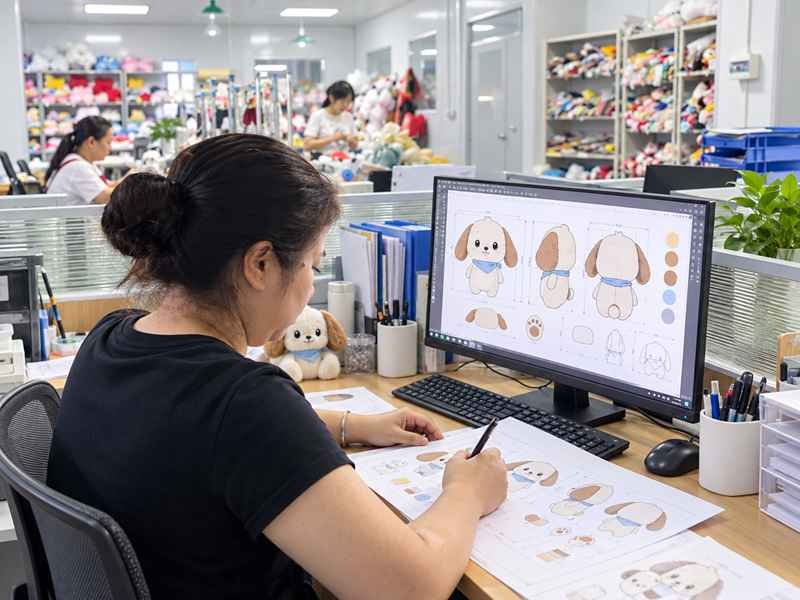
2D Artwork

Send Your Stuffed Animal Project For Engineering Review

Send the information already available, even if the design is not yet a complete manufacturing specification. Ewin can review the animal form, pose, size, fur direction, face construction, materials, decoration, accessories, packaging and target-market inputs before the quotation is finalized. A stronger starting brief helps the development team identify risks early, compare material or cost options and build a sample path that can later connect to Golden Sample, BOM Freeze and bulk production control. If several animal styles belong to one launch, send the complete SKU list at the beginning so shared materials, common packaging and separate approval points can be reviewed together.

Please include:

  • Artwork, animal photos, 3D render or reference sample
  • Finished size or preferred size range
  • Quantity per style and number of SKUs
  • Target market and intended age group
  • Preferred fur, hand feel or visual direction
  • Logo, label, clothing or accessory requirements
  • Packaging and sales channel
  • Delivery location and target date

Start Your Custom Plush Project

We will contact you within 24 Hours, please pay attention to the email with the suffix“@ewintoys.com”. 

# Confidential project? NDA requirements can be discussed before sensitive files are shared.