 Skip to content

Plush Manufacturer for Seasonal Retail Programs & Timed Launches
- 60+ Development Specialists
- Multi-SKU Seasonal Collections
- Launch-Timeline Planning
- Retail Packaging Coordination
- Repeat-Order Consistency

Seasonal Retail Programs Need More Than Holiday Plush
A Retail Season Is a Fixed Commercial Window
Assortment Control Protects Margin and Launch Readiness
Seasonal Programs Built for Different Retail Business Models
Retail Chains
Toy and Plush Brands
IP and Licensing Teams
Gift and Lifestyle Brands
E-commerce Programs
Distributors and Importers
Seasonal Plush Formats for Retail Assortment Planning

Hero Character Plush

Seasonal Animal Plush

Mini Gift Plush

Plush Keychains

Plush Bag Charms

Plush Ornaments

Gift-Box Plush

Plush Gift Sets

Plush Pillows

Collectible Series Plush

Blind-Box Plush

Checkout Impulse Plush
Build One Program Across Many Seasonal SKUs
Separate Shared Platforms From Unique Character Details
Use SKU Architecture to Protect Approval and Reorder Control
Choose Materials Around Retail Effect and Repeatability

Short-Pile Plush
- Best for: detail readability and clean silhouettes.
- Review: GSM, pile direction, stretch, color, embroidery support, and handfeel.
- Seasonal value: strong color blocking and repeated character families. For repeat programs, record the approved surface, color, and stretch direction in the BOM so a later reorder does not rely on a generic fabric name.

Velboa
- Best for: repeatable shape and surface clarity.
- Review: surface density, print compatibility, stretch, color, and seam appearance.
- Seasonal value: efficient base fabric for multi-color or themed collections. A controlled base fabric can simplify family consistency, but print, embroidery, and stuffing should still be reviewed on the actual final construction.

Minky and Super-Soft
- Best for: soft gift positioning.
- Review: stretch direction, pile, color lot, embroidery stabilization, and stuffing density.
- Seasonal value: premium tactile feel for winter, Valentine, baby, and gifting ranges. When several SKUs share the same soft base, approve one material reference and then verify how each pattern and embroidery program behaves on it.
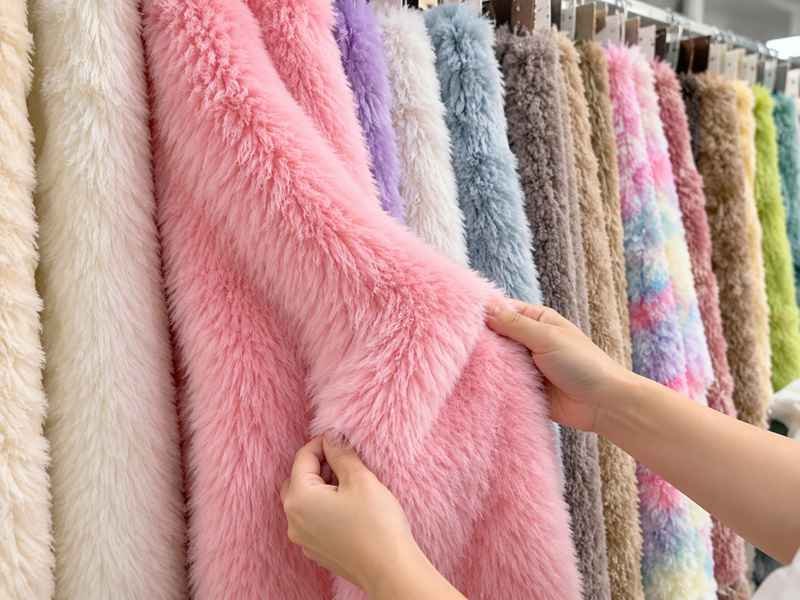
Faux Fur
- Best for: winter animals, bag charms, collector items, and premium accents.
- Review: pile length, shedding, nap direction, backing strength, color match, and trim plan.
- Seasonal value: immediate winter and luxury texture. For long-pile products, protect facial readability with trimming, separate short-pile panels, or larger decoration rather than forcing tiny details into the fur.

Sherpa and Curly Plush
- Best for: cozy texture and visual warmth.
- Review: curl scale, density, seam bulk, embroidery area, and color consistency.
- Seasonal value: winter, Christmas, rustic, and comfort collections. If several winter SKUs share the texture, keep curl scale and density consistent so the assortment reads as one coordinated collection on shelf.

Velvet and Suede Feel
- Best for: premium gift presentation and clothing details.
- Review: nap, light reflection, seam marks, embroidery pressure, and color lot.
- Seasonal value: deep jewel tones and sophisticated holiday styling. Deep seasonal colors should be reviewed under consistent lighting because nap direction can make one approved shade appear different across panels or units.

Printed Plush Fabrics
- Best for: graphic seasonal stories and repeated motifs.
- Review: print method, color tolerance, alignment needs, crocking, handfeel, and fabric stretch.
- Seasonal value: fast visual differentiation across a shared body platform. Printed programs should keep the approved artwork scale and color reference linked to the pattern so later colorways do not drift from the original motif.

Accessory and Clothing Fabrics
- Best for: character storytelling and fashion details.
- Review: fraying, edge finish, thickness, colorfastness, seam allowance, and child-use suitability.
- Seasonal value: high visual impact without changing the main body pattern. Accessory fabrics should also be included in the material approval set because a small scarf, wing, or hat can become the most visible seasonal feature.
Trims and Accessories Shape the Seasonal Story

Ribbons and Bows

Hats and Headwear

Scarves and Clothing

Loops and Hanging Parts

Bells and Metal Accents

Patches and Badges

Internal Structure Parts

Labels and Tags
Logo and Decoration Methods for Seasonal Plush
Embroidery
- Strong for: durable facial and logo details.
- Watch: long pile can hide stitches; dense embroidery can stiffen small panels.
- Approval: lock artwork revision, thread reference, size, position, and machine file before bulk. For multi-SKU families, keep thread codes and machine files mapped to the correct design so similar faces do not receive the wrong program.
Appliqué
- Strong for: visible shapes on larger bodies or pillows.
- Watch: edge shape, fabric fray, seam bulk, and alignment on curved panels.
- Approval: confirm fabric, cut shape, stitch border, placement, and seam interaction on the final sample. Appliqué also works well when several colorways share one graphic shape because fabric color can change without rebuilding the full body pattern.
Fabric Printing
- Strong for: snowflakes, stars, themed repeats, licensed artwork, and color-rich surfaces.
- Watch: stretch, pile, color shift, rubbing, alignment, and print scale.
- Approval: compare printed swatch and finished sample under the intended fabric direction. For repeated seasonal runs, retain the approved print swatch and production artwork so a later batch can be compared against a controlled reference.
Woven Labels
- Strong for: repeatable brand identification across many SKUs.
- Watch: label stiffness, edge feel, fold, color, placement, and child-use considerations.
- Approval: map label artwork and placement to the correct SKU and packaging version. A label matrix is especially useful when the same brand mark appears on several sizes but fold, seam position, or regulatory copy changes by SKU.
Heat Transfer
- Strong for: controlled graphic areas with limited stitch bulk.
- Watch: heat sensitivity, surface texture, cracking, edge lift, and wash or rub behavior where relevant.
- Approval: validate the actual substrate rather than approving from artwork alone. Production should use a validated heat setting and application method because a visually correct sample can still fail if the bulk substrate behaves differently.
Mixed Decoration
Many seasonal characters need more than one decoration method. A face may use embroidery, a sweater may use appliqué, a scarf may carry a woven label, and a body panel may use printed motifs. Mixed decoration should be engineered as one visual system.
- Strong for: premium, licensed, collectible, and story-driven assortments.
- Watch: material compatibility, overlapping tolerances, panel distortion, and revision control.
- Approval: review the finished combination on the actual sample before production files are released. A combined decoration map gives production one reference for which method belongs on each panel, garment, or accessory and reduces cross-SKU file confusion.
From Artwork to Approved Seasonal Production Definition
Pattern Engineering Converts Artwork Into Three-Dimensional Form
Sample Revisions Should Close Decisions, Not Create Endless Versions
Golden Sample and BOM Turn Approval Into a Production Standard
Control Shared and Unique Elements Across Every SKU
A clear assortment matrix shows where standardization helps and where design, packaging, testing, barcode, production, or retail data must remain unique to each SKU.
| Program Variable | SKU-Level Control | Collection-Level Control | Why It Matters |
|---|---|---|---|
| Character identity | Face, ears, costume, embroidery, colorway | Shared proportion rules and style language | Protects visual consistency without making every item identical |
| Pattern | SKU-specific panels and attachment points | Shared body platforms where suitable | Reduces unnecessary redevelopment while keeping fit correct |
| Materials | Local fabric, garment, trim, special color | Shared fabric families and approved handfeel | Improves sourcing stability and color coordination |
| Decoration | Embroidery file, print, appliqué, logo size | Shared thread palette and placement logic | Prevents old files or wrong positions entering production |
| Accessories | Hat, bow, hardware, loop, bell, charm | Shared suppliers and common component families | Reduces purchasing fragmentation and substitution risk |
| Packaging | Unit pack, backing card, gift box, label copy | Shared structure and seasonal visual system | Keeps retail presentation coherent across the assortment |
| Barcode / ID | Unique UPC/EAN/FNSKU or internal SKU data | One controlled data matrix | Reduces scan failure and SKU mixing |
| Testing / compliance | SKU, revision, age grade, product risk | Common program test strategy where applicable | Keeps evidence tied to the correct version |
| Production | Routing, work content, quantity, release status | Common milestone and capacity plan | Makes multi-SKU progress visible before the launch window tightens |
| Shipment | Carton/SKU quantity and marks | Consolidated or split-shipment plan | Supports DC, retailer, and launch-date requirements |
Freeze Critical Inputs Before Seasonal Bulk Production
Production release should happen only after the inputs controlling appearance, cost, compliance, packaging, barcode identity, and quality have reached an approved version.
Release Item | What Should Be Locked | Risk If Released Too Early |
Golden Sample | Approved shape, handfeel, decoration, accessories and overall appearance | Bulk can drift from the version the brand actually approved |
Pattern | Current panel shapes, seam positions and construction details | Old pattern pieces can create shape or fit inconsistency |
BOM | Material IDs, colors, filling, trims, accessories and packaging | Substitution or missing components can change quality and cost |
Decoration Files | Embroidery, print, appliqué and logo artwork revisions | Wrong logo, thread, size or placement can spread across a full batch |
Color References | Approved fabric, thread, print and accessory color standards | Mixed lots or visually inconsistent SKUs can weaken collection presentation |
Packaging Artwork | Box, card, hangtag, wash label, warnings and legal copy | Outdated copy or artwork may require repacking after production |
Barcode / SKU Data | Approved code, position, readable size and SKU mapping | Scan errors or incorrect mapping can cause warehouse or retail rejection |
Testing Inputs | Market, age grade, final materials, components and product revision | Testing may not represent the actual production version |
QC Checkpoints | Key dimensions, workmanship, attachment, needle and pack-out checks | Inspection becomes subjective and problems are found too late |
Plan Backward From the Seasonal On-Shelf Date
| Reverse milestone planning exposes the critical path by linking approval, materials, testing, production, packing, inspection, transportation, and receiving to the required retail date. | ||
| Reverse Stage | Key Inputs | Main Decision |
|---|---|---|
| Retail / DC Arrival | Destination, receiving window, channel rules | What date must sellable units be available? |
| International Delivery | Mode, volume, destination, customs and buffer | Which transport option protects the required arrival date? |
| Pre-shipment Release | Final inspection, quantity, carton marks, barcode, pack version | Are finished goods truly ready to hand over? |
| Pack-out | Approved unit pack, labels, ratio, PDQ, master carton | Can each SKU be packed and identified without rework? |
| Mass Production | Released definition, materials, capacity slot, QC plan | Is the complete assortment ready for controlled production? |
| Testing / Compliance | Final version, market, age grade, material and component scope | Does the evidence represent the product being produced? |
| Golden / PP Approval | Final sample, BOM, pattern, decoration, packaging inputs | Has the team closed product decisions before bulk release? |
| Sample Revision | Measured feedback, material and decoration decisions | Are changes converging toward approval rather than reopening the design? |
| Engineering Start | Artwork, SKU list, quantity, size, channel, launch date | Is there enough information to build a realistic program plan? |
Manage MOQ and Cost Across Seasonal Assortments
Treat 500 Pieces per Style as a Starting Point, Not a Promise
Put Cost Into the Details Consumers Notice Most
Production Details That Protect a Seasonal Launch

Material Readiness
Key gate: approved material and lot status.
Program risk: one late unique component can hold the full assortment. A material status board also helps the project team distinguish ready stock from held, late, or substituted items before the production slot is consumed.

Spreading and Cutting
Key gate: correct pattern revision, material direction, and panel count.
Program risk: wrong pattern or mixed cut panels can multiply across many units before the problem becomes visible. Cut bundles should remain identified by SKU and revision so visually similar panels from related characters are not mixed during sewing.

Embroidery and Printing
Key gate: released program/artwork plus first-piece comparison.
Program risk: multi-SKU jobs can accidentally reuse a file from another character or prior season. Decoration records should retain the first approved piece so operators and inspectors can compare placement and expression throughout the run.

Sewing and Assembly
Key gate: first-piece shape and construction against approved reference.
Program risk: an informal construction shortcut can change silhouette or attachment strength even when materials look correct. Work instructions should identify special seam, reinforcement, or accessory steps that differ from the shared body platform used by other seasonal designs.

Stuffing and Shaping
Key gate: filling target and shaping reference tied to the approved sample.
Program risk: inconsistent handfeel or asymmetric shape across retail units. A controlled filling reference can include target weight, feel, and key shape points so operators do not compensate for shell variation by intuition alone.

Finishing and Handwork
Key gate: finished piece compared with Golden Sample and accessory placement standard.
Program risk: small visual inconsistencies become obvious when many SKUs are displayed together on one shelf. Finishing standards are most useful when photos or approved samples show how fur direction, garments, bows, and hanging hardware should look after recovery.

Production Slot Planning
Key gate: forecast, released definitions, material readiness, and agreed production plan.
Program risk: late changes consume the same time needed for sewing, QC, packing, and shipment buffer. Capacity review should be repeated when quantities, packaging, or approval dates change because the original slot assumption may no longer fit the program.

Pack-out and Release
Production is not complete when sewing stops. Finished goods must move through quality release, correct labels, unit packaging, barcode checks, assortment ratios, master-carton configuration, carton marks, quantity reconciliation, and pre-shipment status.
Key gate: approved pack version and final release information.
Program risk: a correct plush in the wrong box or with the wrong barcode is still a failed retail unit. The shipment release record should confirm the final packed identity, not just finished production quantity, so logistics receives the same version retail approved.
Quality Control From Approved Sample to Retail Pack
Incoming Material Control
First-Piece Approval
In-Process Inspection
Needle and Metal Control
Dimensions and Appearance
Attachment and Physical Checks
Final and Outgoing Inspection
CAPA and Traceability
Certificates, Compliance & Quality Assurance
Ewintoys follows structured quality and compliance practices for custom plush production. We hold relevant certifications and support additional testing, inspection, and compliance documentation based on specific product requirements and destination markets, helping brands meet different international standards with confidence.























Compliance Planning Before the Seasonal Design Is Frozen
Target Market First
Age Grade Matters
U.S. Program Planning
EU Program Planning
Material and Component Scope
Version-to-Report Control
Retail-Ready Packaging From Unit Pack to Master Carton

Simple Polybag
- Best for: cost-efficient unit protection.
- Control: bag size, warning, SKU label, pack orientation, recovery. The approved packing method should be photographed or sampled so repeat pack-out does not depend on an operator’s interpretation of how tightly the product should sit.

Hangtag Program
- Best for: peg, shelf, gift, and character storytelling.
- Control: artwork revision, barcode data, attachment position, print proof, SKU mapping. For repeat seasons, archive the approved tag proof and barcode mapping so artwork can be updated without rebuilding placement decisions from the beginning.

Backing Cards
- Best for: accessories and compact seasonal items.
- Control: card size, hanging balance, hardware restraint, artwork version, barcode placement. A physical pack sample should confirm that the card does not bend, hide the face, or allow heavy hardware to swing into the plush during transport.

Gift Boxes
- Best for: premium gifting and boxed sets.
- Control: product fit, scuff protection, recovery, barcode, box artwork, master-carton cube. Box approval should include the finished print proof and packed product because color, window alignment, and restraint only make sense when reviewed together.

Blind Boxes
- Best for: collectible seasonal drops and character series.
- Control: inner identity, ratio, box revision, display pack, barcode, carton assortment, production count reconciliation. The assortment plan should be reconciled with production counts before sealing master cartons so the display mix is correct at retail opening.

Display and PDQ
- Best for: checkout, promotional, and limited-time retail programs.
- Control: display sample, assortment plan, carton fit, setup method, graphic revision. A drop or handling review can be added where the program or retailer requires it, especially when a display travels inside a larger shipping carton.

E-commerce Pack-Out
- Best for: marketplace and direct-to-consumer seasonal launches.
- Control: unit pack, label, scan check, carton, recovery, destination rules. Marketplace rules change, so label and pack requirements should be confirmed against the active account or program rather than treated as permanent universal rules.

Master Carton Control
- Best for: retail DC, importer, distributor, and consolidated shipments.
- Control: pack-out matrix, carton mark proof, count, SKU segregation, final release status. For consolidated programs, carton data should connect to the shipment matrix so receiving teams can locate each SKU without opening unrelated seasonal cartons.
Three Seasonal Retail Program Scenarios
U.S. Specialty Holiday Range
German Lifestyle Gift Collection
Canadian Multi-SKU Spring Program
Why Ewin Fits Seasonal Retail Program Manufacturing
Development Engine
Manufacturing Scale
Program Control
Retail Readiness
Frequently Asked Questions
Standard custom plush is commonly evaluated from around 500 pieces per style. Effective MOQ depends on fabric, custom color, accessories, packaging, tooling, testing, and how total quantity is split across SKUs. Shared materials or packaging can improve feasibility.
Yes. Multi-SKU programs can be controlled through Design ID, sample version, BOM, packaging revision, barcode, testing, production, and shipment status. The project structure should define shared elements and SKU-specific elements before bulk release.
Start from the required on-shelf or distribution-center date and plan backward. Sampling, revisions, materials, testing, packaging, production, inspection, shipping, and approval speed all affect the critical path, so one universal lead-time number is misleading.
Often yes, when proportion and construction allow it. A shared platform can reduce development and material complexity while faces, ears, colors, clothing, embroidery, or accessories remain unique. The final decision should come from sample and fidelity review.
Yes. Packaging can include polybags, hangtags, backing cards, gift boxes, blind boxes, display packaging, PDQ, labels, barcode application, master-carton pack-out, and compression options where suitable. Packaging should be approved with the actual plush.
Bulk release should reference the approved Golden Sample, frozen BOM, released pattern, current artwork and packaging revisions, plus defined QC checkpoints. Material lots, first pieces, in-process controls, final inspection, and change control support consistency.
Ewin supports target-market review, internal physical and workmanship verification, and third-party laboratory testing as applicable. Requirements depend on market, age grade, product design, materials, accessories, labels, and current standards. Specific pass claims require product-level evidence.
Customer-approved UPC/EAN, FNSKU, retailer labels, warning labels, hangtags, wash labels, and carton marks can be printed or applied according to the program. Barcode scan checks and SKU-level mapping can be included before shipment release.
Air, sea, express, rail, consolidated shipment, split shipment, or urgent partial shipment can be evaluated by destination, urgency, volume, landed-cost priorities, and launch timing. The final route should be confirmed with the quotation and named destination.
Send artwork or reference files, SKU list, size targets, quantity by SKU, target market, age grade, packaging needs, destination, and required launch or arrival date. Retailer guides, barcode requirements, and target price information also help define feasibility.


Send Your Seasonal Program for Manufacturing Review
- Artwork, character sheets, 3D renders, AI concepts, reference photos, or physical sample details
- SKU list, target sizes, quantity per SKU, and expected reorder or forecast information
- Target market, age grade, retail channel, packaging, barcode, label, and testing requirements
- Destination plus target launch, DC arrival, or on-shelf date
