...

A Trusted China Plush Partner for Global Brands !

custom Plush Manufacturing Partner for Toy Brands

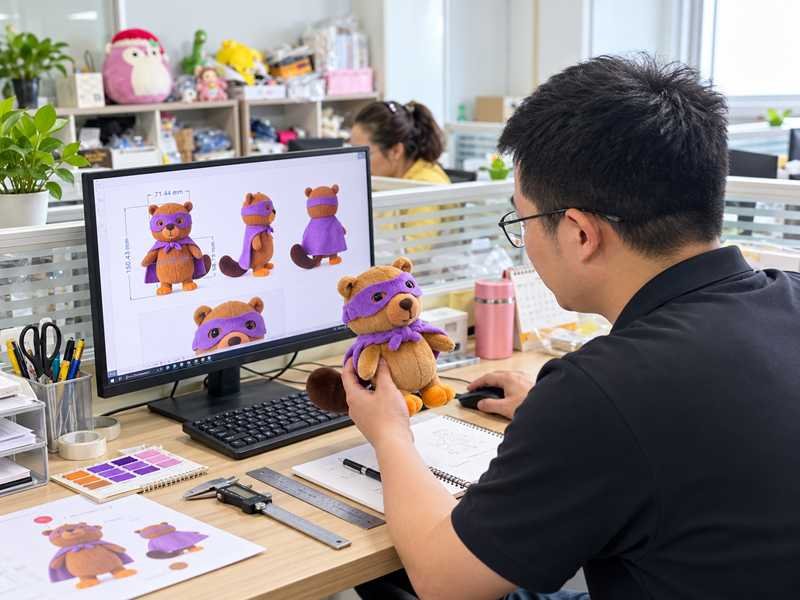
Ewin Toys helps toy brands turn original characters, mascots and product concepts into retail-ready plush collections, coordinating design interpretation, engineering, sampling, production and quality control through one streamlined process. With 20+ years of plush manufacturing experience, we help teams maintain character consistency while moving efficiently from approved artwork to repeatable bulk production.

MOQ 500 pcs | Sampling 5–7 Days | ASTM F963 / CPSIA / EN 71 / REACH | OEM & ODM Solutions | Global Delivery Support
What Toy Brands Need From a Plush Manufacturer

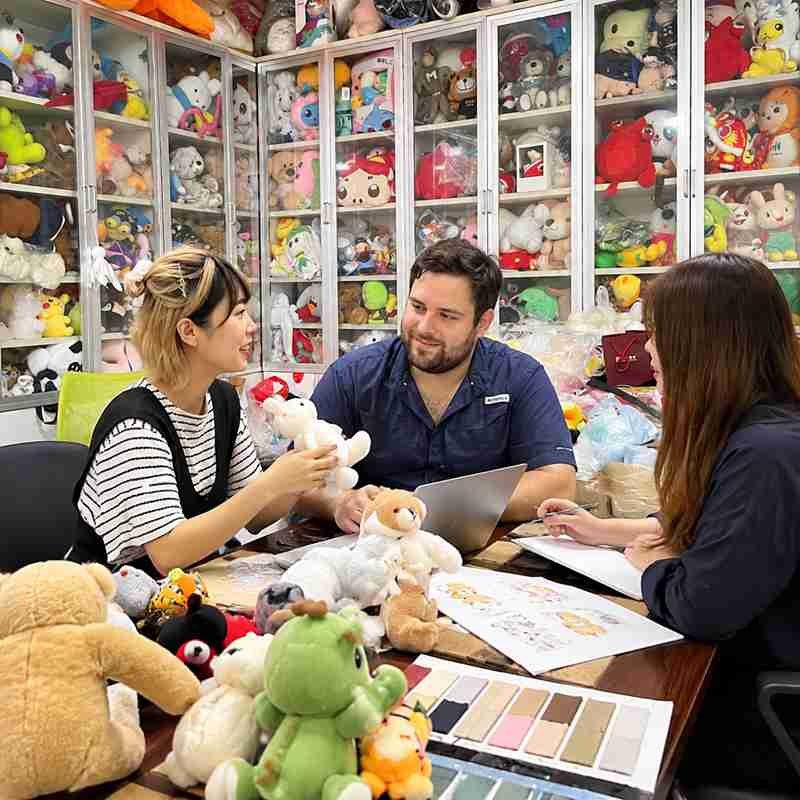
Toy brands need more than sewing capacity. Product development, commercial control and repeatable production must work together from concept through reorder.

Product Development Depth

A strong program starts before cutting fabric. Proportion, pose, pattern, material, decoration, filling and packaging should be reviewed as one product system so attractive concepts can become manufacturable SKUs without losing the visual details that make the line recognizable.

Reliable Sample Decisions

Sampling should answer specific questions: shape, handfeel, facial placement, decoration, accessory construction and production feasibility. Clear V1, revision and approved-sample stages reduce subjective changes and give product teams a controlled route toward final sign-off.

Commercial Fit

MOQ and unit cost depend on more than order quantity. Fabric minimums, custom colors, embroidery, molded parts, hardware, packaging and SKU splits all influence the workable starting quantity. Early cost engineering helps protect both product identity and margin.

Retail Readiness

A plush item becomes retail-ready only after product, labels, barcode data, packaging structure, carton configuration and market requirements align. Ewin can coordinate these elements at SKU level so the finished unit arrives prepared for the intended channel.

Scale And Reorder

A successful first run should create a reusable production baseline. Golden Sample, frozen BOM, released artwork, packaging versions and revision records make seasonal extensions and repeat orders easier to compare, control and reproduce.

Risk Visibility

Launch dates can be affected by materials, special components, testing, approval cycles and packaging. A useful manufacturing partner should surface these constraints early, assign checkpoints and keep the current decision, revision and production status visible to the project team.

Plush Product Lines Built for Toy Brand Portfolios

Build core ranges, extensions and seasonal collections across multiple plush formats without forcing every concept into one construction approach.
Character Plush

Character Plush

Original or licensed characters translated from artwork into controlled 3D proportions, facial placement, fabric direction and pattern structure for recognizable shelf presence.

Animal Plush

Realistic, stylized or brand-specific animals developed around species features, sitting or standing posture, pile choice, stuffing balance and repeatable silhouettes.

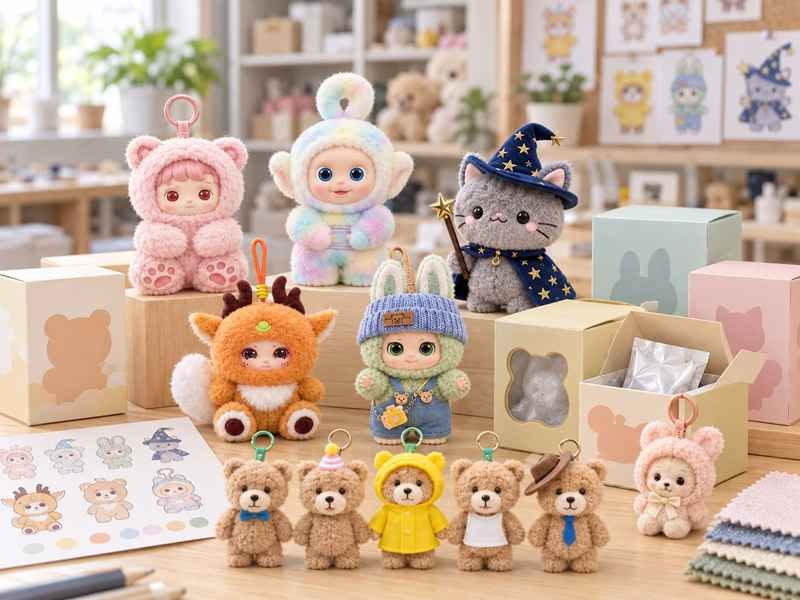
Collectible Plush

Detail-led plush for collector lines where facial precision, texture, accessories, clothing, edition consistency and packaging presentation carry more weight than basic softness alone.
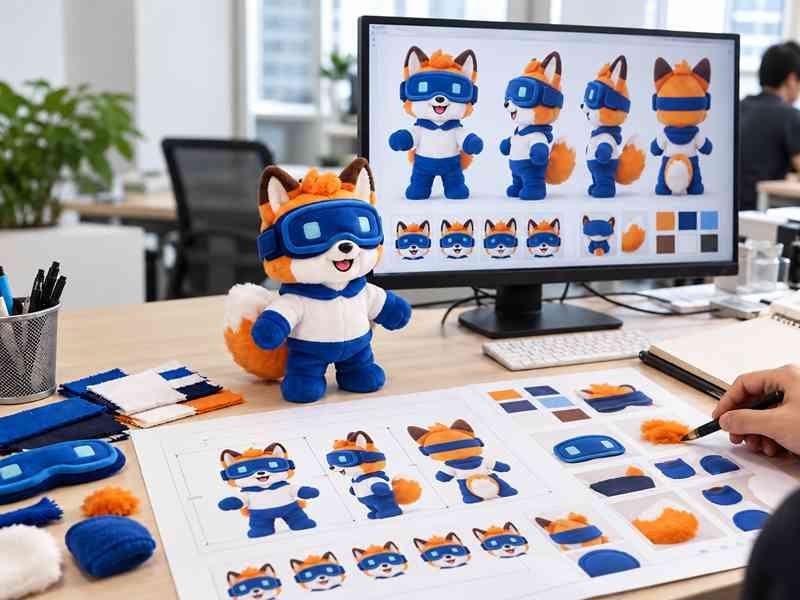
Mascot Plush

Mascot Plush

Brand, school, sports or corporate mascots engineered from identity artwork with recognizable colors, logos, costume details and proportions suitable for repeat programs.

Plush Dolls

Human or stylized figures using layered hair, clothing, embroidered facial features, shoes and accessories that require tighter pattern, assembly and placement control.
Ewintoys 02-05 Plush Keychains

Plush Keychains

Compact plush commonly developed around 6-15 cm, with simplified readable features, secure attachment points, metal hardware and packaging suited to accessories or impulse retail.

Bag Charms

Fashion-oriented plush pendants using clips, chains, straps or rings, with special attention to hanging balance, small-scale detail, hardware finish and visual presentation.
02-3 Ewin toys Mini & Blind Box Plush

Blind Box Plush

Series-based miniature plush developed with assortment control, character-family consistency, inner packaging, blind packaging and display-carton logic for collectible programs.

Interactive Plush

Soft toys integrating sound, light, switches or simple modules while preserving the plush shell, access points, internal cavity, serviceability and safe assembly.
Talking Plush

Talking Plush

Voice or sound-module plush designed around speaker position, activation method, battery access, acoustic clearance and repeatable module installation during production.
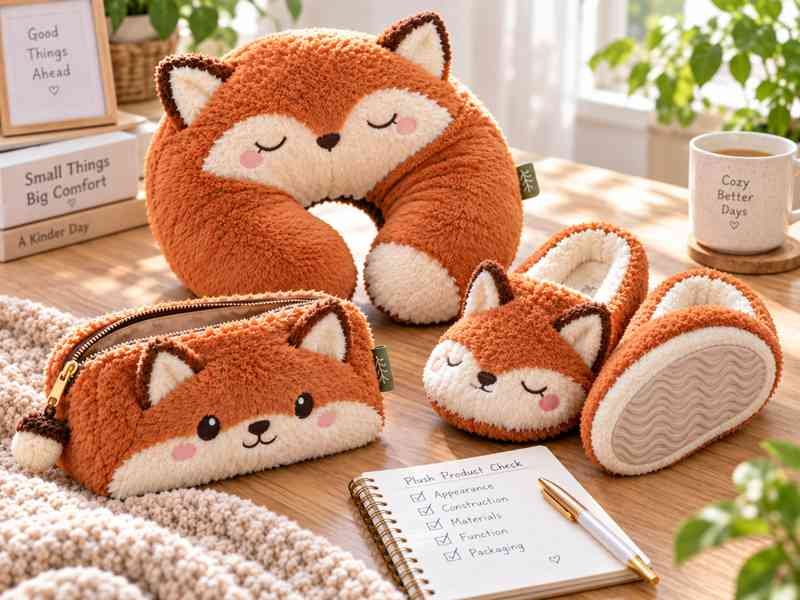
Plush Pillows And Soft Goods

Plush Pillows

Character, logo or shape pillows developed for visual impact, comfort, filling recovery, edge definition and packaging efficiency across retail and lifestyle ranges.

Hybrid Plush

Plush combined with plastic, PVC, silicone, hard eyes, molded parts or structural inserts where interface design and attachment control matter as much as sewing quality.

Seasonal Plush

Holiday, event or promotional variants built from a stable base SKU with controlled changes to color, accessories, clothing, hangtags or gift packaging.

Gift Set Plush

Plush combined with books, accessories, cards or themed items in coordinated packaging where product dimensions, insert structure and presentation need to be designed together.
32-8Ewin toysLifestyle Plush Merchandise

Plush Lifestyle Items

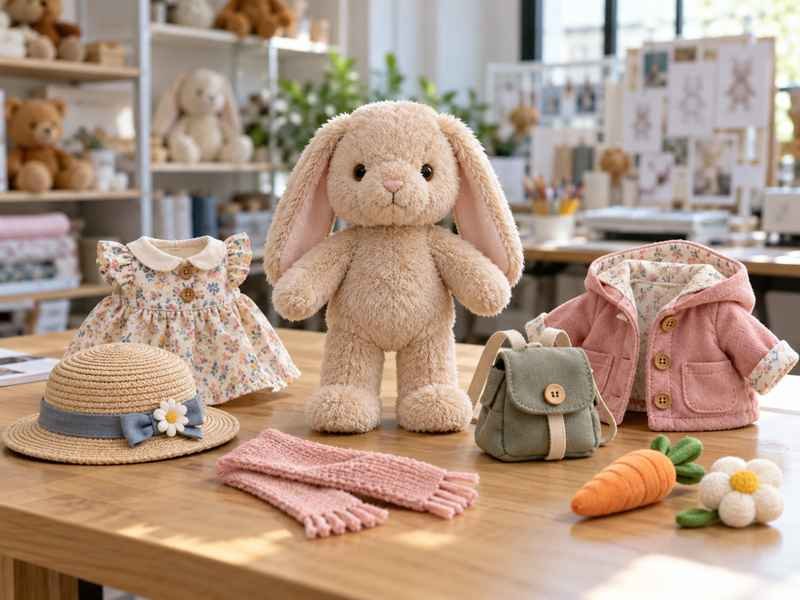
Character-led bags, pouches, blankets, slippers, hats or soft merchandise extensions developed from the same visual language as the main toy line.

Start With the Design Files Already Available
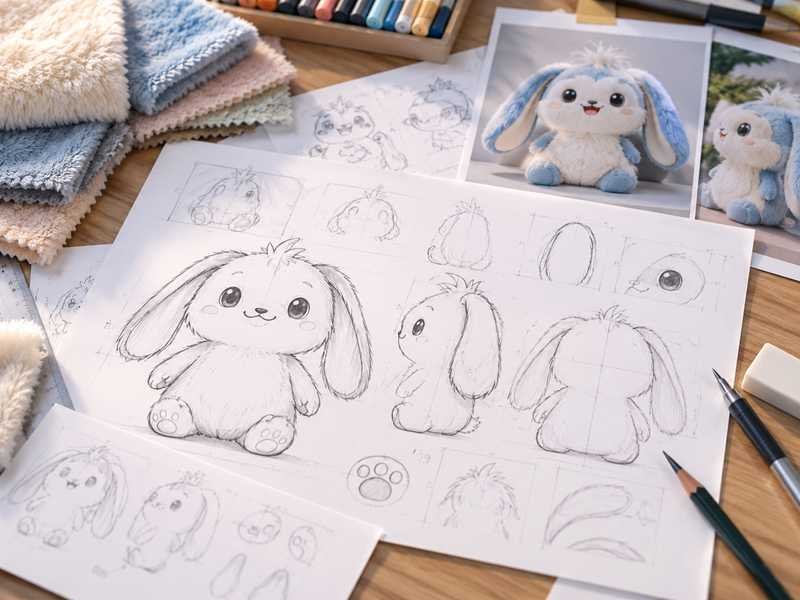
A project can begin from different levels of design maturity. Ewin reviews existing inputs first, then defines what must be clarified before sampling.
Ewintoys 2-1 Hand Sketch

Hand Sketch

A sketch can establish character identity, pose and signature details. The first review focuses on proportion, unclear views, intended size, use scenario and assumptions that need confirmation.

2D Artwork

Front-facing artwork can start development, but thickness, side shape, rear features and seam logic may need engineering interpretation before stable pattern work begins.
44-3Ewin toys Character Sheet

Character Sheet

Multiple poses, expressions and color references give pattern and embroidery teams stronger guidance for shape, face position, accessory scale and series consistency.

Three-View Drawing

Front, side and back views reduce guesswork around depth, tail position, hairstyle, clothing closures and body thickness, helping pattern development move faster.
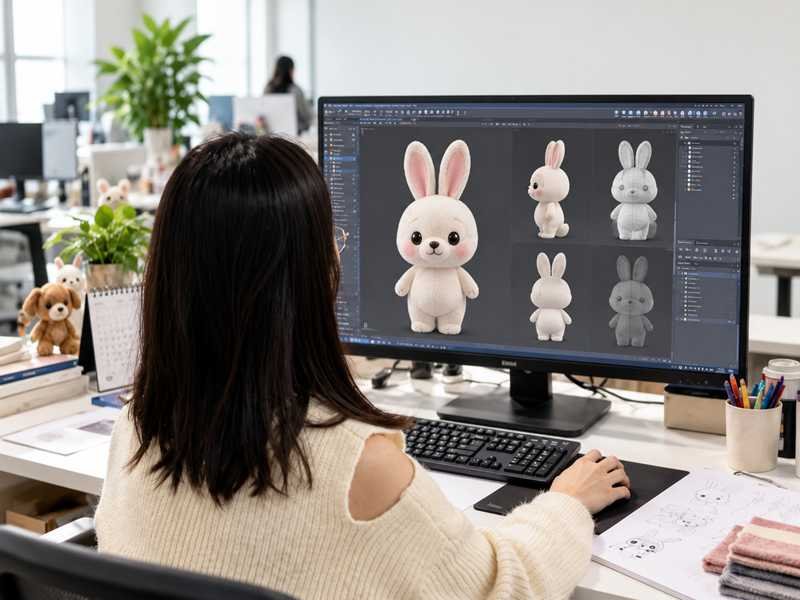
Ewin toys 3D Render

3D Render

A 3D render explains volume well, but hard digital geometry still needs translation into soft panels, seam curves, stuffing behavior and fabric-compatible construction.
Ewin toys Physical Sample

Physical Sample

An existing sample can define scale, handfeel and construction direction. Ewin can review what should be retained, improved, re-engineered or cost-optimized before reproduction.

From Brand Concept to Approved Plush Production

A controlled development route turns creative intent into measurable product decisions before materials and production commitments become difficult to change.

Define the Product Before Pattern Work Begins

The first task is not sewing. Ewin reviews product type, target size, pose, channel, age grade, quantity range, target market, target cost, special functions and packaging direction. Signature character features are separated from adjustable details so the team knows what must be protected during engineering. Missing side or back information is converted into a short assumption list rather than silently guessed. This creates a workable development brief and prevents major changes from appearing only after the first prototype is complete.

Engineer Shape, Structure and Material Together

Pattern engineering, structure and material cannot be decided independently. Head volume affects face spacing; long pile can hide embroidery; clothing changes body dimensions; internal components may require cavities or support; a keychain needs a load-bearing attachment point. Ewin develops panel structure, seam placement, stuffing zones, material direction and decoration positioning as one system. The goal is a plush form that reads correctly in 3D while remaining sewable, fillable, inspectable and suitable for repeat production.

Use Prototypes to Close Real Decisions

A prototype should not be judged only as “good” or “bad.” Review focuses on defined points such as silhouette, head-to-body ratio, face placement, handfeel, pose, color, embroidery scale, accessory fit and packaging interaction. Revisions are tied to a version so approved changes remain visible. For character/IP projects, an initial prototype is commonly planned around 7-12 working days after executable inputs and materials are confirmed; complex structures, special components or new materials can require a longer window.

Freeze the Approved Route Before Scale-Up

Bulk production should begin from released information, not scattered email comments. The approved Golden Sample, frozen BOM, current pattern, embroidery/printing files, material references, accessory notes, packaging artwork and critical QC points form the production baseline. Any later change should be identified as a controlled revision. This discipline protects the visual approval already achieved during sampling and gives production, quality, packaging and sourcing teams one reference for scale-up, reorders and future variants.

Character Fidelity Starts With Pattern and Proportion Control

Recognizable plush characters depend on coordinated shape, face placement, material behavior and stuffing – not a single “accuracy” claim.

Protect Character DNA in Three Dimensions

A drawing can look correct while a plush sample feels wrong because volume changes the way eyes, cheeks, muzzle, ears and body proportions are perceived. Ewin identifies signature features before patterning: head-to-body ratio, face width, eye spacing, ear angle, silhouette, pose and key costume or accessory details. These points become review anchors through sampling. The goal is not literal copying of flat artwork; it is preserving the visual identity after the character is translated into a soft, stuffed object viewed from multiple angles.

Pattern Structure Controls the Final Shape

Pattern panels determine curvature, seam position and volume distribution. Too few panels can flatten a complex head; too many can add cost and create unstable sewing. Ewin balances panel count, seam allowance, grain or pile direction, scaling and sewing sequence around the required form. Pattern revisions are tied to sample versions so the team can understand why a shape changed. For multi-size or character-family programs, stable pattern rules help maintain a consistent visual language instead of rebuilding each SKU independently.

Face Details Need Material-Aware Placement

Embroidery, appliqué, plastic parts and printed features react differently on short pile, long pile, curved panels and stuffed surfaces. Face artwork is reviewed against fabric pile, stitch density, backing, panel shape and the amount of distortion expected after stuffing. Placement is verified on the actual sample rather than relying only on flat embroidery files. This is especially important for small keychains, collectible faces and characters with close-set features, where a few millimeters can change the expression significantly.

Fabrics Selected for Appearance, Handfeel and Production Stability

Material choice should match the product zone, character style, decoration method, cost target and expected retail experience – not softness alone.
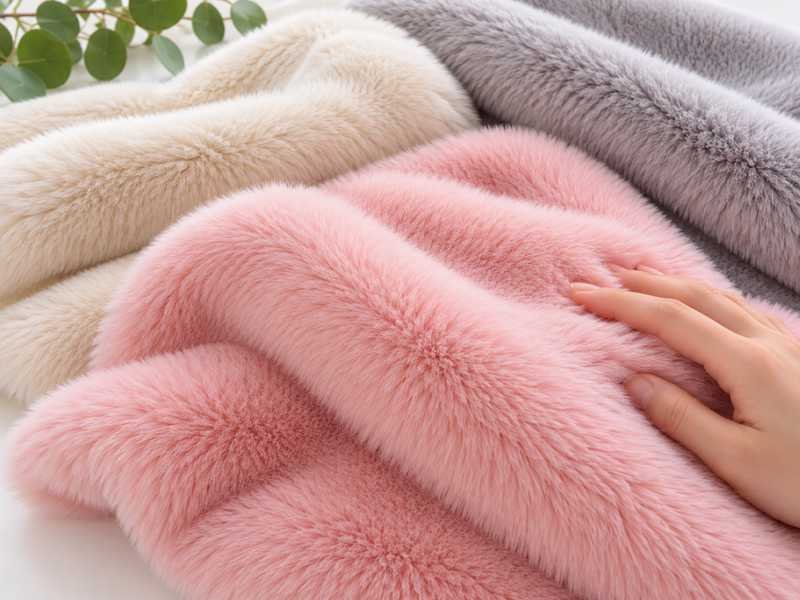
Minky

Minky

Smooth, dense short pile suits clean character faces, baby-soft products and detailed embroidery. GSM, pile height, stretch and color availability should be locked in the BOM.
Velboa

Velboa

Short-pile velboa offers stable surfaces and clear printed or embroidered details. It works well where controlled texture, sharper outlines or cost balance matter.
Crystal Super Soft

Crystal Super Soft

Frequently used for soft retail plush with a clean surface. It supports broad character applications while keeping embroidery, seams and small design elements visually readable.

Faux Fur

Longer pile creates premium texture, animal realism or expressive hair. Pattern direction, trimming, seam concealment and packaging recovery need closer control during development.

Rabbit-Style Plush

Dense, soft pile gives a richer handfeel for premium characters and accessories. Longer fibers may require careful embroidery positioning and grooming after sewing.

Fleece

Fleece provides a matte, textile feel and can work well for clothing, soft bodies, seasonal items and simplified graphic forms where a fur surface is unnecessary.
Sherpa and Fleece

Sherpa

Textured loop surfaces add warmth and visual volume. Sherpa is useful for cozy collections but needs evaluation around embroidery clarity, seam bulk and cleaning expectations.

Printed Plush Fabric

Digital, sublimation or other printing routes can carry gradients, patterns and complex graphics. Fabric compatibility, color approval and alignment must be checked before bulk release.

Trims and Fillings Shape Feel, Durability and Cost
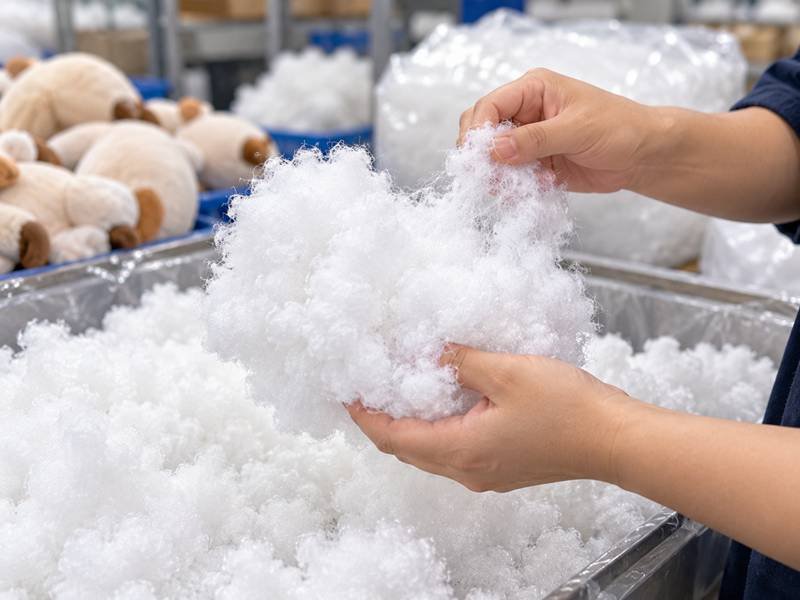
Small materials often create large production differences. Fill, labels, elastic, hook-and-loop and support materials should be defined as controlled BOM items.
Polyester Fiberfill

Polyester Fiber Fill

Fiber grade and filling weight affect softness, rebound, silhouette and cost. Approved handfeel should be linked to a weight or process reference, not memory alone.

High-Loft Filling

Higher loft can create a fuller appearance with lower density, useful for soft bodies and pillows where recovery and volume matter more than firm shaping.

Firm Support Filling

Selected zones may need firmer filling to hold heads, muzzles, feet or seated shapes. Zoned stuffing can improve posture without making the whole plush hard.
Ewintoys 04-06 Weighted Inserts

Weighted Inserts

Weighted products require controlled insert construction, compartment position, fill media containment and balance. Internal placement should be reviewed with safety and handling requirements.

Woven Labels

Woven brand labels support durable identity and care information. Size, fold style, edge finish, placement and seam capture should be approved with the sample.
Printed Care Labels​

Printed Care Labels

Printed labels can carry fiber content, care, origin, age or market information. Final copy, language and attachment position depend on the intended market and product.
Soft Auxiliaries

Elastic And Webbing

Elastic, webbing and straps support wearable or hanging functions. Width, stretch, color, attachment depth and load path need specification before production.

Hook-And-Loop Parts

Hook-and-loop closures can support removable clothing or accessories. Edge softness, placement and exposed hook surfaces should be considered for comfort and product use.

Components and Accessories Engineered Into the Plush Structure
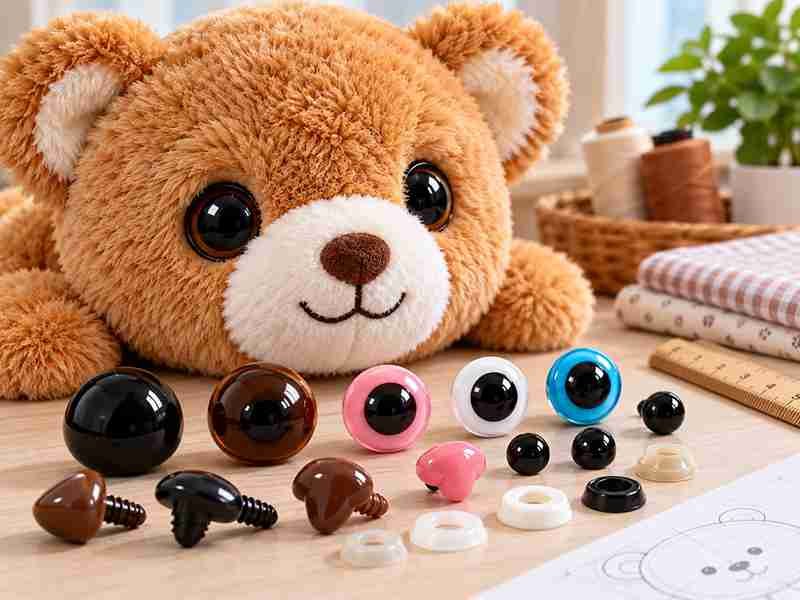
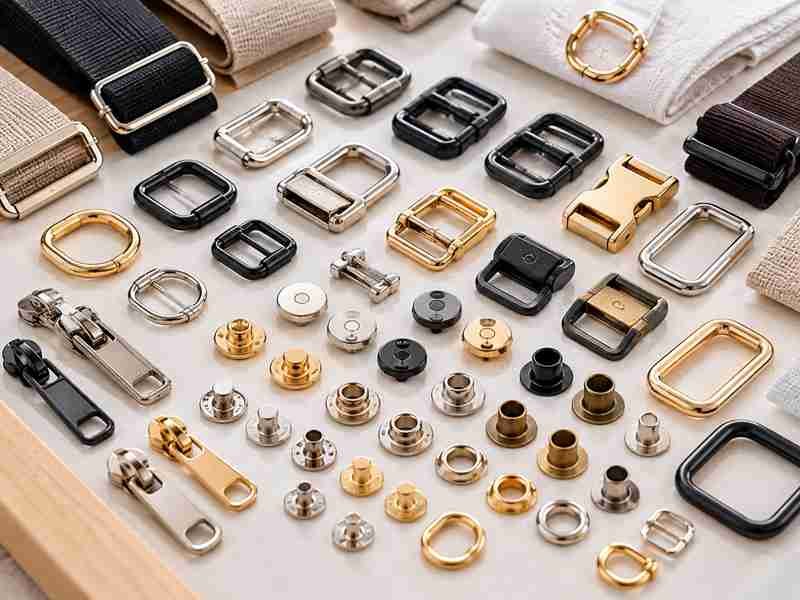
Hardware and rigid parts must connect safely to a soft product while preserving appearance, assembly efficiency and the intended use of each SKU.
Ewintoys 07-01 Plush Accessories Fit Guide Teddy Bear Safety Eye Craft Display Plastic Eyes Noses

Plastic Safety Eyes

Useful for selected styles where dimensional shine is desired. Stem size, washer system, panel reinforcement, age grade and pull resistance require project-specific review.

Embroidered Eyes

Embroidery removes a separate hard component and offers controlled shape and color. Stitch density, pile height, backing and panel distortion influence the final expression.
Ewintoys 04-03 PVC & Silicone Parts

PVC Or Silicone Parts

Soft molded faces, badges or decorative parts can create a hybrid collectible look. Tooling, color, edge design, attachment and compliance scope should be reviewed early.
Ewintoys 05-03 General Metal Hardware

Metal Keychain Hardware

Rings, chains, lobster clasps and carabiners change weight and load behavior. Attachment loops must be engineered into the plush body rather than added superficially.
Clothing Fabrics

Clothing And Shoes

Garments can add strong character recognition but also increase pattern count, handwork and tolerance stack-up. Closures, hems, fit and repeatable dressing sequence need production planning.

Sound Modules

Speaker, switch, battery and wire positions require a defined cavity and assembly route. Module access and soft-goods protection should be resolved before final sample approval.
Ewin toys 3-6 Internal Supports

Internal Supports

Foam, plastic inserts or soft structural parts can help ears, limbs or shapes hold form. Materials should be selected around flexibility, safety and assembly repeatability.
65-8Ewin toys Removable Accessories

Removable Accessories

Hats, bags, props and detachable pieces need a clear attachment method, retention expectation and packaging solution so the full set arrives complete and presentable.

Logo and Decoration Methods Chosen for the Surface

Brand marks and character details perform differently across pile heights, panel shapes and product sizes. Decoration should be approved on the real base material.

Computer Embroidery

Best for durable logos, eyes, mouths and line details. Thread count, stitch density, underlay and fabric pile must be balanced to avoid stiffness or buried artwork.

Appliqué Embroidery

A cut fabric piece is stitched onto the base surface to create larger color areas or layered character details with lower stitch density than full-fill embroidery.

Screen Printing

Suitable for repeated graphics on compatible flat or stable textile surfaces. Ink system, color coverage, fabric texture and curing should match the product requirement.

Digital Printing

Useful for gradients, multicolor artwork and complex patterns. Print resolution, fabric choice, color standard and panel alignment should be approved before production.

Heat Transfer

Transfers can reproduce detailed graphics on selected textiles. Temperature, pressure, surface texture and wash or abrasion expectations should be checked during sampling.

Sublimation Printing

Works on compatible polyester surfaces where artwork needs strong color penetration. White-base material and color management are important for predictable reproduction.

Woven Logo Label

A woven label gives crisp repeated branding without changing the plush surface. Fold, edge, color, logo legibility and seam location become part of the approved specification.

Rubber Or PVC Badge

Dimensional badges can add a modern collectible or lifestyle look. Mold detail, color, thickness, edge feel and attachment route should be developed with the base product.

Sampling Stages That Keep Approvals Clear and Traceable

Each sample stage should close a defined decision so development moves forward instead of creating endless subjective revisions.

Feasibility Review

Artwork, size, pose, materials, accessories, market and quantity are reviewed before pattern work begins. Early risks are listed so major changes do not appear after sampling.

V1 Shape Prototype

The first physical sample focuses on proportion, silhouette, posture and basic construction. Decorative details are reviewed, but shape decisions take priority at this stage.

Material Process Sample

Selected fabrics, embroidery, printing, molded parts, hardware or clothing are checked on the actual construction so visual and handfeel decisions can be approved together.

Revision Sample

Feedback is converted into specific changes against the current version. Pattern, artwork, material or accessory updates are identified so the team can verify what changed.

Final Approval Sample

The final development sample closes visual, material, construction and packaging decisions needed for the production route, subject to project testing and commercial confirmation.

Golden Or PP Sample

The approved reference is linked to the frozen BOM, current pattern, decoration files and critical QC points, forming the release baseline for production and future reorders.

DFM Protects Sample Quality During Mass Production

A beautiful prototype is only valuable when its shape, details and assembly can be repeated consistently across production quantities and future reorders.

Simplify Hidden Complexity Without Weakening the Design

DFM review looks for pattern panels, seam positions, handwork, accessory attachments and decoration steps that are difficult to repeat or inspect. The goal is not to strip away important character features. Ewin separates visible “character DNA” from hidden construction complexity, then looks for cleaner sewing routes, shared components, more stable tolerances or better process order. A controlled simplification can reduce variation and labor while preserving the features that make the product recognizable on shelf and in photography.

Convert Approved Details Into Measurable Production Controls

Visual approval must become manufacturing information. Critical dimensions, embroidery locations, stuffing weight, component positions, color references, seam notes, packaging versions and accepted appearance points are connected to the Golden Sample and BOM. Production teams need these references before line setup, not after defects appear. High-risk features can receive additional in-process checks or first-piece confirmation. Clear control points make it easier to detect drift early and prevent one small process change from spreading through an entire lot.

Plan Bottlenecks Around the Actual SKU Mix

Capacity is not only a monthly headline. A standard 20 cm animal, a multi-layer doll and a hybrid electronic plush place very different loads on cutting, embroidery, sewing, hand assembly and QC. Ewin reviews SKU count, decoration, custom materials, handwork and launch date when planning production. For multi-SKU collections, common fabrics, shared trims, common packaging structures and coordinated approvals can reduce changeovers. Peak-season programs benefit from earlier material readiness and production-slot planning instead of relying on last-minute acceleration.

Release Production From One Controlled Definition

Bulk release should connect the Golden Sample, frozen BOM, released pattern, current artwork, packaging files and QC requirements. Production does not start from a photo or informal “looks good” message. If a later change is approved, the revision is linked to the affected SKU and document set. This approach supports better sample-to-bulk consistency, clearer inspection, easier replenishment and fewer arguments about which version was approved. It also gives future seasonal editions a stable engineering baseline rather than forcing the program to restart from memory.

Cost and MOQ Should Follow the Product Specification

Decision AreaMain Cost or MOQ DriversUseful Optimization Route
Size & Shapefinished dimensions, panel count, fabric consumption, stuffing weightprotect key proportions; simplify hidden panels where possible
Fabriccomposition, GSM, pile height, custom dye, minimum fabric purchaseuse stocked or shared materials when brand requirements allow
Decorationembroidery area, stitch count, print colors, appliqué layerspreserve signature details; simplify low-value areas
Componentscustom molded parts, hardware, electronics, special insertsshare components across SKUs or standardize interfaces
Clothing & Handworkgarment pieces, dressing, closures, manual assemblysimplify construction sequence while keeping visible styling
Packagingcolor box, gift box, blind box, PDQ, inserts, print minimumsalign pack size, share structures, separate version artwork
SKU Countquantity per SKU, color splits, size splits, assortment ratioscombine material buys and shared packaging where possible
Production Setupmachine changeover, special jigs, testing, inspection complexitygroup similar SKUs and freeze common process standards

Manufacturing Control From Cutting Through Retail Pack-Out

A stable plush line depends on connected production stages, each carrying information forward from the approved sample and current BOM.
Material Receiving

Material Receiving

Fabric, filling, components and packaging enter against the approved specification. Color, material identity, quantity and visible condition are checked before release to production.
Pattern And Cutting

Cutting

Released patterns guide marker planning, cutting and component preparation. Shape accuracy starts here because panel variation will affect seam position and finished proportions later.
Embroidery And Printing​

Embroidery Printing

Approved artwork files, positions and colors are linked to the correct panels. Decoration should be completed before assembly where the construction requires accurate flat placement.

Sewing

Panel sequence, seam allowance, attachment points and component placement are controlled against the released construction so volume and posture remain repeatable across operators.

Stuffing

Fiber type, stuffing weight and zone balance are managed to maintain handfeel, shape and pose. Critical parts may require different density from the main body.
Stuffing and Shaping

Hand Assembly

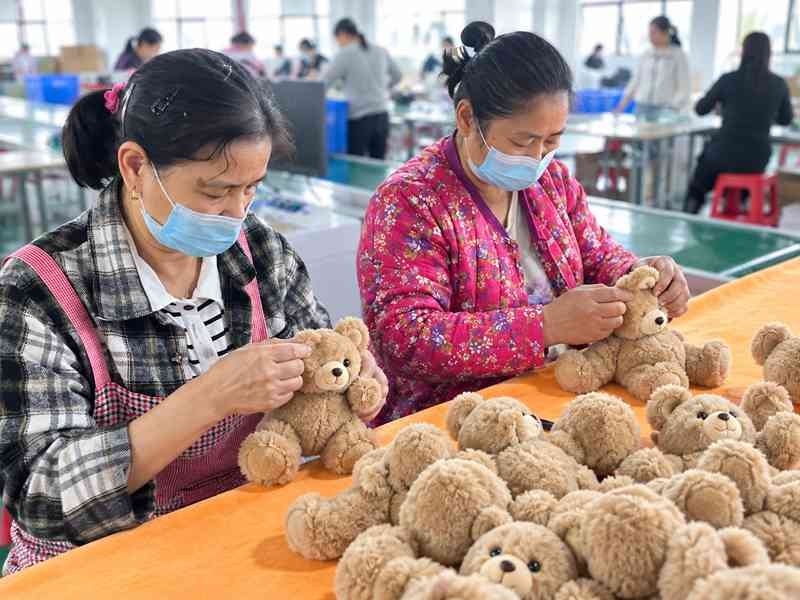
Clothing, accessories, closing, grooming and complex details are completed with specific reference points. Manual steps need clear work instructions because variation can accumulate quickly.
Stuffing And Shaping

Shaping Grooming

Steam, brushing, trimming and final shaping restore silhouette and pile direction. Long-pile and character products often need more finishing than standard plush.

Quality Release

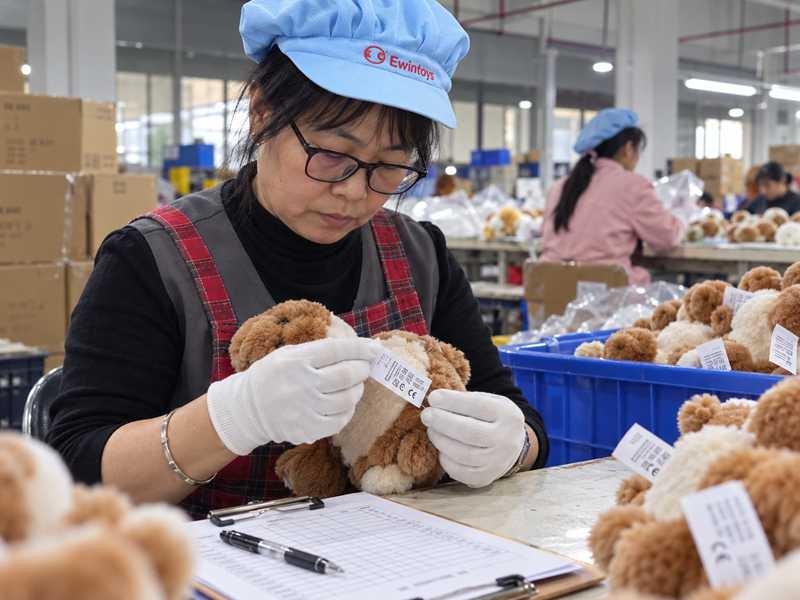
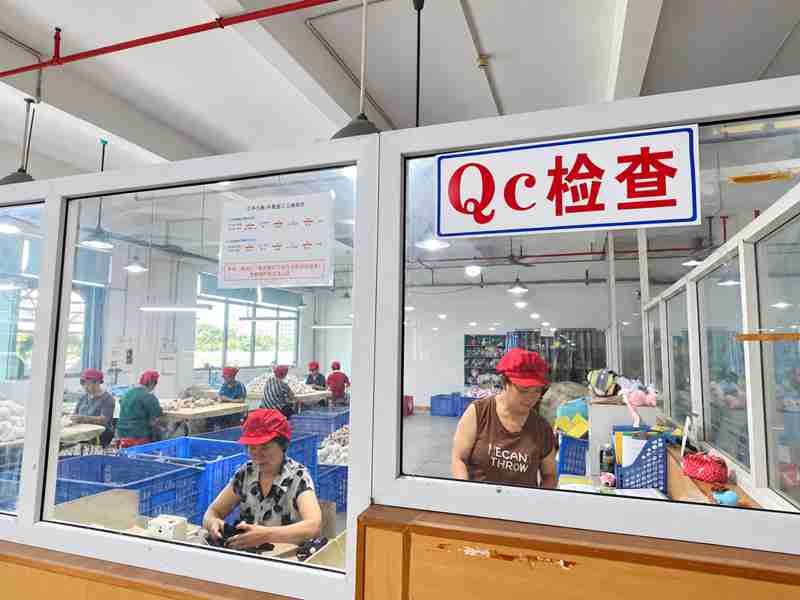
Appearance, dimensions, workmanship, critical attachments and packaging readiness are checked against the project plan before units move into final packing and shipment release.

Packaging

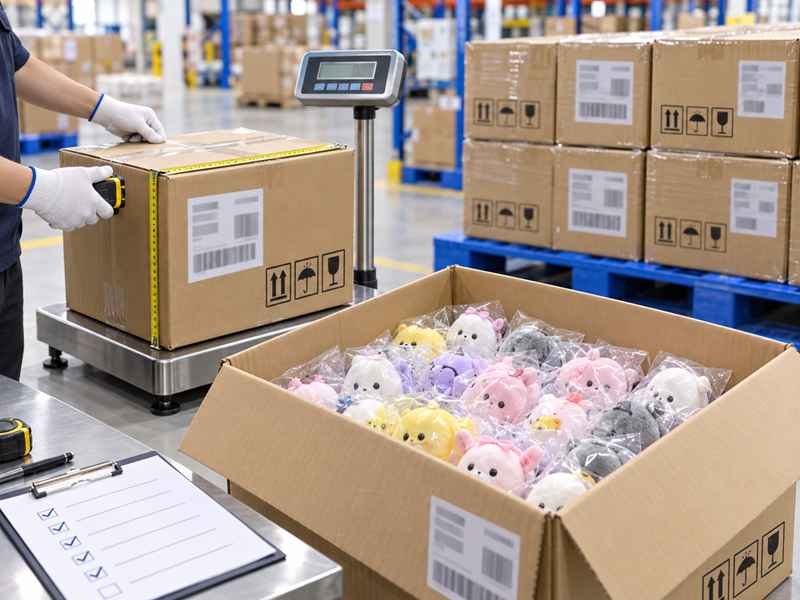
Approved labels, bags or boxes, barcode data, assortment, carton marks and pack-out instructions convert finished plush into controlled retail or e-commerce units.

Quality Control Tied to the Approved Product Definition

Quality checks work best when they target the actual failure risks of each SKU and compare production against controlled references.

Incoming Material Check

Fabric, components, filling and packaging are checked before production for identity, visible condition, color or specification points relevant to the project.

First-Piece Confirmation

Early production pieces can be checked against the released sample and critical dimensions before a process issue spreads across a larger quantity.

In-Process Inspection

Sewing, decoration, stuffing, attachment and assembly points are reviewed during production so defects can be corrected closer to their source.

Dimension Control

Critical dimensions are compared with the approved specification because small shifts in head width, limb length or accessory position can alter character appearance.

Attachment Checks

Keychain loops, eyes, accessories and other attached parts receive project-specific checks around installation, retention and visible workmanship based on product risk.

Needle Control

Needle and metal control is linked with sewing and handwork discipline, equipment checks and finished-goods release rather than treated as one isolated final pass.

Appearance Review

Face placement, shape, symmetry, pile direction, cleanliness, grooming and overall presentation are checked against approved references, especially for collectible and IP-focused products.

Packaging Verification

SKU, label, barcode, pack type, assortment, carton quantity and shipping marks are checked before release so a good toy is not undermined by pack-out errors.

CAPA And Traceability

When a meaningful issue appears, root cause, containment and corrective action should be recorded so the same failure does not repeat in later lots or reorders.

Certificates, Compliance & Quality Assurance

Ewintoys follows structured quality and compliance practices for custom plush production. We hold relevant certifications and support additional testing, inspection, and compliance documentation based on specific product requirements and destination markets, helping brands meet different international standards with confidence.


Compliance Planning Starts Before the Final Sample

Market / Requirement AreaDevelopment QuestionsEwin Support Boundary
United Statesage grade, small parts, materials, labeling, applicable ASTM F963 and CPSIA requirementsreview product inputs, support internal physical checks and coordinate project-specific third-party testing as required
European Unionage grade, mechanical and physical risks, flammability, material/chemical requirements, labeling and applicable EN 71 scopealign construction and test planning with the specific SKU, market and current requirement set
Componentsplastic eyes, hardware, molded parts, electronics, batteries, magnets or weighted insertsidentify component-specific risks and required documentation before bulk release
Labels & Packagingwarnings, fiber/care information, origin, barcode, copyright or retailer copyexecute approved label and packaging artwork; final legal text remains project-specific
Retailer Requirementsvendor manuals, packaging rules, additional tests, routing or documentationincorporate provided retailer requirements into sample, packaging and release planning
Test Reportsexact product version, materials, age grade, laboratory scope and report datespecific “passed” claims require the matching issued report for the relevant SKU/version

Packaging Designed for Retail, E-Commerce and Global Delivery

Packaging should protect the plush, preserve presentation, carry approved information and fit the handling rules of the intended sales channel.
Protective Polybag

Protective Polybag

Simple unit packing can include ventilation, warning copy, sealing method and shape protection. Bag size should avoid crushing faces, ears or long-pile surfaces.

Hangtag Program

Hangtags can carry brand, story, SKU or legal information. Size, stock, finish, string or fastener, placement and artwork version should be approved.
Color Box

Color Box

Printed cartons support shelf presentation and gifting. Product orientation, window size, insert support, barcode position and carton cube influence both display and freight.
Color or Gift Box

Gift Box

Premium sets can combine plush with books, cards or accessories. Internal inserts should protect each item while keeping the opening experience organized and repeatable.

Blind Box

Blind-box programs require inner protection, assortment logic, character identification control, sealed unit boxes and display-carton planning across a complete series.

PDQ Display

Counter or shelf displays need pack-out quantity, facing, barcode logic and structural strength aligned with how the retailer handles and replenishes the assortment.

E-Commerce Pack

Unit packaging can be evaluated around FNSKU or GTIN labeling, scan checks, compression, recovery and master-carton efficiency based on the selling platform requirements.
Master Carton and Shipment Prep

Master Carton

Case quantity, carton dimensions, weight, marks, mixed-SKU rules and protection should be frozen with the shipment plan to reduce warehouse and receiving errors.

Multi-SKU Programs Need One Controlled Launch Plan

Collections become easier to scale when design, approval, packaging and production information stay visible at SKU level under one project structure.

Design ID Control

Each character, size, color or edition receives a clear identity so artwork, patterns and samples do not become mixed across parallel development work.

Sample Version Tracking

V1, revisions, final and Golden Sample status should be visible for every SKU, especially when multiple characters are moving through approvals at different speeds.

BOM And Material Sharing

Shared fabrics, trims, hardware and packaging structures can reduce fragmentation while each SKU retains its approved colors, decoration and unique components.

Packaging Barcode Matrix

Packaging version, barcode data, label language, assortment ratio and carton configuration are linked to each SKU so retail execution does not drift at pack-out.

Launch Capacity Planning

Forecast, material readiness, decoration load, handwork and target ship date are reviewed together. Complex collections need capacity planning by process, not only total quantity.

Reorder Delta Review

Repeat orders compare the latest approved BOM, colors, packaging, artwork and test or market requirements against the previous run before materials and production are released.

Toy Brand Programs and Development Routes

United States Character Collection - 6,000 pcs

A U.S. toy brand preparing a six-character retail collection can structure an opening run at 1,000 pcs per character, using a shared 24 cm body platform with character-specific head patterns, embroidery and accessories. Development begins from character sheets and three-view references. Ewin can first define shared materials, filling feel and common packaging dimensions, then run character-specific pattern and face reviews. V1 samples focus on proportion and expression; revisions close color, embroidery and accessory details. Before production, the Golden Sample, BOM, artwork, packaging and barcode versions are frozen by SKU. The shared platform reduces unnecessary material fragmentation while preserving character identity across the collection.

Germany Collectible Launch - 4,800 pcs

A German collectible brand launching four premium characters can plan 1,200 pcs per SKU with short-pile facial areas, longer-texture hair, embroidered features and removable clothing. Early engineering focuses on character-family consistency, long-pile direction, garment fit and packaging presentation. A material/process sample is useful before final approval because texture and embroidery readability carry more value in a collector product than in a simple promotional plush. Compliance planning can be aligned with the intended EU market and age grade before bulk release. Production is then controlled against the approved sample, frozen BOM and current packaging artwork so each character keeps the same quality language across the series.

Japan Seasonal Retail Program - 9,600 pcs

A Japanese toy and gift brand planning three seasonal characters in two sizes can structure six SKUs at 1,600 pcs each. The engineering challenge is not only making six plush items; it is keeping color, face language, material feel and packaging presentation consistent across sizes. Ewin can define a master character standard, then adapt pattern scaling, embroidery placement and stuffing weight for each size. Shared base fabrics and standardized trim families reduce material complexity, while SKU-specific hangtags and color-box artwork remain controlled separately. A consolidated production and packaging plan helps the brand coordinate one retail launch while retaining clear revision, barcode and carton information for every SKU. Discuss Similar Program

How Toy Brands Can Qualify a Plush Manufacturing Partner

Qualification AreaWhat to AskEvidence Worth Reviewing
Product FitHave you made comparable structures, sizes and functions?relevant samples, process route, material/component examples
Character EngineeringHow do you convert artwork into 3D and control revisions?artwork-to-pattern-to-V1/V2/final sequence
Development TeamWho handles pattern, materials, sample sewing and sample QC?development-center workflow, role structure, sample-room evidence
Sample ControlHow are revisions, approvals and final references managed?version records, Golden Sample process, BOM freeze
ManufacturingWhich core processes are controlled and where are handoffs?cutting, decoration, sewing, stuffing, finishing, QC, packaging evidence
Bulk ConsistencyHow is production tied back to the approved sample?released pattern, critical measurements, process checks, final inspection
ComplianceHow are target market and age-grade requirements handled?test-planning process, internal checks, project-specific third-party reports when applicable
MOQ & CostCan the supplier explain drivers instead of quoting one universal number?cost-driver logic, material/packaging minimums, SKU split assumptions
PackagingCan the supplier execute retail or e-commerce pack-out?hangtags, barcode scan, color box, PDQ, master carton examples
Multi-SKUHow are design, BOM, barcode, testing and shipment controlled by SKU?SKU tracker or program matrix
CapacityIs capacity reviewed against complexity, SKU mix and launch date?forecast review, material plan, process bottleneck assessment
IP & CommunicationHow are files, decisions and changes controlled?NDA workflow, project owner, revision log, escalation and update process

Frequently Asked Questions for Toy Brand Plush Programs

About 500 pcs per style is a useful early commercial starting point for regular custom plush. Custom fabric, molded parts, electronics, printed packaging and fragmented SKU quantities can raise the effective MOQ.

Character/IP prototypes are commonly planned around 7-12 working days after executable design inputs and materials are confirmed. Complex functions, custom components or major revisions can require a longer development window.

Yes. Sketches, 2D artwork, character sheets, three-view drawings, 3D renders, reference products and physical samples can all start a review. Missing information is converted into clear assumptions and questions.

Bulk release is tied to the Golden Sample, frozen BOM, released pattern, current decoration files, packaging version and critical QC points rather than an informal photo or verbal approval.

Yes. Multi-SKU programs can coordinate design IDs, sample versions, shared materials, BOMs, packaging, barcodes, testing, production status and shipment planning under one program structure.

Ewin can review product construction against target market, age grade, materials, small parts, labels and testing needs, then support project-specific third-party testing where required. Exact pass claims depend on issued reports.

Yes. Polybags, hangtags, color boxes, gift boxes, blind boxes, PDQ, barcode application and master-carton pack-out can be developed around the SKU, channel and shipping requirements.

Cost engineering can compare materials, panel count, embroidery, filling, accessories, handwork and packaging while protecting the character details identified as essential to brand recognition.

Yes. Golden Sample, BOM, pattern, color references and packaging versions create a controlled baseline. Reorders should still receive a delta review for material, artwork, market or packaging changes.

Send available artwork or samples, target size, quantity or forecast, selling market, intended age group, target launch date, packaging expectations and any retailer or compliance requirements already known.
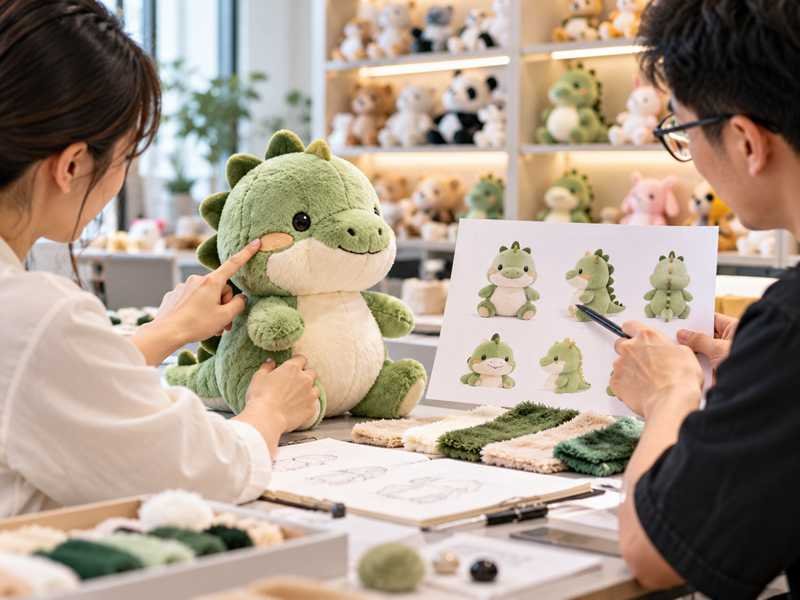
Start Your Toy Brand Plush Program With Ewin Toys

Send the information already available. Ewin can review the development route, main engineering risks, material direction, sampling path, commercial starting point and information still needed before a reliable quotation or prototype plan is prepared.
Helpful inputs include:

  • Artwork, character sheet, three-view drawing, 3D render or reference sample
  • Target finished size and intended pose
  • Quantity per SKU and expected number of SKUs
  • Selling market, age grade and sales channel
  • Preferred materials, handfeel, accessories or functional parts
  • Logo, embroidery, print or clothing requirements
  • Packaging format, barcode or retailer guide if available
  • Target launch, ship or warehouse-receipt date

Start Your Custom Plush Project

We will contact you within 24 Hours, please pay attention to the email with the suffix“@ewintoys.com”. 

# Confidential project? NDA requirements can be discussed before sensitive files are shared.

Seraphinite AcceleratorOptimized by Seraphinite Accelerator
Turns on site high speed to be attractive for people and search engines.